
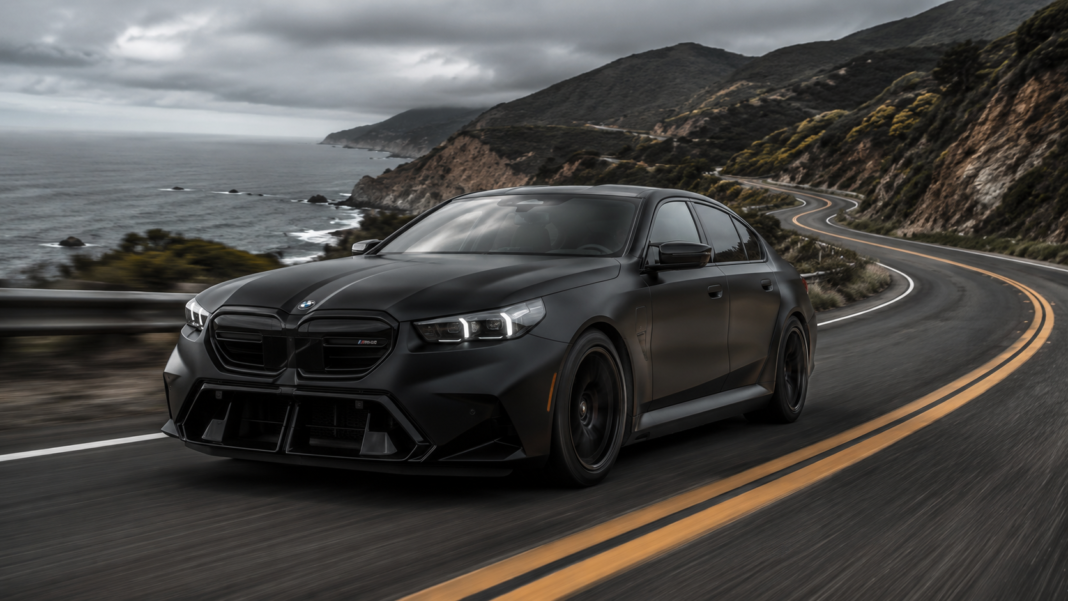
The sun is setting over the Pacific Ocean as a low, wide silhouette carves through the curves of the Pacific Coast Highway. The sound is unmistakable, a deep V8 rumble that echoes off the cliffs. But there is a new layer to the sound, a high-pitched whir from the electric motor that fills in the gaps between gear shifts. This is the BMW M5 G90, the first electrified M5, and it is the most controversial M car since the brand introduced the XM.
The M5 has always been the benchmark for the super sedan. It is the car that defined the segment, a car that could carry a family in comfort and embarrass sports cars on the track. But the G90 generation has changed the formula. It is now a plug-in hybrid, tipping the scales at nearly 5,400 pounds, almost 1,000 pounds heavier than the outgoing F90 model. It is a car that BMW built because it had to, not because it wanted to.
The question is whether the M5 formula survived the transition. The answer is complicated.
The Powertrain: A Hybrid for the Ages
The heart of the G90 M5 is the S68 engine, a 4.4-liter twin-turbo V8 that produces 577 horsepower on its own. An electric motor, integrated into the eight-speed automatic transmission, adds another 194 horsepower, bringing the total system output to 727 horsepower and 738 lb-ft of torque. That is more power than any M5 before it, and it is delivered through M xDrive all-wheel drive.
The performance figures are impressive on paper. The M5 accelerates from 0 to 60 mph in 3.4 seconds and reaches a top speed of 190 mph with the M Driver’s Package. But those figures are actually slightly slower than the previous generation, which could reach 60 mph in 2.8 seconds. The weight has offset the power gain.
The plug-in hybrid system is a significant change. A battery provides approximately 25 miles of electric-only range, allowing the M5 to operate as a silent, emissions-free sedan for short trips. The electric motor provides instant torque, filling the gaps in the V8’s power delivery and making the car feel more responsive than its weight would suggest.
The Weight Problem
The G90 M5 weighs between 2,435 kg and 2,510 kg, depending on the source. That is nearly 1,000 pounds more than the F90 M5 and approaches the weight of the BMW XM. It is a figure that has dominated the conversation around the car, and it has led many enthusiasts to question whether the M5 can still be an M car.
The weight is the result of the hybrid hardware. The battery, electric motor, and related systems add significant mass, and BMW has not been able to offset it with lightweight materials. The car is heavy, and it feels heavy.
But the weight is not a disaster. On smooth roads, the M5 is composed and confidence-inspiring. The adaptive suspension and rear-axle steering work to hide the mass, and the car handles with a precision that defies its size. The AWD system and rear differential do a fantastic job putting the power down, rotating the car through corners.
The ride quality is more controversial. On rough roads, the low-speed damping can be harsh, and the car can feel overly stiff over sharp bumps. Comfort mode can feel too soft and floaty, while Sport Plus is too rigid for daily use. Sport mode offers the best balance, but it is not perfect.
The Driving Experience: Two Personalities
The G90 M5 is a car of two personalities. In EV mode, it is a silent, refined cruiser, gliding through traffic with a smoothness that is genuinely impressive. The electric motor provides enough power for city driving, and the regenerative braking system is well-integrated.
In Sport Plus mode, the car transforms. The V8 barks to life, the throttle sharpens, and the chassis tightens. The acceleration is brutal, punching you in the gut and rearranging your internal organs. The car feels alive, responsive, and eager.
The transition between the two modes is not always seamless. In cold weather, the V8 wake-up can feel a bit rough, with a mild vibration and a slightly delayed response. But overall, the system is smoother than the clunky setup in the BMW XM.
The M1 and M2 buttons allow drivers to configure their preferred setups. It is a feature that should be used, as the car resets to its most comfortable settings at the start of every journey.
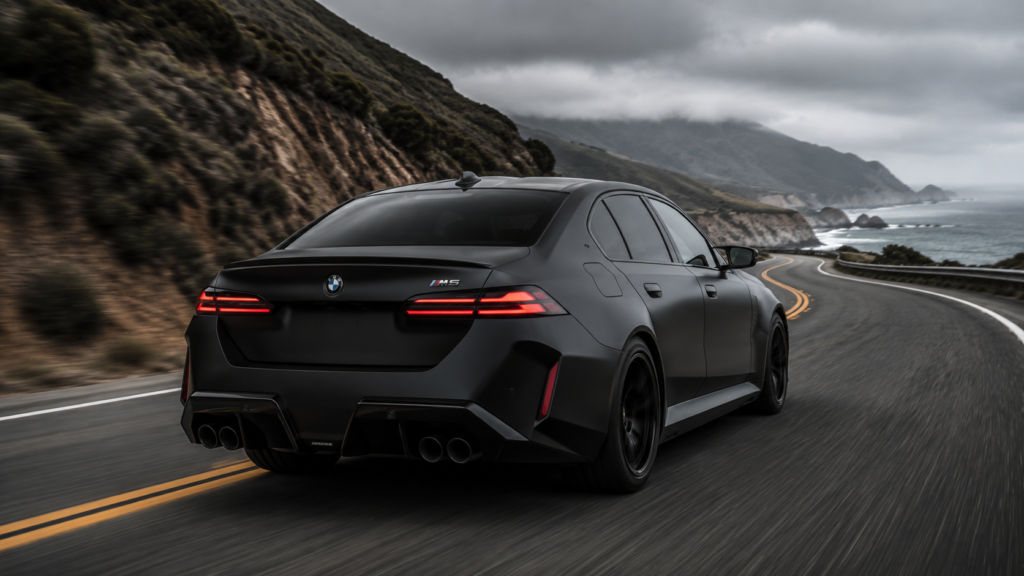
The Verdict: Still an M Car, But Different
The G90 M5 is still an M car. It is fast, refined, and capable. It can carry a family in comfort and embarrass sports cars on the track. It is the most livable M5 ever built, a car that can be a whisper or a war cry depending on your mood.
But it is also a car that has changed. It is heavier, slower to 60 mph, and less focused than its predecessor. It is a car that BMW built because it had to, not because it wanted to. And it is a car that reflects the reality of the modern automotive industry.
The question is not whether the G90 M5 is still an M car. It is. The question is whether you want an M car that has been forced to adapt to the demands of emissions regulations and electrification. The answer depends on what you value.

