
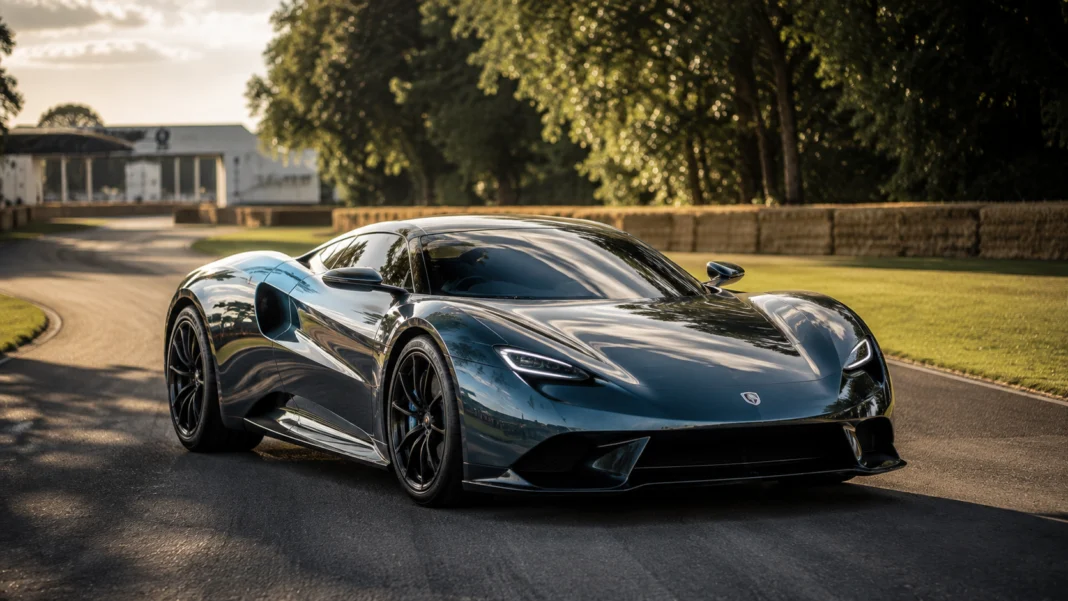
Imagine the sun setting over the South Downs and a low, sleek silhouette waiting in the pit lane at the Goodwood Circuit in West Sussex. The car looks like a cross between a Lotus Emira and a McLaren GT, with a hint of Bentley in its rear haunches. This is the Denza Z, an electric sports car from BYD’s premium brand, and it represents the most ambitious attempt yet from a Chinese manufacturer to challenge the established European sports car hierarchy.
The Z is the first sports car from Denza, a brand that BYD has positioned as its “tech-focused premium” answer to Mercedes, Porsche, and BMW. It is a car that has been developed to take on the Porsche 911, a target that Denza has openly acknowledged from the start. It is a car that produces 1,582 horsepower, accelerates from 0 to 62 mph in as little as 1.96 seconds, and charges from 10 to 97 percent in nine minutes. And it is a car that, after an early drive on track, has left some reviewers with mixed feelings.
The Numbers: A Hypercar in Every Specification
The Denza Z’s powertrain is staggering. A tri-motor all-wheel-drive system, with one 671-horsepower motor at the front and two 456-horsepower motors at the rear, produces a combined output of 1,582 horsepower and 1,240 Nm of torque. The Racing version, fitted with optional semi-slick tires, can launch from 0 to 62 mph in 1.96 seconds and reach a top speed of 217 mph. The standard Coupe is slightly more restrained at 2.25 seconds and 186 mph, while the Spider convertible sits between them at 2.3 seconds.
The charging technology is equally impressive. The Z uses BYD’s second-generation Blade Battery, which is integrated into the chassis using a Cell-to-Body architecture. The battery supports BYD’s Flash Charging system, which can take the battery from 10 to 70 percent in five minutes and from 10 to 97 percent in nine minutes. This is enabled by a series of technical breakthroughs that push the boundaries of LFP battery chemistry.
The range is moderate by EV standards, with the Coupe offering up to 254 miles, the Spider 248 miles, and the Racing 236 miles. This reflects the car’s focus on performance over long-distance cruising.
The Chassis: Clever Tech, Mixed Results
The Z is built on BYD’s e3 platform, which features steer-by-wire technology with no mechanical connection between the steering wheel and the front wheels. The two rear motors can adjust torque independently, enabling torque vectoring and even a “compass turn” where the car pivots around its front wheels.
The Coupe and Spider use magnetorheological adaptive dampers with air suspension, while the Racing version replaces the air springs with more focused coil springs. All versions get double wishbone front suspension, a multi-link rear setup, carbon ceramic brakes with six-piston front calipers, and a boost function that temporarily increases torque by 30 percent for up to 20 seconds.
The Racing version also features a serious aerodynamic package, including a large carbon rear wing, front splitter, diffuser, and an S-duct that channels air through the front of the car. At top speed, the Racing generates up to 1,060 kg of downforce. A Special Edition, expected to produce over 2,000 horsepower and more than 2,000 kg of downforce, is being developed for Nürburgring record attempts.
The Driving Experience: Fast, But Not Yet Refined
Early reviews of the Denza Z on track have been mixed. The car is undeniably fast, but the driving experience has not yet matched the performance figures.
The Good: The steering is positive and the suspension is controlled, even on the track-focused Racing version. The car generates immense grip and acceleration that is genuinely staggering. The virtual engine sound, which can be customized through the infotainment system, works surprisingly well, adding a layer of engagement that electric sports cars often lack.

The Mixed: The car’s weight is evident in some body roll, even in the Racing version. The seating position is high, a consequence of the floor-mounted battery, which undermines the low-slung feel that defines a sports car. The car doesn’t feel as quick as the figures suggest, with one reviewer noting that the acceleration, while rapid, lacks the “visceral, spine-tingling sensation” of a combustion hypercar.
The Not-So-Good: The cabin is not as instantly readable as the best sports cars, with a lot going on that wasn’t immediately obvious during a track session. The interior quality is closer to a Lotus Emira than a premium car, with some materials feeling less premium than the price suggests. The rear seats are only suitable for children or very small adults, a common compromise in this class.
The Goodwood Evening
The Denza Z has completed its demonstration laps. Its tri-motor powertrain has delivered the 1,582 horsepower that makes it one of the most powerful production cars ever built. The chassis tech and aerodynamic package have kept it planted through the curves. But the driver, cocooned in the tech-heavy cabin, has experienced a car that is still finding its feet.
The Z is not a car for everyone. It is a car for those who value extreme performance and cutting-edge technology, who are willing to accept the compromises of a car that prioritizes numbers over feel. But it represents a significant moment in automotive history. It is the most serious attempt yet from a Chinese manufacturer to challenge the European sports car establishment. And it proves that BYD, and its Denza brand, can build a car that can, at least on paper, compete with the best from Porsche and Mercedes. Whether it can compete on feel and engagement remains an open question.
Gear Picks for This Story
 EV LifeTesla Wall Connector Gen 3Check Compatibility →
 Tech UpgradeAutel MaxiSYS MS906 Pro ScannerExplore the Specs →
 Detail Like a ProGtechniq Crystal Serum Light 30mlSee How It Works →
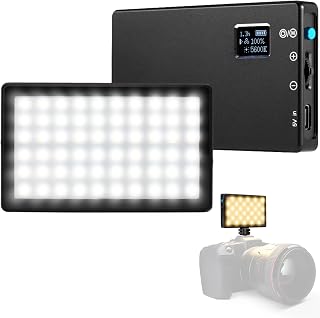 Creator GearLume Cube Panel Mini 2See the Specs →
As an Amazon Associate, VeloxTrend earns from qualifying purchases.

