
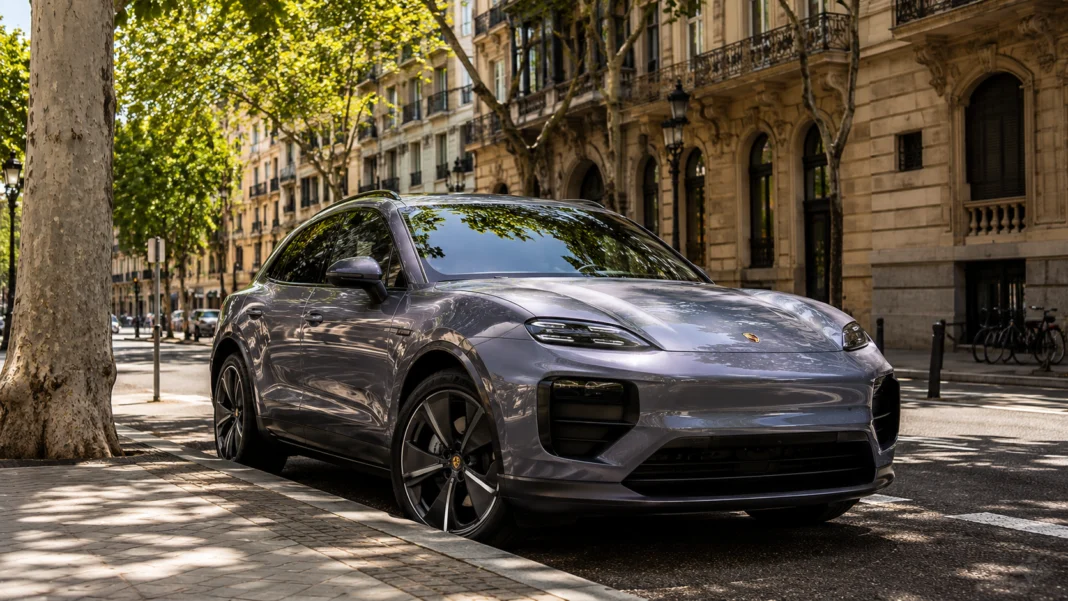
Picture the sun setting over the Mediterranean as a low, wide silhouette carves through the curves of the coastal road south of Barcelona. The sound is not a V8 rumble, but a purposeful electric whir that builds to a crescendo as the car accelerates out of a corner. This is the Porsche Cayenne Turbo Electric, the most powerful production car Porsche has ever built, and it is an SUV.
The Cayenne Electric is a significant moment for Porsche. It is the brand’s first all-electric SUV, and it arrives with performance figures that would have been unthinkable in a family hauler just a few years ago. The Turbo Electric produces over 1,100 horsepower in overboost mode, accelerates from 0 to 60 mph in 2.1 seconds, and can charge from 10 to 80 percent in 16 minutes. It is the fastest-accelerating SUV Car and Driver has ever tested, beating the Lamborghini Revuelto and the Corvette ZR1 by a tenth of a second. And it weighs nearly 6,000 pounds.
The Powertrain: An SUV That Humiliates Supercars
The Cayenne Turbo Electric’s powertrain is a masterpiece of engineering. The dual electric motors produce over 800 horsepower in normal operation and over 1,100 horsepower with overboost engaged. The torque peaks at over 1,100 lb-ft. The performance figures are extraordinary: 0 to 60 mph in 2.1 seconds, the quarter mile in 9.5 seconds at 146 mph, and 0 to 150 mph in just 10.1 seconds.
The base Cayenne Electric produces over 400 horsepower and can reach 60 mph in 4.5 seconds. The Cayenne S Electric sits between them with up to 650 horsepower, accelerating from 0 to 60 mph in 3.6 seconds. The Cayenne Coupé Electric variants offer slightly better aerodynamics with a drag coefficient of 0.23, improving range.
The battery operates on an 800-volt architecture, enabling charging at up to 400 kW. A 10 to 80 percent charge takes less than 16 minutes, and the car can add significant range in just 10 minutes. The range is estimated at over 350 miles, with the Coupé variant achieving slightly more. The battery uses double-sided cooling and direct oil cooling for the rear motor, drawing on technology from Porsche’s motorsport programs.

The Chassis: 2.6 Tonnes That Handle Like a Sports Car
The Cayenne Electric weighs approximately 2,600 kilograms, but it handles with an agility that defies its mass. The adaptive air suspension is standard, and the optional Porsche Active Ride system provides exceptional body control, keeping the car flat through corners and even allowing it to lean into bends like a motorcycle. The rear-axle steering, available as an option, improves maneuverability and stability. On the skidpad, the Cayenne Electric achieved over 1.0 g of lateral grip, dethroning the Lamborghini Urus Performante as the SUV roadholding record holder. The braking performance is equally impressive, with the Turbo Electric stopping from 70 mph in 140 feet, matching the Corvette ZR1 and beating the Cayenne Turbo GT and Lamborghini Urus Performante. The regenerative braking system, with substantial recuperation power, recovers energy during deceleration.
The Interior: Tech-Focused and Spacious
The Cayenne Electric’s cabin is a high-tech space dominated by the new curved “Flow Display” infotainment screen, which integrates with the center console. An optional passenger display adds a third screen. Despite the digital focus, the system is quick and intuitive, and physical controls remain for essential functions. Rear seat space is generous, with the longer wheelbase providing excellent legroom. Cargo space is generous, and there is a front trunk for the charging cables.
The Barcelona Night
The Cayenne Electric has completed its drive along the coast. Its over 1,100 horsepower has delivered the performance that makes it the most powerful Porsche ever built. The Active Ride suspension and rear-axle steering have kept it planted through the curves. The driver, cocooned in the tech-filled cabin, has experienced a level of performance that is as exclusive as it is unexpected.
The Cayenne Electric is not a car for everyone. It is expensive, with the Turbo starting at over $160,000 and easily exceeding $200,000 with options. It is heavy, weighing nearly 6,000 pounds. But it represents a significant moment in Porsche’s history. It is the car that proves an SUV can be the fastest production car the brand has ever built. And that is an awkward reality that Porsche has embraced with characteristic engineering brilliance.
Gear Picks for This Story
 EV LifeTesla Wall Connector Gen 3Check Compatibility →
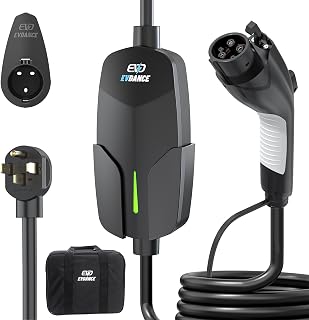 EV LifeEVDANCE Portable EV Charger 32ACheck Compatibility →
 Essential ToolAutel MaxiSYS MS906 Pro ScannerExplore the Specs →
 Garage EssentialNOCO Boost Plus GB40 Jump StarterExplore the Specs →
As an Amazon Associate, VeloxTrend earns from qualifying purchases.

