
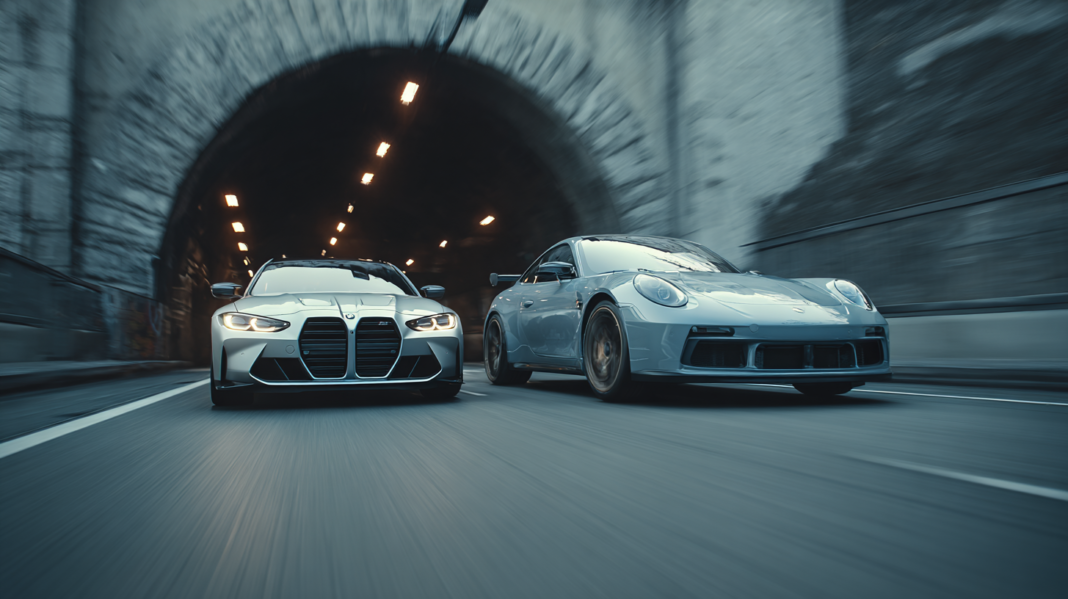
The morning fog is still lifting off the Monongahela River as a dark blue Porsche 911 GT3 winds its way up through the Mount Washington tunnel. The driver downshifts to third gear, and the 4.0 liter flat six behind the seats responds with a sharp, metallic wail that echoes off the concrete walls. The sound does not just travel; it fills the space, demanding attention.
A few miles away, a silver BMW M3 Competition with its twin turbocharged inline six idles at a red light on Liberty Avenue. It is quiet, subdued, almost polite. The driver taps the accelerator, and the engine responds with a muted burble. It is fast. It is efficient. It is missing something.
The debate between naturally aspirated and turbocharged engines is not about which is faster. On a racetrack, the turbocharged cars generally win. The debate is about something harder to measure. It is about feel, about response, about the connection between the driver and the machine.
This article takes an honest look at what the car world has gained and what it has lost in the shift from naturally aspirated engines to turbocharged ones. The setting is Pittsburgh, Pennsylvania: a city of hills, bridges, and tunnels that reward an engine with character.
The Naturally Aspirated Engine: A Brief History
For most of automotive history, naturally aspirated engines were the standard. Air and fuel were drawn into the cylinders by atmospheric pressure. There were no turbochargers to force extra air in, no superchargers to add complexity. The engine’s power output was a function of displacement, compression, and rpm.
The naturally aspirated engine has a directness that forced induction cannot replicate. When the driver presses the accelerator, the engine responds immediately. There is no lag, no delay, no waiting for the turbo to spool. The power builds linearly, predictably, and rewardingly. The sound is pure, unadulterated by the whistle of a turbo or the muffling effect of forced induction.
The naturally aspirated engine is also simpler. There are fewer parts, fewer complex systems, and fewer things to break. But it is less efficient, less powerful per liter of displacement, and increasingly difficult to justify in an era of emissions regulations.
The Turbocharged Engine: The Modern Standard
Turbochargers use exhaust gases to spin a turbine that forces extra air into the engine. This allows a smaller engine to produce the power of a larger one. A 3.0 liter turbocharged engine can produce as much power as a 5.0 liter naturally aspirated engine. This downsizing improves fuel economy and reduces emissions.
Turbocharged engines also produce more torque at lower rpm. This makes them feel faster in everyday driving, even if the peak power numbers are similar. The power comes on earlier and stays strong across a wider rev range.
But turbocharged engines have a different character. There is lag, however small, between the driver’s foot and the engine’s response. The sound is muted, muffled by the turbocharger. The power delivery is not linear. It builds, then surges, then holds. It is effective, but it is not as involving.
Pittsburgh: A City That Demands Character
Pittsburgh is not a flat city. It is a city of hills, bridges, and tunnels. The roads are narrow, the corners are blind, and the elevation changes are constant. A car with good acceleration is useful. A car with good handling is essential. But a car with an engine that talks to the driver is priceless.
The climb up Canton Avenue in the Beechview neighborhood is one of the steepest public streets in the country. A turbocharged engine with its broad torque curve would climb it easily, chugging along at low rpm without complaint. A naturally aspirated engine would require higher revs and more driver engagement.
This is not a disadvantage. It is a difference.
The Fort Pitt Tunnel is a half mile tube that connects the west end of the city to downtown. The sound of a naturally aspirated engine bouncing off the tunnel walls is unforgettable. The driver and passenger are engulfed in sound, a mechanical symphony that cannot be replicated by a turbocharged engine.
The Imprecise Numbers: Which Is Faster?
On paper, turbocharged engines win. They produce more power per liter, more torque at lower rpm, and better fuel economy. They are the rational choice.
In the real world, the gap is smaller. A turbocharged engine may have a 0 to 60 time that is half a second quicker. But half a second is irrelevant on public roads. What matters is the feeling.
The naturally aspirated engine feels faster because it builds power progressively. The driver feels the acceleration building, the revs climbing, the engine working. The turbocharged engine feels fast, but it is less communicative.
The Sound: The Soul of the Engine
The naturally aspirated engine has a sound that turbocharging cannot replicate. The high revving wail of a flat six, the guttural roar of a V8, the metallic scream of a V12 these sounds are part of the experience.
Turbochargers muffle the sound. They act as silencers, smoothing out the exhaust pulses and reducing the volume. Some manufacturers pump artificial engine noise through the speakers to compensate. This is not a solution. It is a confession.
The naturally aspirated engine does not need artificial noise. It sings on its own.
The Losses and Gains
The car world has gained many things from turbocharging. Smaller engines, better fuel economy, lower emissions, and more low end torque. These are real benefits.
But something has been lost. The immediacy of response, the purity of sound, the linear power delivery, the mechanical connection. These are not things that matter on a spec sheet. They matter to the driver.
Pittsburgh: A City for Enthusiasts
The drive continues through Schenley Park, past the golf course and the ice rink. The roads are smooth, the corners are flowing, and the trees are turning orange and red. It is October, and Pittsburgh is beautiful.
The naturally aspirated Porsche 911 GT3 is in its element. The driver works the engine, keeping the revs high, feeling the power build. The transmission is manual, the steering is hydraulic, and the connection is direct.
The turbocharged BMW M3 would be faster on this road. It would be more efficient. It would be more sensible. But it would not be more fun.
The Final Verdict: Which Soul Wins?
There is no winner. There is only preference.
The turbocharged engine is the future. It is more efficient, more powerful, and more sensible. It is the engine of progress.
The naturally aspirated engine is the past. It is less efficient, less powerful, and less sensible. But it has a soul that no turbo can fake.
The driver must choose. Not between fast and faster. Between involved and efficient.
The Pittsburgh Sunset
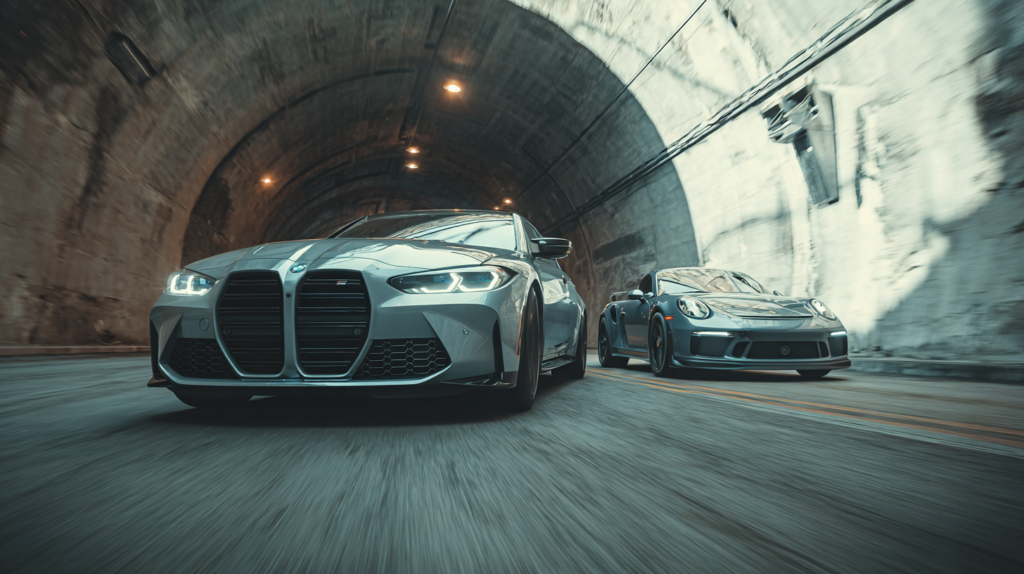
The Porsche 911 GT3 crests the hill on Grandview Avenue, overlooking the city. The sun is setting behind the stadiums, casting a golden glow over the rivers. The driver stops the car, gets out, and looks at the skyline.
The engine ticks as it cools. The exhaust crackles. The driver smiles.
This is why the naturally aspirated engine will always have a place. Not because it is better. Because it is beautiful.
Specifications Summary
| Engine Type | Examples | Power | Torque | Character |
|---|---|---|---|---|
| Naturally Aspirated | Porsche 911 GT3, Lamborghini Huracán | 500 to 600 hp | Lower at low rpm | Linear, responsive, loud |
| Turbocharged | BMW M3, Ferrari 296 GTB | 500 to 700 hp | Higher at low rpm | Surgey, muted, efficient |
Conclusion
The naturally aspirated engine is not dead. It is dying, but it is not dead. Enthusiasts still demand it. Manufacturers still build it. The Porsche 911 GT3 still revs to 9,000 rpm. The Lamborghini Huracán still wails. The Chevrolet Corvette Z06 still screams.
But the days are numbered. Emissions regulations will eventually force even the holdouts to downsize and turbocharge. The naturally aspirated engine will become a rarity, a niche product for the few who remember what was lost.
The turbocharged engine is the future. It is efficient, powerful, and sensible. But it is not the same.
The driver in the Porsche 911 GT3 heads back down the hill, toward the city. The engine sings. The driver smiles. For now, that is enough.

