
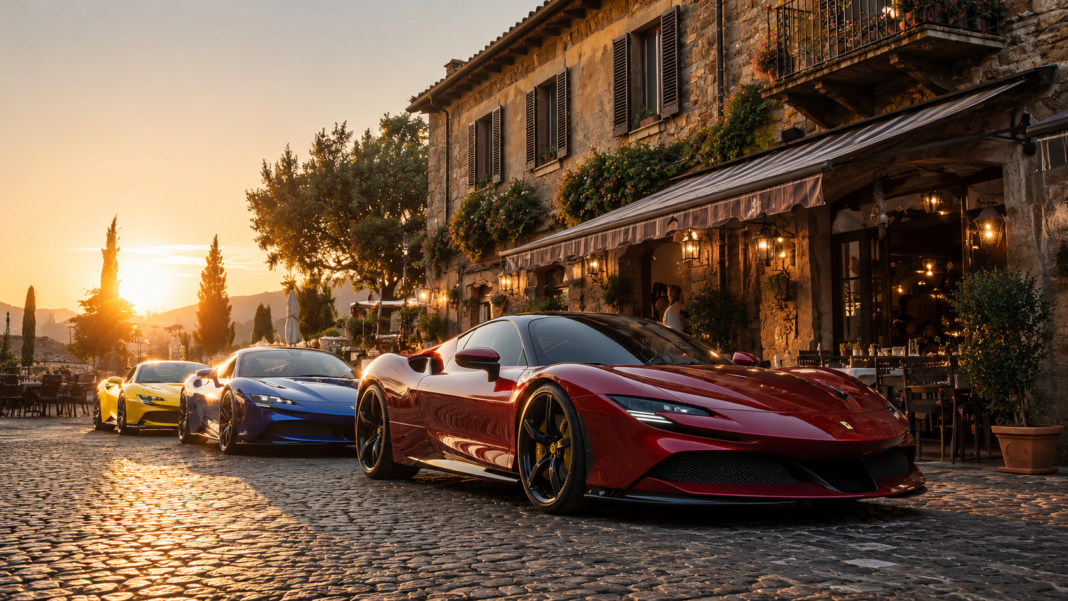
The town of Maranello in northern Italy is unremarkable. It is a small industrial town, home to a few thousand people, with narrow streets and modest buildings. But on the outskirts of town, behind a red gate, sits the factory of dreams. The Ferrari headquarters is a pilgrimage site for enthusiasts from around the world. They come to see the cars, to visit the museum, and to take photos of the famous test track.
Across the street from the factory, a row of Ferraris is parked outside the Cavallino restaurant. A red SF90 Stradale, a yellow 296 GTB, a blue Roma. They are beautiful, expensive, and exclusive.
The Ferrari brand carries a weight that few others can match. A Ferrari costs significantly more than a comparable supercar from Porsche, McLaren, or Lamborghini. This premium is often called the Ferrari Tax. It can be 40 percent, 50 percent, or even 60 percent higher than a competitor with similar performance.
This article asks a simple question: Is owning a Prancing Horse worth the premium? Or are you just paying for a logo?
The Ferrari Tax: By the Numbers
Let us look at the numbers. Compare the Ferrari 296 GTB to its closest competitor, the McLaren Artura. Both are mid-engine V6 hybrids. Both produce around 800 horsepower. Both are rear wheel drive.
- Ferrari 296 GTB: $350,000
- McLaren Artura: $240,000
The Ferrari costs $110,000 more. That is a 46 percent premium.
Compare the Ferrari SF90 Stradale to the Lamborghini Revuelto. Both are V8 hybrids. Both produce around 1,000 horsepower. Both are all wheel drive.
- Ferrari SF90 Stradale: $550,000
- Lamborghini Revuelto: $600,000
The Ferrari is actually less expensive. But the Revuelto is a V12, which commands its own premium.
Compare the Ferrari Roma to the Porsche 911 Turbo S. Both are grand tourers. Both produce around 600 horsepower.
- Ferrari Roma: $250,000
- Porsche 911 Turbo S: $200,000
The Ferrari costs $50,000 more. That is a 25 percent premium.
The Ferrari Tax is real. It is not imaginary. It is not a myth. It is a significant premium that buyers pay for the privilege of owning a Prancing Horse.
The Case For the Ferrari Tax: What You Get for the Money
The Heritage
Ferrari has a racing heritage that few manufacturers can match. The company has won more Formula 1 championships than any other. The brand is associated with Enzo Ferrari, with the 250 GTO, with the F40, with Michael Schumacher. This heritage is not a marketing gimmick. It is a genuine asset that adds value to every car Ferrari builds.
The Experience
Owning a Ferrari is different from owning any other car. The delivery experience is personal. The factory tours are exclusive. The owner events are attended by fellow enthusiasts who share the passion. The Ferrari community is tight knit and welcoming.
The Sound
Ferrari engines sound different. They are tuned for emotion, not just for power. A Ferrari V8 wails. A Ferrari V12 screams. A Ferrari V6 (in the 296 GTB) sings. The sound is part of the experience.
The Resale Value
Ferraris hold their value better than most competitors. A well maintained Ferrari will depreciate slowly. Limited edition models often appreciate. The Ferrari Tax is partially offset by superior resale value.
The Exclusivity
Ferrari controls its production numbers carefully. The company builds fewer cars than there are buyers. This scarcity drives up prices and ensures that Ferraris remain exclusive. You cannot simply walk into a dealer and buy a new Ferrari. You must be invited.
The Case Against the Ferrari Tax: What You Are Overpaying For
The Performance Gap
Modern supercars are so capable that the differences in performance are negligible. A McLaren Artura is not 46 percent slower than a Ferrari 296 GTB. It is a few tenths slower to 60 miles per hour. The performance gap does not justify the price gap.
The Reliability
Ferraris are more reliable than they once were, but they are still not as reliable as Porsches. The Ferrari Tax does not buy you superior reliability. It buys you a brand that is more finicky.
The Service Costs
Ferrari service costs are higher than the competition. A standard annual service for a Ferrari can cost thousands of dollars. A major service, including the timing belt change on older models, can cost tens of thousands.
The Wait
Ferrari controls its production numbers carefully. You cannot simply order a Ferrari. You must build a relationship with a dealer, purchase less desirable models, and wait for an allocation. The Ferrari Tax includes this hassle.
The Logo
At some point, you are paying for the logo. The Prancing Horse is a powerful symbol, but it is still a symbol. The question is whether the symbol is worth $50,000, $100,000, or more.
A Weekend in Maranello: The Emotional Argument
The Ferrari Museum in Maranello is filled with the cars that made the brand famous. The 250 GTO, the F40, the Enzo. They are parked under soft lights, roped off from the crowd. Schoolchildren press their faces against the glass. Older men stare in silence.
Outside the museum, a line of tourists waits to take photos. They are from all over the world. Japan, Brazil, Germany, the United States. They are united by a single obsession.
This is the power of the Ferrari brand. It transcends logic. It transcends numbers. It is an emotional connection that cannot be quantified.
A Ferrari owner is not paying for a car. They are paying for a membership in a club. They are paying for access to a community. They are paying for a feeling.
The Resale Value Argument: The Ferrari Tax as an Investment
Ferraris hold their value better than most cars. A limited edition Ferrari, such as the 458 Speciale or the 488 Pista, may even appreciate. The Ferrari Tax is partially an investment.
Consider the McLaren Artura. It will depreciate. The Ferrari 296 GTB will also depreciate, but likely less. After five years, the Ferrari may be worth 60 percent of its original price. The McLaren may be worth 40 percent. The difference in depreciation could be $50,000 or more.
The Ferrari Tax is not a sunk cost. It is a cost that may be recovered at resale.
The Alternatives: What Else You Can Buy
For the price of a Ferrari Roma ($250,000), you could buy a Porsche 911 Turbo S ($200,000) and have $50,000 left over. The Porsche is faster, more reliable, and more practical. It is the smart choice.
For the price of a Ferrari 296 GTB ($350,000), you could buy a McLaren Artura ($240,000) and a used Porsche 718 Cayman GTS ($110,000). You would have two cars instead of one. Both are excellent.
For the price of a Ferrari SF90 Stradale ($550,000), you could buy a Lamborghini Revuelto ($600,000) which is more exclusive, or a Porsche 911 Turbo S ($200,000) and a used Ferrari 488 GTB ($250,000). You would have a modern daily driver and a classic Ferrari.
The alternatives are compelling. The Ferrari Tax is not the only option.
The Verdict: Is It Worth It?
The Ferrari Tax is real. It is significant. It is not going away. But whether it is worth it depends on what you value.
If you value emotion, heritage, and exclusivity: The Ferrari Tax is worth it. You are not paying for a car. You are paying for an experience.
If you value performance, reliability, and value: The Ferrari Tax is not worth it. There are better cars for less money.
If you are an investor: The Ferrari Tax is worth it. Ferraris hold their value and sometimes appreciate.
If you are a driver: The Ferrari Tax is questionable. A Porsche 911 Turbo S is 90 percent of the car for 50 percent of the price.
The Final Drive
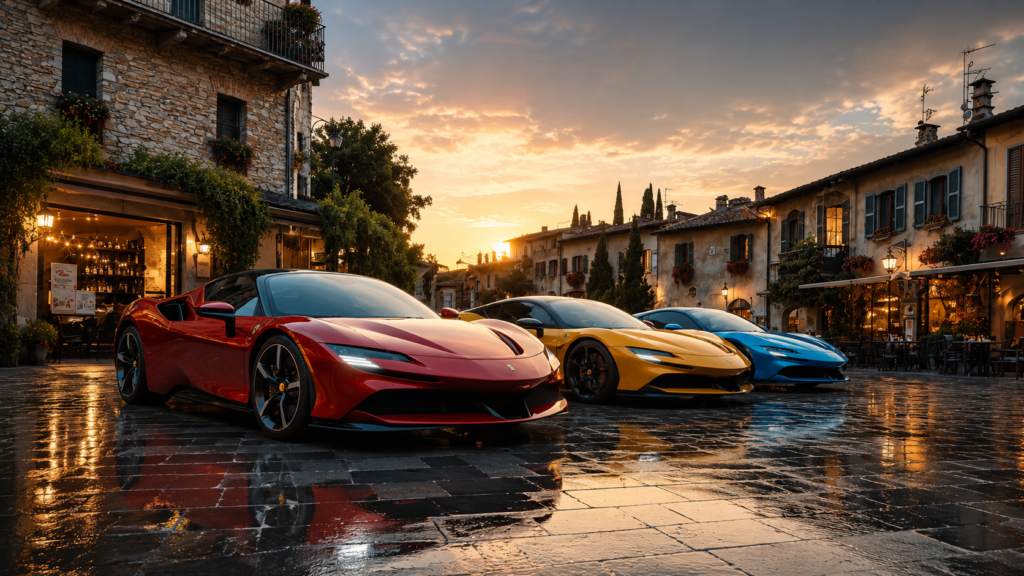
The sun sets over Maranello. The Ferrari 296 GTB pulls out of the Cavallino parking lot. The driver heads toward the Autostrada, leaving the factory behind. The car accelerates, the engine wails, and the driver smiles.
Is the smile worth $350,000? That is the only question that matters.
Specifications Comparison
| Model | Price | Competitor | Price Difference | Premium |
|---|---|---|---|---|
| Ferrari 296 GTB | $350,000 | McLaren Artura ($240,000) | $110,000 | 46% |
| Ferrari Roma | $250,000 | Porsche 911 Turbo S ($200,000) | $50,000 | 25% |
| Ferrari SF90 Stradale | $550,000 | Lamborghini Revuelto ($600,000) | $50,000 | -8% |
Conclusion
The Ferrari Tax is a real and significant premium. It is not based on performance alone. It is based on heritage, emotion, exclusivity, and resale value.
For some buyers, the premium is worth it. For others, it is not. There is no right answer. There is only the question: what do you value?
As the Ferrari disappears into the Italian evening, the debate continues. Is the Prancing Horse worth the premium? The answer depends on who is asking.

