
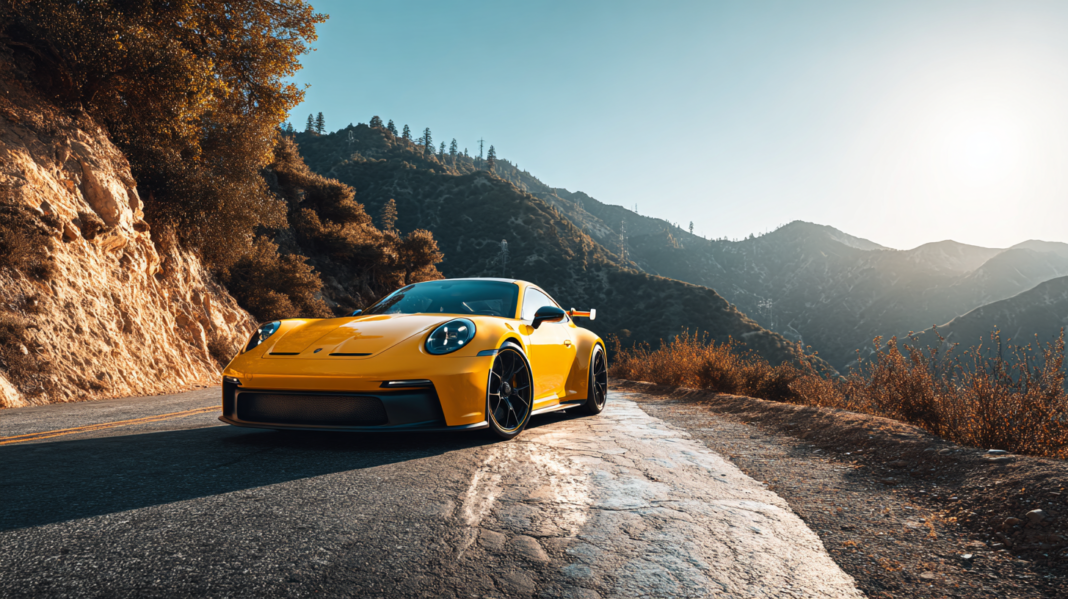
The Angeles Crest Highway, known to locals as the 2, cuts through the San Gabriel Mountains north of Los Angeles. It is a road of constant radius sweepers, tightening turns, and dramatic elevation changes. On a weekday morning, the traffic is light. The pavement is smooth. The views are spectacular.
A bright yellow Porsche 911 GT3 with a six speed manual transmission crests the ridge at 5,000 feet. The driver downshifts from fourth to third, blipping the throttle with their right foot. The engine revs climb, the exhaust crackles, and the car settles into the corner. The driver’s right hand moves to the shifter, pulling it back into fourth as the road straightens. The dance is fluid, instinctive, and satisfying.
This is the experience that paddle shifters cannot replicate. Dual-clutch transmissions shift faster. They deliver better lap times. They are more efficient. But they do not involve the driver in the same way. The manual transmission is slower, but it is more engaging. And for a growing number of enthusiasts, that matters more.
Despite predictions that the manual would die out with the rise of electric cars and automated gearboxes, the third pedal is making a comeback. Manual take rates in sports cars like the Porsche 911, BMW M2, and Toyota GR86 are higher than they have been in years. This article explores why the manual transmission refuses to go quietly.
The Numbers: Manual Sales Are Holding Steady
The data is clear. Enthusiasts are still buying manuals. Take rates for the Porsche 911 GT3 are consistently above 50 percent when a manual is offered. The BMW M2 sees a 20 to 30 percent manual take rate. The Toyota GR86 and Subaru BRZ are manual first cars, with a majority of buyers choosing the third pedal.
The manual is no longer the default. It is now a premium option, an enthusiast choice that costs extra. And buyers are willing to pay.
The Counterargument: Paddle Shifters Are Faster
No one disputes that paddle shifters are faster. A dual-clutch transmission can shift in milliseconds. The driver does not need to lift off the throttle or press a clutch pedal. The car simply bangs through the gears. On a racetrack, this is an advantage. In a drag race, it is decisive.
But most driving is not done on a racetrack. Most driving is done on public roads, where the difference of a few tenths of a second is irrelevant. What matters is the experience. And the experience of a manual transmission is unique.
The Angeles Crest Highway: A Manual’s Natural Habitat
The Angeles Crest Highway is not a racetrack. It is a public road. The speed limit is 55 miles per hour, and speeding is dangerous and illegal. But the road still rewards a driver who is engaged.
In an automatic car, the Angeles Crest can be relaxing. The car does the work. The driver steers and brakes, but the transmission chooses the gears. In a manual car, the driver is part of the machine. The left foot presses the clutch. The right hand moves the shifter. The right foot matches the revs. There is no pause, no delay. The car and driver are connected.
This connection is why manuals are surviving. It is not about lap times. It is about involvement.
The Emotional Argument: You Are Part of the Car
Modern cars are capable but isolating. Electric power steering filters out road feel. Sound deadening quiets the cabin. Automatic transmissions remove the driver from the process of choosing gears. The manual transmission is a counterbalance to this trend.
When you drive a manual, you are not a passenger. You are a participant. You decide when to shift. You decide how aggressively to engage the clutch. You decide whether to rev match on a downshift or simply let the engine slow the car. The car does not make decisions for you. You make them.
This is not nostalgia. It is a preference for engagement over convenience.
The Practical Argument: Manuals Are Cheaper to Maintain
Manual transmissions are simpler than dual-clutch automatics. They have fewer parts, fewer electronic sensors, and no complex hydraulic systems. They are easier to service and cheaper to repair. A clutch replacement is expensive, but it is routine. A dual-clutch transmission failure can cost more than the car is worth.
For owners who keep their cars for the long term, this matters. The manual is the more durable choice.
The Theft Deterrent
In an era where car thieves can clone key fobs and hack electronic systems, the manual transmission is an effective theft deterrent. A significant percentage of car thieves cannot drive a manual. It is not a security system, but it is a barrier.
The Future: Will Manuals Survive Electrification?
The rise of electric vehicles is a threat to the manual transmission. Electric motors do not need multiple gears. A single speed reduction gear is sufficient. There is no clutch, no shifter, and no third pedal to press.
But some manufacturers are exploring simulated manuals. Toyota has filed patents for a simulated manual transmission in an electric vehicle. The system would use software to replicate the feel of shifting gears, including a clutch pedal and a shifter. It would be artificial, but it might satisfy the desire for engagement.
The manual transmission as we know it will eventually disappear from most new cars. But the demand for engagement will not. Something will replace it.
The Angeles Crest Highway: A Perfect Moment
The yellow Porsche 911 GT3 reaches the turnout at Mount Wilson. The driver stops the car and looks out over the Los Angeles basin. The city sprawls to the horizon, a sea of buildings and freeways.
Inside the car, the shifter is in neutral. The clutch pedal is at rest. The engine ticks as it cools. The driver sits for a moment, not wanting the drive to end.
This is why the manual transmission will never die. It is not about speed. It is not about efficiency. It is about the feeling of being connected to the machine, the road, and the moment.
The Case for the Manual: A Summary
- Engagement: The manual involves the driver in the act of driving.
- Simplicity: Manuals are simpler and cheaper to maintain.
- Durability: Manuals are more durable than complex dual-clutch units.
- Theft deterrent: A surprising number of thieves cannot drive a manual.
- Emotion: The manual makes driving a skill to be practiced and enjoyed.
The Case Against the Manual: A Fair Hearing
- Speed: Paddle shifters are faster on track.
- Convenience: Automatics are easier in traffic.
- Fuel economy: Modern automatics are more efficient.
- Availability: Fewer cars are offered with manuals.
The Verdict: The Third Pedal Endures
The manual transmission will never be the mainstream choice again. Automatics are too convenient, too efficient, and too fast. But the manual will survive as an enthusiast option, a third pedal for those who value engagement over lap times.
The Angeles Crest Highway will always have drivers who want to shift their own gears. The Porsche 911 GT3 will always offer a manual. The Toyota GR86 will always be manual first.
The manual transmission is not dying. It is finding its place as a premium, enthusiast focused option. It is slower, but it is more satisfying. And for a growing number of drivers, that is enough.
A Final Thought
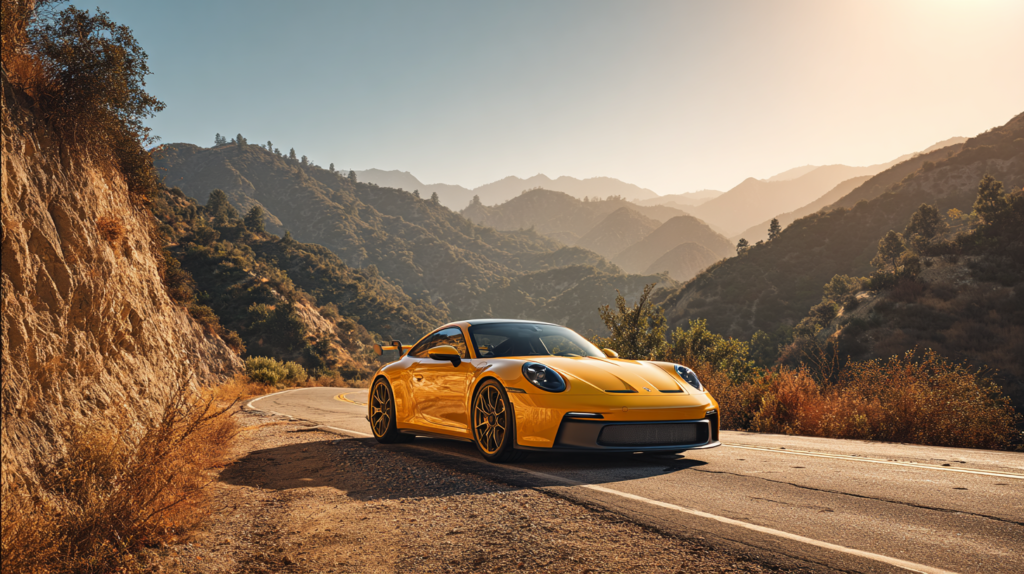
As the sun sets over the San Gabriel Mountains, the Porsche 911 GT3 heads back down the mountain. The driver shifts from third to fourth, then fourth to fifth, then fifth to sixth. The engine settles into a cruise, and the car disappears into the evening light.
The manual transmission is not the future. But it is not the past either. It is a choice. And for as long as there are drivers who want to make that choice, the third pedal will endure.

