
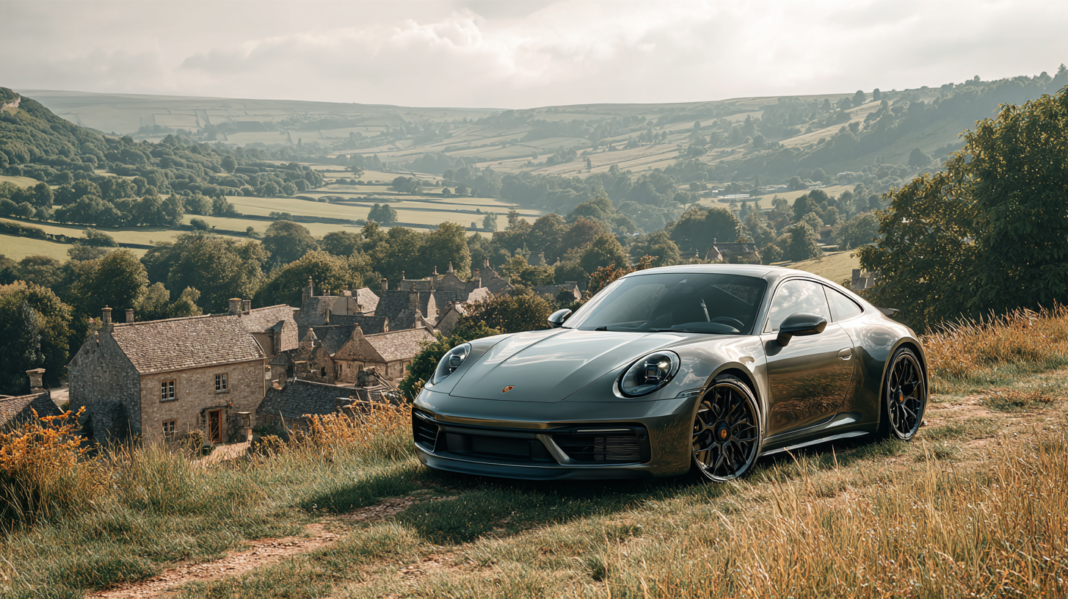
The Cotswolds region of England is a landscape of rolling hills, stone villages, and narrow B roads that thread through the countryside like old veins. This is not racetrack. It is not a drag strip. It is a place where cars are measured by how they feel on a damp morning, how they handle a blind crest, how they fit into a village high street. It is the perfect place to ask a controversial question.
The Porsche 911 has been in continuous production for more than 60 years. It has won countless comparison tests, topped innumerable lists, and earned the devotion of millions of enthusiasts. But is it the greatest sports car ever made? Or is it simply the most successfully marketed?
A 911 Carrera S is parked outside the village pub in Bourton on the Water. It is a beautiful car, there is no denying that. But beauty is not the same as truth. This article makes the case for and against the Porsche 911, and lets you decide.
The Case For: Why the 911 Might Actually Be the Greatest
Continuity and Evolution
The 911 has been in production since 1963. No other sports car can claim such longevity. The 911 has evolved through eight generations, each one building on the last. The rear engine layout, the flat six sound, the distinctive silhouette these are constants. But underneath, the car has been transformed. Air cooling gave way to water cooling. Naturally aspirated engines gave way to turbocharging. Manual transmissions gave way to dual-clutch automatics. The 911 has survived and thrived.
The Rear Engine Magic
The 911’s rear engine layout is a liability in theory, but an asset in practice. The weight over the rear axle provides exceptional traction. On a wet road, the 911 can put down power that a front engine car cannot. The rear engine also gives the 911 its distinctive handling character. The car rotates on corner entry, and the driver can adjust the cornering attitude with the throttle. It is a unique experience, and one that has won over generations of drivers.
The Everyday Usability
The 911 is not a supercar that requires a sacrifice. It has a usable trunk. The rear seats (however small) can accommodate children or luggage. The ride is firm but not punishing. The cabin is quiet at highway speeds. The 911 can be driven to work, to the grocery store, and to the track, all in the same week. This usability is a key part of the 911’s appeal.
The Engineering Excellence
The 911 is engineered to an extraordinarily high standard. The engines are robust, the transmissions are reliable, and the chassis are well sorted. Porsche’s quality control is among the best in the industry. The 911 is a car that can be driven hard and daily without falling apart.
The Resale Value
The 911 holds its value better than almost any other sports car. A well maintained 911 will depreciate slowly, and some models even appreciate. This is a testament to the car’s desirability and durability.
The Case Against: Why the 911 Might Be the Most Successfully Marketed
The Rear Engine Compromise
The 911’s rear engine layout is a solution to a problem that no longer exists. The engine was placed in the back of the original Beetle because it was cheap and simple. Porsche kept it because it became a trademark. But the rear engine layout has inherent disadvantages. It limits luggage space. It makes the car prone to oversteer in the hands of inexperienced drivers. It requires complex engineering to manage weight transfer. A front engine or mid engine layout would be simpler and more effective.
The Rising Price
The 911 was once an affordable sports car. The original 911 cost approximately $6,500. A base 911 Carrera today starts at approximately $120,000. A well equipped Turbo S can exceed $250,000. The 911 is no longer accessible to the average enthusiast. It has become a luxury good, a status symbol.
The Homogenization
The modern 911 is a technological marvel, but it has lost some of its character. The engines are turbocharged, which muffles the classic flat six sound. The steering is electric, which reduces feedback. The manual transmission is available only on certain models, and the dual-clutch is the default. The 911 is more capable than ever, but it is also more remote.
The Marketing Hype
Porsche has done an exceptional job marketing the 911. The brand has cultivated an image of precision, heritage, and exclusivity. The 911 is featured in films, video games, and advertisements. It is associated with success and taste. But marketing is not the same as truth. The 911 is a fine car, but it is not the only fine car.
The Competition
The 911 faces fierce competition. The Chevrolet Corvette offers mid engine performance for half the price. The Audi R8 offers a naturally aspirated V10 and all wheel drive. The Mercedes AMG GT offers a front engine V8 and a luxurious interior. The 911 is no longer the clear leader in its class.
The Cotswolds Drive: A Moment of Clarity
The B roads of the Cotswolds are not designed for speed. They are narrow, poorly surfaced, and often wet. A modern 911 Turbo S would be wasted here. But a base Carrera, with its rear engine traction and manageable power, is in its element.
The driver crests a hill and sees a slow moving tractor ahead. The 911’s brakes are strong and predictable. The car slows without drama. The driver downshifts, the flat six burbles, and the car waits for the opportunity to pass. When the straight comes, the 911 surges forward. It is not violent. It is just effective.
There is no theater here. There is no screaming V12 or wild oversteer. There is just competence. The 911 does everything well, and it does it without fuss. For some drivers, this is the definition of greatness. For others, it is the definition of overrated.
The Verdict: You Decide
The Porsche 911 is not the fastest sports car. It is not the most beautiful sports car. It is not the most affordable sports car. It is not the most exciting sports car. But it is one of the most complete.
The case for the 911 is that it does everything well. It is fast, reliable, usable, and desirable. It is a car that can be driven every day and enjoyed on weekends. It is a car that holds its value and rewards its owner.
The case against the 911 is that it is not special enough. It is too expensive, too homogenized, and too reliant on marketing. It is a car for people who want a sports car but are not willing to make sacrifices. It is a car for people who care more about resale value than driving pleasure.
Which side is right? There is no answer. The 911 is a tool. It is a tool for driving, for commuting, for touring, for tracking. For some people, that tool is perfect. For others, it is not.
The Cotswolds Evening
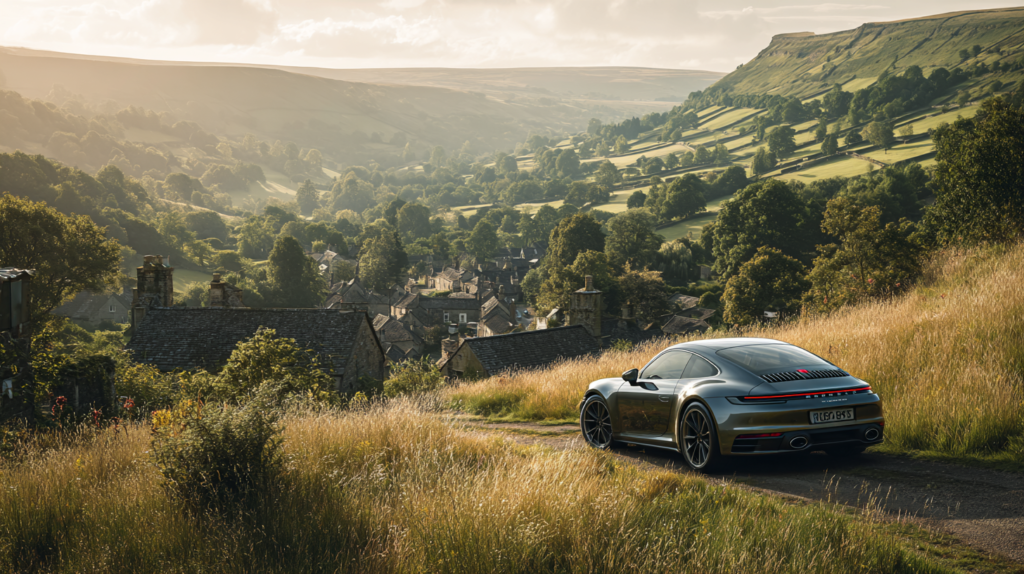
The sun sets over the Cotswolds, and the 911 heads back toward the village. The driver parks the car and walks into the pub. The debate continues inside, over pints of ale and plates of fish and chips.
“Is the Porsche 911 overrated?” one person asks.
“Depends on what you want,” another replies.
That is the only honest answer.
Specifications Summary (Current 992 Generation)
| Model | Horsepower | 0 to 60 mph | Base Price |
|---|---|---|---|
| Carrera | 379 hp | 4.0 seconds | $120,000 |
| Carrera S | 443 hp | 3.5 seconds | $140,000 |
| Turbo S | 640 hp | 2.6 seconds | $230,000 |
| GT3 | 502 hp | 3.2 seconds | $170,000 |
| GT3 RS | 518 hp | 3.0 seconds | $240,000 |
Conclusion
The Porsche 911 is one of the most significant cars in automotive history. It has survived for 60 years, evolved through eight generations, and earned the devotion of millions. But it is not perfect. It is expensive, homogenized, and perhaps overhyped.
Is it the greatest sports car ever made? That is a matter of opinion. Is it the most successfully marketed? That is a matter of fact.
The 911 is a car that inspires strong opinions. That alone is a testament to its importance. Indifference is the true enemy. The 911 has never been indifferent.
As the pub in Bourton on the Water empties and the last patrons head home, the 911 sits alone in the car park. It does not look overrated. It does not look underrated. It just looks like a 911.
And that, perhaps, is the point.

