
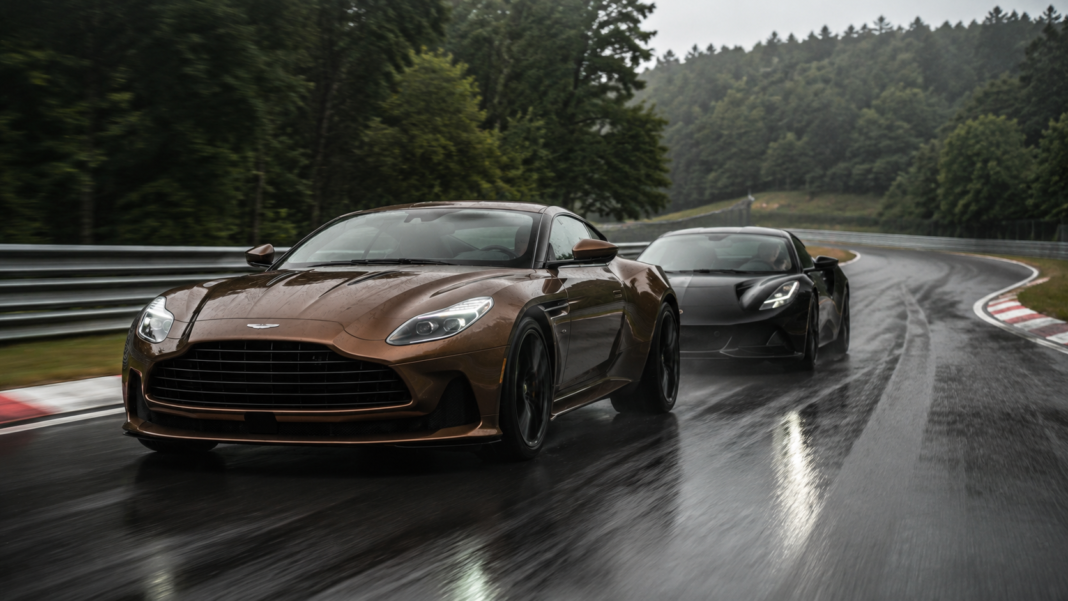
The air is cool and damp as the sun begins to rise over the Eifel mountains. The queue at the Nordschleife entrance is already forming. A line of cars stretches back past Devil’s Diner, a mix of German sedans, British sports cars, and a few exotics. The drivers are nervous. They have watched videos, read guides, and practiced on simulators. But nothing prepares you for the real thing.
The Nürburgring Nordschleife is open to the public during Touristenfahrten sessions. For a fee, you can drive your own car on the same circuit where manufacturers test their latest hypercars. It is a public toll road during these sessions, governed by German traffic laws. But it is also one of the most demanding roads in the world. This is a complete practical guide to driving the Green Hell.
Understanding Touristenfahrten
Touristenfahrten translates to “Tourist Drives.” These are public sessions where anyone with a road-legal vehicle and a valid license can drive the Nordschleife. The track is treated as a public toll road, meaning the German Road Traffic Ordinance applies. You must obey traffic rules, drive on the right, overtake only on the left, and follow speed limits where posted.
During these sessions, the circuit is a one-way toll road. You enter at the designated gate, complete your lap, and exit. There is no need to book in advance. You simply buy a ticket, queue, and drive.
When to Go
The Nordschleife is open for Touristenfahrten on specific days and times. The schedule changes weekly, so you must check the official calendar before planning your trip. Generally, sessions run from mid-March through mid-November, weather permitting. Weekday sessions are often shorter, starting in the late afternoon. Weekend sessions typically run from 8 a.m. to 7 p.m.
The track can close at any time due to accidents, oil spills, or debris. Check the track status before you set off to avoid disappointment.
Tickets and Pricing
You do not buy a ticket per se. You purchase credits and top up your card, scanning it at the entrance barrier.
Prices for 2026 are:
- Weekdays: €30 per lap
- Weekends and public holidays: €35 per lap
Season passes are also available for frequent visitors. During peak events like Carfriday or Green Hell Driving Days, traffic can be heavy, so planning ahead is recommended.
Insurance: The Critical Issue
This is the most important part of the guide. Most standard car insurance policies explicitly exclude the Nürburgring. Even though it is classed as a public road, many insurers consider it a circuit used for racing. If you crash, you will be personally liable for all costs.
The financial risk is substantial. An accident on the Nordschleife can cost tens of thousands of euros. You will be responsible for repairing your car, repairing track damage, barrier replacement, recovery, and emergency services. Even a minor incident often exceeds €3,000.
Specialist track insurance is available, but terms vary. Physical damage may be covered, but third-party protection is often excluded. Do not drive on the Nordschleife without understanding your insurance coverage.
If you are renting a car, rental companies typically have an excess (deductible) that you are liable for in the event of damage. This excess can range from €15,000 on lower-end cars to €200,000 on supercars. You can often purchase additional insurance to reduce this excess.
Vehicle Requirements and Rules
Your car must comply with the German Road Traffic Licensing Regulations. Key rules for your vehicle:
Minimum Speed: The vehicle must be capable of exceeding 60 km/h.
Weight Limit: Gross vehicle weight must be under 2.8 tonnes.
Noise Limit: You must not exceed a drive-by noise limit of 130 dB.
Tires: Road-legal tires are required. Slicks are prohibited. Semi-slicks are allowed if they have an E-mark and are road legal.
License Plate: A front license plate is required.
Seats: Bucket seats with side head restraints are not allowed as they obstruct vision. Bucket seats without the “ears” are permitted.
Roll Cages: Roll cages are permitted but must not block the door openings. Door bars are prohibited during public sessions.
HANS Devices: Head and Neck Support devices are prohibited for the driver as they restrict head movement.
Helmets: Helmets are not required for car drivers, but wearing one is recommended, especially if you have a roll cage.
What to Bring
- Valid driving license
- Vehicle registration documents
- Proof of insurance if your car is not registered in Germany
- Comfortable, loose-fitting clothes
- Sensible driving shoes with flat, narrow soles
- A helmet is recommended but not mandatory
The Driving Rules
The Nordschleife is a public road during Touristenfahrten. You must follow the rules of the road.
Overtaking: Overtaking is only permitted on the left. Cars being overtaken must stick to the right and hold their line.
Speed Limits: Most of the track has no speed limit. However, there are sections with mandatory speed restrictions. In yellow flag zones, construction zones, and incident areas, the limit is 50 km/h.
No Racing: No racing or top speed runs. Overtaking is permitted, but it must be done safely and without exceeding a safe speed for the conditions.
No Drifting: Drifting is prohibited.
No Stopping: No stopping on the tarmac, grass, or gravel. If you have a mechanical issue, pull off the track and stop immediately.
Camera and Lap Timing: Photographing, filming, and video recording are technically prohibited. Lap timing is also not allowed. This rule is not always enforced, but large timers or phone screens mounted on the dash may attract attention.
What to Do in an Accident
- Call the emergency number immediately: 0800 0302 112
- If your vehicle is leaking fluid, stop immediately and get behind the guardrail
- You are responsible for all costs of recovery and track repair
- Do not leave the scene without reporting the accident
The Queue and Entry
You enter the track at the Nordschleife entrance, driving past Devil’s Diner to the barriers. There, you scan your ticket and proceed onto the track. No reservation is needed.
The track has an exit at Döttinger Höhe that opens during peak periods, allowing drivers to leave the track directly onto the L93 road after completing a lap.
The Lap
The Nordschleife is 20.832 kilometers long, with more than 150 corners. It feels more like a tarmac rally stage than a racetrack. There is little runoff before barriers, and grass is often at the edge of the track.
For your first lap, do not try to set a fast time. Learn the circuit, learn the car, and learn the traffic. Drive at 70-80% of your ability. Build speed gradually over multiple sessions. Focus on smooth exits rather than aggressive entries.
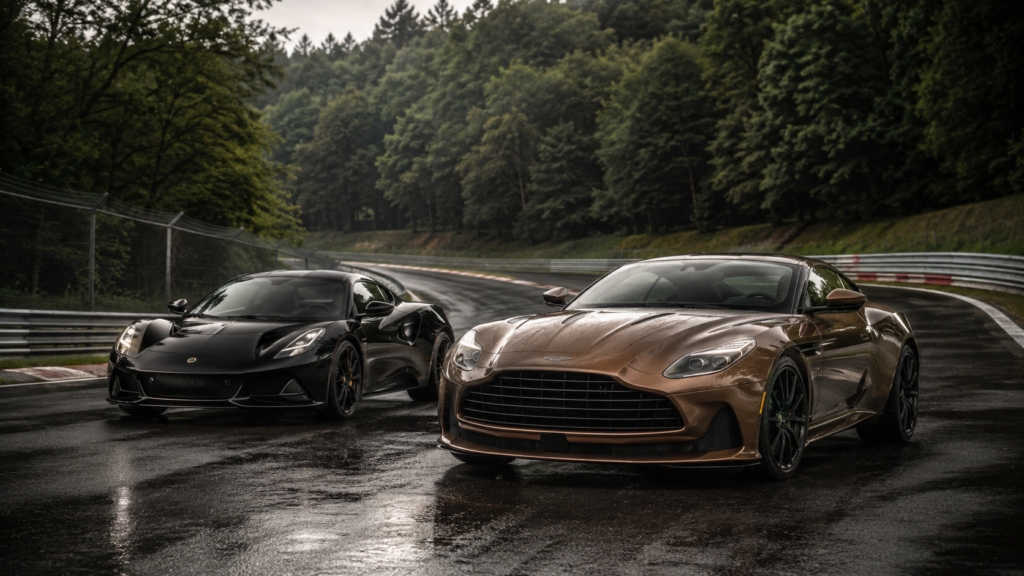
After the Lap
There are photographers stationed around the track during Touristenfahrten. You can purchase photos of your car online. Do not use the handbrake when you stop, as hot brakes can bind. Leave the car in gear instead.
The Nürburgring Morning
The queue has thinned. The first cars are returning. Some drivers are smiling. Others are shaking. The Nordschleife has a reputation for humbling even the most experienced drivers.
A group of first-timers is gathered near the ticket office. They are comparing notes. They are sharing stories. They are already planning their next lap.
The Nürburgring is not just a track. It is an experience. And it is one that every car enthusiast should have at least once.
Key Takeaways
- The Nordschleife is open for Touristenfahrten on specific days and times. Check the calendar before you go.
- Tickets cost €30 on weekdays and €35 on weekends.
- Your standard car insurance probably excludes the Nürburgring. Specialist track insurance is essential.
- Overtake only on the left. Stick to the right. Drive predictably.
- Helmets are not required, but they are recommended. Bucket seats with side head restraints are prohibited.
- Do not film, time laps, or race. The track is a public road during Touristenfahrten.
- In an accident, call the emergency number and stop immediately.
- The exit at Döttinger Höhe allows you to leave the track directly onto the L93 during peak periods.
- For your first lap, drive at 70-80% of your ability. Build speed gradually.
Conclusion
The Nordschleife is a public road for part of the week, and you can drive it in your own car. It is one of the most challenging and rewarding driving experiences in the world.
The morning at the Nürburgring is over. The queue is empty. The drivers are heading home. But they will be back. The Green Hell has a way of calling you back.
Whether you are driving a supercar or a rental hatchback, the Nordschleife is a test of skill, courage, and respect. Know the rules. Prepare your car. Buy the right insurance. Drive within your limits.
And enjoy every corner. There is nothing else like it.

