
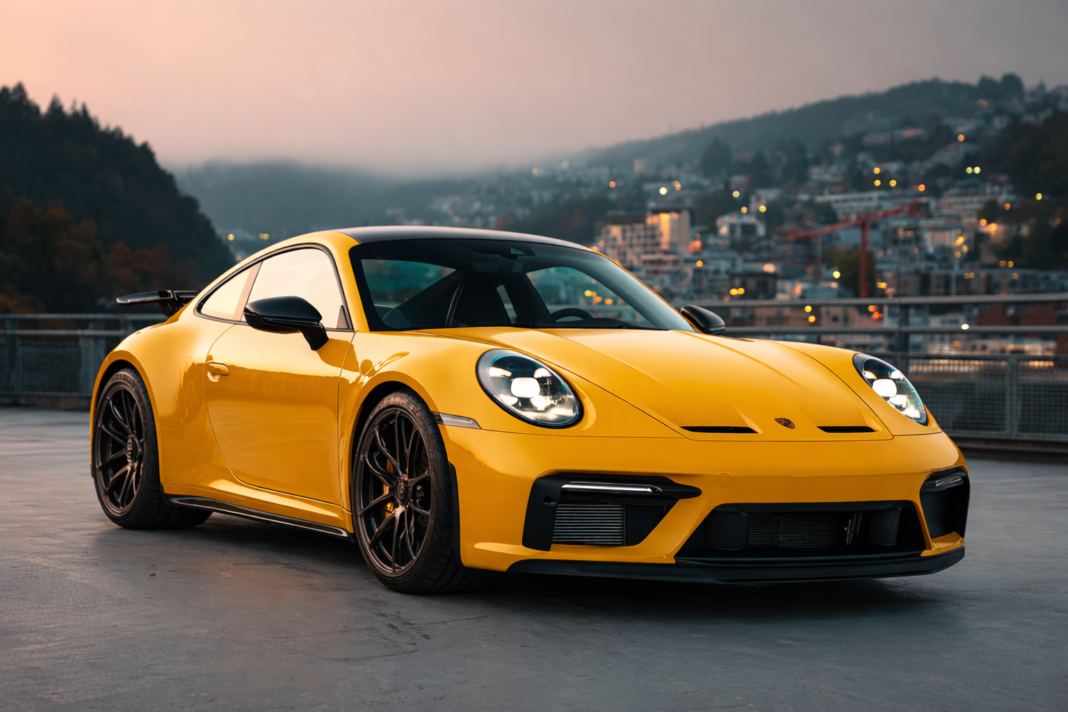
The Porsche 911 has spent six decades establishing itself as one of the most successful sports cars in history. It has won races, set records, and earned a reputation for precision and capability on paved roads. But the 911’s history extends beyond asphalt. The car has a genuine rally pedigree, one that includes overall victories at the Monte Carlo Rally and the East African Safari Rally. The Porsche 911 Dakar is a celebration of this heritage.
Introduced in 2022 as a limited edition model, the 911 Dakar was designed to honor Porsche’s victory in the 1984 Paris Dakar Rally, where a 911 driven by René Metge and Dominique Lemoyne took the overall win. The Dakar is not merely a cosmetic package; it is a comprehensively reengineered 911 with raised suspension, off road tires, and a driving mode that prioritizes loose surface performance. It is a car that can tackle gravel roads, desert tracks, and mountain passes with the same composure that a standard 911 brings to a racetrack.
This article provides a comprehensive review of the Porsche 911 Dakar, examining its rally heritage, performance specifications, design philosophy, and what makes this off road capable sports car stand out in 2026.
The Rally Heritage: Porsche’s Off Road History
The Porsche 911’s rally history stretches back to the 1960s. The 911 made its rally debut in 1965, and over the following decades, it competed in events around the world. The 911’s rear engine layout, with its weight over the driven wheels, provided exceptional traction on loose surfaces, and its robust mechanicals could withstand the punishing conditions of endurance rallying.
The most significant victory came in 1984, when a modified 911, designated the 953, won the Paris Dakar Rally. The car was based on the 911 Carrera 3.2, with all wheel drive, raised suspension, and specialized off road tires. It was driven by René Metge and Dominique Lemoyne, with a support vehicle driven by Jacky Ickx and Claude Brasseur. The victory was a landmark moment for Porsche, demonstrating that the 911 could conquer not only racetracks but also the world’s most demanding off road endurance event.
The 911 Dakar pays tribute to this victory. Its name, its design, and its engineering all reference the 1984 car. It is a modern interpretation of a rally legend, a car that brings the spirit of the Dakar to the road.
The 911 Dakar: Engineering for Off Road Performance
Chassis and Suspension
The 911 Dakar’s most significant modification is its suspension. The car rides approximately 50 millimeters higher than a standard 911 Carrera, with an additional 30 millimeters of lift available through the standard air suspension system. In the highest setting, the Dakar has approximately 190 millimeters of ground clearance, enough to navigate rough terrain without damaging the underbody.
The suspension geometry is revised to accommodate the increased ride height and the different forces generated during off road driving. The springs are stiffer, and the dampers are recalibrated to manage the car’s weight on uneven surfaces. The result is a car that can absorb impacts without transmitting excessive harshness to the cabin.
Tires and Wheels
The 911 Dakar rides on specialized off road tires, developed in partnership with Pirelli. The Scorpion All Terrain Plus tires, sized 245/45 ZR19 at the front and 295/40 ZR20 at the rear, feature a tread pattern designed for loose surfaces, with reinforced sidewalls to resist punctures. The tires are capable of handling gravel, sand, and mud, while still providing acceptable grip on paved roads.
For owners who prioritize road performance, Porsche offers an alternative tire set: summer performance tires mounted on the same wheels. The Dakar can be equipped with either set, allowing owners to tailor the car to their driving needs.
Powertrain
The 911 Dakar is powered by the same 3.0 liter twin turbocharged flat six engine that powers the 911 Carrera 4 GTS. The engine produces 473 horsepower at 6,500 rpm and 420 lb ft of torque from 2,300 to 5,000 rpm. This output is sufficient to propel the Dakar from 0 to 60 miles per hour in 3.2 seconds, with a top speed of 150 miles per hour.
The engine is paired with an eight speed dual clutch transmission and Porsche’s all wheel drive system. The transmission is calibrated for the Dakar’s off road mission, with revised shift points and a dedicated off road mode that alters the shift logic for loose surfaces.
Driving Modes
The 911 Dakar features two driving modes that are unique to the model: Rallye and Offroad. Rallye mode is designed for loose surfaces such as gravel and dirt, with a focus on rear wheel drive bias to allow controlled oversteer. Offroad mode is intended for more challenging terrain, with a focus on traction and stability.
Both modes adjust the settings of the powertrain, transmission, stability control, and suspension to suit the conditions. The car’s rear axle steering is also recalibrated in these modes, providing greater stability at higher speeds and improved maneuverability at low speeds.
Exterior Design: Rally Inspired Details
Visual Distinctions
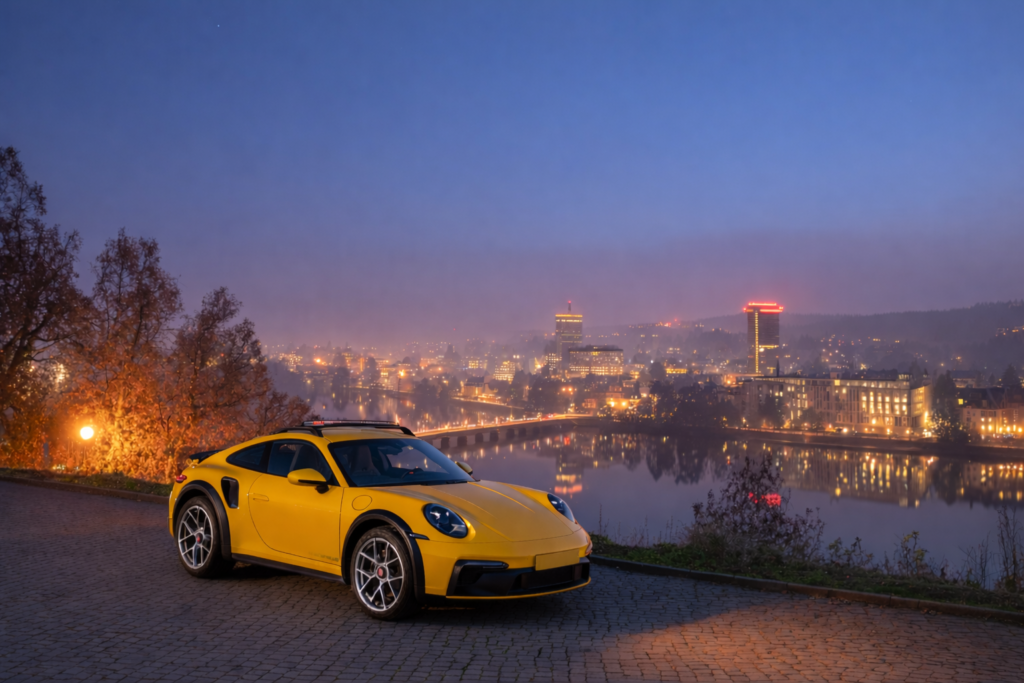
The 911 Dakar is visually distinct from other 911 models. The most obvious difference is the raised suspension, which gives the car a taller, more aggressive stance. The wheel arches are extended to accommodate the larger tires, and the front and rear bumpers are redesigned to improve approach and departure angles.
The Dakar features a fixed rear wing that is similar to the one used on the 911 GT3, providing downforce and visual drama. The front end incorporates a skid plate that protects the underbody from rocks and debris. The car also features red tow hooks at the front and rear, a functional detail that references its rally heritage.
Roof Basket and Accessories
The 911 Dakar can be equipped with an optional roof basket that provides additional storage for off road adventures. The basket is mounted on the roof rails and can carry up to 100 kilograms of equipment, including fuel cans, spare wheels, and luggage. The roof basket also includes integrated LED lights for improved visibility in low light conditions.
For owners who prioritize weight reduction, Porsche offers a carbon fiber roof that eliminates the roof basket option. The carbon fiber roof reduces the car’s center of gravity and contributes to its overall performance.
Rallye Design Package
The optional Rallye Design Package adds a distinctive livery that references the 1984 Dakar winning car. The livery features a white base with blue and red stripes, a color scheme that was originally used on the Porsche 953. The package also includes white painted wheels and a number plate on the doors, further enhancing the rally aesthetic.
The Rallye Design Package is not merely cosmetic; it is a tribute to Porsche’s rally heritage and a way for owners to connect their car to the 1984 victory.
Interior Design: Function Meets Heritage
Cabin Focus
The interior of the 911 Dakar reflects the car’s dual mission as both a performance car and an off road capable machine. The seats are 18 way adjustable sports seats with leather and Alcantara upholstery, providing support during cornering and comfort on long journeys. The seats feature the Dakar logo embossed on the headrests.
The dashboard features the same digital instrument cluster and central touchscreen found in other 911 models, with the addition of a dedicated off road display that shows steering angle, pitch, and roll. This information helps the driver navigate challenging terrain with confidence.
Lightweight Materials
The 911 Dakar incorporates lightweight materials to offset the weight of the raised suspension and off road tires. The hood is made of carbon fiber, and the rear seat is removed as standard, replaced by a lightweight storage compartment. The result is a curb weight of approximately 3,600 pounds, a figure that is only slightly higher than the 911 Carrera 4 GTS.
For owners who prioritize weight reduction, Porsche offers a full carbon fiber interior package that replaces the rear seat with a lightweight storage compartment and adds carbon fiber trim throughout the cabin.
Driving Experience
On Road Character
The 911 Dakar is surprisingly composed on paved roads. The raised suspension and off road tires do not significantly compromise the car’s handling, thanks to Porsche’s careful engineering. The car feels stable at highway speeds, and the steering is precise and communicative. The engine provides ample power for passing and merging, and the transmission shifts smoothly.
The trade off is a slight increase in road noise and a firmer ride compared to a standard 911. The off road tires produce more noise on asphalt, and the raised suspension transmits more impact from road imperfections. For owners who plan to use the Dakar primarily on paved roads, the optional summer performance tires provide a more refined experience.
Off Road Behavior
When driven off road, the 911 Dakar reveals its true character. The raised suspension and off road tires provide the ground clearance and traction needed to navigate gravel roads, dirt tracks, and moderate trails. The Rallye mode allows the car to slide predictably on loose surfaces, with the stability control calibrated to allow a degree of oversteer.
The car’s rear engine layout, with its weight over the driven wheels, provides exceptional traction on loose surfaces. The all wheel drive system can send power to the front wheels when needed, and the rear axle steering improves maneuverability in tight spaces.
The Roof Basket
For owners who equip the optional roof basket, the Dakar gains additional utility. The basket can carry spare tires, fuel cans, and luggage, making the car suitable for extended off road trips. The integrated LED lights provide improved visibility in low light conditions, and the basket’s design minimizes wind noise and drag.
What Makes the 911 Dakar Stand Out in 2026
Rally Heritage
The 911 Dakar’s connection to Porsche’s rally history is a significant part of its appeal. The car honors the 1984 Paris Dakar victory with its name, its design, and its engineering. For enthusiasts who value this heritage, the Dakar offers a way to connect with a lesser known chapter of Porsche’s history.
Versatility
The 911 Dakar is one of the most versatile cars in the Porsche lineup. It can be driven on paved roads with the composure of a sports car, yet it can tackle gravel roads and dirt tracks with the capability of an off road vehicle. This versatility is rare in the sports car market, and it makes the Dakar a compelling choice for owners who value adventure.
Exclusivity
The 911 Dakar is a limited edition model. Porsche built approximately 2,500 units for global markets, with a production run that was completed in 2024. This limited availability ensures that the Dakar remains a rare sight on roads, and its collector value has already begun to appreciate.
The Emotional Appeal
The 911 Dakar is a car that appeals to the heart as much as the head. Its raised suspension, off road tires, and rally inspired design create a sense of adventure that few other cars can match. It is a car that invites exploration, that encourages owners to seek out unpaved roads and discover new places.
How the 911 Dakar Stacks Up Against Rivals
Against the Lamborghini Huracán Sterrato
The Lamborghini Huracán Sterrato is the 911 Dakar’s most direct competitor. It is a raised, off road capable version of the Huracán, with a 5.2 liter V10 producing 602 horsepower.
The Sterrato’s advantage is its power and its drama. The V10 engine produces a sound that is among the best in the industry, and the car’s aggressive styling and scissor doors create a visual presence that the 911 cannot match.
The 911 Dakar’s advantage is its heritage and its usability. The Porsche’s rally history gives it a depth of meaning that the Lamborghini cannot claim. The 911 is also more usable on paved roads, with a more refined ride and a more practical interior.
Against the Ford Bronco Raptor
The Ford Bronco Raptor is a dedicated off road vehicle with a 3.0 liter twin turbocharged V6 producing 418 horsepower. It is larger, heavier, and more capable off road than the 911 Dakar.
The Bronco Raptor’s advantage is its off road capability. The Ford is designed for serious off road use, with locking differentials, a disconnecting sway bar, and terrain management systems that the Porsche cannot match.
The 911 Dakar’s advantage is its on road performance. The Porsche is a sports car first, with handling and acceleration that the Bronco cannot match. For owners who want a vehicle that can handle both paved roads and dirt tracks, the 911 offers a more balanced package.
Against the Audi RS6 Avant
The Audi RS6 Avant is a high performance wagon with a 4.0 liter twin turbocharged V8 producing 621 horsepower. It is not designed for off road use, but it offers exceptional performance on paved roads and substantial cargo capacity.
The RS6’s advantage is its practicality. The wagon body style provides significantly more cargo space than the 911, and the all wheel drive system provides all weather capability.
The 911 Dakar’s advantage is its off road capability and its character. The Porsche can tackle dirt roads and gravel tracks in ways that the Audi cannot. The 911’s rear engine layout and rally heritage also give it a unique character that the RS6 cannot match.
Value Proposition
Pricing
The Porsche 911 Dakar carried a base price of approximately $220,000 when new. The optional Rallye Design Package added approximately $15,000, and the roof basket added an additional $5,000.
This pricing placed the Dakar above the standard 911 Carrera 4 GTS and below the 911 Turbo S. The limited production numbers and the car’s unique mission have contributed to its collectability.
Depreciation
Early indications suggest that the 911 Dakar is holding its value well. The limited production run of 2,500 units, combined with the car’s unique character and connection to Porsche’s rally history, has made it a desirable collector car. Values on the secondary market have already appreciated above the original list price.
Ownership Costs
Maintaining a 911 Dakar involves higher costs than standard 911 models. The off road tires wear more quickly than summer performance tires, and the raised suspension requires periodic inspection. However, Porsche’s reliability and the widespread availability of parts make ownership manageable.
Specifications Summary
| Specification | Value |
|---|---|
| Engine | 3.0L twin turbocharged flat six |
| Horsepower | 473 hp at 6,500 rpm |
| Torque | 420 lb ft from 2,300 to 5,000 rpm |
| Transmission | 8 speed dual clutch |
| Drive | All wheel drive |
| 0-60 mph | 3.2 seconds |
| Top Speed | 150 mph |
| Ground Clearance | 190 mm (maximum) |
| Tires | Pirelli Scorpion All Terrain Plus |
| Weight | 3,600 lb |
| Production | 2,500 units |
| Base Price | $220,000 |
Conclusion
The Porsche 911 Dakar represents a unique chapter in the 911’s long history. It is a car that honors the brand’s rally heritage while delivering modern performance and capability. With its raised suspension, off road tires, and dedicated driving modes, it can tackle gravel roads, dirt tracks, and mountain passes with the same composure that a standard 911 brings to a racetrack.
The Dakar is not the most practical off road vehicle, nor is it the fastest 911. But it offers a combination of attributes that is rare in the automotive world: the heritage of a rally legend, the performance of a sports car, and the capability of an off road vehicle. It is a car for drivers who value adventure, who seek out unpaved roads, and who appreciate the connection to Porsche’s rally history.
Against its rivals, the Dakar holds its own. It offers more heritage than the Lamborghini Huracán Sterrato, more on road performance than the Ford Bronco Raptor, and more character than the Audi RS6 Avant. It is a limited edition model, with only 2,500 units built, and its collector value has already begun to appreciate.
For enthusiasts who remember the 1984 Paris Dakar victory, the 911 Dakar is a tribute to a legendary achievement. For drivers who value versatility, it is a car that can handle any road. And for those who appreciate the 911’s long history, it is a reminder that the car’s capabilities extend far beyond the racetrack. The Porsche 911 Dakar is a celebration of rally heritage, and it stands as one of the most distinctive and capable 911s ever built.

