
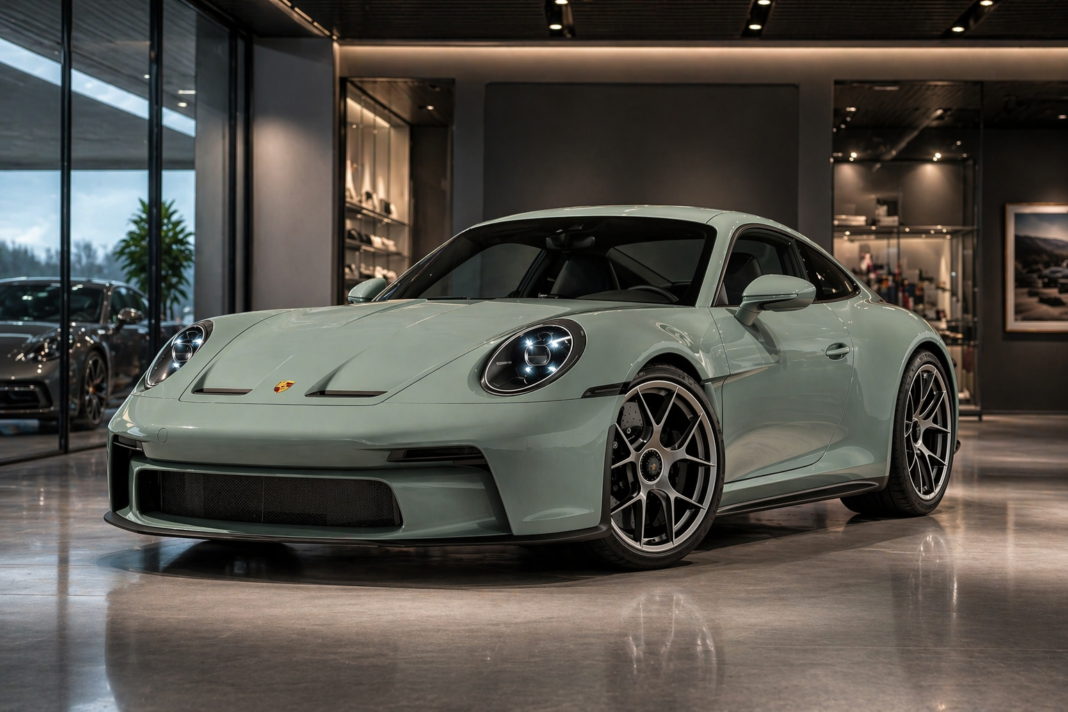
The Porsche 911 has been in continuous production for more than six decades. Over that time, it has evolved from a simple, lightweight sports car into a sophisticated, technologically advanced machine. The current 992 generation offers everything from daily-drivable Carreras to track-focused GT3 RS models. But some enthusiasts have yearned for a return to simplicity, for a 911 that prioritizes driver engagement over lap times and luxury.
The 911 S/T is Porsche’s answer to that yearning. Introduced in 2023 as a limited edition model celebrating the 60th anniversary of the 911, the S/T is the lightest and purest 911 of the modern era. It combines the 4.0 liter naturally aspirated engine from the GT3 with a lightweight body, reduced sound deadening, a shorter final drive ratio, and a manual transmission. It is a car designed for drivers who value the experience of driving over the numbers on a spec sheet.
This article provides a comprehensive examination of the Porsche 911 S/T, including its development, engineering, performance, design, and why enthusiasts consider it one of the best driver-focused Porsches ever built.
The S/T Name: A Legacy of Lightweight 911s
The S/T name references the original 911 ST of the early 1970s. That car was a lightweight, race-focused version of the 911, developed for competition in the European GT category. The original 911 ST featured a thinner gauge steel body, a stripped interior, and a tuned engine. It was a car designed for one purpose: to go fast.
The modern 911 S/T honors this heritage. It is the lightest 992 generation 911, weighing just 1,380 kilograms (3,042 pounds). It is a car that strips away the complexity of modern 911s, focusing on the essentials: a naturally aspirated engine, a manual transmission, rear-wheel drive, and minimal weight.
The 911 S/T’s Place in the 911 Lineup
The 911 S/T sits above the GT3 and below the GT3 RS in Porsche’s 911 hierarchy. It shares the GT3’s 4.0 liter naturally aspirated engine, but it is lighter and more focused on driver engagement. It does not have the GT3 RS’s massive wing or advanced aerodynamics, but it is more usable on public roads.
The S/T is often compared to the 911 R, a limited edition model from 2016 that combined the GT3’s engine with a manual transmission. The S/T is a spiritual successor to the 911 R, but it is even lighter and more focused.
Powertrain: The Heart of the S/T
The 4.0 Liter Engine
The 911 S/T is powered by a 4.0 liter naturally aspirated flat-six engine, the same unit used in the GT3. The engine produces 518 horsepower at 8,500 rpm and 342 lb-ft of torque at 6,300 rpm. The redline is 9,000 rpm.
The engine features individual throttle bodies, a lightweight crankshaft, and titanium connecting rods. It is designed to rev freely and respond immediately to throttle inputs. The sound is sharp and mechanical, with a high-pitched wail at high rpm.
Transmission
The 911 S/T is equipped with a six-speed manual transmission. The transmission is derived from the unit used in the GT3, but with a shorter final drive ratio that improves acceleration. The shift action is mechanical and precise, with clear engagement points.
The transmission does not feature rev-matching. The driver must heel-toe downshift manually, a requirement that adds to the car’s analog character.
Clutch and Flywheel
The S/T features a lightweight clutch and a single-mass flywheel. These components reduce rotating mass, improving throttle response and allowing the engine to rev more freely. The trade-off is a more aggressive engagement and a slight increase in noise.
Performance
The 911 S/T accelerates from 0 to 60 miles per hour in 3.5 seconds. Top speed is 186 miles per hour. These figures are modest by modern supercar standards, but they are not the point. The S/T is about the experience, not the numbers.
Lightweight Construction
Weight Reduction
The 911 S/T weighs 1,380 kilograms (3,042 pounds), making it the lightest 992 generation 911. This weight reduction was achieved through a combination of measures: the use of carbon fiber for the hood, roof, front fenders, and rear decklid; the deletion of rear seats; the use of lightweight glass; the reduction of sound deadening; and the use of lighter battery and brakes.
The S/T is approximately 20 kilograms lighter than the GT3 and approximately 50 kilograms lighter than the GT3 Touring.
Sound Deadening
The S/T has less sound deadening than any other modern 911. The carpet is thinner, the insulation is reduced, and the door panels are lighter. The result is a cabin that is louder than a standard 911, with more engine noise, road noise, and wind noise.
Rear Seats
The S/T does not have rear seats. The area where rear seats would be is covered by a lightweight storage shelf. This deletion saves weight and emphasizes the car’s two-seat focus.
Chassis and Dynamics
Suspension
The 911 S/T features the same double-wishbone front suspension and multi-link rear suspension as the GT3, but with revised tuning. The springs are slightly softer than the GT3’s, and the dampers are calibrated for a balance of road comfort and track performance.
The suspension is not adjustable; the S/T does not have the GT3’s adjustable dampers. This simplifies the car and reduces weight.
Steering
The electric power steering is calibrated for the S/T’s focus on driver engagement. The system provides exceptional feedback, with a level of communication that is rare in modern cars. The steering ratio is quick, requiring minimal input to change direction.
Brakes
The braking system uses carbon ceramic discs with six-piston calipers at the front and four-piston calipers at the rear. The system provides strong stopping power, with a pedal feel that is consistent and predictable.
Wheels and Tires
The S/T rides on 20-inch front wheels and 21-inch rear wheels, wrapped in specially developed tires. The front tires are 255/35 ZR20, and the rear tires are 315/30 ZR21. The tires are designed for maximum grip on road and track.
Aerodynamics
The 911 S/T does not have the aggressive aerodynamic package of the GT3 or GT3 RS. The front bumper is similar to the GT3’s, but the rear wing is smaller and more subtle. The car has an active rear spoiler that deploys at speed, providing downforce without the drag penalty of a fixed wing.
The S/T’s aerodynamic philosophy is balanced: enough downforce for stability, but not so much that it compromises the car’s purity.
Design
Exterior Styling
The 911 S/T’s exterior design is subtle. It does not have the massive wing or aggressive aero elements of the GT3 RS. The most distinctive features are the unique S/T badging, the lightweight wheels, and the C pillar graphics that reference the original 911 ST.
The S/T is available in a range of colors, including the exclusive Shore Blue Metallic that is unique to the model. The car also features a number of Heritage Design elements, including gold badging and a retro-style Porsche crest.
Interior Design
The interior of the 911 S/T is focused on the driver. The seats are carbon fiber racing buckets with Alcantara upholstery, providing lateral support during cornering. The seats are fixed in position, with the pedal box adjustable to accommodate drivers of different sizes.
The dashboard features a digital instrument cluster with a central tachometer and auxiliary gauges. The steering wheel is a three-spoke unit with a flat bottom and a red centering stripe.
The interior is stripped back compared to other 911s. There is no rear seat, no sound deadening, and fewer luxury features. The focus is entirely on driving.
Driving Experience
On Road Character
The 911 S/T is a car that rewards the driver. The engine responds immediately to throttle inputs, with power building linearly to the 9,000 rpm redline. The steering provides exceptional feedback, and the chassis communicates every detail of the road surface.
The manual transmission requires the driver to be engaged in every shift. The clutch is weighted appropriately, and the shift action is mechanical and precise. The lack of rev-matching forces the driver to heel-toe downshift, a skill that many modern drivers have lost.
The cabin is loud, with engine noise, road noise, and wind noise competing for attention. The car is not comfortable in the way a standard 911 is, but it is not punishing. It is a car that demands attention and engagement.
On Track Behavior
When driven on a track, the 911 S/T reveals the depth of its engineering. The brakes provide consistent stopping power, and the chassis remains composed through corners. The car is balanced and predictable, with a slight tendency toward understeer at the limit that rewards skilled drivers.
The S/T is not as fast as the GT3 RS around a track, but it is more engaging. The manual transmission and the lack of electronic aids make the driver feel more connected to the car. The S/T is a car that rewards smooth, precise inputs.
The Sound
The flat-six engine’s sound is one of the S/T’s defining characteristics. The engine produces a sharp, metallic wail as the revs climb toward the 9,000 rpm redline. The sound is immediate and engaging, with a quality that distinguishes it from turbocharged engines.
Rarity and Exclusivity
Production Numbers
Porsche built 1,963 units of the 911 S/T. The number references the year the 911 was first introduced, 1963. All units were sold before production began.
Pricing
The 911 S/T carried a base price of approximately $290,000. This pricing placed it above the GT3 and below the GT3 RS.
Collector Status
The S/T is one of the most sought-after modern Porsches. Its limited production numbers, its status as the lightest 992 911, and its focus on driver engagement have made it a prized collector car.
How the 911 S/T Stacks Up Against Rivals
Against the Porsche 911 GT3
The 911 GT3 is the S/T’s closest relative, sharing the same engine and transmission.
The GT3’s advantage is its adjustability and its track performance. The GT3 has adjustable dampers and a more aggressive aerodynamic package.
The S/T’s advantage is its weight and its purity. The S/T is lighter than the GT3, and its manual transmission and lack of rev-matching create a more engaging driving experience.
Against the Porsche 911 R
The 911 R is the S/T’s predecessor, a 2016 limited edition that combined the GT3’s engine with a manual transmission.
The R’s advantage is its rarity and its place in Porsche history. Only 991 units of the R were built.
The S/T’s advantage is its lighter weight and its more modern chassis. The S/T is more capable and more refined than the R.
Against the Porsche 911 GT3 RS
The 911 GT3 RS is the most hardcore 992 911, with a massive wing, advanced aerodynamics, and a chassis tuned for track use.
The GT3 RS’s advantage is its track performance. The RS is faster around a track than the S/T.
The S/T’s advantage is its usability and its driver focus. The S/T is more comfortable on public roads, and its manual transmission provides a more engaging experience.
Against the Porsche 718 Cayman GT4 RS
The 718 Cayman GT4 RS is a mid-engine sports car with a 4.0 liter engine producing 493 horsepower.
The GT4 RS’s advantage is its mid-engine layout and its track focus. The Cayman is more agile and more responsive than the 911.
The S/T’s advantage is its 911 heritage and its manual transmission. The 911 S/T is a car for purists who value the 911’s rear-engine character.
The S/T’s Place in Porsche History
The 911 S/T is the purest modern 911. It is a car that honors the original 911 ST of the 1970s, and it is a car that celebrates the driving experience. It is not the fastest 911, nor the most technologically advanced, nor the most luxurious. But it is one of the most rewarding to drive.
The S/T is a reminder that driving is about more than numbers. It is about the sound of the engine, the feel of the steering, the engagement of the manual transmission. It is about the connection between the driver and the car.
Specifications Summary
| Specification | Value |
|---|---|
| Engine | 4.0L naturally aspirated flat-six |
| Horsepower | 518 hp at 8,500 rpm |
| Torque | 342 lb-ft at 6,300 rpm |
| Redline | 9,000 rpm |
| Transmission | 6-speed manual |
| Drive | Rear wheel drive |
| 0-60 mph | 3.5 seconds |
| Top Speed | 186 mph |
| Weight | 1,380 kg |
| Production | 1,963 units |
| Base Price | $290,000 |
Conclusion
The Porsche 911 S/T is the purest modern 911. It is a car that strips away the complexity of modern sports cars, focusing on the essentials: a naturally aspirated engine, a manual transmission, rear-wheel drive, and minimal weight. It is a car designed for drivers who value the experience of driving over the numbers on a spec sheet.
The S/T is not the fastest 911, nor the most technologically advanced, nor the most luxurious. But it is one of the most rewarding to drive. The engine responds immediately to throttle inputs, the steering provides exceptional feedback, and the manual transmission requires the driver to be engaged in every shift.
The S/T is also a rarity. Only 1,963 units were built, and all were sold before production began. It is a collector car, a car that will be cherished by its owners for years to come.
The Porsche 911 S/T is Porsche’s purest modern 911, and it will forever be remembered as one of the best driver-focused Porsches ever built. It is a car that honors the 911’s heritage, and it is a car that celebrates the joy of driving.

