
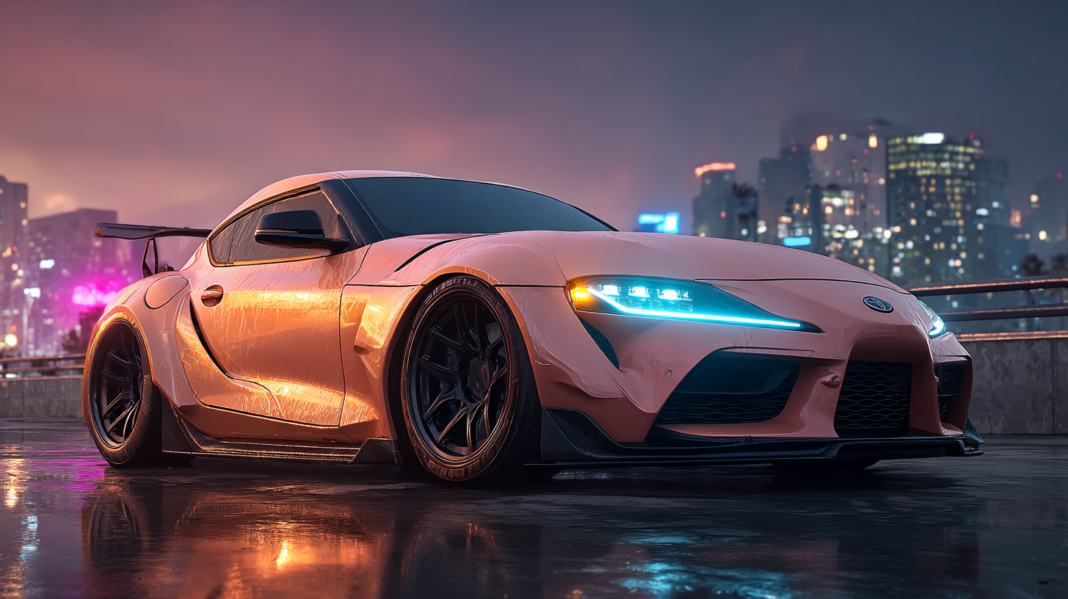
The Toyota GR Supra has occupied a unique space in the sports car market since its reintroduction for the 2020 model year. Born from a partnership with BMW and sharing its platform with the Z4 roadster, the fifth generation Supra faced immediate scrutiny from enthusiasts who questioned its pedigree. Could a car with German mechanicals truly wear the Supra badge with honor?
Over the course of six model years, Toyota’s Gazoo Racing division has steadily refined the formula. The engine gained power. The suspension evolved. And perhaps most significantly for driving enthusiasts, a manual transmission finally joined the lineup. Now, as the current generation reaches the end of its production cycle with the 2026 MkV Final Edition, the question presents itself: has the GR Supra finally achieved perfection?
This article examines the 2026 Toyota GR Supra with the manual transmission, analyzing its specifications, driving character, and position in the current sports car market.
The Evolution of a Modern Icon
The A90 generation Supra arrived in 2019 carrying the weight of an iconic nameplate. The previous generation, the A80, had achieved legendary status through its tuning potential, distinctive styling, and appearances in popular culture. The new car faced the dual challenge of living up to that legacy while adapting to modern engineering realities.
The partnership with BMW provided access to proven powertrain and platform technology. The 3.0 liter turbocharged inline six cylinder engine, shared with the Z4 and various BMW performance models, delivered the smooth power delivery and robust torque that enthusiasts expected from a Supra. The chassis provided a solid foundation for dynamic tuning.
Toyota’s Gazoo Racing division, responsible for the company’s motorsport programs and performance road cars, took the BMW foundation and applied their own calibration philosophy. The result was a car that drove differently than its German cousin, with a distinct character focused on driver engagement and track capability.
The addition of a manual transmission for the 2023 model year addressed the primary complaint from driving purists. The 2026 MkV Final Edition represents the culmination of this development, incorporating lessons learned across the generation’s production run.
2026 Model Year Changes
The 2026 GR Supra lineup continues with three primary trims: the base 3.0, the 3.0 Premium, and the new MkV Final Edition . The Final Edition serves as a sendoff for the current generation, incorporating a range of mechanical and aesthetic enhancements.
Mechanical Upgrades
The Final Edition receives several targeted improvements focused on chassis performance rather than power increases. Engineers revised the differential control logic for improved response during cornering and acceleration. Larger Brembo brake discs enhance stopping capability and resistance to fade during sustained track use.
Suspension bushings are stiffened, increasing chassis rigidity and improving the clarity of feedback transmitted to the driver. The adaptive dampers receive a specific calibration for the Final Edition, balancing compliance for road use with control for track driving.
Aesthetic Distinction
Visual changes for the Final Edition are subtle but purposeful. New 19 inch matte black wheels reduce visual weight while emphasizing the brake package behind them. A carbon fiber ducktail spoiler extends the rear deck, and carbon fiber mirror caps add contrast .
Inside, red seat belts and contrast stitching provide visual interest. The driver’s seat features GR embroidery, and a car cover is included as standard equipment.
Powertrain Specifications
Engine Output
The 2026 GR Supra is powered by a 3.0 liter turbocharged inline six cylinder engine producing 382 horsepower at 5,800 rpm and 368 lb ft of torque at 1,800 rpm. This represents the same output carried forward from previous model years, with no increase for the Final Edition.
The engine’s torque curve is notable for its breadth. Peak torque is available from 1,800 rpm through 5,200 rpm, providing strong acceleration from low engine speeds and sustained pull through the mid range. This broad plateau contributes to the car’s responsiveness in everyday driving and on track.
Transmission Choices
Buyers can choose between a six speed manual and an eight speed automatic transmission across all trims, including the Final Edition. The manual transmission, added for the 2023 model year, represents a significant expansion of the car’s appeal to driving enthusiasts.
The manual transmission features a shift mechanism engineered for precision. The shift lever moves through a 75mm short throw gate, and specially developed synchronizer rings contribute to clean engagement. Shift timing prompts, using algorithms derived from Formula One applications, indicate optimal shift points based on torque demand.
The automatic transmission delivers faster shift times and slightly better acceleration, but the manual provides a level of engagement that cannot be quantified through performance metrics alone.
Acceleration and Performance
With the manual transmission, the GR Supra accelerates from 0 to 60 miles per hour in 3.9 seconds. The automatic transmission is slightly quicker at 3.7 seconds, but the difference is meaningful primarily to those focused on spec sheet comparisons rather than driving experience.
Quarter mile performance is estimated at 12.1 to 12.4 seconds depending on transmission choice. Top speed is electronically limited to 160 miles per hour.
Fuel Economy
The manual transmission carries a fuel economy penalty compared to the automatic. EPA estimates for the manual are 19 miles per gallon city, 26 miles per gallon highway, and 21 miles per gallon combined. The automatic returns 22 city, 29 highway, and 25 combined.
Real world testing has demonstrated that highway fuel economy can exceed EPA estimates. A previous generation Supra with 335 horsepower returned 36 miles per gallon during a 75 miles per hour highway test, suggesting the current model can achieve similar results under steady state cruising.
Chassis and Handling
Suspension System
The GR Supra uses a front MacPherson strut and rear multi link suspension configuration . Adaptive variable suspension is standard across the lineup, allowing the driver to adjust damping characteristics through selectable drive modes.
The system balances conflicting requirements: compliance for daily driving and control for track use. In normal mode, the suspension absorbs road imperfections without transmitting excessive impact energy to occupants. In sportier modes, damping stiffens to control body motion during cornering and provide greater feedback to the driver.
Steering Calibration
Electric power steering is calibrated for direct response and appropriate weighting across speed ranges. The system communicates available grip effectively, allowing the driver to place the car precisely on the road or track.
For the Final Edition, steering response is further optimized through revised calibration and the stiffer suspension bushings mentioned previously. These changes address criticism that earlier Supras felt overly isolated from the road.
Braking System
Standard braking components include 13.7 inch ventilated front discs and 13.6 inch rear discs. The Final Edition upgrades to larger Brembo discs, enhancing heat capacity for track use.
Brake pedal feel is consistent and progressive, allowing precise modulation during corner entry. During track testing, reviewers noted that the brakes maintained performance without softening, even after repeated hard use.
Tires and Wheels
All GR Supras ride on Michelin Pilot Super Sport tires, sized 255/35ZR19 front and 275/35ZR19 rear. These tires provide high levels of grip while maintaining predictable breakaway characteristics at the limit.
The Final Edition’s matte black 19 inch forged wheels reduce unsprung mass compared to standard wheels, contributing to improved suspension response.
Driving Experience
On Road Character
The GR Supra demonstrates a duality in its driving personality that distinguishes it from more focused track machines. On public roads, the car is composed and livable. The suspension absorbs impacts without harshness, and the engine’s broad torque curve means the driver need not constantly work through the gears to access performance.
The manual transmission adds a layer of engagement to everyday driving. The shift action is precise, with mechanical feedback that connects the driver to the powertrain. Clutch pedal effort is moderate, and engagement point consistency allows smooth operation in traffic.
Steering response is direct without being darty. The car tracks faithfully on highways, and lane keeping is effortless. Wind and road noise are present but not excessive, consistent with the car’s performance orientation.
On Track Behavior
When driven at the limit, the GR Supra reveals the depth of its engineering. The chassis balance is neutral, with a slight bias toward understeer at the limit that builds confidence for drivers of varying skill levels. Trail braking can rotate the car into corners, and power application on exit can provoke controlled oversteer.
The manual transmission enhances track engagement. Downshifts can be matched with throttle blips, or the driver can rely on the automatic rev matching function for consistent heel toe performance. The transmission’s gear spacing keeps the engine in its power band across most corner combinations.
Handling is predictable and progressive. When pushed beyond the limit, the car communicates its intentions clearly, allowing the driver to make corrections before losing control. This accessibility makes the Supra rewarding for drivers who may not have extensive track experience.
Comparison to Competitors
The GR Supra’s primary competitors include the Nissan Z, the Porsche 718 Cayman, and the Chevrolet Corvette. Each offers distinct strengths. The Nissan Z provides a more retro inspired aesthetic and slightly lower entry price. The Porsche 718 Cayman sets the benchmark for chassis precision. The Corvette delivers American V8 power in a mid engine configuration.
The Supra’s advantage lies in its combination of attributes. It offers the straight line performance of the Corvette with handling that approaches the Cayman’s standards, all at a price point that undercuts both when comparably equipped. The BMW derived engine provides smooth power delivery and proven reliability, while Toyota’s tuning ensures distinct character.
Interior and Comfort
Seating and Space
The GR Supra’s cabin is designed around the driver. Seat positioning is low, with the hip point closer to the floor than many competitors, creating a sensation of sitting in the car rather than on it. The double bubble roof, while primarily a styling element, provides additional headroom for taller occupants.
Standard 14 way power adjustable seats accommodate a range of body types. Side bolstering is aggressive enough to hold occupants during cornering without being uncomfortable for daily driving. Heated seats are standard across the lineup.
Cabin space is limited, as expected in a two seat sports car. Front seat headroom measures 38.3 inches, leg room is 42.2 inches, and shoulder room is 54.4 inches. Taller drivers, particularly those over six feet two inches, may find headroom tight.
Cargo Capacity
The hatchback design provides access to 10.2 cubic feet of cargo space behind the seats . This is sufficient for several carry on suitcases or a week’s worth of groceries for two people. Longer items can be carried by folding the passenger seat forward, though this compromises the cabin’s two seat configuration.
Material Quality
The interior demonstrates its BMW origins through switchgear and control placement. Buttons and knobs have a solid, damped feel, and materials are appropriate for the car’s price point. The Final Edition adds Alcantara and leather surfaces with red contrast stitching, elevating the cabin’s ambience.
Hard plastics appear in lower visibility areas, but their matte finishes prevent the appearance of cost cutting. Panel gaps are consistent, and assembly quality reflects the maturity of a late production run vehicle.
Technology and Infotainment
Display Systems
The GR Supra features an 8.8 inch central touchscreen running a version of BMW’s iDrive interface with Toyota specific graphics. The system is responsive, and menu logic is straightforward. Physical shortcut buttons and a rotary controller provide alternatives to touchscreen operation for drivers who prefer tactile controls.
A digital instrument cluster displays speed, rpm, and vehicle information in a configurable layout. The display is clear and readable in varying light conditions, with graphics that prioritize function over flash.
Connectivity
Apple CarPlay is standard across the lineup, operating wirelessly on Premium and Final Edition trims. Android Auto is notably absent, a limitation that may influence purchasing decisions for Android users.
A 10 speaker audio system is standard on the base 3.0. The 3.0 Premium and Final Edition upgrade to a 12 speaker JBL system that provides clean sound quality appropriate for the cabin’s dimensions.
Driver Assistance Features
Standard safety equipment includes forward collision warning with pedestrian detection and automatic emergency braking, lane departure warning, lane keep assist, and automatic high beams.
The optional Driver Assist package adds blind spot monitoring with rear cross traffic alert, parking sensors, reverse automatic braking, and adaptive cruise control. Notably, adaptive cruise control is not available with the manual transmission, a common limitation given the difficulty of integrating automated speed control with a clutch pedal.
Pricing and Value
MSRP by Trim
The 2026 Toyota GR Supra is priced as follows:
- 3.0: $58,695 including destination
- 3.0 Premium: $61,845 including destination
- MkV Final Edition: $69,745 including destination
Value Proposition
The GR Supra occupies a competitive price point in the sports car segment. It undercuts the Porsche 718 Cayman, which starts higher and climbs quickly with options. It is priced similarly to the Nissan Z and slightly below the Chevrolet Corvette’s base configuration.
The Final Edition’s $69,745 price represents a significant premium over the 3.0 Premium, but the mechanical upgrades and exclusivity of a limited production model may justify the additional cost for collectors and enthusiasts. As Car and Driver notes, “springing for the MkV Final Edition is a worthy expenditure if you can swing it”.
Ownership Costs
Insurance costs for the GR Supra are consistent with its performance car classification. Fuel economy is reasonable for the performance on offer, with the manual transmission’s 21 miles per gallon combined falling mid pack among competitors .
Tire replacement intervals will vary based on driving style and conditions. The Michelin Pilot Super Sport tires provide exceptional grip but will wear more quickly than all season alternatives, particularly with track use.
The Manual Transmission Question
Why the Manual Matters
The availability of a manual transmission transforms the GR Supra’s character in ways that extend beyond objective performance metrics. The manual invites the driver to participate more fully in the act of driving, selecting gears not just for optimal power delivery but for the satisfaction of mechanical engagement .
Toyota’s decision to develop a manual for a car already in production demonstrates an understanding of their audience. The Supra’s heritage is built on driver involvement, and an automatic only lineup would have represented a fundamental break from that legacy.
The Manual Experience
The six speed manual in the GR Supra is engineered for precision. Shift throws are short, engagement is positive, and the clutch take up is consistent. Automatic rev matching is available for drivers who prefer consistent downshifts, but can be disabled for those who want to practice traditional heel toe technique.
The manual does carry trade offs. Fuel economy is reduced compared to the automatic. Acceleration is slightly slower. Adaptive cruise control is unavailable. For the target audience, these compromises are acceptable in exchange for the enhanced connection the manual provides.
Is It Finally Perfect?
The question posed in this article’s title requires a nuanced answer. The 2026 Toyota GR Supra, particularly in Final Edition trim with the manual transmission, represents the most resolved version of this generation. It addresses criticisms leveled at earlier models through chassis refinement and the addition of a driver focused transmission.
What It Does Well
The Supra delivers a compelling combination of performance, engagement, and daily usability. The engine provides ample power with a smooth, linear delivery that suits both road and track driving. The chassis communicates clearly with the driver, offering accessible handling that rewards skill without punishing mistakes. The manual transmission completes the package, inviting the driver into a more active relationship with the car.
The Final Edition’s enhancements focus on the aspects of performance that matter most to driving enthusiasts: braking, chassis stiffness, and suspension calibration. By investing in these areas rather than pursuing higher power figures, Toyota demonstrates an understanding that feel matters more than numbers.
Where Compromises Remain
No car achieves perfection without compromise, and the Supra is no exception. The interior, while improved, still reflects its BMW parts bin origins and lacks the visual drama of some competitors. Cargo space is limited, and the cabin can feel tight for larger occupants. Android Auto remains unavailable, a frustration for some users.
The price, particularly for the Final Edition, has climbed significantly from earlier models. At nearly $70,000, the Supra faces competition from cars with greater prestige or different configurations. Whether the driving experience justifies the cost is a matter of individual priority.
The Verdict
The 2026 Toyota GR Supra with manual transmission achieves something rare in the contemporary automotive landscape. It delivers a driving experience focused on engagement rather than numbers, on feel rather than spec sheet victories. It honors the Supra heritage not through retro styling or nostalgic references, but through a commitment to the driver focused values that made the original significant.
Is it perfect? Perfection implies an absence of compromise, and the Supra, like any vehicle, involves trade offs. But for drivers who prioritize the sensation of control, the satisfaction of a well executed shift, and the connection between car and driver that only a manual transmission can provide, the 2026 GR Supra comes remarkably close.
As the automotive industry continues its transition toward electrification and automation, cars like this will become increasingly rare. The GR Supra represents a moment when a major manufacturer chose to invest in the analog experience, refining rather than replacing the elements that make sports cars meaningful to enthusiasts.
For the right buyer, that is perfection enough.
Frequently Asked Questions
What is the horsepower of the 2026 Toyota GR Supra?
The 2026 GR Supra produces 382 horsepower from its 3.0 liter turbocharged inline six cylinder engine, regardless of trim level or transmission choice.
Does the 2026 GR Supra come with a manual transmission?
Yes, a six speed manual transmission is available across all trims, including the 3.0, 3.0 Premium, and MkV Final Edition.
What is the difference between the Final Edition and other trims?
The Final Edition adds larger Brembo brakes, stiffer suspension bushings, revised differential calibration, unique 19 inch matte black wheels, carbon fiber exterior accents, and interior details including red seat belts and GR embroidery.
How fast is the GR Supra with the manual transmission?
The manual transmission Supra accelerates from 0 to 60 miles per hour in 3.9 seconds and covers the quarter mile in approximately 12.4 seconds.
What is the price of the 2026 Toyota GR Supra?
Pricing starts at $58,695 for the 3.0 trim, $61,845 for the 3.0 Premium, and $69,745 for the MkV Final Edition, all including destination charges.
Does the GR Supra have Apple CarPlay?
Yes, Apple CarPlay is standard across the lineup, with wireless operation on Premium and Final Edition trims. Android Auto is not available.
Is the GR Supra based on a BMW?
The GR Supra shares its platform, engine, and many mechanical components with the BMW Z4, though Toyota’s Gazoo Racing division handles suspension tuning and overall character development.

