
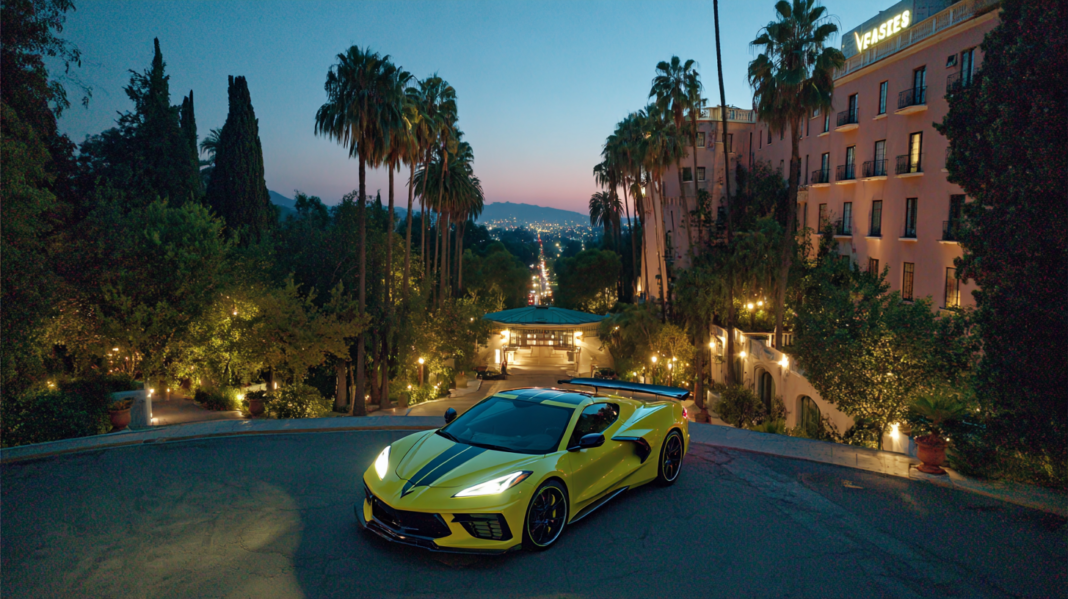
The Chevrolet Corvette has represented American performance for seven decades. From the original 1953 model with its modest inline six to the C8 generation’s mid engine revolution, the Corvette has evolved from a sports car to a genuine supercar contender. The ZR1 nameplate has always represented the pinnacle of this evolution, reserved for the most extreme, most powerful, and most capable Corvettes ever built.
The 2025 Corvette ZR1 continues this tradition. Introduced as the most powerful production Corvette ever created, the ZR1 represents a significant step forward for the nameplate. With a twin turbocharged 5.5 liter V8 producing over 1,000 horsepower, advanced aerodynamics derived from the racing program, and a chassis tuned for track performance, it is a car designed to compete with the best from Europe.
This article provides a comprehensive review of the 2025 Corvette ZR1, examining its performance specifications, engineering, design philosophy, and how it stacks up against European supercars.
The ZR1 Legacy
The ZR1 name first appeared in 1970, as a performance package for the C3 Corvette. That car, with its 370 horsepower LT1 engine, was a rare and sought after model. The ZR1 name returned in 1990 with the C4 generation, featuring a 5.7 liter V8 with dual overhead camshafts, a Lotus developed engine that produced 375 horsepower and established a new benchmark for Corvette performance.
The C6 ZR1, introduced in 2009, was a significant moment for the Corvette. With a supercharged 6.2 liter V8 producing 638 horsepower, it was the first Corvette to exceed 600 horsepower and the first to feature carbon ceramic brakes. It established a template for the ZR1: extreme power, track focused engineering, and a price that undercut European competitors.
The C7 ZR1, introduced in 2018, pushed the formula further. With a supercharged 6.2 liter V8 producing 755 horsepower, a massive rear wing, and aggressive aerodynamics, it was the most extreme front engine Corvette ever built. It was also the last front engine ZR1, as the C8 generation moved the engine behind the driver.
The 2025 ZR1 is the first mid engine ZR1, and it represents the culmination of everything Chevrolet has learned from the C8 platform.
Powertrain: The LT7 V8
Engine Specifications
The 2025 Corvette ZR1 is powered by a 5.5 liter twin turbocharged V8 engine, designated LT7. This engine is a derivative of the naturally aspirated LT6 that powers the Corvette Z06, with the addition of twin turbochargers and supporting modifications.
The engine produces 1,064 horsepower at 7,000 rpm and 828 lb ft of torque at 6,000 rpm. The specific output is 193 horsepower per liter, a figure that places it among the most powerful production engines ever built.
The LT7 features a flat plane crankshaft, a design that promotes balanced firing across both cylinder banks and improves exhaust flow. The flat plane crankshaft contributes to the engine’s ability to rev quickly and smoothly, with a character that is more akin to a racing engine than a traditional American V8.
The engine’s rotating assembly is engineered for high performance and durability. Forged pistons, titanium connecting rods, and a lightweight crankshaft reduce rotating mass, allowing the engine to rev freely to its 7,000 rpm redline. The turbochargers are mounted in the hot V configuration, between the cylinder banks, reducing lag and improving throttle response.
Cooling Systems
The ZR1’s cooling system is one of its most significant engineering achievements. The engine features 14 separate heat exchangers, including intercoolers for the turbochargers, engine oil coolers, transmission coolers, and differential coolers. The system is designed to maintain consistent performance during sustained track use, preventing the power reductions that can affect turbocharged engines under high stress.
The front end of the car is almost entirely dedicated to cooling. The grille openings are larger than any other Corvette, and the front fascia incorporates ducts that direct air to the various heat exchangers. The hood features a prominent air extractor that draws hot air out of the engine bay, reducing underhood temperatures.
Transmission
Power is transmitted to the rear wheels through an eight speed dual clutch transmission. The transmission is mounted behind the engine in a transaxle configuration, contributing to the car’s near perfect weight distribution.
The transmission is upgraded for the ZR1’s additional power and torque, with stronger clutches, revised gear ratios, and enhanced cooling. Shift times are measured in milliseconds in the most aggressive driving modes, and the transmission can be operated in fully automatic mode or via paddle shifters.
Performance
Acceleration and Speed
The Corvette ZR1 accelerates from 0 to 60 miles per hour in 2.3 seconds. The 0 to 100 miles per hour sprint takes approximately 5.0 seconds. The quarter mile is completed in approximately 9.6 seconds at 150 miles per hour.
Top speed is rated at 233 miles per hour, making the ZR1 the fastest production Corvette ever built. This figure is achieved with the low drag rear wing configuration; the high downforce configuration reduces top speed slightly in exchange for increased cornering grip.
Weight and Balance
The ZR1 has a curb weight of approximately 3,700 pounds. This figure reflects the additional hardware required for the twin turbochargers, intercoolers, and cooling systems. Despite the weight, the car’s mid engine layout and near perfect weight distribution contribute to its agile handling.
The weight distribution is 40 percent front, 60 percent rear, a figure that is typical for mid engine supercars and contributes to the car’s balanced handling characteristics.
Chassis and Dynamics
Suspension System
The ZR1 features a double wishbone suspension at all four corners, with magnetic ride control dampers that can adjust their characteristics in milliseconds based on road conditions and driving mode. The suspension is tuned for the ZR1’s performance focus, with stiffer springs, revised damper calibration, and increased negative camber compared to the Stingray and Z06.
The car sits lower than other Corvette models, lowering the center of gravity and improving aerodynamic efficiency. The front end lift system, which raises the nose to clear speed bumps and driveways, is retained.
Brakes
The braking system uses carbon ceramic discs with 15.7 inch front discs and six piston calipers, and 15.4 inch rear discs with four piston calipers. The system provides exceptional stopping power, with consistent pedal feel and resistance to fade during track use.
The brake cooling is enhanced compared to the Z06, with larger ducts and additional air flow management. The system is designed to maintain performance during sustained track sessions, even with the increased speeds that the ZR1’s power enables.
Wheels and Tires
The ZR1 rides on 20 inch front wheels and 21 inch rear wheels, wrapped in Michelin Pilot Sport Cup 2 R tires. The tire sizes are 275/30 ZR20 front and 345/25 ZR21 rear.
The Cup 2 R tires are designed for maximum grip on track, with a compound that provides exceptional adhesion once warmed up. The rear tires are among the widest ever fitted to a production Corvette, providing the traction necessary to manage the engine’s torque.
Aerodynamics
The ZR1 is offered with two aerodynamic configurations. The standard configuration features a rear spoiler and front splitter that provide balanced downforce for most driving conditions. The ZTK Performance Package adds a high downforce rear wing, a larger front splitter, and underbody aero elements that increase downforce significantly.
With the ZTK package, the ZR1 generates 1,200 pounds of downforce at top speed, a figure that places it among the most aerodynamically advanced production cars on the market. The downforce is distributed to maintain balance across the car’s speed range, providing stable handling at high speeds.
Design
Exterior Styling
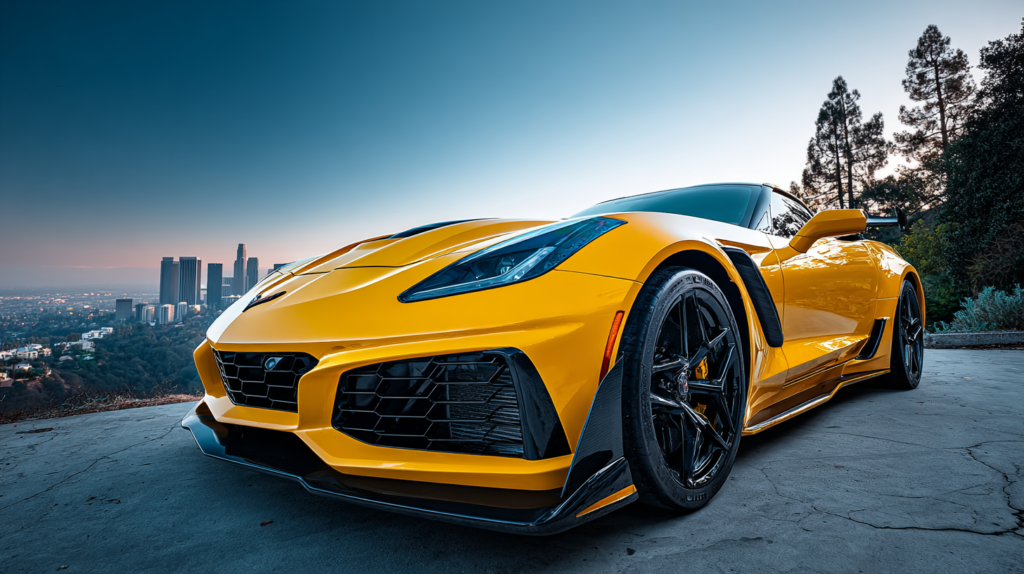
The ZR1’s exterior design builds on the C8’s mid engine proportions, with several distinctive elements that signal its performance capabilities. The front end features a larger grille opening and more aggressive air intakes than the Stingray or Z06, feeding air to the turbocharger intercoolers and other heat exchangers.
The hood incorporates a prominent air extractor that draws hot air out of the engine bay, and the front fenders feature louvered vents that reduce pressure buildup in the wheel wells. The side air intakes are larger than those on other Corvette models, providing cooling air to the engine and transmission.
The rear end features a prominent diffuser that accelerates airflow beneath the car, generating downforce at the rear axle. The quad exhaust outlets are larger in diameter than those on the Z06, reflecting the increased airflow of the twin turbocharged engine.
ZTK Performance Package
The ZTK Performance Package adds a range of track focused enhancements. The package includes a large fixed rear wing, a larger front splitter, underbody aero strakes, and stiffer suspension tuning. The package also includes the Cup 2 R tires, which are not available on the standard ZR1.
The ZTK wing is adjustable, allowing drivers to tailor the downforce balance to suit different tracks and conditions. The wing is constructed from carbon fiber, keeping weight to a minimum while providing the necessary structural rigidity.
Carbon Fiber Components
The ZR1 makes extensive use of carbon fiber to manage weight. The roof, hood, front splitter, rear wing, and various aerodynamic elements are all available in carbon fiber. The optional carbon fiber wheels, which reduce unsprung weight by approximately 18 pounds, are also available.
Interior and Driver Focus
Cabin Design
The interior of the ZR1 reflects the car’s performance focus. The seats are heavily bolstered to hold occupants during cornering, with leather and Alcantara upholstery. The seats are power adjustable with heating and ventilation, and they are available in either GT or Competition configurations.
The dashboard features a digital instrument cluster that can be configured to display performance data, including g forces, lap times, and power distribution. The central touchscreen handles infotainment functions, with a dedicated performance menu that provides access to track oriented features.
The steering wheel is flat bottom, with integrated controls for the car’s systems. The paddle shifters are mounted on the steering column, ensuring they remain in the same position regardless of steering angle.
Technology Features
The ZR1 is equipped with a comprehensive suite of technology features. The infotainment system includes navigation, Apple CarPlay, Android Auto, and a premium audio system. The car also features a performance data recorder that can capture video and telemetry data for analysis after track sessions.
Driver assistance features include a front end lift system for clearing speed bumps and driveways, a rearview camera, and parking sensors. The car is not equipped with adaptive cruise control or other advanced driver assistance features, reflecting its focus on performance.
Driving Experience
On Road Character
The ZR1 is a car that is surprisingly manageable given its performance credentials. The twin turbocharged V8 produces abundant torque from low engine speeds, making it effortless to drive in traffic. The magnetic ride control suspension absorbs road imperfections without transmitting harshness to the cabin, and the seats are comfortable for extended periods.
When the driver presses the accelerator, the character transforms. The engine builds power with a linear urgency, and the turbochargers spool with minimal lag. The car accelerates with a force that pushes occupants into their seats, and the sound is a mechanical wail that builds to a crescendo as the revs climb toward the 7,000 rpm redline.
On Track Behavior
When driven on a track, the ZR1 reveals the depth of its engineering. The brakes provide consistent stopping power lap after lap, with a pedal feel that inspires confidence. The chassis remains composed through corners, with the aerodynamic downforce providing grip that mechanical systems alone could not achieve.
The car’s mid engine layout provides exceptional agility, and the rear wheel drive configuration requires skill to manage the power. The car can be rotated on corner entry with trail braking, and the throttle can be used to adjust the cornering attitude on exit. The ZR1 is a car that rewards skilled drivers and punishes mistakes, but for those who can manage its power, it is one of the most rewarding cars on the market.
The Sound
The LT7 engine produces a sound that is distinct from the Z06’s naturally aspirated LT6. The turbochargers mute some of the high frequency wail, adding a deeper, more muscular tone. The sound is still unmistakably a Corvette, with a mechanical character that communicates power and intent.
How the ZR1 Stacks Up Against European Supercars
Against the Ferrari 296 GTB
The Ferrari 296 GTB is a mid engine hybrid supercar with a V6 producing 819 horsepower.
The 296 GTB’s advantage is its hybrid sophistication and its brand prestige. The Ferrari’s plug in hybrid system provides electric only capability, and the Prancing Horse badge carries a cachet that the Corvette cannot match.
The ZR1’s advantage is its power and its value. With 1,064 horsepower, the ZR1 produces 245 more horsepower than the Ferrari, and its price is approximately one third of the 296 GTB’s. The ZR1’s naturally aspirated character, with its high revving V8, also provides a different kind of experience.
Against the Lamborghini Revuelto
The Lamborghini Revuelto is a V12 hybrid supercar with 1,001 horsepower.
The Revuelto’s advantage is its engine character and its styling. The V12’s sound and the Lamborghini’s dramatic angles create a visceral experience that the Corvette cannot match.
The ZR1’s advantage is its value and its track capability. The ZR1 produces 63 more horsepower than the Revuelto, and its price is less than half. The ZR1’s aerodynamic package and chassis tuning also make it a more focused track tool.
Against the Porsche 911 Turbo S
The Porsche 911 Turbo S is a rear engine, all wheel drive sports car with 640 horsepower.
The 911 Turbo S’s advantage is its daily usability and its refinement. The Porsche is more comfortable, more practical, and more reliable than the ZR1.
The ZR1’s advantage is its performance and its drama. With 1,064 horsepower, the ZR1 produces 424 more horsepower than the Porsche, and its mid engine layout and aggressive styling create a more dramatic experience.
Against the McLaren 750S
The McLaren 750S is a mid engine supercar with 740 horsepower.
The 750S’s advantage is its weight and its handling. The McLaren is significantly lighter than the ZR1, and its chassis tuning is exceptional.
The ZR1’s advantage is its power and its value. The ZR1 produces 324 more horsepower than the McLaren, and its price is significantly lower. The ZR1’s aerodynamic package also provides downforce that the McLaren cannot match.
Value Proposition
Pricing
The 2025 Corvette ZR1 carries a base price of approximately $180,000. The ZTK Performance Package adds approximately $10,000, and the carbon fiber wheels add an additional $15,000. This pricing places the ZR1 in a unique position in the supercar market, offering performance that rivals cars costing three to four times as much.
Depreciation
Corvettes traditionally depreciate more than European supercars, but the ZR1’s limited production numbers and extreme performance may help it hold its value better than standard models. Early indications suggest that the ZR1 will follow the pattern of previous ZR1 models, which have maintained strong values in the collector market.
Ownership Costs
Maintaining a ZR1 involves higher costs than standard Corvettes. The tires, sized 275/30 ZR20 front and 345/25 ZR21 rear, are expensive to replace, and the carbon ceramic brakes carry significant replacement costs. However, compared to European competitors, the ZR1 is significantly less expensive to own and maintain.
Specifications Summary
| Specification | Value |
|---|---|
| Engine | 5.5L twin turbocharged V8 |
| Horsepower | 1,064 hp at 7,000 rpm |
| Torque | 828 lb ft at 6,000 rpm |
| Transmission | 8 speed dual clutch |
| Drive | Rear wheel drive |
| 0-60 mph | 2.3 seconds |
| Quarter Mile | 9.6 seconds at 150 mph |
| Top Speed | 233 mph |
| Downforce | 1,200 lb (with ZTK package) |
| Weight | 3,700 lb |
| Base Price | $180,000 |
Conclusion
The 2025 Corvette ZR1 represents a significant achievement for American automotive engineering. It is the most powerful production Corvette ever built, with a twin turbocharged 5.5 liter V8 producing 1,064 horsepower. It is one of the most aerodynamically advanced production cars on the market, with 1,200 pounds of downforce at top speed. And it is one of the fastest production cars ever built, with a 0 to 60 time of 2.3 seconds and a top speed of 233 miles per hour.
Against its European rivals, the ZR1 holds its own. It offers more power than the Ferrari 296 GTB and Lamborghini Revuelto, more downforce than the McLaren 750S, and more value than any of them. It is a car that can be driven to the track, set competitive lap times, and drive home, all for a fraction of the price of its competitors.
The ZR1 is not a car for everyone. Its power demands respect, its ride is firm, and its interior lacks the luxury of European competitors. But for buyers who value performance above all else, who appreciate American engineering, and who want a car that can compete with the best from Europe, the Corvette ZR1 makes a compelling case. It is America’s most powerful Corvette, and it stands as a statement that American performance can compete at the highest level.

