
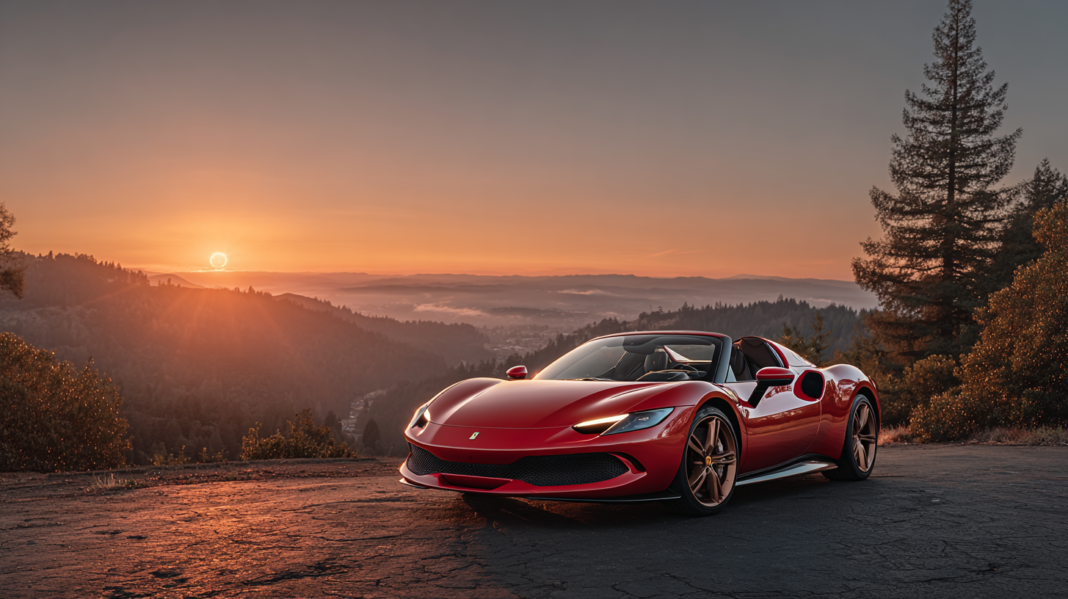
The Ferrari 296 series represents a significant shift for the Italian marque. It is the first Ferrari to use a V6 engine in a mid engine road car since the Dino of the 1960s and 1970s, and it introduces hybrid technology as a core element of the driving experience rather than an add on for efficiency. The 296 GTB coupe established the formula; the 296 GTS extends it to open top motoring.
Introduced in 2022, the 296 GTS combines a 3.0 liter twin turbocharged V6 with an electric motor to produce a combined 819 horsepower. It is a car that can accelerate from 0 to 100 kilometers per hour in 2.9 seconds, reach a top speed of over 330 kilometers per hour, and travel up to 25 kilometers on electric power alone. It is also a car that retains the open air experience that has defined Ferrari’s GTS models for generations.
This article provides a comprehensive review of the Ferrari 296 GTS, examining its performance specifications, hybrid engineering, design philosophy, interior accommodations, and what makes this supercar unique in 2026.
The 296 Series: A New Direction for Ferrari
The Return of the V6
Ferrari’s history with V6 engines stretches back to the Dino of the 1960s, a car that Enzo Ferrari himself viewed as a necessary step into the mid engine market. The Dino 206 GT and 246 GTS were powered by a 2.0 liter and 2.4 liter V6 respectively, and they established a template for mid engine Ferrari sports cars that would later be filled by the V8 powered 308, 328, and 348.
The 296 series revives this lineage. The 3.0 liter V6, designated F163, is a 120 degree V6 with the turbochargers mounted inside the V. This hot V configuration reduces lag, improves throttle response, and allows for a more compact engine package. The engine produces 654 horsepower on its own, with the electric motor contributing an additional 165 horsepower.
The F163 V6 Engine
The F163 engine is a significant engineering achievement. Its 120 degree angle is unusual for a V6; most V6 engines use a 60 or 90 degree configuration. The wide angle allows the turbochargers to be mounted centrally, reducing the distance the exhaust gases must travel to reach the turbines. The result is immediate throttle response, with minimal lag even at low engine speeds.
The engine’s specific output is 218 horsepower per liter, one of the highest figures for any production engine. It revs to 8,500 rpm, and its character is described by Ferrari as “a symphony of mechanical music.” The sound is distinct from the V8s that have dominated Ferrari’s mid engine lineup for decades, with a higher pitched, more urgent quality as the revs climb.
The Hybrid System
The electric motor, designated MGU-K (Motor Generator Unit Kinetic), is integrated into the transmission. It provides additional power during acceleration, fills the torque gap during gear changes, and allows the car to operate in electric only mode for limited distances. The motor is powered by a 7.45 kWh battery pack mounted low in the chassis, contributing to the car’s low center of gravity.
The hybrid system is designed to enhance performance, not simply improve efficiency. The electric motor provides instant torque, filling the low end of the rev range while the turbochargers spool. The result is a power delivery that is linear and immediate, with none of the lag that has traditionally characterized turbocharged engines.
Powertrain and Performance
Total Output
The combined output of the V6 engine and the electric motor is 819 horsepower and 546 lb ft of torque. This figure places the 296 GTS among the most powerful production Ferraris ever built, exceeding the F8 Tributo’s 710 horsepower and approaching the SF90 Stradale’s 986 horsepower.
Acceleration and Speed
The 296 GTS accelerates from 0 to 100 kilometers per hour in 2.9 seconds. The 0 to 200 kilometers per hour sprint takes 7.6 seconds. The quarter mile is completed in approximately 10.3 seconds.
Top speed is rated at over 330 kilometers per hour, a figure that is more than sufficient for any legal driving scenario.
Electric Range
The 7.45 kWh battery provides an electric range of approximately 25 kilometers under WLTP testing. In real world conditions, this figure is reduced to approximately 15 to 20 kilometers. The electric mode is intended for low speed, urban driving, allowing the car to operate silently and without emissions in city centers.
Weight and Balance
The 296 GTS weighs approximately 1,600 kilograms dry, with a curb weight of approximately 1,700 kilograms. This represents a slight increase over the coupe, reflecting the additional structure required for the retractable hardtop. The weight distribution is 40.5 percent front, 59.5 percent rear, contributing to the car’s agile handling.
Transmission
Power is transmitted to the rear wheels through an eight speed dual clutch transmission. The gearbox is mounted transversely behind the engine, a configuration that allows for a shorter overall length and improved weight distribution. The transmission provides rapid shifts, with shift times measured in milliseconds in the most aggressive driving modes.
The GTS: Open Air Experience
Retractable Hardtop
The 296 GTS features a retractable hardtop that can be opened or closed in 14 seconds at speeds up to 45 kilometers per hour. The top folds into a compact space behind the seats, preserving the car’s proportions whether open or closed.
The roof mechanism is designed to maintain the car’s structural integrity. The B pillars and rear bulkhead are reinforced to compensate for the loss of the fixed roof, ensuring that the GTS’s torsional rigidity is within 10 percent of the coupe’s.
Wind Management
Ferrari engineers have paid careful attention to wind management in the GTS. An electrically operated wind deflector, mounted behind the seats, can be deployed to reduce turbulence in the cabin when the roof is open. With the windows up and the deflector raised, occupants can maintain conversation at highway speeds.
The side windows are designed to work with the roof mechanism, sealing effectively to reduce wind noise when the top is up and providing protection from buffeting when the top is down.
Open Air Experience
The 296 GTS offers a sensory experience that the coupe cannot match. The sound of the V6 is more immediate with the roof open, the connection to the environment is more direct, and the sense of speed is heightened. The car is designed to be enjoyed with the top down, and the engineering supports this mission.
Chassis and Dynamics
Suspension System
The 296 GTS features an adaptive suspension system with magnetorheological dampers that can adjust their characteristics in milliseconds based on road conditions and driving mode. The system is tuned for the GTS’s weight distribution and performance capabilities.
The suspension provides a range of behavior, from compliant for daily driving to firm for track use. The car’s body control is exceptional, with minimal roll through corners and stable behavior under hard braking.
Steering
The electric power steering is calibrated for the 296’s performance focus. The system provides appropriate weighting and feedback, with a level of communication that is good for an electric system. The steering ratio is quick, requiring minimal input to change direction.
Brakes
The braking system uses carbon ceramic discs with 15.7 inch front discs and six piston calipers, and 14.4 inch rear discs with four piston calipers. The system provides exceptional stopping power, with consistent pedal feel and resistance to fade during track use.
The regenerative braking system is integrated with the friction brakes through a brake by wire system that maintains consistent pedal feel regardless of the regeneration level.
Wheels and Tires
The 296 GTS rides on 20 inch front wheels and 21 inch rear wheels, wrapped in Michelin Pilot Sport Cup 2 tires. The tire sizes are 245/35 ZR20 front and 305/35 ZR21 rear.
Assetto Fiorano Package
The optional Assetto Fiorano package adds a range of track focused enhancements, including stiffer springs, Multimatic dampers, carbon fiber aerodynamic elements, and a track oriented tire compound. The package reduces weight by approximately 15 kilograms and increases downforce by 10 percent.
Design
Exterior Styling
The 296 GTS shares its design language with the GTB coupe, with a few distinctions that reflect the open top configuration. The front end features a prominent grille and slim LED headlights. The side profile shows the mid engine proportions, with a long wheelbase, short overhangs, and a cabin positioned forward of the rear axle.
The rear end is characterized by a full width light bar and a prominent diffuser that houses the quad exhaust outlets. The retractable hardtop folds into a rear deck that is sculpted to manage airflow.
Aerodynamics
The 296 GTS’s aerodynamic development focused on managing airflow with the roof both up and down. The front splitter directs air under the car, while the underbody panels manage airflow to reduce drag and minimize lift. The rear diffuser accelerates airflow beneath the car, generating downforce at the rear axle.
The car’s active aerodynamic elements include a rear spoiler that deploys at high speeds to increase downforce. The system is integrated with the car’s electronic controls, adjusting automatically based on speed and driving mode.
Color and Personalization
The 296 GTS is offered with a range of exterior colors, including the classic Rosso Corsa red that has become synonymous with Ferrari. The brand’s extensive personalization program, known as Tailor Made, allows buyers to specify unique colors, materials, and details.
Interior and Accommodations
Cabin Design
The interior of the 296 GTS reflects Ferrari’s focus on the driver. The dashboard features a 16 inch curved digital instrument cluster that can be configured to display performance data, navigation, and vehicle information. The passenger faces a dedicated 8.8 inch touchscreen that provides access to infotainment and vehicle functions.
The steering wheel is flat bottom, with integrated controls for the car’s systems. The paddle shifters are mounted on the steering column, ensuring they remain in the same position regardless of steering angle.
Seating and Space
The 296 GTS is a two seat configuration, with no rear seats. The seats are heavily bolstered to hold occupants during cornering, with leather and Alcantara upholstery. The seats are power adjustable with heating and optional cooling.
The trunk, located behind the engine, offers sufficient space for a weekend’s worth of luggage. The retractable hardtop folds into a compartment behind the seats, which reduces storage space when the top is stowed.
Materials and Craftsmanship
The interior materials reflect Ferrari’s commitment to craftsmanship. The leather is sourced from premium tanneries, and the Alcantara is applied with care. The carbon fiber trim is finished to show its weave, and the metal accents are machined from solid aluminum.
Technology Features
The 296 GTS is equipped with a comprehensive suite of technology features. The infotainment system includes navigation, Apple CarPlay, Android Auto, and a premium audio system. The digital instrument cluster can be configured to display performance data, including g forces, lap times, and power distribution.
Driver assistance features include adaptive cruise control, lane departure warning, and automatic emergency braking.
Driving Experience
On Road Character
The 296 GTS is a car that rewards the driver in any setting. In urban environments, the electric mode allows the car to operate silently and efficiently, with enough range for short trips. The suspension absorbs road imperfections without transmitting harshness to the cabin, and the seats are comfortable for extended periods.
When the driver selects a more aggressive mode, the character transforms. The V6 comes alive, with a sharp, metallic wail as the revs climb. The acceleration is immediate and relentless, pushing occupants into their seats with force that is both thrilling and accessible. The car feels light, responsive, and eager.
On Track Behavior
When driven on a track, the 296 GTS reveals the depth of its engineering. The brakes provide consistent stopping power lap after lap, with a pedal feel that inspires confidence. The chassis remains composed through corners, with the torque vectoring system managing power delivery to maximize grip.
The car’s mid engine layout provides exceptional agility, and the active aerodynamics keep the car planted at high speeds. The 296 GTS is a car that rewards skilled drivers, with a level of precision and feedback that is among the best in its class.
The Sound
The V6 engine’s sound is one of the 296’s defining characteristics. The engine has a distinct character, with a high pitched wail as the revs climb toward the 8,500 rpm redline. The sound is sharp, urgent, and deeply satisfying, with a quality that distinguishes it from Ferrari’s V8s.
With the roof open, the sound is more immediate, and the connection between throttle input and engine response is direct and engaging.
Electric Mode
In electric mode, the 296 GTS operates silently. The car can be driven in this mode for up to 25 kilometers at speeds up to 135 kilometers per hour. The transition from electric to hybrid mode is seamless, with the engine starting when additional power is required or when the battery charge is depleted.
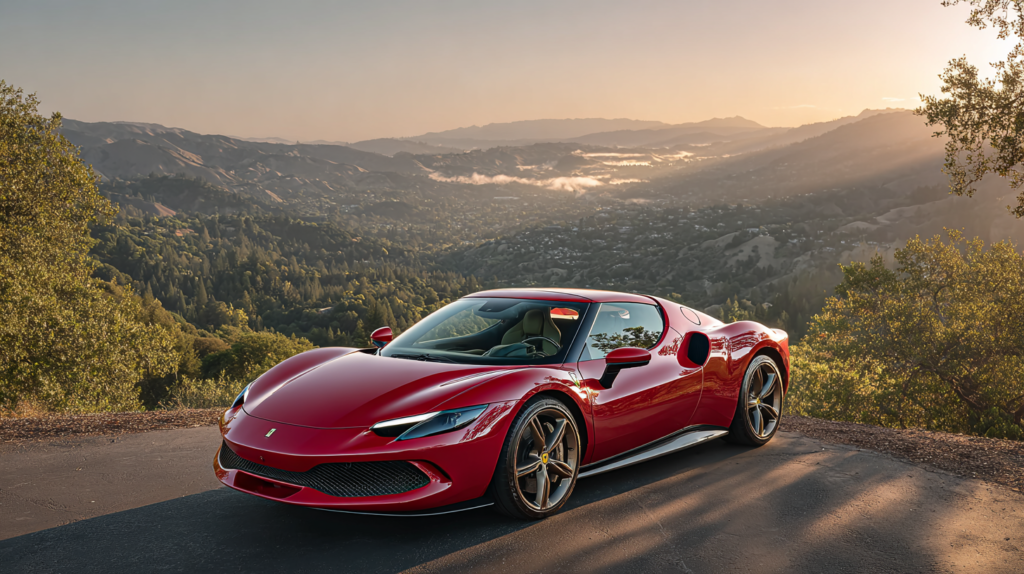
How the 296 GTS Stacks Up Against Rivals
Against the McLaren Artura
The McLaren Artura is the 296’s most direct competitor. It is a mid engine hybrid supercar with a 3.0 liter V6 producing 671 horsepower, a seven speed dual clutch transmission, and a 7.4 kWh battery.
The Artura’s advantage is its weight and its handling. The McLaren is lighter than the Ferrari, with a dry weight of approximately 1,500 kilograms. The car’s chassis tuning is exceptional, with precise steering and a level of feedback that is widely praised.
The 296’s advantage is its power and its character. The Ferrari produces 148 more horsepower than the Artura, and its V6 engine has a more distinctive sound. The 296’s interior is also more luxurious, with higher quality materials and more advanced technology.
In value terms, the two cars are closely priced, with the Ferrari carrying a slight premium.
Against the Porsche 911 Turbo S Cabriolet
The Porsche 911 Turbo S Cabriolet is a rear engine, all wheel drive convertible with a 3.7 liter twin turbocharged flat six producing 640 horsepower.
The 911 Turbo S’s advantage is its daily usability and its all weather capability. The Porsche’s rear engine layout and all wheel drive system provide exceptional traction in all conditions, and the car’s interior is spacious and well appointed.
The 296’s advantage is its character and its driving experience. The Ferrari is more engaging, with a sound and a feel that the Porsche cannot match. The mid engine layout provides a different kind of handling, and the hybrid system adds a layer of sophistication.
Against the Lamborghini Huracán Tecnica
The Lamborghini Huracán Tecnica is a mid engine V10 supercar with 640 horsepower and a seven speed dual clutch transmission.
The Huracán’s advantage is its drama. The V10 engine produces a sound that is among the best in the industry, and the car’s aggressive styling and sharp angles create a visual presence that few competitors can match.
The 296’s advantage is its technology and its efficiency. The Ferrari’s hybrid system provides instant torque and allows for electric only operation, while its fuel consumption is significantly lower than the Lamborghini’s. The 296 is also more refined, with a more comfortable ride and a quieter cabin.
Against the Aston Martin Vantage Roadster
The Aston Martin Vantage Roadster is a front engine, rear drive convertible with a 4.0 liter twin turbocharged V8 producing 503 horsepower.
The Vantage’s advantage is its style and its character. The Aston Martin’s design is elegant and understated, and its V8 engine produces a muscular, traditional sound.
The 296’s advantage is its performance. The Ferrari is significantly quicker than the Vantage, with more power, better handling, and more advanced technology. The 296 is also more exclusive, with a price that reflects its higher position in the market.
Value Proposition
Pricing
The Ferrari 296 GTS carries a base price of approximately $350,000, with final prices varying based on options and personalization. The Assetto Fiorano package adds approximately $30,000 to the price.
This pricing places the 296 GTS in the upper tier of the supercar segment, above the McLaren Artura and Porsche 911 Turbo S Cabriolet, but below the Ferrari SF90 Stradale and Lamborghini Revuelto.
Depreciation
Ferraris traditionally hold their value well, particularly open top models. The 296 GTS, as a mid engine convertible, is expected to depreciate less than the coupe, though not as slowly as limited edition models like the 812 Competizione.
Ownership Costs
Maintaining a Ferrari involves higher costs than mainstream cars. Service intervals are annual or every 10,000 miles, with costs varying based on the service required. The 296 GTS is covered by Ferrari’s new vehicle warranty for three years with unlimited mileage, with extended warranty options available.
The Experience Factor
For many buyers, the value proposition of a Ferrari extends beyond financial considerations. The brand’s heritage, the driving experience, and the sense of occasion that comes with owning a Ferrari are factors that cannot be quantified on a spreadsheet.
Specifications Summary
| Specification | Value |
|---|---|
| Engine | 3.0L twin turbocharged V6 |
| Electric Motor | MGU K |
| Combined Power | 819 hp |
| Combined Torque | 546 lb ft |
| Transmission | 8 speed dual clutch |
| Drive | Rear wheel drive |
| 0-100 km/h | 2.9 seconds |
| 0-200 km/h | 7.6 seconds |
| Top Speed | 330+ km/h |
| Electric Range | 25 km (WLTP) |
| Battery | 7.45 kWh |
| Weight | 1,600 kg dry |
| Base Price | $350,000 |
Conclusion
The Ferrari 296 GTS represents a significant achievement in the evolution of the supercar. It combines a 819 horsepower hybrid powertrain with the open air experience of a convertible, delivering performance that rivals the best in the world while offering the efficiency and sophistication of modern hybrid technology.
The V6 engine, with its 120 degree angle and hot V configuration, is a masterpiece of engineering. Its sound, its responsiveness, and its power delivery are worthy successors to the V8s that have dominated Ferrari’s mid engine lineup. The hybrid system adds instant torque and allows for electric only operation, expanding the car’s capabilities without diluting its character.
Against its rivals, the 296 GTS holds its own. It offers more power than the McLaren Artura, more character than the Porsche 911 Turbo S Cabriolet, more efficiency than the Lamborghini Huracán Tecnica, and more performance than the Aston Martin Vantage Roadster. It is a car that can be driven daily, enjoyed on weekends, and appreciated for its engineering excellence.
For buyers seeking a supercar that combines hybrid technology with open air motoring, the Ferrari 296 GTS makes a compelling case. It is a car that honors Ferrari’s tradition while embracing the future, and it stands as one of the most complete convertibles in its class.

