
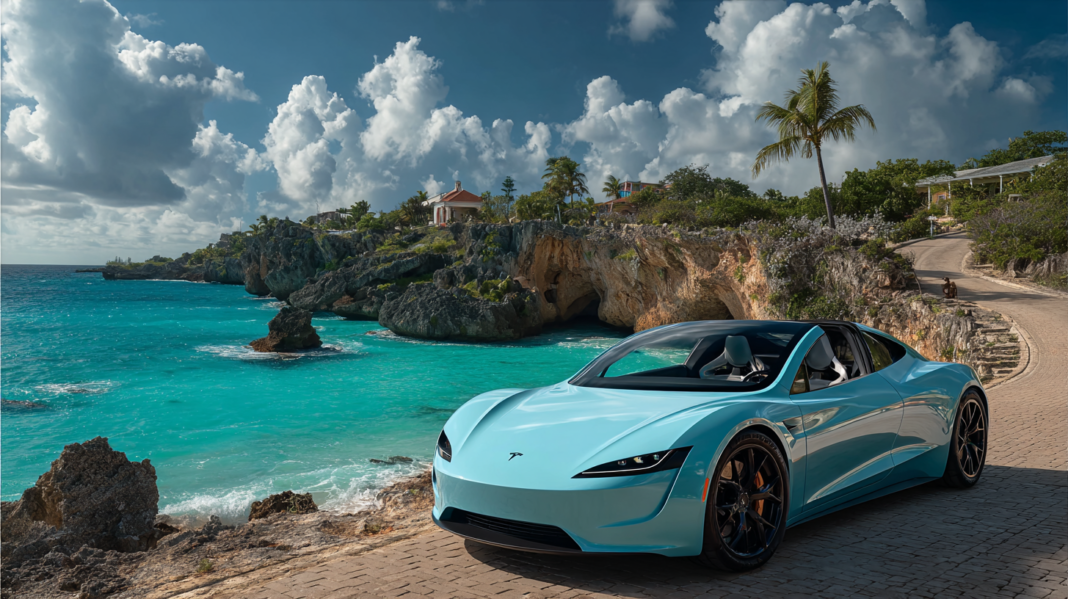
For nearly a decade, the Tesla Roadster has occupied a peculiar space in the automotive world. It exists in the collective imagination of enthusiasts, in the official specifications on Tesla’s website, and in the promise of a future that never seems to arrive. First unveiled in 2017 with a promised 2020 launch date, the second generation Roadster has become something of a legend through its absence.
Now, after multiple delays and years of silence, there is finally a concrete update. In March 2026, Elon Musk announced that the Roadster is scheduled for an April 2026 unveiling, with production to follow in 2027 or 2028. This has reignited the debate that has followed the car since its debut: is the Roadster a genuine game-changer, or is it destined to remain vaporware?
This article examines everything known about the 2026 Tesla Roadster, its claimed specifications, the context of its delayed development, and how it stacks up against rivals in performance, design, and value.
The Roadster Story: A Decade of Promise and Delay
The Original Roadster
The Tesla Roadster story began in 2008, when the company delivered its first production vehicle based on the Lotus Elise platform. That car, with approximately 220 miles of range and a near 4.0 second 0 to 60 time, proved that electric vehicles could be desirable performance machines. Approximately 2,450 units were sold before production ended in 2012.
The Second Generation
The second generation Roadster was unveiled in November 2017, alongside the Tesla Semi. It was presented as a prototype with claimed specifications that seemed almost unbelievable: 0 to 60 miles per hour in 1.9 seconds, a top speed exceeding 250 miles per hour, and a range of 620 miles. Production was promised for 2020.
That date came and went. Then 2021 passed, then 2022, then 2023. Each year brought occasional mentions from Musk about progress, but no production vehicle materialized. The reasons varied: prioritizing Model 3 and Model Y production, developing the Cybertruck, supply chain challenges, and the need to perfect the technology required to meet the ambitious claims.
The 2026 Announcement
In March 2026, Musk announced via social media that the Roadster would be unveiled in April 2026, with production to follow 12 to 18 months later. The announcement came shortly after Tesla reported that Model Y had achieved three consecutive years as the global sales leader, a context that suggests the company is using its mass market success to fund a halo car.
Official Specifications: What Tesla Claims
According to the Tesla website and official statements, the 2026 Roadster will deliver the following specifications:
Powertrain
The car features a three motor all wheel drive system, with one motor at the front and two at the rear. The claimed wheel torque figure is 10,000 Nm, though this is likely torque at the wheels rather than motor torque, a common distinction in electric vehicle marketing. A more realistic projection places total system horsepower in the range of 800 to 1,000.
Acceleration and Speed
The claimed 0 to 60 miles per hour time is 1.9 seconds for the base model, with a 0 to 100 km/h time of 2.1 seconds. A SpaceX package, incorporating approximately 10 cold gas thrusters, is claimed to reduce the 0 to 60 time to as low as 1.1 seconds. The quarter mile is claimed at 8.8 seconds.
Top speed is claimed to exceed 250 miles per hour, with some sources citing over 400 km/h.
Battery and Range
The Roadster will use a 200 kWh battery pack, one of the largest ever fitted to a production electric vehicle. Claimed range is 620 miles on the WLTP cycle.
Charging
The car will support high power fast charging, with claims of 600 km of range added in 15 minutes.
Design
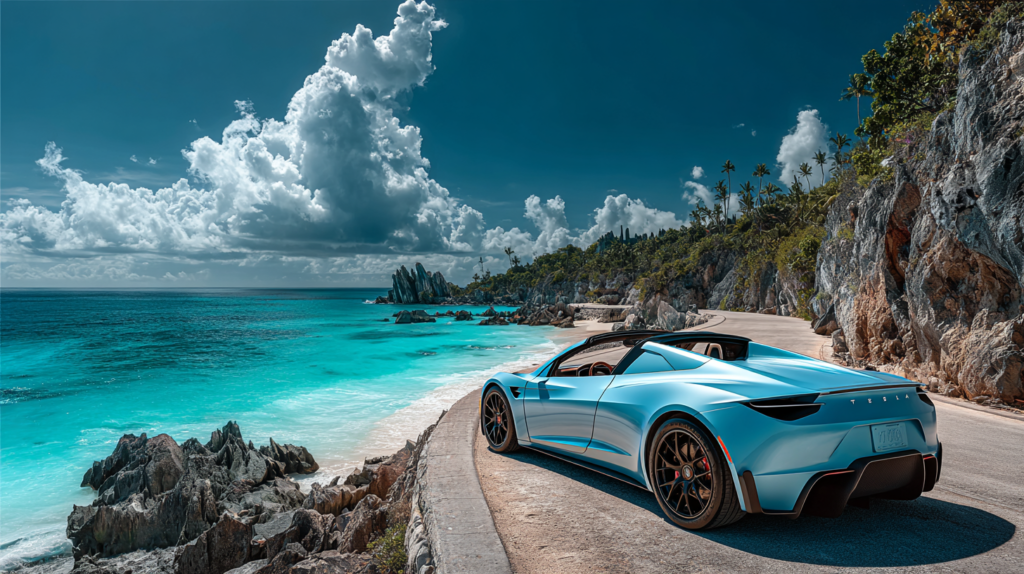
The Roadster is a four seat, two door coupe with a removable glass roof that can be stored in the trunk for open top driving. The exterior design is characterized by a low, wide stance, a closed front grille with a light bar, and aerodynamic features including a large rear diffuser and a deployable rear wing.
The SpaceX Package: Rocket Propulsion for a Road Car
One of the most unusual features claimed for the Roadster is the optional SpaceX package. According to Musk, this option adds approximately 10 cold gas thrusters mounted around the vehicle, using high pressure nitrogen to provide additional acceleration, braking, and cornering capability.
The claimed effects include reducing the 0 to 60 time to 1.1 seconds, improving lateral grip, and potentially allowing the car to achieve “short hops” or a brief hover. The technology is reportedly derived from SpaceX’s work on reaction control systems for spacecraft.
It is worth noting that no detailed technical explanation of this system has been provided, and its inclusion in a production vehicle remains speculative.
The Vaporware Argument: Reasons for Skepticism
A Decade of Delays
The Roadster was first shown in 2017 with a promised 2020 launch. Nine years later, no production vehicle exists. Each year has brought new promises, new timelines, and new reasons for delay. This pattern of missed deadlines is the primary evidence for the vaporware argument.
Tesla’s Track Record
While Tesla has successfully brought several vehicles to market, it has also repeatedly delayed others. The Cybertruck, unveiled in 2019, did not begin deliveries until late 2023. The Semi, also unveiled in 2017, began limited production in 2022. The Roadster’s delay is consistent with Tesla’s pattern, but the length of the delay is exceptional.
Skeptical Claims
The claimed specifications stretch credibility. A 200 kWh battery producing 620 miles of range while delivering 1.9 second 0 to 60 times and a 250 mph top speed would represent a significant breakthrough in battery energy density and thermal management. The SpaceX package, with its cold gas thrusters, is unlike any technology currently offered in a production vehicle.
The Context of Tesla’s Challenges
In 2025, Tesla faced significant headwinds. Global sales declined, while competitors gained ground. Profit fell significantly. The company announced plans to discontinue Model S and Model X due to low sales.
In this context, the Roadster may serve a strategic purpose as a halo car to restore brand prestige, but it does not address the fundamental challenges of aging product lines and increased competition in the mass market segments where Tesla generates its revenue.
The Game-Changer Argument: Reasons for Optimism
The Technical Precedent
Tesla has a history of delivering vehicles that meet or exceed initial claims. The Model S Plaid, with its 1,020 horsepower and sub 2.0 second 0 to 60 time, demonstrated that Tesla could produce a production vehicle with hypercar level acceleration. The 4680 battery cell technology, while slower to scale than anticipated, represents genuine advancement in battery manufacturing.
Recent Progress Indicators
In early 2026, Tesla filed a patent for new seat designs specifically for the Roadster, indicating ongoing engineering work. The company also posted job listings for Roadster program positions in recent months. These are concrete signs of activity, not just promises.
The March 2026 Announcement
The April 2026 unveiling date was announced with specificity, not the vague “next year” language that has characterized previous Roadster updates. The announcement was made with a clear timeline for production: 12 to 18 months after unveiling.
The Model Y Context
The Roadster announcement came shortly after Tesla announced that Model Y had achieved three consecutive years as the global sales leader. This suggests that Tesla is using its mass market success to fund halo projects, a sustainable business model that has worked for other automakers.
How the Roadster Stacks Up Against Rivals
Against the Rimac Nevera
The Rimac Nevera is the current benchmark for electric hypercars. With 1,914 horsepower, a 0 to 60 time of 1.85 seconds, and a top speed of 258 mph, it represents the state of the art. The Nevera’s 120 kWh battery delivers approximately 300 miles of range.
The Roadster’s claimed advantage is its range and its price. At $200,000, the Roadster is priced at less than one third of the Nevera’s approximately $2.2 million starting price. The claimed 620 mile range would also significantly exceed the Nevera’s.
The Nevera’s advantage is its proven capability. It has been tested independently, delivered to customers, and validated on tracks worldwide. The Roadster’s claims remain unproven.
Against the Ferrari SF90 Stradale
The Ferrari SF90 Stradale is a plug in hybrid with 986 horsepower and a 0 to 60 time of 2.5 seconds. It represents the pinnacle of Italian supercar engineering, with a V8 engine that produces a sound and sensation that no electric car can match.
The Roadster’s advantage is its acceleration and its efficiency. The claimed 1.9 second 0 to 60 time would significantly outperform the SF90. The Roadster also offers the practicality of four seats and a trunk, while the SF90’s rear seats are vestigial.
The SF90’s advantage is its character. The V8 engine, the Ferrari badge, and the visceral experience of driving an Italian supercar are qualities that electric vehicles have not yet replicated.
Against the Porsche 911 Turbo S
The Porsche 911 Turbo S is a 640 horsepower, 2.6 second 0 to 60 sports car with a legacy of engineering excellence. It is widely regarded as one of the most usable supercars, capable of daily driving and long distance touring.
The Roadster’s advantage is its claimed performance. The 1.9 second 0 to 60 time would significantly outpace the 911 Turbo S, and the 620 mile range would exceed any Porsche EV.
The 911 Turbo S’s advantage is its polish. Porsche’s chassis tuning, interior quality, and reliability are the results of decades of refinement. The 911 is a proven product with a devoted following.
Against the Lucid Air Sapphire
The Lucid Air Sapphire is a four door electric sedan with 1,234 horsepower, a 1.89 second 0 to 60 time, and 427 miles of range. It is currently one of the most capable electric vehicles on the market.
The Roadster’s advantage is its claimed range and its body style. The 620 mile range would exceed the Sapphire’s 427, and the two door coupe configuration offers a different driving experience.
The Sapphire’s advantage is its proven capability. Independent testing has validated its performance claims, and customer deliveries are underway. The Sapphire also offers the practicality of four doors and a spacious trunk.
Against the Chinese Competition
Chinese manufacturers have entered the electric supercar segment with impressive offerings. The BYD Yangwang U9 produces 1,300 horsepower, accelerates to 60 mph in 2.36 seconds, and has a top speed of 244 mph. The Xiaomi SU7 Ultra produces 1,527 horsepower and accelerates to 60 mph in 1.98 seconds.
The Roadster’s advantage is its claimed range. The U9 delivers approximately 280 miles of range, while the SU7 Ultra delivers approximately 320 miles. The Roadster’s 620 mile claim would be a significant advantage.
The Chinese competitors’ advantage is their availability. Both are in production or near production, while the Roadster remains a promise.
The Strategic Purpose: Why Tesla Needs the Roadster
Replacing Model S and Model X
Tesla has announced plans to discontinue Model S and Model X production. These vehicles, once the flagships of the brand, accounted for a small fraction of Tesla’s sales in 2025 and utilized only a fraction of their production capacity.
The Roadster is positioned as a replacement for these models in terms of brand positioning. It will serve as the halo vehicle that attracts attention and demonstrates Tesla’s technological capabilities.
Countering Competition
In markets worldwide, Tesla faces increasing competition from manufacturers who have matched or exceeded the brand in interior quality, technology features, and driving dynamics. The Roadster serves as a statement of Tesla’s continued engineering leadership.
Technology Demonstration
The Roadster is designed to showcase technologies that may eventually filter down to mass market models. The 200 kWh battery, the thermal management system, and the high speed motor technology could inform future iterations of mass market models.
The Delivery Timeline: What to Expect
Unveiling
The Roadster is scheduled for unveiling in April 2026. This event is expected to reveal the production version of the car, with finalized design and specifications.
Production Start
According to Musk, production will begin 12 to 18 months after the unveiling, placing first deliveries in late 2027 or early 2028. This timeline suggests that customers who reserve now can expect delivery in approximately two years.
Pricing
The base Roadster is expected to start at approximately $200,000, with a Founders Series limited edition priced at $250,000. Reservations require a deposit.
Is the Roadster Vaporware or a Game-Changer?
The answer may be neither, or it may be both.
The Roadster is not vaporware in the sense of being a complete fabrication. There is evidence of ongoing engineering work, patent filings, and specific announcements with concrete timelines. The technical claims, while ambitious, are not implausible given Tesla’s existing capabilities.
But the Roadster is also not likely to be the game-changer that Tesla claims. A $200,000, low volume supercar cannot reverse the company’s fortunes or address the fundamental challenges it faces in the mass market segments where it generates the majority of its revenue.
The Roadster is, instead, a halo car. It is designed to capture attention, demonstrate technical capability, and restore brand prestige. Its value to Tesla is not in the number of units sold but in the message it sends about the company’s continued engineering ambition.
For enthusiasts, the Roadster represents a promise: that the electric vehicle can deliver not just efficiency but also excitement, not just practicality but also passion. Whether it delivers on that promise remains to be seen. But after nine years of waiting, there is finally reason to believe that the answer may come within the next few years.
Specifications Summary
| Specification | Claimed Value |
|---|---|
| Powertrain | 3 motor all wheel drive |
| Horsepower | 800 to 1,000 (estimated) |
| Wheel Torque | 10,000 Nm |
| 0-60 mph | 1.9 seconds (base), 1.1 seconds (SpaceX) |
| Top Speed | 250+ mph |
| Battery | 200 kWh |
| Range | 620 miles |
| Seating | 4 seats |
| Roof | Removable glass hardtop |
| Base Price | $200,000 |
| Expected Delivery | 2027 to 2028 |
Conclusion
The 2026 Tesla Roadster sits at the intersection of promise and skepticism. Its claimed specifications would place it among the most capable production vehicles ever built: 1.9 second 0 to 60 acceleration, 250 mph top speed, and 620 miles of range. The optional SpaceX package, with its cold gas thrusters, would be unlike anything offered in a production car.
Yet the Roadster is also defined by its absence. Announced in 2017, promised for 2020, it has become a symbol of Tesla’s tendency to overpromise and delay. The 2026 announcement provides a specific timeline, and there is evidence of ongoing development, but the production vehicle remains unproven.
For buyers considering the Roadster, the calculus is straightforward. It is a $200,000 car that will not be delivered for at least two years, with specifications that have not been independently validated. It is a car for early adopters who trust Tesla’s claims and who value the experience of being among the first to own a potentially revolutionary vehicle.
For the broader automotive industry, the Roadster serves a different purpose. It is a statement of intent, a demonstration that Tesla remains committed to pushing boundaries. It may not save the company from the challenges of aging product lines and increased competition, but it may remind the world of what made Tesla special in the first place.
In the end, the Roadster will be judged not by its specifications or its promises but by what it delivers. If it achieves its claimed performance, it will be a game-changer. If it never arrives, it will be remembered as vaporware. The answer is not yet written.

