
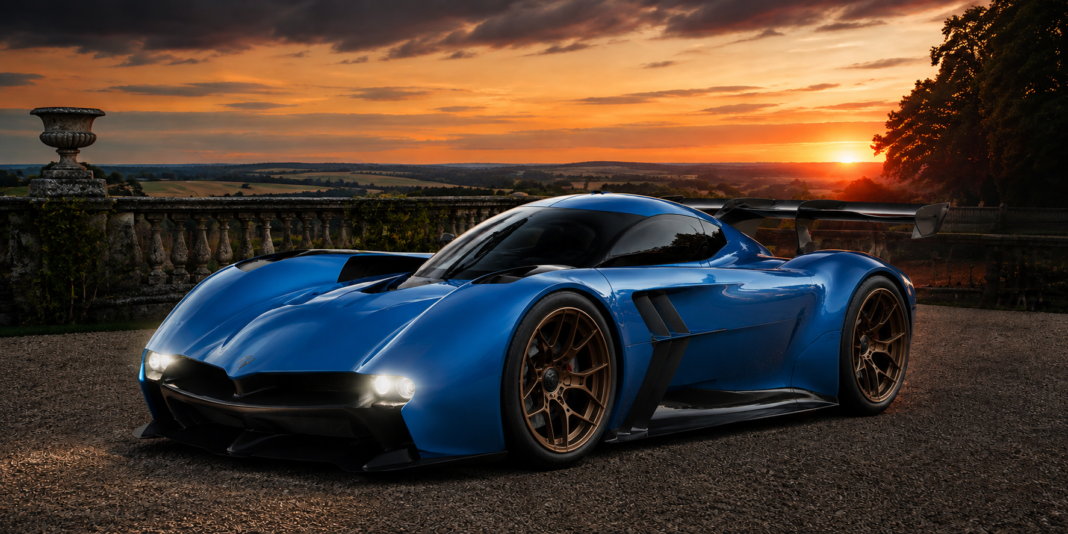
The sun is setting over the rolling hills of the Goodwood Estate in West Sussex, England. The 1.16-mile hill climb course is quiet now, but the echoes of a record-breaking run still linger. On a summer weekend in 2022, a small, single-seat electric car launched up the hill with a jet-like scream and shattered the all-time record by nearly a second. This is the McMurtry Speirling, the fan car that broke Goodwood, and it represents the most significant advance in automotive aerodynamics since the invention of the rear wing.
The Speirling is not a conventional supercar. It is a single-seat, track-only electric hypercar developed by a British startup founded by former Williams engineer Thomas Yates. It weighs just 1,000 kilograms, produces 1,000 horsepower, and generates an astonishing 2,000 kilograms of downforce. It is the fastest accelerating car in the world, capable of 0 to 60 mph in 1.4 seconds. And it does all of this through a technology that motorsport banned decades ago: a fan.
The Technology: Downforce on Demand
The Speirling’s secret is its patented Downforce-on-Demand system. Two fans, each spinning at 23,000 rpm, are mounted under the rear of the car. They draw air from beneath the car and exhaust it out the rear, creating a vacuum that sucks the car to the ground. The system generates the full 2,000 kilograms of downforce even when the car is stationary. It does not rely on speed to generate grip.
This is a fundamental departure from conventional aerodynamics. A traditional racing car generates downforce through wings and diffusers, which create drag and only work at speed. The Speirling’s fan system provides constant downforce regardless of speed, allowing it to corner with levels of grip that are typically the domain of LMP2 race cars. It also reduces drag, improving efficiency and top speed.
The fan system gives the Speirling an unusual sound. The twin fans produce a jet-engine-like noise, a high-pitched whine that is distinct from the electric motor’s whir. It is the sound of a car that is literally sucking itself to the road.
The Record: 39.08 Seconds at Goodwood
The Speirling’s record at Goodwood was a demonstration of the technology’s potential. Driven by IndyCar and former F1 driver Max Chilton, the car completed the 1.16-mile hill climb in 39.08 seconds. It beat the previous record, set by Romain Dumas in the Volkswagen ID.R electric race car, by nearly a second. It was the fastest time ever recorded up the Goodwood hill, faster than any Formula 1 car, any Le Mans prototype, any rally car.
The record run was a sensation. The car launched with the force of a slingshot, cornered with unnatural grip, and seemed to defy physics. It was a moment that reminded the automotive world of what happens when engineers are given the freedom to think without constraint.
The Legacy: A Banned Technology Revived
The Speirling is not the first fan car. The concept originated with the Chaparral 2J, a Can-Am car developed by American engineer Jim Hall in 1970. The 2J used two fans powered by a separate engine to create a vacuum under the car, generating immense downforce. It was fast, but it was also banned by the Sports Car Club of America after one season.
The concept was revived in Formula 1 by Gordon Murray’s Brabham BT46B in 1978. The BT46B used a fan driven by the main engine to cool the car and create downforce. It won its only race, the Swedish Grand Prix, by over half a minute, but it was banned immediately afterward. Murray’s achievement was recognized as a brilliant interpretation of the rules, but the technology was deemed too dangerous to allow.
The Speirling is the first production car to use fan technology since the Brabham. It is a proof of concept that the technology can work reliably and safely, and it is a reminder of what is possible when engineers are allowed to push the boundaries.
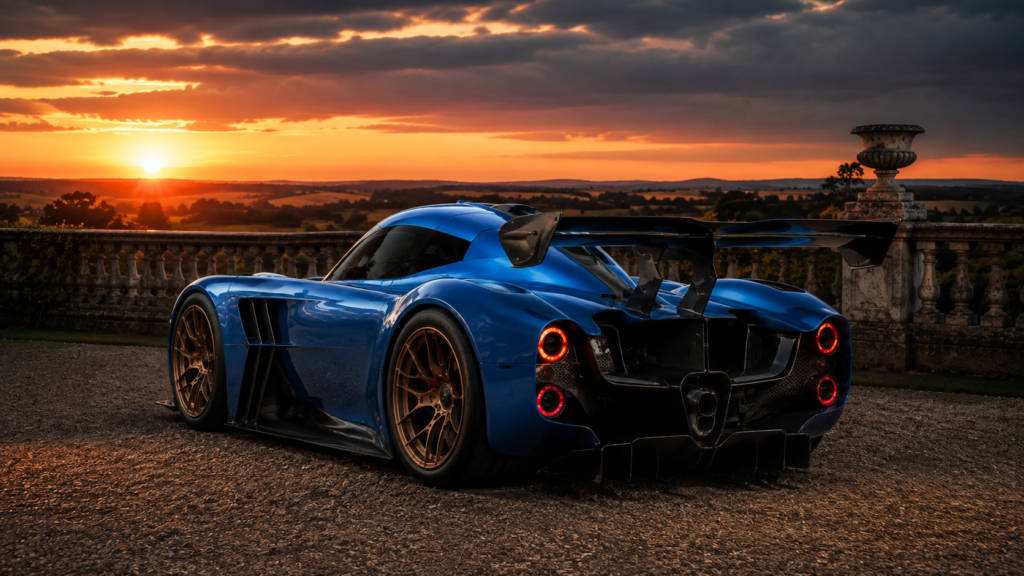
The Goodwood Evening
The Speirling has completed its demonstration run. Its fan system has delivered the 2,000 kilograms of downforce that makes it one of the most extraordinary track cars ever built. The driver has experienced a level of performance that is as exclusive as it is extraordinary.
The Speirling is not a car for everyone. It is a track-only single-seater, priced at approximately $1.3 million. But it represents a significant moment in automotive history. It is the car that proved fan technology could work, that a small British startup could challenge the established order, and that the spirit of innovation is still alive.
The Speirling is not just a car. It is a statement. It is a reminder that even in an era of electrification and automation, there is still room for a car that is built by hand, driven with intent, and cherished as art. The fan car has returned. And it is faster than ever.

