
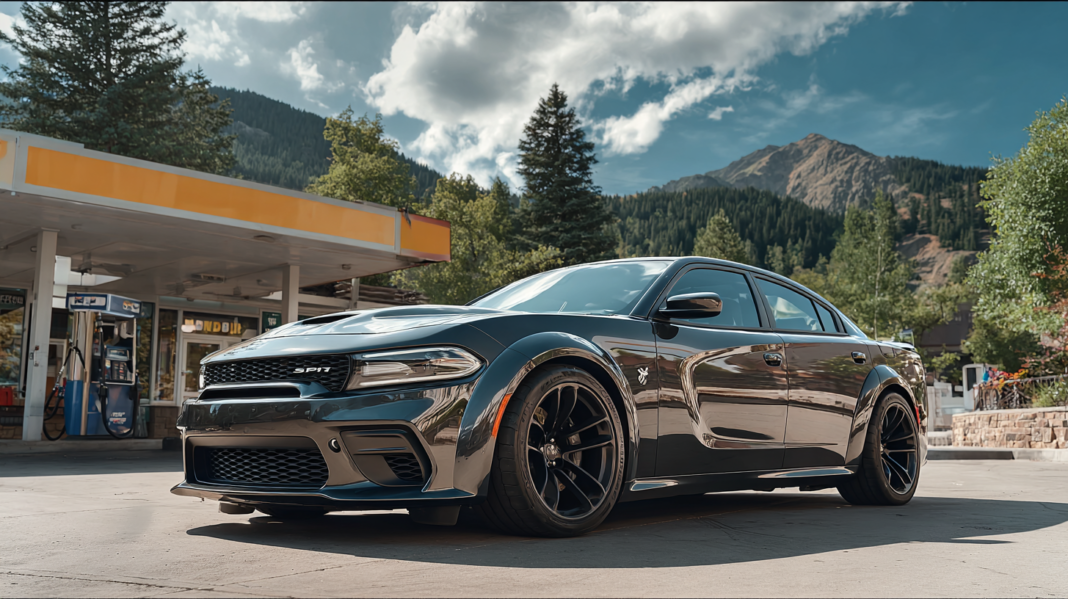
For decades, the Dodge brand has been defined by a simple formula: big engines, bold styling, and unapologetic performance. The Hemi V8, the Scat Pack, the Hellcat these are names that resonate with enthusiasts who value power above all else. The Dodge Charger and Challenger have been the last bastions of the traditional American muscle car, with V8 engines producing 700 or more horsepower in their most extreme forms.
But the automotive landscape is changing. Emissions regulations, fuel economy standards, and consumer preferences are pushing manufacturers toward electrification. For Dodge, the question was not whether to electrify but how to do so without losing the character that defines the brand.
The Charger Daytona SRT is the answer. Introduced as a concept in 2022 and entering production for the 2024 model year, the Daytona is the first electric muscle car from an American manufacturer. It is a car designed to prove that electric powertrains can deliver the visceral experience that muscle car enthusiasts demand. This article provides a comprehensive review of the Dodge Charger Daytona SRT, examining its performance specifications, design philosophy, interior accommodations, and how it stacks up against rivals in performance, design, and value.
The Muscle Car Formula: Reimagined for Electric
The traditional muscle car formula is simple: a front engine, rear drive coupe or sedan with a large displacement V8, aggressive styling, and straight line speed. The Charger Daytona SRT retains the spirit of this formula while updating it for the electric age.
The car is built on a dedicated electric platform, with a 400 volt electrical architecture. It features a front motor producing 335 horsepower and a rear motor producing 335 horsepower, for a total system output of 670 horsepower in the standard configuration. A high performance version, called the Daytona SRT Banshee, produces up to 807 horsepower.
The car retains the Charger’s four door sedan body style, with aggressive styling that echoes the current generation Charger while incorporating design elements that signal its electric powertrain. The result is a car that looks like a muscle car, sounds like a muscle car, and performs like a muscle car, but without the V8 engine.
Powertrain and Performance
Dual Motor Configuration
The Charger Daytona SRT uses two electric motors, one at the front axle and one at the rear, providing all wheel drive. The system is designed to mimic the behavior of a traditional rear wheel drive muscle car, with a rear bias in most driving conditions.
In the standard Daytona SRT, the combined output is 670 horsepower and 627 lb ft of torque. The Banshee version, which features upgraded motors and a more powerful inverter, produces 807 horsepower and 702 lb ft of torque.
Transmission and Drivetrain
Unlike most electric vehicles, which have a single speed transmission, the Charger Daytona SRT features a multi speed transmission. The unit is a two speed gearbox that allows the car to deliver strong acceleration from a standstill while maintaining efficiency at highway speeds.
The transmission is controlled through paddle shifters, allowing the driver to select gears manually. The system is designed to provide the engagement of a traditional performance car, with shift points that can be adjusted through the car’s drive modes.
Acceleration and Speed
The standard Daytona SRT accelerates from 0 to 60 miles per hour in 3.3 seconds. The Banshee version achieves the same sprint in 2.7 seconds. Both figures are competitive with the most powerful internal combustion muscle cars, including the Hellcat and Demon.
The quarter mile is completed in approximately 11.5 seconds at 120 miles per hour for the standard version and 10.5 seconds at 130 miles per hour for the Banshee. Top speed is 137 miles per hour for the standard version and 150 miles per hour for the Banshee.
Battery and Range
The Charger Daytona SRT is powered by a 100.5 kWh battery pack, mounted low in the floor to lower the center of gravity. The standard version has an EPA estimated range of 260 miles, while the Banshee version has a range of approximately 230 miles due to its higher power output.
The battery can be charged at up to 350 kW, allowing a 10 to 80 percent charge in approximately 20 minutes. The car also features vehicle to load capability, allowing it to power external devices.
Weight and Balance
The Charger Daytona SRT weighs approximately 5,800 pounds, a figure that reflects the size of the battery pack and the structural reinforcements required for its performance. Despite this weight, the car’s low center of gravity and sophisticated suspension tuning allow it to handle with surprising agility.
The weight distribution is approximately 48 percent front, 52 percent rear, contributing to the car’s balanced handling.
The Fratzonic Chambered Exhaust
The Sound Question
One of the defining characteristics of a muscle car is its sound. The rumble of a V8 at idle, the roar at wide open throttle these are sensory experiences that enthusiasts value. Electric vehicles, by contrast, are quiet.
Dodge’s engineers developed a solution: the Fratzonic Chambered Exhaust. This system uses a series of amplifiers and resonators to produce a sound that mimics a V8 engine. The sound is not a recording; it is synthesized in real time based on throttle position, vehicle speed, and motor rpm.
How It Works
The Fratzonic system is mounted in the rear of the car, where the exhaust would be on a traditional Charger. It uses two amplifiers producing 600 watts each, driving speakers that generate sound waves. The waves are directed through tuned resonators that shape the sound, giving it the character of a V8.
The result is a sound that is surprisingly authentic. At idle, there is a deep rumble. Under acceleration, the sound builds to a roar. On deceleration, there is a burble and crackle that mimics the sound of an internal combustion engine.
Controversy and Reception
The Fratzonic system has been controversial. Some enthusiasts appreciate the effort to preserve the auditory experience of a muscle car. Others find it artificial, a simulation rather than the real thing.
Dodge’s position is that the system is a necessary part of the muscle car experience. The company has stated that it will continue to develop the technology, with the goal of making it indistinguishable from a V8.
Chassis and Dynamics
Suspension System
The Charger Daytona SRT features an adaptive suspension system with air springs and continuously variable dampers. The system can adjust ride height and damping characteristics in milliseconds based on road conditions and driving mode.
The suspension is tuned for the car’s performance focus, with a balance of comfort and handling. The car’s body control is good, with minimal roll through corners and stable behavior under hard braking.
Steering
The electric power steering is calibrated for the Daytona’s performance focus. The system provides appropriate weighting and feedback, with a level of communication that is good for an electric system. The steering ratio is quick, requiring minimal input to change direction.
Brakes
The braking system uses 15.7 inch front discs with six piston Brembo calipers and 15.4 inch rear discs with four piston calipers. The system provides strong stopping power, with consistent pedal feel and resistance to fade during hard use.
The regenerative braking system is integrated with the friction brakes through a brake by wire system that maintains consistent pedal feel regardless of the regeneration level.
Wheels and Tires
The Daytona rides on 20 inch front wheels and 21 inch rear wheels, wrapped in high performance summer tires. The tire sizes are 275/40 ZR20 front and 315/35 ZR21 rear. The tires are developed specifically for the Daytona, with a compound and construction that provide the grip necessary for the car’s performance.
Drive Modes
The Charger Daytona SRT features six selectable drive modes: Auto, Sport, Track, Drag, Wet, and Custom. Each mode adjusts the settings of the powertrain, suspension, steering, and sound system.
Drag mode is designed for straight line acceleration, with the suspension set for maximum weight transfer and the powertrain calibrated for the quickest launches. Track mode sharpens the chassis responses for circuit driving.
Design
Exterior Styling
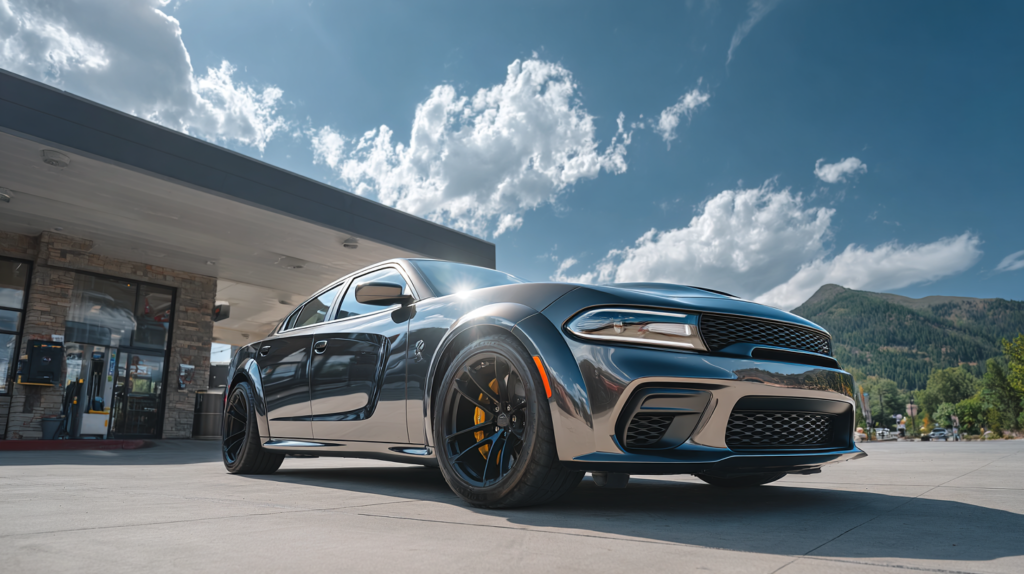
The Charger Daytona SRT’s exterior design builds on the aggressive styling of the current Charger, adding elements that signal its electric powertrain. The front end features a full width light bar and a prominent grille that incorporates the Fratzonic exhaust system. The hood is sculpted, with a functional air intake that feeds cooling air to the powertrain.
The side profile shows the classic Charger proportions, with a long hood, a fastback roofline, and a short rear deck. The doors are flush mounted, and the side mirrors are aerodynamically shaped. The rear end features a full width light bar, a prominent diffuser, and the Fratzonic exhaust outlets.
The car is available in a range of exterior colors, including the exclusive Daytona Blue that is unique to the model.
Aerodynamics
The Daytona’s aerodynamic development focused on managing airflow for stability and cooling. The front splitter directs air under the car, while the underbody panels manage airflow to reduce drag and minimize lift. The rear diffuser accelerates airflow beneath the car, generating downforce at the rear axle.
The car’s drag coefficient is 0.28, a figure that is good for a performance sedan.
Interior and Accommodations
Cabin Design
The interior of the Charger Daytona SRT reflects the car’s dual personality as both a muscle car and a modern electric vehicle. The seats are heavily bolstered to hold occupants during cornering, with leather and Alcantara upholstery. The front seats are power adjustable with heating, cooling, and massage functions.
The dashboard features a 12.3 inch digital instrument cluster and a 12.3 inch central touchscreen. The instrument cluster can be configured to display performance data, including g forces, lap times, and power output. The infotainment system includes navigation, Apple CarPlay, Android Auto, and a premium audio system.
The steering wheel is flat bottom, with integrated controls for the car’s systems. The paddle shifters control the two speed transmission, allowing the driver to select gears manually.
Seating and Space
The Charger Daytona SRT seats five passengers comfortably. The front seats offer excellent support and comfort, with a driving position that is low and sporty. The rear seats are shaped for comfort, with sufficient legroom and headroom for adult passengers.
The trunk offers 16 cubic feet of space, sufficient for a weekend’s worth of luggage or a set of golf clubs.
Technology Features
The Daytona is equipped with a comprehensive suite of technology features. The infotainment system includes wireless Apple CarPlay and Android Auto, a premium audio system, and integrated navigation. The digital instrument cluster includes a track mode that displays performance data in a format suited to circuit driving.
Driver assistance features include adaptive cruise control, lane departure warning with lane keep assist, blind spot monitoring, and automatic emergency braking.
Driving Experience
On Road Character
The Charger Daytona SRT is a car that commands attention. Its aggressive styling and the Fratzonic exhaust sound draw looks wherever it goes. In normal driving, the car is civil and composed. The suspension absorbs road imperfections without transmitting harshness to the cabin, and the cabin is quiet enough for conversation.
When the driver presses the accelerator, the character transforms. The acceleration is immediate and relentless, pushing occupants into their seats with force that is impressive. The Fratzonic exhaust sound builds to a roar, creating a sensory experience that is surprisingly authentic.
On Track Behavior
When driven on a track, the Daytona reveals the depth of its engineering. The brakes provide consistent stopping power lap after lap, with a pedal feel that inspires confidence. The chassis remains composed through corners, with the all wheel drive system providing traction that allows early power application on exit.
The car’s weight is evident during hard cornering, but the low center of gravity and the sophisticated suspension tuning allow it to handle with agility that belies its mass. The car is balanced and predictable, with a slight tendency toward understeer at the limit that builds driver confidence.
The Sound Experience
The Fratzonic exhaust system is a defining feature of the Daytona experience. The sound is not a perfect imitation of a V8; it has a synthetic quality that some drivers find artificial. But it is a genuine effort to preserve the auditory experience of a muscle car, and for many drivers, it succeeds.
How the Charger Daytona SRT Stacks Up Against Rivals
Against the Tesla Model S Plaid
The Tesla Model S Plaid is the Daytona’s most obvious competitor, with a three motor powertrain producing 1,020 horsepower and a 0 to 60 time of 1.99 seconds.
The Model S Plaid’s advantage is its performance. The Tesla is significantly quicker than the Daytona, with acceleration that few cars can match. The car also offers access to Tesla’s extensive Supercharger network, which provides reliable fast charging across the country.
The Daytona’s advantage is its character. The Fratzonic exhaust sound, the aggressive styling, and the muscle car heritage create an experience that the Tesla cannot match. The Daytona also offers a more traditional interior layout, with physical controls and a conventional dashboard.
Against the Lucid Air Sapphire
The Lucid Air Sapphire is a four door electric sedan with a three motor powertrain producing 1,234 horsepower and a 0 to 60 time of 1.89 seconds.
The Air Sapphire’s advantage is its performance and its range. The Lucid is quicker than the Daytona, and its 427 mile range is significantly higher. The interior is also more luxurious, with higher quality materials and more advanced technology.
The Daytona’s advantage is its character and its price. The Dodge is designed to be a muscle car, with a sound and a feel that the Lucid cannot match. The Daytona is also significantly less expensive, with a starting price approximately $100,000 lower than the Air Sapphire.
Against the Porsche Taycan Turbo GT
The Porsche Taycan Turbo GT is a four door electric sedan with a dual motor powertrain producing 1,092 horsepower and a 0 to 60 time of 2.2 seconds.
The Taycan Turbo GT’s advantage is its handling. Porsche’s chassis tuning is widely regarded as the benchmark in the electric performance segment, and the Taycan’s steering, suspension, and brake feel are exceptional.
The Daytona’s advantage is its muscle car character. The Dodge offers a different kind of experience, one based on power, sound, and attitude rather than precision. The Daytona is also less expensive than the Taycan.
Against the Ford Mustang Mach-E GT
The Ford Mustang Mach-E GT is an electric crossover with a dual motor powertrain producing 480 horsepower and a 0 to 60 time of 3.5 seconds.
The Mach-E GT’s advantage is its price and its practicality. The Ford is significantly less expensive than the Daytona, and its crossover body style offers more cargo space and easier entry and exit.
The Daytona’s advantage is its performance and its character. The Dodge is quicker, more powerful, and more engaging to drive than the Mach-E GT. The Daytona also offers a more traditional muscle car experience, with a sound and a feel that the Ford cannot match.
Against the Chevrolet Corvette E-Ray
The Chevrolet Corvette E-Ray is a hybrid sports car with a 6.2 liter V8 and an electric motor producing a combined 655 horsepower and a 0 to 60 time of 2.5 seconds.
The E-Ray’s advantage is its character and its handling. The Corvette’s V8 engine produces a sound that no electric car can match, and its mid engine chassis provides exceptional handling.
The Daytona’s advantage is its practicality and its space. The Dodge offers four doors, a spacious interior, and a trunk, making it a car that can be used for daily driving as well as weekend adventures.
Value Proposition
Pricing
The Dodge Charger Daytona SRT carries a base price of approximately $75,000. The Banshee version starts at approximately $85,000. This pricing places the Daytona in the upper tier of the electric performance sedan market, above the Ford Mustang Mach-E GT but below the Lucid Air Sapphire and Porsche Taycan Turbo GT.
Depreciation
Dodge vehicles traditionally hold their value reasonably well, though the long term depreciation of the Daytona is not yet established. Early indications suggest that the Daytona, as a halo model for the brand, may hold its value better than standard Charger models.
Ownership Costs
Maintaining a Charger Daytona involves lower costs than internal combustion muscle cars. There are no oil changes, no spark plugs, and no engine air filters. The brake pads are expected to last longer than those on internal combustion cars due to regenerative braking. The tires, sized 275/40 ZR20 front and 315/35 ZR21 rear, are expensive to replace.
The Experience Factor
For many buyers, the Daytona’s value proposition extends beyond financial considerations. The car’s character, its sound, and its connection to the muscle car heritage are factors that cannot be quantified on a spreadsheet.
Specifications Summary
| Specification | Standard Daytona SRT | Banshee Version |
|---|---|---|
| Motors | 2 motor (1 front, 1 rear) | 2 motor (1 front, 1 rear) |
| Horsepower | 670 hp | 807 hp |
| Torque | 627 lb ft | 702 lb ft |
| Battery | 100.5 kWh | 100.5 kWh |
| Range | 260 miles | 230 miles |
| 0-60 mph | 3.3 seconds | 2.7 seconds |
| Quarter Mile | 11.5 seconds @ 120 mph | 10.5 seconds @ 130 mph |
| Top Speed | 137 mph | 150 mph |
| Weight | 5,800 lb | 5,800 lb |
| Base Price | $75,000 | $85,000 |
Conclusion
The Dodge Charger Daytona SRT represents a significant moment in the evolution of the muscle car. It is the first electric muscle car from an American manufacturer, and it is a car that attempts to preserve the character of the muscle car while embracing the advantages of electric power.
The Daytona is not a perfect translation of the muscle car formula. It is heavy, its range is limited, and its Fratzonic exhaust sound is a simulation rather than the real thing. But it offers performance that rivals the most powerful internal combustion muscle cars, handling that is surprisingly capable, and a character that is unmistakably Dodge.
Against its rivals, the Daytona holds its own. It offers more character than the Tesla Model S Plaid, more value than the Lucid Air Sapphire, more practicality than the Chevrolet Corvette E-Ray, and a more traditional muscle car experience than the Ford Mustang Mach-E GT.
The Daytona is a car that will appeal to enthusiasts who are ready to embrace electric power but are not ready to give up the sensory experience of a muscle car. It is a car that demonstrates that electric powertrains can deliver power, that they can deliver character, and that they can deliver the thrill of driving.
In 2026, as the automotive industry continues its transition toward electrification, the Charger Daytona SRT stands as a statement that the muscle car is not dead. It is evolving, changing, adapting to a new era. But the spirit remains.

