
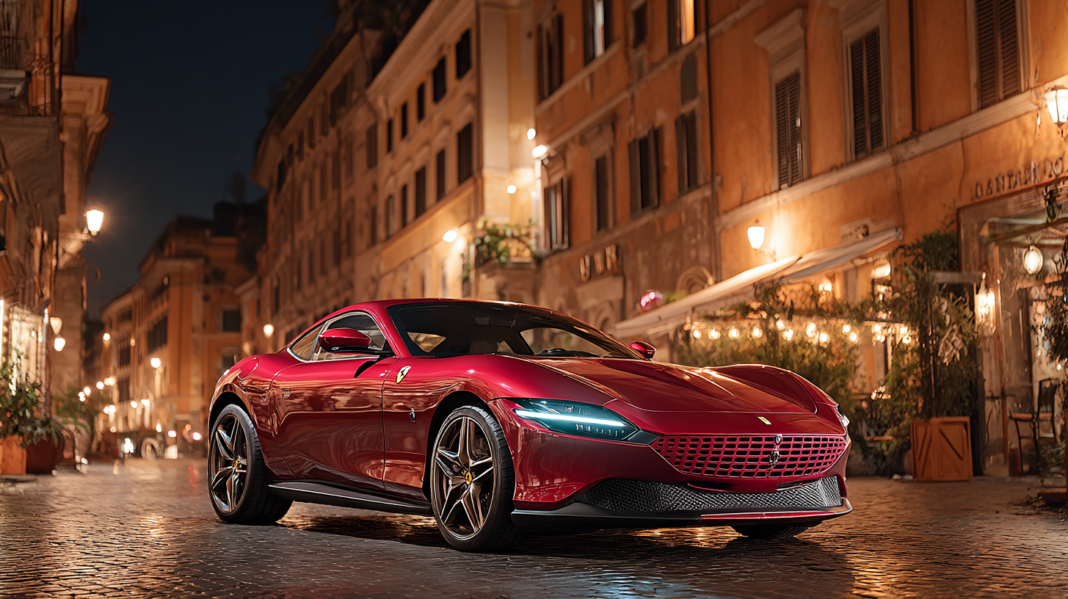
Ferrari has long been associated with dramatic styling, high strung engines, and a racing pedigree that few manufacturers can claim. The company’s history is filled with cars that shout their performance credentials, from the flamboyant Testarossa to the aggressively styled F40. But every so often, Ferrari produces a car that takes a different approach, one that prioritizes elegance over aggression and restraint over excess.
The Roma Spider is such a car. Introduced as the open top version of the Roma coupe, the Spider represents Ferrari’s interpretation of the grand touring tradition. It is a front engine, rear drive convertible with seating for four, a twin turbocharged V8 producing over 600 horsepower, and a design that draws inspiration from the classic Ferrari grand tourers of the 1950s and 1960s.
This article provides a comprehensive review of the Ferrari Roma Spider, examining its performance specifications, design philosophy, interior accommodations, and how it stacks up against rivals in performance, design, and value.
The Roma Philosophy: A Return to Elegance
When Ferrari unveiled the Roma coupe in 2019, it represented a deliberate departure from the brand’s recent design language. Where the F8 Tributo and SF90 Stradale featured aggressive aerodynamics and complex surfaces, the Roma was clean, simple, and elegant. The design was inspired by the grand tourers of Ferrari’s past, cars like the 250 GT Lusso and the 365 GTC/4, which prioritized style and refinement alongside performance.
The Roma Spider extends this philosophy to the open top format. It is a car designed for drivers who value the experience of grand touring as much as lap times, who appreciate the sound of a V8 with the roof down, and who want a Ferrari that can be used for weekend getaways as well as spirited drives.
The Spider’s development was integrated with the coupe from the beginning, ensuring that the open top version maintains the structural rigidity and handling balance of the closed car. Unlike convertibles that are developed after the coupe and suffer from weight penalties and compromised dynamics, the Roma Spider was designed as a convertible from the outset.
Powertrain and Performance
Engine Specifications
The Roma Spider is powered by the same 3.9 liter twin turbocharged V8 engine that has become Ferrari’s premier powerplant. This engine, which has won numerous awards for its performance and character, produces 612 horsepower at 5,750 rpm and 561 lb ft of torque from 3,000 to 5,750 rpm.
The engine is part of Ferrari’s V8 family that debuted in the 488 GTB and has since been refined for the F8 Tributo, the Portofino, and the Roma. It features a flat plane crankshaft, which gives it the high revving character and distinctive sound traditionally associated with Ferrari V8s. The twin turbochargers are mounted in the V between the cylinder banks, a configuration that reduces lag and improves throttle response.
Transmission
Power is transmitted to the rear wheels through an eight speed dual clutch transmission. This unit, developed in house by Ferrari, represents a significant advancement over the seven speed unit used in earlier models. The gearbox is designed for rapid shifts, with the ability to change gears in milliseconds in the most aggressive driving modes.
The transmission offers a range of shift characteristics depending on the selected drive mode. In Comfort and Sport modes, shifts are smooth and unobtrusive, suited to relaxed grand touring. In Race mode, the shifts become more aggressive, with a sharp, mechanical feel that adds to the sense of engagement.
Acceleration and Speed
The Roma Spider accelerates from 0 to 100 kilometers per hour in 3.4 seconds. The 0 to 200 kilometers per hour sprint takes 9.7 seconds. These figures place the Spider slightly behind the coupe, which achieves the same benchmarks in 3.2 and 9.3 seconds respectively, reflecting the additional weight of the convertible mechanism.
Top speed is rated at 320 kilometers per hour. For most owners, this figure is academic; the car’s performance is more than sufficient for any legal driving scenario.
Weight and Balance
The Roma Spider weighs approximately 1,670 kilograms dry, with a curb weight of approximately 1,770 kilograms including fluids. This represents a weight increase of approximately 100 kilograms over the coupe, primarily due to the retractable hardtop mechanism and the structural reinforcements required to maintain rigidity.
Despite the added weight, the Spider maintains the coupe’s near perfect weight distribution, with 49 percent of the weight over the front axle and 51 percent over the rear. This balance contributes to the car’s neutral handling characteristics.
Chassis and Dynamics
Structure and Rigidity
The Roma Spider’s chassis is based on the same aluminum architecture as the coupe, with modifications to accommodate the open top configuration. The A pillars are reinforced, the sills are strengthened, and the rear bulkhead incorporates additional bracing to compensate for the loss of the fixed roof.
Ferrari engineers claim that the Spider’s torsional rigidity is within 10 percent of the coupe, a remarkable achievement for a convertible. This rigidity is essential for precise handling and consistent steering feedback.
Suspension
The Roma Spider uses double wishbone suspension at the front and a multi link setup at the rear. The system features magnetorheological dampers that can adjust their characteristics in milliseconds based on road conditions and driving mode.
The suspension is tuned for a balance of comfort and handling, consistent with the car’s grand touring mission. In Comfort mode, the car absorbs road imperfections without transmitting harshness to the occupants. In Race mode, the suspension stiffens, reducing body roll and sharpening responses for spirited driving.
Steering and Brakes
The electric power steering is calibrated to provide appropriate weighting and feedback across speed ranges. The system is less communicative than the hydraulic systems of older Ferraris, but it is precise and provides sufficient feedback for confident cornering.
The brakes are carbon ceramic units with 390 mm discs at the front and 360 mm discs at the rear. The six piston front calipers and four piston rear calipers provide exceptional stopping power, with consistent pedal feel and resistance to fade during repeated hard stops.
Driving Modes
The Roma Spider features Ferrari’s manettino switch on the steering wheel, allowing the driver to select from five driving modes: Comfort, Sport, Race, Wet, and ESC Off. Each mode adjusts the settings of the engine, transmission, suspension, stability control, and exhaust.
Comfort mode is suited to relaxed touring, with softer suspension, smoother shifts, and reduced exhaust volume. Sport mode sharpens responses without becoming aggressive. Race mode is intended for track use, with the fastest shift times, stiffest suspension, and minimal stability control intervention.
Design and Aerodynamics
Exterior Styling
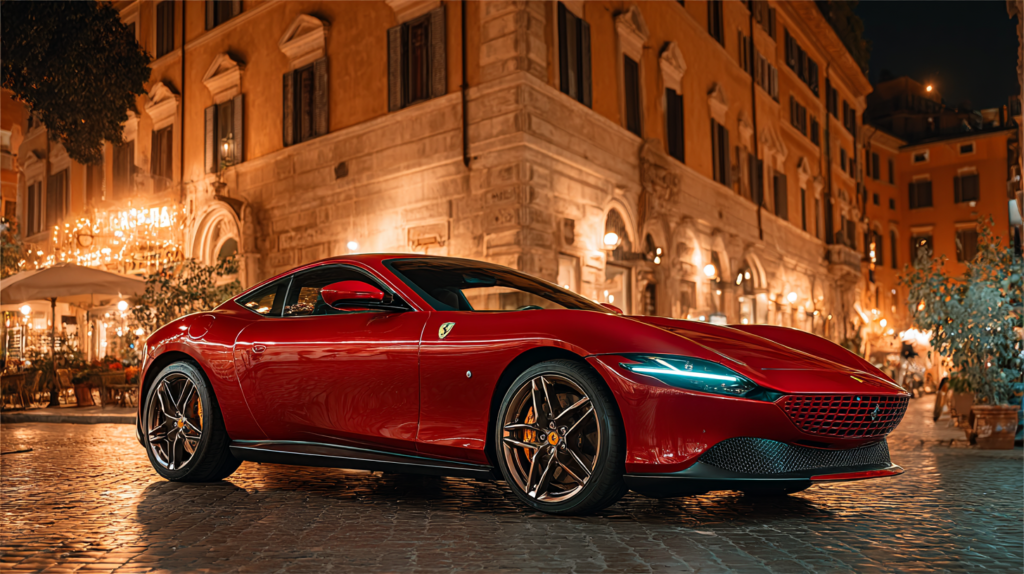
The Roma Spider’s exterior design is defined by clean surfaces, flowing lines, and an absence of aggressive aerodynamic elements. The front end features a prominent grille with a mesh pattern that references Ferrari’s classic grand tourers. The headlights are slim and integrated into the bodywork, with LED elements that provide distinctive lighting.
The side profile is characterized by a long hood, a rearward cabin, and a fastback roofline that flows into the tail. The doors are flush mounted, contributing to the car’s clean appearance. The rear end features a subtle integrated spoiler and quad exhaust outlets.
The Spider’s retractable hardtop is a significant engineering achievement. It can be opened or closed in approximately 14 seconds at speeds up to 60 kilometers per hour. The top folds into a compact space behind the rear seats, preserving the car’s proportions whether open or closed.
Aerodynamics
The Roma Spider’s aerodynamic development focused on managing airflow both with the roof up and with the roof down. The front splitter directs air under the car, while the underbody panels manage airflow to reduce drag and minimize lift.
When the roof is open, a wind deflector integrated into the rear bulkhead can be deployed to reduce buffeting in the cabin. This deflector is electrically operated and can be adjusted to suit different driving conditions.
Color and Personalization
The Roma Spider is offered with a range of exterior colors, including the classic Rosso Corsa red that has become synonymous with Ferrari. The brand’s extensive personalization program, known as Tailor Made, allows buyers to specify unique colors, materials, and details, ensuring that each car reflects its owner’s preferences.
Interior and Accommodations
Cabin Design
The interior of the Roma Spider continues the theme of elegance and simplicity. The dashboard is clean and uncluttered, with a prominent central screen that serves as the primary interface for infotainment and vehicle functions. The instrument cluster is fully digital, with a configurable display that can be tailored to the driver’s preferences.
The passenger faces a dedicated touchscreen that provides access to infotainment and climate controls. This screen can be hidden when not in use, preserving the clean lines of the dashboard.
Seating and Space
The Roma Spider features a 2+2 seating configuration, with two full size front seats and two rear seats intended for occasional use. The front seats are comfortable and supportive, with power adjustment and heating as standard. The rear seats are best suited for children or for additional luggage space when folded.
The convertible top’s operation does not significantly compromise rear seat space or trunk capacity. The trunk, located behind the rear seats, offers sufficient space for weekend luggage, with capacity for two carry on suitcases.
Materials and Craftsmanship
The interior materials reflect Ferrari’s commitment to craftsmanship. The seats are trimmed in fine leather, with optional contrast stitching and embroidery. The dashboard and door panels incorporate a combination of leather and aluminum trim, with careful attention to fit and finish.
Buyers can specify a range of interior colors and materials through the Tailor Made program, including Alcantara upholstery, carbon fiber trim, and special stitching patterns.
Technology Features
The Roma Spider is equipped with a comprehensive suite of technology features. The infotainment system includes navigation, Apple CarPlay, Android Auto, and a premium audio system. The digital instrument cluster can display navigation directions, performance data, and vehicle information.
Driver assistance features include adaptive cruise control, lane departure warning, blind spot monitoring, and automatic emergency braking. These systems can be adjusted or disabled through the infotainment interface.
The Open Top Experience
Roof Operation
The retractable hardtop is one of the Roma Spider’s defining features. The mechanism is electrically operated and can be controlled through a button on the center console. The operation is smooth and quiet, with the top folding into the rear deck in approximately 14 seconds.
When open, the top creates a sense of freedom that is difficult to replicate in a coupe. The sound of the V8 becomes more present, and the connection to the environment is immediate.
Wind Management
Ferrari engineers have paid careful attention to wind management in the Roma Spider. The electrically operated wind deflector, mounted behind the rear seats, can be deployed to reduce turbulence in the cabin. With the windows up and the deflector raised, occupants can maintain conversation at highway speeds.
The side windows are designed to work with the roof mechanism, sealing effectively to reduce wind noise when the top is up and providing protection from buffeting when the top is down.
The Sound
The 3.9 liter V8 produces a distinctive sound that is a significant part of the Roma Spider’s appeal. The flat plane crankshaft gives the engine a high pitched wail at high rpm, while the turbochargers provide a deep burble at lower speeds. With the roof down, the sound is immediate and engaging, providing auditory feedback that connects the driver to the car.
How the Roma Spider Stacks Up Against Rivals
Against the Aston Martin DB12 Volante
The Aston Martin DB12 Volante is the Roma Spider’s most direct competitor. Both are front engine, rear drive grand tourers with V8 engines, convertible tops, and 2+2 seating configurations. The DB12 Volante uses a 4.0 liter twin turbocharged V8 producing 671 horsepower, a significant advantage over the Roma Spider’s 612.
The DB12 Volante’s advantage in power is balanced by the Roma Spider’s advantage in weight and handling. The Ferrari is lighter and more agile, with sharper responses and more precise steering. The Aston Martin offers a more relaxed driving experience, with a softer suspension and a more isolated cabin.
In design, the two cars take different approaches. The Roma Spider emphasizes clean, simple lines, while the DB12 Volante is more muscular and aggressive. Which design appeals more is a matter of personal preference.
In value terms, the Roma Spider is priced slightly lower than the DB12 Volante, though both occupy the same segment of the luxury grand touring market.
Against the Porsche 911 Turbo S Cabriolet
The Porsche 911 Turbo S Cabriolet takes a different approach to the grand touring convertible. It is rear engine, all wheel drive, and features a 3.7 liter twin turbocharged flat six producing 640 horsepower. The 911 Turbo S Cabriolet accelerates from 0 to 100 km/h in 2.8 seconds, significantly quicker than the Roma Spider.
The 911 Turbo S Cabriolet’s advantage in acceleration and all weather capability comes with trade offs in character and design. The Porsche is more technologically advanced and offers exceptional performance, but some drivers find it less emotionally engaging than the Ferrari. The 911’s rear engine layout also affects handling characteristics, with a different feel than the front engine Roma.
In design, the 911 is instantly recognizable but has evolved incrementally over generations, while the Roma Spider represents a fresh direction for Ferrari. Value wise, the 911 Turbo S Cabriolet is priced in the same range as the Roma Spider.
Against the Mercedes AMG SL63
The Mercedes AMG SL63 is a front engine, all wheel drive convertible with a 4.0 liter twin turbocharged V8 producing 577 horsepower. It is larger and heavier than the Roma Spider, with a focus on comfort and luxury rather than pure performance.
The SL63’s advantage lies in its daily usability and its extensive technology features. The cabin is more spacious, the infotainment system is more advanced, and the ride is more compliant. The Mercedes is a car that can serve as a daily driver without compromise.
The Roma Spider offers a more focused driving experience, with sharper handling and a stronger connection to the road. For buyers who prioritize driving engagement over comfort and technology, the Ferrari is the better choice.
Against the Maserati GranCabrio
The Maserati GranCabrio uses a 3.0 liter twin turbocharged V6 producing 550 horsepower. It is a front engine, all wheel drive convertible with seating for four. The GranCabrio is positioned as a more accessible alternative to the Roma Spider, with a lower price point.
The GranCabrio’s advantage is its value proposition and its distinctive Italian styling. However, it falls short of the Roma Spider in performance, with slower acceleration and less precise handling. The interior materials and craftsmanship also lag behind the Ferrari.
For buyers who can afford the premium, the Roma Spider offers a more complete grand touring experience.
Value Proposition
Pricing
The Ferrari Roma Spider carries a base price of approximately $250,000, with final prices varying based on options and personalization. This positions it in the upper tier of the grand touring convertible segment.
Depreciation
Ferraris traditionally hold their value well, particularly limited production models and convertibles. The Roma Spider is expected to depreciate less than its competitors, though not as slowly as limited edition models like the 812 Competizione.
Ownership Costs
Maintaining a Ferrari involves higher costs than mainstream vehicles. Service intervals are annual or every 10,000 miles, with costs varying based on the service required. The Roma Spider is covered by Ferrari’s new vehicle warranty for three years with unlimited mileage, with extended warranty options available.
The Experience Factor
For many buyers, the value proposition of a Ferrari extends beyond financial considerations. The brand’s heritage, the driving experience, and the sense of occasion that comes with owning a Ferrari are factors that cannot be quantified on a spreadsheet.
What Makes the Roma Spider Stand Out in 2026
The Elegant Design
In a segment where many competitors rely on aggressive styling to attract attention, the Roma Spider’s clean, elegant design is distinctive. It is a car that appeals to buyers who value sophistication over drama, who want a Ferrari that can be driven to a nice restaurant without announcing its presence.
The Convertible Experience
The Roma Spider’s retractable hardtop combines the security of a coupe with the open air freedom of a convertible. The mechanism is quick and quiet, and the top folds into a compact space that preserves the car’s proportions. For drivers who value the experience of open top motoring, this capability is essential.
The Balanced Performance
The Roma Spider’s 612 horsepower and 3.4 second 0 to 100 km/h time are more than sufficient for any road driving scenario. The car’s performance is accessible and usable, not intimidating or overwhelming. This balance makes the Roma Spider a car that can be enjoyed by drivers of varying skill levels.
The Grand Touring Focus
The Roma Spider is designed for driving, not for setting lap times. The suspension is tuned for comfort, the cabin is refined, and the roof allows occupants to enjoy the environment. For drivers who value the journey as much as the destination, this focus is appealing.
The Ferrari Heritage
The Roma Spider carries the Ferrari badge, with all the heritage and prestige that entails. For many buyers, this is a significant part of the car’s appeal. The Ferrari ownership experience, from the personalized delivery to the exclusive events, adds value beyond the car itself.
Specifications Summary
| Specification | Value |
|---|---|
| Engine | 3.9L twin turbocharged V8 |
| Horsepower | 612 hp at 5,750 rpm |
| Torque | 561 lb ft from 3,000 to 5,750 rpm |
| Transmission | 8 speed dual clutch |
| Drive | Rear wheel drive |
| 0-100 km/h | 3.4 seconds |
| 0-200 km/h | 9.7 seconds |
| Top Speed | 320 km/h |
| Weight | 1,670 kg dry |
| Fuel Economy | Combined 18.5 mpg (estimated) |
| Base Price | $250,000 |
Conclusion
The Ferrari Roma Spider represents a distinct interpretation of the grand touring convertible. It combines a 612 horsepower twin turbocharged V8 with a retractable hardtop, a clean and elegant design, and an interior focused on comfort and craftsmanship. It is a car for drivers who value the experience of grand touring as much as performance figures, who appreciate style and refinement alongside speed.
Against its rivals, the Roma Spider holds its own. It offers a more focused driving experience than the Mercedes SL63, a more elegant design than the Porsche 911 Turbo S Cabriolet, and a more refined character than the Aston Martin DB12 Volante. Its 612 horsepower and 3.4 second 0 to 100 km/h time place it competitively within the segment.
The Roma Spider is not the fastest car in its class, nor the most technologically advanced, nor the most spacious. But it offers a combination of attributes that is difficult to find elsewhere: Ferrari heritage, elegant design, open top freedom, and a driving experience that rewards without intimidating.
For buyers seeking a grand tourer that can be driven daily, enjoyed on weekends, and appreciated for its style and sophistication, the Ferrari Roma Spider makes a compelling case. It is a car that honors Ferrari’s grand touring tradition while embracing modern technology, and it stands as one of the most complete convertibles in its class.

