

The concept of a family wagon that can outperform dedicated sports cars seems like a contradiction. Station wagons have traditionally been associated with practicality, carrying children and cargo with efficiency rather than excitement. The Audi RS6 Avant has spent more than two decades challenging this notion, combining the utility of a spacious estate car with the performance of a supercar.
The RS6 Avant Performance represents the latest evolution of this formula. It is a car that can accelerate from 0 to 60 miles per hour in 3.2 seconds, carry five passengers in comfort, and swallow enough luggage for a weeklong family vacation. It is a car that embodies the idea that performance and practicality need not be mutually exclusive.
This article provides a comprehensive review of the Audi RS6 Avant Performance, examining its performance specifications, design philosophy, interior accommodations, and how it stacks up against rivals in performance, design, and value.
The RS6 Legacy: 20 Years of Performance Wagons
The RS6 name first appeared in 2002, with a twin turbocharged V8 producing 444 horsepower. It was the first high performance wagon to challenge the dominance of sedans and coupes in the performance car market. The RS6 proved that a family car could deliver supercar levels of performance without sacrificing practicality.
Over four generations, the RS6 has evolved. The second generation introduced a V10 engine borrowed from the Lamborghini Gallardo. The third generation returned to a V8, with 552 horsepower. The current generation, introduced in 2020, features a 4.0 liter twin turbocharged V8 with mild hybrid technology, producing 591 horsepower in standard form and 621 horsepower in the Performance variant.
The RS6 Avant Performance represents the pinnacle of this lineage. It is the most powerful and capable RS6 ever built, with enhancements to the engine, chassis, and aerodynamics that sharpen its performance without compromising its practicality.
Powertrain and Performance
Engine Specifications
The RS6 Avant Performance is powered by a 4.0 liter twin turbocharged V8 engine, designated EA825. This engine, developed in partnership with Porsche, features a hot V configuration with the turbochargers mounted inside the V between the cylinder banks. This layout reduces lag, improves throttle response, and allows for a more compact engine package.
In Performance specification, the engine produces 621 horsepower at 6,000 rpm and 627 lb ft of torque from 2,300 to 4,500 rpm. This represents an increase of 30 horsepower and 37 lb ft of torque over the standard RS6.
The engine incorporates mild hybrid technology, with a 48 volt belt alternator starter that can recover up to 12 kW of energy during deceleration. This system powers a electric compressor that can spool the turbochargers when the engine is under light load, reducing lag and improving response.
Transmission and Drive
Power is transmitted to all four wheels through an eight speed automatic transmission and Audi’s Quattro all wheel drive system. The transmission is tuned for rapid shifts, with the ability to change gears in milliseconds in dynamic driving modes.
The Quattro system uses a self locking center differential that distributes torque between the front and rear axles. Under normal conditions, the split is 40 percent front, 60 percent rear. Under hard acceleration or when traction is limited, the system can send up to 85 percent of torque to the rear axle or 70 percent to the front, depending on conditions.
A sport differential at the rear can actively distribute torque between the rear wheels, enhancing cornering performance by pushing the car into turns.
Acceleration and Speed
The RS6 Avant Performance accelerates from 0 to 60 miles per hour in 3.2 seconds. This figure places it among the quickest production wagons ever built, with acceleration that rivals dedicated sports cars.
The 0 to 100 miles per hour sprint takes approximately 7.5 seconds, and the quarter mile is completed in approximately 11.3 seconds at 122 miles per hour. Top speed is electronically limited to 174 miles per hour, though this can be increased to 190 miles per hour with the optional Dynamic Plus package.
Weight and Balance
The RS6 Avant Performance weighs approximately 4,700 pounds, a figure that reflects its substantial dimensions, all wheel drive system, and luxury equipment. Despite its weight, the car’s torque vectoring systems and adaptive suspension allow it to handle with remarkable agility.
The weight distribution is approximately 55 percent front, 45 percent rear, reflecting the front heavy layout of the V8 engine and Quattro system.
Chassis and Dynamics
Suspension System
The RS6 Avant Performance features a five link suspension at both the front and rear axles, with adaptive air springs that can adjust ride height and firmness based on driving conditions. The system can lower the car by 10 mm at highway speeds to reduce drag and improve stability, and raise it for speed bumps and driveways.
The RS specific tuning includes stiffer springs, revised damper calibration, and increased negative camber that improves cornering grip. The suspension can be adjusted through Audi’s drive select system, with modes ranging from Comfort for daily driving to Dynamic for spirited back road driving.
Steering
The RS6 Avant Performance uses an electromechanical power steering system with variable ratio. The system is speed sensitive, with light assistance for parking and low speed maneuvers and heavier weighting at highway speeds for stability.
Dynamic steering, available as an option, adds a variable ratio that changes based on steering angle, providing quicker responses in corners while maintaining stability in straight line driving.
Brakes
The standard braking system uses 16.3 inch ventilated discs at the front with ten piston calipers, and 14.5 inch discs at the rear with single piston calipers. The optional carbon ceramic brakes, part of the Dynamic Plus package, feature 17.3 inch front discs with ten piston calipers and 14.5 inch rear discs with single piston calipers.
The carbon ceramic brakes provide improved stopping power, reduced fade during track use, and lower unsprung weight. The calipers are finished in gray or red, depending on the specification.
Wheels and Tires
The RS6 Avant Performance rides on 21 inch wheels as standard, with 22 inch wheels available as an option. The wheels are wrapped in high performance summer tires, sized 285/30 ZR22 at all four corners.
The tire and wheel package is designed to provide the grip necessary for the car’s performance while maintaining acceptable ride comfort. The 22 inch wheels contribute to the car’s aggressive stance and fill the wheel arches effectively.
Design and Aerodynamics
Exterior Styling
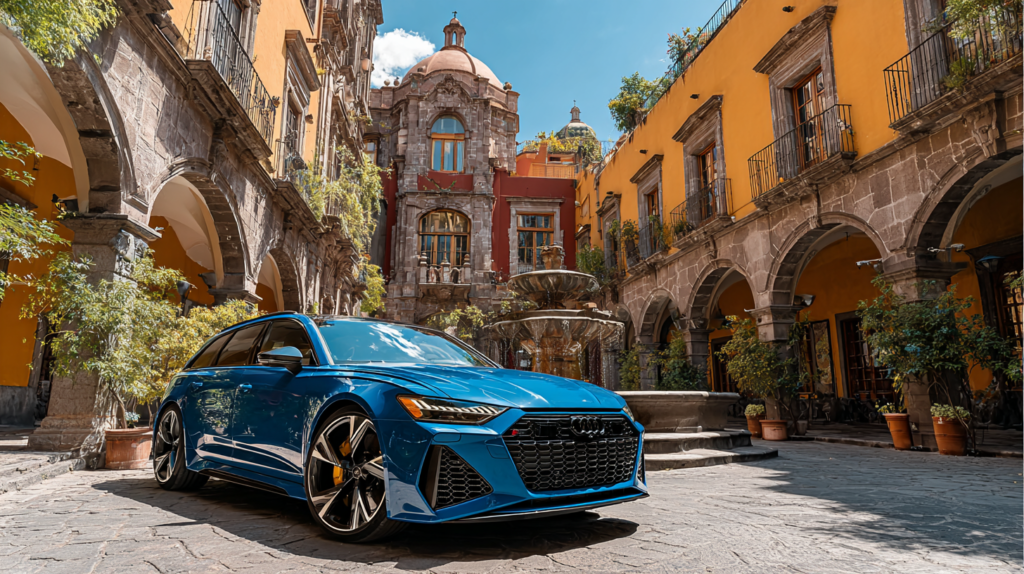
The RS6 Avant Performance’s exterior design is characterized by its wide stance, aggressive bodywork, and the elongated silhouette of the Avant wagon body style. The car is 4,995 mm long, 1,951 mm wide, and 1,460 mm tall, with a wheelbase of 2,929 mm.
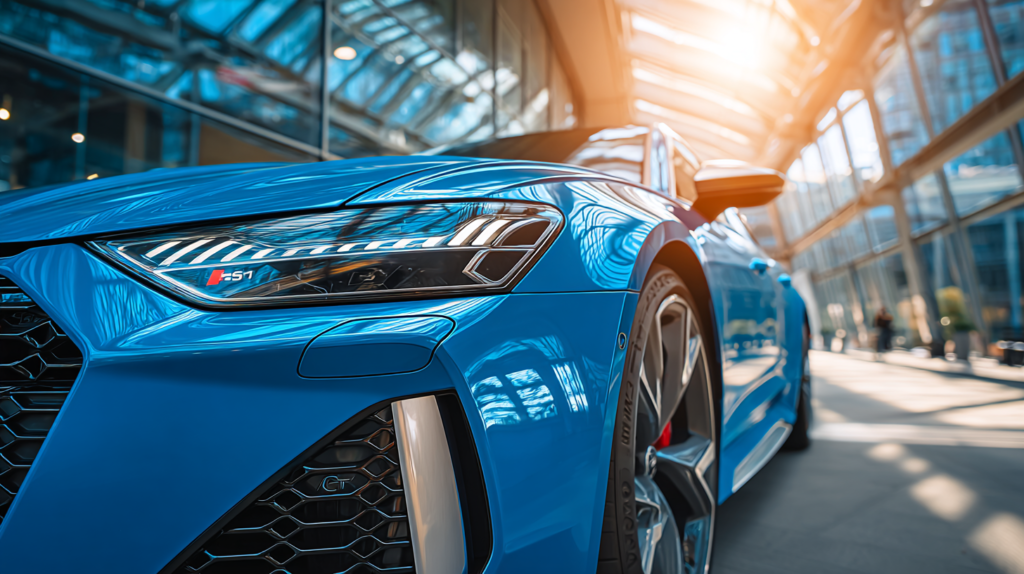
The front end features a large single frame grille with a honeycomb pattern, flanked by aggressive air intakes that feed cooling air to the engine and brakes. The headlights are Matrix LED units with Audi’s signature daytime running light design.
The side profile shows the wagon body style, with a long roof line and a rear overhang that accommodates the substantial cargo area. The wheel arches are flared to accommodate the wide track, and the side skirts are sculpted to manage airflow.
The rear end features a prominent diffuser that houses the dual oval exhaust outlets. The taillights are full width, a design element that emphasizes the car’s width. A roof spoiler contributes to aerodynamic balance.
Aerodynamics
The RS6 Avant Performance’s aerodynamic development focused on managing airflow for stability and cooling. The front splitter directs air under the car, while the underbody panels manage airflow to reduce drag and minimize lift.
The car’s drag coefficient is 0.33, a respectable figure for a high performance wagon with aggressive styling and wide tires. The aerodynamic package generates downforce at the rear axle, contributing to high speed stability.
RS Performance Distinctions
The Performance variant adds several visual distinctions. The exterior trim, including the grille surround, window trim, and roof rails, is finished in matte gray. The side mirrors are finished in carbon fiber, and the exhaust outlets are finished in black.
The wheels are a unique design for the Performance variant, with a five spoke pattern and a matte finish. The car also features RS badging on the grille and tailgate.
Interior and Accommodations
Cabin Design
The interior of the RS6 Avant Performance reflects Audi’s commitment to luxury and technology. The dashboard is dominated by a trio of screens: a 12.3 inch digital instrument cluster, a 10.1 inch central infotainment display, and an 8.6 inch climate control screen.
The RS specific touches include a flat bottom steering wheel with RS mode buttons, RS badging on the seats and door sills, and contrast stitching in the chosen interior color. The upholstery is a combination of leather and Alcantara, with diamond quilting on the seats.
Seating and Space
The RS6 Avant Performance seats five passengers comfortably. The front seats are power adjustable with heating and ventilation, and they offer excellent lateral support for spirited driving. The rear seats are shaped for comfort, with sufficient legroom and headroom for adult passengers.
The cargo area is the RS6’s greatest practical asset. With the rear seats in place, the cargo capacity is 30 cubic feet. Folding the rear seats expands this to 68 cubic feet, sufficient for large items such as furniture, sporting equipment, or luggage for a family vacation. The cargo area is accessed through a power liftgate.
Technology Features
The RS6 Avant Performance is equipped with a comprehensive suite of technology features. The infotainment system includes navigation, Apple CarPlay, Android Auto, and a premium Bang & Olufsen audio system with 3D sound.
The digital instrument cluster can be configured to display performance data, including g forces, lap times, and power output. The optional head up display projects speed, navigation directions, and driver assistance information onto the windshield.
Driver Assistance
The RS6 Avant Performance includes a full suite of driver assistance features as standard. These include adaptive cruise control with traffic jam assist, lane departure warning with lane keep assist, blind spot monitoring with rear cross traffic alert, and automatic emergency braking with pedestrian detection.
The parking system includes front and rear sensors and a 360 degree camera system that provides a bird’s eye view of the car.
The Performance Variant: What’s Different
Engine Tuning
The Performance variant’s 30 horsepower and 37 lb ft torque increase is achieved through revised engine calibration, higher boost pressure from the turbochargers, and improved cooling that allows the engine to sustain peak output for longer periods.
Suspension Tuning
The suspension in the Performance variant features stiffer spring rates and revised damper calibration compared to the standard RS6. The car sits 10 mm lower than the standard model, lowering the center of gravity and improving aerodynamic efficiency.
Weight Reduction
The Performance variant incorporates several weight saving measures. The standard wheels are 5 kg lighter than the standard RS6 wheels, and the optional carbon ceramic brakes reduce unsprung weight by approximately 34 kg.
Exhaust System
The Performance variant features a sport exhaust system as standard, with adjustable valves that can be opened to provide a more aggressive sound. The system is designed to amplify the V8’s character, with a deep burble at low speeds and a sharper note at high rpm.
Driving Experience
On Road Character
The RS6 Avant Performance reveals its dual nature the moment the driver settles into the seat. In Comfort mode, the car is relaxed and refined, absorbing road imperfections without transmitting harshness to the cabin. The engine is subdued, the transmission shifts smoothly, and the cabin is quiet enough for conversation.
In Dynamic mode, the character transforms. The suspension stiffens, the throttle response sharpens, and the exhaust opens. The car feels taut and responsive, ready to attack corners with enthusiasm. The steering weights up, and the all wheel drive system provides the traction to deploy the 621 horsepower effectively.
The car’s size is noticeable in tight spaces, but the 360 degree camera system and parking sensors help navigate urban environments. The turning circle is 41 feet, which is larger than smaller cars but manageable for a vehicle of this size.
On Track Behavior
When driven on a track, the RS6 Avant Performance demonstrates that its performance claims are not merely theoretical. The car accelerates with authority, the brakes provide consistent stopping power lap after lap, and the chassis remains composed through corners.
The car’s weight is evident during hard cornering, but the torque vectoring systems work to mitigate understeer and maintain grip. The car is not as agile as a dedicated sports car, but it handles with a competence that belies its size and mass.
The Sound
The V8 engine produces a sound that is a significant part of the RS6’s appeal. The engine has a deep, muscular tone at low speeds, with a sharper, more aggressive note as the revs climb. The sport exhaust system, with its adjustable valves, allows the driver to control the volume.
At full throttle, the engine produces a distinctive V8 roar that communicates power and intent. During downshifts, the transmission blips the throttle, producing a satisfying bark from the exhaust.
Practicality
The RS6 Avant Performance’s practicality is its defining characteristic. The cargo area accommodates a week’s worth of luggage for a family of four, and the rear seats fold to create a flat floor for larger items. The power liftgate makes loading and unloading easy.
The cabin provides ample storage for small items, with door pockets, a center console bin, and cup holders for front and rear passengers. The rear seat passengers have their own climate controls and USB ports.
How the RS6 Avant Performance Stacks Up Against Rivals
Against the Mercedes AMG E63 S Wagon
The Mercedes AMG E63 S Wagon is the RS6’s most direct competitor. It features a 4.0 liter twin turbocharged V8 producing 603 horsepower, a nine speed automatic transmission, and all wheel drive.
The E63 S Wagon’s advantage is its power and its character. The engine produces more torque than the RS6, and the car’s handling is more playful, with a rear bias that allows for controlled oversteer. The interior is more luxurious, with higher quality materials and a more sophisticated infotainment system.
The RS6’s advantage is its design and its all around competence. The Audi’s exterior styling is more aggressive and distinctive, and the car’s chassis is more composed and confidence inspiring. The RS6 also offers slightly more cargo space than the E63 S.
In value terms, the two cars are closely matched, with the RS6 generally priced slightly lower than the E63 S.
Against the BMW M5 Touring
The BMW M5 Touring, reintroduced for the current generation, features a 4.4 liter twin turbocharged V8 producing 617 horsepower, an eight speed automatic transmission, and all wheel drive.
The M5 Touring’s advantage is its power and its handling. The car is slightly quicker than the RS6 in acceleration testing, and its chassis is tuned for a more engaging driving experience. The interior is modern and well appointed, with BMW’s latest iDrive infotainment system.
The RS6’s advantage is its design and its legacy. The RS6 has been in continuous production for more than 20 years, establishing a reputation that the M5 Touring, absent for a generation, must rebuild. The Audi’s exterior styling is also more distinctive than the BMW’s.
In value terms, the two cars are comparable, with the RS6 generally slightly less expensive than the M5 Touring.
Against the Porsche Cayenne Turbo GT
The Porsche Cayenne Turbo GT is an SUV, not a wagon, but it competes with the RS6 in terms of performance and price. It features a 4.0 liter twin turbocharged V8 producing 631 horsepower, an eight speed automatic transmission, and all wheel drive.
The Cayenne Turbo GT’s advantage is its handling. Porsche’s SUV defies expectations with cornering grip and precision that rivals sports cars. The car’s acceleration is also slightly quicker than the RS6.
The RS6’s advantage is its body style. The Avant wagon offers a lower center of gravity than the Cayenne, and its lower roofline makes it easier to load cargo. Some buyers also prefer the aesthetic of a wagon to that of an SUV.
Against the Tesla Model S Plaid
The Tesla Model S Plaid represents a different approach to performance. It is an electric sedan with 1,020 horsepower, all wheel drive, and acceleration from 0 to 60 miles per hour in 1.99 seconds.
The Model S Plaid’s advantage is its performance. No internal combustion wagon can match its acceleration, and its electric powertrain provides instant torque and smooth power delivery. The car’s range of approximately 400 miles makes it practical for long distance travel.
The RS6’s advantage is its character and its practicality. The V8 engine provides a sensory experience that electric cars cannot replicate, and the wagon body style offers more cargo space than the Model S sedan. Some buyers also prefer the traditional luxury of the Audi to the minimalist interior of the Tesla.
Value Proposition
Pricing
The Audi RS6 Avant Performance carries a base price of approximately $125,000, with final prices varying based on options and packages. The Dynamic Plus package, which adds carbon ceramic brakes and increases the top speed, adds approximately $6,000 to the price.
This pricing places the RS6 in the upper tier of the performance wagon segment, comparable to the Mercedes AMG E63 S Wagon and BMW M5 Touring.
Depreciation
Audi RS models traditionally hold their value reasonably well, though not as strongly as limited production models or Porsche vehicles. The RS6’s status as the ultimate performance wagon helps preserve its value, and the Avant body style is particularly desirable in markets where wagons are rare.
The Performance variant, with its additional power and equipment, is likely to hold its value slightly better than the standard RS6.
Ownership Costs
Maintaining an RS6 involves higher costs than mainstream Audis. Service intervals are 10,000 miles or annually, with costs varying based on the service required. The tires, sized 285/30 ZR22, are expensive to replace, and the carbon ceramic brakes, if equipped, carry significant replacement costs.
The car’s fuel economy, at an EPA estimated 14 miles per gallon city and 20 highway, is a consideration for buyers who cover significant mileage.
The Experience Factor
For many buyers, the value proposition of the RS6 extends beyond financial considerations. The car’s combination of performance and practicality is unique in the market, and the experience of driving a 621 horsepower wagon that can also carry a family is difficult to quantify.
Specifications Summary
| Specification | Value |
|---|---|
| Engine | 4.0L twin turbocharged V8 |
| Horsepower | 621 hp at 6,000 rpm |
| Torque | 627 lb ft from 2,300 to 4,500 rpm |
| Transmission | 8 speed automatic |
| Drive | Quattro all wheel drive |
| 0-60 mph | 3.2 seconds |
| Top Speed | 174 mph (190 mph with Dynamic Plus) |
| Weight | 4,700 lb |
| Fuel Economy | 14 mpg city, 20 mpg highway |
| Cargo Capacity | 30 cu ft (seats up), 68 cu ft (seats folded) |
| Base Price | $125,000 |
Conclusion
The Audi RS6 Avant Performance represents the culmination of more than two decades of development. It combines a 621 horsepower twin turbocharged V8 with the practicality of a spacious wagon body style, the all weather capability of Quattro all wheel drive, and the luxury of a premium interior.
It is a car that can accelerate from 0 to 60 miles per hour in 3.2 seconds, yet still accommodate a family of five and their luggage for a weeklong vacation. It is a car that can attack a twisty back road with enthusiasm, yet absorb highway miles in comfort. It is a car that embodies the idea that performance and practicality need not be mutually exclusive.
Against its rivals, the RS6 holds its own. It offers a more distinctive design than the BMW M5 Touring, a more composed chassis than the Mercedes AMG E63 S Wagon, and a lower center of gravity than the Porsche Cayenne Turbo GT. Its V8 engine provides a sensory experience that electric competitors like the Tesla Model S Plaid cannot match.
The RS6 Avant Performance is not for everyone. Its price places it out of reach for many buyers, its fuel economy is a consideration for those who cover significant mileage, and its size can be challenging in urban environments. But for buyers who need the practicality of a wagon and desire the performance of a supercar, the RS6 Avant Performance is one of the few cars that can deliver both.
It is a fitting continuation of a legacy that began with the first RS6 in 2002, and it stands as one of the most complete performance vehicles on the market. For those who can afford it, the RS6 Avant Performance offers a combination of attributes that few other cars can match.

