
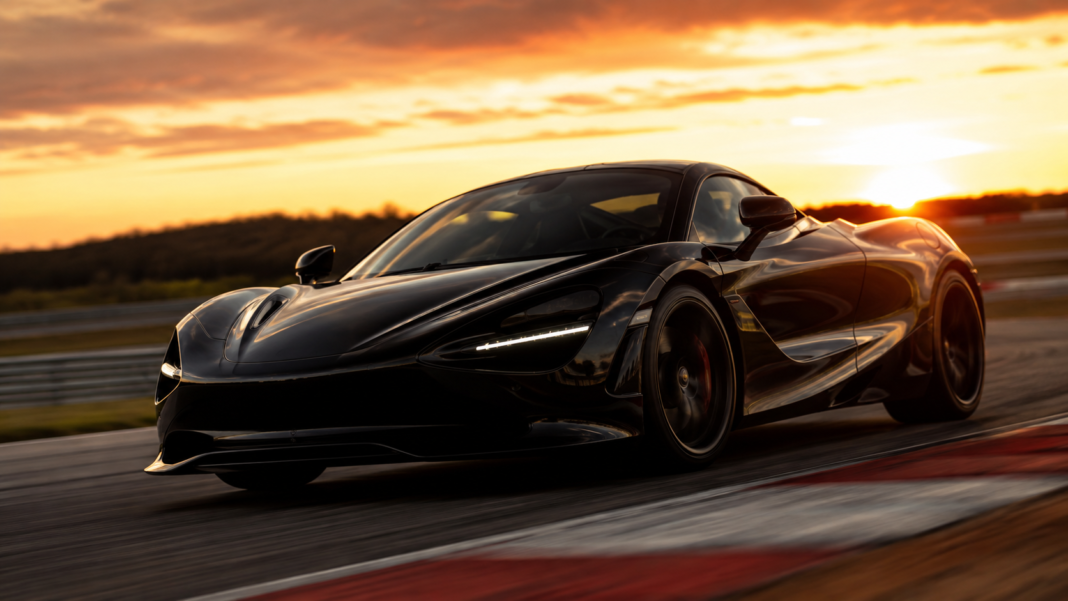
The sun is still low over the hills of western Pennsylvania, but the track at Pittsburgh International Race Complex in Wampum is already alive with the sound of high-revving engines. A McLaren 720S is flying down the main straight. As it approaches the braking zone for Turn 7, its active rear wing tilts forward in less than half a second, transforming from a downforce generator into an air brake. The car decelerates with a stability that seems to defy physics.
What you are witnessing is active aerodynamics in action. Unlike fixed wings and splitters that provide a constant level of downforce, active systems adapt in real time to the car’s speed, steering angle, braking force, and cornering load. They optimize downforce for cornering, reduce drag for straight-line speed, and even assist in braking. This is the science behind moving wings, and it has become one of the defining technologies of the modern supercar.
The Problem: Why Fixed Aero Isn’t Enough
A fixed rear wing is a compromise. It is designed to provide optimal downforce at a specific speed, typically a track average. At lower speeds, it creates unnecessary drag, reducing acceleration. At higher speeds, it may not provide enough downforce for stability. And under heavy braking, a fixed wing does nothing to slow the car.
Active aerodynamics solves these problems by varying the car’s aerodynamic aids on the fly. By adjusting the angle of attack, opening or closing ducts, or deploying movable elements, the car can strike a balance between efficiency and roadholding ability. The result is a car that can be slippery on the straights and planted in the corners.
The Sensory Network: How the Car Knows What to Do
Active aerodynamic systems do not operate in isolation. They are integrated with the car’s electronic control systems, including the ECU, ABS, and stability control. The system takes information from a variety of sensors.
Speed Sensors
The car’s speed is a primary input. At low speeds, downforce is less important, and drag reduction is prioritized. At high speeds, stability becomes critical, and the system adds downforce.
Steering Angle Sensors
When the driver turns the wheel, the system anticipates the cornering load and adjusts the aerodynamics accordingly. The front splitter may be adjusted to balance the downforce distribution.
Brake Pressure Sensors
Under heavy braking, the system deploys the rear wing as an air brake. The wing tilts to increase drag, slowing the car and improving stability.
Yaw Rate and Lateral Acceleration Sensors
These sensors detect the car’s rotational motion and cornering forces. They allow the system to adjust downforce distribution to maintain balance.
Suspension Load Sensors
Some systems monitor the load on each wheel. This information allows the system to optimize downforce for the specific cornering situation.
The Actuators: How the Movement Happens
The sensors provide the data. The actuators make the movement happen.
Hydraulic Actuators
Many systems use hydraulic actuators to move the wings and splitters. Hydraulics provide precise control and high force. They are used in the Bugatti Chiron’s active rear wing and the McLaren 720S’s air brake.
Electric Motors
Electric actuators are becoming more common. They are lighter and more responsive than hydraulic systems. The Porsche 911 GT3 uses electric motors to adjust its rear wing.
Pneumatic Systems
Some systems use compressed air to move aerodynamic elements. Pneumatics are lightweight but less precise than hydraulics.
The Aerodynamic Elements: What Moves
Active Rear Wings
The rear wing is the most common active aerodynamic element. It can change its angle of attack to balance downforce and drag. Under heavy braking, it can deploy as an air brake.
Active Front Splitters
The front splitter can be adjusted to balance downforce distribution. In some cars, the splitter is fixed, but the underbody diffuser is active.
Active Air Intakes
Some systems use active air intakes to manage cooling and aerodynamics. The intakes can be opened or closed to reduce drag when cooling is not needed.
Active Underbody Panels
The underbody is a critical aerodynamic surface. Active panels can be adjusted to manage airflow under the car, reducing lift and improving stability.
The Software: The Brain Behind the System
The sensors and actuators are the hardware. The software is the brain. The control algorithms determine when and how the aerodynamic elements should move.
The software is developed through extensive testing, both on the track and in computational fluid dynamics simulations. The goal is to optimize the car’s behavior for all driving conditions.
The driver can also influence the system. In some cars, the driver can select different aerodynamic modes, such as “Sport,” “Track,” or “High Downforce.”
The Benefits: Why Active Aero Matters
Active aerodynamics provides several benefits over fixed systems.
Improved Performance
The car can be optimized for all driving conditions. Downforce is available when needed. Drag is reduced when not.
Better Stability
The car remains stable at high speeds. The downforce is balanced between the front and rear axles.
Shorter Braking Distances
The air brake function reduces braking distances. The car stops more quickly and more predictably.
Increased Efficiency
Drag is reduced on the straights, improving acceleration and fuel economy.
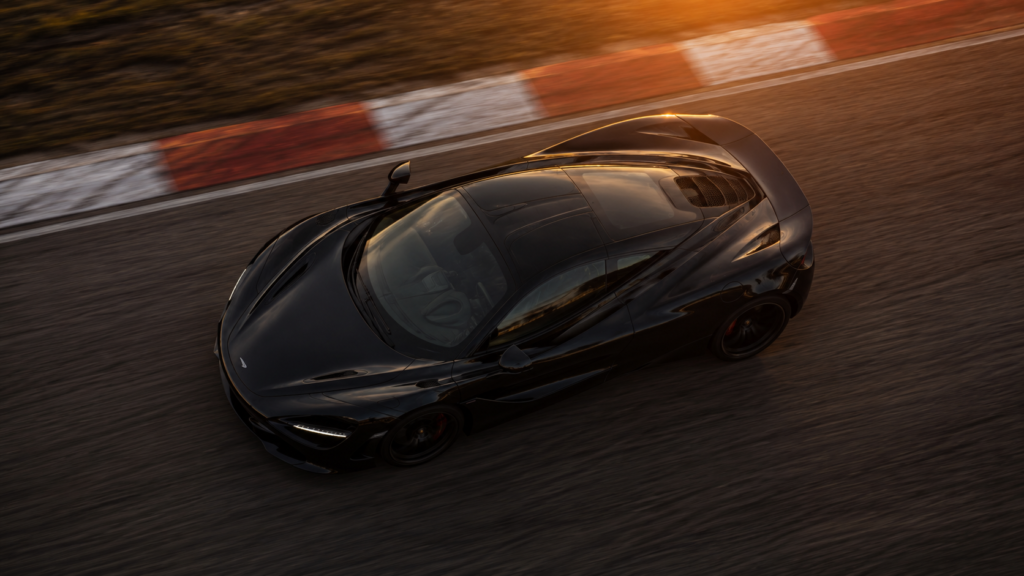
The Pittsburgh Morning: A Track Session
The McLaren 720S has completed its lap. It is parked in the paddock. The driver is stepping out.
The active rear wing is still in its neutral position. It will deploy again on the next lap.
A group of enthusiasts is gathered around the car. They are studying the wing mechanism. They are asking questions.
“How does it know when to move?” one asks.
The driver explains. “It reads the sensors. It adjusts automatically. I do not have to think about it.”
The Limits of Active Aero
Active aerodynamics is not perfect. The system adds weight. The mechanisms can fail. The software can be buggy.
The complexity also adds cost. Active systems are expensive to develop and expensive to repair.
But the benefits outweigh the drawbacks for most supercar buyers. The performance gains are significant.
The Future of Active Aero
Active aerodynamics is becoming more common. It is no longer limited to hypercars. The Porsche 911 Turbo, the Ferrari 296 GTB, and the Chevrolet Corvette Z06 all feature active aero elements.
The technology is also evolving. New materials, lighter actuators, and more sophisticated software are being developed. The active systems of the future will be more responsive, more efficient, and more reliable.
The Verdict
Active aerodynamics is a critical technology for modern supercars. It allows the car to be optimized for all driving conditions, improving performance, stability, and efficiency.
The system is complex, combining sensors, actuators, and software. The result is a car that adapts to the road in real time.
The McLaren 720S has left the paddock. It is back on the track. The wing tilts forward in the braking zone. The car slows predictably.
That is the science of moving wings. It is the future of performance.
Key Takeaways
- Active aerodynamics adjusts the car’s aerodynamic aids in real time based on speed, steering angle, braking force, and cornering load.
- The system uses speed sensors, steering angle sensors, brake pressure sensors, yaw rate sensors, and suspension load sensors.
- Hydraulic actuators, electric motors, and pneumatic systems move the aerodynamic elements.
- Active rear wings, front splitters, air intakes, and underbody panels are all common active elements.
- The software determines when and how the elements should move, based on extensive testing.
- The benefits include improved performance, better stability, shorter braking distances, and increased efficiency.
Conclusion
The sun is higher now. The track is busier. The McLaren 720S is parked, its wing retracted.
The driver is satisfied. The car performed as expected. The active aero system worked perfectly.
Active aerodynamics is not a gimmick. It is a genuine performance enhancer. It allows the car to be optimized for every moment, every corner, every speed.
The science is complex. The engineering is demanding. The result is a car that is faster, more stable, and more efficient.
That is the power of moving wings. That is the future of supercar performance.

