
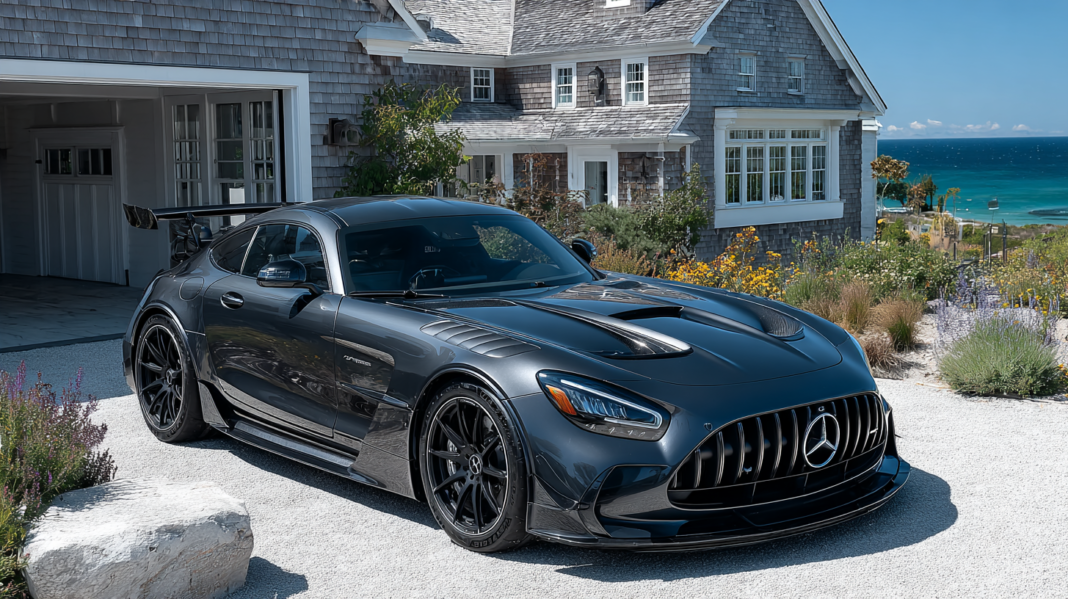
The Mercedes-AMG GT Black Series occupies a unique place in the history of the German performance brand. Introduced in 2020 as the most extreme version of the GT coupe, it represented the culmination of AMG’s engineering capabilities. With a 4.0 liter twin turbocharged V8 producing 720 horsepower, aero elements derived from the GT3 race car, and a chassis tuned for track performance, it was a car that blurred the line between road car and race car.
Now, as the GT Black Series approaches its sixth year on the market, it remains one of the most capable track focused road cars ever built. It has been succeeded by the GT 63 S E Performance, a plug in hybrid that represents a different approach to performance, but the Black Series continues to command respect from enthusiasts and collectors. Its naturally aspirated character, its rear wheel drive layout, and its focus on driver engagement set it apart in an era of electrification.
This article revisits the Mercedes-AMG GT Black Series, examining its performance specifications, engineering, design, and why it remains one of the most extreme road cars in 2026.
The Black Series Legacy
The Black Series name first appeared on the 2006 SLK 55 AMG Black Series, a stripped down, track focused version of the roadster. Over the following years, AMG applied the Black Series formula to the C63, SLS, and finally the GT. Each Black Series model was characterized by increased power, reduced weight, aggressive aerodynamics, and a focus on track performance.
The GT Black Series represented the most extreme application of this formula. It was developed alongside the GT3 race car, and many of its components were derived directly from the racing program. The car was designed to be a track weapon that was still road legal, and it succeeded in that mission.
Powertrain: The Most Powerful AMG V8
Engine Specifications
The GT Black Series is powered by a 4.0 liter twin turbocharged V8 engine, designated the M178 LS2. This engine is an evolution of the M178 that powers other GT models, with significant modifications that increase power and improve thermal management.
The engine produces 720 horsepower at 6,700 rpm and 590 lb ft of torque at 5,200 rpm. The specific output is 180 horsepower per liter, one of the highest figures for a production V8 engine.
The modifications for the Black Series include larger turbochargers that increase boost pressure, a revised intake system with a unique airbox and carbon fiber intake manifold, and a flat plane crankshaft that improves exhaust flow and allows for higher revs. The flat plane crankshaft also changes the engine’s character, giving it a sharper, more urgent sound that distinguishes it from other GT models.
The engine features a dry sump lubrication system, which allows it to withstand the high g forces generated during track driving. The system uses a separate oil tank and a high capacity oil pump to ensure consistent lubrication even under extreme cornering and braking.
Transmission
Power is transmitted to the rear wheels through a seven speed dual clutch transmission. The transmission is mounted at the rear of the car in a transaxle configuration, contributing to the car’s near perfect weight distribution. The gear ratios are shorter than those in other GT models, optimized for track acceleration rather than highway cruising.
The transmission features a track specific calibration, with faster shift times and a more aggressive downshift strategy. In the most aggressive driving modes, the transmission holds gears to the redline and performs throttle blips on downshifts that are sharp and immediate.
Cooling Systems
The GT Black Series features an extensive cooling system that allows it to sustain performance during track sessions. The system includes additional radiators for the engine, transmission, and differential, as well as oil coolers and intercoolers for the turbochargers. The front end of the car is almost entirely dedicated to cooling, with large grille openings and ducts that direct air to the various heat exchangers.
Performance
Acceleration and Speed
The GT Black Series accelerates from 0 to 60 miles per hour in 3.2 seconds. The quarter mile is completed in approximately 10.8 seconds at 130 miles per hour. Top speed is 202 miles per hour.
These figures, while impressive, are not the car’s defining characteristic. The Black Series is designed for track performance, and its acceleration is only part of the story.
Nürburgring Lap Time
The GT Black Series set a lap time of 6 minutes 43.616 seconds at the Nürburgring Nordschleife, making it the fastest production Mercedes AMG ever to lap the circuit. The time was achieved with the car’s adjustable aero package in its most aggressive configuration, and it demonstrates the car’s capability on one of the world’s most demanding tracks.
Weight and Balance
The GT Black Series has a curb weight of approximately 3,600 pounds. The weight is reduced through the use of carbon fiber for the hood, roof, front fenders, and various aerodynamic elements. The weight distribution is 47 percent front, 53 percent rear, a figure that contributes to the car’s balanced handling.
Aerodynamics
Active Aero
The GT Black Series features an active aerodynamic system that adjusts the car’s downforce based on speed and driving mode. The front splitter is adjustable, with two positions that change the angle and the amount of downforce generated. The rear wing is a two element design, with an adjustable upper element that can be set to different angles.
The car’s aero system is designed to generate downforce without excessive drag. At top speed, the system generates approximately 400 kilograms of downforce, a figure that is substantial for a road car.
Carbon Fiber Components
The GT Black Series makes extensive use of carbon fiber to manage weight and improve aerodynamics. The hood, roof, front fenders, front splitter, rear wing, and diffuser are all constructed from carbon fiber. The hood features a unique design with large air outlets that draw hot air out of the engine bay.
Underbody Aero
The car’s underbody is flat from the front splitter to the rear diffuser, a design that improves airflow and reduces drag. The diffuser is large and complex, with multiple channels that accelerate airflow beneath the car and generate downforce at the rear axle.
Chassis and Dynamics
Suspension System
The GT Black Series features a double wishbone suspension at all four corners, with coil over dampers that are manually adjustable. The suspension is tuned for track use, with stiffer springs, revised damper calibration, and increased negative camber compared to other GT models.
The car’s suspension is not adaptive; it is manually adjustable, reflecting the Black Series’s focus on track performance. Drivers can adjust compression and rebound settings to suit different tracks and conditions.
Steering
The electric power steering is calibrated for the Black Series’s performance focus. The system provides exceptional feedback, with a level of communication that is rare in electric systems. The steering ratio is quick, requiring minimal input to change direction.
Brakes
The braking system uses carbon ceramic discs with 16.1 inch front discs and six piston calipers, and 14.8 inch rear discs with four piston calipers. The system provides exceptional stopping power, with consistent pedal feel and resistance to fade during track use.
Wheels and Tires
The GT Black Series rides on 19 inch front wheels and 20 inch rear wheels, wrapped in Michelin Pilot Sport Cup 2 R tires. The tire sizes are 285/35 ZR19 front and 335/30 ZR20 rear.
The Cup 2 R tires are designed for maximum grip on track, with a compound that provides exceptional adhesion once warmed up. The rear tires are among the widest ever fitted to a production Mercedes.
Design
Exterior Styling
The GT Black Series’s exterior design is aggressive and functional. The front end features a large grille and prominent air intakes that feed cooling air to the engine and brakes. The hood has a distinctive double bubble design with large air outlets. The front fenders are flared to accommodate the wider track, and the side skirts are sculpted to manage airflow.
The rear end is dominated by the large two element rear wing, which sits above the carbon fiber diffuser. The quad exhaust outlets are positioned high, a design element that references the GT3 race car.
Interior Design
The interior of the GT Black Series is stripped back compared to other GT models. The rear seats are removed as standard, replaced by a storage shelf. The door panels are lightweight, with fabric door pulls instead of traditional handles.
The seats are carbon fiber racing buckets with Alcantara upholstery, providing lateral support during cornering. The seats are fixed in position, with the pedal box adjustable to accommodate drivers of different sizes.
The dashboard features a digital instrument cluster that can be configured to display performance data, and a central touchscreen handles infotainment functions. The steering wheel is wrapped in Alcantara, with a flat bottom and a red centering stripe.
Materials and Craftsmanship
The interior materials reflect the car’s performance focus. Alcantara is used throughout, providing grip and reducing glare. Carbon fiber trim appears on the dashboard and center console. The overall effect is purposeful rather than luxurious.
Driving Experience
On Road Character
The GT Black Series is a car that is defined by its compromises. On public roads, it is firm, loud, and demanding. The suspension transmits every imperfection in the road surface to the cabin, and the engine’s sound is ever present. The car is not uncomfortable, but it is not relaxing. It demands attention, engagement, and a willingness to accept the trade offs that come with track focused engineering.
Yet for drivers who value engagement above all else, the Black Series rewards. The steering is precise, the chassis communicates every detail, and the engine responds immediately to throttle inputs. The car feels alive, responsive, and connected in ways that few modern cars can match.
On Track Behavior
When driven on a track, the GT Black Series reveals the depth of its engineering. The brakes provide consistent stopping power lap after lap, with a pedal feel that inspires confidence. The chassis remains composed through corners, with the aerodynamic downforce providing grip that mechanical systems alone could not achieve.
The car’s front engine, rear wheel drive configuration requires skill to manage the power. The car can be rotated on corner entry with trail braking, and the throttle can be used to adjust the cornering attitude on exit. The Black Series is a car that rewards experienced drivers and punishes mistakes.
The Sound
The flat plane crankshaft V8 produces a sound that is distinct from other AMG engines. The engine has a sharp, metallic wail as the revs climb toward the 7,200 rpm redline. The sound is immediate and engaging, connecting the driver to the car in a way that few modern engines can match.
Why the GT Black Series Remains Relevant in 2026
The Naturally Aspirated Character
In an era of hybrid powertrains and forced induction, the GT Black Series’s twin turbocharged V8 represents a traditional approach to performance. Its character, with its immediate throttle response and high revving nature, is increasingly rare.
The Focus on Driver Engagement
The GT Black Series is a car that prioritizes driver engagement above all else. It has no rear seats, no adaptive suspension, and no luxury features that would add weight. It is a car for drivers who value the experience of driving over comfort or convenience.
The Racing Pedigree
The GT Black Series was developed alongside the GT3 race car, and its engineering reflects this connection. The aerodynamic package, the suspension geometry, and the cooling system all trace their lineage to the racing program. For enthusiasts who value a connection to motorsport, this pedigree is a significant part of the car’s appeal.
The Collectability
The GT Black Series is a limited production model, with only approximately 1,700 units built worldwide. Its limited numbers, combined with its status as the most extreme GT model, have made it a desirable collector car. Values have remained strong since production ended.
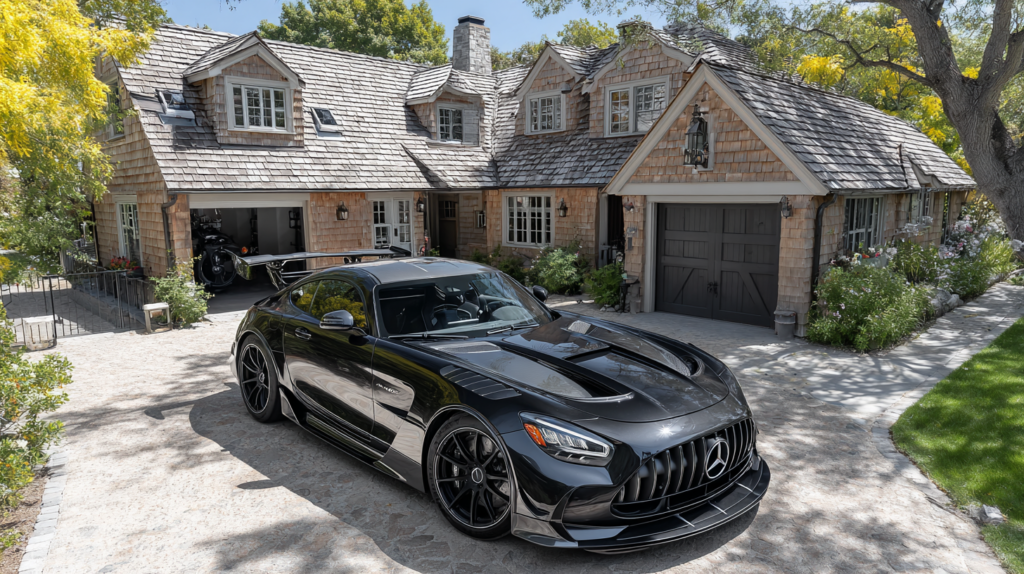
How the GT Black Series Stacks Up Against Modern Rivals
Against the Porsche 911 GT3 RS
The Porsche 911 GT3 RS is a track focused sports car with a 4.0 liter naturally aspirated flat six producing 518 horsepower.
The GT3 RS’s advantage is its aerodynamics and its handling. The Porsche’s downforce figures are among the highest of any road car, and its chassis tuning is exceptional.
The GT Black Series’s advantage is its power and its torque. With 720 horsepower, the Mercedes produces 202 more horsepower than the Porsche. The car’s front engine layout also provides a different driving experience.
Against the Lamborghini Huracán STO
The Lamborghini Huracán STO is a track focused version of the Huracán, with a 5.2 liter V10 producing 631 horsepower.
The STO’s advantage is its engine character and its drama. The V10’s sound and the Lamborghini’s aggressive styling create a visceral experience that the Mercedes cannot match.
The GT Black Series’s advantage is its power and its engineering. With 720 horsepower, the Mercedes produces 89 more horsepower than the Lamborghini. The car’s aerodynamic development and chassis tuning also provide a level of precision that the STO cannot match.
Against the Ferrari 296 GTB
The Ferrari 296 GTB is a hybrid supercar with a 3.0 liter V6 producing 819 horsepower.
The 296 GTB’s advantage is its power and its technology. The Ferrari produces 99 more horsepower than the GT Black Series, and its hybrid system provides instant torque and electric only capability.
The GT Black Series’s advantage is its focus and its character. The Mercedes is a more focused track tool, with aerodynamics and chassis tuning that prioritize lap times. The naturally aspirated character of the engine also provides a different kind of experience.
Specifications Summary
| Specification | Value |
|---|---|
| Engine | 4.0L twin turbocharged V8 |
| Horsepower | 720 hp at 6,700 rpm |
| Torque | 590 lb ft at 5,200 rpm |
| Transmission | 7 speed dual clutch |
| Drive | Rear wheel drive |
| 0-60 mph | 3.2 seconds |
| Quarter Mile | 10.8 seconds at 130 mph |
| Top Speed | 202 mph |
| Downforce | 400 kg at top speed |
| Weight | 3,600 lb |
| Nürburgring Lap Time | 6:43.616 |
| Production | Approximately 1,700 units |
| Base Price | $325,000 |
Conclusion
The Mercedes-AMG GT Black Series represents the pinnacle of AMG’s engineering capabilities. It is a car that was developed alongside the GT3 race car, with aero elements derived from racing, a 720 horsepower flat plane crankshaft V8, and a chassis tuned for track performance. It is a car that set a lap time of 6 minutes 43 seconds at the Nürburgring, making it one of the fastest production cars ever to lap the circuit.
The GT Black Series is not a car for everyone. Its ride is firm, its interior is stripped, and its focus on track performance means compromises in comfort and convenience. But for drivers who value engagement above all else, it is one of the most rewarding cars ever built.
In 2026, as the automotive industry continues its transition toward electrification and hybrid powertrains, the GT Black Series stands as a reminder of what was possible when AMG was given the freedom to create the most extreme version of its platform. It is a car that honors the Black Series legacy, and it remains one of the most extreme road cars in the world.

