
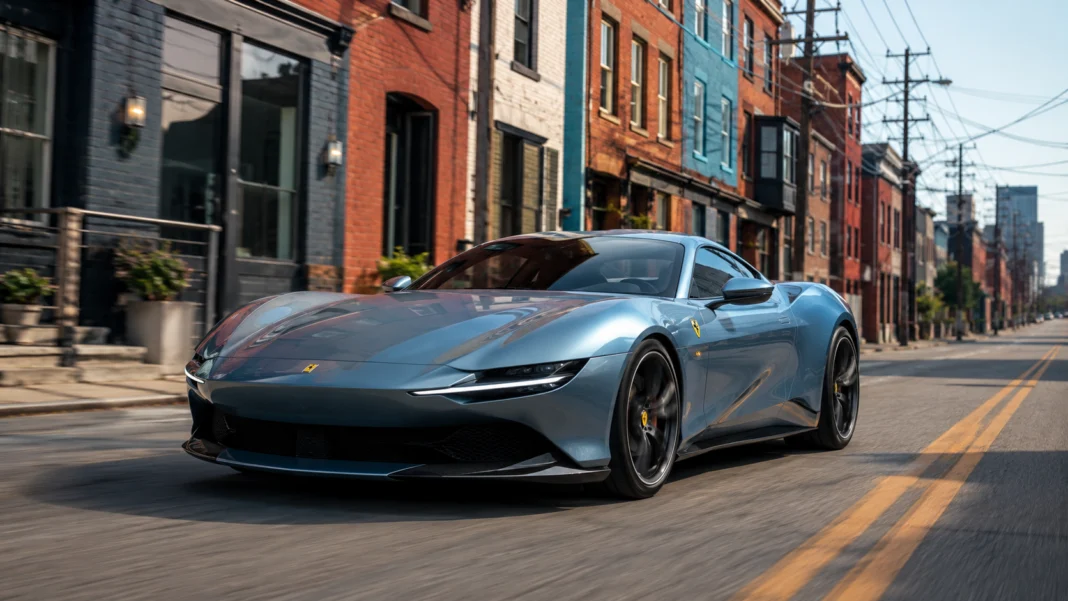
Imagine a blue Ferrari gliding along Butler Street in Pittsburgh’s Lawrenceville neighborhood as the summer sun hangs low over the Allegheny River, past old brick buildings and converted warehouses that once housed steel and manufacturing and now hold boutiques, coffee shops, and tech startups. It would be unmistakably a Ferrari, yet unlike any Ferrari before it. The Ferrari Luce is the first fully electric car from Maranello, and it arrives at a moment when many are asking whether an electric Ferrari can still be a Ferrari.
The Luce is Ferrari’s gamble on the future. With four electric motors producing 1,050 cv (1,036 horsepower), a 122 kWh battery, and a top speed exceeding 310 km/h, it is undeniably fast. But speed alone has never defined Ferrari. The question is whether a Ferrari without a combustion engine can still deliver the emotional connection that defines the brand.
What the Luce Actually Is
The Luce is not a one-off concept. It is a production-ready model scheduled for delivery in the fourth quarter of 2026, priced at approximately €550,000 ($640,000). It represents over two decades of electrification research at Ferrari, beginning with Formula 1 technology that was first incorporated into the limited-edition LaFerrari hybrid supercar that debuted in 2013.
The car’s name, Luce, is Italian for “light,” and it was developed with input from former Apple design chief Jony Ive and his collective LoveFrom. It is Ferrari’s first five-seater, a practical grand tourer aimed at families with deep pockets. The design features rear-hinged doors, a floating front wing, and a glass-led design that marks a break from the carmaker’s aggressive, muscular, signature sporty style.

The Powertrain: Four Motors, One Philosophy
The Luce’s powertrain is a departure from everything Ferrari has built before. Four independent electric motors, one at each wheel, deliver a combined output of 1,050 cv. The front axle alone produces 210 kW and up to 3,500 Nm of torque, while the rear axle delivers a further 620 kW and 8,000 Nm.
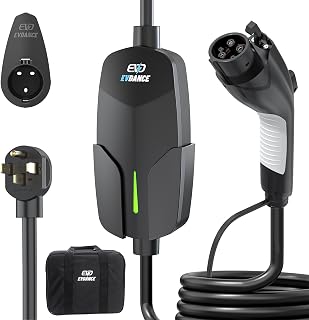
The 122 kWh battery pack operates on an 800-volt architecture, enabling charging speeds up to 350 kW. Range is rated at over 530 kilometers (approximately 329 miles). The battery is integrated into the floorpan, with 85 percent of the modules located between the front and rear axles. Weight distribution is 47:53 percent front-to-rear, much like a mid-engined supercar, and the center of gravity sits 95 mm lower than a Purosangue’s.
The car weighs approximately 2,260 kilograms, making it the heaviest Ferrari ever built. But the chassis and body are made from 75 percent recycled aluminum, saving 6.7 tons of carbon dioxide per vehicle.
The Sound: Amplified, Not Simulated
One of the most significant challenges for any electric Ferrari is the sound. Ferrari has not attempted to fake the roar of a V12. Instead, the company has amplified the natural acoustic characteristics of the electric powertrain.
Antonio Palermo, the engineer responsible for sound and vibration on the Luce, has described the approach as being inspired by the electric guitar. A precision accelerometer on the rear axle captures the natural frequencies of the powertrain components, which are then amplified in the cabin. Ferrari has also applied its Order Noise Cancellation technology to eliminate undesirable harmonics and high-pitched whines.
The resultant sound is functional: if you drive the Luce hard, the noise reaches a ripe crescendo. At steady state motorway speeds, it shuts up. The sound level is based on the position of the e-Manettino and the use of the paddles, allowing the driver to switch from quiet focus to maximum expressiveness.
The Driving Experience: Ferrari First
Freed from the constraints of a traditional gearbox, the steering wheel paddles now provide access to five progressively higher levels of torque with the right-hand paddle, or increase engine braking with inputs to the left paddle in a strategy called Torque Shift Engagement. The driver can influence dynamic characteristics through Range, Tour, and Performance driving modes, while the eManettino adjusts the electric powertrain and the Manettino includes a new Dry mode integrated between Wet and Sport.
Third-generation 48-volt active suspension, first seen in the Purosangue and subsequently in the F80 hypercar, has been revised for the Luce. An upgrade to the recirculating ball screw better cushions and controls vertical impacts, and revised shock absorbers reduce weight by 2 kilograms. The suspension now also monitors and controls damper oil temperature for consistent behavior in both hot and cold conditions.
The traction control system in the Luce actually learns how you drive. Ferrari’s software judges the pilot, studying how the operator brakes, modulates the throttle, and turns the wheel. If you drive cleanly and confidently, the system raises its intervention threshold and allows capable drivers more wheel slip. Race mode is earned, not selected.
What It Must Prove
The Luce has to prove several things. It must demonstrate that a Ferrari without a V8 or V12 can still deliver the emotional connection that defines the brand. It must prove that the company’s first electric vehicle can attract new buyers while satisfying existing customers. And it must show that Ferrari can lead in electrification.

The company has scaled back its electrification targets. In 2022, Ferrari said 40 percent of its lineup would be electric by 2030. That figure is now 20 percent. The Luce is positioned as “an addition, not a transition,” according to CEO Benedetto Vigna.
The car has faced significant criticism from traditionalists. Ferrari shares fell after the launch. Online, fans have mocked the Luce as “more Apple Magic Mouse than Italian stallion.” But Ferrari is betting that a new generation of wealthy buyers, less tied to the legacy of twelve and eight cylinder engines, will embrace the shift. The Luce could help Ferrari penetrate markets where EVs are widespread and big petrol cars are heavily taxed.
The Butler Street Evening
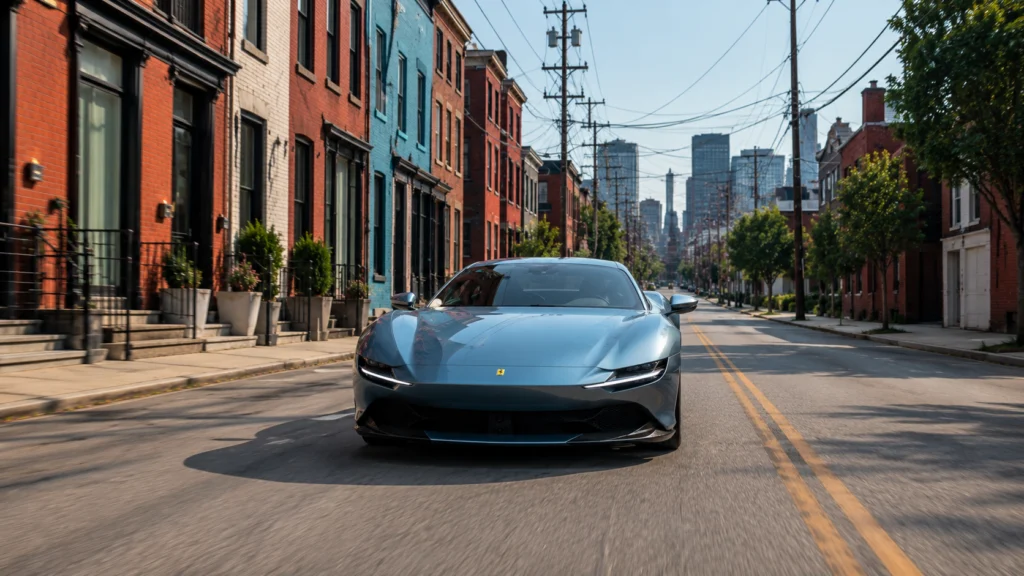
The blue prototype has completed its drive along Butler Street. Its four electric motors have delivered the instant torque and dynamic response that Ferrari executives have promised. The active suspension and low center of gravity have kept it composed through the curves. The driver, cocooned in the cabin, has experienced a level of performance that proves the Ferrari formula can survive electrification.
The Luce is not a car for everyone. It is expensive, priced at approximately €550,000. It is heavy, weighing more than 2.2 tonnes. But it represents a significant moment in Ferrari’s history. It is the first fully electric car from Maranello, and it proves that Ferrari can deliver the driving experience enthusiasts demand, even without a combustion engine.
The Luce is not just a car. It is a statement. It is a reminder that even in an era of electrification, Ferrari remains committed to the pure, unfiltered joy of driving. The sound is different, the powertrain is different, and the driving experience is different. But the soul remains. The Ferrari Luce has arrived. And it has a lot to prove.
Gear Picks for This Story
 Paddock StyleRed Bull Racing F1 Team CapSee the Design →
 Style UpSPARCO Martini Racing TeeSee the Design →
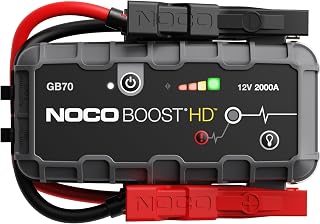 Garage EssentialNOCO Boost HD GB70 Jump StarterExplore the Specs →
 Essential ToolMishimoto Magnetic Oil Drain PlugExplore the Specs →
As an Amazon Associate, VeloxTrend earns from qualifying purchases.

