
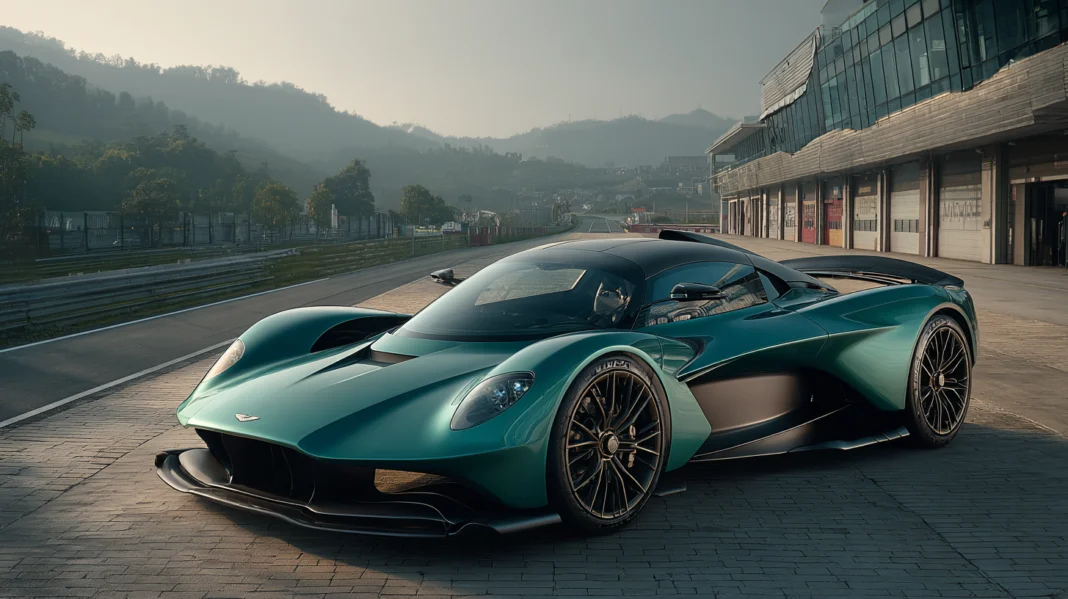
The Aston Martin Valkyrie represents a unique convergence of Formula 1 engineering and road car design. Conceived by Adrian Newey, the most successful Formula 1 designer in history, the Valkyrie was intended to be the closest thing to a road-legal F1 car ever built. Its aerodynamics, its powertrain, and its chassis were all derived from racing technology, with minimal compromise for road use.
Developed in partnership with Red Bull Racing, the Valkyrie was first announced in 2016 and entered limited production in 2021. Only 150 units were built (plus 25 track-only AMR Pro versions). The car features a 6.5 liter naturally aspirated V12 engine developed by Cosworth, producing 1,000 horsepower, supplemented by a hybrid system that adds an additional 160 horsepower. The total output is 1,160 horsepower, and the dry weight is just 1,030 kilograms.
This article provides a comprehensive examination of the Aston Martin Valkyrie, including its development, aerodynamics, powertrain, engineering, and why it remains one of the most extreme road cars ever built.
The Genesis: Adrian Newey’s Vision
Adrian Newey has been responsible for some of the most successful Formula 1 cars in history. His designs have won multiple constructors’ championships and drivers’ championships for Williams, McLaren, and Red Bull Racing. After years of designing cars for the track, Newey wanted to create a road car that embodied the same principles: extreme aerodynamics, lightweight construction, and uncompromising performance.
The Valkyrie was the result. Newey envisioned a car that would be as close to a Formula 1 car as possible while remaining road-legal. He collaborated with Aston Martin and Red Bull Racing to bring the vision to life.
The project was announced in 2016, with the name “AM-RB 001.” Later, it was christened the Valkyrie, a name that references the female figures from Norse mythology who chose which warriors would live or die in battle. The name reflected the car’s extreme character.
The Adrian Newey Philosophy
Newey’s approach to car design is defined by several core principles. First, aerodynamics are paramount. Every surface should contribute to downforce or reduce drag. Second, weight is the enemy. Every component should be as light as possible. Third, the driver should be at the center of the experience. The car should communicate clearly and reward skill.
The Valkyrie embodies all of these principles. Its aerodynamic package is among the most extreme ever fitted to a road car. Its carbon fiber construction keeps weight to a minimum. And its driver-focused cockpit places the driver at the center of the action.
Aerodynamics: The Defining Feature
Ground Effect
The Valkyrie’s aerodynamic philosophy is based on ground effect, a principle that Newey exploited to great success in Formula 1. The car’s underbody is shaped to accelerate airflow, creating a low-pressure area that sucks the car onto the road. This generates downforce without the drag penalty of a large rear wing.
The underbody features a complex arrangement of venturi tunnels and diffusers. The tunnels accelerate airflow, and the diffuser slows it down, creating a pressure differential that generates downforce. The system is so effective that the Valkyrie generates more downforce than its own weight at high speeds.
Active Aerodynamics
The Valkyrie features active aerodynamic elements that adjust based on speed and driving mode. The front splitter is adjustable, and the rear wing is also adjustable. The system is designed to balance downforce and drag, providing high downforce for cornering and low drag for straight-line speed.
Cooling and Aerodynamics
The Valkyrie’s cooling system is integrated into the aerodynamic package. The radiators are mounted in the side pods, and airflow is managed by the bodywork. The system is designed to provide adequate cooling without compromising downforce.

Downforce Figures
The Valkyrie generates approximately 1,000 kilograms of downforce at 150 miles per hour. This figure is comparable to a GT3 race car and exceeds that of any other production road car. The car’s downforce-to-weight ratio is approximately 1:1, meaning the car generates enough downforce to support its own weight.
Powertrain: The Heart of the Valkyrie
The Cosworth V12
The Valkyrie is powered by a 6.5 liter naturally aspirated V12 engine developed by Cosworth, designated the RA. This engine is one of the most remarkable production engines ever built. It produces 1,000 horsepower at 10,500 rpm and 546 lb-ft of torque at 7,000 rpm. The redline is 11,100 rpm.
The engine is incredibly compact and light. It weighs just 206 kilograms, a figure that is remarkable for a V12. The engine’s compact dimensions allow it to be mounted low in the chassis, contributing to the car’s low center of gravity.
The engine features a flat-plane crankshaft, titanium connecting rods, and a gear-driven valvetrain. The intake system is designed to minimize restriction, with a ram air intake that draws air from a scoop above the driver’s head.
The Hybrid System
The Valkyrie features a hybrid system developed by Rimac, the Croatian electric hypercar manufacturer. The system uses a 48-volt integrated starter-generator mounted on the engine. The system produces 160 horsepower and provides additional torque during acceleration.
The hybrid system also provides reverse gear, as the transmission does not have a reverse gear. The car can also operate in electric-only mode for short distances, allowing for quiet operation in urban environments.
Total Output
The combined output of the V12 engine and the hybrid system is 1,160 horsepower and 664 lb-ft of torque.
Performance
Acceleration and Speed
The Valkyrie accelerates from 0 to 60 miles per hour in 2.5 seconds. The 0 to 100 miles per hour sprint takes approximately 4.5 seconds. The quarter mile is completed in approximately 9.5 seconds.
Top speed is rated at 217 miles per hour (350 kilometers per hour). This figure is limited by the car’s aerodynamic downforce; a low-drag configuration would allow for a higher top speed.
Weight and Power-to-Weight Ratio
The Valkyrie has a dry weight of 1,030 kilograms, giving it a power-to-weight ratio of approximately 1.13 horsepower per kilogram. This figure is among the highest of any production road car.
Chassis and Construction
Carbon Fiber Monocoque
The Valkyrie is built around a carbon fiber monocoque that is lighter and stiffer than any road car before it. The monocoque is manufactured using aerospace-grade materials and processes, with careful attention to fiber orientation and layup sequence. The body panels are also carbon fiber.
The monocoque weighs only 105 kilograms, and the entire chassis (including the engine and suspension) weighs less than a typical production car’s engine alone.
Suspension
The Valkyrie features double-wishbone suspension at all four corners, with pushrod-actuated dampers. This configuration, derived from Formula 1, allows for precise control over wheel motion and reduces unsprung weight. The suspension is adjustable, with settings for ride height, camber, and damping.
Brakes
The braking system uses carbon ceramic discs with six-piston calipers at the front and four-piston calipers at the rear. The system provides exceptional stopping power, with consistent pedal feel and resistance to fade during track use.
Wheels and Tires
The Valkyrie rides on 20-inch front wheels and 21-inch rear wheels, wrapped in specially developed Michelin tires. The front tires are 265/35 ZR20, and the rear tires are 325/30 ZR21. The tires were developed specifically for the Valkyrie, with a compound and construction designed for maximum grip.
Design
Exterior Styling

The Valkyrie’s exterior design is purely functional. There are no decorative elements; every surface is shaped by aerodynamic requirements. The car is low and wide, with a length of 4,612 mm, a width of 2,075 mm, and a height of just 1,130 mm.
The front end features a prominent splitter and large air intakes that feed cooling air to the engine and brakes. The headlights are slim and integrated into the bodywork. The side profile shows the mid-engine proportions, with a long wheelbase, short overhangs, and a cabin positioned forward of the rear axle.
The rear end is characterized by a large diffuser and quad exhaust outlets. The taillights are slim and integrated into the bodywork.
Interior Design
The interior of the Valkyrie is focused entirely on the driver. The driver sits in the center of the cabin, with two passenger seats flanking the driver and positioned slightly behind. This 3-seat configuration, inspired by the McLaren F1, provides the driver with an unobstructed view forward.
The seats are carbon fiber racing buckets with minimal padding, upholstered in Alcantara. The seats are fixed in position, with the pedal box adjustable to accommodate drivers of different sizes.
The dashboard features a digital instrument cluster that displays essential information. The steering wheel is a Formula 1-inspired unit with integrated controls for the car’s systems. The paddle shifters are mounted on the steering column.
The interior is stripped back compared to any other Aston Martin. There is no infotainment screen, no premium audio system, and no sound deadening. The focus is entirely on driving.
Driving Experience
On Road Character
The Valkyrie is a car that is best appreciated on a track, but it can be driven on public roads. The suspension is extremely firm, transmitting every imperfection in the road surface to the cabin. The ride is not comfortable, and the car is not quiet. The engine produces a constant mechanical whir, and the aerodynamics produce wind noise at speed.
Yet for drivers who are willing to meet its demands, the Valkyrie rewards. The steering provides exceptional feedback, the engine responds immediately to throttle inputs, and the chassis communicates every detail of the road surface.
On Track Behavior
When driven on a track, the Valkyrie reveals the depth of its engineering. The brakes provide consistent stopping power lap after lap, with a pedal feel that inspires confidence. The chassis remains composed through corners, with the aerodynamic downforce providing grip that mechanical systems alone could not achieve.
The car’s hybrid system provides instant torque on corner exit, and the naturally aspirated V12 pulls strongly to the 11,100 rpm redline. The car is balanced and predictable, with a level of feedback that is unmatched by any other production car.
The Sound
The V12 engine’s sound is one of the Valkyrie’s defining characteristics. The engine produces a high-pitched wail as the revs climb toward the 11,100 rpm redline. The sound is sharp, urgent, and deeply satisfying, with a quality that distinguishes it from every other production engine.
The Valkyrie AMR Pro
Aston Martin also produced the Valkyrie AMR Pro, a track-only version of the car. The AMR Pro features even more extreme aerodynamics, a lighter construction, and a more powerful engine. Only 25 units were built, and they are not road-legal.
The AMR Pro generates significantly more downforce than the road car, and its performance is comparable to a Le Mans prototype.
Rarity and Exclusivity
Production Numbers
Aston Martin built 150 units of the Valkyrie coupe. The company also built 25 units of the track-only AMR Pro and 85 units of the Valkyrie Spider (open-top version). All units were sold before production began.
Pricing
The Valkyrie carried a base price of approximately $3.5 million. The AMR Pro and Spider were priced higher.
Collector Status

The Valkyrie is one of the most sought-after hypercars of its era. Its connection to Adrian Newey, its extreme engineering, and its limited production numbers have made it a prized collector car.
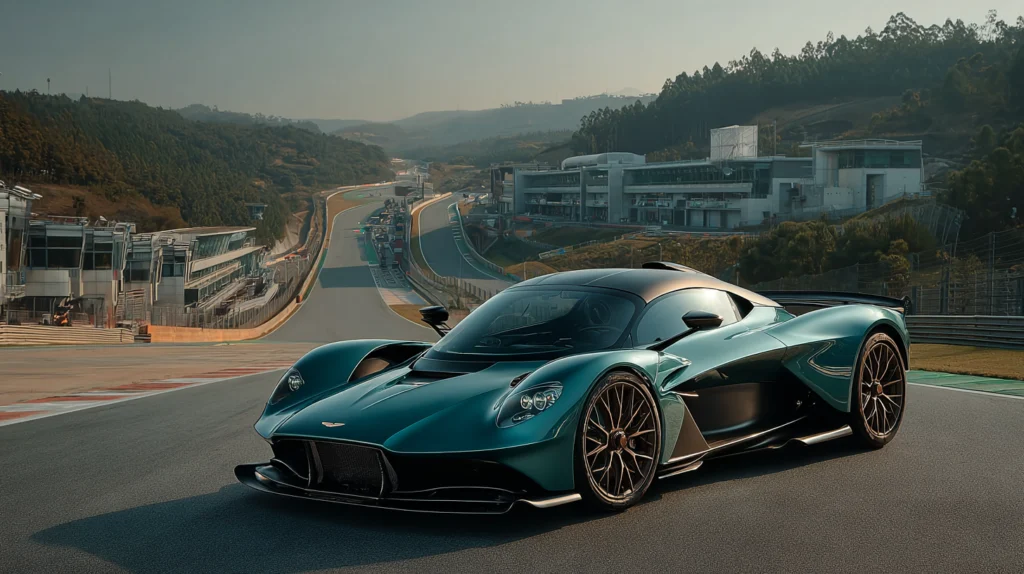
How the Valkyrie Stacks Up Against Rivals
Against the Mercedes-AMG One
The Mercedes-AMG One is a road-legal hypercar with a Formula 1-derived 1.6 liter V6 hybrid producing 1,049 horsepower.
The One’s advantage is its Formula 1 powertrain and its engine character. The Mercedes’ engine revs to 11,000 rpm and produces a sound that is pure racing.
The Valkyrie’s advantage is its aerodynamics and its naturally aspirated V12. The Aston Martin’s downforce figures exceed the Mercedes’, and its V12 provides a different kind of sound and character.
Against the Gordon Murray T.50
The Gordon Murray T.50 is a V12 hypercar with a 4.0 liter naturally aspirated V12 producing 654 horsepower.
The T.50’s advantage is its weight and its analog character. The Gordon Murray is lighter than the Valkyrie, and its manual transmission provides a more engaging driving experience.
The Valkyrie’s advantage is its power and its aerodynamics. The Aston Martin produces 506 more horsepower than the T.50 and generates significantly more downforce.
Against the Bugatti Chiron Super Sport
The Bugatti Chiron Super Sport is a hypercar with an 8.0 liter quad-turbocharged W16 producing 1,578 horsepower.
The Chiron’s advantage is its power and its top speed. With 1,578 horsepower and a top speed of 273 miles per hour, the Bugatti is in a different performance class for straight-line speed.
The Valkyrie’s advantage is its handling and its track focus. The Aston Martin is lighter, more agile, and more aerodynamically advanced than the Chiron.
Against the Ferrari SF90 Stradale
The Ferrari SF90 Stradale is a hybrid hypercar with a 4.0 liter twin-turbocharged V8 and three electric motors producing 986 horsepower.
The SF90’s advantage is its technology and its daily usability. The Ferrari’s plug-in hybrid system provides electric-only range, and the car is more comfortable for daily driving.
The Valkyrie’s advantage is its extreme character and its Formula 1-derived engineering. The Aston Martin is a more focused, more uncompromising machine.
Specifications Summary
| Specification | Value |
|---|---|
| Engine | 6.5L naturally aspirated V12 |
| Engine Power | 1,000 hp at 10,500 rpm |
| Redline | 11,100 rpm |
| Hybrid System | 160 hp |
| Combined Power | 1,160 hp |
| Combined Torque | 664 lb-ft |
| Transmission | 7-speed automated manual |
| Drive | Rear wheel drive |
| 0-60 mph | 2.5 seconds |
| Top Speed | 217 mph |
| Downforce | 1,000 kg at 150 mph |
| Weight | 1,030 kg dry |
| Production | 150 coupe, 85 spider, 25 AMR Pro |
| Base Price | $3.5 million |
Conclusion
The Aston Martin Valkyrie is one of the most extreme road cars ever built. Conceived by Adrian Newey, the most successful Formula 1 designer in history, it was designed to be the closest thing to a road-legal F1 car. Its aerodynamic package generates 1,000 kilograms of downforce, its 6.5 liter V12 revs to 11,100 rpm and produces 1,160 horsepower, and its carbon fiber construction keeps weight to just 1,030 kilograms.
The Valkyrie is not a car for everyone. Its production is limited to 150 units, its price is $3.5 million, and its focus on track performance means it lacks the comfort and convenience of other hypercars. But for the 150 owners who acquired a Valkyrie, the car offers something that no other vehicle can provide: the experience of driving a car designed by Adrian Newey, a car that represents the pinnacle of Formula 1 engineering applied to the road.
The Valkyrie also represents the culmination of Newey’s career. He has designed some of the most successful F1 cars in history, and the Valkyrie is his first road car. It is a car that embodies his philosophy, and it stands as one of the most remarkable vehicles ever created.
The Aston Martin Valkyrie is Adrian Newey’s road-legal F1 car, and it will forever be remembered as one of the greatest hypercars of all time.
Gear Picks for This Story
 Style UpRay-Ban Aviator Classic SunglassesSee the Design →
 Essential ToolMilwaukee M12 FUEL 3/8 RatchetExplore the Specs →
 Detail Like a ProMeguiar's G7516 Ultimate CompoundSee How It Works →
 Creator GearDJI Air 3S DroneSee the Specs →
As an Amazon Associate, VeloxTrend earns from qualifying purchases.

