
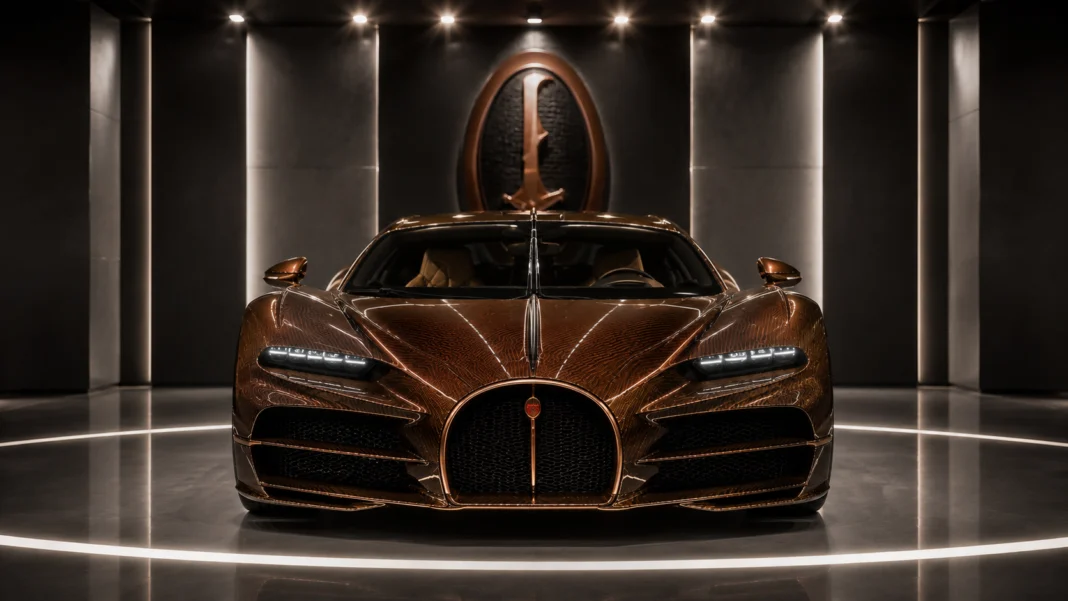
Picture the lights of the Bugatti Atelier glowing softly in the Alsatian night, in the Molsheim courtyard where Ettore Bugatti built his first cars over a century ago. Bugatti’s newest powertrain is not a W16, and it is not a battery-electric hypercar. It is something the automotive world has not seen in decades: a naturally aspirated V16 engine, paired with hybrid assistance, designed to carry Bugatti into a new era.
The Bugatti Tourbillon is the replacement for the Chiron, and it represents the most significant departure from the brand’s modern formula since the Veyron introduced the W16 in 2005. The quad-turbocharged 8.0-liter W16, with its 1,600 horsepower and 16 cylinders arranged in a W formation, defined Bugatti for two decades. But Mate Rimac, the engineer now leading the brand, chose a different path.
The V16: A Return to Mechanical Artistry
The heart of the Tourbillon is an 8.3-liter naturally aspirated V16 engine, developed in partnership with Cosworth. It produces 1,000 horsepower at 9,000 rpm on its own, without any forced induction. The engine is a masterpiece of engineering: a 90-degree V16, nearly a meter long, with a massive crankshaft and a redline that few naturally aspirated engines can match.
The engine weighs just 251.7 kilograms, remarkably light for its size and configuration. The entire rear powertrain assembly, including the V16, the eight-speed dual-clutch transmission, and a rear electric motor, weighs only 430 kilograms. That is less than the weight of the Chiron’s engine alone.
The decision to go naturally aspirated was deliberate. Rimac and his team wanted an engine that was pure, emotional, and responsive. In an era of downsizing, turbocharging, and hybridization, a naturally aspirated V16 is a statement. It is a return to the mechanical artistry that defined the early days of Bugatti, when Ettore himself insisted that every visible component be beautifully finished.
The Hybrid System: Electric Assistance Without Compromise
The V16 is not alone. Three electric motors complement the combustion engine. Two motors are mounted on the front axle, providing all-wheel drive and torque vectoring. A third motor is mounted at the rear axle, integrated into the transmission.
The total system output is 1,800 horsepower. The front axle alone produces up to 3,000 Nm of torque at the wheels, and the rear axle electric motor can spin at 24,000 rpm. The battery pack operates on an 800-volt architecture, enabling electric-only range of over 60 kilometers. The battery is integrated into the chassis structure, contributing to rigidity and optimizing weight distribution.
The hybrid system is designed to enhance the V16, not replace it. Where the combustion engine cannot deliver full power immediately, the electric motor can. The electric motors provide instant torque, filling the gaps in the V16’s power delivery and eliminating the need for a traditional starting system.
Why Not a Bigger Battery?
The answer is fundamental to Bugatti’s philosophy. A larger battery would have added weight, compromised the car’s proportions, and altered its character. Bugatti did not want a hypercar that felt like a science experiment. They wanted a hypercar that felt like a Bugatti: elegant, powerful, and timeless.

The Tourbillon’s engineering demonstrates this philosophy. Despite its advanced hybrid architecture, the car weighs less than the Chiron. It achieves this through weight-saving innovations such as 3D-printed suspension components that are 45 percent lighter than previous units.
The Name: Tourbillon
The name is a reference to the intricate rotating mechanism in high-end watches. It is a deliberate choice, reflecting the car’s focus on mechanical artistry and timelessness. The dashboard features an instrument cluster built by Swiss watchmakers, with gauges housed in crystal. The car is designed to be a mechanical masterpiece, not a digital device.
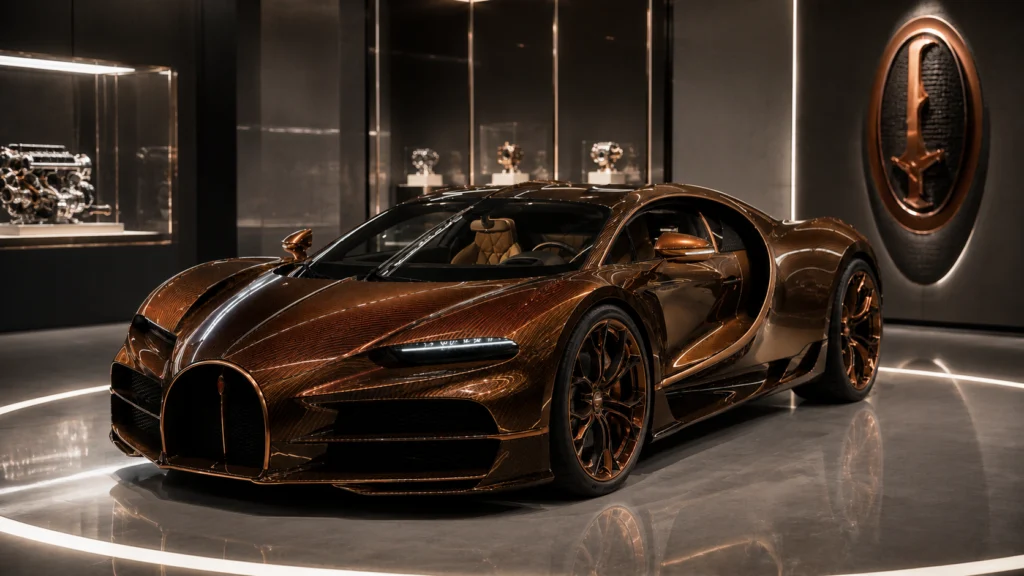
The Molsheim Night
The Tourbillon has completed its demonstration run. Its V16 has delivered the 1,000 horsepower that makes it one of the most powerful naturally aspirated engines ever built. The electric motors have provided instant torque and seamless power delivery. The driver has experienced a level of performance that is as refined as it is exhilarating.
The Tourbillon is not a car for everyone. It is limited to 250 units, priced at approximately €3.6 million ($3.8 million). But it represents a significant moment in Bugatti’s history. It is the first Bugatti with a V16, the first with a hybrid powertrain, and the first to abandon the W16 formula.
The Tourbillon is not just a car. It is a statement. It is a reminder that Bugatti remains committed to the art of engineering, the emotion of driving, and the legacy of Ettore Bugatti. The V16 is not a compromise. It is a choice.
Gear Picks for This Story
 EV LifeChargePoint Home Flex EV ChargerCheck Compatibility →
 Stay SafeVIOFO A329S 4K Dual Dash CamSee How It Helps →
 Tech UpgradeVeepeak OBDCheck BLE Bluetooth ScannerExplore the Specs →
 Detail Like a ProGriot's Garage Orbital PolisherSee How It Works →
As an Amazon Associate, VeloxTrend earns from qualifying purchases.

