
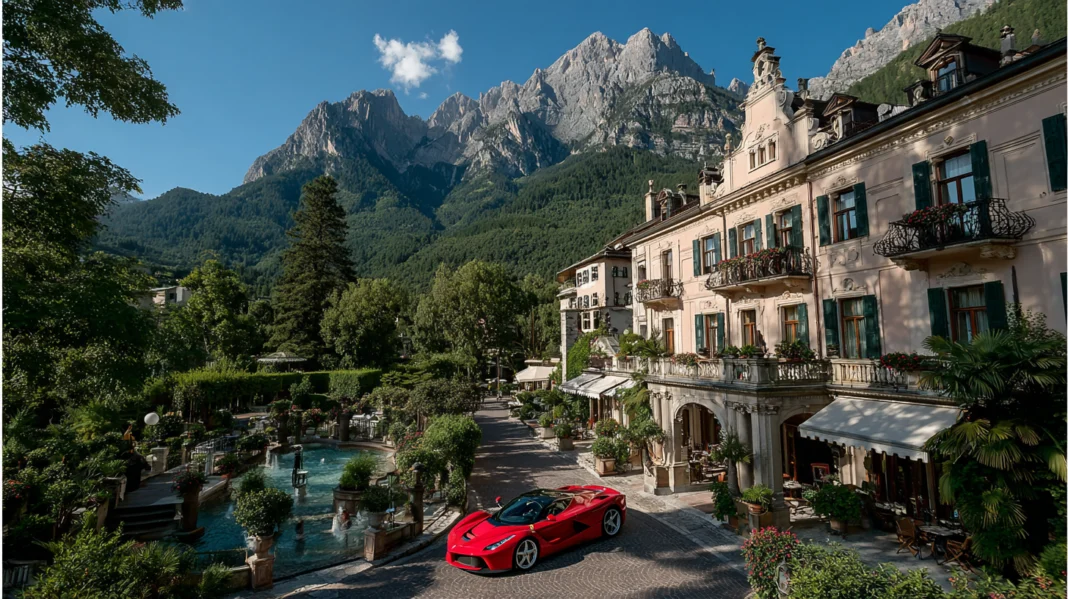
The Ferrari LaFerrari occupies a unique place in the company’s history. It was the first hybrid hypercar from Maranello, combining a 6.3 liter naturally aspirated V12 with an electric motor to produce a combined 949 horsepower. It was the successor to the Enzo, and it represented Ferrari’s vision for the future of extreme performance. It was also the first Ferrari to use a hybrid system not as an efficiency aid but as a performance enhancement.
Produced from 2013 to 2016, the LaFerrari was limited to 499 units (plus one additional unit donated to charity). It was the most powerful and technologically advanced Ferrari ever built at the time, and it set a new standard for the hypercar segment. Alongside the Porsche 918 Spyder and the McLaren P1, the LaFerrari formed the “Holy Trinity” of hybrid hypercars that redefined what was possible.
This article provides a comprehensive examination of the Ferrari LaFerrari, including its development, hybrid powertrain, performance, design, and why it remains one of the most significant hypercars of its era.
The Holy Trinity: A New Era of Hypercars
The LaFerrari, Porsche 918 Spyder, and McLaren P1 were introduced within a few years of each other. Each car used a hybrid system to enhance performance, and each set new benchmarks for power, speed, and technology. The three cars are collectively known as the “Holy Trinity” of hybrid hypercars, and they represent a turning point in automotive history.
The LaFerrari was the most extreme of the three. While the Porsche and McLaren used their hybrid systems to improve efficiency and provide electric-only range, Ferrari focused solely on performance. The LaFerrari’s hybrid system was designed to fill the gaps in the V12’s power delivery, providing instant torque at low revs and additional power at high revs.
The LaFerrari Name
The name LaFerrari translates to “The Ferrari” in Italian. The choice of name was deliberate: this car was intended to be the definitive Ferrari, the ultimate expression of the brand’s engineering capabilities. It was a car that would represent everything Ferrari stood for.
Powertrain: The Heart of LaFerrari
The V12 Engine
The LaFerrari is powered by a 6.3 liter naturally aspirated V12 engine, designated the F140 FE. This engine is a development of the unit that powered the Enzo and the F12berlinetta, with significant modifications for the LaFerrari application. It produces 789 horsepower at 9,000 rpm and 516 lb-ft of torque at 6,750 rpm. The redline is 9,250 rpm.
The engine features a 65-degree V angle, four valves per cylinder, and a dry-sump lubrication system. The intake system uses individual throttle bodies, contributing to the engine’s immediate throttle response. The exhaust system is tuned to produce a distinctive sound, with a high-pitched wail at high rpm.
The HY-KERS System
The LaFerrari features a hybrid system called HY-KERS (Hybrid Kinetic Energy Recovery System). This system includes an electric motor mounted at the rear of the car, integrated with the seven-speed dual-clutch transmission. The motor produces 161 horsepower and 199 lb-ft of torque.

The electric motor draws power from a 2.3 kWh lithium-ion battery pack, mounted low in the chassis to lower the center of gravity. The battery is designed for power delivery rather than range, with a focus on providing the electric assistance needed for performance.
The HY-KERS system provides instant torque at low engine speeds, filling the gap before the V12’s power builds. It also provides additional power during hard acceleration, and it can recover energy during braking. The system does not allow electric-only driving; the V12 is always running when the car is in motion.
Total Output
The combined output of the V12 engine and the HY-KERS system is 949 horsepower and 664 lb-ft of torque. This made the LaFerrari the most powerful Ferrari ever built at the time.
Performance
Acceleration and Speed
The LaFerrari accelerates from 0 to 60 miles per hour in 2.5 seconds. The 0 to 100 miles per hour sprint takes approximately 5.2 seconds. The quarter mile is completed in approximately 9.7 seconds at 145 miles per hour. Top speed is 217 miles per hour (349 kilometers per hour).
These figures made the LaFerrari one of the fastest production cars in the world.
Fiorano Lap Time
The LaFerrari set a lap time of 1 minute 19.70 seconds at Ferrari’s Fiorano test track. This was significantly faster than the Enzo (1 minute 24.90 seconds) and the 599 GTB (1 minute 26.50 seconds). The LaFerrari’s lap time demonstrated its track capability.
Chassis and Aerodynamics
Carbon Fiber Monocoque
The LaFerrari is built around a carbon fiber monocoque that is lighter and stiffer than the Enzo’s. The monocoque is manufactured using aerospace-grade materials and processes, with careful attention to fiber orientation and layup sequence. The body panels are also carbon fiber.
The result is a dry weight of approximately 1,255 kilograms (2,766 pounds), comparable to the Enzo.
Suspension
The LaFerrari features double-wishbone suspension at all four corners, with pushrod-actuated dampers. This configuration, derived from Formula 1, allows for precise control over wheel motion and reduces unsprung weight. The suspension is adjustable, with settings for ride height, camber, and damping.
Brakes
The braking system uses carbon ceramic discs with six-piston calipers at the front and four-piston calipers at the rear. The front discs measure 15.7 inches in diameter, and the rear discs measure 14.2 inches. The system provides exceptional stopping power, with consistent pedal feel and resistance to fade during track use.
Aerodynamics
The LaFerrari’s aerodynamic development was led by engineers from Ferrari’s Formula 1 program. The car features active aerodynamic elements, including a front splitter and a rear wing that adjust their angle based on speed and driving mode. The underbody is flat, with a large diffuser that accelerates airflow beneath the car.
The aerodynamic package generates significant downforce, keeping the car planted at high speeds. The LaFerrari produces approximately 360 kilograms of downforce at 124 miles per hour.
Design
Exterior Styling
The LaFerrari’s exterior was designed by the Ferrari Styling Centre under the direction of Flavio Manzoni. The design is aggressive and functional, with a low nose, prominent air intakes, and a distinctive rear end.
The front end features a prominent grille and large air intakes that feed cooling air to the engine and brakes. The headlights are slim and integrated into the bodywork. The side profile shows the mid-engine proportions, with a long wheelbase, short overhangs, and a cabin positioned forward of the rear axle.
The rear end is characterized by a prominent diffuser and quad exhaust outlets. The taillights are slim and integrated into the bodywork.
Interior Design
The interior of the LaFerrari is focused on the driver. The seats are carbon fiber racing buckets with leather upholstery, providing lateral support during cornering. The dashboard features a digital instrument cluster with a central tachometer and auxiliary gauges.
The steering wheel is a Formula 1-inspired unit with integrated controls for the car’s systems. The paddle shifters are mounted on the steering column, and the start button is located on the wheel. The driver can control the suspension settings, the traction control, and the hybrid system without taking their hands off the wheel.
The interior is stripped back compared to grand tourers, but it is not spartan. The materials are of high quality, and the craftsmanship is excellent.
Driving Experience
On Road Character
The LaFerrari is a demanding car to drive, but it is more refined than the Enzo. The dual-clutch transmission provides smooth shifts in automatic mode, and the suspension can be softened for road use. The hybrid system fills the gaps in the V12’s power delivery, making the car more responsive at low speeds.
The V12 engine’s sound is intoxicating, with a high-pitched wail that builds to a crescendo as the revs climb toward the 9,250 rpm redline. The steering provides exceptional feedback, and the chassis communicates every detail of the road surface.
On Track Behavior
When driven on a track, the LaFerrari reveals the depth of its engineering. The brakes provide consistent stopping power lap after lap, with a pedal feel that inspires confidence. The chassis remains composed through corners, with the active aerodynamics providing grip that mechanical systems alone could not achieve.
The hybrid system provides instant torque on corner exit, pulling the car out of corners with authority. The car’s rear-wheel-drive layout requires skill to manage, but the electronic aids are calibrated to allow a degree of slip before intervening.
The Sound
The V12 engine’s sound is one of the LaFerrari’s defining characteristics. The engine produces a high-pitched wail as the revs climb toward the 9,250 rpm redline. The sound is sharp, urgent, and deeply satisfying, with a quality that distinguishes it from every other production engine.
The LaFerrari’s Legacy
The End of an Era
The LaFerrari was the last naturally aspirated V12 hypercar from Ferrari. The company’s subsequent hypercar, the SF90 Stradale, uses a twin-turbocharged V8 hybrid powertrain. The LaFerrari represents the end of an era for Ferrari.
Collector Status
The LaFerrari is one of the most sought-after collector cars in the world. Its limited production run of 499 units, its status as the first Ferrari hybrid hypercar, and its legendary performance have driven values to significant heights. Well-maintained LaFerraris trade for millions of dollars, and they are prized by collectors worldwide.
The Aperta

Ferrari also produced 210 units of the LaFerrari Aperta, an open-top version of the car. The Aperta was even more exclusive than the coupe, and it is even more valuable today.
How the LaFerrari Stacks Up Against the Holy Trinity
Against the Porsche 918 Spyder
The Porsche 918 Spyder is a plug-in hybrid hypercar with a 4.6 liter naturally aspirated V8 and two electric motors, producing a combined 887 horsepower.
The 918 Spyder’s advantage is its electric range and its open-top design. The Porsche can travel approximately 20 miles on electric power alone, and the Spyder variant offers open-air driving.
The LaFerrari’s advantage is its power and its V12 character. The Ferrari produces 62 more horsepower than the Porsche, and its V12 sound is more dramatic.
Against the McLaren P1
The McLaren P1 is a plug-in hybrid hypercar with a 3.8 liter twin-turbocharged V8 and an electric motor, producing a combined 903 horsepower.
The P1’s advantage is its aerodynamics and its track focus. The McLaren’s active aero system is advanced, and its chassis tuning is exceptional.
The LaFerrari’s advantage is its V12 engine and its brand prestige. The Ferrari’s engine provides a sound and character that the McLaren’s V8 cannot match, and the Prancing Horse badge carries a weight that McLaren cannot equal.
Specifications Summary
| Specification | Value |
|---|---|
| Engine | 6.3L naturally aspirated V12 |
| Electric Motor | HY-KERS, 161 hp |
| Combined Power | 949 hp |
| Combined Torque | 664 lb-ft |
| Transmission | 7-speed dual-clutch |
| Drive | Rear wheel drive |
| 0-60 mph | 2.5 seconds |
| Top Speed | 217 mph |
| Weight | 1,255 kg dry |
| Production | 499 units (+1 charity, +210 Aperta) |
| Fiorano Lap Time | 1 minute 19.70 seconds |
Conclusion
The Ferrari LaFerrari is one of the most significant hypercars ever built. It was Maranello’s first hybrid hypercar, combining a 6.3 liter naturally aspirated V12 with an electric motor to produce 949 horsepower. It was the successor to the Enzo, and it represented Ferrari’s vision for the future of extreme performance.
The LaFerrari was not the most powerful hypercar of its era, nor the fastest, nor the most technologically advanced in every way. But it was a car that represented the pinnacle of Ferrari’s engineering capabilities, and it set a new standard for what a hybrid hypercar could be.
The LaFerrari also formed part of the “Holy Trinity” alongside the Porsche 918 Spyder and the McLaren P1. These three cars redefined the hypercar segment, demonstrating that hybrid technology could enhance performance rather than simply improving efficiency.
Today, the LaFerrari is a legend. Its limited production run of 499 units, its status as the first Ferrari hybrid hypercar, and its legendary performance have made it one of the most desirable collector cars in the world. It is a car that is recognized by enthusiasts everywhere, and it remains a symbol of Ferrari’s commitment to innovation.
The LaFerrari’s legacy lives on in every Ferrari hybrid that followed. The SF90 Stradale, the 296 GTB, and the upcoming electric hypercars all owe a debt to the LaFerrari. It was a car that changed Ferrari, and it changed the hypercar segment. The Ferrari LaFerrari is a legend, and it will forever be remembered as one of the greatest cars ever built.
Gear Picks for This Story
 Garage EssentialMobil 1 Extended Performance 5W-30 5qtExplore the Specs →
 Paddock StyleSPARCO Martini Racing TeeSee the Design →
 Stay SafeUniden R7 Radar DetectorSee How It Helps →
 Essential ToolMishimoto Magnetic Oil Drain PlugExplore the Specs →
As an Amazon Associate, VeloxTrend earns from qualifying purchases.

