
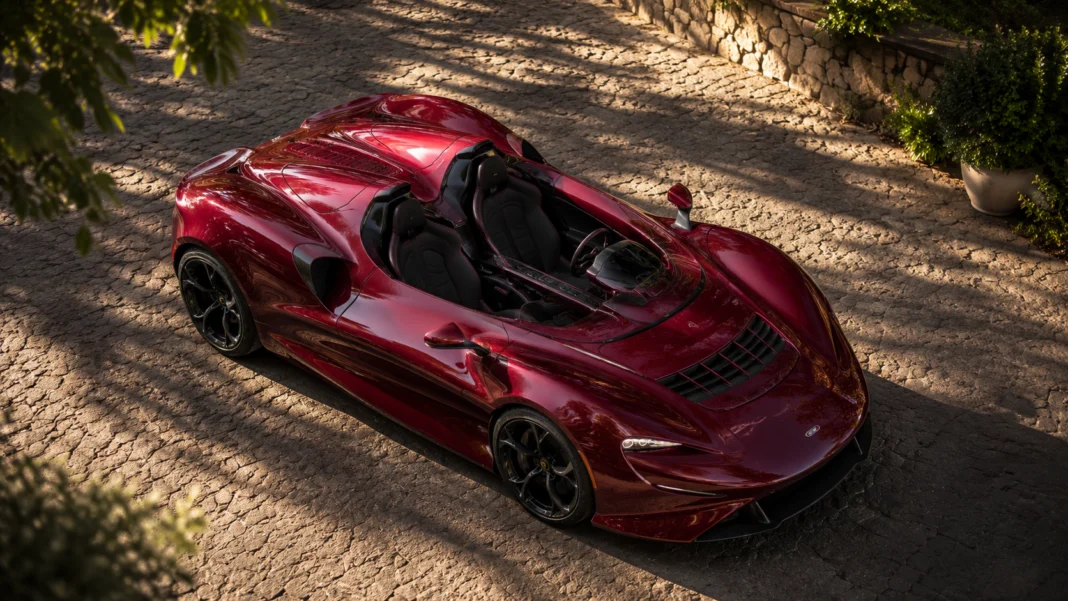
Imagine the sun rising over the Monterey Peninsula and a low, shark-like silhouette sitting on the lawn at the Quail Lodge in Carmel, California. The car has no roof, no windscreen, and no doors in the traditional sense. It is a McLaren Elva, one of just 149 examples ever built, and it represents one of the most polarizing experiments in modern supercar history.
The Elva was McLaren’s fifth Ultimate Series model, following the F1, P1, Senna, and Speedtail. Named after the “elle va” French phrase meaning “she goes” and paying tribute to Bruce McLaren’s open-top race cars of the 1960s, it was designed to deliver the purest possible driving experience. But the market had other ideas.
The Concept: Pure, Undiluted Connection
When McLaren unveiled the Elva in 2019, the pitch was simple. No roof. No windscreen. No barriers between the driver and the elements. It was the lightest McLaren road car ever built at 1,148 kg dry, with the most powerful version of McLaren’s 4.0-liter twin-turbo V8, producing 815 PS and 800 Nm of torque.
The car was a technical showcase. The Active Air Management System, a world first, channeled high-speed air over the cabin to create a turbulence-free zone for driver and passenger. The carbon fiber body was made from just three main panels. The Proactive Chassis Control II suspension delivered handling that was described as exceptional.

The performance was staggering. 0 to 100 km/h in 2.8 seconds. 0 to 200 km/h in 6.7 seconds. A top speed of 203 mph. The Elva was, by any measure, a genuine hypercar.
The Problem: A Windscreen-Free Hypercar with Limited Appeal
The Elva faced an immediate challenge: it was a highly specialized, niche product in a market that was already saturated with limited edition hypercars. It competed directly with the Ferrari Monza SP1 and SP2 and the Aston Martin V12 Speedster, two equally unconventional speedsters.
The open-cockpit design was polarizing. Some reviewers praised the immersive experience, comparing it to driving a superbike or an open-cockpit aircraft. Others found it contrived, a car for buyers so wealthy and attention-seeking that they would happily put up with being pelted by gravel.
The lack of a windscreen was a practical issue. In the United States, local regulations required a windshield for road use, so McLaren offered a fixed windscreen variant as a factory option. But this added weight and compromised the car’s purity of purpose.

Production Numbers: From 399 to 149
McLaren originally planned to build 399 examples of the Elva. But in April 2020, the production total was reduced to 249 units, and eventually to just 149. McLaren CEO Mike Flewitt cited customer feedback encouraging exclusivity, but the decision likely reflected sluggish sales.
Market Performance: Soft Demand, Stable Values
The Elva’s market performance has been mixed. When new, the base price was $1.69 million. Today, values have settled well below that figure.
At a 2026 auction, a 2021 Elva sold for $1,512,500. Another auction house has estimated a low-mileage example at $1.75 million to $2.1 million. The median price since 2020 is approximately $1.24 million, with a sell-through rate of just 28 percent. A lightly damaged salvage example sold for just $813,000.
The Elva’s value has not collapsed, but it has not appreciated like some of its Ultimate Series siblings. A 2014 P1 in good condition is now valued at approximately $1.5 million, with the strongest examples selling well past $2 million. The Senna has also held its value more consistently. The Elva, by contrast, remains a niche collector car with a limited audience.
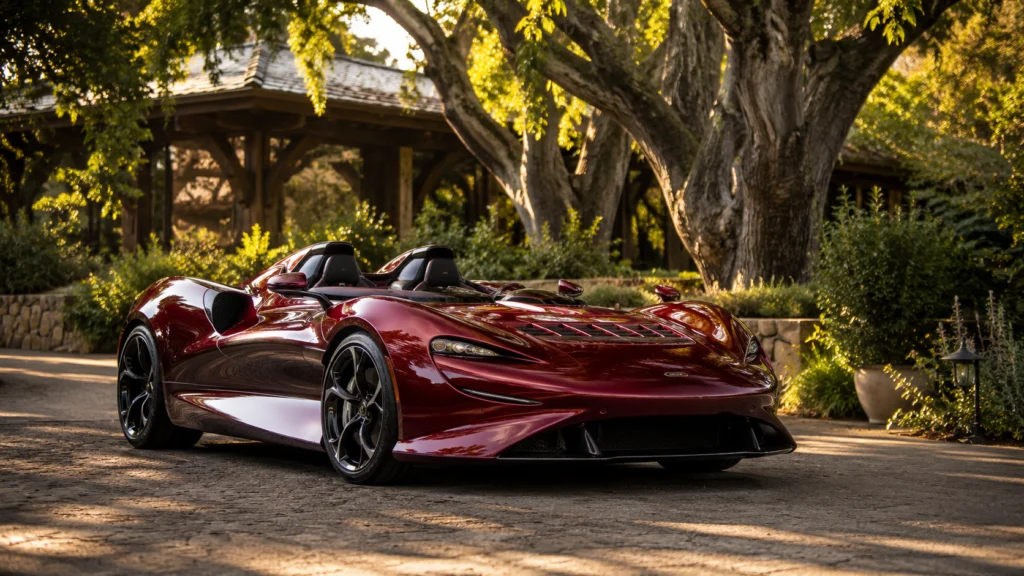
The Quail Morning
The Elva has completed its drive. Its V8 has delivered the 815 PS that makes it one of the most powerful McLarens ever built. The Active Air Management System has kept the cabin calm. The driver has experienced a level of engagement that few cars can match.

The Elva is not a car for everyone. It is a car for those who value the pure, unfiltered experience of driving, who are willing to accept the compromises of an open cockpit, and who have the means to afford a $1.7 million hypercar. But it is also a car that struggled to find its audience.
What the Elva Teaches Us
The Elva is a case study in the limits of the hypercar market. A car can be technically brilliant, visually stunning, and emotionally engaging, yet still struggle to find buyers. The market for $1.7 million speedsters is small, and the Elva faced competition from Ferrari, Aston Martin, and its own stablemates.
McLaren’s decision to limit production to 149 units was the right call. It preserved exclusivity and ensured that the Elva would not become a drag on the brand’s reputation. But it also acknowledged that the windscreen-free experiment had not resonated as strongly as the company had hoped.
The Elva is not a failure. It is a reminder that even the most passionate engineering vision must align with market reality. The car has found its owners, and it will be remembered as one of McLaren’s most daring creations. But it will also be remembered as the Ultimate Series model that didn’t quite sell.
Gear Picks for This Story
 Paddock StyleAlpinestars Sequence HoodieSee the Design →
 Style UpFormula 1 Mercedes AMG Team CapSee the Design →
 Detail Like a ProMeguiar's G7516 Ultimate CompoundSee How It Works →
 Essential ToolMilwaukee M12 FUEL 3/8 RatchetExplore the Specs →
As an Amazon Associate, VeloxTrend earns from qualifying purchases.

