
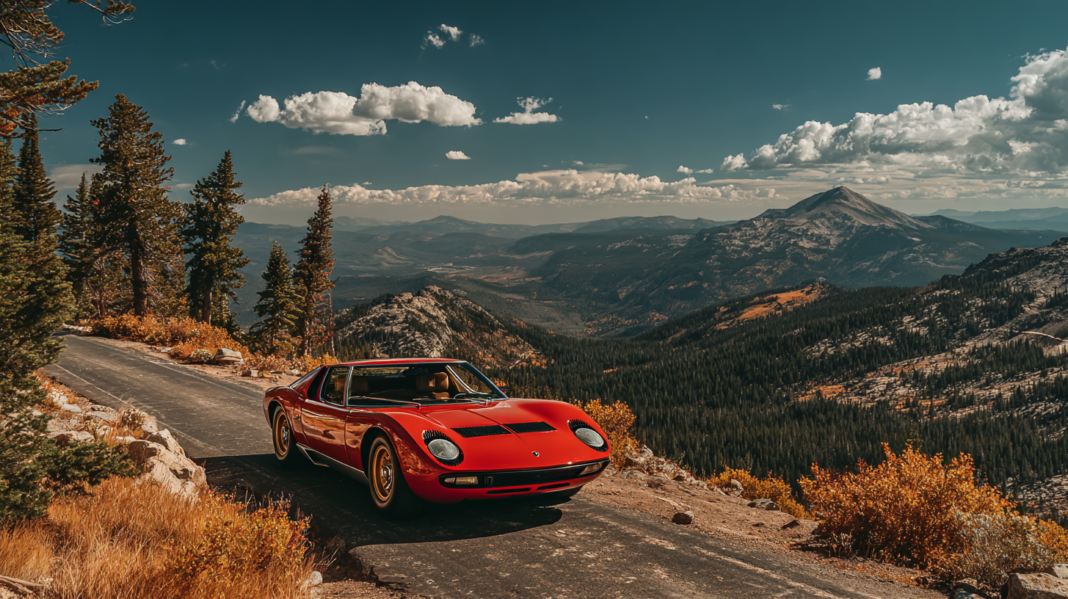
The Lamborghini Miura is widely regarded as the world’s first supercar. Before the Miura, high-performance cars were typically front-engine grand tourers or purpose-built race cars. The Miura changed that. It introduced the mid-engine layout that would become the standard for high-performance cars for generations. It combined breathtaking styling with a transverse V12 engine, creating a template that Ferrari, Porsche, and every other manufacturer would eventually follow.
The Miura was not just a car; it was a statement. It announced to the world that Lamborghini, a tractor manufacturer that had only built a handful of cars, could compete with and even surpass the established Italian sports car manufacturers. It was a car that prioritized emotion over practicality, style over comfort, and performance over everything else.
This article provides a comprehensive examination of the Lamborghini Miura, including its development history, engineering, design, driving experience, and why it remains one of the most significant cars ever built.
The Genesis: A Tractor Manufacturer’s Ambition
Ferruccio Lamborghini founded his company in 1963. He had made his fortune building tractors, and he had a passion for fast cars. According to the well-known story, he was dissatisfied with the quality and performance of his Ferrari, and he decided to build his own car.
The first Lamborghini, the 350 GT, was a front-engine grand tourer. It was a capable car, but it did not set the world on fire. It was the Miura that would establish Lamborghini as a serious competitor.
The Miura was the brainchild of a small team of young engineers at Lamborghini. They included Giampaolo Dallara, Paolo Stanzani, and Bob Wallace. Working outside of the official development process, they conceived a car with a mid-mounted engine, a layout that had been used in race cars but never in a production road car.
When Ferruccio Lamborghini saw the prototype, he was initially skeptical. He had built his company on grand tourers, not extreme sports cars. But he recognized the potential of the design and approved it for production.
The Miura was unveiled at the 1966 Geneva Motor Show. It was an immediate sensation. The car’s low, wide stance, its dramatic styling, and its revolutionary engine layout captivated the audience. The Miura was not just a car; it was a work of art.
The Miura Name
The Miura was named after a famous Spanish breeder of fighting bulls, Don Eduardo Miura. This naming convention would become a tradition for Lamborghini, with subsequent models named after other famous bulls. The choice of a bull’s name reflected the car’s aggressive character and its Spanish-Italian heritage.
Engineering: The Mid-Engine Revolution
The Transverse V12
The Miura’s most significant engineering innovation was its transverse mid-engine layout. Instead of mounting the engine longitudinally (front to back) as was typical, the Miura’s engineers mounted the engine sideways across the chassis. This transverse layout allowed the engine and transmission to be packaged in a compact space behind the driver.
The engine was a 3.9 liter naturally aspirated V12, designed by Giotto Bizzarrini and developed by Lamborghini’s engineers. In its initial form, the engine produced 345 horsepower at 7,700 rpm and 263 lb-ft of torque at 5,000 rpm. Later versions, including the Miura S and Miura SV, produced more power, with the SV reaching 380 horsepower.
The engine was mounted transversely, with the transmission and final drive housed in the same casing. This integrated design saved space and weight, contributing to the car’s compact dimensions.
Chassis
The Miura used a semi-monocoque chassis, with a central steel structure supporting the engine and suspension. The body was made of aluminum, keeping weight to a minimum. The dry weight was approximately 1,250 kilograms.
The suspension was independent at all four corners, using double wishbones and coil springs. The brakes were disc brakes, with ventilated discs on later models.
Performance
The Miura accelerated from 0 to 60 miles per hour in 6.7 seconds. The top speed was approximately 171 miles per hour.
These figures made the Miura the fastest production car in the world when it was introduced. It was capable of speeds that had previously been the exclusive domain of race cars.
Design: The Pencil of Marcello Gandini
Bertone Styling
The Miura’s body was designed by Marcello Gandini at the Bertone design house. Gandini was a young designer who had recently joined Bertone, and the Miura was his first major project. He created a car that was low, wide, and dramatic.
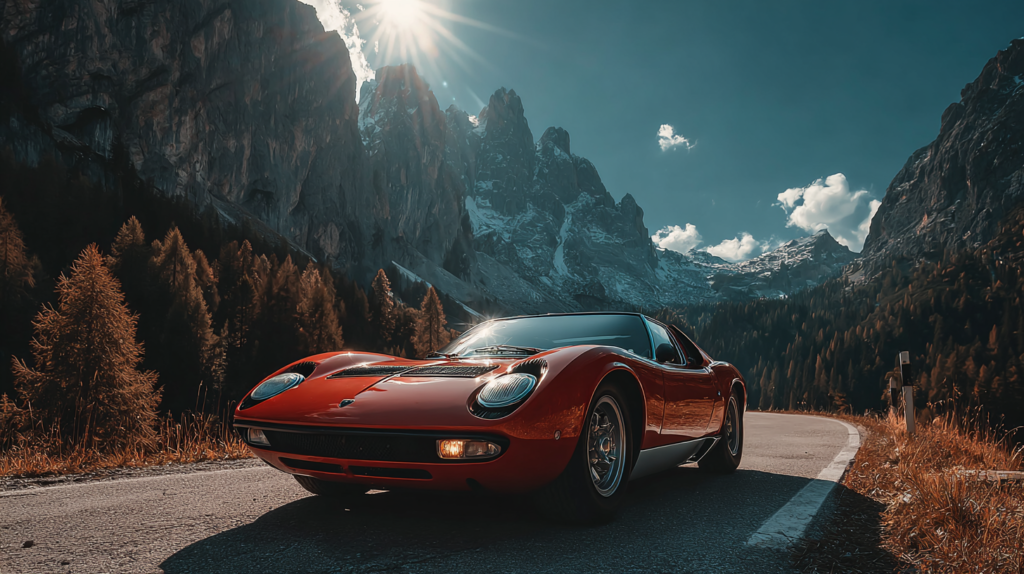
The Miura’s most distinctive features included its “eyelash” headlight covers, its prominent front air intake, and its muscular rear haunches. The car sat just 41 inches high, making it one of the lowest production cars ever built.
Proportions
The Miura’s proportions were defined by its mid-engine layout. The car had a long nose, a short tail, and a cabin positioned far forward. The engine sat behind the driver, visible through a louvered rear window. The overall effect was dramatic and purposeful.
Later Revisions
The Miura underwent several revisions during its production run. The Miura S (1968) featured more power, revised suspension, and minor styling updates. The Miura SV (1971) was the most significant revision, with a wider track, flared wheel arches, different headlight surrounds, and a revised tail section.
The SV is widely regarded as the most desirable Miura variant, with its more aggressive stance and increased power.
The Driving Experience
On Road Character
Driving a Miura is an experience that is both thrilling and demanding. The driving position is low, with the pedals offset to the right and the steering wheel positioned close to the driver. The view forward is excellent, but the rear visibility is limited by the engine cover.
The engine produces a distinctive sound, with a high-pitched wail as the revs climb. The power delivery is linear and progressive, with the engine pulling strongly to the redline. The transmission is a five-speed manual, with a gated shifter that requires deliberate movements.
The handling is characterized by a tendency toward oversteer, particularly on the limit. The rear weight bias and the lack of modern electronic aids require skill and attention. The Miura is a car that rewards smooth inputs and punishes abrupt actions.
The Miura’s Challenges
The Miura is not an easy car to drive. The engine produces significant heat, which can make the cabin uncomfortable on warm days. The clutch is heavy, the steering is heavy at low speeds, and the brakes require effort. The car is best suited to experienced drivers who are willing to work for the rewards.
The Sound
The V12 engine’s sound is one of the Miura’s defining characteristics. The engine produces a high-pitched wail as the revs climb toward the redline. The sound is sharp, urgent, and deeply satisfying, with a quality that distinguishes it from every other engine of its era.
The Miura’s Legacy
The Birth of the Supercar
The Miura is widely credited with creating the supercar segment. Before the Miura, high-performance cars were either front-engine grand tourers or purpose-built race cars. The Miura combined the performance of a race car with the road-going practicality of a grand tourer. It established the template that Ferrari, Porsche, and every other manufacturer would follow.
The mid-engine layout that the Miura pioneered became the standard for high-performance cars for generations. The Lamborghini Countach, Diablo, Murciélago, and Aventador all used mid-engine layouts. Ferrari’s 308, 328, 348, F355, 360, F430, 458, 488, F8, and 296 all use mid-engine layouts. The Miura’s influence is evident in almost every supercar built since.
The Miura’s Influence on Lamborghini
The Miura established Lamborghini as a manufacturer of extreme, emotionally charged performance cars. It set the brand’s direction for decades to come. The Countach, which followed the Miura, was even more extreme. The Diablo, Murciélago, and Aventador continued the tradition. The Miura was the car that put Lamborghini on the map.
Collector Status
The Miura is one of the most sought-after collector cars in the world. Its limited production run of 764 units, its status as the first supercar, and its timeless design have driven values to significant heights. Well-restored Miuras trade for millions of dollars, and they are prized by collectors worldwide.
The most desirable Miura variant is the SV, with its wider track, flared wheel arches, and increased power. Only 150 SVs were built, making them the rarest of the Miura variants.
How the Miura Stacks Up Against Modern Rivals
The Miura is not a modern car, and it cannot compete with modern supercars in terms of performance, safety, or reliability. But it is not intended to. The Miura’s significance is historical. It is a car that changed the automotive world.
Against the Lamborghini Revuelto
The Revuelto is Lamborghini’s current flagship hybrid supercar. It produces over 1,000 horsepower and accelerates from 0 to 60 miles per hour in 2.5 seconds.
The Revuelto’s advantage is its performance and its technology. It is faster, safer, more reliable, and more efficient than the Miura.
The Miura’s advantage is its historical significance and its emotional appeal. The Miura was the first, and it remains one of the most beautiful cars ever built.
Against the Ferrari 296 GTB
The Ferrari 296 GTB is a modern hybrid supercar with over 800 horsepower.
The 296’s advantage is its performance and its technology. It is a car designed for the 21st century.
The Miura’s advantage is its purity and its design. The Miura is a car from a different era, one that prioritized emotion over efficiency.
Against the Porsche 911 Turbo
The Porsche 911 Turbo is a modern all-wheel-drive sports car with over 600 horsepower.
The 911’s advantage is its daily usability and its reliability. It is a car that can be driven every day.
The Miura’s advantage is its drama and its legacy. The Miura is a car that stops traffic, that draws a crowd, that tells a story.
The Miura’s Place in Automotive History
The Lamborghini Miura is one of the most significant cars ever built. It invented the supercar segment. It established the mid-engine layout as the standard for high-performance cars. It demonstrated that a small, ambitious manufacturer could compete with and surpass the established giants.
The Miura was not a perfect car. It was difficult to drive, it was hot, it was loud, and it was unreliable. But it was also beautiful, thrilling, and emotionally charged. It was a car that prioritized passion over practicality, style over substance, and performance over everything else.
Today, the Miura is remembered as a legend. It is a car that changed the automotive world, and it remains one of the most desirable collector cars in existence.
Specifications Summary
| Specification | Miura P400 | Miura SV |
|---|---|---|
| Engine | 3.9L naturally aspirated V12 | 3.9L naturally aspirated V12 |
| Horsepower | 345 hp at 7,700 rpm | 380 hp at 7,850 rpm |
| Torque | 263 lb-ft at 5,000 rpm | 295 lb-ft at 5,500 rpm |
| Transmission | 5-speed manual | 5-speed manual |
| Drive | Rear wheel drive | Rear wheel drive |
| 0-60 mph | 6.7 seconds | Approximately 5.5 seconds |
| Top Speed | 171 mph | 180 mph |
| Weight | 1,250 kg | 1,300 kg |
| Production | 275 units | 150 units |
Conclusion
The Lamborghini Miura is the birth of the supercar. It introduced the mid-engine layout that would become the standard for high-performance cars for generations. It combined breathtaking styling with a transverse V12 engine, creating a template that every manufacturer would eventually follow. It was a car that prioritized emotion over practicality, style over comfort, and performance over everything else.
The Miura was not the first mid-engine car, but it was the first to combine that layout with a production V12 engine and a road-going chassis. It was a car that proved that a small, ambitious manufacturer could compete with and surpass the established giants. It was a car that changed automotive history.
Today, the Miura is remembered as a legend. Its design remains timeless, its sound remains thrilling, and its significance remains undiminished. It is one of the most beautiful cars ever built, and it is one of the most important.
The Miura’s legacy lives on in every mid-engine supercar on the road. The Lamborghini Revuelto, the Ferrari 296 GTB, the McLaren 750S they all owe a debt to the Miura. It was the first, and it remains one of the best. The Lamborghini Miura is the birth of the supercar, and it will forever be remembered as such.

