
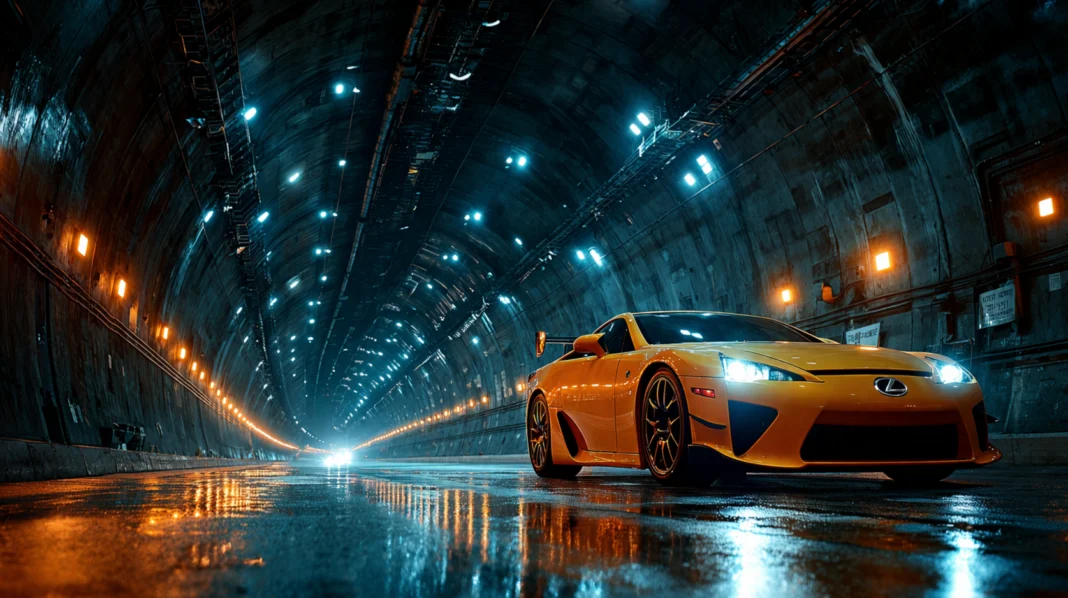
The Lexus LFA occupies a unique place in automotive history. Produced from 2010 to 2012, it was a car that prioritized engineering purity over commercial success. Its 4.8 liter naturally aspirated V10 engine, developed in partnership with Yamaha, revved to 9,000 rpm and produced 552 horsepower. Only 500 units were built, and each was sold at a significant loss per vehicle. Today, the LFA is widely regarded as one of the greatest driver’s cars ever made, with values on the secondary market exceeding $1 million.
Among the 500 LFAs produced, the Nürburgring Edition stands as the most extreme and sought-after variant. Developed with input from the car’s racing program at the Nürburgring 24 Hours, the Nürburgring Edition added power, reduced weight, and sharpened the chassis for track use. Only 64 units of the Nürburgring Edition were built, making it one of the rarest and most desirable modern Japanese performance cars.
This article provides a comprehensive examination of the Lexus LFA Nürburgring Edition, including its development, performance specifications, engineering, design, and why it remains Japan’s ultimate driver car.
The LFA Legacy: From Concept to Reality
The LFA project began in 2000, with the goal of creating a halo car that would demonstrate Lexus’s engineering capabilities. The development timeline stretched over a decade, as engineers refined the carbon fiber chassis, the V10 engine, and the overall design. The result was a car that was unlike anything Lexus had built before or has built since.
The standard LFA was a masterpiece. Its V10 engine, with its Formula 1-inspired sound and 9,000 rpm redline, was one of the best engines ever fitted to a production car. Its carbon fiber monocoque kept weight to a minimum, and its chassis was tuned for driver engagement. It was a car that rewarded skill and communicated with the driver in ways that few modern supercars could.
The Nürburgring Edition was developed to commemorate the LFA’s racing program at the Nürburgring 24 Hours. Lexus entered two LFAs in the 2010 race, and the experience gained on the track informed the development of the Nürburgring Edition. The car was designed for drivers who wanted a more track-focused LFA, with additional power, reduced weight, and a sharper chassis.
The Nürburgring Connection
The Nürburgring Nordschleife has long been used by manufacturers to test and develop high-performance cars. The 12.9-mile circuit, with its 154 corners and significant elevation changes, is one of the most demanding tracks in the world. Lexus used the Nürburgring to develop the LFA, and the lessons learned on the track informed the production car.
The Nürburgring Edition was developed directly from the racing program. Lexus entered two LFAs in the 2010 Nürburgring 24 Hours, and the experience gained on the track was used to refine the car’s suspension, aerodynamics, and cooling. The Nürburgring Edition represents the closest a road-legal LFA came to the race car.
Powertrain: The V10 Unleashed
Engine Specifications
The Nürburgring Edition is powered by the same 4.8 liter naturally aspirated V10 engine as the standard LFA, but with modifications that increase power and improve throttle response. The engine produces 562 horsepower at 8,700 rpm, an increase of 10 horsepower over the standard LFA. The torque remains at 354 lb-ft at 6,800 rpm. The redline is 9,000 rpm.
The power increase was achieved through revised engine calibration and a more efficient exhaust system. The throttle response was also sharpened, with the engine responding more immediately to driver inputs.
Transmission
Power is transmitted to the rear wheels through a six-speed automated sequential gearbox. The transmission is mounted at the rear of the car in a transaxle configuration, contributing to the car’s near-perfect weight distribution.

The Nürburgring Edition received a revised transmission calibration, with faster shift times and a more aggressive downshift strategy. The shift times were reduced to 0.15 seconds, making the gear changes even more immediate than the standard LFA.
The Sound
The V10 engine’s sound is one of the LFA’s defining characteristics. The engine produces a high-pitched wail as the revs climb toward the 9,000 rpm redline. The sound is sharp, urgent, and deeply satisfying, with a quality that distinguishes it from every other production engine.
The Nürburgring Edition’s sound is even more pronounced than the standard LFA’s, with the revised exhaust system producing a sharper, more aggressive note.
Performance
Acceleration and Speed
The Nürburgring Edition accelerates from 0 to 60 miles per hour in 3.7 seconds. The quarter mile is completed in approximately 11.7 seconds at 121 miles per hour. Top speed is 202 miles per hour.
These figures are marginally improved over the standard LFA, reflecting the additional power and reduced weight.
Nürburgring Lap Time
The standard LFA set a lap time of 7 minutes 14 seconds at the Nürburgring Nordschleife. The Nürburgring Edition, with its sharper chassis, additional power, and reduced weight, is capable of a faster lap time. The car’s racing program provided valuable data that informed the development of the Nürburgring Edition.
Weight and Balance
The Nürburgring Edition weighs approximately 3,640 pounds, a reduction of approximately 30 pounds compared to the standard LFA. The weight reduction was achieved through the use of carbon fiber for the front splitter, rear wing, and other components.
The weight distribution is 48 percent front, 52 percent rear, contributing to the car’s balanced handling.
Chassis and Dynamics
Suspension
The Nürburgring Edition features a revised suspension compared to the standard LFA. The springs are stiffer, the dampers are recalibrated, and the ride height is reduced by approximately 10 millimeters. The suspension geometry is also revised, with increased negative camber that improves cornering grip.
The result is a car that is sharper, more responsive, and more planted on track. The Nürburgring Edition communicates with the driver more directly, providing feedback that allows the driver to place the car precisely.
Brakes
The braking system uses carbon ceramic discs with six-piston calipers at the front and four-piston calipers at the rear. The Nürburgring Edition received revised brake cooling ducts that improve airflow to the discs, reducing fade during track use.
Wheels and Tires
The Nürburgring Edition rides on unique 20-inch forged alloy wheels, finished in black. The wheels are wrapped in high-performance tires, with a compound and construction designed for maximum grip. The tire sizes are 265/35 ZR20 front and 305/30 ZR20 rear.
Aerodynamics
The Nürburgring Edition features a revised aerodynamic package that increases downforce. The front splitter is larger and more aggressive than the standard LFA’s, and the rear wing is fixed rather than deployable. The wing is made of carbon fiber and is adjustable, allowing drivers to tailor the downforce to suit different tracks.
The underbody diffuser is also revised, with larger channels that accelerate airflow beneath the car. The result is increased downforce at both axles, improving high-speed stability and cornering grip.
Design
Exterior Styling
The Nürburgring Edition is visually distinguished from the standard LFA by several features. The most obvious is the fixed carbon fiber rear wing, which replaces the standard car’s deployable wing. The front splitter is larger and more aggressive, and the side skirts are revised.

The car features unique black forged alloy wheels, and the brake calipers are finished in black or orange, depending on the owner’s preference. The Nürburgring Edition is available in a range of colors, including the exclusive Matte Black and Satin White.
Interior Design
The interior of the Nürburgring Edition is focused on the driver. The seats are carbon fiber racing buckets with Alcantara upholstery, providing lateral support during cornering. The seats are fixed in position, with the pedal box adjustable to accommodate drivers of different sizes.
The steering wheel is wrapped in Alcantara, with a flat bottom and a red centering stripe. The shift paddles are larger than the standard LFA’s, making them easier to use on track. The instrument cluster features a digital display with a dedicated track mode that shows lap times and other performance data.
The interior is stripped back compared to the standard LFA. The sound deadening is reduced, and the audio system is optional. The focus is entirely on driving.
Driving Experience
On Road Character
The Nürburgring Edition is a car that is best appreciated on a track, but it can be driven on public roads. The suspension is firm, transmitting road imperfections to the cabin. The ride is not punishing, but it is not comfortable. The car demands attention and engagement.
The engine responds immediately to throttle inputs, with power building linearly to the 9,000 rpm redline. The sound is intoxicating, filling the cabin with a high-pitched wail. The steering provides exceptional feedback, and the chassis communicates every detail of the road surface.
On Track Behavior
When driven on a track, the Nürburgring Edition reveals the depth of its engineering. The brakes provide consistent stopping power lap after lap, with a pedal feel that inspires confidence. The chassis remains composed through corners, with the aerodynamic downforce providing grip that mechanical systems alone could not achieve.
The car’s rear-wheel-drive layout requires skill to manage. The Nürburgring Edition rewards smooth, precise inputs and punishes abrupt actions. The car is balanced and predictable, with a slight tendency toward oversteer at the limit that rewards skilled drivers.
The Sound
The V10 engine’s sound is the Nürburgring Edition’s defining characteristic. The engine produces a high-pitched wail as the revs climb toward the 9,000 rpm redline. The sound is sharp, urgent, and deeply satisfying. On track, with the windows down and the engine at full song, it is an experience that few other cars can provide.
Rarity and Exclusivity
Production Numbers
Lexus built only 64 units of the LFA Nürburgring Edition. This represents approximately 13 percent of the total LFA production run of 500 units. The Nürburgring Edition was available in only two colors: Matte Black and Satin White, with the majority of units finished in Matte Black.
Pricing
The Nürburgring Edition carried a base price of approximately $445,000 when new, a premium of approximately $70,000 over the standard LFA. Today, values have appreciated significantly, with well-maintained Nürburgring Editions trading for over $1.5 million.
Collector Status
The Nürburgring Edition is one of the most sought-after Japanese collector cars in the world. Its rarity, its status as the ultimate LFA, and its connection to the Nürburgring racing program have made it a prized possession for collectors.
How the Nürburgring Edition Stacks Up Against Rivals
Against the Porsche 911 GT3 RS
The Porsche 911 GT3 RS is a track-focused sports car with a 4.0 liter naturally aspirated flat-six producing 518 horsepower.
The GT3 RS’s advantage is its aerodynamics and its chassis tuning. The Porsche’s downforce figures are among the highest of any road car, and its handling is exceptional.

The Nürburgring Edition’s advantage is its V10 engine and its rarity. The Lexus’s engine produces a sound and a character that the Porsche’s flat-six cannot match. The Nürburgring Edition is also significantly rarer, with only 64 units built.
Against the Ferrari 458 Speciale
The Ferrari 458 Speciale is a track-focused version of the 458 Italia, with a 4.5 liter naturally aspirated V8 producing 597 horsepower.
The Speciale’s advantage is its power and its chassis. The Ferrari’s V8 produces 35 more horsepower than the LFA’s V10, and its chassis tuning is exceptional.
The Nürburgring Edition’s advantage is its engine character and its rarity. The Lexus’s V10 sound is unique, and the car’s limited production numbers make it more exclusive.
Against the Lamborghini Huracán Performante
The Lamborghini Huracán Performante is a track-focused version of the Huracán, with a 5.2 liter naturally aspirated V10 producing 631 horsepower.
The Performante’s advantage is its power and its aerodynamics. The Lamborghini’s V10 produces 69 more horsepower than the LFA’s, and its ALA active aero system is advanced.
The Nürburgring Edition’s advantage is its engine character and its driver focus. The Lexus’s V10 sound is more refined than the Lamborghini’s, and the car’s chassis is tuned for engagement.
Against the Mercedes-AMG GT Black Series
The Mercedes-AMG GT Black Series is a track-focused sports car with a 4.0 liter twin-turbocharged V8 producing 720 horsepower.
The GT Black Series’s advantage is its power and its aerodynamics. The Mercedes produces 158 more horsepower than the LFA, and its downforce figures are impressive.
The Nürburgring Edition’s advantage is its naturally aspirated engine and its rarity. The Lexus’s V10 provides a different kind of experience than the Mercedes’s turbocharged V8, and the Nürburgring Edition is significantly rarer.
Specifications Summary
| Specification | Value |
|---|---|
| Engine | 4.8L naturally aspirated V10 |
| Horsepower | 562 hp at 8,700 rpm |
| Torque | 354 lb-ft at 6,800 rpm |
| Redline | 9,000 rpm |
| Transmission | 6-speed automated sequential |
| Drive | Rear wheel drive |
| 0-60 mph | 3.7 seconds |
| Top Speed | 202 mph |
| Weight | 3,640 lb |
| Production | 64 units |
| Original Price | $445,000 |
Conclusion
The Lexus LFA Nürburgring Edition is Japan’s ultimate driver car. It represents the pinnacle of Lexus’s engineering capabilities, with a 4.8 liter naturally aspirated V10 that revs to 9,000 rpm and produces 562 horsepower. It is a car that was developed with input from the LFA’s racing program at the Nürburgring 24 Hours, and it is the closest a road-legal LFA came to the race car.
The Nürburgring Edition is not a car for everyone. Its production was limited to 64 units, its original price was $445,000, and its focus on track performance means it lacks the comfort of the standard LFA. But for the 64 owners who acquired a Nürburgring Edition, the car offers something that no other vehicle can provide: the experience of driving the ultimate LFA, a car that represents the best of Japanese engineering.
The Nürburgring Edition also represents the end of an era. The LFA was the last naturally aspirated V10 supercar from a Japanese manufacturer, and the Nürburgring Edition was its most extreme expression. For enthusiasts who value the sound and character of a high-revving naturally aspirated engine, the Nürburgring Edition is a reminder of what was lost.
Today, the Nürburgring Edition is a legend. It is one of the most sought-after Japanese collector cars in the world, and it is recognized by enthusiasts as one of the greatest driver’s cars ever built. Its V10 sound, its engineering purity, and its rarity have made it an icon.
The Lexus LFA Nürburgring Edition is Japan’s ultimate driver car, and it will forever be remembered as one of the most remarkable vehicles ever created.
Gear Picks for This Story
 Paddock StyleSPARCO Martini Racing TeeSee the Design →
 Style UpRay-Ban Aviator Classic SunglassesSee the Design →
 Creator GearDJI Mini 3 Pro DroneSee the Specs →
 Tech UpgradeBlueDriver Pro OBD2 Bluetooth ScannerExplore the Specs →
As an Amazon Associate, VeloxTrend earns from qualifying purchases.

