
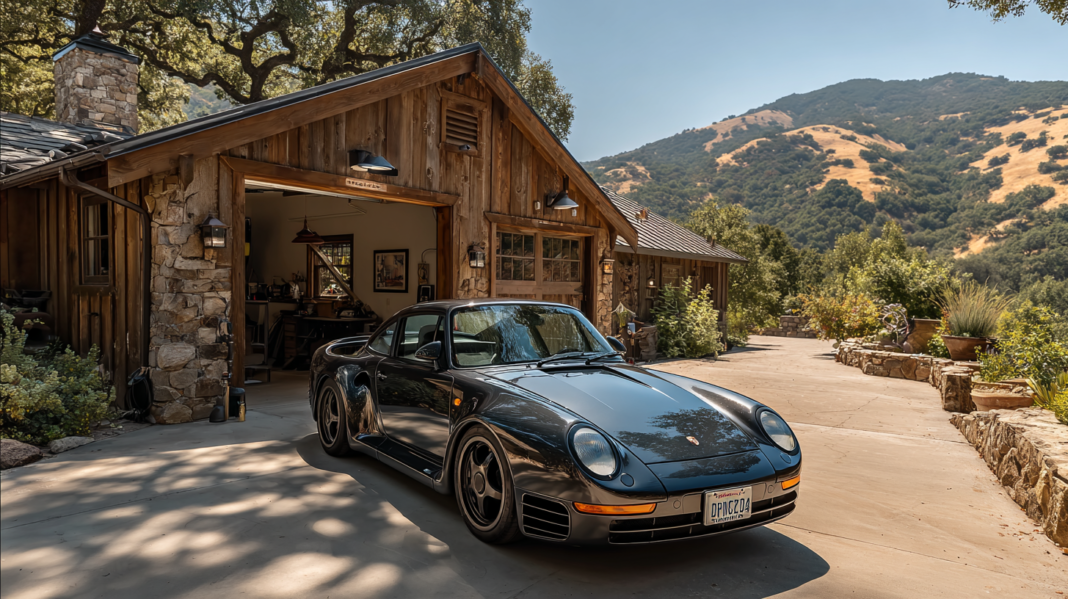
The Porsche 959 is widely regarded as one of the most technologically advanced cars of the 20th century. Introduced in 1986, it was a car that looked to the future, incorporating technologies that would not become common on production vehicles for another decade. Its all-wheel-drive system, its electronically controlled suspension, its sequential twin-turbocharged engine, and its lightweight composite body made it a rolling testbed of innovation.
Originally developed for Group B rallying, the 959 was a homologation special. Porsche had to build 200 road cars to qualify the 959 for competition. But when Group B was canceled after a series of fatal accidents, the 959 existed only as a road car. Only 337 units were built, including 292 production cars and 45 pre-production prototypes. Today, the 959 is one of the most sought-after collector Porsches, with values exceeding $1.5 million.
This article provides a comprehensive examination of the Porsche 959, including its development, engineering, performance, design, and why it remains a technological revolution.
The Genesis: Group B Homologation
The Porsche 959 was born from the same Group B rallying era that inspired the Ferrari 288 GTO. Group B regulations allowed manufacturers to build extreme, low-volume competition cars with minimal restrictions. Porsche saw an opportunity to develop a technologically advanced rally car that would showcase the company’s engineering capabilities.
The 959 was based on the 911 platform, but it shared few components. The body was widened, the wheelbase was extended, and the chassis was completely redesigned. The engine was a new 2.8 liter twin-turbocharged flat-six, and the all-wheel-drive system was the most sophisticated ever fitted to a production car.
The 959 made its public debut at the 1983 Frankfurt Motor Show as the Group B concept. Production of the road car began in 1986, and the first customer deliveries occurred in 1987.
When Group B was canceled after the 1986 season, Porsche’s racing program ended. The 959 exists only as a road car.
The Technological Revolution
The Sequential Twin-Turbo Engine
The 959 is powered by a 2.8 liter twin-turbocharged flat-six engine, designated the Type 935. This engine was derived from the unit used in Porsche’s Le Mans winning 956 and 962 race cars.
The engine uses a sequential twin-turbocharger system. A smaller turbocharger spools quickly to provide low-end torque, while a larger turbocharger takes over at higher engine speeds. This system eliminates the turbo lag that plagued many turbocharged cars of the era.
The engine produces 444 horsepower at 6,500 rpm and 369 lb-ft of torque at 5,500 rpm. The redline is 6,800 rpm.
The PSK All-Wheel-Drive System
The 959’s most significant innovation was its electronically controlled all-wheel-drive system, called PSK (Porsche Steuer Kupplung). This system could vary torque distribution between the front and rear axles based on driving conditions.
Under normal conditions, the system sent 20 percent of the torque to the front wheels and 80 percent to the rear wheels. Under hard acceleration or low traction conditions, the system could send up to 80 percent of the torque to the front wheels.
The PSK system also included an electronic differential lock that could manage torque between the left and right rear wheels.
The Adjustable Suspension
The 959 featured an electronically controlled suspension system that could adjust ride height and damping based on driving conditions. The driver could select from four modes: Traction, Normal, Automatic, and Lift.
In Traction mode, the suspension was optimized for low-grip surfaces. In Normal mode, the car had a standard ride height. In Automatic mode, the suspension lowered the car at high speeds for improved aerodynamics. In Lift mode, the car raised the front end to clear obstacles.
The Composite Body
The 959’s body was constructed from a combination of aluminum, Kevlar, and carbon fiber. The roof, hood, and doors were aluminum, while the fenders, bumpers, and rear wing were made of Kevlar and carbon fiber.
The use of lightweight materials kept the weight down to approximately 1,450 kilograms (3,197 pounds).
Performance
Acceleration and Speed
The 959 accelerates from 0 to 60 miles per hour in 3.6 seconds. The quarter mile is completed in approximately 11.9 seconds at 117 miles per hour. Top speed is 197 miles per hour (317 kilometers per hour).
These figures made the 959 the fastest production car in the world when it was introduced, surpassing the Ferrari 288 GTO and the Lamborghini Countach.
Design
Exterior Styling
The 959’s exterior design is based on the 911, but it is wider, lower, and more aggressive. The body features pronounced fender flares that accommodate the wider track. The front end has a prominent air dam and fog lights. The rear end features a large fixed rear wing that provides downforce.
The car’s proportions are unmistakably 911, but the wider stance and aerodynamic elements give it a more purposeful appearance.
Interior Design
The interior of the 959 is focused on the driver. The seats are supportive, with leather upholstery. The dashboard features a digital instrument cluster with a central tachometer and auxiliary gauges for boost pressure, oil temperature, and other data.
The interior is not as luxurious as the 911 Turbo’s, reflecting the car’s racing heritage.
The 959 S
Porsche also produced a limited edition variant of the 959 called the 959 S. The S featured a more powerful engine producing 508 horsepower, along with a stripped interior and a reduced weight of 1,360 kilograms.
Only 29 units of the 959 S were built. It is the rarest and most valuable 959 variant.
The 959’s Racing Program
The 959 was intended to compete in Group B rallying, but the cancellation of the category ended those plans. However, a customer 959 did compete in the 1986 Paris Dakar Rally, finishing first overall. The car was driven by René Metge and Claude Lemesle.
This victory was a testament to the 959’s capability and durability.
Driving Experience
On Road Character
The 959 is a car that is remarkably refined for its era. The sequential turbochargers provide smooth, lag-free power delivery. The all-wheel-drive system provides exceptional traction in all conditions. The adjustable suspension allows the driver to tailor the car’s behavior to the road.
The car is more comfortable than its contemporaries. The ride is firm but not punishing, and the cabin is relatively quiet.
On Track Behavior
When driven on a track, the 959 reveals its capabilities. The all-wheel-drive system provides grip that rear-drive cars cannot match. The engine pulls strongly to the 6,800 rpm redline, and the chassis remains composed through corners.
The 959 is not as sharp as a dedicated track car, but it is more than capable of rewarding skilled drivers.
The Sound
The flat-six engine’s sound is distinctive. The engine produces a sharp, metallic wail as the revs climb.
Rarity and Exclusivity
Production Numbers
Porsche built 337 units of the 959. This includes 292 production cars, 37 pre-production prototypes, and 8 test cars.
Pricing
The 959 carried a base price of approximately $225,000 when new (equivalent to over $500,000 today). Today, well-maintained examples trade for over $1.5 million.
Collector Status
The 959 is one of the most sought-after Porsches of the modern era. Its technological significance, its limited production numbers, and its connection to the Group B era have made it a prized collector car.
How the 959 Stacks Up Against Rivals
Against the Ferrari F40
The Ferrari F40 is the 959’s most famous rival. It features a 2.9 liter twin-turbocharged V8 producing 471 horsepower.
The F40’s advantage is its simplicity and its rawness. The Ferrari is lighter, more powerful, and more aggressive.
The 959’s advantage is its technology and its refinement. The Porsche’s all-wheel-drive system, adjustable suspension, and sequential turbochargers were years ahead of the F40.
Against the Porsche 959 vs. the Ferrari 288 GTO
The Ferrari 288 GTO is the car that inspired the 959. It features a 2.8 liter twin-turbocharged V8 producing 400 horsepower.
The 288 GTO’s advantage is its V8 engine and its design.
The 959’s advantage is its all-wheel-drive system and its technology.
Against the Porsche 911 Turbo (930)
The 911 Turbo (930) is the standard Porsche against which the 959 is compared. It features a 3.3 liter single-turbocharged flat-six producing 296 horsepower.
The 930’s advantage is its affordability and its simplicity.
The 959’s advantage is its performance and its technology.
The 959’s Legacy
The Technological Revolution
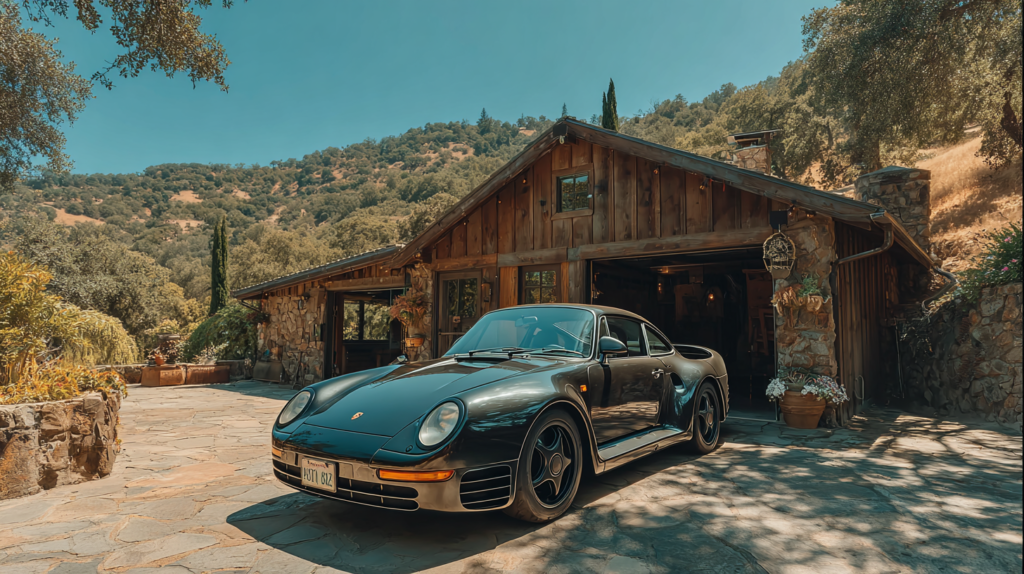
The 959 was a technological revolution. Its all-wheel-drive system, its electronically controlled suspension, its sequential twin-turbochargers, and its composite body were all groundbreaking. These technologies would eventually filter down to production Porsches, but when the 959 was introduced, they were unique.
Influence on Porsche
The 959 paved the way for future Porsche supercars, including the Carrera GT, the 918 Spyder, and the Taycan Turbo GT. Its spirit of innovation is evident in every Porsche that followed.
The Porsche 959 is a legend
The 959 is a reminder of what Porsche can achieve when the engineers are given the freedom to innovate.
Specifications Summary
| Specification | 959 | 959 S |
|---|---|---|
| Engine | 2.8L twin-turbo flat-six | 2.8L twin-turbo flat-six |
| Horsepower | 444 hp at 6,500 rpm | 508 hp |
| Torque | 369 lb-ft at 5,500 rpm | 419 lb-ft |
| Transmission | 6-speed manual | 6-speed manual |
| Drive | All wheel drive | All wheel drive |
| 0-60 mph | 3.6 seconds | 3.4 seconds |
| Top Speed | 197 mph | 211 mph |
| Weight | 1,450 kg | 1,360 kg |
| Production | 337 units | 29 units |
| Original Price | $225,000 | Higher |
Conclusion
The Porsche 959 is a technological revolution. It introduced technologies that were decades ahead of their time: an electronically controlled all-wheel-drive system, a sequential twin-turbocharged engine, an adjustable suspension, and a lightweight composite body. It was the fastest production car in the world when it was introduced, and it remains one of the most significant Porsches ever built.
The 959 is not a car for everyone. Its production was limited to 337 units, its price today exceeds $1.5 million, and its focus on technology means it lacks the raw simplicity of its rivals. But for the collectors who own a 959, the car offers something that no other vehicle can provide: the experience of driving a car that changed the automotive world.
The 959 also represents a turning point in Porsche’s history. It demonstrated that the company could build a technologically advanced supercar that could compete with the best from Ferrari and Lamborghini. It paved the way for the Carrera GT, the 918 Spyder, and the Taycan Turbo GT.
The Porsche 959 is a legend, and it will forever be remembered as one of the greatest supercars ever built. It is the technological revolution that changed everything.

