
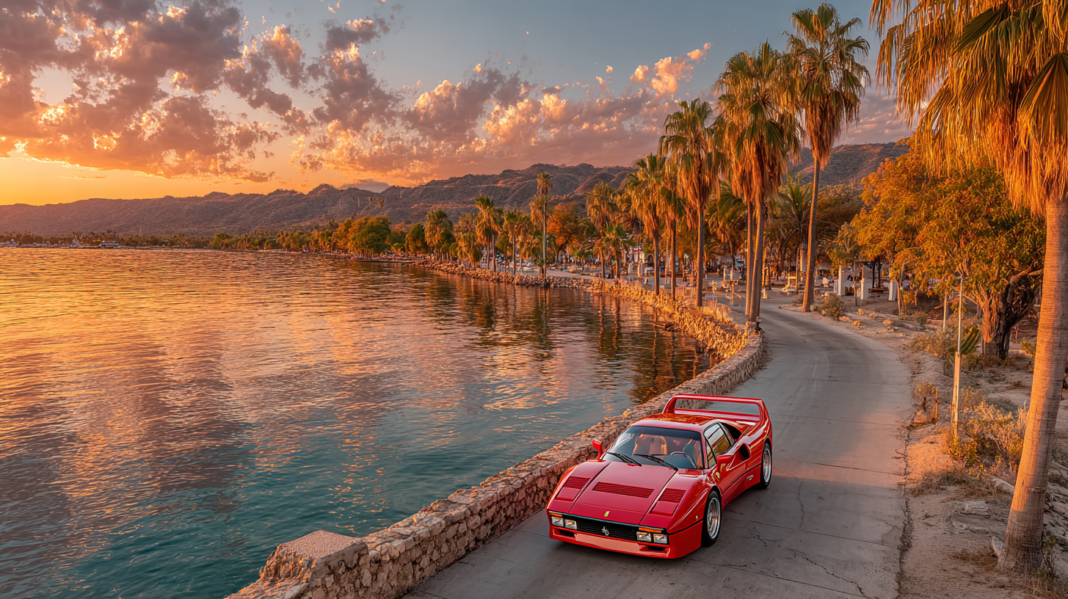
The Ferrari 288 GTO is widely regarded as the car that started the modern supercar era. While the Lamborghini Miura is often credited as the first supercar, it was the 288 GTO that established the template that Ferrari and other manufacturers would follow for decades. It was a limited edition, turbocharged, mid-engine V8 grand tourer that was originally designed to compete in Group B rallying. Its combination of performance, exclusivity, and design made it an instant icon.
Produced from 1984 to 1985, the 288 GTO was built to homologate a racing version for the FIA’s Group B category. Only 272 units were built, far fewer than the 200 required for homologation. Today, the 288 GTO is one of the most sought-after collector Ferraris, with values exceeding $3 million.
This article provides a comprehensive examination of the Ferrari 288 GTO, including its development, engineering, performance, design, and why it remains one of the most significant Ferraris ever built.
The GTO Name
The GTO name holds a special place in Ferrari history. It stands for Gran Turismo Omologato, Italian for “Grand Touring Homologated.” The name was first used on the 250 GTO of 1962, which is widely regarded as one of the greatest Ferraris ever built. The 250 GTO was a racing car built for homologation purposes, and it dominated GT racing in the early 1960s.
The 288 GTO revived this name, and it carried the same homologation purpose. It was built to qualify a Group B racing version, though the racing program was ultimately canceled when Group B was discontinued after a series of fatal accidents.
The Genesis: Group B Homologation
In the early 1980s, the FIA’s Group B category was the pinnacle of rallying. The cars were essentially prototypes with minimal road-going requirements. Manufacturers had to build 200 road cars to homologate a racing version.
Ferrari had never been involved in rallying, but the company saw an opportunity to build a road car that would showcase its engineering capabilities. The 288 GTO was designed to be a road car first, with the racing version intended to follow.
The car was based on the 308 GTB platform, but it shared few components. The wheelbase was extended, the body was widened, and the engine was a new 2.8 liter twin-turbocharged V8. The name 288 referred to the engine’s displacement: 2.8 liters and 8 cylinders.
When Group B was canceled after the 1986 season, Ferrari never built the racing version. The 288 GTO exists only as a road car.
Powertrain: The Twin-Turbo V8
Engine Specifications
The 288 GTO is powered by a 2.8 liter twin-turbocharged V8 engine, designated the F114B. This engine is a development of the unit used in the 308 GTB, with significant modifications for the GTO application.
The engine produces 400 horsepower at 7,000 rpm and 366 lb-ft of torque at 3,800 rpm. The redline is 7,000 rpm.
The specific output of 143 horsepower per liter was extraordinary for the mid-1980s. The engine features two IHI turbochargers, dual intercoolers, and Weber-Marelli fuel injection.
Transmission
Power is transmitted to the rear wheels through a five-speed manual transmission. The transmission is mounted longitudinally behind the engine, contributing to the car’s weight distribution.
Performance
The 288 GTO accelerates from 0 to 60 miles per hour in 4.9 seconds. Top speed is 189 miles per hour (305 kilometers per hour).
These figures made the 288 GTO the fastest production car in the world when it was introduced, surpassing the Porsche 930 Turbo and the Lamborghini Countach.
Chassis and Engineering
Frame and Body
The 288 GTO uses a tubular steel frame, derived from the 308 GTB. The frame is lightweight and rigid, providing a solid foundation for the suspension. The body panels are made of fiberglass and Kevlar, with the exception of the aluminum doors.
The dry weight is approximately 1,160 kilograms (2,557 pounds).
Suspension
The GTO features double-wishbone suspension at all four corners, with coil springs and telescopic dampers. The suspension is tuned for a balance of road comfort and high-speed stability.
Brakes
The braking system uses ventilated disc brakes with four-piston calipers.
Wheels and Tires
The 288 GTO rides on 16-inch wheels, wrapped in Goodyear tires. The front tires are 225/50 VR16, and the rear tires are 265/50 VR16.
Design
Exterior Styling
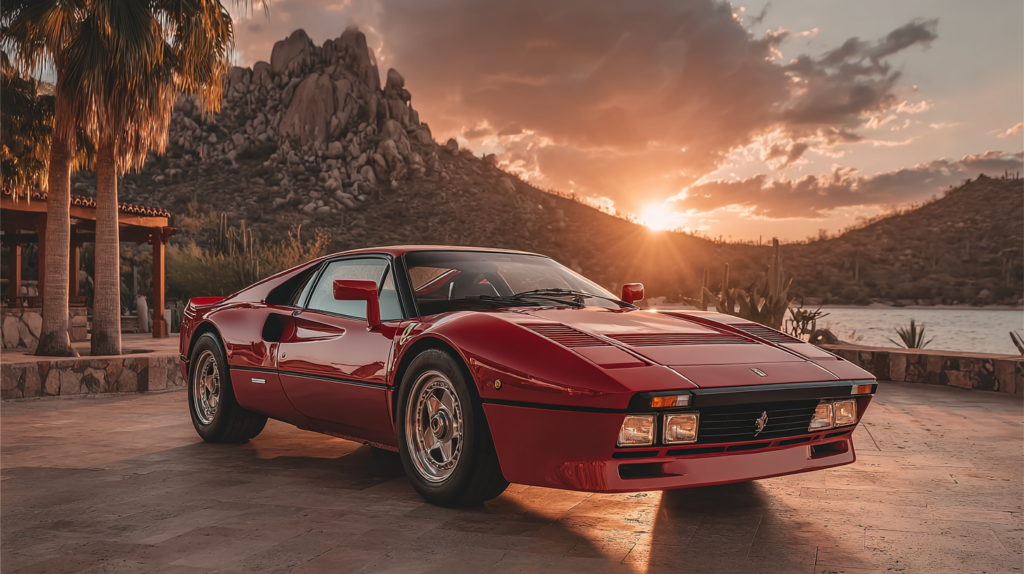
The 288 GTO’s exterior was designed by Pininfarina, under the direction of Leonardo Fioravanti. The design is aggressive and functional, with a low, wide stance, a long nose, and a distinctive rear end.
The front end features a prominent grille with a mesh pattern and a Ferrari badge. The headlights are pop-up units that are integrated into the bodywork. The hood has a large air outlet that extracts hot air from the engine bay.
The side profile shows the extended wheelbase, the large side air intakes, and the flared fenders. The NACA ducts on the hood are a distinctive feature.
The rear end is characterized by a prominent rear spoiler integrated into the decklid, a large diffuser, and quad exhaust outlets. The taillights are round, a reference to classic Ferraris.
Interior Design
The interior of the 288 GTO is focused on the driver. The seats are power-adjustable with leather upholstery. The dashboard features a digital instrument cluster with a central tachometer and auxiliary gauges.
The steering wheel is a three-spoke unit with a leather wrap. The shift lever is positioned high on the center console.
The interior is more refined than the 308 GTB’s, with higher quality materials and better sound insulation.
Driving Experience
On Road Character
The 288 GTO is a car that requires respect. The turbochargers produce significant lag, with power building slowly below 4,000 rpm and then surging as the turbos spool. The clutch is heavy, and the gearshift requires deliberate movements.
The ride is firm but not punishing. The steering is heavy at low speeds, but it provides excellent feedback at speed.
The car is not relaxing, but it is engaging.
On Track Behavior
When driven on a track, the 288 GTO reveals its capabilities. The engine pulls strongly to the 7,000 rpm redline, and the chassis remains composed through corners. The car’s rear-wheel-drive layout requires skill to manage.
The Sound
The twin-turbo V8 produces a distinctive sound. The engine has a sharp, metallic wail at high rpm, with the turbochargers adding a mechanical whine.
Rarity and Exclusivity
Production Numbers
Ferrari built 272 units of the 288 GTO. The original plan was to build 200 units for homologation, but demand was so strong that Ferrari extended the production run.
Pricing
The 288 GTO carried a base price of approximately $83,000 when new. Today, well-maintained examples trade for over $3 million.
Collector Status
The 288 GTO is one of the most sought-after Ferraris of the modern era. Its limited production numbers, its connection to the canceled Group B program, and its legendary performance have made it a prized collector car.
How the 288 GTO Stacks Up Against Its Rivals
Against the Porsche 959
The Porsche 959 is a twin-turbocharged all-wheel-drive supercar with 444 horsepower.
The 959’s advantage is its technology and its all-weather capability. The Porsche’s all-wheel-drive system and advanced electronics were ahead of their time.
The 288 GTO’s advantage is its V8 engine and its design. The Ferrari’s engine provides a different character, and its styling is more dramatic.
Against the Lamborghini Countach
The Lamborghini Countach is a mid-engine V12 supercar with 420 horsepower.
The Countach’s advantage is its V12 engine and its dramatic styling. The Countach is one of the most iconic designs in automotive history.
The 288 GTO’s advantage is its refinement and its handling. The Ferrari is more usable and more engaging to drive.
Against the Ferrari F40
The Ferrari F40 is the successor to the 288 GTO, with a 2.9 liter twin-turbocharged V8 producing 471 horsepower.
The F40’s advantage is its power and its weight. The F40 is lighter and more powerful than the 288 GTO.
The 288 GTO’s advantage is its rarity and its place in Ferrari history. The 288 GTO is more exclusive, and it established the template for the F40.
Against the Ferrari 308 GTB
The 308 GTB is the base model from which the 288 GTO was derived, with a 3.0 liter naturally aspirated V8 producing 240 horsepower.
The 308’s advantage is its affordability and its daily usability. The 308 is less expensive and more practical.
The 288 GTO’s advantage is its performance and its exclusivity. The GTO produces 160 more horsepower than the 308, and it is significantly rarer.
The Legacy of the 288 GTO
The Supercar Template
The 288 GTO established the template for Ferrari’s future supercars. Its combination of a twin-turbocharged V8, a mid-engine layout, and limited production numbers would be repeated with the F40, the F50, the Enzo, and the LaFerrari.
The GTO Name
The 288 GTO revived the GTO name, and it remains the only Ferrari since the 250 GTO to carry it. The name carries immense weight, and the 288 GTO honored it.
The Group B Legacy
The 288 GTO is a reminder of the wild era of Group B rallying. The car was designed to compete in the most extreme racing category ever created, and its spirit reflects that ambition.
Specifications Summary
| Specification | Value |
|---|---|
| Engine | 2.8L twin-turbo V8 |
| Horsepower | 400 hp at 7,000 rpm |
| Torque | 366 lb-ft at 3,800 rpm |
| Transmission | 5-speed manual |
| Drive | Rear wheel drive |
| 0-60 mph | 4.9 seconds |
| Top Speed | 189 mph |
| Weight | 1,160 kg dry |
| Production | 272 units |
| Original Price | $83,000 |
Conclusion
The Ferrari 288 GTO is the supercar that started it all. It established the template for Ferrari’s modern supercars, combining a twin-turbocharged V8, a mid-engine layout, and limited production numbers. It was designed to compete in Group B rallying, and its spirit reflects the ambition and intensity of that era.
The 288 GTO is not a car for everyone. Its production was limited to 272 units, its price today exceeds $3 million, and its turbo lag requires skill to manage. But for the collectors who own a 288 GTO, the car offers something that no other Ferrari can provide: the experience of driving the car that started the modern supercar era.
The 288 GTO also represents a turning point in Ferrari’s history. It was the first modern supercar from Maranello, and it paved the way for the F40, the F50, the Enzo, and the LaFerrari. It is a car that will forever be remembered as one of the greatest Ferraris ever built.
The Ferrari 288 GTO is a legend, and it remains one of the most significant supercars in automotive history.

