
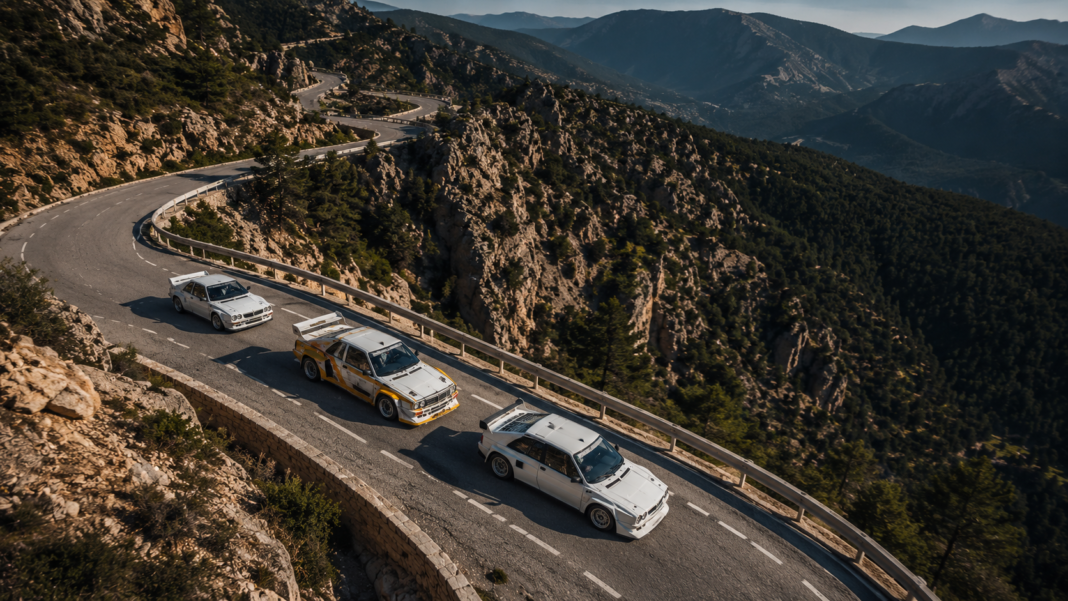
The sun is setting over the Col de Turini, one of the most famous stages of the Monte Carlo Rally. The road is narrow, winding, and unforgiving. In the distance, the sound of a turbocharged engine echoes off the mountainside. It is the sound of a Lancia Delta S4, a car that could produce over 500 horsepower in a chassis that weighed less than 950 kilograms. It is the sound of an era that was as brilliant as it was dangerous.
The Group B era of rallying lasted only four years, from 1982 to 1986. But in that short time, it produced some of the most powerful, most sophisticated, and most viscerally exciting motorsport ever filmed. The cars were too fast, the crowds were too close, and the consequences were fatal.
The Birth of Group B
Group B was introduced by the FIA in 1982 as a replacement for both Group 4 and Group 5 regulations. The idea was to encourage more manufacturers to join the World Rally Championship by reducing the number of cars required for homologation. Where Group 4 required 400 units, Group B required only 200. Evolution versions could be introduced with just 20 cars.
The rules were remarkably relaxed. Group B cars could have two seats and a minimum weight calculated by engine displacement and tyre size. There were no restrictions on boost pressure, exotic materials, or technology. Manufacturers could build what they wanted, as long as they built enough road cars to meet the homologation requirements.
The category was aimed at manufacturers by promising outright competition victories and the subsequent publicity opportunities. But the cost of competing quickly rose, and the performance of the cars proved too much.
The Cars: Purpose-Built Weapons
What made Group B cars so special was that they were not modified road cars. They were purpose-built racing machines that just happened to be road legal. Manufacturers designed the ideal rally car and then built a handful of road-legal derivatives to satisfy the regulations.
The results were staggering. In 1981, the year before Group B rules were introduced, rally cars produced around 250 horsepower. By 1986, at least two cars were producing in excess of 500 horsepower. In just five years, the power output of rally cars had more than doubled.
The cars featured lightweight composite bodywork, sophisticated all-wheel-drive systems, and mid-engined turbocharged engines. The engine designs were extreme. The Lancia Delta S4 used both a supercharger and a turbocharger to eliminate lag. The Audi Sport Quattro S1 produced over 600 horsepower with a huge snowplough-like front end. The Ford RS200 was purpose-built around a lower aluminium chassis with double wishbones and double shocks all round.
The Golden Era: 1983 to 1985
Lancia claimed the first manufacturers’ title with the 037 in 1983, a rear-wheel-drive supercharged car that was nimble enough to beat the clumsy Audis. Audi took the drivers’ title in 1983 and 1984 with Hannu Mikkola and Stig Blomqvist.
But the game changed when Peugeot arrived with the 205 T16 in 1984. The T16 was compact, mid-engined, and four-wheel-drive, and it rendered the front-engined Audis and rear-drive Lancias obsolete. Peugeot dominated the 1985 season, with Timo Salonen winning the drivers’ championship with five victories.
The Disaster: 1986
The stage was set for an epic 1986 season. Lancia had replaced the 037 with the Delta S4, which featured both a supercharger and a turbocharger. Audi’s new Sport Quattro S1 boasted over 600 horsepower. Peugeot had the Evolution 2 version of the 205 T16. Ford was ready with the RS200.
But the year would be remembered for tragedy. In Portugal, a Ford RS200 driven by Joaquim Santos crashed into a group of spectators, killing three people and injuring 31 others. The accident was a warning, but the sport did not stop.
Then came the Tour de Corse in May 1986. Henri Toivonen, one of the most talented drivers of the era, was leading the rally in his Lancia Delta S4. On the 18th stage, he lost control on a fast, downhill section. The car flew off the road, tumbled down the mountainside, and burst into flames. Toivonen and his co-driver Sergio Cresto were killed instantly.
There were no eyewitnesses. The car was so badly burned that the cause of the crash was never determined. But the result was clear. Group B was over.
The RAC Rally: A Poignant Send-Off
The British RAC Rally in November 1986 was the last Group B event in Europe. The championship battle was finely balanced. Lancia’s Markku Alén was chasing Peugeot’s Juha Kankkunen for the drivers’ title.
The rally was a fitting send-off. The top four were covered by just five seconds after the second leg. Kankkunen rolled his car in Grizedale Forest, losing three and a half minutes. Timo Salonen took the win, with Alén second.
The result put Alén into the championship lead by one point, but the decision to annul the results of the Sanremo Rally eventually cost him the title to Kankkunen. Peugeot concluded the Group B era with back-to-back drivers’ and manufacturers’ titles.
The Legacy
Group B was banned for the 1987 season, replaced by the more production-based Group A cars. The decision was made by the FIA in the wake of the Toivonen crash. There was no appeal.
The cars did not disappear entirely. Peugeot took the 205 T16 to the Paris-Dakar Rally, winning in 1987 and 1988. Audi took the Sport Quattro S1 to Pikes Peak, where Walter Röhrl claimed a sub-11 minute time in 1987. But the World Rally Championship would never be the same.
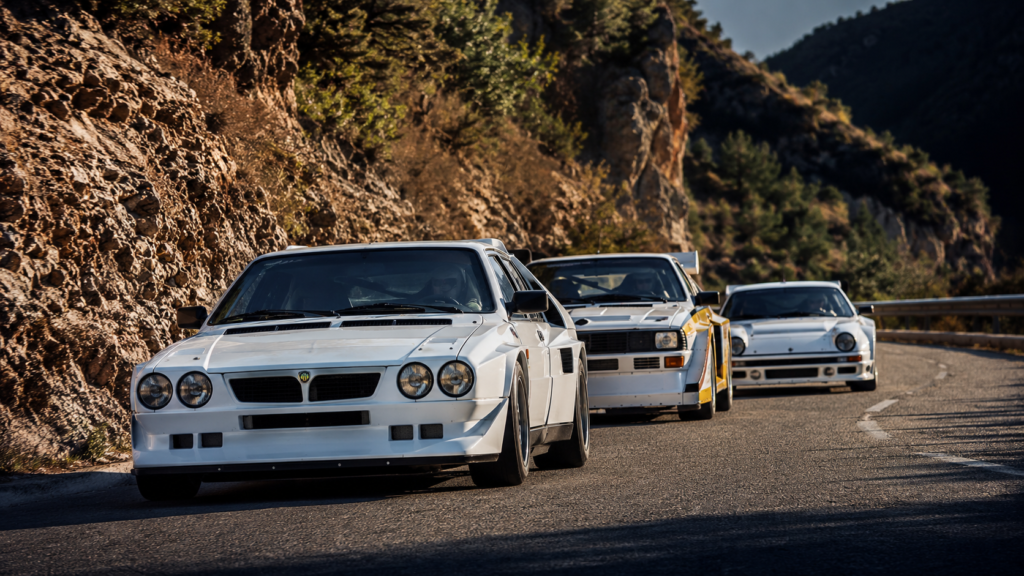
The Col de Turini Evening
The sun has fully set over the Col de Turini. The Lancia Delta S4 is gone. The sound has faded into the night.
The Group B era was short, but it was brilliant. It produced some of the most powerful and sophisticated rally cars ever built. It gave us legends like Toivonen, Vatanen, and Röhrl. It thrilled spectators and terrified drivers.
But it was also dangerous. The cars were too fast for the roads, the crowds were too close, and the consequences were fatal. The deaths of Toivonen and Cresto forced the sport to confront its excesses.
Key Takeaways
- Group B was introduced in 1982 with relaxed homologation rules, requiring only 200 road cars.
- Power outputs increased from 250 hp in 1981 to over 500 hp by 1986.
- The cars featured lightweight composite bodywork, all-wheel drive, and mid-engined turbocharged engines.
- The 1986 season was marked by tragedy, including the deaths of three spectators in Portugal and driver Henri Toivonen and co-driver Sergio Cresto in Corsica.
- Group B was banned at the end of 1986, replaced by Group A regulations.
Conclusion
The Group B era of rallying was the most dangerous and most brilliant chapter in motorsport. It produced cars that were so powerful they were almost uncontrollable, and drivers who were brave enough to tame them. It also produced tragedy.
The Col de Turini is quiet now. The Lancia Delta S4 is gone. But the memory of the Group B era endures, a reminder of what happens when engineering ambition outruns safety.

