
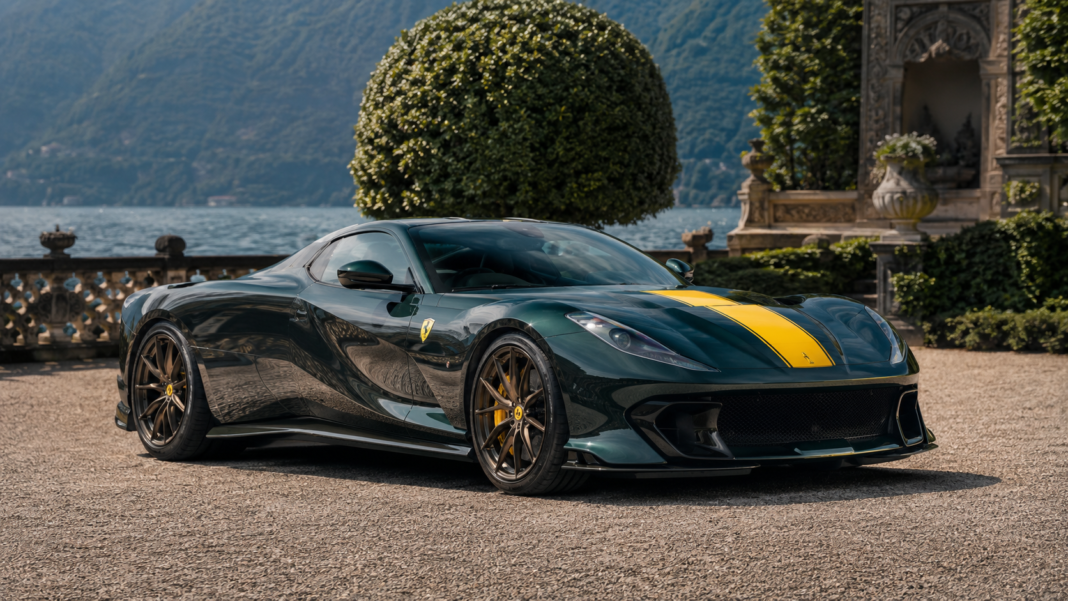
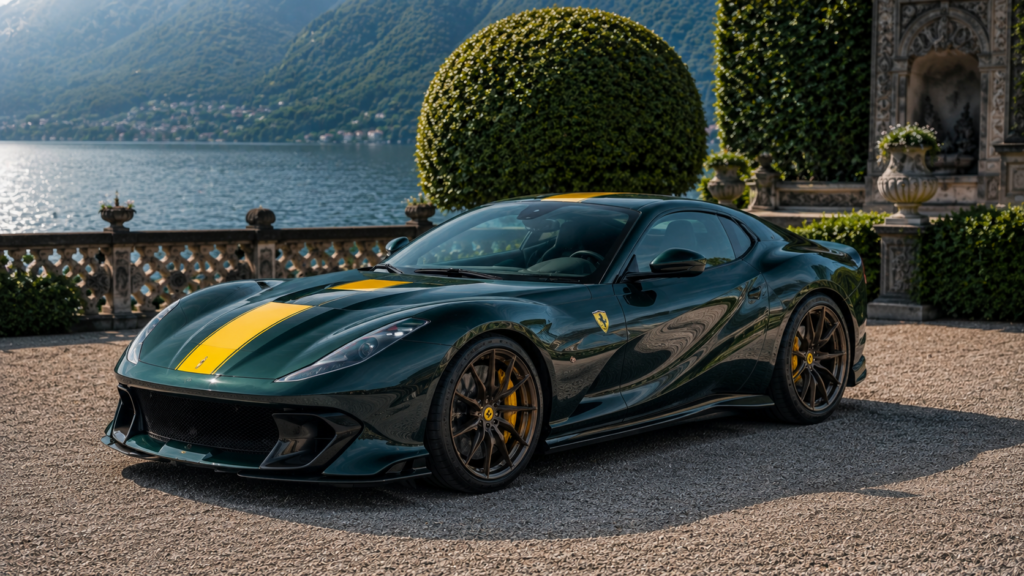
The sun is setting over Lake Como, casting a golden glow across the manicured gardens of the Villa d’Este. The annual Concorso d’Eleganza is winding down, but one car is still drawing a crowd. It is a Ferrari 812 Competizione, its 6.5-liter V12 glinting in the fading light. A man in his 60s is explaining the engine to a group of younger enthusiasts. “This is the last of its kind,” he says. “No turbos. No batteries. Just pure, unfiltered power.”
The V12 engine has been the ultimate expression of automotive excess for decades. Smooth, powerful, and unapologetically indulgent, it has been the weapon of choice for the world’s most exclusive performance cars. But today, the clock is ticking. Regulations, electrification, and changing buyer expectations are slowly silencing the thunderous symphony of the V12. This article explores whether the naturally aspirated V12 is genuinely going extinct and what that means for the future of performance cars.
Why the V12 Mattered
The V12 is special because it sits at the intersection of engineering perfection and emotional theater. With six cylinders per bank firing evenly at every 60 degrees of crank rotation, the V12 delivers unmatched smoothness. It doesn’t just make power; it sings with a wailing, operatic sound that no turbocharged or hybrid-assisted engine has ever replicated.
Ferrari, Lamborghini, and Aston Martin once used V12s to make a statement: these cars were not just transportation, they were rolling art. A V12 engine under the hood instantly meant “flagship” – the best a brand could offer. For decades, it was the default choice for halo cars. The V12’s 60-degree bank angle and self-cancelling inertial forces create a level of mechanical refinement no other common production engine layout matches.
But times change. The V12 has become harder to justify in a world obsessed with efficiency, carbon targets, and electrification. Where a V12 once proudly announced its presence, today it almost whispers goodbye.
The Modern Survivors
As we enter the middle of the 2020s, only a handful of brands still produce V12 engines. These aren’t just cars; they are monuments, built with the knowledge that there will never be another like them.
Ferrari remains committed to the naturally aspirated V12. The 812 Competizione’s 6.5-liter engine revs to 9,500 rpm and makes 819 horsepower without a single turbo or electric motor. The Ferrari 12Cilindri, launched in 2024, continues the tradition with around 820 horsepower. Even the Purosangue SUV, Ferrari’s first four-door vehicle, keeps the V12 alive with 715 horsepower. Ferrari’s global marketing director reinforced the format’s longevity, stating that Ferrari will produce naturally aspirated V12s until the law no longer allows them to.
Lamborghini’s identity has been built around its screaming V12s, from the Miura to the Countach to the Aventador. The Aventador Ultimae marked the final pure V12 Lamborghini before the hybrid era. Its successor, the Revuelto, still has a V12, but it’s paired with a plug-in hybrid system, producing a combined 1,001 horsepower. Lamborghini has confirmed that its V12 engine isn’t going anywhere and plans to keep it in production well beyond 2030.
Aston Martin refuses to let go quietly. The Valkyrie, developed with Formula 1 engineer Adrian Newey, features a naturally aspirated 6.5-liter V12 from Cosworth that revs to 11,100 rpm. The new Vanquish, with a 5.2-liter twin-turbo V12 producing 835 horsepower, demonstrates customer demand remains strong. Aston Martin plans to keep producing V12s until at least 2030, with low-volume exemptions potentially extending their life.
Pagani and Gordon Murray Automotive are also keeping the flame alive. The Pagani Utopia uses a bespoke AMG-built 6.0-liter twin-turbo V12. The Gordon Murray T.50, with its Cosworth-built 3.9-liter naturally aspirated V12 revving to 12,100 rpm, might be the last word on what a V12 can be when designed with zero compromises.
The Silent March Toward Hybrids
The short answer to why the V12 is disappearing is regulations. Around the world, governments are tightening emissions standards. Europe’s Euro 7 rules and similar policies elsewhere make it almost impossible for manufacturers to justify building high-displacement naturally aspirated engines.
At the same time, customers are shifting. Wealthy buyers may still love V12s, but brands also need to show commitment to sustainability. Hybrid and electric systems aren’t just about compliance; they’re about optics. A company selling $500,000 cars in 2026 needs to appear future-forward, not stuck in the past.
That’s why Ferrari’s upcoming models, Lamborghini’s Revuelto, and Aston Martin’s future flagships are embracing electrification. The V12 will live on, but it won’t be pure. Batteries, motors, and turbos will always sit alongside them now.
However, there is hope. Ferrari has found a way to make its V12 compliant with regulations and continues to develop its engines. Lamborghini’s hybrid system allows the V12 to comply with emissions legislation while maintaining its character. Aston Martin’s CEO has a bold plan to keep the V12 alive through low-volume production exemptions.
The Lake Como Evening
The sun has fully set over Lake Como. The Ferrari 812 Competizione is still parked on the lawn. The crowd has thinned, but a few enthusiasts remain.
A young man approaches the owner. “Will we ever see another car like this?” he asks.
The owner pauses. “Probably not,” he says. “But that’s what makes it special.”
Key Takeaways
- Ferrari, Lamborghini, and Aston Martin still produce V12 engines, but most are now hybrid-assisted.
- Emissions regulations, electrification, and changing buyer expectations are driving the V12 toward extinction.
- Some manufacturers are finding ways to keep the V12 alive through hybrid systems and low-volume exemptions.
- The V12’s smoothness, power, and emotional impact remain unmatched by any other engine format.
- The last pure V12s are rolling monuments to human excess and engineering mastery.
Conclusion
The V12 engine is not dead, but it is dying. The naturally aspirated, unassisted V12 is becoming a memory, replaced by hybrid systems that combine the emotional impact of the V12 with the efficiency of electric motors.
The Ferrari 812 Competizione, the Lamborghini Aventador Ultimae, the Aston Martin Valkyrie, and the Gordon Murray T.50 are the last echoes of a golden age. They exist because passion doesn’t always follow logic. They are proof that sometimes, engineers and designers fight back against the tide of efficiency and build something irrationally beautiful.
The Villa d’Este is quiet now. The Ferrari is gone. The V12 has faded into the night. But the memory of its sound will linger, a reminder of what the automotive world is losing.

