Home Blog Page 18

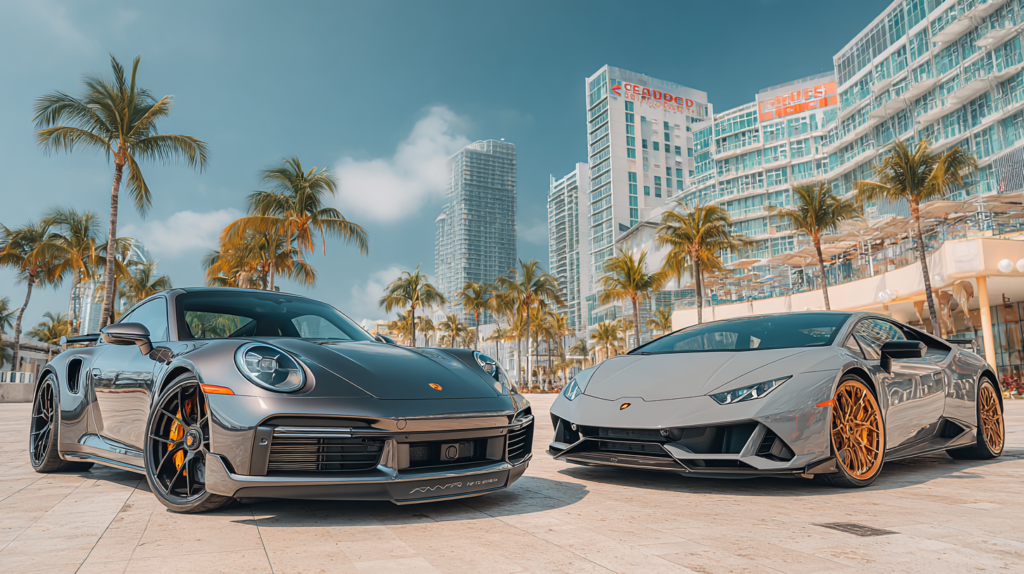
Porsche 911 Turbo S vs Lamborghini Huracán EVO: Two Ways to Go Fast in 2026

0

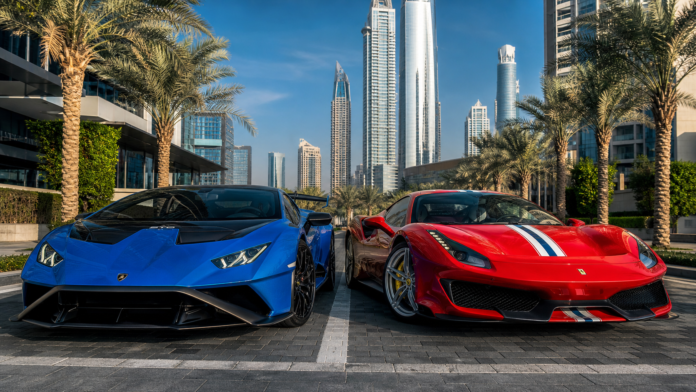
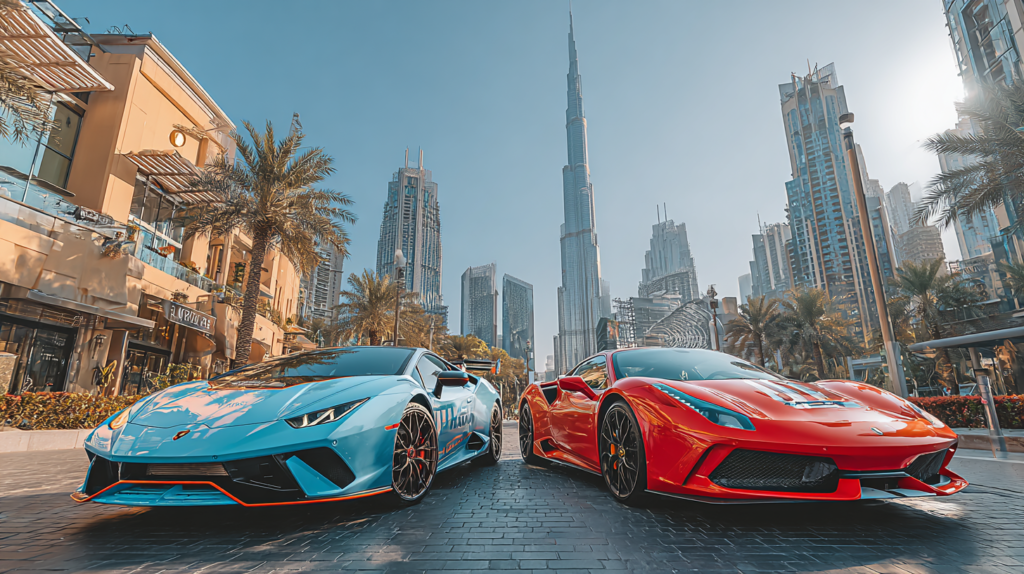
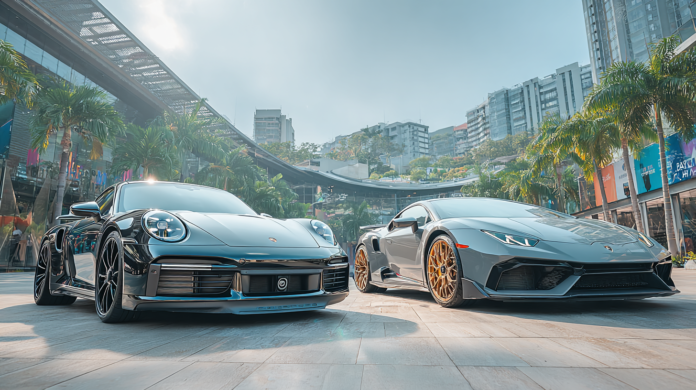
The Porsche 911 Turbo S and the Lamborghini Huracán EVO represent two distinct approaches to high-performance motoring. The Turbo S is the ultimate expression of the everyday supercar. It combines blistering acceleration with all-weather traction, a comfortable interior, and the usability of a daily driver. The Huracán EVO is the drama machine. It is loud, aggressive, and unapologetically flamboyant. Its naturally aspirated V10, all-wheel-drive system, and sharp styling make it a car that demands attention.

Both cars are capable of extraordinary speed. Both are expensive, exclusive, and desirable. But they are designed for very different drivers. This article compares the Porsche 911 Turbo S and the Lamborghini Huracán EVO across performance, handling, design, daily usability, and value to determine which one you would drive every day and which one you would save for the weekends.

The Contenders: Two Very Different Personalities

Porsche 911 Turbo S: The Mature Supercar

The 911 Turbo S is the flagship of the 911 lineup. It uses a 3.7 liter twin-turbocharged flat-six engine producing 640 horsepower. The car features Porsche’s advanced all-wheel-drive system, rear-axle steering, and adaptive suspension. The design is aggressive, but it is still recognizable as a 911. The Turbo S is designed to be used every day, in any weather, without compromise.

Lamborghini Huracán EVO: The Drama Machine

The Huracán EVO is the mid-cycle update of Lamborghini’s V10 supercar. It uses a 5.2 liter naturally aspirated V10 engine producing 631 horsepower. The car features Lamborghini’s all-wheel-drive system with rear-wheel steering and advanced torque vectoring. The design is sharp, angular, and aggressive. The Huracán is designed to be an event every time you drive it.

Powertrain and Performance

Porsche 911 Turbo S

The Turbo S’s flat-six engine is a masterpiece of forced induction. The twin turbochargers provide massive low-end torque, with peak torque available from 2,500 rpm. The engine produces 640 horsepower at 6,750 rpm and 590 lb-ft of torque from 2,500 to 4,000 rpm.

  • Displacement: 3.7 liters
  • Configuration: Twin-turbo flat-six
  • Horsepower: 640 hp at 6,750 rpm
  • Torque: 590 lb-ft from 2,500 to 4,000 rpm
  • Transmission: 8-speed dual-clutch
  • Drive: All-wheel drive
  • 0-60 mph: 2.6 seconds
  • Top Speed: 205 mph
  • Curb Weight: 1,640 kg

Lamborghini Huracán EVO

The Huracán’s V10 is one of the last naturally aspirated engines in its class. The engine produces a distinctive, high-pitched wail as the revs climb toward the 8,500 rpm redline. The power delivery is linear and progressive, with a surge of torque in the upper rev range.

  • Displacement: 5.2 liters
  • Configuration: Naturally aspirated V10
  • Horsepower: 631 hp at 8,000 rpm
  • Torque: 443 lb-ft at 6,500 rpm
  • Transmission: 7-speed dual-clutch
  • Drive: All-wheel drive
  • 0-60 mph: 2.9 seconds
  • Top Speed: 202 mph
  • Curb Weight: 1,542 kg

Performance Verdict

The Porsche is significantly quicker in a straight line. Its 640 horsepower and 590 lb-ft of torque, combined with the dual-clutch transmission and all-wheel-drive system, allow it to launch harder and accelerate faster than the Lamborghini. The Turbo S’s 2.6 second 0 to 60 time is 0.3 seconds quicker than the Huracán’s.

The Lamborghini’s naturally aspirated engine is slower, but it is more dramatic. The V10’s high-pitched wail and linear power delivery create an experience that the Porsche’s turbocharged flat-six cannot match.

Chassis and Handling

Porsche 911 Turbo S: Precision and Stability

The Turbo S uses Porsche’s advanced all-wheel-drive system with rear-axle steering. The system provides exceptional traction in all conditions. The rear-axle steering improves maneuverability at low speeds and stability at high speeds.

The suspension is adaptive, with settings that range from comfortable to firm. The car is incredibly stable at high speeds, with minimal body roll and precise turn-in.

Lamborghini Huracán EVO: Agility and Drama

The Huracán’s all-wheel-drive system is rear-biased, giving it the feel of a rear-wheel-drive car. The rear-wheel steering, which turns the rear wheels in the opposite direction to the front wheels at low speeds and in the same direction at high speeds, improves agility.

The suspension is firm, transmitting road imperfections to the cabin. The car feels smaller and more agile than the Porsche, with quicker turn-in and more adjustability.

Handling Verdict

The Porsche is the more stable and predictable car. It inspires confidence in all conditions, from wet roads to high-speed highway cruising. The Lamborghini is the more agile and playful car. It is more engaging to drive at the limit, but it is less forgiving.

The Turbo S is the better car for daily driving. The Huracán is the better car for weekend thrills.

Design and Styling

Porsche 911 Turbo S: Understated Aggression

The Turbo S’s design is aggressive but understated. The wider body, larger air intakes, and prominent rear wing signal its performance capabilities, but it is still recognizable as a 911. The car is available in a range of colors, but it does not scream for attention.

The interior is luxurious and driver-focused. The seats are comfortable and supportive, and the cabin is quiet at highway speeds.

Lamborghini Huracán EVO: Unapologetic Drama

The Huracán’s design is sharp, angular, and aggressive. The front end features a prominent grille and large air intakes. The side profile shows the massive side intakes and the sharp lines. The rear end is characterized by a prominent diffuser and quad exhaust outlets.

The interior is dramatic, with a fighter jet-inspired cockpit, a digital instrument cluster, and a central touchscreen.

Design Verdict

The Lamborghini is the more dramatic and attention-grabbing car. It stops traffic and draws a crowd. The Porsche is more understated, appealing to drivers who prefer to fly under the radar.

Daily Usability and Practicality

Porsche 911 Turbo S: The Everyday Supercar

The Turbo S is designed for daily use. The ride is compliant, the cabin is quiet, and the seats are comfortable for long journeys. The car has a front trunk with enough space for a weekend bag, and the rear seats offer additional storage.

The all-wheel-drive system provides traction in rain and snow, making the Turbo S a year-round car. The fuel economy, while not class-leading, is reasonable for a 640 horsepower supercar.

Lamborghini Huracán EVO: The Weekend Toy

The Huracán is less practical for daily use. The ride is firm, the cabin is loud, and the seats are less comfortable for long journeys. The car has a small front trunk that can hold a small bag, but there is no additional storage.

The all-wheel-drive system provides traction, but the car’s low ground clearance and wide body make it challenging in urban environments. The fuel economy is poor, even by supercar standards.

Usability Verdict

The Porsche is the clear winner for daily use. It is comfortable, practical, and usable in all weather conditions. The Lamborghini is best reserved for weekends and special occasions.

Driving Experience

On the Road

The Turbo S is a car that can be driven every day without compromise. The engine provides effortless power, the transmission shifts smoothly, and the suspension absorbs road imperfections. The car is quiet, comfortable, and refined.

The Huracán is a car that demands attention. The engine is loud, the ride is firm, and the steering is heavy. The car is not relaxing, but it is thrilling. Every drive feels like an event.

On the Track

On a track, both cars are exceptional. The Turbo S is faster, with a power advantage that makes it quicker on circuits with long straights. The Huracán is more engaging, with a naturally aspirated engine that rewards high revs and a chassis that rotates eagerly on corner entry.

The Turbo S is a car that flatters the driver. It is fast, stable, and predictable. The Huracán is a car that challenges the driver. It rewards skill and punishes mistakes.

The Sound

The Porsche’s flat-six produces a deep, guttural rumble at low speeds and a sharp roar at full throttle. The sound is refined but not particularly distinctive.

The Lamborghini’s V10 produces one of the best sounds in the automotive world. The engine wails to an 8,500 rpm redline with a high-pitched shriek that is both thrilling and intoxicating.

Value and Ownership

Pricing

The Porsche 911 Turbo S has a base price of approximately $200,000. The Lamborghini Huracán EVO has a base price of approximately $210,000. The cars are similarly priced, but the Porsche holds its value better over time.

Depreciation

The Porsche 911 Turbo S is known for strong resale value. The Lamborghini Huracán depreciates more quickly, though the naturally aspirated V10 may help it hold value better than turbocharged alternatives.

Ownership Costs

Maintaining a Porsche is less expensive than a Lamborghini. Service intervals are longer, parts are more readily available, and the dealer network is larger. The Huracán’s V10 requires specialized service and parts that are more expensive.
Which One is Right for You?

Choose the Porsche 911 Turbo S if:

  • You want a car that you can drive every day, in any weather. The Turbo S is comfortable, practical, and usable year-round.
  • You value understated design and brand heritage. The 911 is timeless and recognizable without being flashy.
  • You prioritize speed and performance over drama. The Turbo S is faster and more capable than the Huracán.
  • You plan to keep the car for several years. The Porsche holds its value better and is less expensive to maintain.

Choose the Lamborghini Huracán EVO if:

  • You want a car that is an event every time you drive it. The Huracán’s V10, sharp styling, and dramatic presence are unmatched.
  • You prioritize emotion and engagement over practicality. The Huracán is less comfortable, but it is more thrilling.
  • You want to attract attention. The Lamborghini stops traffic and draws a crowd wherever it goes.
  • You are willing to accept higher ownership costs and faster depreciation.

Specifications Summary

SpecificationPorsche 911 Turbo SLamborghini Huracán EVO
Engine3.7L twin-turbo flat-six5.2L naturally aspirated V10
Horsepower640 hp at 6,750 rpm631 hp at 8,000 rpm
Torque590 lb-ft from 2,500 to 4,000 rpm443 lb-ft at 6,500 rpm
Transmission8-speed dual-clutch7-speed dual-clutch
DriveAll-wheel driveAll-wheel drive
0-60 mph2.6 seconds2.9 seconds
Top Speed205 mph202 mph
Redline7,200 rpm8,500 rpm
Curb Weight1,640 kg1,542 kg
Base Price$200,000$210,000

Conclusion

The Porsche 911 Turbo S and the Lamborghini Huracán EVO are two of the finest performance cars ever built. They represent two very different philosophies of speed.

The Turbo S is the everyday supercar. It is fast, comfortable, practical, and usable in any weather. It is a car that you can drive to work, to the grocery store, and to the track, all in the same week. It is mature, refined, and understated.

The Huracán EVO is the drama machine. It is loud, aggressive, and unapologetically flamboyant. Its naturally aspirated V10 wails to an 8,500 rpm redline, and its sharp styling turns heads wherever it goes. It is a car for weekends, for special occasions, and for drivers who want to feel alive every time they get behind the wheel.

The Porsche is the car you would drive every day. The Lamborghini is the car you would drive on weekends.

Both are exceptional. Both will be remembered as legends. And both prove that there is no single way to go fast.
McLaren 720S vs Ferrari F8 Tributo: The Benchmark Mid-Engine Battle in 2026

0

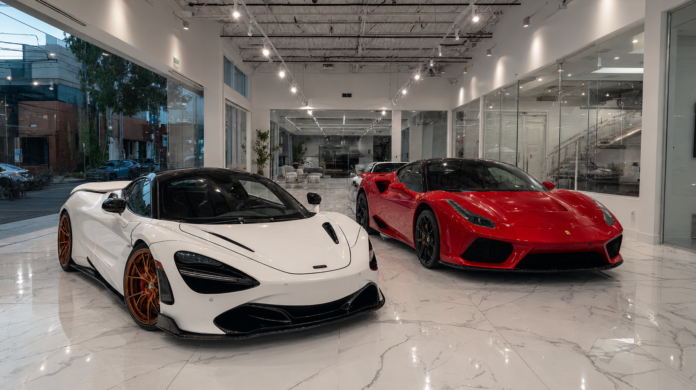
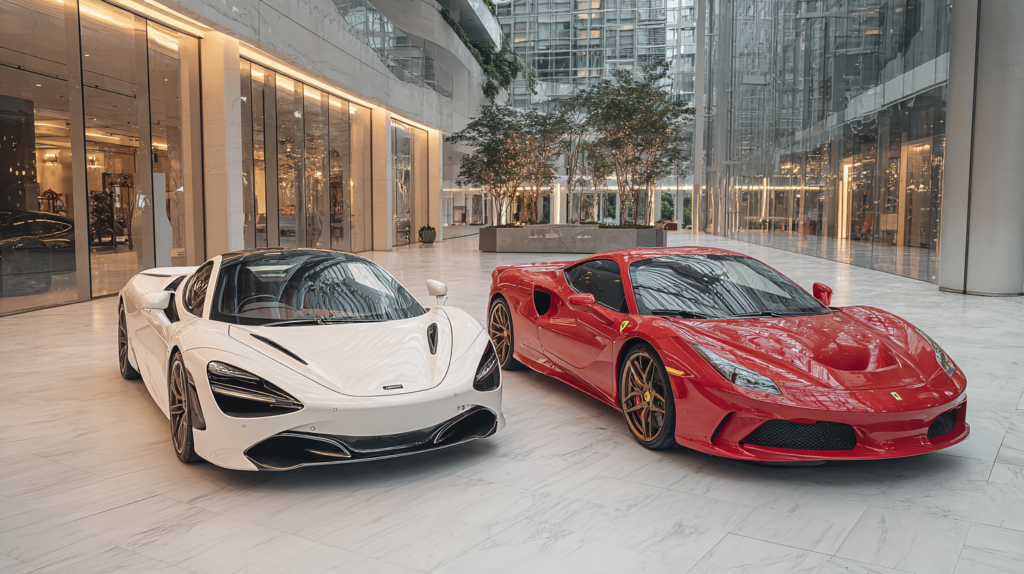
For the better part of a decade, the McLaren 720S and the Ferrari F8 Tributo have defined the mid-engine supercar segment. The 720S was McLaren’s second-generation Super Series car, following the 650S. It introduced a radical new design language, a more powerful 4.0 liter twin-turbo V8, and a chassis that set new standards for ride comfort and handling precision. The F8 Tributo was Ferrari’s final mid-engine V8 supercar before the brand moved to hybrid powertrains. It was a refinement of the 488 GTB, with more power, improved aerodynamics, and a more engaging driving experience.

To this day, both cars are benchmarks. They represent the pinnacle of internal combustion engineering before the industry shifted toward hybridization and electrification. This article compares the McLaren 720S and the Ferrari F8 Tributo across performance, handling, design, driving experience, and value to determine which mid-engine supercar earns the money, the emotion, and the crowd.

The Contenders: Two Philosophies of Speed

McLaren 720S: Lightweight, Agile, Technical

McLaren’s philosophy has always centered on lightweight construction and chassis precision. The 720S uses a carbon fiber monocoque that weighs just 100 kilograms. The body is shaped for aerodynamic efficiency, with a drag coefficient of just 0.32. The car’s 4.0 liter twin-turbo V8 produces 710 horsepower.

Ferrari F8 Tributo: Powerful, Refined, Emotional

Ferrari’s F8 Tributo is a tribute to the brand’s V8 heritage. The name means “tribute” in Italian, and the car honors the engines that have powered Ferrari’s mid-engine supercars for decades. The F8 uses a 3.9 liter twin-turbo V8 producing 710 horsepower. The car’s design is a blend of classic Ferrari styling and modern aerodynamics.

Powertrain and Performance

McLaren 720S

The 720S’s M840T engine is a 4.0 liter twin-turbo V8. It produces 710 horsepower at 7,500 rpm and 568 lb-ft of torque at 5,500 rpm. The redline is 8,500 rpm. The engine features a flat-plane crank, lightweight internals, and dual twin-scroll turbochargers.

  • Displacement: 4.0 liters
  • Configuration: Twin-turbo V8
  • Horsepower: 710 hp at 7,500 rpm
  • Torque: 568 lb-ft at 5,500 rpm
  • Transmission: 7-speed dual-clutch
  • Drive: Rear-wheel drive
  • 0-60 mph: 2.7 seconds
  • Quarter mile: 10.2 seconds at 140 mph
  • Top Speed: 212 mph
  • Curb Weight: 1,328 kg dry

Ferrari F8 Tributo

The F8’s F154 engine is a 3.9 liter twin-turbo V8. It produces 710 horsepower at 8,000 rpm and 568 lb-ft of torque at 3,250 rpm. The redline is 8,000 rpm. The engine features a flat-plane crank and a hot vee turbocharger layout that reduces lag.

  • Displacement: 3.9 liters
  • Configuration: Twin-turbo V8
  • Horsepower: 710 hp at 8,000 rpm
  • Torque: 568 lb-ft at 3,250 rpm
  • Transmission: 7-speed dual-clutch
  • Drive: Rear-wheel drive
  • 0-60 mph: 2.8 seconds
  • Top Speed: 211 mph
  • Curb Weight: 1,435 kg dry

Performance Verdict

The McLaren is slightly quicker to 60 miles per hour, with a time of 2.7 seconds compared to the Ferrari’s 2.8 seconds. The 720S is also lighter, with a dry weight of 1,328 kilograms compared to the F8’s 1,435 kilograms. The power-to-weight ratio of the 720S is approximately 1.87 horsepower per kilogram, while the F8’s is approximately 1.64 horsepower per kilogram. The McLaren has a clear advantage in straight-line performance.

Chassis and Handling

McLaren 720S: The Benchmark for Ride and Handling

The 720S uses a carbon fiber monocoque that is extremely rigid and light. The suspension is a double-wishbone design with adaptive dampers. The system, called Proactive Chassis Control, replaces traditional anti-roll bars with hydraulic actuators that adjust in milliseconds.

The result is a car that rides with exceptional compliance on public roads while remaining flat and composed through corners. The steering is precise and communicative, providing excellent feedback about available grip.

Ferrari F8 Tributo: The Evolution of the 488

The F8 uses a chassis derived from the 488 GTB, with modifications for increased rigidity and reduced weight. The suspension is double-wishbone at all four corners, with adaptive dampers. The car features Ferrari’s Side Slip Control system, which manages torque delivery and stability to allow the driver to control oversteer.

The F8’s steering is quick and direct, with good feedback. The car is stable and predictable at the limit, with a slight tendency toward understeer that builds driver confidence.

Handling Verdict

The McLaren is the more agile and responsive car. Its lighter weight and sophisticated chassis control system make it feel smaller and more nimble than the Ferrari. The 720S rotates eagerly on corner entry and provides exceptional feedback.

The Ferrari is the more stable and predictable car. It is easier to drive quickly, with a power advantage that makes it faster on circuits with long straights. But the McLaren is the more engaging car to drive at the limit.

Aerodynamics

McLaren 720S: The Active Aero Pioneer

The 720S features an active aerodynamic system that adjusts the rear wing based on speed and driving mode. In high downforce mode, the wing deploys to increase grip. In low drag mode, the wing retracts to reduce resistance. The system improves high-speed stability and cornering grip.

Ferrari F8 Tributo: The S-Duct Innovation

The F8 features an S-duct aerodynamic system derived from the 488 Pista. The system channels airflow from the front bumper to the hood, increasing downforce at the front axle without adding drag. The car also features active aerodynamic elements, including a rear wing that deploys at speed.

Aerodynamics Verdict

Both cars generate significant downforce. The 720S’s active wing system is more sophisticated, but the F8’s S-duct is more integrated into the bodywork. The McLaren is the more efficient car, with a lower drag coefficient. The Ferrari is the more stable car at high speeds.

Design and Styling

McLaren 720S: Technical and Dramatic

The 720S’s design is radical and futuristic. The front end features the “eye socket” headlights, which integrate the headlamps into large air intakes. The side profile shows the dihedral doors and the massive side intakes. The rear end is characterized by a prominent diffuser and twin exhaust outlets.

The interior is driver-focused, with a digital instrument cluster that folds away in track mode. The seats are supportive and comfortable, and the cabin is well-insulated.

Ferrari F8 Tributo: Elegant and Aggressive

The F8’s design is more classic. The front end features a prominent grille and slim headlights. The side profile shows the large side intakes that feed cooling air to the engine and brakes. The rear end is characterized by quad exhaust outlets and a prominent diffuser.

The interior is luxurious, with leather and Alcantara upholstery and a digital instrument cluster. The seats are comfortable and supportive, and the cabin is quiet at highway speeds.

Design Verdict

The McLaren is the more dramatic and distinctive car. Its radical design stands out in any setting. The Ferrari is the more elegant and refined car, with a timeless design that will age gracefully.

Driving Experience

On the Road

The McLaren is the more comfortable car for daily driving. Its adaptive suspension absorbs road imperfections without transmitting harshness to the cabin. The cabin is relatively quiet, and the seats are supportive for long journeys.

The Ferrari is firmer, but it is still acceptable for daily use. The ride is more communicative, with more road feel transmitted to the driver. The cabin is slightly louder, with more engine noise and road noise.

On the Track

Both cars are exceptional on a track. The McLaren’s lighter weight and agile chassis make it more rewarding to drive at the limit. The car rotates eagerly on corner entry and provides exceptional feedback. The Ferrari’s power advantage makes it faster on circuits with long straights.

The 720S feels more alive. The steering is more direct, the chassis communicates more clearly, and the car responds to inputs with immediacy. The F8 feels more clinical. It is faster and more predictable, but it is less engaging.

The Sound

The McLaren’s V8 produces a sharp, metallic wail at high rpm. The sound is technical and precise, but it lacks the emotion of the Ferrari’s engine. The Ferrari’s V8 produces a deeper, more muscular roar, with a character that is more traditional and engaging.

Value and Ownership

Pricing

The McLaren 720S has a base price of approximately $300,000. The Ferrari F8 Tributo has a base price of approximately $280,000. The Ferrari is slightly less expensive, but both cars are in the same price range.

Depreciation

Both cars have experienced significant depreciation since their introduction. The 720S and F8 have settled into a stable market, with well-maintained examples trading for $180,000 to $220,000. The Ferrari tends to hold its value slightly better due to brand prestige.

Ownership Costs

Maintaining a McLaren is more expensive than a Ferrari. Service intervals are shorter, parts are more expensive, and the dealer network is smaller. The Ferrari’s simpler systems and larger dealer network result in lower ownership costs.

Which One is Right for You?

Choose the McLaren 720S if:

  • You prioritize handling precision and driver engagement. The 720S is lighter, more agile, and more rewarding to drive at the limit.
  • You value technical innovation and dramatic design. The 720S’s radical styling and active aero are distinctive.
  • You want a car that is comfortable enough for daily driving. The 720S’s ride quality is exceptional for a supercar.
  • You prioritize track performance over brand prestige. The 720S is faster and more capable on a circuit.

Choose the Ferrari F8 Tributo if:

  • You value brand prestige and emotional engagement. The Ferrari badge and V8 sound are unmatched.
  • You want a car that is faster in a straight line. The F8’s power advantage makes it quicker on circuits with long straights.
  • You prefer a more elegant and refined design. The F8’s styling is classic and timeless.
  • You want lower ownership costs and better resale value. The Ferrari is less expensive to maintain and holds its value better.

Specifications Summary

SpecificationMcLaren 720SFerrari F8 Tributo
Engine4.0L twin-turbo V83.9L twin-turbo V8
Horsepower710 hp at 7,500 rpm710 hp at 8,000 rpm
Torque568 lb-ft at 5,500 rpm568 lb-ft at 3,250 rpm
Transmission7-speed dual-clutch7-speed dual-clutch
DriveRear-wheel driveRear-wheel drive
0-60 mph2.7 seconds2.8 seconds
Top Speed212 mph211 mph
Dry Weight1,328 kg1,435 kg
Base Price$300,000$280,000

Conclusion

The McLaren 720S and the Ferrari F8 Tributo are two of the greatest mid-engine supercars ever built. They represent the pinnacle of internal combustion engineering before the industry moved toward hybridization.

The 720S is the more technically accomplished car. Its lightweight carbon fiber monocoque, sophisticated chassis control system, and active aerodynamics make it one of the best handling cars ever built. It is more agile, more comfortable, and more rewarding to drive at the limit.

The F8 Tributo is the more emotional car. Its V8 engine produces a sound that is traditional and engaging. Its design is elegant and timeless. Its brand prestige is unmatched.

Which car earns the money, the emotion, and the crowd? The answer depends on what you value most. If you want the most capable and technically advanced supercar, the McLaren 720S is the clear choice. If you want the most emotional and prestigious supercar, the Ferrari F8 Tributo is the better option.

Both are exceptional. Both will be remembered as legends. And both prove that the internal combustion supercar is far from dead.

Lamborghini Huracán STO vs Ferrari 488 Pista: Track Day Kings Face Off in 2026

0

The Lamborghini Huracán STO and the Ferrari 488 Pista represent the pinnacle of their respective generations. Both are track-focused, road-legal specials. Both are designed to deliver lap times that rival dedicated race cars. Both are the final evolution of naturally aspirated V10 and V8 engines before their respective manufacturers moved toward hybrid powertrains.

The STO, which stands for Super Trofeo Omologata, is a road-legal version of Lamborghini’s one-make race car. The Pista, which means “track” in Italian, is the most hardcore version of the 488. Both cars are rare, expensive, and brutally fast. But they take very different approaches to the track day formula.

This article compares the Lamborghini Huracán STO and the Ferrari 488 Pista across performance, handling, design, driving experience, and value to determine which delivers the more rewarding experience when the road runs out.

The Contenders: Two Track Day Specials

Lamborghini Huracán STO: The Race Car for the Road

The Huracán STO is the most extreme version of the Huracán. It is based on the Super Trofeo Evo race car that competes in Lamborghini’s one-make series. The STO uses a 5.2 liter naturally aspirated V10 producing 631 horsepower. It is rear-wheel drive, a departure from the all-wheel-drive layout of standard Huracáns. The car features extensive aerodynamic elements, including a massive rear wing, a prominent front splitter, and functional fender vents.

Ferrari 488 Pista: The Evolution of a Champion

The 488 Pista is the track-focused version of the 488 GTB. It uses a 3.9 liter twin-turbocharged V8 producing 710 horsepower. Like the STO, it is rear-wheel drive. The Pista features extensive aerodynamic elements derived from Ferrari’s Formula 1 and GT racing programs. It is lighter than the standard 488, with carbon fiber components and a stripped interior.

Powertrain and Performance

Lamborghini Huracán STO: The Naturally Aspirated V10

The STO’s V10 is the defining feature of the car. It is one of the last naturally aspirated V10s in production. The engine produces a distinctive, high-pitched wail as the revs climb toward the 8,500 rpm redline.

  • Displacement: 5.2 liters
  • Configuration: Naturally aspirated V10
  • Horsepower: 631 hp at 8,000 rpm
  • Torque: 417 lb-ft at 6,500 rpm
  • Transmission: 7-speed dual-clutch
  • Drive: Rear-wheel drive
  • 0-62 mph: 3.0 seconds
  • Top Speed: 193 mph
  • Weight: 1,339 kg dry

Ferrari 488 Pista: The Twin-Turbo V8

The Pista’s V8 is a development of the engine that powered the 488 GTB. It is one of the most powerful V8s ever fitted to a production Ferrari. The turbochargers are mounted in the hot vee configuration, reducing lag and improving throttle response.

  • Displacement: 3.9 liters
  • Configuration: Twin-turbo V8
  • Horsepower: 710 hp at 8,000 rpm
  • Torque: 567 lb-ft at 3,000 rpm
  • Transmission: 7-speed dual-clutch
  • Drive: Rear-wheel drive
  • 0-62 mph: 2.85 seconds
  • Top Speed: 211 mph
  • Weight: 1,385 kg dry

Performance Verdict

The Ferrari has a significant power advantage. Its 710 horsepower is 79 more than the Lamborghini’s 631. The Pista is also quicker to 62 miles per hour, with a time of 2.85 seconds compared to the STO’s 3.0 seconds.

However, the Lamborghini is lighter. Its dry weight of 1,339 kilograms is 46 kilograms less than the Ferrari. The power-to-weight ratio of the Pista is approximately 1.95 horsepower per kilogram, while the STO’s is approximately 1.79 horsepower per kilogram. The Ferrari has a clear advantage, but the Lamborghini’s naturally aspirated character and lighter weight make it feel more responsive.

Chassis and Handling

Lamborghini Huracán STO: The Race Car Foundation

The STO is based on the Super Trofeo race car. The chassis is stiffened, and the suspension is revised for track use. The car features a rear-wheel-drive setup, which makes it more playful and adjustable than all-wheel-drive Huracáns.

The STO’s steering is quick and direct, with excellent feedback. The car rotates eagerly on corner entry, and the driver can adjust the cornering attitude with the throttle. The rear-wheel-drive layout requires skill to manage, but it rewards smooth, precise inputs.

Ferrari 488 Pista: The Evolution of the GTB

The Pista’s chassis is derived from the 488 GTB, with significant modifications for track use. The suspension is stiffer, the ride height is lower, and the rear-wheel-drive layout is retained. The car features Ferrari’s Side Slip Control system, which manages torque delivery and stability to allow the driver to control oversteer.

The Pista’s steering is precise and communicative. The car is stable and predictable at the limit, with a slight tendency toward understeer that builds driver confidence.

Handling Verdict

Both cars are exceptional. The Lamborghini is the more dramatic and engaging car to drive at the limit. Its rear-wheel-drive layout and naturally aspirated V10 make it feel alive and responsive. The Ferrari is the more precise and predictable car. Its power advantage and advanced electronics make it faster on most tracks.

The STO is for drivers who want to feel every input and manage the car’s behavior. The Pista is for drivers who want to focus on hitting apexes and maximizing lap times.

Aerodynamics

Lamborghini Huracán STO: Extreme Downforce

The STO’s aerodynamic package is derived from the Super Trofeo race car. The car features a massive fixed rear wing with three adjustable positions. The front splitter is large and aggressive, and the fenders are vented to reduce pressure buildup.

The STO generates approximately 800 pounds of downforce at 150 miles per hour. This is a significant figure for a road car.

Ferrari 488 Pista: Active Aero

The Pista features active aerodynamic elements derived from Ferrari’s Formula 1 program. The front splitter is adjustable, and the rear wing is active, deploying at speed to increase downforce.

The Pista generates approximately 440 pounds of downforce at 124 miles per hour. This is less than the STO’s figure, but the car’s lower drag and higher top speed make it faster on circuits with long straights.

Aerodynamics Verdict

The Lamborghini has the more aggressive aerodynamic package. The STO is designed for maximum downforce, even at the expense of top speed. The Ferrari is more balanced, with a focus on reducing drag as well as generating downforce.

Design and Styling

Lamborghini Huracán STO: Aggressive and Purposeful

The STO’s exterior design is dramatic and functional. The massive rear wing, prominent front splitter, and vented fenders give the car a race car appearance. The car is available in a range of colors, including the signature Arancio Borealis orange.

The interior is stripped back, with race seats, Alcantara upholstery, and minimal sound deadening. The car features a digital instrument cluster with a track mode that displays lap times and other performance data.

Ferrari 488 Pista: Elegant and Aggressive

The Pista’s exterior design is more refined than the STO’s. The aerodynamic elements are integrated into the bodywork, and the overall shape is smoother and more flowing. The car features a distinctive stripe that runs from the front bumper to the rear deck.

The interior is more luxurious than the STO’s, with leather and Alcantara upholstery and a digital instrument cluster.

Design Verdict

The Lamborghini is the more dramatic car. Its aggressive styling and race car appearance make it stand out in any setting. The Ferrari is the more elegant car, with a design that is both beautiful and functional.

Driving Experience

On the Road

Neither car is particularly comfortable on public roads. The STO’s suspension is extremely firm, transmitting every imperfection to the cabin. The ride is punishing on rough surfaces. The Pista is slightly more compliant, but it is still firm.

The Lamborghini’s V10 produces a high-pitched wail that is intoxicating. The Ferrari’s V8 produces a deeper, more muscular roar. Both sounds are thrilling, but the Lamborghini’s naturally aspirated character is more distinctive.

On the Track

When driven at the limit, both cars are exceptional. The STO rewards skilled drivers who can manage its rear-wheel-drive layout and naturally aspirated power delivery. The Pista is faster and more predictable, with a power advantage that makes it easier to set fast lap times.

The STO feels more alive. The steering is more direct, the chassis communicates more clearly, and the engine pulls to an 8,500 rpm redline. The Pista feels more clinical. It is faster, but it is less engaging.

Rarity and Value

Production Numbers

Lamborghini built approximately 2,000 units of the Huracán STO production run . Ferrari built approximately 3,500 units of the 488 Pista . The STO is rarer, and it is expected to hold its value better.

Pricing

The Lamborghini Huracán STO has a base price of approximately $330,000. The Ferrari 488 Pista has a base price of approximately $350,000 . The Ferrari is slightly more expensive, but both cars are in the same price range.

Collector Status

Both cars are destined to become collector items. The STO is the last naturally aspirated V10 Lamborghini before the Huracán was replaced by the Temerario hybrid . The Pista is one of the last twin-turbo V8 Ferraris before the brand moved to hybrid V6s . The STO is likely to appreciate more due to its rarity and its naturally aspirated engine .

Which One is Right for You?

Choose the Lamborghini Huracán STO if:

  • You value the drama and engagement of a naturally aspirated V10 . The STO’s sound and character are unmatched.
  • You want a car that feels like a race car on the road . The STO’s aggressive styling and stiff suspension are uncompromising.
  • You are an experienced driver who wants to manage the car’s behavior at the limit . The STO rewards skill and punishes mistakes.
  • You want a car that will appreciate in value . The STO’s rarity and naturally aspirated engine make it a collector’s item.

Choose the Ferrari 488 Pista if:

  • You prioritize lap times and track performance . The Pista is faster and more predictable.
  • You want a car that is easier to drive quickly . The Pista’s advanced electronics and power advantage make it more forgiving.
  • You prefer a more refined and elegant design . The Pista’s styling is more integrated and flowing.
  • You want a car with a more powerful and torquey engine . The Pista’s 710 horsepower is a clear advantage.

Specifications Summary

SpecificationLamborghini Huracán STOFerrari 488 Pista
Engine5.2L naturally aspirated V103.9L twin-turbo V8
Horsepower631 hp at 8,000 rpm710 hp at 8,000 rpm
Torque417 lb-ft at 6,500 rpm567 lb-ft at 3,000 rpm
Transmission7-speed dual-clutch7-speed dual-clutch
DriveRear-wheel driveRear-wheel drive
0-62 mph3.0 seconds2.85 seconds
Top Speed193 mph211 mph
Downforce800 lb at 150 mph440 lb at 124 mph
Dry Weight1,339 kg1,385 kg
ProductionApproximately 2,000 unitsApproximately 3,500 units
Base Price$330,000$350,000

Conclusion

The Lamborghini Huracán STO and the Ferrari 488 Pista are two of the greatest track-focused road cars ever built. They represent the final evolution of naturally aspirated V10 and twin-turbo V8 engines before the industry moved toward hybrids .

The STO is the more dramatic and engaging car. Its naturally aspirated V10, rear-wheel-drive layout, and race-derived aerodynamics make it feel alive and responsive. The car rewards skilled drivers who are willing to manage its behavior at the limit. It is a car for purists.

The Pista is the faster and more predictable car. Its power advantage and advanced electronics make it easier to drive quickly. The car is more refined and more comfortable, but it is less engaging than the Lamborghini . It is a car for drivers who prioritize lap times over raw emotion.

Which is the better track day king? The answer depends on what you value most. If you want the most dramatic and engaging driving experience, the Lamborghini Huracán STO is the clear choice. If you want the fastest lap times and a more refined package, the Ferrari 488 Pista is the better option.

Both are exceptional. Both will be remembered as legends. And both prove that the analog supercar is far from dead.

Ferrari 296 GTB vs McLaren Artura: Hybrid Supercar Showdown in 2026

0

The Ferrari 296 GTB and the McLaren Artura represent a new generation of hybrid supercars. Both use a V6 engine paired with an electric motor. Both prioritize lightweight construction and handling precision over sheer horsepower. Both are designed to be as usable on city streets as they are thrilling on a race track.

Yet the two cars take very different approaches to the hybrid formula. The Ferrari emphasizes the emotional connection between driver and machine. Its V6 revs to 8,500 rpm and is mounted behind the driver in a mid-engine layout. The McLaren focuses on efficiency and weight reduction. Its V6 is smaller, its battery is larger, and its electric-only range is longer.

This article compares the Ferrari 296 GTB and the McLaren Artura across performance, handling, design, technology, and daily usability to help determine which hybrid supercar is the better choice.

The Hybrid Formula: Two Approaches

Ferrari 296 GTB: Emotion First

The 296 GTB is Ferrari’s first production V6 mid-engine supercar since the Dino of the 1960s and 1970s. The name refers to the engine displacement (2.9 liters) and the number of cylinders. The car features a 120-degree V6 mounted longitudinally behind the driver. The wide angle allows the turbochargers to be mounted inside the V, reducing lag and improving throttle response.

The electric motor is integrated into the transmission. It provides instant torque at low engine speeds and fills the gaps during gear shifts. The battery is small, with a capacity of 7.45 kWh. The electric range is approximately 15 miles, sufficient for short urban trips but not a primary feature.

McLaren Artura: Efficiency and Lightness

The Artura is McLaren’s first series-production hybrid supercar. It uses a 3.0 liter V6 with a 120-degree angle, similar to the Ferrari. But the McLaren’s engine is designed for a broader torque curve and greater fuel efficiency. The electric motor is also integrated into the transmission, but the battery is larger, with a capacity of 7.4 kWh.

The Artura’s electric range is approximately 19 miles, slightly better than the Ferrari. McLaren also emphasizes weight reduction, with a carbon fiber monocoque that keeps the dry weight to just 1,395 kilograms.

Powertrain and Performance

Ferrari 296 GTB

The 296 GTB’s powertrain is designed for maximum driver engagement. The V6 produces 654 horsepower on its own, with the electric motor adding an additional 165 horsepower. The total output is 819 horsepower and 546 lb-ft of torque.

  • Engine: 3.0L twin-turbo V6 (120-degree)
  • Electric Motor: Integrated into transmission
  • Total Power: 819 hp
  • Total Torque: 546 lb-ft
  • Transmission: 8-speed dual-clutch
  • Drive: Rear-wheel drive
  • 0-60 mph: 2.9 seconds
  • Top Speed: 205 mph
  • Dry Weight: 1,470 kg

McLaren Artura

The Artura’s powertrain is tuned for a balance of performance and efficiency. The V6 produces 577 horsepower, with the electric motor adding 94 horsepower. The total output is 671 horsepower and 531 lb-ft of torque.

  • Engine: 3.0L twin-turbo V6 (120-degree)
  • Electric Motor: Integrated into transmission
  • Total Power: 671 hp
  • Total Torque: 531 lb-ft
  • Transmission: 8-speed dual-clutch
  • Drive: Rear-wheel drive
  • 0-60 mph: 3.0 seconds
  • Top Speed: 205 mph
  • Dry Weight: 1,395 kg

Performance Verdict

The Ferrari is significantly more powerful. Its 819 horsepower gives it a 148 horsepower advantage over the McLaren. The 296 GTB is also slightly quicker to 60 miles per hour, with a time of 2.9 seconds compared to the Artura’s 3.0 seconds.

However, the McLaren is lighter. Its dry weight of 1,395 kilograms is 75 kilograms less than the Ferrari. The power-to-weight ratio of the Ferrari is approximately 1.75 hp per kilogram, while the Artura’s is approximately 1.67 hp per kilogram. The Ferrari has a clear advantage, but the McLaren’s lighter weight and broader torque curve make it feel more responsive in everyday driving.

Chassis and Handling

Ferrari 296 GTB: The Evolution of the Mid-Engine Formula

The 296 GTB uses a mid-engine layout that has been refined over decades of Ferrari supercar development. The engine is mounted low in the chassis, contributing to a low center of gravity. The suspension uses double wishbones at all four corners, with active dampers that adjust based on driving conditions.

The car features Ferrari’s Side Slip Control system, which uses the electric motor to manage torque delivery and stability. The system allows the driver to control oversteer with confidence, making the car feel playful but predictable.

McLaren Artura: The Lightweight Specialist

McLaren’s expertise in carbon fiber construction is evident in the Artura. The car’s monocoque weighs only 82 kilograms, contributing to the low overall weight. The suspension uses double wishbones at all four corners, with pushrod-activated dampers.

The Artura features McLaren’s Proactive Chassis Control system, which uses the electric motor to manage body roll without the need for anti-roll bars. The system keeps the car flat through corners while maintaining ride comfort.

Handling Verdict

Both cars are exceptional. The Ferrari has a slightly more rear-biased weight distribution, giving it a playful, adjustable character. The car can be rotated on corner entry and set up for a corner with the throttle. The McLaren is more neutral and precise. Its lower weight and rigid chassis make it feel more agile, but it is less willing to oversteer.

The Ferrari is the more exciting car to drive at the limit. The McLaren is the more forgiving car, making it easier to drive quickly with less effort.

Design and Styling

Ferrari 296 GTB: Elegant and Aggressive

The 296 GTB’s design is a blend of classic Ferrari styling and modern aerodynamics. The front end features a prominent grille and slim headlights that are integrated into the bodywork. The side profile shows the mid-engine proportions, with a long wheelbase and short overhangs.

The rear end is dominated by a prominent diffuser and quad exhaust outlets. The taillights are slim and integrated into the bodywork. The car is available as a coupe or as a retractable hardtop convertible called the 296 GTS.

McLaren Artura: Purposeful and Technical

The Artura’s design is more technical, with sharp lines and dramatic air intakes. The front end features a low nose and large intakes that feed cooling air to the engine and brakes. The side profile shows the dihedral doors, a McLaren signature, and the massive side intakes.

The rear end is characterized by a prominent diffuser and high-mounted exhaust outlets. The taillights are slim and integrated into the bodywork.

Design Verdict

The Ferrari is the more beautiful car. Its curves and proportions are classic and elegant. The McLaren is the more aggressive car, with a technical, race-inspired appearance. The choice between them is a matter of personal taste.

Interior and Technology

Ferrari 296 GTB: Driver Focused

The interior of the 296 GTB is designed around the driver. The digital instrument cluster is positioned directly in front of the driver, and the passenger has a dedicated touchscreen. The steering wheel is flat-bottom, with integrated controls for the car’s systems.

The seats are comfortable and supportive, with ample adjustment. The cabin is well-insulated, making the car quiet at highway speeds.

McLaren Artura: Minimalist and Modern

The Artura’s interior is minimalist, with a small digital instrument cluster and a central touchscreen. The steering wheel has few controls, with most functions managed through the touchscreen.

The seats are supportive but firm. The cabin is less spacious than the Ferrari’s, with less storage space.

Technology Verdict

The Ferrari has a more advanced and user-friendly infotainment system. The Touchpad interface is intuitive, and the passenger display is a useful feature. The McLaren’s system is simpler but less capable.

Daily Usability and Practicality

Electric Range

The Ferrari has an electric range of approximately 15 miles. This is sufficient for short trips, but the car will rely on the V6 for most driving. The McLaren has a range of approximately 19 miles, slightly better but still limited.

Cargo Space

The Ferrari has a front trunk with space for a weekend bag. There is additional storage behind the seats. The McLaren has a small front trunk and limited interior storage.

Ride Comfort

Both cars are surprisingly comfortable for supercars. The Ferrari’s suspension is slightly more compliant, making it better suited to rough roads. The McLaren’s ride is firmer, but it is still acceptable for daily driving.

Usability Verdict

The Ferrari is the more practical daily driver. Its ride is more comfortable, its interior is more spacious, and its infotainment system is better. The McLaren is lighter and more agile, but it is less forgiving on rough roads.

Value and Ownership

Pricing

The Ferrari 296 GTB has a base price of approximately $350,000. The McLaren Artura has a base price of approximately $240,000. The Ferrari is significantly more expensive, reflecting its higher power output and brand prestige.

Depreciation

Both cars are expected to hold their value well, but the Ferrari’s limited production numbers and brand cachet give it an advantage. The 296 GTB is likely to depreciate less than the Artura over the long term.

Ownership Costs

Maintaining a Ferrari is more expensive than a McLaren. Service intervals are shorter, parts are more expensive, and the dealer network is smaller. The Artura’s simpler powertrain and lower complexity should result in lower ownership costs.

Which One is Right for You?

Choose the Ferrari 296 GTB if:

  • You want the most powerful and exciting hybrid supercar. The Ferrari’s 819 horsepower provides a thrill that the McLaren cannot match.
  • You value brand prestige and exclusivity. The Ferrari badge carries a weight that McLaren cannot equal.
  • You plan to drive the car on public roads more than on track. The Ferrari is more comfortable and more usable.
  • You can afford the higher purchase price and ownership costs.

Choose the McLaren Artura if:

  • You prioritize handling precision and driving engagement. The Artura is lighter and more agile, making it more rewarding on a track.
  • You value efficiency and modern technology. The Artura’s longer electric range and lower weight are advantages.
  • You want a car that is easier to live with on a daily basis. The Artura’s simpler systems and lower running costs make it a better value.
  • You are price-sensitive. The Artura is significantly less expensive than the Ferrari.

Specifications Summary

SpecificationFerrari 296 GTBMcLaren Artura
Engine3.0L twin-turbo V63.0L twin-turbo V6
Electric Motor165 hp94 hp
Total Power819 hp671 hp
Total Torque546 lb-ft531 lb-ft
Transmission8-speed DCT8-speed DCT
DriveRear-wheel driveRear-wheel drive
0-60 mph2.9 seconds3.0 seconds
Top Speed205 mph205 mph
Electric Range15 miles19 miles
Dry Weight1,470 kg1,395 kg
Base Price$350,000$240,000

Conclusion

The Ferrari 296 GTB and the McLaren Artura are two of the finest hybrid supercars ever built. They represent the future of performance: electrification without compromise. Both combine a V6 engine with an electric motor to deliver thrilling performance and surprising efficiency.

The Ferrari is the more powerful and more exciting car. Its 819 horsepower and 8,500 rpm redline are intoxicating. The car is also more comfortable, more usable, and more prestigious. But it is also significantly more expensive.

The McLaren is the lighter and more agile car. Its 1,395 kilogram curb weight and Proactive Chassis Control make it one of the best handling cars on the market. It is also more efficient, with a longer electric range and lower running costs. And it is significantly less expensive.

Which is the better supercar? The answer depends on what you value most. If you want the most powerful and prestigious hybrid supercar, the Ferrari 296 GTB is the clear choice. If you want a lighter, more agile car that is easier to live with and costs less, the McLaren Artura is the better option.

Both are exceptional. Both represent the best of what hybrid technology can offer. And both prove that the supercar is far from dead. It is simply evolving.

Corvette C8 Z06 vs Porsche 911 GT3: The Great American Debate in 2026

0

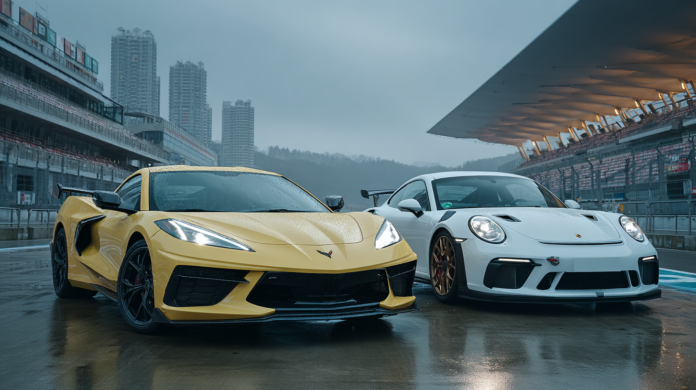
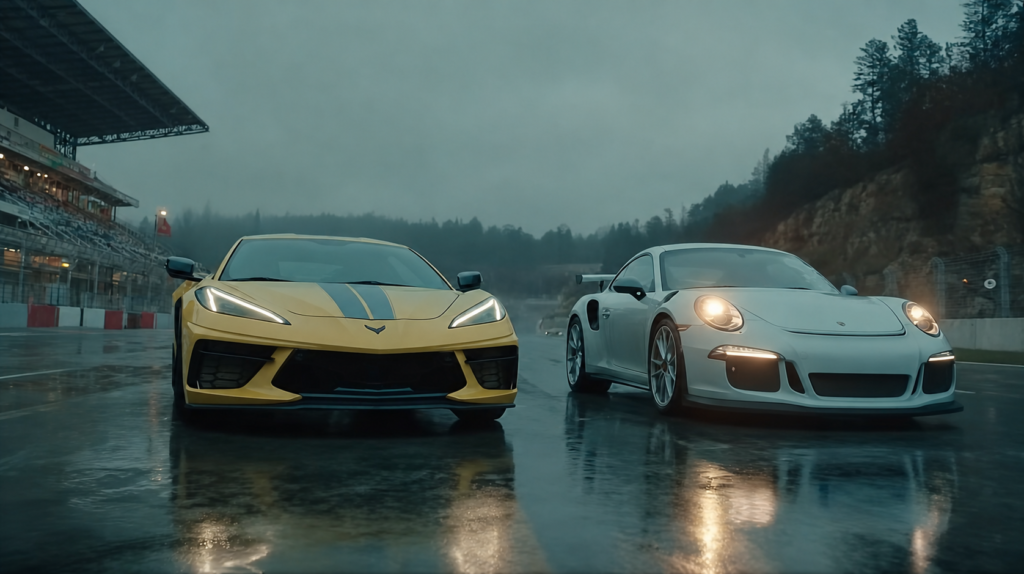
The debate between the Chevrolet Corvette and the Porsche 911 has persisted for decades. But the arrival of the mid-engine C8 Corvette Z06 has fundamentally changed the terms of the discussion. For the first time, the Corvette can claim not just superior power and value, but also technological sophistication that rivals the best from Stuttgart. The Porsche 911 GT3, now in its 992.2 generation, remains the benchmark for naturally aspirated driver’s cars. It offers a high-revving flat-six, a manual transmission, and chassis tuning that is widely regarded as peerless.

Choosing between these two machines is not a matter of simple metrics. It is a decision rooted in philosophy, driving priorities, and the ownership experience. This article compares the Corvette Z06 and the Porsche 911 GT3 across performance, track capability, design, practicality, and value to help determine which is the better driver’s car.

The Contenders: Two Philosophies of Speed

Chevrolet Corvette Z06

The Corvette Z06 represents America’s answer to European exoticars. It uses a 5.5 liter naturally aspirated V8 with a flat-plane crank, an engine configuration traditionally associated with Ferrari. The layout is mid-engine, a radical departure for a nameplate that was front-engine for seven generations. The Z06 is designed to deliver supercar performance at a fraction of the price of its rivals.

Porsche 911 GT3

The 911 GT3 is the purist’s choice. It retains the rear-engine layout that has defined the 911 for over six decades. Its 4.0 liter naturally aspirated flat-six revs to 9,000 rpm and is available with a six-speed manual transmission. The GT3 is less about raw power and more about balance, feedback, and the connection between driver and machine.

Powertrain and Performance

The Corvette Z06: The Flat-Plane Crank V8

The Z06’s LT6 engine is a masterpiece of engineering. It is one of the most powerful naturally aspirated V8s ever fitted to a production car. The flat-plane crank allows it to rev quickly and produce a high-pitched wail reminiscent of a Ferrari V8 rather than the deep rumble of a traditional American V8.

  • Displacement: 5.5 liters
  • Configuration: Naturally aspirated V8 with flat-plane crank
  • Horsepower: 670 hp at 8,400 rpm
  • Torque: 460 lb-ft at 6,300 rpm
  • Transmission: 8-speed dual-clutch (no manual option)
  • 0-60 mph: 2.6 seconds
  • Quarter mile: 10.6 seconds at 131 mph

The Porsche 911 GT3: The 9,000 rpm Flat-Six

The GT3’s 4.0 liter engine is the defining feature of the car. Its power output is relatively modest, but its willingness to rev and its immediate throttle response make it incredibly rewarding to drive hard. It produces a sharp, mechanical howl at high rpm that is distinctly Porsche.

  • Displacement: 4.0 liters
  • Configuration: Naturally aspirated flat-six with 9,000 rpm redline
  • Horsepower: 502 to 518 hp depending on market
  • Torque: 331 to 346 lb-ft
  • Transmission: 7-speed dual-clutch or 6-speed manual
  • 0-60 mph: 3.4 seconds with dual-clutch, 3.9 seconds with manual
  • Top speed: 193 to 197 mph

Performance Verdict

The Corvette is significantly faster in a straight line. Its 670 horsepower and mid-engine traction allow it to launch harder and pull away from the Porsche on any straight section of road. However, the GT3 is not about straight-line speed. The manual transmission and the 9,000 rpm redline create an interactive experience that many drivers find more rewarding than simply going faster.

Chassis and Handling

The Corvette Z06: Mid-Engine Traction

The C8 platform is the first mid-engine Corvette. This layout provides a lower center of gravity and a more balanced weight distribution than the front-engine C7. The Z06 adds wider tires, a stiffer suspension, and an optional performance package that includes massive aerodynamic components and sticky cup tires. The car is incredibly capable, with immense grip and traction that allows drivers to apply power very early when exiting corners.

The Porsche 911 GT3: Rear-Engine Precision

The GT3’s rear-engine layout creates a unique handling signature. The weight over the rear axle provides phenomenal traction on corner exit. The steering is widely considered among the best in the industry, with an unparalleled level of feel and communication. The car rotates willingly on corner entry and remains stable and predictable at the limit.

Handling Verdict

On a track day, the Z06 will likely post a faster lap time, provided the driver can manage the car’s power and weight. However, the GT3 is generally considered the more rewarding car to drive at the limit. Its lower limits are more accessible, and its chassis communicates more clearly. Porsche’s rear-axle steering and advanced torque vectoring make the car feel smaller and more agile than its dimensions suggest.

Track Capability

The standard GT3 is exceptionally fast on a circuit, typically lapping in the low seven-minute range at the Nürburgring. The more extreme GT3 RS is even quicker. The Corvette Z06 with its performance package is also exceptionally quick, but its larger, heavier character can make it feel more intimidating on a tight circuit.

The Porsche is designed from the ground up for sustained track use. It has a sophisticated cooling system and brakes that resist fade lap after lap. The Corvette has proven its track capability, but its complex flat-plane-crank V8 generates significant heat that must be managed.

Design and Styling

The Corvette Z06: Exotic Aggression

The C8 Z06 looks like a supercar. Its wide stance, massive rear haunches, and sharp angles give it a presence that is genuinely exotic. With the performance package’s large rear wing and front dive planes, the car looks ready for a race track. It attracts attention wherever it goes.

  • Proportions: It is wide and low, with a dramatic silhouette that borrows cues from European supercars.
  • Aerodynamics: The performance package includes a massive adjustable rear wing and substantial front dive planes, generating significant downforce.

The Porsche 911 GT3: Purposeful Elegance

The 911 GT3 is more understated than the Corvette. The Touring package removes the large rear wing entirely, creating a car that looks like a standard 911 Carrera to the untrained eye. The winged version is more aggressive, but it still maintains the classic 911 silhouette. The design is functional and elegant rather than flashy.

  • Timeless Proportions: The 911 shape is universally recognized and has aged gracefully over decades.
  • Aerodynamics: The front spoiler and rear wing are functional but integrated more subtly than on the Corvette.
  • Touring Package: An option that deletes the rear wing for a more classic, understated look.

Interior and Practicality

The Corvette Z06: Driver-Focused Tech

The Corvette’s interior is a significant leap forward from previous generations. It features a squared-off steering wheel, a bank of physical buttons for climate control, and a high-resolution digital gauge cluster. The seats are supportive for spirited driving. The cabin is designed to cocoon the driver.

The Porsche 911 GT3: Ergonomic Precision

The 911 GT3’s interior is less dramatic than the Corvette’s, but it is ergonomically superior. Everything falls naturally to hand. The driving position is excellent. The materials are of high quality, though the cabin can feel utilitarian compared to the Corvette’s more stylized layout.

Practicality and Daily Use

Neither car is particularly practical, but the Porsche is easier to live with daily. The front trunk is a useful size, and the rear seats offer additional storage space. The Corvette has a front trunk and a rear trunk, but the rear trunk is small and can get hot from the engine. The Corvette’s cabin is also quite tight on space.

Ownership Experience and Value

Acquisition Cost and Availability

The Corvette Z06 has a starting MSRP of approximately $115,000 to $120,000. However, due to high demand and dealer markups, actual transaction prices have often been significantly higher. The used market has moderated, but finding one at MSRP remains challenging.

The Porsche 911 GT3 starts at approximately $180,000. Allocations are difficult to secure, and dealers often require a history of Porsche purchases to order one. The GT3 holds its value exceptionally well, often selling for more than its original MSRP on the used market.

Reliability and Maintenance

The Corvette’s high-strung LT6 engine is a complex new design. While many owners have no issues, there have been reports of engine problems requiring warranty replacement. Standard maintenance on a Porsche is expensive, but the cars are generally considered very reliable if serviced correctly. The Corvette also requires specialized servicing at a Chevrolet dealership.

Which One is Right for You?

Choose the Chevrolet Corvette Z06 if:

  • You want the most power and performance for your dollar. The Z06 offers hypercar-level acceleration for a fraction of the price of European rivals.
  • You love the sound of a high-revving V8. The flat-plane crank V8 is one of the best-sounding engines in production today.
  • You are comfortable with a car that demands more from the driver and has a higher risk of mechanical issues.
  • You prefer the dramatic looks of a mid-engine supercar.

Choose the Porsche 911 GT3 if:

  • You are a purist who values the driving experience above all else. The 9,000 rpm flat-six and the manual transmission are defining features for enthusiasts.
  • You plan to track your car frequently. The GT3 is more durable and easier to drive at the limit for extended sessions.
  • You care about resale value. The GT3 is a more stable investment that is unlikely to depreciate heavily.
  • You prefer a car that is easier to live with on a daily basis.

Specifications Summary

SpecificationChevrolet Corvette Z06Porsche 911 GT3 (992.2)
Engine5.5L V8 (flat-plane crank)4.0L flat-six
AspirationNaturally aspiratedNaturally aspirated
Horsepower670 hp502 to 518 hp
Torque460 lb-ft331 to 346 lb-ft
Transmission8-speed dual-clutch6-speed manual / 7-speed dual-clutch
DriveRear-wheel driveRear-wheel drive
0-60 mph2.6 seconds3.4 seconds (dual-clutch)
Curb weightApproximately 3,600 lbApproximately 3,200 lb
Base price (USD)$115,000 to $120,000$180,000

Conclusion

The Corvette Z06 and the Porsche 911 GT3 represent two different philosophies of what a modern sports car should be. The Corvette is about democratizing extreme performance. It offers Ferrari-rivaling technology and sound for a fraction of the price. It is a car that screams for attention and delivers brutal, thrilling speed.

The Porsche 911 GT3 is about the purity of the analog driving experience. It is about the balance, the feedback, and the interaction between the driver, the engine, and the road. It is a car that feels alive at any speed, even when you are not breaking any laws.

The Corvette is the better value. The Porsche is the better driver’s car. For the enthusiast who wants to feel a connection to the machine, the 9,000 rpm flat-six and the precise six-speed gearbox of the Porsche 911 GT3 are difficult to surpass. For the enthusiast who wants the relentless thrust and exotic howl of a world-class V8, the Corvette Z06 is the only logical choice.

Bugatti EB110: The Forgotten Hypercar Pioneer in 2026

0

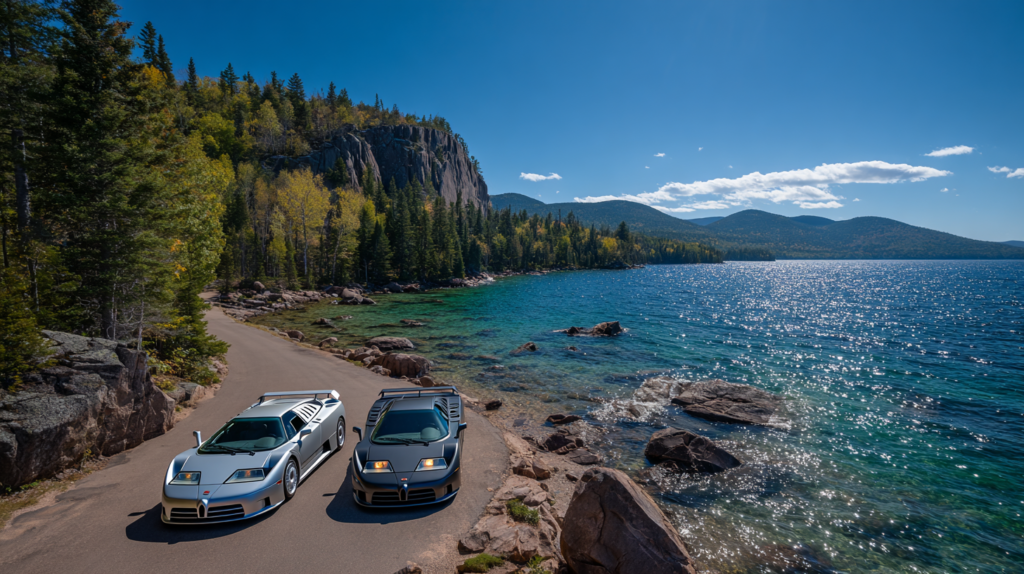
The Bugatti EB110 occupies a strange place in automotive history. It was born at the wrong time, produced by a company that had only recently been revived, and it arrived just as a global recession was taking hold. It was a technological masterpiece, with a quad-turbocharged V12 engine, carbon fiber construction, and all-wheel drive. It was faster than the Ferrari F40 and the Porsche 959, yet it sold in small numbers and the company went bankrupt within a few years.

For decades, the EB110 was largely forgotten. The Volkswagen-era Bugatti Veyron and Chiron overshadowed it, and the earlier cars from the original Bugatti company had more historical significance. But in recent years, the EB110 has been rediscovered by enthusiasts. It is now recognized as a pioneer, a car that pushed the boundaries of what was possible in the early 1990s.

This article provides a comprehensive examination of the Bugatti EB110, including its development history, engineering, performance, design, and why it deserves to be remembered as one of the most significant hypercars of its era.

The Revival of Bugatti

The original Bugatti company ceased operations in the 1950s. The brand was purchased by Italian entrepreneur Romano Artioli in 1987. Artioli, a wealthy car enthusiast who had made his fortune in the automotive distribution business, planned to revive the Bugatti name with a new, technologically advanced supercar.

Artioli chose a location near Modena, Italy, for the new factory. The facility was designed to be state-of-the-art, with advanced manufacturing capabilities and a focus on quality. The company recruited engineers from Lamborghini, Ferrari, and other Italian sports car manufacturers.

The goal was ambitious: to build the fastest, most technologically advanced production car in the world. The result was the EB110, named for Ettore Bugatti (the company’s founder) and the 110th anniversary of his birth.

The EB110 Name

The EB110 name carries significant meaning. The EB stands for Ettore Bugatti, the founder of the original Bugatti company. The 110 refers to what would have been his 110th birthday in 1991, the year the car was unveiled. The name was a tribute to the brand’s heritage and a statement of intent for its future.

Engineering: A Technological Marvel

The Quad-Turbo V12 Engine

The EB110 was powered by a 3.5 liter naturally aspirated V12 engine with four turbochargers. The engine was designed by Paolo Stanzani, a former Lamborghini engineer who had worked on the Miura and the Countach. It was a compact, lightweight unit with five valves per cylinder.

The engine produced 552 horsepower at 8,000 rpm and 450 lb-ft of torque at 4,200 rpm in the standard EB110 GT. The later EB110 Super Sport produced 603 horsepower at 8,250 rpm. The redline was 8,250 rpm for the GT and 8,500 rpm for the SS.

The quad-turbocharger system was a significant engineering challenge. The four small turbochargers were arranged in a sequential configuration, with two turbos providing low-end response and all four providing top-end power. The system was designed to minimize lag while maximizing power output.

Transmission and Drive

Power was transmitted to all four wheels through a six-speed manual transmission and a sophisticated all-wheel-drive system. The transmission was mounted longitudinally behind the engine, with a central differential that distributed torque to the front and rear axles.

The all-wheel-drive system was a pioneering feature for a supercar. It provided exceptional traction in all conditions, allowing the EB110 to put its power to the ground effectively.

Chassis and Construction

The EB110 was one of the first production cars to use a carbon fiber monocoque chassis. The structure was a single-piece carbon fiber tub that provided exceptional rigidity and occupant protection while minimizing weight. The body panels were also made of carbon fiber.

The suspension was independent at all four corners, using double wishbones and coil springs. The brakes were ventilated discs with four-piston calipers.

Performance

The EB110 GT accelerated from 0 to 60 miles per hour in 3.4 seconds and reached a top speed of 213 miles per hour. The EB110 Super Sport was quicker, with a 0 to 60 time of 3.2 seconds and a top speed of 221 miles per hour.

These figures made the EB110 the fastest production car in the world when it was introduced. It outperformed the Ferrari F40 and the Porsche 959, establishing Bugatti as a serious competitor.

Design: The Pencil of Marcello Gandini

Exterior Styling

The EB110’s exterior was designed by Marcello Gandini, the same designer who had created the Lamborghini Miura, Countach, and Diablo. Gandini’s signature style was evident in the EB110’s sharp lines, low profile, and dramatic proportions.

The EB110 measured approximately 4,399 mm in length, 2,014 mm in width, and 1,074 mm in height. The wheelbase was 2,550 mm. The car was low and wide, with a distinctive wedge shape that emphasized its aggressive character.

The most distinctive feature of the EB110 was its front end, with a prominent grille and pop-up headlights. The side profile featured large air intakes that fed cooling air to the engine and brakes. The rear end was characterized by a prominent rear wing and quad exhaust outlets.

Interior Design

The interior of the EB110 was driver-focused but not spartan. The seats were upholstered in leather, with power adjustment and heating. The dashboard featured a digital instrument cluster with a central tachometer and auxiliary gauges. The steering wheel was a three-spoke unit wrapped in leather.

The interior was more luxurious than many contemporary supercars, reflecting Bugatti’s grand touring heritage. The materials were of high quality, and the craftsmanship was excellent.

The EB110 Super Sport

The EB110 Super Sport was a more extreme version of the car. It featured a larger rear wing, more aggressive aerodynamic elements, a lighter interior, and a more powerful engine. The Super Sport was designed for buyers who prioritized performance over comfort.

The Driving Experience

On Road Character

The EB110 was a demanding car to drive. The engine produced significant turbo lag, with power building slowly below 4,000 rpm and then surging as the turbos spooled. The clutch was heavy, the steering was heavy at low speeds, and the gearshift required deliberate movements.

The all-wheel-drive system provided exceptional traction, even in wet conditions. The car felt planted and stable at high speeds, with the rear wing providing downforce that kept it glued to the road.

On Track Behavior

When driven on a track, the EB110 revealed its capabilities. The brakes provided strong stopping power, with consistent pedal feel. The chassis remained composed through corners, with the all-wheel-drive system providing grip that rear-drive competitors could not match.

The turbo lag was a challenge on corner exit. The driver had to anticipate the power delivery, getting on the throttle early to ensure that the turbos were spooled by the apex. The EB110 rewarded smooth, progressive inputs.

The Sound

The V12 engine’s sound was distinctive. At low speeds, it produced a deep, burbling note. As the revs climbed, the sound became sharper and more urgent, with the four turbochargers adding a mechanical whine. At full throttle, the engine produced a wail that was both thrilling and intimidating.

The EB110’s Challenges

Economic Recession

The EB110 was launched in 1991, just as a global recession was taking hold. The market for $300,000 supercars was limited, and many potential buyers were cautious about spending. The car’s high price and the economic climate combined to limit sales.

High Price

The EB110 GT had a base price of approximately $300,000 in the early 1990s. The EB110 Super Sport was even more expensive. This pricing placed the EB110 above the Ferrari F40 and the Porsche 959, making it one of the most expensive cars on the market.

Limited Production

Bugatti planned to build hundreds of EB110s, but only 139 were actually produced. The limited production run reflected the car’s high price and the economic challenges of the era.

Bankruptcy

Despite the EB110’s engineering achievements, Bugatti’s revival was short-lived. The company filed for bankruptcy in 1995, and production of the EB110 ended. The brand was later purchased by Volkswagen, which would go on to produce the Veyron and Chiron.

The EB110’s Legacy

A Pioneer

The EB110 was a pioneer in several ways. It was one of the first production cars to use a carbon fiber monocoque. It was one of the first to use a quad-turbocharged engine. It was one of the first to combine all-wheel drive with a mid-engine layout. It was a technological tour de force.

The Forgotten Hypercar

For many years, the EB110 was largely forgotten. The Veyron’s 1,000 horsepower and 250+ mph top speed overshadowed it, and the original Bugatti’s pre-war cars had more historical significance. The EB110 was a car from a failed revival, a footnote in automotive history.

Rediscovery

In recent years, the EB110 has been rediscovered by collectors and enthusiasts. Its rarity, its engineering significance, and its connection to the Bugatti name have driven values to significant heights. Well-maintained EB110s now trade for millions of dollars.

The EB110 has also been recognized as a pioneer of the modern hypercar segment. It established the template that the Veyron and Chiron would follow: a quad-turbocharged engine, all-wheel drive, and a focus on top speed.

How the EB110 Stacks Up Against Its Contemporaries

Against the Ferrari F40

The Ferrari F40 was the EB110’s most direct competitor. It featured a 2.9 liter twin-turbocharged V8 producing 471 horsepower.

The F40’s advantage was its weight and its purity. The Ferrari was lighter than the EB110, with a more aggressive, race-focused character.

The EB110’s advantage was its technology and its all-weather capability. The Bugatti’s all-wheel-drive system provided traction that the rear-drive F40 could not match.

Against the Porsche 959

The Porsche 959 was another technological pioneer, with a 2.8 liter twin-turbocharged flat-six producing 444 horsepower and a sophisticated all-wheel-drive system.

The 959’s advantage was its engineering and its daily usability. The Porsche was more refined and more reliable than the EB110.

The EB110’s advantage was its power and its top speed. With 552 horsepower and a top speed of 213 mph, the Bugatti outperformed the Porsche.

Against the Jaguar XJ220

The Jaguar XJ220 was a mid-engine supercar with a 3.5 liter twin-turbocharged V6 producing 542 horsepower.

The XJ220’s advantage was its top speed. The Jaguar reached 213 mph, matching the EB110 GT.

The EB110’s advantage was its all-wheel drive and its engine character. The Bugatti’s V12 provided a sound and a character that the Jaguar’s V6 could not match.

Against the McLaren F1

The McLaren F1 was the ultimate supercar of the 1990s, with a 6.1 liter naturally aspirated V12 producing 618 horsepower and a central driving position.

The F1’s advantage was its engineering purity and its driver focus. The McLaren’s central driving position, manual transmission, and lightweight construction created an experience that was unique.

The EB110’s advantage was its all-weather capability and its technological ambition. The Bugatti’s all-wheel-drive system and quad-turbocharged engine were more advanced than the McLaren’s simpler layout.

The EB110’s Place in Bugatti History

The EB110 was the first modern Bugatti. It established the template that the Veyron and Chiron would follow: a quad-turbocharged engine, all-wheel drive, and a focus on top speed. It was a technological tour de force, even if it was a commercial failure.

The EB110 also demonstrated that the Bugatti name could be revived. It proved that there was a market for a technologically advanced, ultra-expensive hypercar. Without the EB110, it is possible that Volkswagen would never have revived the brand.

Today, the EB110 is recognized as a pioneer. It is a car that pushed the boundaries of what was possible in the early 1990s, and it deserves to be remembered as one of the most significant hypercars of its era.

Specifications Summary

SpecificationEB110 GTEB110 SS
Engine3.5L quad-turbo V123.5L quad-turbo V12
Horsepower552 hp at 8,000 rpm603 hp at 8,250 rpm
Torque450 lb-ft at 4,200 rpm480 lb-ft
Transmission6-speed manual6-speed manual
DriveAll wheel driveAll wheel drive
0-60 mph3.4 seconds3.2 seconds
Top Speed213 mph221 mph
Weight1,450 kg1,400 kg
Production95 units44 units

Conclusion

The Bugatti EB110 is the forgotten hypercar pioneer. It was a technological masterpiece, with a quad-turbocharged V12 engine, carbon fiber construction, and all-wheel drive. It was faster than the Ferrari F40 and the Porsche 959, and it established the template that the Veyron and Chiron would follow.

Yet the EB110 was also a commercial failure. It was launched during a global recession, its price was high, and the company went bankrupt within a few years. Only 139 were built, and for decades, the EB110 was largely forgotten.

Today, the EB110 is being rediscovered. Collectors and enthusiasts have recognized its significance, and values have risen accordingly. The EB110 is now seen as a pioneer, a car that pushed the boundaries of what was possible.

The EB110’s legacy lives on in every modern Bugatti. The Veyron, the Chiron, and the Bolide all owe a debt to the EB110. It was the first modern Bugatti, and it deserves to be remembered as one of the most significant hypercars of its era.

For enthusiasts who appreciate automotive history, the EB110 is a fascinating footnote. It is a car that represents ambition, innovation, and the pursuit of speed. It is the forgotten hypercar pioneer, and it is finally getting the recognition it deserves.

Lamborghini Miura: The Birth of the Supercar in 2026

0

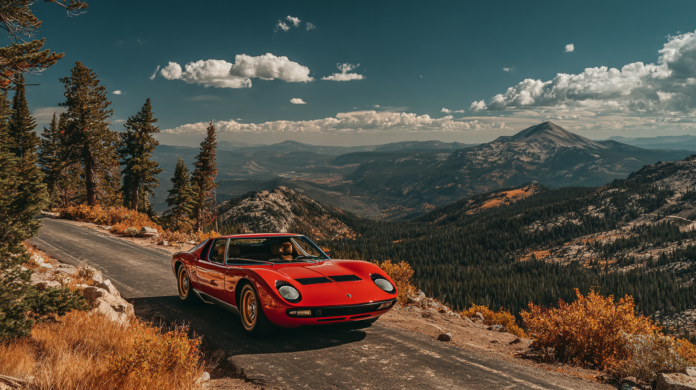
The Lamborghini Miura is widely regarded as the world’s first supercar. Before the Miura, high-performance cars were typically front-engine grand tourers or purpose-built race cars. The Miura changed that. It introduced the mid-engine layout that would become the standard for high-performance cars for generations. It combined breathtaking styling with a transverse V12 engine, creating a template that Ferrari, Porsche, and every other manufacturer would eventually follow.

The Miura was not just a car; it was a statement. It announced to the world that Lamborghini, a tractor manufacturer that had only built a handful of cars, could compete with and even surpass the established Italian sports car manufacturers. It was a car that prioritized emotion over practicality, style over comfort, and performance over everything else.

This article provides a comprehensive examination of the Lamborghini Miura, including its development history, engineering, design, driving experience, and why it remains one of the most significant cars ever built.

The Genesis: A Tractor Manufacturer’s Ambition

Ferruccio Lamborghini founded his company in 1963. He had made his fortune building tractors, and he had a passion for fast cars. According to the well-known story, he was dissatisfied with the quality and performance of his Ferrari, and he decided to build his own car.

The first Lamborghini, the 350 GT, was a front-engine grand tourer. It was a capable car, but it did not set the world on fire. It was the Miura that would establish Lamborghini as a serious competitor.

The Miura was the brainchild of a small team of young engineers at Lamborghini. They included Giampaolo Dallara, Paolo Stanzani, and Bob Wallace. Working outside of the official development process, they conceived a car with a mid-mounted engine, a layout that had been used in race cars but never in a production road car.

When Ferruccio Lamborghini saw the prototype, he was initially skeptical. He had built his company on grand tourers, not extreme sports cars. But he recognized the potential of the design and approved it for production.

The Miura was unveiled at the 1966 Geneva Motor Show. It was an immediate sensation. The car’s low, wide stance, its dramatic styling, and its revolutionary engine layout captivated the audience. The Miura was not just a car; it was a work of art.

The Miura Name

The Miura was named after a famous Spanish breeder of fighting bulls, Don Eduardo Miura. This naming convention would become a tradition for Lamborghini, with subsequent models named after other famous bulls. The choice of a bull’s name reflected the car’s aggressive character and its Spanish-Italian heritage.

Engineering: The Mid-Engine Revolution

The Transverse V12

The Miura’s most significant engineering innovation was its transverse mid-engine layout. Instead of mounting the engine longitudinally (front to back) as was typical, the Miura’s engineers mounted the engine sideways across the chassis. This transverse layout allowed the engine and transmission to be packaged in a compact space behind the driver.

The engine was a 3.9 liter naturally aspirated V12, designed by Giotto Bizzarrini and developed by Lamborghini’s engineers. In its initial form, the engine produced 345 horsepower at 7,700 rpm and 263 lb-ft of torque at 5,000 rpm. Later versions, including the Miura S and Miura SV, produced more power, with the SV reaching 380 horsepower.

The engine was mounted transversely, with the transmission and final drive housed in the same casing. This integrated design saved space and weight, contributing to the car’s compact dimensions.

Chassis

The Miura used a semi-monocoque chassis, with a central steel structure supporting the engine and suspension. The body was made of aluminum, keeping weight to a minimum. The dry weight was approximately 1,250 kilograms.

The suspension was independent at all four corners, using double wishbones and coil springs. The brakes were disc brakes, with ventilated discs on later models.

Performance

The Miura accelerated from 0 to 60 miles per hour in 6.7 seconds. The top speed was approximately 171 miles per hour.

These figures made the Miura the fastest production car in the world when it was introduced. It was capable of speeds that had previously been the exclusive domain of race cars.

Design: The Pencil of Marcello Gandini

Bertone Styling

The Miura’s body was designed by Marcello Gandini at the Bertone design house. Gandini was a young designer who had recently joined Bertone, and the Miura was his first major project. He created a car that was low, wide, and dramatic.

The Miura’s most distinctive features included its “eyelash” headlight covers, its prominent front air intake, and its muscular rear haunches. The car sat just 41 inches high, making it one of the lowest production cars ever built.

Proportions

The Miura’s proportions were defined by its mid-engine layout. The car had a long nose, a short tail, and a cabin positioned far forward. The engine sat behind the driver, visible through a louvered rear window. The overall effect was dramatic and purposeful.

Later Revisions

The Miura underwent several revisions during its production run. The Miura S (1968) featured more power, revised suspension, and minor styling updates. The Miura SV (1971) was the most significant revision, with a wider track, flared wheel arches, different headlight surrounds, and a revised tail section.

The SV is widely regarded as the most desirable Miura variant, with its more aggressive stance and increased power.

The Driving Experience

On Road Character

Driving a Miura is an experience that is both thrilling and demanding. The driving position is low, with the pedals offset to the right and the steering wheel positioned close to the driver. The view forward is excellent, but the rear visibility is limited by the engine cover.

The engine produces a distinctive sound, with a high-pitched wail as the revs climb. The power delivery is linear and progressive, with the engine pulling strongly to the redline. The transmission is a five-speed manual, with a gated shifter that requires deliberate movements.

The handling is characterized by a tendency toward oversteer, particularly on the limit. The rear weight bias and the lack of modern electronic aids require skill and attention. The Miura is a car that rewards smooth inputs and punishes abrupt actions.

The Miura’s Challenges

The Miura is not an easy car to drive. The engine produces significant heat, which can make the cabin uncomfortable on warm days. The clutch is heavy, the steering is heavy at low speeds, and the brakes require effort. The car is best suited to experienced drivers who are willing to work for the rewards.

The Sound

The V12 engine’s sound is one of the Miura’s defining characteristics. The engine produces a high-pitched wail as the revs climb toward the redline. The sound is sharp, urgent, and deeply satisfying, with a quality that distinguishes it from every other engine of its era.

The Miura’s Legacy

The Birth of the Supercar

The Miura is widely credited with creating the supercar segment. Before the Miura, high-performance cars were either front-engine grand tourers or purpose-built race cars. The Miura combined the performance of a race car with the road-going practicality of a grand tourer. It established the template that Ferrari, Porsche, and every other manufacturer would follow.

The mid-engine layout that the Miura pioneered became the standard for high-performance cars for generations. The Lamborghini Countach, Diablo, Murciélago, and Aventador all used mid-engine layouts. Ferrari’s 308, 328, 348, F355, 360, F430, 458, 488, F8, and 296 all use mid-engine layouts. The Miura’s influence is evident in almost every supercar built since.

The Miura’s Influence on Lamborghini

The Miura established Lamborghini as a manufacturer of extreme, emotionally charged performance cars. It set the brand’s direction for decades to come. The Countach, which followed the Miura, was even more extreme. The Diablo, Murciélago, and Aventador continued the tradition. The Miura was the car that put Lamborghini on the map.

Collector Status

The Miura is one of the most sought-after collector cars in the world. Its limited production run of 764 units, its status as the first supercar, and its timeless design have driven values to significant heights. Well-restored Miuras trade for millions of dollars, and they are prized by collectors worldwide.

The most desirable Miura variant is the SV, with its wider track, flared wheel arches, and increased power. Only 150 SVs were built, making them the rarest of the Miura variants.

How the Miura Stacks Up Against Modern Rivals

The Miura is not a modern car, and it cannot compete with modern supercars in terms of performance, safety, or reliability. But it is not intended to. The Miura’s significance is historical. It is a car that changed the automotive world.

Against the Lamborghini Revuelto

The Revuelto is Lamborghini’s current flagship hybrid supercar. It produces over 1,000 horsepower and accelerates from 0 to 60 miles per hour in 2.5 seconds.

The Revuelto’s advantage is its performance and its technology. It is faster, safer, more reliable, and more efficient than the Miura.

The Miura’s advantage is its historical significance and its emotional appeal. The Miura was the first, and it remains one of the most beautiful cars ever built.

Against the Ferrari 296 GTB

The Ferrari 296 GTB is a modern hybrid supercar with over 800 horsepower.

The 296’s advantage is its performance and its technology. It is a car designed for the 21st century.

The Miura’s advantage is its purity and its design. The Miura is a car from a different era, one that prioritized emotion over efficiency.

Against the Porsche 911 Turbo

The Porsche 911 Turbo is a modern all-wheel-drive sports car with over 600 horsepower.

The 911’s advantage is its daily usability and its reliability. It is a car that can be driven every day.

The Miura’s advantage is its drama and its legacy. The Miura is a car that stops traffic, that draws a crowd, that tells a story.

The Miura’s Place in Automotive History

The Lamborghini Miura is one of the most significant cars ever built. It invented the supercar segment. It established the mid-engine layout as the standard for high-performance cars. It demonstrated that a small, ambitious manufacturer could compete with and surpass the established giants.

The Miura was not a perfect car. It was difficult to drive, it was hot, it was loud, and it was unreliable. But it was also beautiful, thrilling, and emotionally charged. It was a car that prioritized passion over practicality, style over substance, and performance over everything else.

Today, the Miura is remembered as a legend. It is a car that changed the automotive world, and it remains one of the most desirable collector cars in existence.

Specifications Summary

SpecificationMiura P400Miura SV
Engine3.9L naturally aspirated V123.9L naturally aspirated V12
Horsepower345 hp at 7,700 rpm380 hp at 7,850 rpm
Torque263 lb-ft at 5,000 rpm295 lb-ft at 5,500 rpm
Transmission5-speed manual5-speed manual
DriveRear wheel driveRear wheel drive
0-60 mph6.7 secondsApproximately 5.5 seconds
Top Speed171 mph180 mph
Weight1,250 kg1,300 kg
Production275 units150 units

Conclusion

The Lamborghini Miura is the birth of the supercar. It introduced the mid-engine layout that would become the standard for high-performance cars for generations. It combined breathtaking styling with a transverse V12 engine, creating a template that every manufacturer would eventually follow. It was a car that prioritized emotion over practicality, style over comfort, and performance over everything else.

The Miura was not the first mid-engine car, but it was the first to combine that layout with a production V12 engine and a road-going chassis. It was a car that proved that a small, ambitious manufacturer could compete with and surpass the established giants. It was a car that changed automotive history.

Today, the Miura is remembered as a legend. Its design remains timeless, its sound remains thrilling, and its significance remains undiminished. It is one of the most beautiful cars ever built, and it is one of the most important.

The Miura’s legacy lives on in every mid-engine supercar on the road. The Lamborghini Revuelto, the Ferrari 296 GTB, the McLaren 750S they all owe a debt to the Miura. It was the first, and it remains one of the best. The Lamborghini Miura is the birth of the supercar, and it will forever be remembered as such.

Porsche Mission X: Porsche’s Vision for the Next Hypercar in 2026

0

The Porsche Mission X represents the future of the hypercar. First unveiled to celebrate Porsche’s 75th anniversary, this all-electric concept study stands in the direct lineage of the 959, Carrera GT, and 918 Spyder. It is a statement of intent, a demonstration that Porsche envisions the electric hypercar not as a compromise but as the next evolution of extreme performance.

As we move through 2026, the automotive world awaits a final production decision from Porsche. If given the green light, the Mission X would target the Nürburgring production car lap record, achieve a power-to-weight ratio of one horsepower per kilogram, generate downforce exceeding the current 911 GT3 RS, and charge significantly faster than the Taycan Turbo S. This article explores the design philosophy, engineering goals, and the significance of this ambitious project.

The Lineage: Inheritors of a Legacy

The Mission X positions itself as the successor to three of Porsche’s most significant supercars.

The 959 was the most technologically advanced car of its era. It introduced a sequential twin-turbocharged engine, electronically controlled all-wheel drive, and adjustable suspension. It was the fastest production car in the world at its debut.

The Carrera GT represented a return to purism. With its 5.7 liter naturally aspirated V10, carbon fiber monocoque, and six-speed manual transmission, it prioritized driver engagement above all else. It remains one of the most revered driver’s cars ever built.

The 918 Spyder was the pioneer of the hybrid hypercar. It combined a 4.6 liter V8 with two electric motors to produce 887 horsepower. It was one of the first production cars to lap the Nürburgring in under seven minutes.

The Mission X inherits the ambition of the 959, the driver focus of the Carrera GT, and the technological sophistication of the 918 Spyder. It is designed to be the next milestone in this lineage.

Exterior Design: Sculpted Performance

The Mission X is visually striking. It measures approximately 4.5 meters long, 2 meters wide, and stands less than 1.2 meters tall, giving it the compact proportions of the Carrera GT and 918 Spyder.

Proportions and Stance

The car sits low and wide, with a wheelbase of approximately 2.73 meters. The design is lean and muscular, with smooth surfaces and subtle curves. The bodywork below the waistline is finished in exposed carbon fiber, while the upper surfaces are painted in a metallic finish. The combination of the long hood, the fastback tail, and the prominent fenders gives the Mission X an aggressive yet elegant stance.

Lighting Signature

The Mission X features a reimagined version of Porsche’s classic four-point light graphic. The vertical headlights, inspired by the 906 and 908 race cars, are housed in a high-tech framework with exposed LED modules. At the rear, a full-width light unit spans the tail, with transparent, illuminated Porsche lettering. When the car is charging, the “E” in the Porsche logo pulses, creating a subtle, futuristic effect.

Le Mans Doors

One of the most distinctive features is the Le Mans-style door. Attached to the A-pillar and the roof, these doors open upwards and forwards. This design, previously used on the legendary Porsche 917 race car, provides wide access to the cabin and adds to the car’s dramatic presence.

Aerodynamic Details

The concept is covered in functional aerodynamic elements. The rear wheels are fitted with near-transparent aeroblades designed like turbines to improve brake cooling. The lightweight glass dome features a carbon fiber-reinforced exoskeleton that extends over both seats. The car is equipped with an active aero system, allowing the front splitter and rear wing to adjust automatically based on speed and driving mode.

Interior Design: The Driver as the Center

The interior of the Mission X is asymmetrical and entirely focused on the driver.

Asymmetrical Concept

The driver’s seat is finished in a light grey and forms a single visual unit with the center console and the dashboard. The passenger seat is finished in a contrasting brown. This color scheme emphasizes that the Mission X is built for the driver, not the passenger.

Motorsport Elements

The carbon fiber seat shells are integrated into the monocoque, and the car features six-point seatbelts. The steering wheel is a motorsport-derived open-top design with mode switches and shift paddles. There is a recording button on the multi-purpose controller that allows the driver to capture video footage from onboard cameras.

The Chronograph Module

A removable chronograph module can be docked into the passenger side dashboard. It features both analog and digital displays and can show lap times or vital driver data for circuit and rally use.

Engineering Goals: The Technical Vision

Porsche has not released detailed powertrain specifications for the Mission X. Instead, the company has outlined a “technical vision” that establishes the targets a production car must meet.

Nürburgring Record

The primary goal is for the Mission X to be the fastest road-legal vehicle around the Nürburgring Nordschleife. The current lap record is held by a hypercar with a Formula 1 derived powertrain. The Mission X is designed to beat this time.

Power-to-Weight Ratio

The target is a power-to-weight ratio of approximately one horsepower per kilogram. This implies a vehicle weight of roughly 1,500 kilograms and an output of approximately 1,500 horsepower.

Downforce

The Mission X is designed to generate downforce “well in excess” of the current 911 GT3 RS. The GT3 RS generates approximately 860 kilograms of downforce at high speed. The Mission X would exceed this figure, providing exceptional high-speed cornering grip.

Charging Performance

The car will use a high-voltage architecture, enabling significantly faster charging than current models. The goal is for the Mission X to charge approximately twice as quickly as the Taycan Turbo S, which can charge at high power levels. This suggests a target charging power approaching 500 kW.

High-Voltage Architecture

The high-voltage system is a cornerstone of the Mission X’s engineering. It allows for higher charging speeds and reduced current, which translates to thinner, lighter wiring and improved thermal efficiency.

The E-Core Layout

The Mission X uses an “e-core layout.” The battery pack is mounted centrally behind the seats, rather than being spread across the floor as in a traditional skateboard chassis.

This configuration has several advantages. It centers the mass of the car, providing the same weight distribution benefits as a traditional mid-engine sports car. It positions the driver and passenger lower in the chassis, lowering the overall center of gravity. It also makes the car more agile and responsive than a battery-skateboard design.

Development Status and Production Potential

Current Status

As of 2026, the Mission X remains a concept. Porsche continues to evaluate the feasibility of bringing the car to production. A final decision has not yet been announced.

Challenges

There are significant engineering challenges to overcome. Keeping the weight down to 1,500 kilograms while delivering 1,500 horsepower and a large enough battery requires advancements in battery energy density and thermal management. The high-voltage architecture is complex and requires new components that must be reliable and safe. The cost of developing a bespoke hypercar platform is immense, and Porsche must determine if there is sufficient market demand at the expected price point.

Expected Timeline

If the Mission X is approved for production, its release would likely follow the timeline of the Mission E concept, which was shown in 2015 and led to the production Taycan in 2019. A similar timeline would place the Mission X in production around 2027 or 2028.

Exclusivity and Pricing

Production would be extremely limited, likely to a few hundred units. The price would be significant, likely exceeding $2 million. The Mission X would be reserved for Porsche’s most dedicated collectors and enthusiasts.

The Modernized Porsche Crest

The Mission X debuted a modernized version of the Porsche crest. The new crest features a more minimalist design, with a brushed precious metal appearance, a honeycomb structure, and a more stylized animal motif. It is cleaner and more sophisticated, reflecting Porsche’s modern brand identity. The crest appears on the front hood and steering wheel of the Mission X, and in a monochromatic version on the wheel centers.

The Mission X and the Future of Porsche

The Mission X is not just about building a hypercar. It is a technology demonstrator for the entire Porsche brand.

Technology Transfer

The high-voltage architecture, the advanced battery cooling, the lightweight materials, and the aerodynamic concepts developed for the Mission X are expected to trickle down to future production models.

The All-Electric Strategy

Porsche has committed to an all-electric future. The Mission X is the halo car for this vision. It is designed to prove that electric cars can be the most exciting, most capable, and most desirable performance machines in the world.

The Successor to the 918 Spyder

The Mission X is the hypercar that will succeed the 918 Spyder. It will set a new benchmark for performance and technology.

How the Mission X Stacks Up Against Rivals

Against the Mercedes-AMG One

The Mercedes-AMG One is a hypercar with a Formula 1-derived V6 hybrid producing over 1,000 horsepower.

The One’s advantage is its F1 powertrain and its engine character. The Mercedes’ engine revs to very high rpm and produces a sound that is pure racing.

The Mission X’s advantage is its all-electric powertrain and its charging technology. The Porsche’s electric motors provide instant torque, and its high-voltage architecture allows for rapid charging.

Against the Rimac Nevera

The Rimac Nevera is an all-electric hypercar with nearly 2,000 horsepower.

The Nevera’s advantage is its power and its proven performance.

The Mission X’s advantage is its lightweight construction and its Porsche engineering. The Porsche is expected to be significantly lighter and more agile than the Nevera.

Against the Ferrari SF90 Stradale

The Ferrari SF90 Stradale is a plug-in hybrid with nearly 1,000 horsepower.

The SF90’s advantage is its V8 engine and its brand prestige.

The Mission X’s advantage is its all-electric efficiency and its track focus.

Specifications Summary

SpecificationTarget
LengthApproximately 4.5 meters
WidthApproximately 2.0 meters
HeightUnder 1.2 meters
WheelbaseApproximately 2.73 meters
WeightApproximately 1,500 kg
Power-to-Weight RatioApproximately 1 hp per kg
PowerApproximately 1,500 hp
DownforceExceeds 911 GT3 RS (860+ kg)
Charging ArchitectureHigh voltage
Charging SpeedApproximately 2x Taycan Turbo S
Nürburgring TargetUnder current record

Conclusion

The Porsche Mission X is a vision of the future. It is a hypercar that honors the legacy of the 959, Carrera GT, and 918 Spyder, while embracing an all-electric future. Its design is stunning, its engineering goals are ambitious, and its potential is immense.

The Mission X is not a production car, at least not yet. As of 2026, the decision to build it remains under evaluation. But the concept stands as a statement of Porsche’s intent. It says that the hypercar will survive the transition to electric power. It says that the electric sports car can be the fastest, most exciting, and most desirable car in the world.

If the Mission X reaches production, it will do for the electric hypercar what the 959 did for all-wheel drive, the Carrera GT did for carbon fiber, and the 918 did for hybridization. It will set a new standard.

The Porsche Mission X is a dream made real. It is a glimpse of the next hypercar. And it is a promise that the future of performance is electric.

Shelby Cobra 427: Raw American Performance in 2026

0

The Shelby Cobra 427 is one of the most iconic American performance cars ever built. It represents the purest expression of the hot rodding philosophy: take a lightweight British sports car, drop in a massive American V8, and create something that is terrifying, thrilling, and unforgettable. The 427 Cobra was not a car for beginners. It had no traction control, no anti-lock brakes, and no stability management. It was a car that demanded respect and rewarded skill.

Produced from 1965 to 1967, the 427 Cobra was the final and most extreme evolution of the AC Cobra. Only 348 units were built, including 260 competition models and 88 street models. Today, the 427 Cobra is one of the most valuable American cars ever produced, with well-maintained examples trading for over $1 million.

This article provides a comprehensive examination of the Shelby Cobra 427, including its development, engineering, performance, design, and why it remains a symbol of raw American performance.

The Genesis: British Chassis, American Power

The Cobra story began with Carroll Shelby, a former race car driver who had won the 24 Hours of Le Mans in 1959. Shelby wanted to build an American sports car that could compete with the best from Europe. He approached AC Cars, a British manufacturer, about using their Ace chassis. He then approached Ford about supplying a V8 engine.

The first Cobras used a 260 cubic inch (4.2 liter) V8 producing 260 horsepower. These cars were quick, but Shelby wanted more power. The 289 Cobra (4.7 liter) followed, with 271 horsepower. These cars dominated American sports car racing in the early 1960s.

But Shelby wanted the ultimate Cobra. He asked Ford for their largest production V8: the 427 cubic inch (7.0 liter) engine. The result was a car that was faster, more powerful, and more extreme than anything that had come before.

The 427 V8 Engine

Engine Specifications

The Shelby Cobra 427 is powered by a 7.0 liter (427 cubic inch) V8 engine, a modified version of Ford’s FE series. The engine produces 425 horsepower at 6,000 rpm and 480 lb-ft of torque at 3,700 rpm in street trim. The competition models produced up to 485 horsepower with modifications.

The engine’s torque is staggering. The 480 lb-ft figure is available low in the rev range, providing immediate, brutal acceleration. The engine is not a high-revving unit; it is a torque monster designed to propel the lightweight Cobra with ferocious force.

The Sound

The 427 V8 produces one of the most iconic sounds in automotive history. At idle, it produces a deep, guttural rumble that shakes the ground. At full throttle, it roars with a thunderous bellow that is both intimidating and exhilarating.

Chassis and Lightweight Construction

The AC Ace Platform

The Cobra is built around a ladder frame chassis, derived from the AC Ace. The chassis is simple but effective, providing a solid foundation for the suspension and powertrain.

The body is made of aluminum, hand-formed over a wooden buck. The lightweight construction keeps the weight down. The 427 Cobra weighs approximately 1,050 kilograms (2,315 pounds).

Suspension

The Cobra features independent front suspension with wishbones and coil springs, and a live rear axle with leaf springs. The suspension is simple and effective, designed for road holding rather than ride comfort.

Brakes

The braking system uses disc brakes at the front and drum brakes at the rear on early models. Later models, including the 427, use disc brakes at all four corners.

Wheels and Tires

The Cobra rides on 15-inch wheels, wrapped in high-performance tires. The rear tires are significantly wider than the front tires, providing traction for the massive V8.

Performance

Acceleration and Speed

The Shelby Cobra 427 accelerates from 0 to 60 miles per hour in 4.2 seconds. The quarter mile is completed in approximately 12.2 seconds at 118 miles per hour. Top speed is 165 miles per hour.

These figures made the 427 Cobra one of the fastest production cars in the world in the 1960s. It could out-accelerate almost anything on the road, including the Ferrari 275 GTB and the Jaguar E-Type.

The Driving Experience

On Road Character

Driving a 427 Cobra is an experience that is both thrilling and intimidating. The engine produces massive torque from idle, and the car accelerates with ferocious force. The steering is heavy at low speeds, and the ride is firm. The car is not comfortable, not quiet, and not forgiving.

But for drivers who are willing to meet its demands, the Cobra rewards. The engine’s power is addictive, and the car’s responsiveness is immediate. The driver feels every bump, every shift in weight, every change in road surface.

The Handling

The 427 Cobra’s handling is as raw as its power. The live rear axle can be unpredictable, and the car has a tendency to oversteer if the driver is too aggressive with the throttle. The lack of electronic aids means the driver must manage the car’s behavior.

The Cobra is not a car for beginners. It requires skill, attention, and respect.

Design

Exterior Styling

The 427 Cobra’s exterior design is simple and purposeful. The long hood, the low-slung body, and the aggressive wheel arches give the car a muscular, athletic appearance. The side exhaust pipes are a distinctive feature, routing exhaust gases directly from the engine bay.

The front end features a prominent grille with a Cobra badge, and round headlights. The rear end is minimal, with small taillights and a single fuel filler cap.

The Wider Body

The 427 Cobra has a wider body than the 289 Cobra to accommodate the larger engine and wider tires. The fenders are flared, and the overall width is increased. The car sits low to the ground, with a ground clearance of just 5 inches.

The Competition Model

The competition model of the 427 Cobra has a more aggressive appearance, with a larger hood scoop, fender flares, and racing stripes.

The Cobra 427 in Racing

The 427 Cobra was designed for racing, and it succeeded. The car won the FIA International GT Championship in 1965. It also dominated American sports car racing, with drivers like Ken Miles, Bob Bondurant, and Dan Gurney piloting Cobras to victory.

The Cobra’s racing legacy is significant. It proved that an American car could compete with and beat the best from Europe.

Rarity and Collectability

Production Numbers

Shelby built 348 units of the 427 Cobra. This includes 260 competition models and 88 street models. The competition models are more desirable and more valuable.

Pricing

The 427 Cobra carried a base price of approximately $7,500 when new (equivalent to approximately $55,000 today). Today, well-maintained examples trade for over $1 million.

Collector Status

The 427 Cobra is one of the most valuable American cars in existence. Its rarity, its performance, and its connection to Carroll Shelby have made it a prized collector car.

How the 427 Cobra Stacks Up Against Rivals

Against the Ferrari 275 GTB

The Ferrari 275 GTB is a front-engine V12 grand tourer with 280 horsepower.

The 275’s advantage is its refinement and its styling. The Ferrari is more beautiful and more sophisticated.

The Cobra’s advantage is its power and its raw character. The Shelby produces 145 more horsepower than the Ferrari, and its driving experience is more visceral.

Against the Jaguar E-Type

The Jaguar E-Type is a front-engine inline-six grand tourer with 265 horsepower.

The E-Type’s advantage is its design and its daily usability. The Jaguar is one of the most beautiful cars ever built.

The Cobra’s advantage is its performance and its exclusivity. The Shelby is faster and rarer.

Against the Chevrolet Corvette Sting Ray

The Chevrolet Corvette Sting Ray is a front-engine V8 sports car with 375 horsepower.

The Corvette’s advantage is its affordability and its practicality. The Corvette is less expensive and easier to drive.

The Cobra’s advantage is its power-to-weight ratio and its racing pedigree. The Shelby is faster and more extreme.

The Shelby Legacy

Carroll Shelby

Carroll Shelby was one of the most influential figures in American automotive history. Beyond the Cobra, he was responsible for the Ford GT40 that won Le Mans, the Shelby Mustang GT350 and GT500, and the Dodge Viper.

The Cobra was Shelby’s first car, and it established his reputation as a builder of world-class performance machines.

The Cobra’s Influence

The Cobra influenced generations of American performance cars. It proved that lightweight construction and a powerful V8 could create something extraordinary.

Specifications Summary

SpecificationValue
Engine7.0L naturally aspirated V8
Horsepower425 hp at 6,000 rpm (street)
Torque480 lb-ft at 3,700 rpm
Transmission4-speed manual
DriveRear wheel drive
0-60 mph4.2 seconds
Top Speed165 mph
Weight1,050 kg
Production348 units
Original Price$7,500

Conclusion

The Shelby Cobra 427 is a symbol of raw American performance. It represents the purest expression of the hot rodding philosophy: take a lightweight chassis, add a massive V8, and create something that is terrifying, thrilling, and unforgettable. Its 7.0 liter V8 produces 425 horsepower and 480 lb-ft of torque, and its curb weight is just 1,050 kilograms.

The 427 Cobra is not a car for everyone. Its production was limited to 348 units, its price today exceeds $1 million, and its lack of electronic aids means it demands respect. But for the collectors who own a 427 Cobra, the car offers something that no other American vehicle can provide: the experience of driving a raw, unfiltered performance legend.

The Cobra also represents the legacy of Carroll Shelby, one of the most influential figures in American automotive history. It is a car that will forever be remembered as one of the greatest American cars ever built.

The Shelby Cobra 427 is a legend, and it remains a symbol of raw American performance.

Porsche 959: The Technological Revolution in 2026

0

The Porsche 959 is widely regarded as one of the most technologically advanced cars of the 20th century. Introduced in 1986, it was a car that looked to the future, incorporating technologies that would not become common on production vehicles for another decade. Its all-wheel-drive system, its electronically controlled suspension, its sequential twin-turbocharged engine, and its lightweight composite body made it a rolling testbed of innovation.

Originally developed for Group B rallying, the 959 was a homologation special. Porsche had to build 200 road cars to qualify the 959 for competition. But when Group B was canceled after a series of fatal accidents, the 959 existed only as a road car. Only 337 units were built, including 292 production cars and 45 pre-production prototypes. Today, the 959 is one of the most sought-after collector Porsches, with values exceeding $1.5 million.

This article provides a comprehensive examination of the Porsche 959, including its development, engineering, performance, design, and why it remains a technological revolution.

The Genesis: Group B Homologation

The Porsche 959 was born from the same Group B rallying era that inspired the Ferrari 288 GTO. Group B regulations allowed manufacturers to build extreme, low-volume competition cars with minimal restrictions. Porsche saw an opportunity to develop a technologically advanced rally car that would showcase the company’s engineering capabilities.

The 959 was based on the 911 platform, but it shared few components. The body was widened, the wheelbase was extended, and the chassis was completely redesigned. The engine was a new 2.8 liter twin-turbocharged flat-six, and the all-wheel-drive system was the most sophisticated ever fitted to a production car.

The 959 made its public debut at the 1983 Frankfurt Motor Show as the Group B concept. Production of the road car began in 1986, and the first customer deliveries occurred in 1987.

When Group B was canceled after the 1986 season, Porsche’s racing program ended. The 959 exists only as a road car.

The Technological Revolution

The Sequential Twin-Turbo Engine

The 959 is powered by a 2.8 liter twin-turbocharged flat-six engine, designated the Type 935. This engine was derived from the unit used in Porsche’s Le Mans winning 956 and 962 race cars.

The engine uses a sequential twin-turbocharger system. A smaller turbocharger spools quickly to provide low-end torque, while a larger turbocharger takes over at higher engine speeds. This system eliminates the turbo lag that plagued many turbocharged cars of the era.

The engine produces 444 horsepower at 6,500 rpm and 369 lb-ft of torque at 5,500 rpm. The redline is 6,800 rpm.

The PSK All-Wheel-Drive System

The 959’s most significant innovation was its electronically controlled all-wheel-drive system, called PSK (Porsche Steuer Kupplung). This system could vary torque distribution between the front and rear axles based on driving conditions.

Under normal conditions, the system sent 20 percent of the torque to the front wheels and 80 percent to the rear wheels. Under hard acceleration or low traction conditions, the system could send up to 80 percent of the torque to the front wheels.

The PSK system also included an electronic differential lock that could manage torque between the left and right rear wheels.

The Adjustable Suspension

The 959 featured an electronically controlled suspension system that could adjust ride height and damping based on driving conditions. The driver could select from four modes: Traction, Normal, Automatic, and Lift.

In Traction mode, the suspension was optimized for low-grip surfaces. In Normal mode, the car had a standard ride height. In Automatic mode, the suspension lowered the car at high speeds for improved aerodynamics. In Lift mode, the car raised the front end to clear obstacles.

The Composite Body

The 959’s body was constructed from a combination of aluminum, Kevlar, and carbon fiber. The roof, hood, and doors were aluminum, while the fenders, bumpers, and rear wing were made of Kevlar and carbon fiber.

The use of lightweight materials kept the weight down to approximately 1,450 kilograms (3,197 pounds).

Performance

Acceleration and Speed

The 959 accelerates from 0 to 60 miles per hour in 3.6 seconds. The quarter mile is completed in approximately 11.9 seconds at 117 miles per hour. Top speed is 197 miles per hour (317 kilometers per hour).

These figures made the 959 the fastest production car in the world when it was introduced, surpassing the Ferrari 288 GTO and the Lamborghini Countach.

Design

Exterior Styling

The 959’s exterior design is based on the 911, but it is wider, lower, and more aggressive. The body features pronounced fender flares that accommodate the wider track. The front end has a prominent air dam and fog lights. The rear end features a large fixed rear wing that provides downforce.

The car’s proportions are unmistakably 911, but the wider stance and aerodynamic elements give it a more purposeful appearance.

Interior Design

The interior of the 959 is focused on the driver. The seats are supportive, with leather upholstery. The dashboard features a digital instrument cluster with a central tachometer and auxiliary gauges for boost pressure, oil temperature, and other data.

The interior is not as luxurious as the 911 Turbo’s, reflecting the car’s racing heritage.

The 959 S

Porsche also produced a limited edition variant of the 959 called the 959 S. The S featured a more powerful engine producing 508 horsepower, along with a stripped interior and a reduced weight of 1,360 kilograms.

Only 29 units of the 959 S were built. It is the rarest and most valuable 959 variant.

The 959’s Racing Program

The 959 was intended to compete in Group B rallying, but the cancellation of the category ended those plans. However, a customer 959 did compete in the 1986 Paris Dakar Rally, finishing first overall. The car was driven by René Metge and Claude Lemesle.

This victory was a testament to the 959’s capability and durability.

Driving Experience

On Road Character

The 959 is a car that is remarkably refined for its era. The sequential turbochargers provide smooth, lag-free power delivery. The all-wheel-drive system provides exceptional traction in all conditions. The adjustable suspension allows the driver to tailor the car’s behavior to the road.

The car is more comfortable than its contemporaries. The ride is firm but not punishing, and the cabin is relatively quiet.

On Track Behavior

When driven on a track, the 959 reveals its capabilities. The all-wheel-drive system provides grip that rear-drive cars cannot match. The engine pulls strongly to the 6,800 rpm redline, and the chassis remains composed through corners.

The 959 is not as sharp as a dedicated track car, but it is more than capable of rewarding skilled drivers.

The Sound

The flat-six engine’s sound is distinctive. The engine produces a sharp, metallic wail as the revs climb.

Rarity and Exclusivity

Production Numbers

Porsche built 337 units of the 959. This includes 292 production cars, 37 pre-production prototypes, and 8 test cars.

Pricing

The 959 carried a base price of approximately $225,000 when new (equivalent to over $500,000 today). Today, well-maintained examples trade for over $1.5 million.

Collector Status

The 959 is one of the most sought-after Porsches of the modern era. Its technological significance, its limited production numbers, and its connection to the Group B era have made it a prized collector car.

How the 959 Stacks Up Against Rivals

Against the Ferrari F40

The Ferrari F40 is the 959’s most famous rival. It features a 2.9 liter twin-turbocharged V8 producing 471 horsepower.

The F40’s advantage is its simplicity and its rawness. The Ferrari is lighter, more powerful, and more aggressive.

The 959’s advantage is its technology and its refinement. The Porsche’s all-wheel-drive system, adjustable suspension, and sequential turbochargers were years ahead of the F40.

Against the Porsche 959 vs. the Ferrari 288 GTO

The Ferrari 288 GTO is the car that inspired the 959. It features a 2.8 liter twin-turbocharged V8 producing 400 horsepower.

The 288 GTO’s advantage is its V8 engine and its design.

The 959’s advantage is its all-wheel-drive system and its technology.

Against the Porsche 911 Turbo (930)

The 911 Turbo (930) is the standard Porsche against which the 959 is compared. It features a 3.3 liter single-turbocharged flat-six producing 296 horsepower.

The 930’s advantage is its affordability and its simplicity.

The 959’s advantage is its performance and its technology.

The 959’s Legacy

The Technological Revolution

The 959 was a technological revolution. Its all-wheel-drive system, its electronically controlled suspension, its sequential twin-turbochargers, and its composite body were all groundbreaking. These technologies would eventually filter down to production Porsches, but when the 959 was introduced, they were unique.

Influence on Porsche

The 959 paved the way for future Porsche supercars, including the Carrera GT, the 918 Spyder, and the Taycan Turbo GT. Its spirit of innovation is evident in every Porsche that followed.

The Porsche 959 is a legend

The 959 is a reminder of what Porsche can achieve when the engineers are given the freedom to innovate.

Specifications Summary

Specification959959 S
Engine2.8L twin-turbo flat-six2.8L twin-turbo flat-six
Horsepower444 hp at 6,500 rpm508 hp
Torque369 lb-ft at 5,500 rpm419 lb-ft
Transmission6-speed manual6-speed manual
DriveAll wheel driveAll wheel drive
0-60 mph3.6 seconds3.4 seconds
Top Speed197 mph211 mph
Weight1,450 kg1,360 kg
Production337 units29 units
Original Price$225,000Higher

Conclusion

The Porsche 959 is a technological revolution. It introduced technologies that were decades ahead of their time: an electronically controlled all-wheel-drive system, a sequential twin-turbocharged engine, an adjustable suspension, and a lightweight composite body. It was the fastest production car in the world when it was introduced, and it remains one of the most significant Porsches ever built.

The 959 is not a car for everyone. Its production was limited to 337 units, its price today exceeds $1.5 million, and its focus on technology means it lacks the raw simplicity of its rivals. But for the collectors who own a 959, the car offers something that no other vehicle can provide: the experience of driving a car that changed the automotive world.

The 959 also represents a turning point in Porsche’s history. It demonstrated that the company could build a technologically advanced supercar that could compete with the best from Ferrari and Lamborghini. It paved the way for the Carrera GT, the 918 Spyder, and the Taycan Turbo GT.

The Porsche 959 is a legend, and it will forever be remembered as one of the greatest supercars ever built. It is the technological revolution that changed everything.