Home Blog Page 29

Koenigsegg Jesko Absolut: Is This the Fastest Car Ever?

0
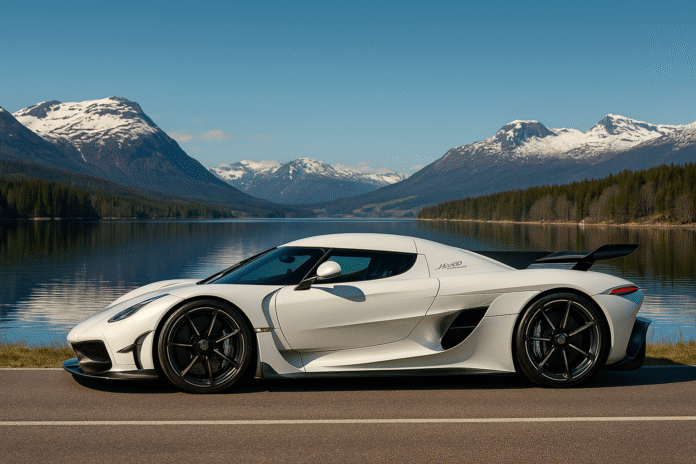
A high-resolution side view of the Koenigsegg Jesko Absolut captured on a scenic Swedish road, highlighting its aerodynamic design and matte finish. VeloxTrend LLC.

The Call of Speed

It starts with a question only a few ever dare to ask: How fast can we go?

Not metaphorically. Not in spirit. Literally. How fast can four tires, an engine, and a human driver move across the Earth before physics or fear steps in?

This is the question Christian von Koenigsegg asked himself in the early 1990s. He was not from Detroit or Stuttgart. He was a dreamer from Sweden with no formal car-making background, just a vision of building something that could stand shoulder to shoulder with giants like Ferrari, Bugatti, and McLaren.

That dream gave birth to Koenigsegg Automotive. And now, three decades later, the Jesko Absolut stands at the edge of what may be possible. A hypercar engineered not just to go fast, but to rewrite the meaning of fast.


What Makes the Jesko Absolut So Special?

Unlike its track-focused sibling, the Jesko Attack, the Jesko Absolut was designed for one purpose: to achieve the highest top speed of any production car in history.

To do that, Koenigsegg reimagined everything. Every panel, every surface, and every internal component was sculpted to reduce drag, enhance control, and maintain stability even as speeds climb well past 300 mph.


Aerodynamics and Design

Visually, the Jesko Absolut is cleaner and more restrained than many of its rivals. That is by design. Koenigsegg removed the aggressive rear wing found on the Jesko Attack and extended the bodywork at the rear to reduce turbulence.

  • Drag coefficient: just 0.278
  • Hidden aerodynamic elements reduce lift and drag
  • Longtail body design increases high-speed stability

This is not a car that needs to look wild to prove itself. The speed speaks for it.


Heart of a Monster: The V8 Engine

At the center of the Jesko Absolut is a 5.0-liter twin-turbocharged V8 engine. But this is no ordinary V8. It is one of the most powerful and technologically advanced combustion engines ever put into a road car.

  • Up to 1,600 horsepower on E85 fuel
  • 1,106 lb-ft of torque
  • Flat-plane crankshaft for reduced weight and faster revving
  • Redline at 8,500 RPM

Everything in this engine was built for maximum speed, but also for sustained performance at extreme conditions.


Light Speed Transmission

Traditional gearboxes would not be able to handle the demands of the Absolut. That is why Koenigsegg invented its own: the Light Speed Transmission.

  • 9-speed, multi-clutch transmission
  • Instant gear skipping (from 7th to 4th or any gear without delay)
  • Weighs only 198 pounds
  • Mechanically simpler and more efficient than a dual-clutch system

The result is a system that keeps the engine in its ideal power band at all times, helping the car accelerate without hesitation.


Chassis and Suspension Engineering

Speed is useless without control. Koenigsegg addressed this by building the Absolut around a carbon fiber monocoque chassis that is both ultra-light and exceptionally strong.

  • Front and rear triplex dampers for better ride quality and aero stability
  • Adaptive suspension for low-speed comfort and high-speed control
  • Near-perfect weight distribution

At over 250 mph, most cars begin to lose connection with the road. The Jesko Absolut stays planted.


Will It Break the Record?

So far, Koenigsegg has not conducted a public top-speed run. But CEO Christian von Koenigsegg has stated that the Jesko Absolut is capable of 330 miles per hour. If that is verified, it will comfortably surpass the current claimed and contested records held by the Bugatti Chiron Super Sport 300+, SSC Tuatara, and Hennessey Venom F5.

Importantly, Koenigsegg is not known for exaggeration. They typically overdeliver. That makes the possibility of 330 mph more than just a marketing line.


Why It Matters in 2025

We live in an era of digital dashboards, electric motors, and autonomous driving. Performance is being redefined by algorithms and range maps. The Jesko Absolut is a reminder that raw mechanical excellence still has a place.

This car does not drive itself. It does not make compromises. It is built to push the envelope of what the combustion engine can do—perhaps for the last time.

For car lovers, engineers, and even skeptics, the Jesko Absolut stands as a monument to what humans can still build with vision, passion, and courage.


Final Thoughts

Whether or not it takes the speed crown, the Jesko Absolut has already achieved something important. It proves that the chase for speed is not over. There are still rules to break, limits to test, and roads to conquer.

When the time comes and the Absolut is unleashed in the right conditions, one thing is certain: it will not just go fast. It will make history.
Aston Martin Valour: Manual Transmission Meets Retro Design

0
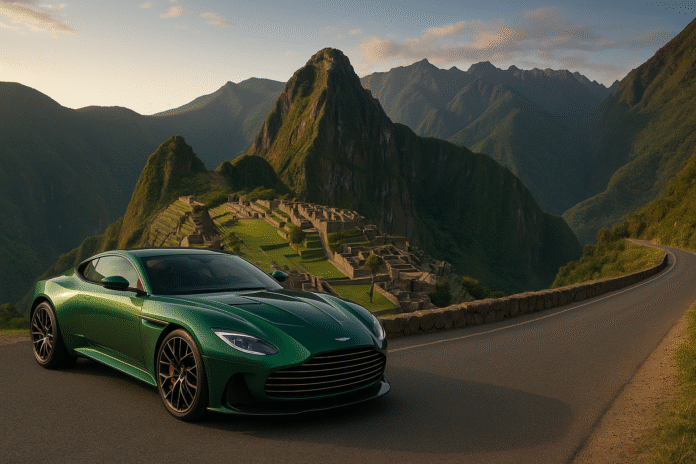
A high-resolution photograph of a green Aston Martin Valour parked on a scenic mountain road overlooking Machu Picchu in Peru, captured from a distance with a 16:9 aspect ratio. The image highlights the car’s retro design and powerful stance against a dramatic South American landscape. Created by VeloxTrend LLC.

In an era dominated by algorithms, automation, and paddle shifters, the Aston Martin Valour arrives as a glorious anomaly — a car that defiantly celebrates analog emotion in a digital world. With only 110 units planned for production, the Valour isn’t just rare — it’s a symbol of resistance against the soulless march of homogenized performance.

This isn’t a nostalgia act. It’s a reminder of what driving used to feel like. And why it still matters.


A Celebration of Heritage

Unveiled in 2023 and delivered into a world in transition, the Aston Martin Valour was built to honor the brand’s 110th anniversary. It fuses visual cues from icons like the V8 Vantage, DBR1, and Victor, blending them with a modern carbon fiber body to create something both timeless and raw.

At first glance, the Valour looks like a reimagined vision of the 1970s GTs. It has the long hood, wide hips, and angry stance that defined an era of analog aggression. But beneath that heritage-rich silhouette sits a machine very much designed for the present — and maybe even the future.


Under the Hood: A Proper V12, No Hybrid in Sight

What powers the Valour is what makes it heroic: a 5.2-liter twin-turbocharged V12, hand-built by Aston Martin, producing 715 horsepower and 555 lb-ft of torque.

Even more important than the numbers? It’s mated to a 6-speed manual transmission.

Let that sink in. In 2025, when even some performance cars are ditching real gears in favor of dual-clutch wizardry or all-electric torque vectors, the Valour gives you three pedals and a stick. There is no paddle shifter option. No automatic. No compromise.

And that decision is deliberate.

Aston Martin built the Valour for a driver who wants to feel the machinery. Who wants to stall the car once in a while. Who believes heel-and-toe downshifting isn’t an inconvenience, but an art form.


Analog Craftsmanship in a Digital World

Inside the cabin, Aston Martin has resisted digital bloat. The Valour’s interior is focused, tactile, and handcrafted. The gated shifter is exposed, its linkage visible like a skeleton watch. The seats are trimmed in hand-stitched leather and woven wool, with aluminum switchgear that clicks with satisfying mechanical resistance.

There’s no giant curved screen trying to be your best friend. There’s no AI co-pilot offering life advice. Just an engine, a clutch, and a car that answers only to you.

In this sense, the Valour is more than a car. It’s an experience that’s becoming harder to find — especially in a year when most automakers are racing toward EV-only platforms and Level 3 autonomy.


Why the Valour Matters in 2025

In the midst of this shift toward electric mobility, the Valour isn’t just about performance — it’s about philosophy. It’s about defending something irreplaceable: the relationship between driver and machine.

Whereas electric supercars can offer breathtaking speed and zero lag, they often remove the visceral connection that made us fall in love with driving in the first place. The Valour restores that.

It reminds us:

  • That analog still has value in a digital world
  • That noise, vibration, and even imperfection are part of the thrill
  • That a machine doesn’t need to be perfect to be alive

Limited to 110 Units: A Statement of Intent

Aston Martin is only building 110 Valours, making it one of the rarest cars in the company’s history. Each is custom-specified by the buyer, with a wide palette of retro-inspired color schemes and materials. Every one will be collectible — but more importantly, every one is driveable.

And that’s the point. This isn’t a car to hide away in a climate-controlled vault. It’s a car to drive — with purpose, with effort, and with a smile on your face.


Final Thoughts

The Aston Martin Valour is a love letter to a dying breed: the analog grand tourer. In a market dominated by data and driven by automation, it dares to offer feel over feedback, mechanical over digital, and soul over science.

It’s not the future. It’s a reminder of everything the future shouldn’t forget.

And for that, it might just be the most important car of 2025.

The Corvette ZR1X: The Future of American Speed

0
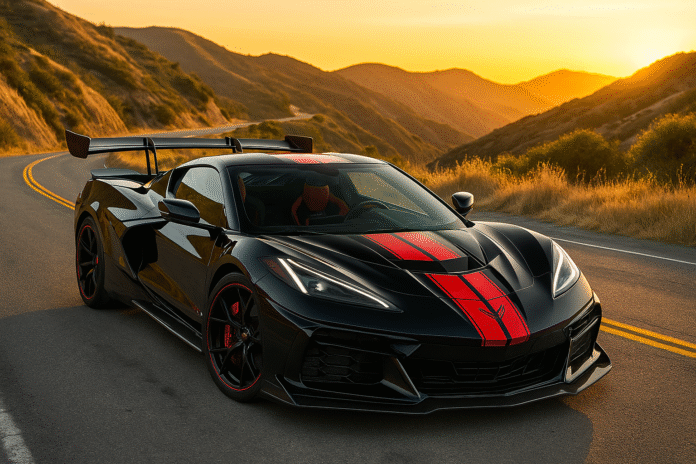
A high-resolution image of a black Corvette ZR1X with bold red racing stripes, parked on a winding California mountain road during golden hour. The car features aggressive carbon-fiber aero, sculpted hood vents, a large rear wing, and red-accented wheels. The lighting highlights the detailed hood design and wide stance. Captured for VeloxTrend, the photo showcases the hypercar’s striking design against a scenic backdrop of sunlit hills and curves.

In 1953, a small team of engineers in Flint, Michigan, assembled the very first Chevrolet Corvette by hand. It was bold, light, and unproven — a fiberglass gamble that dared to challenge the world’s performance icons. Over the decades, that gamble paid off. The Corvette became a legend, evolving through generations of V8 thunder, racing triumphs, and cultural impact. But even legends must evolve.

Fast forward to today — the Corvette no longer just competes. It disrupts. And with the upcoming 2026 Corvette ZR1X, Chevrolet isn’t just building a faster car — they’re rewriting the rules of American performance. For the first time in its 70-year history, the Corvette enters hypercar territory, armed with twin turbos, electrified all-wheel drive, and a blistering 1,250 horsepower. It’s not just fast. It’s unrelenting. And it’s proudly built in Kentucky.

This is the ZR1X — the most extreme Corvette ever made.


Powertrain & Performance

Twin‑Turbo V8 + Electrified Front Axle

  • LT7 5.5‑liter twin‑turbo V8 with a flat-plane crank and dry sump lubrication produces 1,064 hp and 828 lb-ft of torque at high revs.
  • The front axle is driven by a 186-hp electric motor, adapted from the Corvette E-Ray but reengineered with more output and quicker torque delivery.
  • Together, they generate a total system output of 1,250 hp, with torque-vectoring capabilities that enhance grip, responsiveness, and cornering speed.

Supercar-Breaking Acceleration

  • 0–60 mph in under 2 seconds
  • Quarter mile in under 9 seconds, crossing the traps above 150 mph
  • The ZR1X leverages instant electric torque off the line, feeding into relentless turbo power at high speeds

Track-Focused Design and Chassis

The ZR1X’s dual-mode chassis is designed to be both street-friendly and utterly dominant on track days.

  • Standard setup: Michelin Pilot Sport 4S tires with tuned Magnetic Ride Control for daily usability
  • ZTK Performance Package: Cup 2R tires, stiffer springs, more aggressive aero, and recalibrated dampers

Its magnetorheological suspension, first pioneered on past Corvettes and Ferraris alike, gives it the responsiveness of a track car with the compliance of a grand tourer.


Cutting-Edge Tech and Interface

Inside, the ZR1X introduces the most advanced driver environment in Corvette history.

Cockpit Highlights:

  • Triple-display layout with a 14-inch driver cluster, 12.7-inch infotainment screen, and a 6.6-inch control display to the left of the steering wheel
  • Wireless charging, enhanced HUD, and fully integrated Performance Data Recorder
  • Built-in track coaching tools with real-time telemetry overlays and adaptive launch control settings

Aerodynamics and Braking

With 1,250 hp under foot, you need just as much stopping and control power.

  • Carbon-ceramic brakes featuring 10-piston front and 6-piston rear calipers — the largest and most aggressive ever fitted to a Corvette
  • Active aero elements including deployable front splitters, carbon dive planes, and a massive rear wing that adjusts based on speed, yaw, and brake force

Electrified for the Future

Unlike plug-in hybrids, the ZR1X’s front motor is powered by a self-charging battery replenished via regenerative braking. This system allows:

  • Torque fill to eliminate turbo lag
  • Front-axle boost in launch control mode
  • Enhanced traction and variable torque vectoring during corner exit

At speeds above 160 mph, the front motor decouples to reduce drag and maximize top-end power from the twin-turbo V8.


Built in America. Engineered for Domination.

Every ZR1X will be hand-built at GM’s Bowling Green Assembly Plant in Kentucky. The LT7 twin-turbo V8 will be assembled by master engine builders at the Performance Build Center, just a few feet away on the same campus.

This is more than horsepower. It’s heritage.


Final Thoughts: Corvette Reimagined

The ZR1X represents a philosophical leap forward — not just for Chevrolet, but for American performance as a whole. It’s a car that can go toe-to-toe with multi-million-dollar European hypercars while still carrying the Corvette badge, still being made in the USA, and still embodying the relentless innovation that’s defined this car since 1953.

The future of American speed lives here.

Lamborghini Revuelto: V12 Hybrid Power Reimagined

0

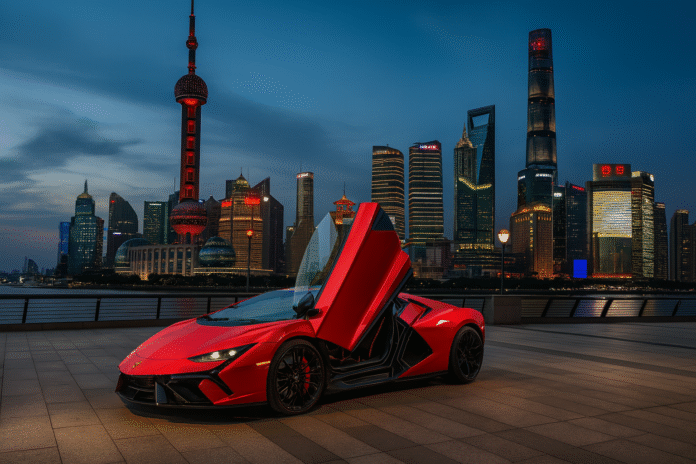
Lamborghini has always been about drama, excess, and uncompromising performance. With the release of the Revuelto, the Italian marque embarks on a new chapter in its storied legacy, introducing a high-revving V12 hybrid powertrain that does not dilute the brand’s identity. Instead, it expands it.

The Revuelto is more than just a replacement for the Aventador. It is a complete rethink of what a Lamborghini can be in a world transitioning to electrification. With its unmistakable styling, brand-new chassis, and pioneering drivetrain, the Revuelto is the boldest signal yet that the future of Lamborghini remains loud, fast, and unapologetically exotic.


A New Era: Electrification Meets Tradition

At the core of the Revuelto is Lamborghini’s signature 6.5-liter naturally aspirated V12 engine, now reworked to produce 814 horsepower. But this time, the V12 is accompanied by three electric motors—two on the front axle and one integrated into the new eight-speed dual-clutch transmission. Together, they deliver a combined output of 1,001 horsepower.

This is not a plug-in hybrid in the traditional sense. Lamborghini uses the hybrid system to enhance performance rather than chase efficiency. The 3.8 kWh lithium-ion battery provides enough juice for short electric-only operation, but the real magic happens when all power sources work in unison.

Key Powertrain Specs:

  • 6.5L V12 engine with 814 hp
  • Three electric motors adding 187 hp
  • Total system output: 1,001 hp
  • 8-speed dual-clutch gearbox
  • All-wheel drive via front motors and rear transmission
  • 0 to 62 mph in 2.5 seconds
  • Top speed over 217 mph

This is the most powerful Lamborghini road car ever built.


Design: Sharp, Angular, and Aerodynamic

The Revuelto’s exterior design is instantly recognizable as a Lamborghini. It takes inspiration from the brand’s past while pushing forward with an evolved design language. Every line is there to serve a purpose—either visual or aerodynamic.

At the front, Y-shaped LED lighting and massive intakes frame a low, aggressive nose. The side profile features deep sculpting and an open engine bay, while the rear showcases an exposed V12, floating wing, and stacked hexagonal exhausts.

Aerodynamically, the Revuelto generates 33 percent more front downforce and 74 percent more rear downforce compared to the Aventador Ultimae. Lamborghini has focused heavily on stability at speed, cooling efficiency, and high-speed handling—all while preserving that iconic silhouette.


Interior: Futuristic but Familiar

Inside the Revuelto, Lamborghini delivers a driver-centric layout that feels advanced but still mechanical. A trio of digital displays dominate the dashboard: a 12.3-inch instrument cluster, 8.4-inch vertical center screen, and a 9.1-inch passenger-side display.

The design is minimalist compared to previous Lamborghinis, with more focus on horizontal lines and reduced button clutter. However, the experience is no less visceral. Toggle switches, carbon fiber accents, and bespoke material options make the cabin feel crafted for speed.

The Revuelto also introduces a new Lamborghini Infotainment System (LIS), allowing over-the-air updates, telemetry integration, and real-time performance analytics. The user interface is clean and responsive, finally bringing the brand’s tech up to modern standards.


Performance and Handling

The hybrid powertrain unlocks a new dimension of handling for Lamborghini. With electric torque vectoring on the front axle and real-time control over power distribution, the Revuelto feels significantly more agile than the Aventador ever did.

Weight distribution is improved, and the battery pack sits low in the chassis behind the seats, lowering the center of gravity. The car remains rear-biased in power delivery, but the front motors allow for precise cornering and sharp turn-in.

In various driving modes—City, Strada, Sport, and Corsa—the Revuelto adapts its hybrid and suspension settings to match the driver’s intent. In Corsa mode, the car unleashes its full 1,001 hp and pushes all systems to their limits. The electric motors help fill torque gaps and assist in hard launches, making it Lamborghini’s quickest accelerating production car to date.


Sustainability With Identity

While the Revuelto may be hybridized, it remains a purebred Lamborghini in attitude. The V12 is still the emotional centerpiece of the car, revving to over 9,500 rpm with a naturally aspirated howl that few other manufacturers can replicate. The hybrid system is there to amplify the experience, not dilute it.

This approach contrasts with competitors who often chase efficiency and silence in their electrification efforts. Lamborghini remains committed to building emotionally charged, performance-focused vehicles, even in a world that demands lower emissions.

By making the Revuelto a performance hybrid instead of an eco-hybrid, Lamborghini has signaled its intent to evolve without sacrificing its soul.


Pricing and Availability

The Revuelto starts at around $604,000 USD, though most models will exceed that once customization begins. Deliveries have already started in select markets, and Lamborghini has confirmed that the car will be a full production model, not a limited edition.

Every Revuelto will be built at the Sant’Agata Bolognese factory, which has recently been upgraded to support hybrid and electric production.


Final Thoughts

The Lamborghini Revuelto is more than a new flagship. It is a technical showcase, a bold evolution of the V12 supercar, and a declaration that hybridization does not mean compromise. With over 1,000 horsepower, unmistakable design, and handling that benefits from electrification, it may be Lamborghini’s most complete supercar yet.

As the brand looks toward full electrification in the coming decade, the Revuelto is a powerful reminder that even in a changing world, Lamborghini is still Lamborghini.

Porsche 911 Turbo S vs Taycan Turbo GT: Gas vs Electric Showdown

0
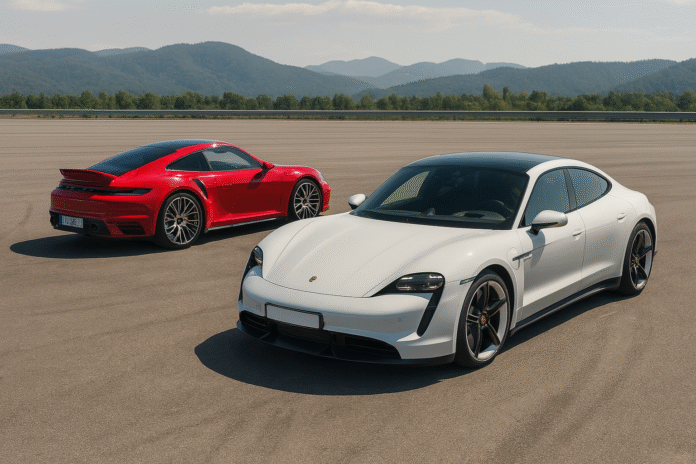
Porsche 911 Turbo S vs. Taycan Turbo GT: Gas vs. Electric Showdown

Porsche stands at a crossroads in automotive performance. On one side we have the 911 Turbo S, a legendary gas-powered icon that has defined sports cars for generations. On the other stands the Taycan Turbo GT, a cutting-edge electric hyper-sedan that challenges everything we know about EV performance.

Both represent the pinnacle of their respective powertrains. Both push the boundaries of speed and technology. But which one truly deserves the crown?

We put these two Porsche titans head-to-head in the ultimate gas versus electric showdown, comparing acceleration, handling, lap times, and driving experience to determine which machine reigns supreme.


The Contenders: Defining the Machines

1. 2025 Porsche 911 Turbo S – The Combustion King

  • Engine: 3.8L twin-turbo flat-6
  • Power: 640 hp and 590 lb-ft of torque
  • Transmission: 8-speed PDK dual-clutch
  • Drivetrain: All-wheel drive with rear torque bias
  • 0-60 mph: 2.5 seconds (with Sport Chrono)
  • Top Speed: 205 mph
  • Weight: Approximately 3,600 lbs

The 911 Turbo S represents the ultimate evolution of Porsche’s internal combustion expertise. With its rear-engine layout, active aerodynamics, and rear-axle steering, it delivers supercar performance with everyday usability.

2. 2025 Porsche Taycan Turbo GT – The Electric Revolution

  • Powertrain: Dual-motor AWD with performance battery
  • Power: 1,019 hp (with Launch Control)
  • Torque: 988 lb-ft (instantaneous)
  • Transmission: Single-speed automatic
  • 0-60 mph: 2.1 seconds (with Launch Control)
  • Top Speed: 190 mph (electronically limited)
  • Weight: Approximately 5,100 lbs

The Taycan Turbo GT is Porsche’s most extreme electric vehicle yet. This 1,000-hp monster features track-tuned suspension, massive carbon-ceramic brakes, and aggressive aerodynamics. It even includes a “Push-to-Pass” button for temporary power boosts.


Round 1: Acceleration – The Drag Race

Electric vehicles dominate straight-line performance, and the Taycan Turbo GT continues this trend.

Metric911 Turbo STaycan Turbo GT
0-60 mph2.5 seconds2.1 seconds
1/4-mile10.3 seconds9.8 seconds
30-70 mph2.7 seconds2.4 seconds

Winner: Taycan Turbo GT
The Taycan’s instant torque delivery and lack of gear changes give it a decisive advantage off the line. While the 911 Turbo S is brutally quick, it can’t match the EV’s relentless acceleration.


Round 2: Handling & Lap Times – The Track Battle

This is where the competition gets interesting. The 911 Turbo S benefits from lighter weight and traditional sports car dynamics, while the Taycan Turbo GT uses advanced technology to overcome its mass.

Nürburgring Lap Times (Estimated)

  • 911 Turbo S: Approximately 7:05
  • Taycan Turbo GT: Approximately 6:55 (with Weissach Package)

Surprisingly, the Taycan may be faster. How?

  • Torque Vectoring Plus enables precise power distribution to each wheel
  • Rear-wheel steering improves agility despite the car’s size
  • Active aerodynamics generate significant downforce at speed
  • Regenerative braking helps stabilize the car while recovering energy

But the 911 Turbo S offers purer driving joy

  • The lighter chassis feels more nimble and responsive
  • The PDK transmission delivers satisfying, crisp shifts
  • The rear-engine layout provides classic 911 driving dynamics

Winner: Taycan Turbo GT (on lap time), 911 Turbo S (for driver engagement)


Round 3: Daily Driving & Usability

911 Turbo S Advantages:

  • More engaging driving experience (engine sound, manual shifting options)
  • Longer range (about 300 miles per tank) and quicker refueling
  • More compact dimensions for easier parking and urban driving

Taycan Turbo GT Advantages:

  • Silent, effortless acceleration with no turbo lag
  • Lower operating costs (no fuel, reduced maintenance)
  • More practical (four doors, larger cargo capacity)

Winner: Tie (Depends on driver priorities)


Final Verdict: Which One Wins?

Choose the 911 Turbo S if…

  • You value engine character and traditional driving dynamics
  • You want a weekend thrill machine that can also serve as a daily driver
  • You believe true sports cars should have internal combustion

Choose the Taycan Turbo GT if…

  • You want the quickest accelerating Porsche ever built
  • You appreciate cutting-edge technology and instant torque
  • You need family-friendly practicality with supercar performance

The Bottom Line

The 911 Turbo S represents the glorious peak of combustion-engine performance. The Taycan Turbo GT showcases the incredible potential of electric propulsion.

Which Porsche would you pick? Share your thoughts in the comments below.

McLaren 750S vs. 720S: What Really Changed?

0
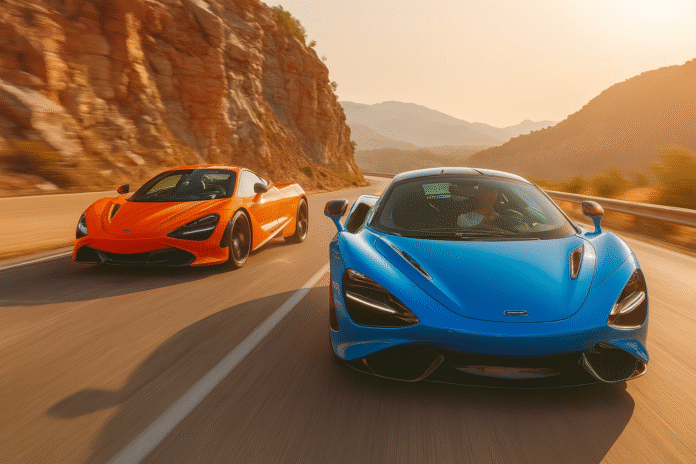
McLaren 750S vs. 720S: What Really Changed? by VeloxTrend LLC

When McLaren launched the 720S in 2017, it redefined the supercar landscape. With its lightweight carbon-fiber construction, blistering acceleration, and futuristic design, it set a new benchmark for performance. Now, in 2025, McLaren has refined the formula with the 750S, an evolution that builds on the 720S’s strengths while pushing boundaries further in power, aerodynamics, and driver engagement.

But what exactly has changed? Is the 750S just a mild refresh, or does it represent a meaningful leap forward? We dive deep into the key differences between these two supercars.


What is the McLaren 750S?

The 750S is McLaren’s latest iteration of its Super Series lineup, positioned as a more potent and driver-focused version of the 720S. While it retains the same fundamental architecture, nearly 30% of its components are new or redesigned, making it more than just a power bump.

Available in two body styles:

  • 750S Coupe
  • 750S Spider (convertible)

Both versions emphasize weight reduction, sharper dynamics, and enhanced aerodynamics while maintaining McLaren’s signature balance of road comfort and track capability.


Powertrain and Performance: More Power, Faster Response

The heart of the 750S remains McLaren’s 4.0-liter twin-turbo V8 (M840T), but engineers have extracted more power and torque while improving throttle response.

Key Performance Upgrades:

SpecMcLaren 720SMcLaren 750S
Power710 hp740 hp
Torque568 lb-ft590 lb-ft
0-60 mph2.7 sec2.6 sec
Top Speed212 mph212 mph
Weight2,829 lbs2,769 lbs
  • Engine Tweaks: New lightweight pistons, revised turbos, and a higher-flow fuel system contribute to the power increase.
  • Faster Shifts: The 7-speed dual-clutch transmission has been recalibrated for quicker shifts, especially in Track mode.
  • Exhaust Note: A retuned exhaust system delivers a more aggressive sound without artificial enhancement.

Despite the extra power, the 750S remains efficient thanks to cylinder deactivation and improved thermal management.


Aerodynamics: Smarter Downforce, Sharper Handling

While the 720S was already aerodynamically efficient, the 750S takes it further with active aero refinements and a redesigned body.

Key Aero Upgrades:

✔ Extended Front Splitter – Increases downforce while reducing lift.
✔ Revised Rear Diffuser – Works in tandem with the new active rear wing for better high-speed stability.
✔ Larger Air Intakes – Improve cooling for the engine and brakes.
✔ Active Rear Wing – Now 20% larger than the 720S’s, deploying faster under heavy braking.

The result? 15% more downforce than the 720S, making the 750S more planted at high speeds and through corners.


Chassis and Suspension: Lighter, More Precise

McLaren’s obsession with weight savings continues:

  • Carbon fiber monocoque remains, but additional weight is shaved off via lighter wheels, thinner glass, and optimized body panels.
  • Proactive Chassis Control II (PCC II) suspension has been recalibrated for sharper responses, reducing body roll without sacrificing ride comfort.
  • New Braking System – Standard carbon-ceramic discs with improved cooling and Formula 1-inspired brake booster tech for shorter stopping distances.

The 750S also introduces McLaren’s latest Vehicle Dynamics Control system, allowing for more granular adjustments in Comfort, Sport, and Track modes.


Interior: More Driver-Centric, But Still Luxurious

The 720S’s minimalist, fighter-jet-inspired cockpit was already impressive, but the 750S refines it further:

  • New Carbon Fiber Racing Seats – Lighter and more supportive than before.
  • Redesigned Steering Wheel – Thinner rim, integrated shift lights, and a simplified button layout.
  • Upgraded Infotainment – A faster processor, improved touchscreen response, and Apple CarPlay/Android Auto as standard.
  • Optional Clubsport Pack – Adds a titanium roll cage, fire extinguisher, and 4-point harnesses for track enthusiasts.

Despite the performance focus, McLaren hasn’t stripped out luxury—dual-zone climate control, premium leather/Alcantara options, and a Bowers & Wilkins sound system remain available.


750S Spider: Open-Top Thrills

The 750S Spider follows the same formula as the coupe but adds a retractable hardtop that operates in just 11 seconds (up to 31 mph). Despite the extra weight (~110 lbs), the Spider’s performance is nearly identical thanks to structural reinforcements.


Price and Availability

  • 750S Coupe: Starts at $325,000
  • 750S Spider: Starts at $345,000

Compared to the outgoing 720S (which started at $300,000), the price hike reflects the upgrades, but it remains more affordable than rivals like the Ferrari 296 GTB or Lamborghini Huracán Tecnica.


How It Compares to the Competition

The 750S sits in a competitive segment, facing off against:

  • Ferrari 296 GTB (Hybrid V6, 819 hp)
  • Lamborghini Huracán Tecnica (V10, 631 hp)
  • Porsche 911 GT3 RS (N/A Flat-6, 518 hp)

What sets the 750S apart is its pure internal combustion focus, lighter weight, and analog-like driver engagement in an increasingly hybrid-dominated supercar world.


Final Verdict: Evolution, Not Revolution

The McLaren 750S isn’t a radical departure from the 720S—it’s a refined, sharper, and more engaging version of an already brilliant supercar. With more power, better aerodynamics, and a more driver-focused cockpit, it cements McLaren’s reputation for building some of the most thrilling driver’s cars on the market.

For 720S owners, the upgrade may not be essential—but for those stepping into the Super Series for the first time, the 750S is the best iteration yet. It proves that incremental improvements, when executed right, can make a world of difference.

Would you pick the 750S over its rivals? Let us know in the comments!

The 2025 Ferrari SF90 XX Stradale: Track-Bred Engineering in Street-Legal Form

0
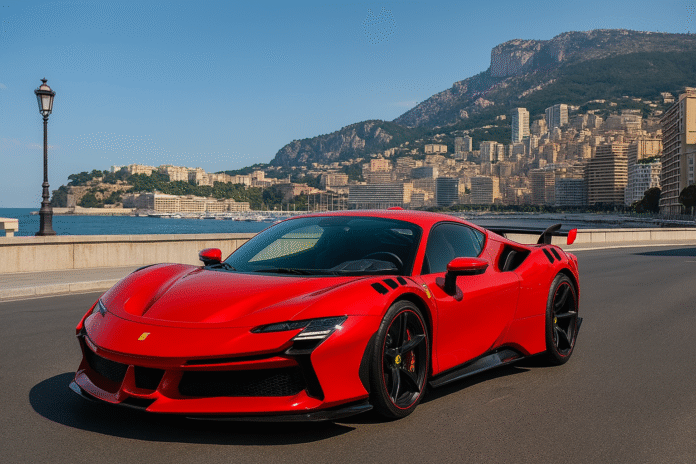
Ferrari SF90 XX Stradale in Monaco, image by VeloxTrend LLC

When Ferrari introduced the SF90 Stradale in 2019, it changed the conversation around supercars. A plug-in hybrid with electric all-wheel drive and close to 1,000 horsepower, it was the first true hybrid hypercar Ferrari offered for the road. Fast forward to 2025, and the automaker has raised the stakes once again with the SF90 XX Stradale, a limited-production, track-focused evolution of its hybrid flagship.

This is not just an upgraded version. It is the first time Ferrari has taken its experimental XX program, which was once reserved for track-only machines, and applied it to a street-legal car. The result is a model that sits at the intersection of motorsport engineering and modern hybrid technology.


What is the SF90 XX Stradale?

The XX designation has always been Ferrari’s internal code for extreme, no-compromise track vehicles. Past XX models like the FXX-K and 599XX were not road legal and were typically reserved for elite Ferrari clients as part of a private development program. The SF90 XX Stradale changes that tradition. It takes the essence of Ferrari’s XX cars and makes it available for real-world driving.

The SF90 XX comes in two versions:

  • SF90 XX Stradale (Coupe)
  • SF90 XX Spider (Convertible)

Both variants build upon the standard SF90 platform but offer significant enhancements in aerodynamics, power delivery, chassis tuning, and visual aggression.


Powertrain and Performance

The car features the same 4.0-liter twin-turbo V8 hybrid system found in the standard SF90 Stradale. However, Ferrari engineers have optimized it to deliver even more output. The total system power is now 1,016 horsepower, with 786 horsepower coming from the internal combustion engine and the rest from three electric motors.

Key Performance Stats:

  • 0 to 62 mph in 2.3 seconds
  • Top speed of 199 mph
  • 8-speed dual-clutch automatic transmission
  • Electric-only E-Drive mode for low-speed city driving

Despite the increased power, the XX remains surprisingly manageable on the road, thanks to its refined hybrid control system and torque vectoring technology.


Aerodynamics and Downforce

For the first time in a Ferrari road car, the SF90 XX Stradale features active aerodynamics. Most notably, it introduces an active rear wing that adjusts based on speed, throttle input, and cornering forces to optimize downforce and stability. This setup is similar to what you would find on Ferrari’s track-exclusive FXX-K Evo.

Additional changes include:

  • A Y-duct integrated into the front end for airflow management
  • A new fixed rear spoiler for added high-speed stability
  • Enlarged front splitters and rear diffusers
  • Louvers over the wheel arches for pressure reduction
  • A revised underbody for maximum ground effect

These aerodynamic improvements provide up to 1,170 pounds of downforce at 155 mph, making this the most aerodynamically advanced Ferrari road car to date.


Interior and Driver Focus

Inside the SF90 XX Stradale, you will find a cockpit built for focus. Carbon fiber is used extensively, not only for aesthetics but also for weight reduction. The standard seats have been replaced with Sabelt carbon racing seats, offering additional bolstering and lateral support.

Despite its performance orientation, Ferrari did not completely strip out the comforts. The digital instrument cluster remains, along with infotainment features such as Apple CarPlay. Dual-zone climate control and adjustable driving modes are still available, although the overall environment feels closer to a race car than a grand tourer.


SF90 XX Spider: Open-Air Drama

The SF90 XX Spider brings the same performance and dynamics to an open-top configuration. It features a retractable hardtop that stows away in just 14 seconds. Even with the additional weight of the roof mechanism, the Spider delivers nearly identical performance to the coupe, thanks to advanced engineering and structural reinforcements.

It is ideal for those who want extreme performance without giving up the visceral experience of open-air driving.


Production Numbers and Price

The SF90 XX Stradale and Spider are both limited-production models. Ferrari will produce:

  • 799 units of the SF90 XX Stradale
  • 599 units of the SF90 XX Spider

Pricing begins around $850,000 USD, but with Ferrari’s customization program, most buyers will likely spec their cars closer to or above the $1 million mark. All units were sold out almost immediately through Ferrari’s VIP client network.


How It Compares

The SF90 XX lives in rare company. Its hybrid supercar competitors include:

  • McLaren P1 GTR (track-only)
  • Lamborghini Revuelto
  • Aston Martin Valkyrie
  • Koenigsegg Jesko Absolut
  • Bugatti Chiron Super Sport

However, what sets the SF90 XX apart is that it blends street legality with experimental technology. It is also one of the few in this segment to deliver such high performance through a plug-in hybrid platform while maintaining Ferrari’s signature driving dynamics.


Final Thoughts

The 2025 Ferrari SF90 XX Stradale is not just a milestone for Ferrari. It is a marker for the entire performance car industry. This model proves that hybrid technology does not have to mean compromise. In fact, it can enable performance that was once only achievable on racetracks.

With a combination of brute power, electric precision, active aerodynamics, and Ferrari’s legendary design language, the SF90 XX stands as one of the most advanced and desirable supercars of its generation.

For those lucky enough to own one, it is more than a car. It is a piece of Ferrari’s engineering evolution and a glimpse into the brand’s electrified future.

The Chevrolet Corvette Stingray: A Legacy of American Performance, Reimagined

0

When it comes to American sports cars, no name commands more respect than the Corvette. Since its debut in 1953, Chevrolet’s flagship model has delivered innovation, style, and raw power. The eighth-generation Corvette, the C8 Stingray, marks a turning point for the brand. With its bold mid-engine layout, exotic styling, and aggressive performance, it redefines what an American sports car can be.

Many of its supporters consider the C8 Stingray to be a true supercar. With acceleration times under three seconds and design elements pulled from far more expensive exotics, the Stingray now belongs in conversations that once excluded American cars.

In this post, we explore the full Corvette lineup, including the Stingray trims, Z06, E-Ray, and the upcoming ZR1 and ZR1X. The latter is expected to rival some of the most advanced exotic cars in the world.


Mid-Engine Mastery: The C8 Corvette Stingray

Chevrolet’s decision to move the Corvette to a mid-engine platform changed everything. The C8 offers balance, improved weight distribution, and a commanding presence on the road. Powered by a 6.2L LT2 V8 engine, it produces up to 495 horsepower and 470 lb-ft of torque with the performance exhaust package. Paired with an eight-speed dual-clutch transmission, the C8 can launch from zero to sixty in just 2.9 seconds.


Corvette Stingray Trims: 1LT, 2LT, and 3LT

1LT: The Essential Driver’s Car

The 1LT is the most affordable way to own a C8 Stingray. It focuses on performance without luxury add-ons. Perfect for purists.

  • 6.2L LT2 V8 engine
  • 8-speed dual-clutch transmission
  • 10-speaker Bose sound system
  • GT1 bucket seats
  • Apple CarPlay and Android Auto
  • Rear vision camera

2LT: More Comfort and Technology

The 2LT adds more features that make the C8 comfortable as a daily driver.

  • Heated and ventilated seats
  • Head-up display
  • Performance Data Recorder
  • Navigation
  • Blind zone alert and rear cross-traffic alert
  • 14-speaker Bose audio system

3LT: Premium and Performance Combined

The 3LT trim is the highest luxury option in the Stingray line.

  • Napa leather seating surfaces
  • Sueded microfiber upper trim
  • Leather-wrapped interior surfaces
  • Custom interior color options
  • Enhanced GT2 seats

Corvette Z06: Built for the Track

The Z06 is a precision tool, engineered to perform at the highest levels. At its core is the LT6 engine, a 5.5L flat-plane crank V8 that revs to 8,600 rpm and delivers 670 horsepower. This is the most powerful naturally aspirated V8 in any production car.

  • 0 to 60 mph in 2.6 seconds
  • Wider stance and aggressive aero
  • Optional Z07 Performance Package
  • Carbon fiber wheels and ceramic brakes
  • Race-tuned suspension and cooling upgrades

The Z06 is not just louder and faster. It is engineered for balance, feedback, and extreme handling.


Corvette E-Ray: Performance Meets Electrification

The E-Ray is the first hybrid and first all-wheel-drive Corvette ever made. It combines the traditional LT2 V8 with a front-mounted electric motor to produce a total of 655 horsepower.

  • Quickest Corvette to date, 0 to 60 mph in 2.5 seconds
  • Electric-only Stealth Mode for low-speed driving
  • Standard carbon ceramic brakes and adaptive suspension
  • Same wide body as the Z06
  • Seamless blend of internal combustion and electric power

The E-Ray adds confidence in all seasons and delivers immediate torque from the electric motor, making it both a daily driver and a performance machine.


Corvette ZR1 (Upcoming): Forced Induction Powerhouse

Chevrolet is preparing to launch the ZR1, which is expected to feature a twin-turbocharged version of the Z06’s LT6 engine. Estimated power output could exceed 850 horsepower.

  • Twin-turbocharged 5.5L flat-plane crank V8
  • Upgraded cooling and drivetrain components
  • Active aerodynamics
  • Lightweight materials and carbon enhancements
  • Increased track focus

The ZR1 will take the C8 platform to a level that surpasses every previous generation.


ZR1X or Zora (Speculative): The Future Exotic

Enthusiasts and insiders are anticipating the arrival of a top-tier Corvette known as the ZR1X or Zora. This model may combine the ZR1’s twin-turbocharged engine with the E-Ray’s hybrid electric drive to produce over 1,000 horsepower.

This would make the ZR1X a full-fledged exotic capable of going head-to-head with hypercars like the Bugatti Chiron, Ferrari SF90 Stradale, and McLaren P1.

Expected features include:

  • All-wheel drive hybrid system
  • More than 1,000 combined horsepower
  • Extensive use of carbon fiber
  • Fully integrated track telemetry systems
  • Active suspension and aerodynamics

The ZR1X would be a milestone in Corvette history, not just a halo model but a technological showcase.


Why the Corvette Still Wins

The C8 lineup proves that Chevrolet can compete with and often outperform global supercar brands. Pricing remains a core advantage. Even the base Stingray undercuts competitors with similar performance, and high-end variants like the Z06 and E-Ray offer Ferrari-level acceleration and engineering for a fraction of the price.

Corvette owners also enjoy access to performance parts, community events, and the brand’s storied racing heritage.


Final Thoughts

The Chevrolet Corvette C8 Stingray and its extended family — Z06, E-Ray, and the upcoming ZR1 and ZR1X — represent the next generation of American performance. No longer just a sports car, the Corvette has stepped confidently into supercar and exotic territory.

From the simplicity of the 1LT to the exotic ambitions of the ZR1X, the Corvette lineup offers something for everyone. It is a vehicle born from decades of racing, reimagined for the modern era, and still proudly built in America.