
Home Blog Page 28

Porsche Cayman GT4 RS: Track Precision in a Compact Form

0
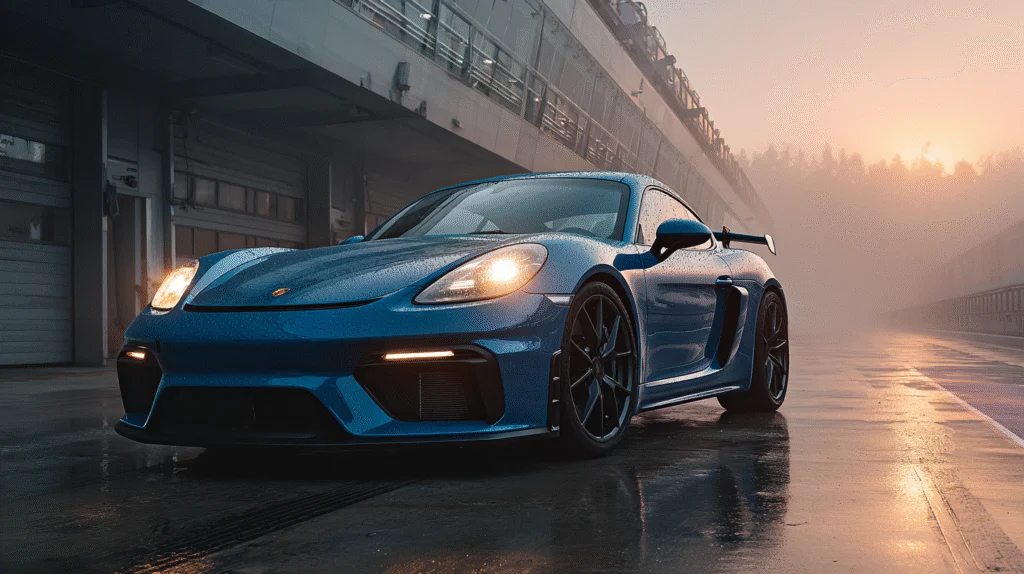
A Porsche Cayman GT4 RS parked on a foggy racetrack at sunrise, showcasing its aggressive rear wing, aerodynamic design, and track-ready stance. The soft orange glow of the sun breaks through the mist, casting reflections on the wet pavement. Designed by VeloxTrend LLC.

A Sunday Morning, Nürburgring Style

The air was crisp, and the early morning mist had barely lifted from the tarmac. It was quiet except for the mechanical hum of preparation. A lone Porsche Cayman GT4 RS sat at the edge of the paddock, the scent of warm rubber and high-octane fuel lingering nearby. The scene was not from a glamorous unveiling but from an owner’s weekend track day. There were no sponsors or spotlights—just pure engineering, intent on carving perfection into every corner.

The GT4 RS may be the little sibling of Porsche’s 911 GT cars, but on this morning, it felt anything but secondary. The car stood ready, not as a statement of wealth or prestige but as a purpose-built instrument, waiting to do exactly what it was designed for—attack the track with surgical accuracy.

Overview: What Is the GT4 RS?

The Porsche Cayman GT4 RS is the most extreme version of the 718 Cayman lineup. First introduced in late 2021 as a 2022 model, it continues to hold strong appeal in 2025. It represents the first time Porsche gave the Cayman platform the RS treatment, a title usually reserved for the 911 GT3 RS and its motorsport-bred variants.

The GT4 RS is a compact, mid-engine sports car that merges the naturally aspirated power of Porsche’s GT division with the lightweight, agile chassis of the Cayman. It is not designed for comfort. It does not prioritize road manners. It exists to deliver one of the most connected and precise driving experiences Porsche has ever engineered.


Engine and Performance: Borrowed from Greatness

At the heart of the GT4 RS is the same 4.0-liter flat-six engine found in the 911 GT3. This is not a watered-down version. It is the real thing, slightly reworked for the mid-engine layout. The engine revs to 9,000 rpm and produces 493 horsepower and 331 lb-ft of torque.

Unlike other Cayman models, the GT4 RS comes exclusively with a 7-speed PDK dual-clutch transmission. While some purists lament the lack of a manual, Porsche made a clear choice—this car is for serious lap times. The shifts are lightning-quick, and the gearing is tuned specifically for performance. With a 0 to 60 mph time of just 3.2 seconds and a Nürburgring Nordschleife lap time of 7:04.511, this is a true track weapon.

Porsche Cayman GT4 RS: Track Precision in a Compact Form

Key Specs

  • Engine: 4.0L naturally aspirated flat-six
  • Horsepower: 493 hp
  • Torque: 331 lb-ft
  • Transmission: 7-speed PDK only
  • 0–60 mph: 3.2 seconds
  • Top speed: 196 mph
  • Weight: 3,227 lbs (DIN curb weight)

Chassis and Aerodynamics: Precision Above All

The RS badge means significant changes to the chassis, suspension, and aero. The GT4 RS gets a fully revised front suspension derived from the 911 GT3, with ball joints instead of rubber bushings for maximum feedback. Spring and damper tuning are aggressive but finely calibrated for track use.

Aerodynamics play a major role in the RS transformation. A new swan-neck rear wing provides high downforce while reducing drag. Vents on the front fenders relieve wheel well pressure. The hood and front fenders are made from carbon fiber reinforced plastic (CFRP), reducing weight and improving balance. NACA ducts and underbody panels optimize cooling and airflow.

These elements are not for show. Every line, vent, and crease is functional, reflecting the car’s singular purpose: to extract the most performance possible from every component.


Braking and Tires: Track-Ready from the Factory

The GT4 RS features standard steel brakes with massive rotors—16.1 inches up front and 15 inches in the rear. Porsche Ceramic Composite Brakes (PCCB) are available as an option for reduced fade and lower unsprung mass.

Tires are Michelin Pilot Sport Cup 2s, specifically designed for the car’s dynamics. The grip they provide is confidence-inspiring on both track and aggressive canyon drives. The car’s standard 20-inch forged aluminum wheels are lightweight and strong, another nod to the motorsport DNA.


Interior: Minimalism Meets Function

Inside, the GT4 RS is stripped down and focused. You get a small diameter steering wheel without unnecessary controls. The seats are carbon-fiber full buckets, providing excellent lateral support but minimal cushioning. Door pulls replace handles to reduce weight. Alcantara and carbon dominate the materials, but not for aesthetics—it’s about function and saving grams.

Despite the rawness, the car retains Porsche’s modern infotainment system. There’s a digital gauge cluster and touchscreen interface, but these feel secondary to the mechanical interaction. It is a cockpit, not a lounge.


Driving Experience: Every Turn Counts

The driving experience in the GT4 RS is nothing short of visceral. Because of the mid-engine layout, the car feels incredibly planted in corners. Weight transfer is predictable. Turn-in is immediate. Steering is unfiltered and precise. There is a sense of connectedness that even the 911 GT3 cannot replicate due to its rear-engine layout.

The air intakes, now positioned just behind the driver’s and passenger’s windows, feed directly into the engine. That means the induction sound is loud and intense. It feels as if the engine is breathing through your ears.

The lack of sound insulation, the stiff suspension, and the racing seats all contribute to a raw, uncompromised feeling. It’s not comfortable on long trips, but it’s addictively engaging during short, focused sessions behind the wheel.


Design Language: Functional Aggression

Visually, the GT4 RS stands out without exaggeration. It looks purpose-built. The rear wing is large but not flamboyant. The aggressive diffuser, functional vents, and sharp front end give it a distinct look without relying on unnecessary flourishes.

Colors are mostly muted, with shades like Arctic Grey, Shark Blue, and standard white and black. Porsche’s Paint to Sample program allows for further personalization, but the overall aesthetic remains restrained.

This is not a car designed to be parked in front of a hotel lobby. It belongs in pit lanes and twisty backroads.

Porsche Cayman GT4 RS: Track Precision in a Compact Form, photo 2

Who Is It For?

The Cayman GT4 RS is for the driver who wants the sharpest possible mid-engine experience without stepping into hypercar territory. It is ideal for those who plan to track their cars or seek a purist driving experience on weekends.

It is not a daily driver. It is not a luxury GT. It is a specialized tool that rewards skill and punishes complacency.


Comparisons: How Does It Stack Up?

In the sports car world, the GT4 RS sits in a unique position. At around $160,000, it is not inexpensive, but it offers performance rivaling or exceeding much more expensive supercars.

  • Vs. 911 GT3: The GT3 offers more power and a rear-engine layout. It is more forgiving and has a broader range of use. The GT4 RS, however, is sharper in tight corners and arguably more fun at lower speeds.
  • Vs. Chevrolet Corvette Z06: The Z06 offers more power for less money, but lacks the same precision and feedback. The GT4 RS feels more refined and focused.
  • Vs. Lotus Emira: The Emira is more comfortable and stylish but lacks the performance and prestige of the RS.

Ownership and Community

Owners of the GT4 RS become part of a niche community. These are not casual Porsche enthusiasts. Most are repeat buyers, often with GT3s or other track cars in their garages. Many will attend Porsche’s track experience days or take their cars to private motorsport events.

Running costs are in line with other GT cars. Brakes and tires wear quickly during hard use, and routine maintenance is more frequent due to the high-strung nature of the engine. But unlike some exotics, the GT4 RS is built to be used, not stored.


Final Thoughts: A Benchmark in Modern Driving

The Porsche Cayman GT4 RS is not about luxury or showing off. It is about engineering. It is a testament to what can happen when a car is designed for one purpose and that purpose alone—track precision.

For driving enthusiasts, it may very well be the most exciting Porsche available in 2025. It brings the DNA of the 911 GT3 into a platform that is more accessible, more balanced, and arguably more engaging.

In an age of increasing electrification and digital detachment, the GT4 RS remains a holdout for those who want every drive to matter.
Pagani Utopia: Art Meets Engineering in Motion

0
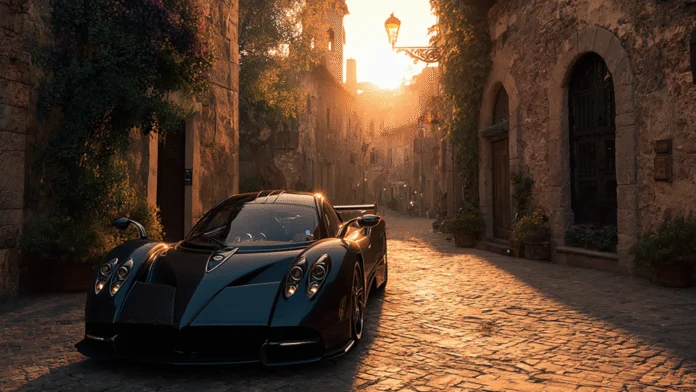
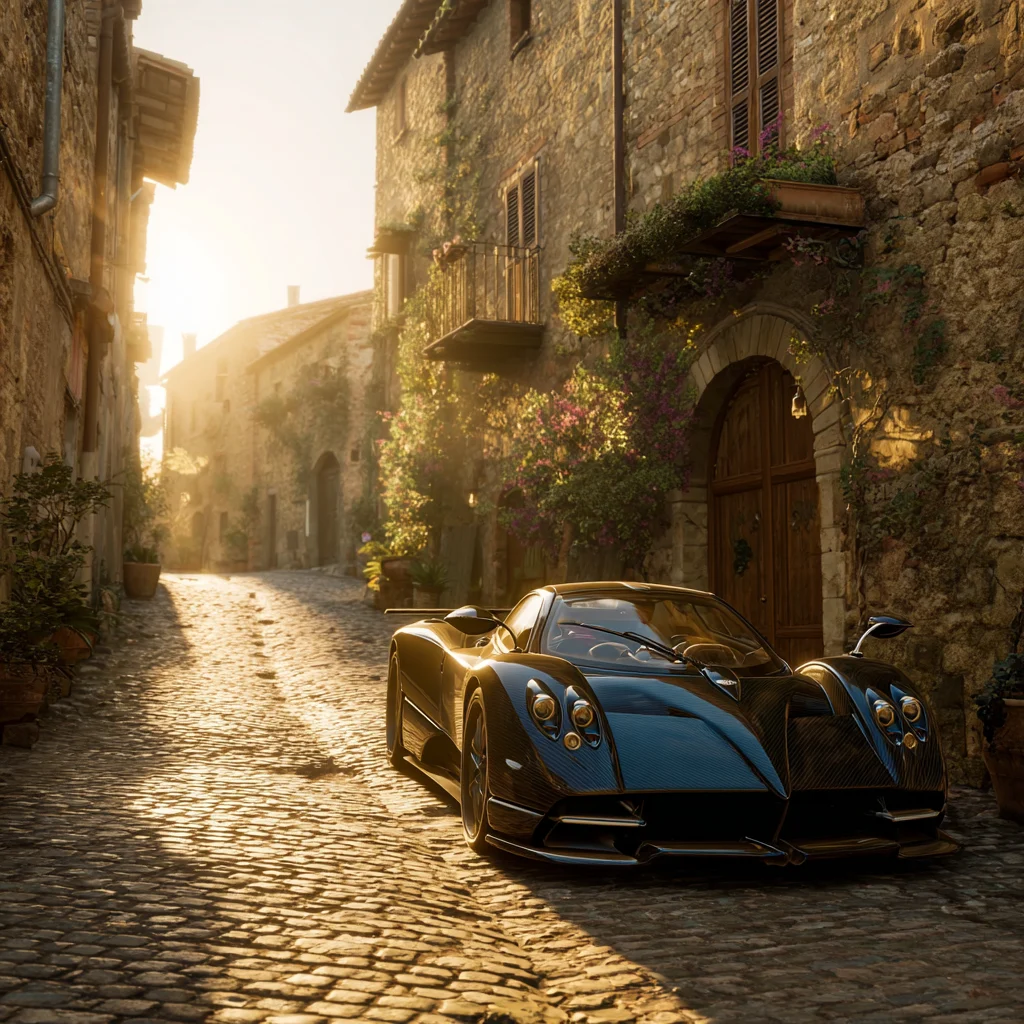
A black Pagani Utopia parked on a cobblestone street in a historic Italian village at sunset, surrounded by stone buildings, flowering vines, and warm golden light reflecting off the car’s sculpted body.

A Quiet Morning in Modena

It was a quiet morning in Modena, Italy. The sun had barely risen, casting soft golden light across cobblestone streets and age-old villas. Somewhere behind a discreet set of doors sat the latest creation from Horacio Pagani and his team—a machine so carefully designed, it blurred the line between automotive engineering and fine art. This wasn’t just a car. It was the Pagani Utopia.

Parked under a skylight in the Pagani Atelier, the Utopia waited, still and composed. At first glance, its silhouette evoked classic Italian design—graceful curves, functional lines, and a stance that could only belong to something crafted with passion and precision. But there was more to it. There always is with Pagani.

What Is the Pagani Utopia?

The Pagani Utopia is the third hypercar to emerge from the Modenese marque, following the Zonda and the Huayra. With a name that implies a perfect world, the Utopia is Pagani’s latest attempt to bring mechanical purity and aesthetic harmony together in a single package.

Launched as a successor to the Huayra, the Utopia refines many of Pagani’s core values: obsessive craftsmanship, lightweight engineering, and a dedication to the analog driving experience. It represents Horacio Pagani’s response to an increasingly digital automotive world, one where emotion often gives way to automation.

Design Philosophy: Beauty Without Noise

The first thing that strikes you about the Utopia is its design. It isn’t trying to look aggressive or futuristic for the sake of it. Instead, it leans into timeless forms—rounded edges, clean surfaces, and exposed materials.

Every detail of the Utopia’s body serves a purpose. Air flows seamlessly through carbon fiber channels integrated into the structure itself. There are no oversized splitters or exaggerated diffusers here. The design avoids visual clutter. Instead, aerodynamic efficiency is achieved with subtle ducting and underbody manipulation, allowing the body to remain unspoiled by excessive elements.

The lighting units, door mirrors, and even the wheels reflect a balance between traditional beauty and forward-thinking functionality. Pagani refers to the approach as “simplicity complex,” where intricate design emerges from clean lines and seamless forms.

Performance Specs: Mechanical Emotion

Despite the elegance, the Pagani Utopia is a raw machine at heart.

  • Engine: 6.0-liter twin-turbocharged V12 developed by Mercedes-AMG
  • Power Output: 864 horsepower and 811 lb-ft of torque
  • Transmission: 7-speed manual or automated single-clutch gearbox
  • 0–60 mph: Estimated under 3.0 seconds
  • Top Speed: Over 220 mph
  • Curb Weight: Around 2,800 pounds (1,280 kg)

Pagani made a clear decision to keep the Utopia analog. It does not use a dual-clutch automatic transmission. There is no hybrid drivetrain. There are no touchscreens inside. The goal was purity, a return to the tactile experience of driving.

Chassis and Materials

As with all Paganis, materials matter. The Utopia is constructed from Pagani’s proprietary carbon-titanium monocoque. This material is extremely lightweight and rigid, allowing the car to deliver its high performance without unnecessary bulk.

The suspension system is double wishbone at all four corners, made from forged aluminum, and tuned for both comfort and responsiveness. The car sits low but handles uneven roads with balance and control.

Even the wheels are a marvel—each forged from a single piece of aluminum and designed to manage airflow around the brakes, keeping them cool under pressure. Every ounce counts in a Pagani.

Interior: Mechanical Art

Open the butterfly doors, and the interior presents itself like a kinetic sculpture. Everything inside the Utopia has a function, but nothing is ordinary.

The gauge cluster is entirely analog. Each dial is a piece of art, milled from aluminum and hand-polished. The gear lever is exposed, with visible linkages that let you see and feel every shift. Leather is stitched with care, and every switch is made of metal—not plastic.

There is no infotainment screen. Instead, Pagani gives you simplicity and tactility. You drive this car by feel, not by navigating menus. The cabin is quiet in its elegance, yet rich in detail and craftsmanship.

Driving Experience

Driving the Pagani Utopia is not just about speed. It’s about connection.

The manual gearbox is a statement against the trend of increasing automation. Shifting gears engages your attention. Steering feel is direct. Acceleration is violent but controllable. There are no fake soundtracks or artificial interventions.

The car was designed to feel mechanical, responsive, and human. It corners with precision, accelerates with urgency, and brakes with absolute confidence. Everything about the Utopia invites the driver to be present. There is no autopilot here.

Pagani Utopia: Art Meets Engineering in Motion

A Limited Production Vision

Pagani plans to produce only 99 coupes of the Utopia, and each one is customizable to the client’s tastes. Owners can choose materials, colors, configurations, and even gearboxes. Pagani does not mass-produce cars. Each one is built by hand, with the owner involved in the process from start to finish.

This ensures that no two Utopias will be identical. They are machines, but they are also portraits—expressions of their owners’ identities.

Pricing and Ownership

The Pagani Utopia is priced around $2.5 million USD before options. Most buyers will spend significantly more due to the bespoke nature of the car. It is not just a vehicle. It is a commissioned object, tailored to the buyer’s vision.

Ownership also includes exclusive experiences with the brand: factory tours, custom fittings, and direct conversations with the design team. Few automakers offer this level of personal connection between client and creation.

A Future-Focused Legacy

The Utopia arrives at a pivotal moment in automotive history. While the rest of the world moves toward electric propulsion and autonomous technology, Pagani has chosen a different path.

Horacio Pagani believes that there will always be room for emotional, human-driven machines. The Utopia does not ignore the future—it simply refuses to forget the past. It’s an ode to driving as an art form.

Why the Pagani Utopia Matters in 2025

In 2025, the automotive landscape is increasingly defined by software, regulations, and electrification. The Pagani Utopia is a reminder of what makes driving special. It’s a symbol of engineering discipline and artistic freedom. It stands out not because it is loud, but because it is deliberate.

By building a car that honors simplicity, craftsmanship, and the analog experience, Pagani has created something that goes against the tide. The Utopia is not here to chase trends. It exists to preserve the essence of driving.

Final Thoughts

The Pagani Utopia is more than a hypercar. It is a philosophy, a return to fundamentals, and a celebration of what happens when art and engineering are treated with equal respect. With its analog soul and sculpted presence, the Utopia represents a future where emotion still matters and the machine remains something to be felt, not just used.

Lamborghini Huracán Sterrato: Off-Roading a Supercar?

0
A Lamborghini Huracán Sterrato, covered in dirt and equipped with off-road tires, a roof rack, and a spare tire, is parked on a rugged mountain trail overlooking a vast forested valley at sunset. The scene captures the car’s off-road capability and adventurous design against a backdrop of alpine peaks and dramatic lighting.

In a world where supercars are often confined to polished garages or weekend track sessions, the idea of one kicking up gravel on a forest trail seems almost contradictory. But that is exactly what the Lamborghini Huracán Sterrato sets out to do. Built on the foundation of Lamborghini’s proven V10 platform, the Sterrato is more than a novelty. It is an intentional, limited-production off-road variant of the Huracán designed to explore the roads less traveled.

In 2025, it continues to draw interest not just for its outlandish concept, but because it works. It drives. It climbs. It endures. This is not simply a Huracán with a lift kit. It is a new take on what a supercar can be.


A Familiar Platform, A Radical Twist

The Huracán Sterrato begins with the same core as the Huracán EVO, retaining the naturally aspirated 5.2-liter V10 engine. It delivers 602 horsepower and 413 lb-ft of torque, channeled through a 7-speed dual-clutch transmission and Lamborghini’s all-wheel-drive system with rear mechanical self-locking differential. Acceleration remains impressive, with a 0 to 60 mph time of approximately 3.4 seconds.

However, what defines the Sterrato is not straight-line speed. It is the reworked chassis, increased ride height, and a revised suspension setup that allows it to travel beyond the pavement.

Key Differences from the Standard Huracán:

  • Increased ride height by 44 mm (1.73 inches)
  • Wider track: +30 mm front, +34 mm rear
  • Aluminum-reinforced underbody and side skirts
  • All-terrain Bridgestone Dueler tires on 19-inch wheels
  • Revised suspension geometry tuned for rough surfaces
  • Front LED rally-style lights and extended wheel arches

These changes go beyond aesthetics. The combination of upgraded suspension and off-road tires transforms the Huracán into something that can confidently attack dirt roads, loose gravel, and uneven terrain.


Design Language That Reflects Function

The Sterrato’s exterior remains familiar to Huracán enthusiasts, but small details signal its unique purpose. The car sits higher on its wheels, with a more aggressive stance due to wider fenders and beefier tires. Functional roof rails and a roof-mounted air intake support off-road capability and help maintain clean airflow to the engine when driving through dust and debris.

At the front, additional LED lights mounted on the nose improve visibility during rally-inspired runs. The body cladding around the arches and the reinforced sills serve not only to protect the car but to emphasize its rugged aesthetic. Lamborghini’s signature sharp lines and low profile are still present, but now they coexist with purposeful elements built to resist real-world abuse.

Inside, the Sterrato retains the cockpit layout of the Huracán EVO, with a few tweaks. The digital instrument display features off-road focused readouts such as pitch and roll angles, compass direction, and inclinometer data. The cabin is still wrapped in Alcantara and leather, though durable materials are used in high-contact areas to handle dust, mud, and potential abrasions.


Driving Experience: A New Kind of Supercar Fun

Supercars are usually associated with grip, precision, and high-speed cornering on smooth asphalt. The Sterrato flips this narrative. It is not the fastest Huracán. It is not the lightest. But it is arguably the most entertaining.

Driving the Sterrato involves embracing imperfection. The tires give up a bit of road feedback for compliance. The raised ride height means more body movement through corners. But in return, you get a Lamborghini that can be used in more places, more often.

On loose gravel or packed dirt, the Sterrato comes alive. The all-wheel-drive system finds traction where you least expect it. The steering remains sharp, and the V10 provides enough torque to induce controlled slides. It feels like a rally car in a supercar’s clothing.

Most surprising is the level of comfort. The ride is forgiving compared to the firm suspension found in other Huracán variants. The recalibrated damping and increased suspension travel make uneven roads manageable rather than punishing.

Lamborghini added a Rally drive mode, in addition to Strada and Sport, which optimizes the car’s behavior for low-grip surfaces. Throttle mapping, suspension stiffness, and traction control are all reprogrammed to allow for more wheel slip and tail-out fun without fully disabling stability systems.


Lamborghini Huracán Sterrato: Off-Roading a Supercar?

Why the Sterrato Exists

The Huracán Sterrato was not born from a focus group or a business case. It started as a design and engineering experiment within Lamborghini’s R&D department. The idea was simple: what if a supercar could go where it is not supposed to?

That spirit of curiosity and irreverence has always been part of Lamborghini’s identity. From the original Countach to the off-road LM002, the company has often challenged the conventions of what a sports car should be.

The Sterrato follows this lineage. It is a vehicle that exists because someone within the company asked “why not?” and received permission to explore the answer.

In doing so, Lamborghini also capitalized on a growing niche. The automotive world has seen a rise in safari-style 911 builds, overlanding trends, and luxury adventure vehicles. The Sterrato offers a factory-built alternative for drivers who want supercar performance with the option to leave paved roads behind.


Production, Availability, and Price

The Huracán Sterrato is a limited-production model. Lamborghini confirmed 1,499 units worldwide, making it one of the rarer Huracán variants. Each model comes with a specific build number, and owners can personalize their car through Lamborghini’s Ad Personam program.

In 2025, the average price for a Sterrato starts around $278,000, though final costs vary depending on customization. With demand exceeding supply, resale values have remained strong, and some examples are already trading above MSRP in certain markets.


What Makes the Sterrato Stand Out in 2025

Amid a growing field of electrified supercars and increasingly digitized driving experiences, the Huracán Sterrato stands apart for its analog soul and playful purpose.

  • It uses a naturally aspirated engine, free from hybrid complexity
  • It is designed for fun and versatility, not lap records
  • It embraces imperfection, encouraging drivers to slide, explore, and adapt
  • It stays true to Lamborghini’s tradition of bold design and unexpected ideas

As the Huracán platform approaches the end of its lifecycle, the Sterrato serves as a fitting sendoff. It is the version that takes the car out of its comfort zone, both literally and figuratively.


Final Thoughts

The Lamborghini Huracán Sterrato is not the fastest supercar on the road. It is not the most practical, nor the most efficient. But it may be the most liberating.

It allows drivers to experience the V10 soundtrack on a dirt road, to drive through a snow-covered trail, or to simply break free from the constraints usually placed on low-slung sports cars. It is a reminder that performance does not always need to be polished. Sometimes, it can be raw, unrefined, and a little dusty.

In 2025, the Sterrato proves that supercars can still surprise us. Not by going faster, but by going places they never have before.

Indecent 007: A Bespoke Porsche 911 Redefined Through Craftsmanship and Design

0
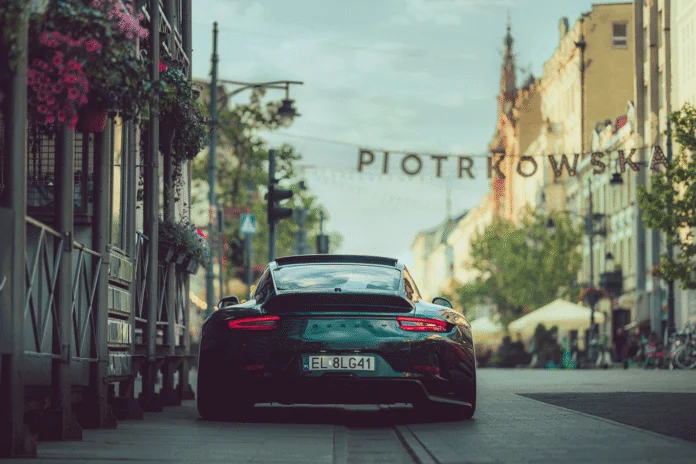
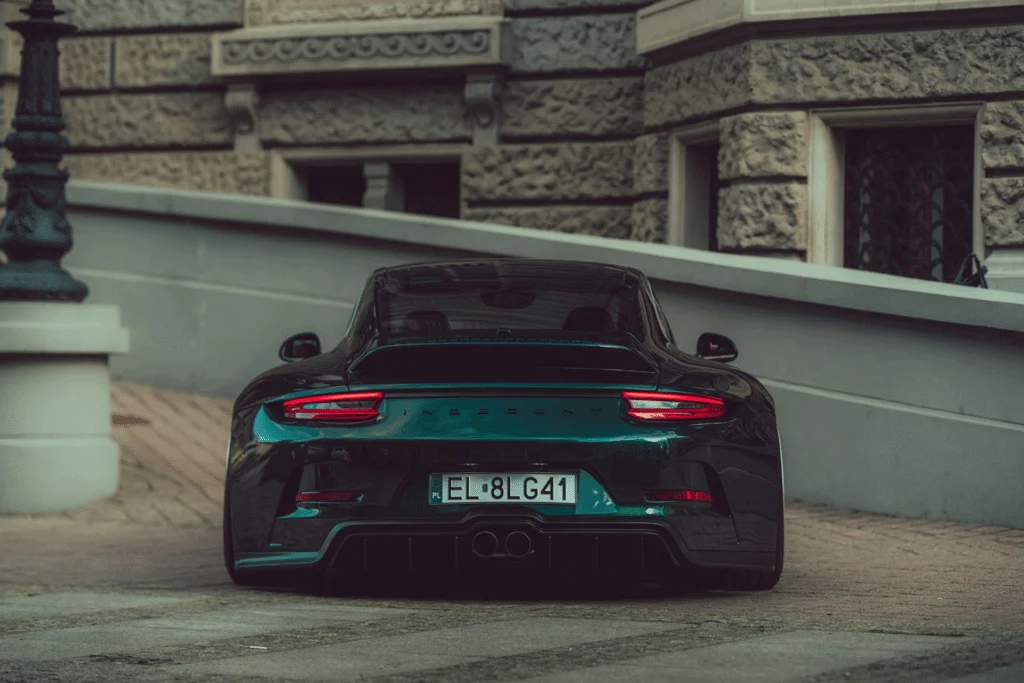
The Indecent 007, a custom dark green Porsche 911 with widebody styling and a ducktail spoiler, is parked on Piotrkowska Street in Łódź, Poland. The rear view shows the "INDECENT" lettering above the license plate, framed by historic buildings and hanging flowers. This photo was captured by Sebastien Polit, founder of Indecent Vehicle Designs.

A Vision in Motion: When the Indecent 007 Captured Our Imagination

It was late June on the edge of Lago di Como in Italy. The lake shimmered under a quiet sky as the sun dipped behind the Alps. A light breeze rolled in across the water, brushing through olive trees and carrying the scent of pine and summer. Along a winding road skirting the lakeside, a low-slung silhouette emerged. Its curves caught the light in all the right places.

This was no ordinary Porsche. It was the Indecent 007, a personalized vision of the Porsche 911 created by Sebastien Polit, founder of Indecent Vehicle Designs and owner of the detailing studio SNB Łódź. With its custom stance, handcrafted details, and unmistakable presence, it stood as a reminder that driving can still be both personal and expressive.

We would like to thank Sebastien for letting us feature his personal build in this story. The Indecent 007 is not just a car. It is a rolling statement of design, purpose, and individuality.


Indecent 007: A Bespoke Porsche 911 Redefined Through Craftsmanship and Design

A Closer Look at Indecent 007: What Makes It Unique

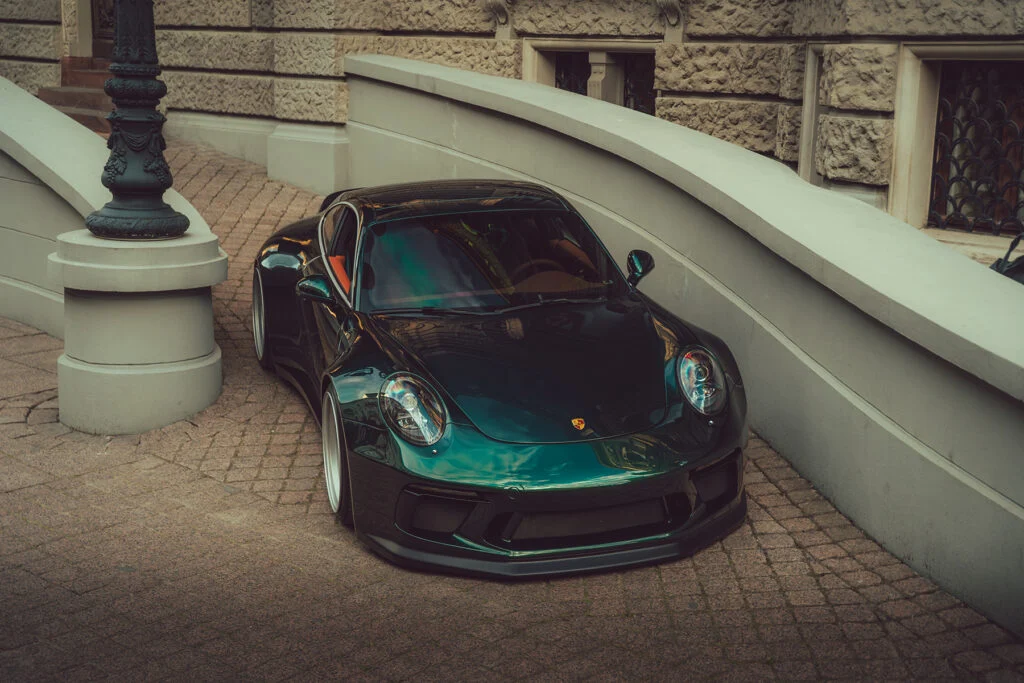
The Indecent 007 is a bespoke build based on a 2013 Porsche 911 (991.1) Carrera with a 7-speed manual transmission. It blends traditional Porsche performance with a custom, handcrafted aesthetic curated by Sebastien Polit and the team at Indecent Vehicle Designs.

This particular build features an Indecent widebody conversion with a distinctive ducktail spoiler, giving the car a muscular yet balanced profile. The body is finished in a custom 4-layer Indecent Racing Green, developed exclusively for build number 007. According to the builder, this paint formula will not be used on any future cars.

Complementing the bodywork are 21-inch Indecent wheels, BC Racing coilovers, and an Indecent active exhaust system with valves, paired with titanium headers for enhanced tone and responsiveness. The ride height, stance, and acoustics have all been tuned to offer a dynamic yet composed driving experience.

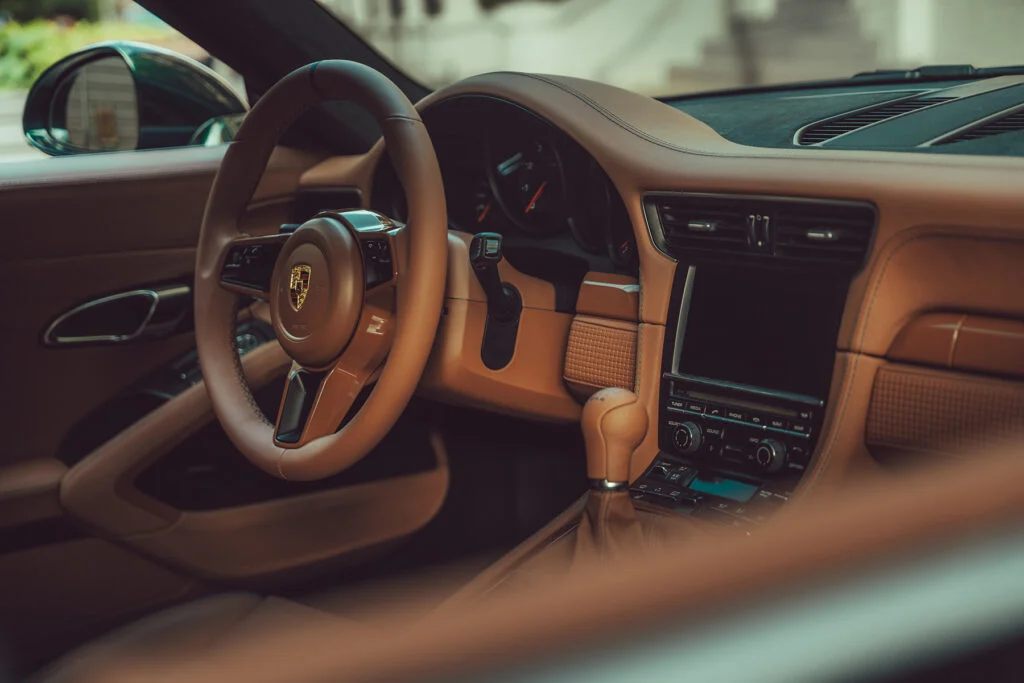
Inside, the Indecent top-tier interior package completes the transformation. Every element, from the upholstery to the trim layout, was selected to match the unique identity of the build. No two Indecent interiors are alike, and this one reflects the same one-off philosophy that defines the rest of the car.


Indecent 007: A Bespoke Porsche 911 Redefined Through Craftsmanship and Design, photo 2

A Legacy of Bespoke 911s: The Indecent Lineup

The Indecent 007 build is part of a growing series of custom Porsche 911 reinterpretations developed by Sebastien Polit and his team. Each model is numbered and entirely unique. Paint formulas, wheel finishes, and interior trims are never repeated. The philosophy is rooted in creating machines that are one of one, where every detail serves a greater design vision.

  • Indecent 001 debuted in bright yellow with Rotiform FUC wheels, an optional ducktail, and show-spec suspension.
  • Indecent 002 took a more aggressive route with magenta paint, a rear wing, and USF wheels.
  • Indecent 003 introduced a convertible configuration with clean silver paint and subtle branding.
  • Indecent 004 followed with a white coupe featuring show-level refinement.
  • Indecent 005 brought in track-focused elements, a race suspension setup, and a 600-horsepower output wrapped in striking red.

Each of these builds is documented with precision and presented as part of the evolving Indecent design language. The 007 build continues that tradition but speaks in a quieter tone. It represents confidence through restraint.


Indecent 007: A Bespoke Porsche 911 Redefined Through Craftsmanship and Design, photo 3

Craftsmanship Over Hype

What sets Indecent apart is its dedication to consistency. The builds are not created to chase trends or please algorithms. They are grounded in a philosophy of thoughtful design. This is evident in every panel gap, every wheel spec, and every stitching pattern.

There is no badge engineering. Every build is fabricated, painted, assembled, and detailed with intention. The craftsmanship seen in 007 extends beyond the usual aftermarket expectations. It carries the weight of a workshop that cares deeply about the end result, from first sketch to final polish.

Sebastien Polit’s background in detailing is clearly present. His studio, SNB Łódź, is known for high-end paint correction and finish work. That same eye for visual precision is embedded in the Indecent process.


Why the Indecent 007 Matters

The Porsche 911 has been customized and reimagined countless times. There are thousands of widebodies, restomods, and GT-inspired kits. Some lean toward motorsport influence. Others aim for show car aesthetics. What sets the Indecent 007 apart is the way it threads a line between form and function, restraint and confidence.

It is not a factory special, and it does not need to be. It is a personal statement, delivered through a familiar shape with new proportions and character. The manual gearbox, titanium exhaust, and handcrafted interior all reinforce this theme. It is a car made for someone who values individuality and timeless design.

This is not about louder. It is about better. Not about being faster than the next car, but about being more meaningful to the one who drives it.


Indecent 007: A Bespoke Porsche 911 Redefined Through Craftsmanship and Design, photo 4

Final Thoughts

The Indecent 007 is more than a Porsche 911 with a widebody kit. It is the seventh chapter in a growing story about how design, craftsmanship, and individuality can meet in one build. It reflects the values of the person who made it and offers something rare in a saturated market: clarity.

Whether it ends up in a private collection or on mountain roads with the wind moving past the ducktail, the Indecent 007 stands as a modern classic. Not because of what it copies, but because of what it creates.

Bugatti Tourbillon: The W16 Farewell and the Rise of Hyper Hybrids

0
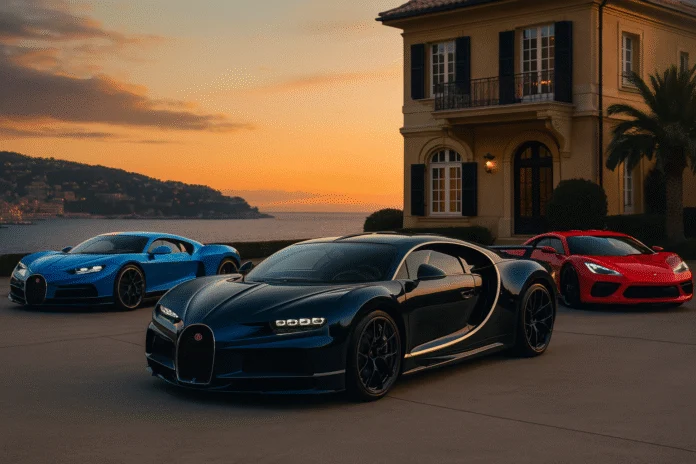
A sleek dark blue Bugatti Tourbillon hypercar parked in front of luxurious Monaco mega mansions at dusk, showcasing the brand’s shift to hybrid performance engineering — designed by VeloxTrend LLC.

A Legacy Echoes in Molsheim

It was a quiet morning in Molsheim, France, when the sound of a dozen Bugatti engines filled the countryside. This wasn’t just any test session. Behind the gates of the Château Saint-Jean, the engineering team had gathered to say goodbye. A final send-off for a powerplant that redefined the meaning of speed and luxury: the W16.

For nearly two decades, the W16 engine roared at the heart of Bugatti’s automotive masterpieces. From the Veyron to the Chiron, it symbolized the pursuit of mechanical perfection. But all eras end. And from this ending emerges a new icon—the Bugatti Tourbillon.

In 2025, the Tourbillon marks a turning point for Bugatti. It is not merely a new model. It is a new philosophy. A hypercar rooted in tradition but launched into the electric future. This is the story of a farewell, a transformation, and a future where hybrid hypercars reign supreme.


A Final Salute to the W16

The 8.0-liter quad-turbocharged W16 engine has become the stuff of legend. Producing over 1,500 horsepower in its final form, it was more than a motor—it was an engineering sculpture. In a world increasingly shaped by downsizing and electrification, Bugatti dared to dream bigger.

But regulations, emissions standards, and the evolution of automotive technology have caught up. The W16 has reached its zenith. With the Chiron Super Sport and Bolide variants, Bugatti gave the world a masterclass in internal combustion. The Tourbillon, then, is not just a replacement. It’s a baton passed to a new generation of propulsion.


Enter the Bugatti Tourbillon: A New Chapter

The Tourbillon gets its name from the world of haute horlogerie. In watchmaking, a tourbillon is a complex rotating cage designed to counteract gravity’s effect on a timepiece’s accuracy. It symbolizes precision, craftsmanship, and a relentless pursuit of perfection.

This metaphor fits perfectly. Bugatti’s new hypercar doesn’t just replace raw power with batteries and silence. It refines, reinvents, and redefines what a hypercar should be in the 2020s and beyond.


The Powertrain: Embracing Hybridization

At the core of the Tourbillon is a brand-new V16 engine developed in collaboration with Rimac and other tech partners. This 8.3-liter naturally aspirated V16 is paired with three electric motors—two on the front axle and one at the rear. Combined, the system produces over 1,800 horsepower.

  • Engine: 8.3L V16 NA
  • Electric motors: 3 (AWD setup)
  • System output: ~1,800 hp
  • Battery capacity: Estimated 25-30 kWh
  • 0-60 mph: Expected in under 2.0 seconds
  • Top speed: Electronically limited to 277 mph+

This is not a plug-in hybrid built for compliance. It’s a performance hybrid designed to push boundaries. With instant torque from the electric motors and the visceral experience of a V16 at full throttle, the Tourbillon delivers a blend of power and emotion unmatched in today’s market.


The Design: Sculpted for the Future

The Tourbillon’s exterior pays homage to Bugatti’s past while embracing a future aesthetic. At first glance, it’s clearly a Bugatti—C-line bodywork, a horseshoe grille, and flowing curves. But subtle changes hint at its modern DNA.

  • Aerodynamics: Active elements include a deployable rear wing and dynamic front flaps.
  • Materials: Extensive use of carbon fiber, titanium, and aerospace-grade alloys.
  • Lighting: LED laser lighting systems inspired by timepieces and jewelry design.
  • Interior: Analog-inspired with exposed mechanical gauges, crafted like a luxury watch.

The cabin features an analog-meets-digital approach. A rotating tourbillon gauge cluster and tactile knobs are balanced by a hidden digital interface, accessible only when needed. This design philosophy bridges the gap between tradition and tomorrow.


Driving Experience: More Than Speed

What makes the Tourbillon so special isn’t just the numbers. It’s the experience.

The electric motors provide torque vectoring, instant acceleration, and regenerative braking. But the naturally aspirated V16 still sings with emotion. The chassis has been tuned to feel alive, not just surgical. Even in an era of AI-assisted driving and autonomous features, the Tourbillon demands and rewards driver input.


The State of Hypercars: A Shift in Identity

The Tourbillon isn’t alone. Ferrari, Lamborghini, and McLaren are all exploring hybrid and electric powertrains. But Bugatti’s move is unique in both scale and philosophy.

While others emphasize sustainability or regulation compliance, Bugatti focuses on emotional resonance. Their hybrid system doesn’t sacrifice character—it amplifies it.

This approach signals a larger shift in the hypercar market:

BrandModelPowertrainTotal HPFocus
BugattiTourbillonV16 + 3 Electric~1,800Emotion + Performance
FerrariSF90 StradaleV8 + 3 Electric986Track Capability + Tech
LamborghiniRevueltoV12 + 3 Electric1,001Sound + Presence
RimacNeveraAll-electric1,914Tech + Speed Record Chaser
KoenigseggGemera (new)V8 Hybrid or Electric~1,700+Innovation + Utility

Bugatti’s strategy places them at the center of a new era—where tradition and tech aren’t opposites, but partners.


Pricing and Rarity

Like all Bugattis, the Tourbillon will be produced in extremely limited numbers. Rumors suggest only 250 units will be made, starting at around $4.5 million USD. Customization through Bugatti’s Sur Mesure program will push some builds well past the $6 million mark.

This isn’t a car for the masses. It’s a statement piece. An heirloom of performance.


Why It Matters

The Tourbillon arrives at a pivotal time in automotive history. The internal combustion engine is under pressure. Electrification is surging. Brands are struggling to preserve character while adapting to change.

Bugatti has chosen to embrace that challenge without compromise.

By blending old-world craftsmanship with next-generation performance, the Tourbillon does more than just replace the Chiron. It anchors the brand in the past while launching it into the future.


Final Thoughts: The Future Roars On

The W16 may be gone, but its spirit lives on. In the echo of the Tourbillon’s exhaust. In the mechanical intricacies of its design. And in the experience it promises to those lucky enough to drive it.

As the hypercar world enters a hybrid age, Bugatti leads not just with speed—but with soul.

McLaren Artura: Lightweight Hybrid, Heavyweight Performance

0
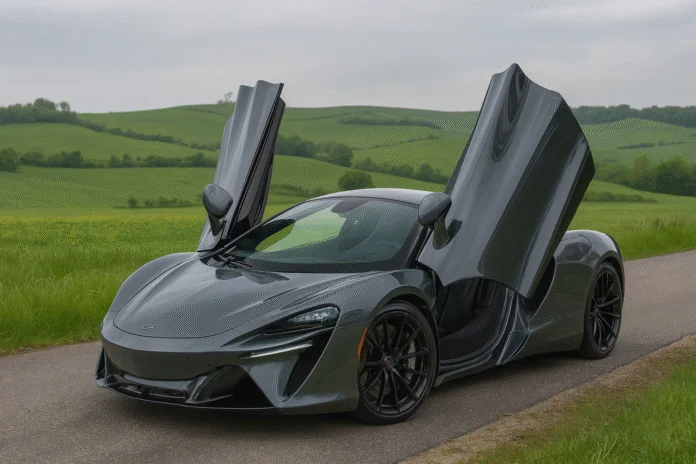
A high-resolution photograph of a McLaren Artura in a sleek gray finish, captured in vivid detail while parked on a scenic countryside road in France. The background features green rolling pastures and distant hills under a clear sky, emphasizing the Artura’s aerodynamic design and dihedral doors. Designed by VeloxTrend LLC.

Introduction: A New Chapter in Supercar Evolution

It was a quiet morning along the Pacific Coast Highway when I first saw the McLaren Artura glide by. No thunderous roar, no theatrical downshifts. Just a low, confident hum followed by the sharp crack of internal combustion engaging. In an age where supercars are often judged by volume and visual drama, the Artura slipped through the frame like a precision tool, engineered for a world more complex than raw speed alone.

That brief moment wasn’t just a passing car — it marked a new kind of performance. McLaren’s entry into hybrid technology is not just about sustainability. It’s about redefining how lightweight design and electric power can coexist with the visceral pleasure of a mid-engine supercar.

McLaren’s Intent: Beyond the P1

Before the Artura, McLaren’s only hybrid was the limited-run P1 — a hypercar with massive horsepower and a hefty price tag. The Artura, however, is built for a wider audience. It signals McLaren’s long-term engineering direction: integrating hybrid performance into the DNA of daily-drivable supercars without compromising the core principles of weight savings and driver engagement.

Powertrain and Performance

At the heart of the McLaren Artura is a 3.0-liter twin-turbocharged V6 engine paired with a compact axial flux electric motor. Together, they produce:

  • Total Output: 671 horsepower
  • Torque: 531 lb-ft
  • 0–60 mph: 3.0 seconds
  • 0–124 mph: 8.3 seconds
  • Top Speed: Electronically limited to 205 mph

The engine revs to 8,500 rpm, delivering a sharp and aggressive powerband. Unlike traditional turbocharged engines, throttle response in the Artura is immediate, aided by the electric motor’s instant torque delivery.

The electric-only mode allows for about 11 miles (19 km) of pure EV driving — ideal for city centers or low-speed residential cruising. While not the centerpiece of the Artura’s capabilities, it adds flexibility and reduced emissions for short-range travel.

Lightweight Engineering

McLaren’s mantra of minimizing weight is evident throughout the Artura:

  • Curb Weight: 3,303 lbs (1,498 kg)
  • Chassis: Carbon-fiber monocoque (MCLA – McLaren Carbon Lightweight Architecture)
  • Electric Motor Weight: Just 34 lbs (15.4 kg)

Despite adding hybrid components, the Artura weighs less than many V8-powered competitors. The carbon tub is designed in-house and produced at McLaren’s Sheffield facility, underscoring their commitment to vertical integration and lightweight manufacturing.

Transmission and Drivetrain

The Artura introduces McLaren’s first eight-speed dual-clutch transmission paired with an electronic rear differential (E-diff). The E-diff improves traction and stability during corner exit without the weight penalty of a mechanical LSD.

There is no reverse gear. Instead, reverse is handled entirely by the electric motor, a decision that saved space and further reduced drivetrain complexity.

Driving Experience

Behind the wheel, the Artura feels surgically precise. The steering — hydraulically assisted — transmits road texture in a way few modern cars do. In a world of over-assisted electric systems, the Artura remains a purist’s tool.

Drive Modes:

  • E-mode: Pure electric, silent operation
  • Comfort: Hybrid mode with a focus on ride quality and efficiency
  • Sport: Prioritizes V6 engagement with electric boost
  • Track: Aggressive throttle, firmer suspension, limited traction control

The transition between EV and hybrid modes is seamless. Most drivers will barely notice when the V6 wakes up, unless they’re pushing hard.

McLaren also added a suite of modern driver aids, including:

  • Adaptive suspension
  • Launch control
  • Variable drift control
  • Forward collision and lane-departure warnings

Interior and Usability

Unlike many supercars, the Artura’s cabin feels inviting rather than intimidating.

  • Display: Digital instrument cluster mounted to the steering column
  • Infotainment: 8-inch portrait touchscreen with Android Auto and Apple CarPlay
  • Seats: Lightweight performance buckets with excellent long-haul comfort
  • Trunk Space: 5.3 cubic feet (front)

Noise insulation has improved compared to earlier McLaren models, but the cabin still lets in just enough sound to maintain engagement. Small details, like the tactile knobs and minimalist design, echo McLaren’s F1-inspired ethos without overcomplicating the user experience.

Comparisons and Segment Position

The McLaren Artura competes in a tightly packed arena, including:

CarPower0–60 mphPrice (Base)
McLaren Artura671 hp3.0 sec$237,500
Ferrari 296 GTB819 hp2.9 sec$338,255
Lamborghini Huracán Tecnica631 hp3.2 sec$244,795
Porsche 911 Turbo S640 hp2.6 sec$230,400
Maserati MC20621 hp3.2 sec$233,995

The Artura slots in with competitive pricing and a unique hybrid approach. It’s not the most powerful in the group, but it emphasizes balance, weight distribution, and tactile driver feel. For enthusiasts prioritizing chassis balance and connection over spec-sheet supremacy, the Artura delivers.

Reliability and Early Feedback

Initial production hiccups delayed the Artura’s release, primarily due to software integration with its new electrical architecture. However, by 2024 most issues were resolved. McLaren has committed to long-term support, and owners are now reporting high satisfaction with overall build quality and reliability.

Efficiency and Ownership Costs

While efficiency is not a typical supercar selling point, the Artura offers:

  • EPA Estimated Fuel Economy: 18 mpg city / 22 mpg highway
  • EV Range: 11 miles (plug-in hybrid capability)
  • Battery: 7.4 kWh lithium-ion, located under the rear deck

Routine maintenance costs remain higher than a Porsche 911, but the Artura offers a 5-year powertrain warranty and available service plans that help offset ownership expenses.

Why the Artura Matters

The McLaren Artura is not just a “first” in McLaren’s lineup — it’s a roadmap. It blends analog feel with hybrid power, lightweight construction with everyday usability. It is a bridge between two automotive eras: one fueled by combustion, the other driven by electrons.

For McLaren, the Artura is a proof-of-concept that hybridization does not mean compromise. In many ways, it amplifies McLaren’s core traits. The lighter weight, sharper handling, and usable powerband make it one of the most approachable and refined McLarens to date.

Final Thoughts

The McLaren Artura isn’t trying to be the loudest or the most dramatic. It doesn’t need to be. It focuses instead on a purer form of performance — one grounded in physics and engineering rather than marketing.

As other manufacturers race to electrify, McLaren has found a thoughtful balance. With the Artura, they’ve shown the automotive world that lightweight hybrid performance is not only possible, but deeply satisfying.

For those seeking a forward-thinking supercar with traditional driving thrills, the Artura is not just worth considering — it may become the benchmark.

The Full Spectrum: C8 Corvette Stingray, Z06, E-Ray, ZR1 & ZR1X Explained

0
Four Chevrolet Corvette models — a Rapid Blue C8, a black ZR1X with front hood vents, a Torch Red Z06, and an Orange E-Ray — driving on a scenic San Francisco road with two leading and two trailing behind. Designed by VeloxTrend LLC.

Sunrise in Bowling Green

It’s 5:30 a.m. in Bowling Green, Kentucky. A faint rumble rolls across campus, carrying with it the promise of speed and excitement. As the sun begins to glow over the Kentucky hills, five Corvettes emerge from the GM assembly plant like gladiators stepping onto the arena floor.

The first in line is the familiar, almost humble C8 Stingray – the everyday hero. Behind it sit the louder, more potent variants: the Z06, the stealthy hybrid E-Ray, the fierce ZR1, and finally the mythic ZR1X – the exclamation point on Chevy’s performance story.

This isn’t just another factory shift. It’s a passing of the torch, a display of evolution from a sports car into true exotic territory. And today, we get to drive them all.


Overview of the Lineup

ModelCategoryBase PriceEngine / Drivetrain
StingraySports / Entry Supercar~$66,0006.2L NA V8, 490 hp, RWD
Z06Supercar~$108,0005.5L NA flat-plane V8, 670 hp, RWD
E-RaySupercar Hybrid~$103,000Stingray engine + eAWD, ~655 hp total
ZR1Hypercar~$173,0005.5L twin-turbo V8, 1064 hp, RWD
ZR1XHypercar (Hybrid)~$250,000ZR1 engine + hybrid torque, 1,250 hp, AWD

The Corvette Stingray – A Supercar in Disguise?

With a starting price of $66,000, the Stingray is often dismissed as a sports car. But when it blasts from 0 to 60 mph in 2.8 seconds, clips 11.2 seconds in the quarter mile, and rings off 7:28 at the Nürburgring, suddenly terms start losing meaning.

The Stingray delivers performance that rivals $200k supercars, but wrapped in approachable packaging. It offers a comfortable cabin, heated seats, and practical cargo room—traits rarely seen in the exotic circle. Its under-3.0 second acceleration and near-200 mph top speed beg the question: Could this be America’s budget supercar?


Z06 – Relentless Track Beast

The roar of the sawed-off 5.5L flat-plane V8 tells you everything you need to know. The Z06 is built to dominate racetracks, yet remain civil enough for everyday use.

  • 0–60 mph: 2.6 seconds
  • 0–100 mph: ~6.2 seconds
  • 1/4 mile: ~10.5 seconds @ 131 mph
  • Nürburgring: 7:10.51

Priced around $108,000, the Z06 brings serious hardware: carbon ceramic brakes, magnetic ride control, and aero-focused cooling. It’s a supercar in horsepower, agility, and feel—but tailored for those who still schedule morning errands.


E-Ray – Quiet Efficiency, Loud Execution

Imagine gliding silently through the neighborhood before stomping the throttle and hearing a chorus of electric motors and V8 exhaust. That is the RR E-Ray – a hybrid supercar that sets new standards for usability.

  • 0–60 mph: sub‑3.0 seconds (AWD torque assist)
  • 0–100 mph: ~6.5 seconds
  • 1/4 mile: ~10.7 seconds

At $103,000, the E-Ray delivers a unique blend of stealth and power. It’s quiet enough for parking garages, yet firm and explosive when unleashed. With eAWD it offers better winter traction and more confidence in low-grip conditions—a feature rare in exotic circles.


ZR1 – Twin-Turbo Terror

Enter the ZR1—Corvette’s answer to the modern hypercar battle. It isn’t quiet, it isn’t subtle, and it sure isn’t cheap. But it’s built to decimate speed limits.

  • 0–60 mph: 2.3 seconds
  • 1/4 mile: ~9.6 seconds @ 152 mph
  • Nürburgring: expected low 6‑minute run (unofficial)

At $173,000, this machine boasts a 5.5L twin-turbo V8, extreme downforce aero, and track-tuned suspension. It leaps into hypercar territory with performance numbers that rival exotics costing double.


ZR1X – The Ultimate Hybrid Hypercar

The ZR1X is Corvette’s pièce de résistance. With a $250,000 sticker, 1,250 hp, AWD, and hybrid electric torque, it is the apex predator.

  • 0–60 mph: Under 2.0 seconds (estimated)
  • 1/4 mile: Under 9.0 seconds (claimed)
  • 0–100 mph: ~3.5 seconds
  • Track Grip: 1g cornering, 1.05g with aero body

The ZR1X transcends mid-engine sports machines—it is a plug-and-play road legal prototype that laughs at boundaries and refuses to lose. It rewrites what Corvette is capable of, putting it shoulder-to-shoulder with the fastest cars on Earth.


Deep Comparisons

MetricStingrayZ06E-RayZR1ZR1X
0–60 mph (s)2.82.6sub-3.02.3under 2.0
0–100 mph (s)~7.6~6.2~6.5~5.0~3.5
1/4 mile (s @ mph)11.2 @ 12310.5 @ 13110.79.6 @ 152<9.0
Nürburgring7:287:10~7:15?~6:50?Sub-6:40?
Top Speed (mph)~194~200~200~215~230+
Price$66,000$108,000$103,000$173,000$250,000
CategorySports / Budget SupercarSupercarSupercar HybridHypercarHybrid Hypercar

Choosing Your Corvette

Stingray – The Everyday Performer

If you want supercar performance without the supercar price tag or sacrifices, the Stingray is unmatched. It’s daily driver-friendly, comfortable, intelligent, and only a twist away from launching into wild speed.

Z06 – Race Track Ready

This model loses little comfort but gains razor-sharp capability. It’s your best bet if you track your car on weekends and still need a usable commuter on weekdays.

E-Ray – Hybrid Convenience

A nod to modern performance, the E-Ray is smooth, quiet, and electric-strong. If you care about traction, emissions, and electric edge, it’s your smartest pick.

ZR1 – Twin‑Turbo Dominator

Want the thrill of a modern hypercar without going all digital? The ZR1 delivers late‑model power, brutish aero, and pure speed in a traditional, visceral way.

ZR1X – The Pinnacle

If price isn’t a limit and you crave the fastest, smartest, loudest, and most dramatic Corvette ever made, the ZR1X is your exclamation mark. Ultimate in power, grip, and status.


Final Take

Corvette’s mid-engine lineup proves one thing: supercars and hypercars are no longer exclusive to royalty and jet setters. From $66k Stingray supercar-worthy performance to the $250k ZR1X hybrid hypercar establishing new global benchmarks, Corvette writes the ultimate American performance story.

These cars are not only fast. They are smart, usable, and practical. They have soul, swagger, and speed—and they fit into your daily routine.

So ask yourself: Do you want to drive fast, or do you want to drive into the legends? Corvette has answered.

The Most Underrated Supercars: High Performance Without the Spotlight

0
A high-resolution photograph featuring the Maserati MC20, Lotus Emira, and Ford GT Mk IV parked on a scenic mountain road in Germany. The backdrop includes rolling green hills, pine forests, and a winding asphalt road, capturing the understated elegance and performance potential of these underrated 2025 supercars. Designed by VeloxTrend LLC.

In a world where headlines are dominated by the Bugatti Tourbillon, Koenigsegg Jesko Absolut, and Lamborghini Revuelto, there exists a tier of supercars quietly defying expectations. These are the machines that don’t often grace the covers of magazines or dominate social media feeds—but they deliver pure driving pleasure, standout design, and remarkable engineering.

Picture a crisp spring morning and a Maserati MC20 humming softly in a garage tucked away in the hills outside Santa Barbara. There is no entourage, no crowd, and no cameras. Just a driver looking forward to a weekend canyon drive. While the world obsesses over $3M hyper hybrids, they are sitting behind the wheel of one of the most exciting cars Maserati has ever produced, for a fraction of the price. That is where the real story of underrated supercars begins: beyond the noise.

What Makes a Supercar “Underrated”?

An underrated supercar typically flies under the radar of mainstream hype yet punches well above its weight in terms of performance, design, and emotional engagement. These vehicles offer:

  • Excellent performance-to-price ratio
  • Unique engineering or aesthetic vision
  • Limited production or boutique brand cachet
  • Real-world usability that complements exotic flair

Below are some of the most overlooked machines in the 2025 automotive landscape, along with what makes them worth your attention.


Maserati MC20: The Rebirth of Italian Performance

Performance

  • Engine: 3.0L Twin-Turbo Nettuno V6
  • Horsepower: 621 hp
  • 0-60 mph: 2.9 seconds
  • Top Speed: 202 mph
  • Price: Around $240,000

The MC20 marks Maserati’s return to true supercar territory. Powered by the in-house developed Nettuno engine, this car is more than a beautiful sculpture. It delivers raw, race-inspired performance with refinement for daily use. With a carbon-fiber monocoque chassis and aerodynamic bodywork, it handles both tight urban corners and long stretches of autobahn with ease.

What truly sets it apart is its character. It feels analog in a digital world—alive, aggressive, and yet, surprisingly comfortable. The interior isn’t overloaded with screens, instead offering a minimalist cabin that puts the driving experience first.

Why It’s Underrated

  • Maserati’s reputation has been more associated with luxury than performance in recent years, but the MC20 redefines expectations.
  • It competes directly with the McLaren Artura and Lamborghini Huracán Tecnica, but it’s less frequently mentioned.

Lotus Emira: Lightweight Legacy Continues

Performance

  • Engine: Supercharged 3.5L V6 or AMG-sourced 2.0L turbo
  • Horsepower: Up to 400 hp
  • 0-60 mph: 4.2 seconds
  • Top Speed: 180 mph
  • Price: Starting around $90,000

The Lotus Emira is the last combustion-engine car the company will produce, making it a collector’s item in its own right. Staying true to the brand’s ethos, it’s lightweight, simple, and razor-sharp on the road. The Emira doesn’t need 700 horsepower to impress—its purity and driver engagement are what count.

You feel every movement, every imperfection in the road, and every ounce of feedback through the steering wheel. It’s a driver’s car through and through.

Why It’s Underrated

  • In a market obsessed with horsepower and 0-60 stats, the Emira’s nuanced dynamics are often overlooked.
  • At under $100,000, it offers a pure sports car experience few can match.

Ford GT Mk IV (2023–2025): The Swan Song of an American Icon

Performance

  • Engine: Twin-Turbo 3.5L EcoBoost V6 (Racing Specification)
  • Horsepower: Over 800 hp
  • 0-60 mph: ~2.0 seconds (est.)
  • Top Speed: 225+ mph (track only)
  • Price: $1.7M (limited to 67 units)

Ford closed out its GT run with a brutal, track-focused version that pays tribute to the 1967 Le Mans winner. The Mk IV is not street legal, which immediately excludes it from casual comparison—but that’s exactly why it’s special. This is a no-compromise machine, built purely for track domination.

Despite its price, the GT Mk IV is overshadowed by European hypercars with similar specs. However, it’s arguably one of the most visceral and precise cars Ford has ever built.

Why It’s Underrated

  • Rare and not street legal, limiting mainstream exposure
  • Represents peak American engineering in a market dominated by European giants

Acura NSX Type S: The Hybrid You Forgot About

Performance

  • Engine: Twin-Turbo V6 with 3 electric motors
  • Horsepower: 600 hp
  • 0-60 mph: 2.7 seconds
  • Top Speed: 191 mph
  • Price: $171,495

The NSX Type S ended the second generation of the NSX with a bang. It’s a balanced, smart supercar that leverages its hybrid system for performance, not just efficiency. While it may not have the street presence of a Ferrari or the drama of a Lamborghini, it quietly outperforms many of its peers in consistency, reliability, and day-to-day drivability.

With under 350 units made for the U.S., the NSX Type S is now a rare beast.

Why It’s Underrated

  • Overshadowed by flashier rivals
  • Quietly one of the most reliable and accessible daily-driven supercars ever built

BMW M8 Competition Coupe: Grand Tourer With Supercar Punch

Performance

  • Engine: 4.4L Twin-Turbo V8
  • Horsepower: 617 hp
  • 0-60 mph: 3.0 seconds
  • Top Speed: 190 mph (limited)
  • Price: Starting at $140,000

It may be a luxury coupe first, but the M8 Competition delivers numbers that rival true exotics. With a plush cabin, xDrive all-wheel drive, and plenty of torque, the M8 bridges the gap between grand touring and brutal acceleration.

The car’s size and weight may not lend themselves to hairpin thrills, but for covering long distances at speed, few do it better.

Why It’s Underrated

  • Not branded as a supercar, but performs like one
  • Often seen as a luxury GT rather than the performance monster it is

Dodge Viper ACR (2016–2017): The Last Analog Track Weapon

Performance

  • Engine: 8.4L naturally aspirated V10
  • Horsepower: 645 hp
  • Downforce: Over 1,200 lb from the aero package
  • Track record: Lap records at 13 circuits, including Laguna Seca and Road Atlanta
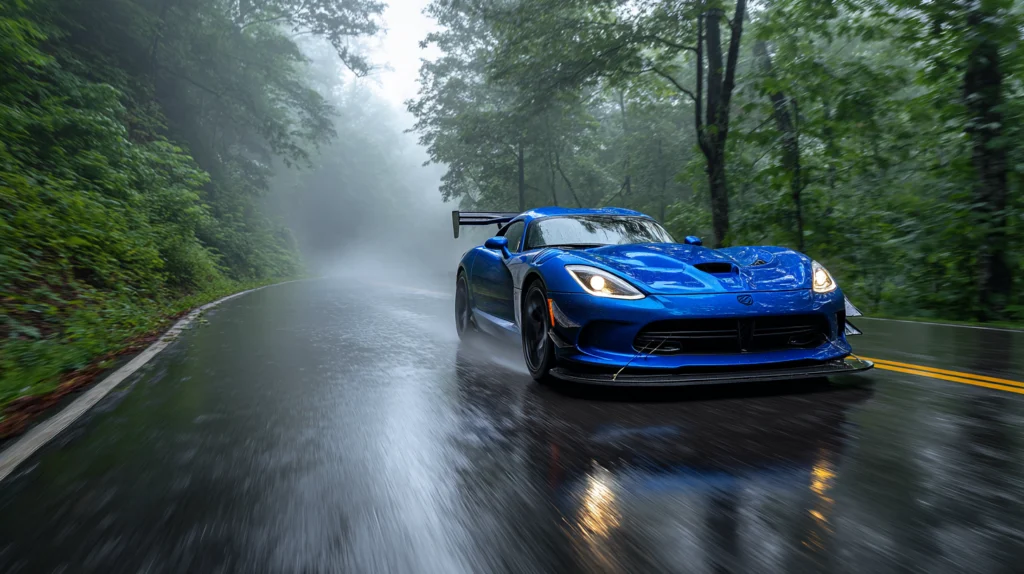
Dodge Viper ACR

The final Viper ACR was one of the fastest track cars ever sold to the public. Its huge V10, manual gearbox and serious aerodynamic package made it a car that rewarded commitment and punished carelessness. It is brutal, demanding, and brilliant.

It is not comfortable, it is not luxurious, and it is not easy to drive. That is exactly the point. In a world of digital supercars with layers of electronic help, the ACR is a reminder of what raw performance used to feel like.

Why It’s Underrated

  • Production ended because of new safety regulations and changing tastes, so the car never got the long run it deserved
  • Its lap records are often forgotten next to newer, more expensive European cars

Alpine A110: Lightness Over Horsepower

Performance

  • Engine: 1.8L turbocharged four-cylinder
  • Horsepower: 252 hp
  • Weight: About 2,400 lb
  • Layout: Mid-engine, rear-wheel drive

The A110 is not powerful by supercar standards, and it does not try to be. It is small, light and mid-engined, and that is where its talent comes from. The handling is sublime, the ride is supple, and the car feels alive at speeds where heavier machines feel bored.

It proves that weight matters more than a horsepower figure, and it is one of the purest driver’s cars on sale.

Why It’s Underrated

  • It has never been sold in the United States, so most American enthusiasts have never driven one
  • It ignores the horsepower wars, so it rarely shows up in spec-sheet comparisons

Lexus LFA (2010–2012): Dismissed When New, Vindicated Now

Performance

  • Engine: Naturally aspirated V10
  • Redline: 9,000 rpm
  • Sound: Exhaust and intake tuned with Yamaha
  • Construction: Carbon fiber body structure

The LFA is not unknown. Enthusiasts know about the V10, the 9,000 rpm redline and the Yamaha-tuned sound. But when it was new, it was widely dismissed as overpriced, and it was not the fastest car in its class.

Time has vindicated it. The carbon fiber construction was ahead of its time, the engineering is remarkable, and the sound is unforgettable. Today it is a collector car valued at around a million dollars.

Why It’s Underrated

  • It was judged on price and lap times instead of engineering and character
  • Its reputation only caught up years after production ended

Performance-to-Price Ratio Breakdown

CarPrice0–60 mphHorsepowerNotes
Maserati MC20$240,0002.9s621 hpCarbon monocoque, in-house engine
Lotus Emira$90,0004.2s400 hpFinal ICE Lotus, analog feel
Ford GT Mk IV$1.7M~2.0s800+ hpTrack-only, carbon tub, rare
Acura NSX Type S$171,4952.7s600 hpHybrid precision, limited production
BMW M8 Competition$140,0003.0s617 hpEveryday usability, sleeper performance

Why These Cars Deserve More Attention

While many consumers chase horsepower and badge prestige, the reality of modern supercars is more nuanced. True value lies in balance, engineering, and purpose. Each of these underrated supercars brings something unique to the table:

  • The MC20 is an Italian comeback story with real racing DNA.
  • The Emira is pure joy for the purist.
  • The NSX Type S blends hybrid tech with balance and performance.
  • The GT Mk IV is a purpose-built monster celebrating Ford’s Le Mans heritage.
  • The M8 wraps brute force in a business suit.
  • The Viper ACR is the last of the analog American track weapons.
  • The Alpine A110 proves lightness beats horsepower.
  • The LFA is a masterpiece that was underappreciated when new.

Final Thoughts

As the supercar landscape shifts toward electrification and digital driving aids, these underrated 2025 machines serve as reminders of what makes performance cars great—soul, story, and character.

They may not always be the loudest in the room, but they speak directly to those who listen with more than just their ears. Whether it’s a Lotus Emira carving through the Alps or a Maserati MC20 tucked into an Italian village garage, these cars are more than specs. They’re experiences.

The Art of Everyday Exotics: Audi R8 GT, Acura NSX Type S, and the Porsche 911 GTS

0
A high-resolution photograph captures three high-performance exotic cars—a Porsche 911 GTS, an Acura NSX Type S, and an Audi R8 GT—parked on a winding coastal road in Monaco, with the Mediterranean Sea and hillside villas in the background. Each car features sophisticated old-money color schemes and realistic lighting details. Designed by VeloxTrend LLC.

A Supercar for the Real World

At 7:00 a.m., the garage door rises. You hear it before you see it — the growl of a naturally aspirated V10, or maybe the hum of an electric motor joining forces with a twin-turbo V6. The neighbors are awake now, and you are too. Today isn’t a track day. It’s a Tuesday. You’re headed to work, the grocery store, or maybe the gym. And yet, you’re doing it in a car that would look just as comfortable on the Nürburgring.

Welcome to the world of everyday exotics.

Once reserved for weekend drives and YouTube reviews, modern supercars like the Audi R8 GT, Acura NSX Type S, and Porsche 911 GTS are rewriting the rules. These machines deliver elite performance without sacrificing comfort, reliability, or livability.

In this guide, we explore how these three cars — each a marvel in its own right — balance art and utility. We compare their specs, real-world usability, design philosophy, and maintenance expectations to help you understand what it means to own a supercar you can drive every day.


Why Everyday Exotics Matter

The exotic car market is evolving. Gone are the days when owning a Ferrari or Lamborghini meant constant shop visits and low mileage. Today’s exotic cars embrace:

  • Comfortable interiors
  • Daily drivability
  • Enhanced reliability
  • Practical tech

These aren’t just cars for the weekend or the track. They’re for the school run, the commute, and the occasional joyride. They’re exotic but accessible, fast but forgiving.

And that’s where the Audi R8 GT, NSX Type S, and 911 GTS stand out. Each represents a different approach to blending power and practicality — and each does so with remarkable success.


Audi R8 GT: The Everyday Supercar’s Swan Song

Engine: 5.2L Naturally Aspirated V10
Horsepower: 602 hp
0–60 mph: 3.3 seconds
Drivetrain: Rear-Wheel Drive (GT model)
Starting Price: ~$250,000 (limited to 333 units)

Legacy and Performance

The Audi R8 has always been known as the “friendly” supercar. Unlike some of its Italian cousins, the R8 never demanded sacrifices. You got the Lamborghini Huracán’s engine with Audi’s understated styling and ergonomic luxury.

The R8 GT, however, marks the end of an era. It’s lighter, sharper, and more engaging than the standard R8, yet still refined enough for everyday use. Stripped of all-wheel drive for the first time in over a decade, the GT brings rear-wheel power and a seven-speed dual-clutch transmission with ultra-quick shifts.

Real-World Usability

  • Cabin Comfort: Heated seats, quality Alcantara and leather, intuitive infotainment
  • Visibility: Surprisingly good for a mid-engine coupe
  • Ground Clearance: Not bad thanks to front lift assist
  • Cargo Space: Minimal but usable for a duffel or briefcase

Maintenance and Reliability

Audi’s reputation for engineering shows here. The R8 GT may be a limited edition, but its underlying platform has been road-tested for years. Service intervals are reasonable, and many owners report excellent reliability.


Acura NSX Type S: Hybrid Precision with Japanese Reliability

Engine: 3.5L Twin-Turbo V6 + 3-Motor Hybrid System
Horsepower: 600 hp
0–60 mph: 2.9 seconds
Drivetrain: All-Wheel Drive
Starting Price: ~$171,000

The Hybrid Supercar That Gets It Right

The original NSX helped redefine what a supercar could be. It was usable, reliable, and capable — all while being mid-engined and exotic.

The NSX Type S, the final evolution of the second-gen NSX, pushes this legacy forward. With improved handling, sharper looks, and more power, it proves that hybrids aren’t just for fuel economy — they’re for performance.

Real-World Usability

  • Cabin Comfort: Modern tech, easy entry and exit, dual-zone climate control
  • Drive Modes: Switch from Quiet to Track in seconds
  • Electric Mode: Great for silent cruising in neighborhoods
  • Cargo Space: 4.4 cubic feet behind the engine — fits groceries or a backpack

Maintenance and Reliability

With its hybrid drivetrain and Honda engineering, the NSX Type S delivers exotic performance with the reliability of a Civic. Yes, servicing the electric motors requires expertise, but the system has proven robust. It’s a car you could put 100,000 miles on — and many owners do.


Porsche 911 GTS: The Everyday Icon

Engine: 3.0L Twin-Turbo Flat-Six
Horsepower: 473 hp
0–60 mph: 3.1 seconds (PDK)
Drivetrain: RWD or AWD (GTS trims vary)
Starting Price: ~$145,000

The Gold Standard of Dual-Purpose Driving

No list of everyday exotics is complete without a Porsche 911. And within the 911 lineup, the GTS trim strikes the perfect balance between the base Carrera and the track-focused GT3.

It’s quick, composed, and packed with tech. You can take it to the office on Monday and the track on Saturday — without touching a single setting.

Real-World Usability

  • Cabin Comfort: Familiar Porsche layout, optional rear seats for kids
  • Ride Quality: Adaptive suspension soaks up potholes
  • Trunk Space: Front trunk + small rear seat space = best practicality in this group
  • All-Weather Use: Available AWD for snowy climates

Maintenance and Reliability

Porsches hold their value for a reason. They last. The 911 GTS, while performance-focused, still fits into Porsche’s culture of precision and durability. Regular maintenance isn’t cheap but it’s predictable.


Head-to-Head Comparison

FeatureAudi R8 GTAcura NSX Type SPorsche 911 GTS
PowertrainV10 NA, RWDTwin-Turbo V6 + Hybrid AWDTwin-Turbo Flat-6, RWD/AWD
0–60 Time3.3 sec2.9 sec3.1 sec (PDK)
Daily ComfortHighVery HighExceptional
Cabin NoiseModerateQuiet in EV modeQuiet, well insulated
Storage SpaceMinimalSmall trunkBest-in-class
Winter CapabilityLowHighVery High (AWD)
ReliabilityHighVery HighVery High
Starting Price~$250,000~$171,000~$145,000

Which One Should You Choose?

Each of these everyday exotics offers something unique:

Choose the Audi R8 GT if:

  • You want a visceral, naturally aspirated V10 experience
  • You appreciate limited-production exclusivity
  • Design and drama matter to you

Choose the Acura NSX Type S if:

  • You want cutting-edge hybrid tech with bulletproof reliability
  • You need a stealthy, comfortable, high-performance cruiser
  • You drive in stop-and-go traffic often

Choose the Porsche 911 GTS if:

  • You prioritize balance, build quality, and all-weather usability
  • You want the widest range of configurability (manual or PDK, RWD or AWD)
  • You value long-term ownership and resale value

Final Thoughts: The Art of Balance

Driving an exotic no longer means storing it eight months a year or sacrificing comfort for speed. The Audi R8 GT, Acura NSX Type S, and Porsche 911 GTS represent a shift — where extreme engineering meets everyday sensibility.

These cars are fast, striking, and engineered to thrill — yet they also idle quietly at red lights, sip fuel (relatively), and survive city potholes. They are proof that the exotic can also be practical. The dream can also be lived.

Owning one means more than weekend photoshoots or quick sprints. It means having a machine that turns every drive into something worth remembering.

Koenigsegg Jesko Absolut: Is This the Fastest Car Ever?

0
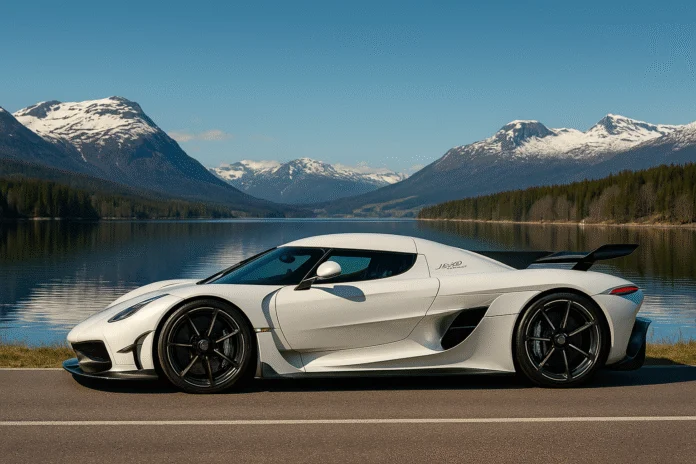
A high-resolution side view of the Koenigsegg Jesko Absolut captured on a scenic Swedish road, highlighting its aerodynamic design and matte finish. VeloxTrend LLC.

The Call of Speed

It starts with a question only a few ever dare to ask: How fast can we go?

Not metaphorically. Not in spirit. Literally. How fast can four tires, an engine, and a human driver move across the Earth before physics or fear steps in?

This is the question Christian von Koenigsegg asked himself in the early 1990s. He was not from Detroit or Stuttgart. He was a dreamer from Sweden with no formal car-making background, just a vision of building something that could stand shoulder to shoulder with giants like Ferrari, Bugatti, and McLaren.

That dream gave birth to Koenigsegg Automotive. And now, three decades later, the Jesko Absolut stands at the edge of what may be possible. A hypercar engineered not just to go fast, but to rewrite the meaning of fast.


What Makes the Jesko Absolut So Special?

Unlike its track-focused sibling, the Jesko Attack, the Jesko Absolut was designed for one purpose: to achieve the highest top speed of any production car in history.

To do that, Koenigsegg reimagined everything. Every panel, every surface, and every internal component was sculpted to reduce drag, enhance control, and maintain stability even as speeds climb well past 300 mph.


Aerodynamics and Design

Visually, the Jesko Absolut is cleaner and more restrained than many of its rivals. That is by design. Koenigsegg removed the aggressive rear wing found on the Jesko Attack and extended the bodywork at the rear to reduce turbulence.

  • Drag coefficient: just 0.278
  • Hidden aerodynamic elements reduce lift and drag
  • Longtail body design increases high-speed stability

This is not a car that needs to look wild to prove itself. The speed speaks for it.


Heart of a Monster: The V8 Engine

At the center of the Jesko Absolut is a 5.0-liter twin-turbocharged V8 engine. But this is no ordinary V8. It is one of the most powerful and technologically advanced combustion engines ever put into a road car.

  • Up to 1,600 horsepower on E85 fuel
  • 1,106 lb-ft of torque
  • Flat-plane crankshaft for reduced weight and faster revving
  • Redline at 8,500 RPM

Everything in this engine was built for maximum speed, but also for sustained performance at extreme conditions.


Light Speed Transmission

Traditional gearboxes would not be able to handle the demands of the Absolut. That is why Koenigsegg invented its own: the Light Speed Transmission.

  • 9-speed, multi-clutch transmission
  • Instant gear skipping (from 7th to 4th or any gear without delay)
  • Weighs only 198 pounds
  • Mechanically simpler and more efficient than a dual-clutch system

The result is a system that keeps the engine in its ideal power band at all times, helping the car accelerate without hesitation.


Chassis and Suspension Engineering

Speed is useless without control. Koenigsegg addressed this by building the Absolut around a carbon fiber monocoque chassis that is both ultra-light and exceptionally strong.

  • Front and rear triplex dampers for better ride quality and aero stability
  • Adaptive suspension for low-speed comfort and high-speed control
  • Near-perfect weight distribution

At over 250 mph, most cars begin to lose connection with the road. The Jesko Absolut stays planted.


Will It Break the Record?

So far, Koenigsegg has not conducted a public top-speed run. But CEO Christian von Koenigsegg has stated that the Jesko Absolut is capable of 330 miles per hour. If that is verified, it will comfortably surpass the current claimed and contested records held by the Bugatti Chiron Super Sport 300+, SSC Tuatara, and Hennessey Venom F5.

Importantly, Koenigsegg is not known for exaggeration. They typically overdeliver. That makes the possibility of 330 mph more than just a marketing line.


Why It Matters in 2025

We live in an era of digital dashboards, electric motors, and autonomous driving. Performance is being redefined by algorithms and range maps. The Jesko Absolut is a reminder that raw mechanical excellence still has a place.

This car does not drive itself. It does not make compromises. It is built to push the envelope of what the combustion engine can do—perhaps for the last time.

For car lovers, engineers, and even skeptics, the Jesko Absolut stands as a monument to what humans can still build with vision, passion, and courage.


Final Thoughts

Whether or not it takes the speed crown, the Jesko Absolut has already achieved something important. It proves that the chase for speed is not over. There are still rules to break, limits to test, and roads to conquer.

When the time comes and the Absolut is unleashed in the right conditions, one thing is certain: it will not just go fast. It will make history.