Home Blog Page 27

Jaguar F-Type R75: The Final Roar of a Modern Cat

0
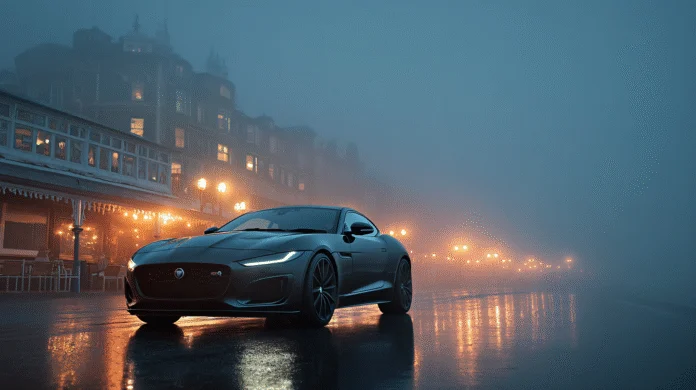
A sleek Brighton Blue Jaguar F-Type R75 is parked along a foggy, lamp-lit coastal road in Brighton, England at dusk. The reflections of the car and streetlights shimmer on the wet pavement, with historic seaside architecture visible in the misty background.

Brighton, UK – Where the Wind and the Legacy Roar

The early morning mist still hung low over the cliffs of Brighton as a Brighton Blue Jaguar F-Type R75 cut through the coastal roads with a symphony of snarling V8 fury. Locals paused their seaside jogs to catch a glimpse—because even in a town steeped in character, this car stole the show. Its low, wide body glistened under the weak English sun, reflecting a blend of history and progress. For Jaguar, this was more than a drive. It was a farewell.

In 2025, as the world speeds toward an electric future, Jaguar delivers a swan song to the combustion era—the F-Type R75. This is not just a sports car. It’s a rolling tribute to 75 years of passion, racing spirit, and British elegance. This is the final roar of a modern cat.


A Heritage Worth Honoring

The Jaguar F-Type launched in 2013 as the spiritual successor to the legendary E-Type. Sleek, aggressive, and unapologetically British, it blended grand touring class with raw performance. The R75 edition, built to commemorate 75 years of Jaguar sports cars, is the ultimate send-off. It marks the end of the internal combustion chapter with emotion and power.


Performance: 575 Reasons to Smile

Under the hood of the F-Type R75 roars a 5.0-liter supercharged V8, churning out 575 horsepower and 516 lb-ft of torque. It sends power through an 8-speed Quickshift automatic and all-wheel drive—reaching 0 to 60 mph in 3.5 seconds and a top speed of 186 mph.

But it’s not just the numbers. It’s the way this Jag delivers speed: a torque-rich, sound-infused surge that feels analog in the best way. Cornering is agile, yet smooth, thanks to an adaptive suspension system, torque vectoring, and a chassis tuned to celebrate driving—not just efficiency.


Exterior Design: Stealth Meets Glamour

The R75 isn’t subtle, but it’s tasteful. Dressed in Brighton Blue, it celebrates its coastal roots with a look that’s both elegant and menacing. Its 20-inch gloss black wheels, R75 badging, and black exterior trim set it apart from lesser models.

The shape is unmistakable Jaguar: long hood, low profile, muscular haunches. It’s a modern sculpture that honors the design lineage without slipping into retro gimmicks.


Interior: Luxury That Doesn’t Scream

Inside, the R75 feels like a handcrafted British lounge. You’re wrapped in Windsor leather and greeted by a digital cockpit with a 12.3-inch configurable display. Performance seats, aluminum trim, and subtle R branding add a sporty flair without losing the grand tourer identity. It’s a driver’s car—but with the refinement of a Bentley coupe.


Driving Experience: The End of the V8 Symphony

The Jaguar F-Type R75 drives like it knows it’s the last of its kind. Every downshift delivers crackles and pops that feel more like defiance than design. Whether you’re cruising through winding country roads or hammering the throttle on the autobahn, this car connects with your senses in a way few modern vehicles do.

It’s not about efficiency. It’s about emotion. And in 2025, that’s becoming rare.


What Sets the R75 Apart in 2025

  • Final V8-powered Jaguar sports car
  • Limited production model with collector value
  • R75-specific design elements and color options
  • Raw, visceral driving feel you can’t get from EVs
  • A bridge between old-school driving passion and modern tech

How It Stacks Up

If you’re considering the Porsche 911 Carrera GTS or BMW M8 Coupe, you’ll find strong competition—but neither captures the emotional drama of the F-Type R75. It’s not just about lap times. It’s about how a car makes you feel.


A Final Word

As Jaguar shifts to an all-electric lineup, the F-Type R75 stands as a tribute to everything the brand did right with performance cars. It’s a collector’s piece, a canyon carver, and a coastal cruiser all in one. If this is the last gasp of the V8 Jaguar era, it’s one worthy of standing ovations.
Corvette ZR1 2025 vs. Lamborghini Revuelto 2025 vs. Ferrari SF90 Hypercar Showdown

0
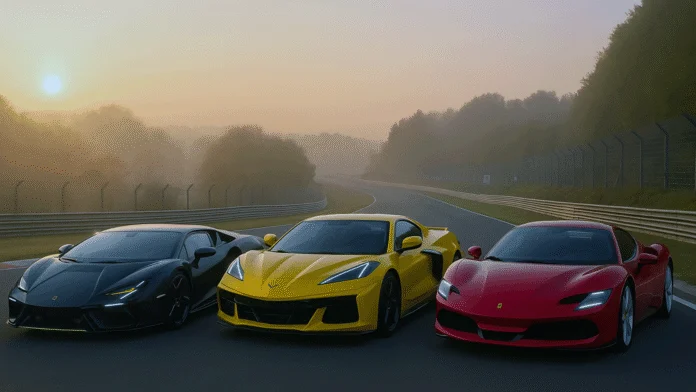
A high-resolution photograph shows three high-performance sports cars lined up at the Nürburgring Nordschleife in the early morning. From left to right, the matte black Lamborghini Revuelto, bright yellow 2025 Chevrolet Corvette ZR1, and red Ferrari SF90 sit on the track under a lightly clouded blue sky, with scenic hills and barriers in the background. The image captures the realism of a pre-race moment with accurate lighting, shadows, and car reflections.

Introduction: American Thunder Echoes in the Eifel Mountains

It’s early morning on the edge of the Nürburgring Nordschleife. The air is sharp, the skies moody, and the shrill whine of turbochargers slices through the mist. Among the usual suspects—camouflaged Ferraris and whisper-quiet Lamborghinis—a new contender has arrived. Wide, low, brash, and undeniably American, the 2025 Chevrolet Corvette ZR1 is back. And it’s not here to make friends.

What once was called “The Corvette from Hell” has returned with more firepower than ever: 1,064 horsepower, rear-wheel drive, and twin turbos strapped to a flat-plane-crank V8. It’s a monster aimed squarely at Italy’s finest—Lamborghini’s Revuelto, Ferrari’s 296 GTS, and the hybrid-hyper Ferrari SF90.

But can the ZR1—a car priced under $200,000—really challenge these half-a-million-dollar exotics on power, performance, and even prestige? Let’s find out.


Meet the Contenders: American and Italian Icons

ModelHorsepower0-60 mph1/4 MileTop SpeedPrice
Corvette ZR1 (2025)1064 hp2.4 sec9.8 sec212 mph~$160,000
Ferrari 296 GTS819 hp2.8 sec10.4 sec205 mph~$370,000
Ferrari SF90986 hp2.5 sec9.6 sec211 mph~$525,000
Lamborghini Revuelto1001 hp2.5 sec9.7 sec217 mph~$600,000

The ZR1 is the only RWD car here. It’s also the most powerful and the least expensive—by a long shot.


Corvette ZR1 (2025): Hypercar in Disguise

GM didn’t just aim to break records. They wanted to upend the hypercar hierarchy.

The ZR1’s 5.5L twin-turbo LT7 V8 is the most powerful V8 ever offered in a production car. With a flat-plane crank and the largest turbos ever fitted to a road car, it generates over 1,000 hp on pump gas. No hybrid boost, no all-wheel drive—just pure combustion fury sent to the rear wheels via an 8-speed dual-clutch transmission.

Its quarter-mile time of 9.8 seconds at 146 mph makes it the fastest-accelerating rear-wheel-drive car ever tested.

Yet it’s not just about raw speed. GM’s engineers refined the chassis with adaptive dampers, Michelin PS4S tires (or Cup 2Rs with the ZTK track package), and a revised aerodynamic kit good for over 1,200 pounds of downforce.

Despite all that performance, the ZR1 is surprisingly civil. It rides well, handles predictably, and doesn’t try to kill you on exit. It’s a street car that devours racetracks.


Ferrari 296 GTS: The Sensual Hybrid

In many ways, the 296 GTS represents Ferrari’s philosophical shift. Gone is the high-revving V8 of the 488 and F8. In its place is a 120-degree twin-turbo V6 mated to a plug-in hybrid system.

Power? 819 hp.

The 296 doesn’t chase lap times the way the SF90 does. Instead, it balances finesse and speed with one of the most emotionally engaging driving experiences available. It’s lighter than the SF90, sharper on turn-in, and supremely composed under throttle.

Yet it’s also more relaxed. This is a car you cruise in, not just crush lap records with. And with its elegant styling and open-roof design, it’s arguably the most beautiful of the group.


Ferrari SF90 Stradale: The Hybrid Performance Benchmark

The SF90 was Ferrari’s response to the hypercar arms race. A twin-turbo V8 paired with three electric motors pushes total output to 986 hp—and it’s all channeled through a razor-sharp AWD system.

Performance is relentless. It hits 60 mph in 2.5 seconds and blitzes the quarter-mile in 9.6 seconds—even quicker than the new ZR1.

But that grip comes at a cost: weight. At 3,900 pounds, the SF90 is the heaviest Ferrari ever. Yet its power, AWD system, and complex aero help disguise that mass—especially on the track.

If the ZR1 is brash, the SF90 is clinical. It’s the surgical scalpel to the ZR1’s sledgehammer.


Lamborghini Revuelto: Raw Power Meets Electrification

Say hello to Lamborghini’s first plug-in hybrid supercar. The Revuelto combines a screaming 6.5L naturally aspirated V12 with three electric motors for a combined 1,001 hp.

It’s brutal, loud, and dramatic—everything a Lamborghini should be. Yet it’s also shockingly fast. 0–60 in 2.5 seconds, quarter-mile in 9.7, and a top speed of 217 mph make it the fastest here in outright speed.

Where the Ferrari SF90 feels precise and calculating, the Revuelto is wild and theatrical. Steering is fast, the throttle sharp, and the V12’s howl intoxicating.

Compared to the ZR1, the Lambo feels more analog in character but digital in delivery. And despite being nearly $600,000, it doesn’t offer more fun—it just does it louder.


Head-to-Head Performance Comparison

MetricZR1296 GTSSF90Revuelto
Horsepower1064 hp819 hp986 hp1001 hp
0–60 mph2.4 sec2.8 sec2.5 sec2.5 sec
1/4 mile9.8 sec10.4 sec9.6 sec9.7 sec
Top speed212 mph205 mph211 mph217 mph
DrivetrainRWDRWDAWDAWD
Transmission8-speed DCT8-speed DCT8-speed DCT8-speed DCT
Weight (lbs)3,8503,4953,9004,100

While the Ferrari SF90 wins on launch grip and hybrid smoothness, the Corvette ZR1 shines in raw delivery. It’s the fastest RWD car here—and the most engaging in terms of steering feedback and driver involvement.


Usability and Daily Driving

The C8 platform has always been the most livable Corvette. The ZR1 continues that tradition. Soft enough for daily driving (in non-ZTK trim), it also retains cargo space and reasonably good visibility.

Ferrari’s 296 GTS and SF90 offer hybrid driving modes and even EV-only functionality in short bursts. However, both suffer from limited cargo room and low ground clearance.

The Revuelto? Forget practicality. It’s wide, loud, and has the turning radius of a yacht.

Verdict: The ZR1 wins the usability test—again.


Price, Value, and Ownership

Let’s not beat around the bush. The ZR1 costs $160,000. The SF90 and Revuelto cost more than 3X that. And even the 296 GTS is over double.

The Corvette gives you hypercar power and lap times for the price of a mid-range luxury SUV. It’s built in America, parts are cheap, and it doesn’t scream “please steal me” the way a Ferrari does.

However, the Italians still carry unmatched badge prestige. The Ferrari keyfob and the bull badge still hold sway in elite circles.


Final Verdict: Which One Wins?

Each of these cars represents a different flavor of excess:

  • The ZR1 is a blue-collar hero turned assassin. Its price-to-performance ratio is unbeatable, and it delivers the kind of theater once reserved for cars three times the price.
  • The SF90 is the numbers game winner. It’s quicker and more refined, but it feels engineered more than emotional.
  • The 296 GTS is the driver’s car, the purist’s choice, light and delicate in a world of sledgehammers.
  • The Revuelto is Lamborghini unleashed—absurd, aggressive, and unapologetically wild.

But if you want the best blend of performance, usability, price, and theater?

The 2025 Corvette ZR1 is the king of the hill.

And just like its predecessors, it didn’t just show up—it showed off.

Maserati MC20 Cielo: Italian Performance With the Sky Above

0
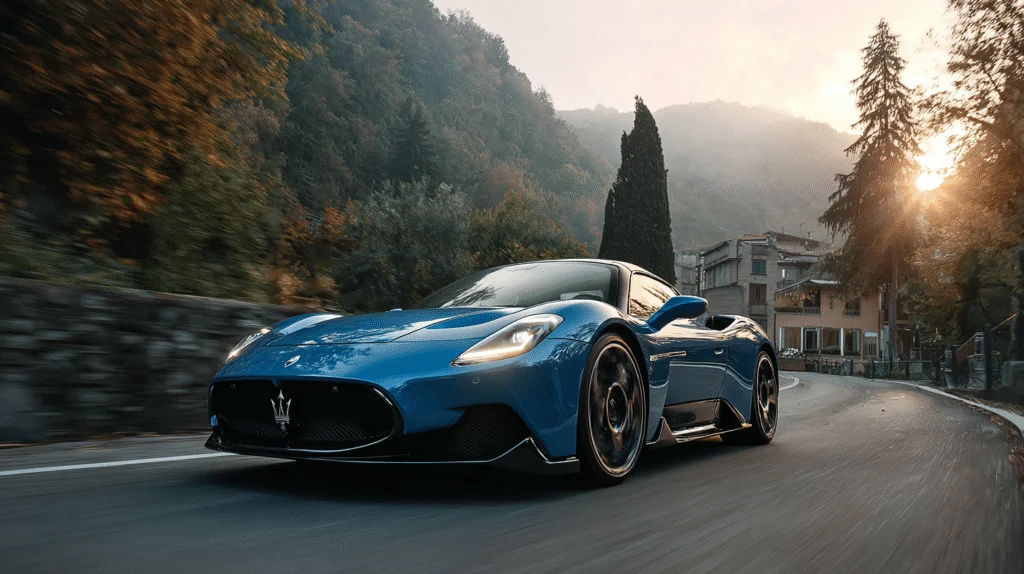
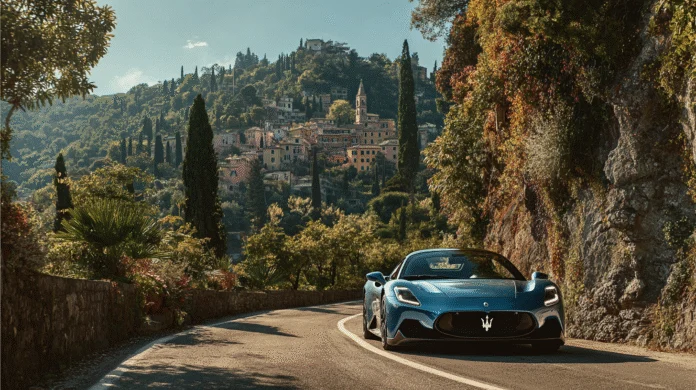
A vibrant blue Maserati MC20 Cielo convertible cruises through the scenic hills of Portofino, Italy, surrounded by lush greenery and pastel-colored villas, captured for VeloxTrend LLC’s automotive editorial content.

A Sunset Drive Through Portofino

As the sun dipped beneath the Ligurian Sea, casting a golden hue over the winding roads of Portofino, a sound unlike any other echoed through the coastal cliffs. It wasn’t thunder. It wasn’t a storm. It was the unmistakable roar of the Maserati MC20 Cielo, top down, carving its way through paradise. With the sea breeze kissing your skin and a V6 twin-turbo growl singing behind you, the MC20 Cielo isn’t just a car. It’s a declaration — a reminder that driving, at its best, is a sensory experience.

In a world shifting toward silent electric propulsion, the MC20 Cielo holds the line for passion, precision, and raw performance — all while letting the sky in.


What is the Maserati MC20 Cielo?

The Maserati MC20 Cielo is the convertible version of Maserati’s MC20 supercar, launched originally in 2020. “Cielo” means “sky” in Italian — a fitting name for a car that pairs brutal performance with an electrochromic glass roof that disappears at the push of a button.

Unlike many convertibles, the MC20 Cielo sacrifices almost nothing in the transition from coupe to spider. It maintains the same carbon fiber monocoque chassis, preserving rigidity and weight balance while adding open-top exhilaration.


Performance Specs: Numbers That Matter

Despite its stylish, luxurious nature, the MC20 Cielo is a proper performance machine. Let’s take a closer look at the numbers that define it in 2025:

  • Engine: 3.0-liter V6 twin-turbocharged “Nettuno”
  • Horsepower: 621 hp
  • Torque: 538 lb-ft
  • 0–60 mph: 3.0 seconds
  • Top Speed: 199 mph
  • Transmission: 8-speed dual-clutch automatic
  • Drive Type: Rear-wheel drive
  • Weight: ~3,400 lbs (only ~143 lbs more than the coupe)

That power comes from Maserati’s innovative pre-chamber combustion system, derived from Formula 1 tech. It delivers a razor-sharp throttle response and a unique exhaust note that remains rich and emotional, even by Italian standards.


Retractable Glass Roof: Engineering Elegance

The highlight of the Cielo is its retractable glass roof. Unlike traditional fabric or metal hardtops, Maserati went all-in on electrochromic glass, which can switch between clear and opaque with a touch of a button. It opens in just 12 seconds, merging Italian design with cutting-edge tech.

Why it matters:

  • You can drive under open skies or a shaded canopy without sacrificing design
  • Even with the top closed, light floods into the cabin
  • The roof integration is seamless, preserving aerodynamic lines

In 2025, this roof still stands out as one of the most elegant convertible systems on the market.


Design Philosophy: Italian Art in Motion

The MC20 Cielo doesn’t shout. It whispers, seduces, and then screams when provoked. From its butterfly doors to its low-slung, sculpted body, every line has purpose.

Exterior Highlights:

  • Clean bodywork, devoid of excessive vents or spoilers
  • Subtle Maserati trident badges integrated into the C-pillars
  • Rear light signature inspired by past Maserati sports cars
  • Aerodynamic balance achieved without a large rear wing

Interior Design:

Inside the cabin, Maserati has created a minimalist, driver-focused space with premium materials:

  • Alcantara and carbon fiber throughout
  • Digital instrument cluster and infotainment
  • Drive mode selector with GT, Sport, Corsa, and Wet settings
  • Unique touches like laser-engraved tridents in the headrests

In true Italian fashion, it’s both high-performance and haute couture.


Daily-Drivable Supercar?

Surprisingly, yes.

The MC20 Cielo isn’t just about blistering speed. It offers adaptive suspension, decent ground clearance (with front axle lift), and reasonable cargo space for a supercar. Unlike more hardcore rivals, you can enjoy this car in urban settings, coastal cruises, or weekend escapes — not just on a racetrack.


Maserati MC20 Cielo: Italian Performance With the Sky Above

MC20 Cielo vs the Competition (2025)

Car0–60 mphTop SpeedBase Price (USD)Layout
Maserati MC20 Cielo3.0 sec199 mph~$260,000RWD, V6 TT
Ferrari 296 GTS2.9 sec205 mph~$345,000RWD, V6 Hybrid
McLaren Artura Spider3.0 sec205 mph~$280,000RWD, V6 Hybrid
Lamborghini Huracán Sterrato3.3 sec160 mph (off-road biased)~$270,000AWD, V10 NA
Porsche 911 Turbo S Cabrio2.7 sec205 mph~$243,000AWD, F6 TT

While some competitors may be quicker or offer hybrid boosts, the MC20 Cielo stands out for its raw purity, character, and design elegance. It’s a true gentleman’s exotic.


2025 Updates and Refinements

Maserati has been careful not to disrupt the winning formula, but in 2025 the MC20 Cielo receives:

  • Updated infotainment UI for better responsiveness
  • Improved parking camera resolution
  • Slight retuning of the adaptive suspension for smoother city driving
  • More customization options via Maserati Fuoriserie program

Ownership and Experience

Owning a Maserati MC20 Cielo in 2025 is about more than driving. It’s an entry into a world of curated events, track experiences, and Italian luxury.

Key ownership perks include:

  • Maserati personal concierge support
  • Factory driving experiences in Italy and select U.S. tracks
  • Global roadside support and maintenance packages

Why the Maserati MC20 Cielo Stands Out in 2025

  • Open-Top Performance: Without the weight penalty or sacrifice in rigidity
  • Formula 1 Engine Tech: Nettuno V6 still feels futuristic
  • Timeless Design: Subtle, elegant, and unmistakably Italian
  • Understated Rarity: Less common than a Ferrari or Porsche, but equally admired
  • Sensory Experience: From the roar of the V6 to the feel of Italian leather, the Cielo is full of emotion

Final Thoughts

Driving the Maserati MC20 Cielo is about embracing everything we love about cars: the sound, the design, the rush of speed, and the connection to the road and sky. In 2025, it remains one of the most beautiful, emotional supercars available — made even more special by the fact that you can experience it with the roof down.

For those who believe driving is still an art form, the MC20 Cielo is your canvas.

Rimac Nevera: How Fast Can Electric Really Go?

0
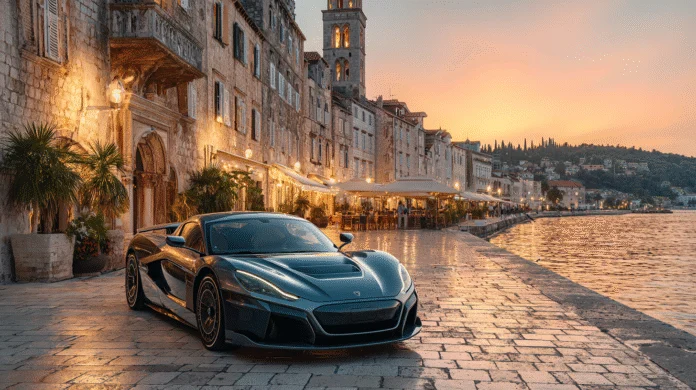
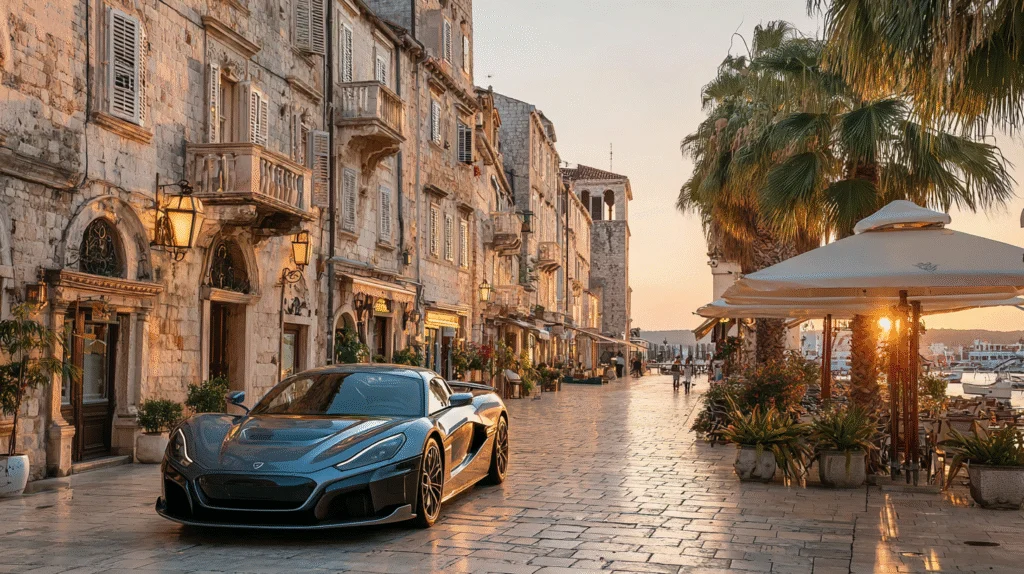
A Rimac Nevera hypercar parked along the lakefront promenade at sunrise in Lucerne, Switzerland. The electric vehicle’s sleek design reflects the morning light, surrounded by historic architecture and calm waters. Captured for VeloxTrend LLC, showcasing luxury performance in a serene European setting.

Sunrise in Split, Croatia

The air was crisp as the first light of dawn stretched over the Adriatic coastline. The narrow stone streets of Split were still quiet, the city’s Roman architecture glowing gently under the amber glow of street lamps. Down by the promenade, a whisper broke the silence — not from a combustion engine roaring to life, but from the futuristic hum of something far more revolutionary.

It was a Rimac Nevera, poised like a predator under the soft Croatian sky. Its low stance, muscular carbon-fiber body, and aggressive front end looked out of place in this ancient city, and yet — it felt right at home. It wasn’t here just to cruise. It was here to prove a point: electric cars aren’t just catching up — they’re leading the charge.


The Story Behind Rimac

Rimac Automobili, founded by Mate Rimac in Sveta Nedelja, Croatia, has gone from a garage-built BMW E30 conversion to creating the world’s fastest production electric hypercar. The Nevera is not just a statement of speed — it’s the product of innovation, obsession with detail, and Croatia’s entry into the elite club of hypercar builders.

Built from scratch and entirely in-house, the Nevera represents Rimac’s full vision of what electric performance can be when no compromises are made.


Powertrain: More Than Just Electric

The Rimac Nevera is powered by four independent electric motors — one at each wheel. Together, they produce a staggering 1,914 horsepower and 2,360 Nm (1,741 lb-ft) of torque. The car launches from 0 to 60 mph in just 1.74 seconds, making it quicker than a Bugatti Chiron, Tesla Model S Plaid, or anything else with four wheels.

More impressive is the 0 to 100 mph sprint, which it completes in 3.21 seconds, and the quarter mile in 8.25 seconds, verified and recorded by independent testing.

Top speed? An earth-shattering 258 mph.

This isn’t electric “catching up.” This is electric rewriting the rules.


Battery and Range

The Nevera’s 120 kWh lithium-manganese-nickel battery pack is not just about longevity — it’s about performance. Rimac’s T-shaped battery is structurally integrated into the monocoque chassis and strategically placed for perfect weight distribution and rigidity.

Range? Officially, the Nevera can travel up to 300 miles on a single charge under WLTP standards. But let’s be honest — no one’s buying this car for road trips. Still, having that range in your back pocket, along with ultra-fast 500 kW charging capabilities, is a testament to Rimac’s balanced approach to power and practicality.


Chassis and Aerodynamics

The Nevera rides on a carbon-fiber monocoque chassis, making it one of the stiffest cars ever built. This rigidity, combined with a complex active suspension system and all-wheel torque vectoring, gives the car agility typically associated with far lighter vehicles.

Its aerodynamics are fully active — the front splitter, rear diffuser, and wing adjust in real time depending on the drive mode and speed. Whether you’re slicing through a corner on the track or braking hard on a mountain descent, the car is constantly optimizing airflow and grip.


Interior: Futuristic, Not Gimmicky

Step inside the Nevera and you’re greeted by a blend of minimalist design and driver-centric technology. Three screens dominate the dash — one for the driver, one for the passenger, and a central infotainment display. Despite its hypercar pedigree, the cabin is surprisingly usable. It features real leather, exposed carbon, CNC-milled aluminum controls, and enough comfort to make short trips enjoyable.

What stands out is Rimac’s proprietary telemetry system. It records over 250 data channels in real time — from G-forces to steering angles to brake temperatures — which you can later review on the car’s interface or export to analyze on your laptop.

For those who track their cars religiously, this is a dream.


Driving Experience: Beyond Human Reflexes

The Nevera doesn’t just accelerate — it bends reality. The instant torque from the four motors delivers acceleration in a way that no internal combustion car ever could. You don’t wait for revs to build. You don’t shift. You just go.

Cornering is nearly telepathic. Thanks to the torque vectoring system dubbed R-AWTV (Rimac All Wheel Torque Vectoring), each wheel receives independent power based on the car’s yaw, pitch, and steering inputs. It’s not just smart — it’s surgical.

This makes the Nevera easy to drive fast, but with layers of complexity underneath for those who want to push the envelope.


Track Modes and Drift Control

The car comes with seven driving modes: Range, Comfort, Sport, Track, Drift, and two customizable modes. Drift mode is particularly exciting — allowing you to send more torque to the rear wheels for smoky slides, all without sacrificing control.

On the other end, Range mode optimizes everything — including ride stiffness and energy distribution — for maximum efficiency, even disabling unnecessary aerodynamic elements to reduce drag.


Safety and Tech

The Nevera is equipped with ADAS (Advanced Driver Assistance Systems) including adaptive cruise control, lane-keep assist, emergency braking, and more. Rimac plans to roll out over-the-air software updates to continuously improve features, including dynamic driving assistance.

The car also supports full OTA updates, a cloud-based telemetry system, and customizable traction thresholds — giving you F1-level control over how much grip and slip the car allows.


Rimac Nevera: How Fast Can Electric Really Go?

Limited Production, Unlimited Impact

Only 150 units of the Rimac Nevera will be produced globally, with each unit starting around $2.1 million. Each car is tailor-made for its buyer, with options for one-off paint colors, custom interiors, and performance fine-tuning.

While few will ever drive one, the Nevera sets a benchmark. It’s the poster child of what electric hypercars can be when budget and imagination are unlimited.


The Legacy of the Name

“Nevera” is a word from Croatian folklore that refers to a sudden Mediterranean storm — powerful, unexpected, and dramatic. It’s the perfect name. The Rimac Nevera didn’t arrive gradually or politely. It landed like lightning, disrupting every conversation about performance, combustion, and the future of driving.


Final Thoughts: The Electric Benchmark

The Rimac Nevera is not just fast. It’s not just beautiful. It’s a warning shot to the rest of the automotive world. While legacy brands race to catch up, Rimac has already crossed the finish line.

It proves that electric cars are no longer about compromise. They can be the loudest — even if they’re silent. The boldest — even if they’re elegant. The fastest — without burning a drop of gasoline.

In 2025, the Rimac Nevera is more than a car. It’s a revolution with four seats and nearly two thousand horses.

Koenigsegg Gemera: Four Seats, Three Motors, One Monster

0
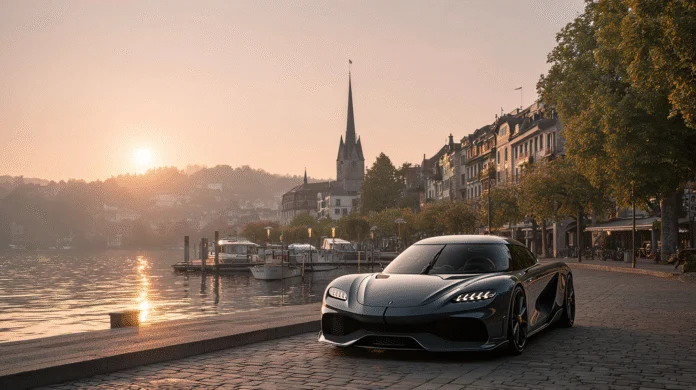
A sleek Koenigsegg Gemera parked at sunrise along the waterfront promenade in Lucerne, Switzerland, with historic buildings and a church steeple in the background. Captured for VeloxTrend LLC, showcasing the elegance and performance of the four-seater hypercar in a serene European setting.

Introduction: A Morning in Lucerne

In the serene Swiss city of Lucerne, as the sun begins to rise over the glistening waters of Lake Lucerne, a quiet rumble disrupts the morning calm. Locals turn their heads as a sleek, aggressive silhouette slices through the mist. But this isn’t your average hypercar. It’s not a stripped-down track weapon or a garage queen reserved for weekend blasts. It’s the Koenigsegg Gemera, the world’s first Mega-GT—a four-seater hypercar packing the punch of a monster.

Blending Scandinavian minimalism with mind-bending engineering, the Gemera is Koenigsegg’s answer to the question no one dared ask: Can you build a family-friendly hypercar without compromising an ounce of performance?

Let’s dive into what makes the 2025 Koenigsegg Gemera a once-in-a-generation engineering marvel.


Design Philosophy: Function Meets Art

From the moment you lay eyes on the Gemera, it’s clear this isn’t just another supercar. It’s a statement.

Christian von Koenigsegg envisioned a car that could accommodate four adults comfortably, carry luggage, and still obliterate anything on the Autobahn. With a body sculpted from carbon fiber and infused with the brand’s signature clean-sheet engineering, the Gemera achieves just that.

Exterior highlights:

  • Dihedral synchro-helix doors provide full access to both front and rear seats.
  • The body is slippery yet aggressive, with clean air channels and functional intakes throughout.
  • A minimalist grille and dramatic rear diffuser hint at the performance lying underneath.

Interior highlights:

  • Four memory foam seats wrapped in Alcantara and leather.
  • Three infotainment screens (one for each passenger, excluding the driver).
  • Eight cup holders (four heated, four cooled), wireless charging pads, and world-class sound insulation.

This isn’t just about power. It’s about reimagining what a hypercar can be.


Powertrain: Engineering Madness

The headline might say “Three motors,” but the Gemera’s story goes even deeper.

The Heart: Tiny Friendly Giant (TFG)

At the core of the Gemera sits Koenigsegg’s 2.0-liter twin-turbocharged 3-cylinder engine dubbed the Tiny Friendly Giant (TFG). It produces 600 horsepower and 443 lb-ft of torque on its own—without the help of any electric assistance. Thanks to Koenigsegg’s Freevalve technology (camshaft-free), this engine is lighter, more efficient, and cleaner than any ICE in its class.

Electric Overkill

In addition to the TFG engine, the Gemera features three electric motors:

  • One 400-hp motor on the crankshaft to assist the ICE with torque fill and efficiency.
  • Two 500-hp motors on the rear wheels that enable torque vectoring, all-wheel drive, and blistering off-the-line performance.

Combined output: 1,700 horsepower and 2,581 lb-ft of torque.
Yes, you read that right.

And yet, the Gemera can run silently in full EV mode for up to 50 km (31 miles), thanks to its 15-kWh battery.


Performance: Family-Friendly Insanity

With such a unique powertrain, you’d expect big numbers—and the Gemera delivers.

Performance stats:

  • 0-60 mph: 1.9 seconds
  • Top speed: 249 mph
  • 0-250-0 mph: Under 20 seconds (projected)
  • Electric-only range: 31 miles
  • Total range: Up to 620 miles (with combined fuel + electric)

And here’s the kicker—it seats four.

No other hypercar has ever balanced these stats with this level of practicality. The Gemera truly is in a class of its own.


Handling: Mega-GT With a Twist

The Gemera doesn’t just go fast in a straight line. It handles like a Koenigsegg should.

Key handling features:

  • All-wheel drive and all-wheel torque vectoring for maximum grip in all conditions.
  • All-wheel steering allows the Gemera to feel nimble despite its grand touring aspirations.
  • Advanced adaptive suspension makes it comfortable on city streets and sharp in the canyons.

Whether you’re carving through Swiss alpine roads or cruising the autobahn, the Gemera adapts like no other performance car.


Technology: Hypercar Innovation

The Koenigsegg Gemera doesn’t just rely on raw power. It’s a technological showcase.

Tech features:

  • Gecko Chassis Control System: A suite of sensors and control units manage every aspect of the car’s dynamics in real time.
  • Over-the-air updates: Futureproofing performance, comfort, and safety.
  • Advanced driver aids: Though not autonomous, the Gemera includes lane-keep assist, adaptive cruise, and parking sensors.
  • Biofuel-ready ICE: Designed to run on second-gen ethanol or carbon-neutral methanol.

Koenigsegg’s focus on sustainability means you can drive a 1,700-hp hypercar with a smaller carbon footprint than some hybrids.


Real-World Use: Yes, It Can Be Your Daily

Most hypercars live a lonely life in temperature-controlled garages. Not the Gemera.

Koenigsegg engineered it with everyday usability in mind:

  • Four full-size seats
  • Trunk space that fits weekend luggage
  • Cabin comfort that rivals luxury sedans
  • Multiple USB-C ports, Apple CarPlay, and optional child seat anchors

In a world where hypercars rarely serve practical functions, the Gemera dares to be both a family cruiser and a track assassin.


Pricing and Availability

The Koenigsegg Gemera isn’t mass-produced, and it isn’t cheap.

Estimated price: $1.7 to $2 million
Production volume: Limited to 300 units globally

Despite the price tag, the Gemera’s value comes from its uniqueness. It isn’t trying to compete with the Ferrari SF90 or the Bugatti Chiron. It’s rewriting the playbook altogether.

Deliveries began in late 2024, with 2025 models currently being shipped to early customers.


Why It Matters in 2025

The automotive world is shifting. EVs are becoming mainstream. Governments are pushing combustion engines toward extinction. And yet, Koenigsegg dares to dream differently.

The Gemera stands at the crossroads:

  • It proves that internal combustion, when done right, can be clean and efficient.
  • It shows that hypercars can be usable, comfortable, and family-ready.
  • It brings a new definition to what it means to be a grand tourer.

More than just a car, the Koenigsegg Gemera is a blueprint for the future of ultra-high-performance motoring.


Final Thoughts: More Than a Monster

“Four seats. Three motors. One monster.” That’s the tagline—and it’s accurate. But the Gemera is more than brute force.

It’s a machine that bridges the gap between passion and practicality. A rolling contradiction that works. And perhaps most importantly, it’s a reminder that innovation doesn’t always mean conforming to trends.

In a world full of compromise, the Koenigsegg Gemera offers everything. And that’s what makes it legendary.

Porsche 718 Spyder RS: Manual Driving, Reinvented

0
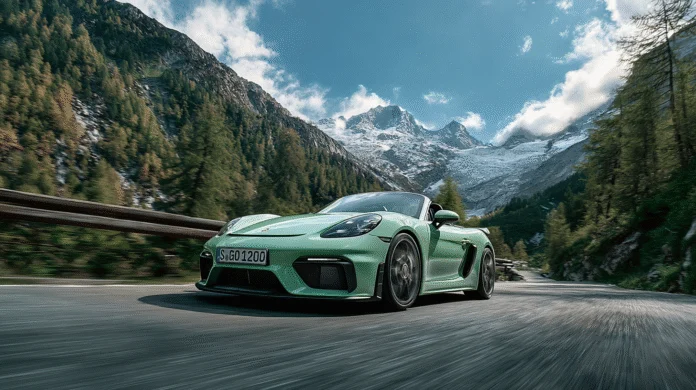
A mint green Porsche 718 Spyder RS drives through the scenic Stelvio Pass near Bormio, Italy, surrounded by the towering peaks and lush pine forests of the Italian Alps. Captured by VeloxTrend LLC.

In an era where paddle shifters and electric motors dominate automotive headlines, a handful of purist machines still manage to break through the noise. Among them stands a roofless rebel, built not to chase lap times or range estimates, but to rekindle the emotional connection between driver and machine.

The 2025 Porsche 718 Spyder RS isn’t just a car. It’s a statement. A defiant, open-top celebration of everything that makes driving analog, raw, and unforgettable. From its naturally aspirated heart to its driver-focused cockpit, the Spyder RS might just be the last great manual sports car of our generation.

Let’s dive into why.


The Scene: Bormio, Italy – Driving Through Alpine Glory

Imagine winding your way up the Stelvio Pass just before sunrise. You’re in Bormio, a hidden Alpine gem in northern Italy. The morning air is crisp, the road surface cool. Around you, the Dolomites rise like ancient giants, snow-capped and silent. And in your hands? A short-throw gear lever, connected to one of the most exciting powertrains Porsche has ever built.

The 718 Spyder RS roars through the switchbacks, its flat-six echoing off the cliffs like a symphony. This is what driving should feel like—visceral, intentional, connected. Here, there’s no room for distractions. It’s you, the car, the road, and that glorious soundtrack.


Heart of the Beast: The 4.0L Naturally Aspirated Flat-Six

At the core of the 718 Spyder RS lies a gem of engineering: the 4.0-liter flat-six engine lifted from the 911 GT3. It’s not turbocharged, not hybrid-assisted, and certainly not quiet.

  • Power: 493 hp
  • Torque: 331 lb-ft
  • Redline: A screaming 9,000 RPM
  • 0-60 mph: 3.2 seconds
  • Top speed: 191 mph

What makes it magical is not just the numbers, but how it delivers them. Instant throttle response, a soaring crescendo of revs, and a linear power curve that rewards precision driving.

This engine is Porsche at its finest—no compromises, just pure, unfiltered performance.


A Manual in a World of Automatics

While the standard 718 GT4 RS is PDK-only, the Spyder RS is rumored to be one of the last true manual driver’s cars Porsche will produce in this segment. Even if PDK dominates the track, there’s nothing like the tactile joy of a perfectly timed heel-toe downshift on a mountain pass.

The six-speed manual transmission is a direct link to Porsche’s motorsport DNA, giving you full control and an unmatched sense of involvement. Each shift is a decision, a commitment, and a moment of clarity behind the wheel.


Lightweight and Purpose-Built

The 718 Spyder RS strips away the excess. Every component is optimized for weight savings and performance:

  • Carbon fiber bucket seats
  • Fabric interior door pulls
  • Manual folding soft top
  • Lightweight forged wheels

The result? A curb weight of just over 3,100 pounds, which makes this roadster an agile weapon in the canyons or on a backroad blast.

The chassis is dialed in with GT4 RS-derived suspension geometry, race-tuned dampers, and a lowered stance. Yet despite its aggressive setup, the Spyder RS never feels punishing. It feels alive.


Design: A Beautiful Brute

The 2025 Spyder RS blends motorsport aggression with timeless Porsche elegance. Up front, large NACA ducts cool the brakes while reducing lift. Out back, a subtle ducktail spoiler and center-exit exhaust signal the car’s intent without needing to scream.

Inside, it’s a driver-first layout: Alcantara, exposed carbon, and a clean analog gauge cluster. Every button, every stitch, every detail serves the singular purpose of performance.

And with the roof down, you’re immersed in every sound, scent, and sensation. It’s the ultimate way to feel speed.


A New Chapter in Porsche’s Legacy

For decades, Porsche has built cars that balance track prowess with everyday usability. The 718 Spyder RS leans hard into the former, while still offering enough refinement to make weekend drives feel special without being punishing.

It stands as a direct answer to enthusiasts who asked Porsche to do one last thing: build the ultimate driver’s roadster before electric takes over.

And Porsche delivered.


Competition: What Else Comes Close?

In a world full of dual-clutch supercars and high-revving hybrids, few cars compete with the Spyder RS on emotional grounds.

  • Lotus Emira: Gorgeous and agile, but not quite as potent or raw.
  • Chevrolet Corvette Z06 Convertible: Mid-engine thrills with big American personality, but heavier and more grand tourer than scalpel.
  • Alfa Romeo 4C Spider (discontinued): Featherweight fun, but lacking the polish and power.
  • Mazda MX-5 Miata Club: Still the budget king of analog driving, but far from the performance tier of the RS.

The truth is, Porsche carved out a category of its own with the Spyder RS. It exists in that rare space where performance meets purity.


Price and Availability

This kind of car doesn’t come cheap.

  • Base price: ~$160,000 (USD)
  • With Weissach Package: Add another ~$15,000
  • Limited availability: As with all RS models, expect production caps and long waitlists

Still, for collectors and purists alike, the cost is justified. This is likely the last time Porsche will offer a car like this with an internal combustion engine, manual transmission, and this level of performance.


Why It Matters in 2025

As Porsche accelerates toward full electrification with the upcoming electric 718 and the Taycan lineup, the Spyder RS stands as a love letter to what made Porsche iconic in the first place.

It isn’t a car that’s about saving the planet or breaking Nürburgring records. It’s about making your heart race on a sunrise drive in the Alps. It’s about the joy of shifting gears and the honesty of mechanical grip.

In 2025, that’s something worth celebrating.


Final Thoughts

The 2025 Porsche 718 Spyder RS doesn’t just reinvent manual driving. It honors it. This car is a culmination of decades of engineering, motorsport heritage, and love for the art of driving.

For those lucky enough to get behind the wheel, it will be more than a car. It will be a memory etched in throttle blips and apexes. A final chapter in a book that shaped generations of drivers.

And if this is the end of the analog era, Porsche made damn sure it went out with a roar.

Aston Martin DB12: Grand Touring, Redefined

0
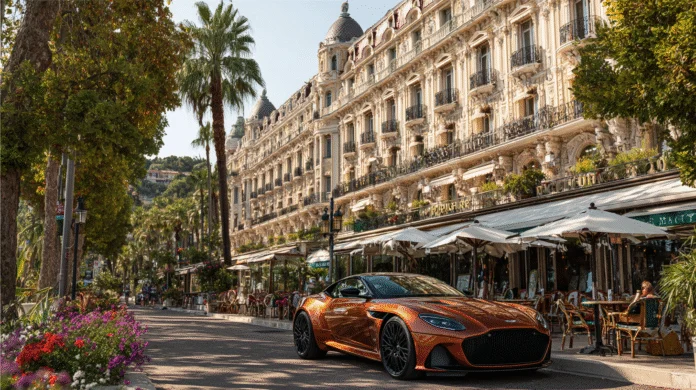
A stunning Aston Martin DB12 finished in a rich bronze color is parked along a palm-lined street in Cannes, France, in front of the historic Hôtel Barrière Le Majestic. The elegant architecture and lively outdoor cafés capture the essence of Riviera luxury, while the sleek grand tourer from VeloxTrend LLC adds a bold touch of modern automotive excellence.

A Morning in Monte Carlo

The sun had just begun to rise over Monte Carlo, casting a golden shimmer on the terracotta rooftops and the glassy waters of the Côte d’Azur. A warm breeze rolled in from the Mediterranean as the streets echoed with the low, confident rumble of a hand-crafted V8 engine. Parked outside the legendary Hôtel de Paris, the new Aston Martin DB12 sat poised like a piece of rolling sculpture. A modern statement on elegance, aggression, and raw grand touring power, the DB12 turned heads even in a city where Ferraris and Bentleys are commonplace.

It is here, in the playground of the rich and refined, that the Aston Martin DB12 feels most at home. But make no mistake—this is not just a car built to cruise through scenic coastal roads. It is a redefinition of the grand tourer for a new era.

The Evolution from DB11 to DB12

The DB12 is not just a facelifted version of the DB11. This is Aston Martin’s first step into a new generation, and they’re calling it the world’s first “Super Tourer.” While it retains the classic front-engine, rear-wheel-drive layout, almost everything under the skin has been reimagined. Gone is the twin-turbo V12—at least for now. In its place is a re-tuned, Mercedes-AMG-sourced 4.0-liter twin-turbo V8 that pumps out an astonishing 671 horsepower and 590 lb-ft of torque.

That’s nearly 150 more horses than the outgoing DB11 V8 and enough to launch the DB12 from 0 to 60 mph in just 3.5 seconds. The top speed? A heart-racing 202 mph. But numbers only tell half the story.

Driving Dynamics: Grand Touring with Bite

Aston Martin worked hard to ensure the DB12 didn’t just look fast. Its aluminum chassis has been stiffened by 7 percent, and it now includes the brand’s first use of an electronic rear differential (E-diff), improving responsiveness in corners. Adaptive dampers and a new suspension setup make the DB12 feel more agile than its predecessor, with an edge of sportiness that leans closer to supercar territory than traditional GT comfort.

Still, the DB12 remains a grand tourer at heart. Cruising along European highways or winding through Swiss alpine passes, the ride is composed and confident, the cabin quiet enough to enjoy a conversation at speed.

Exterior Design: Classic Lines, Aggressive Presence

The Aston Martin DB12 maintains the long hood, short rear proportions that have defined GT cars for decades. But every angle has been sharpened, refined, and modernized. A larger front grille and updated LED headlights give it a bolder face, while 21-inch forged alloy wheels and wider tracks provide both visual muscle and real-world grip.

The car’s muscular lines flow seamlessly into the sculpted rear, where the slim taillights and subtle diffuser hint at the performance lying beneath the surface. The whole body is designed with aerodynamic efficiency in mind, including an active front splitter and functional side vents that reduce drag and lift.

Interior: Craftsmanship Meets Tech

Inside, the DB12 is unmistakably Aston Martin—hand-stitched leather, carbon fiber trim, and a minimalist layout that emphasizes driver control. But the real story here is the tech upgrade.

Gone is the outdated infotainment system from the DB11. The DB12 features Aston Martin’s first in-house developed infotainment suite, including a 10.25-inch high-res touchscreen, wireless Apple CarPlay and Android Auto, and over-the-air updates. The digital driver display is crisp and customizable, and the center console retains physical buttons for vital controls, blending modern convenience with tactile familiarity.

The sound system, developed with Bowers & Wilkins, features 15 speakers and a 1,170-watt amplifier, turning the DB12 into a concert hall on wheels.

Grand Touring for a New Generation

What sets the DB12 apart from other GTs isn’t just its blend of luxury and performance—it’s how seamlessly those traits work together. It’s equally at home devouring the autobahn at triple-digit speeds as it is gliding through the French countryside. Aston Martin has struck a near-perfect balance between sportiness and sophistication.

For drivers who want the theater of a supercar without sacrificing comfort, the DB12 delivers. It’s visceral without being punishing. Elegant without being soft. And thanks to its reinforced chassis and upgraded drivetrain, it’s now a serious contender even on spirited track days.

Competitors: How the DB12 Stands Out in 2025

The 2025 DB12 finds itself in elite company. In the grand touring segment, it competes against:

  • Ferrari Roma – A more rev-happy V8 but lacks the aggressive presence of the DB12
  • Bentley Continental GT V8 – Plush and powerful but more luxury-focused
  • Mercedes-AMG SL63 – Quick and tech-savvy, but without the Aston’s charisma
  • Porsche 911 Turbo S – More agile and slightly faster, but not as exotic or special-feeling

Where the DB12 wins is in its identity. It’s not trying to be a race car in disguise or a limousine with too much horsepower. It’s a proper GT with a unique soul—British charm blended with German engineering and handcrafted artistry.

Price and Availability

In the United States, the Aston Martin DB12 starts at around $245,000 before options. That places it firmly in the upper echelon of grand tourers, but it offers exclusivity and cachet that justify the price tag.

Buyers can customize nearly every detail through Aston Martin’s Q personalization program, from unique exterior colors to tailored interior materials. Whether you want a subtle satin finish or bold racing stripes, Aston Martin will build your DB12 to reflect your personality.

Deliveries have already begun in select global markets, with waitlists forming as Aston ramps up production.

Key Specs Recap

FeatureSpecification
Engine4.0L Twin-Turbo V8
Power671 hp
Torque590 lb-ft
0-60 mph3.5 seconds
Top Speed202 mph
DrivetrainRear-Wheel Drive
Transmission8-Speed Automatic
Curb WeightApprox. 3,715 lbs
Starting Price$245,000 USD (est.)
Infotainment10.25″ Touchscreen, Wireless CarPlay

Final Thoughts: Is the DB12 Worth It?

In a world where luxury coupes are increasingly giving way to high-performance SUVs and crossovers, the Aston Martin DB12 is a bold statement. It reminds us what grand touring was meant to be—fast, beautiful, comfortable, and exhilarating.

For those who demand more than just straight-line speed, who want a car that can thrill on the mountain roads of the Dolomites and still feel at home parked outside the Four Seasons in Geneva, the DB12 is it.

It doesn’t chase trends. It sets a new standard.

Chevrolet Corvette E-Ray: Hybrid Power, Classic Looks

0
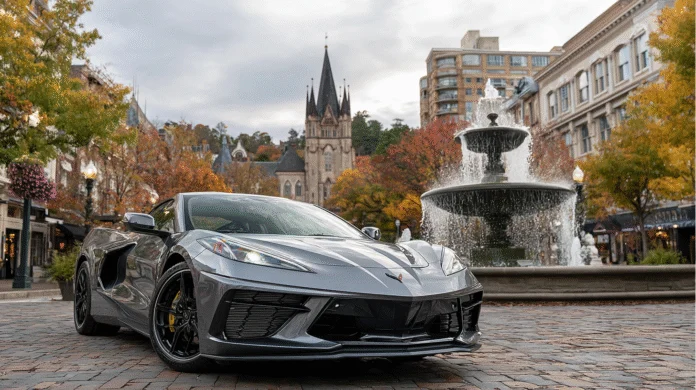
A silver Chevrolet Corvette E-Ray featured by VeloxTrend LLC parked on the cobblestone streets of downtown Asheville, North Carolina. The scene includes a grand tiered fountain, fall foliage, and historic architecture including a cathedral-style church, creating a dynamic contrast with the modern hybrid performance car. This VeloxTrend visual captures the essence of American engineering set against a timeless urban backdrop.

A Quiet Morning in Asheville

The sun was just beginning to break through the mist clinging to the Blue Ridge Mountains. Downtown Asheville, North Carolina, known for its mix of rustic charm and modern artsy edge, was just waking up. Coffee shops were opening their doors. The scent of espresso and pastries filled the crisp mountain air. A light breeze ruffled the flags above the historic buildings along Biltmore Avenue.

Down the street came a low whirr that sounded oddly futuristic. It wasn’t the deep, throaty rumble you’d expect from a classic muscle car. Instead, it was the new Chevrolet Corvette E-Ray, gliding almost silently past sleepy-eyed pedestrians. A blur of Arctic White and carbon fiber, it moved like a predator—graceful, confident, unmistakable. This was no ordinary Vette. This was a hybrid built to change the game.


The Corvette Enters the Future—Without Leaving the Past Behind

Since 1953, the Chevrolet Corvette has been a symbol of American performance. It has evolved from a charming roadster into a world-class sports car, competing with the likes of Ferrari, McLaren, and Porsche. But the E-Ray, introduced in 2023 and refined for the 2025 model year, is different. It’s the first hybrid Corvette and the first with all-wheel drive. Yet it still wears the silhouette that made the C8 generation iconic.

This car is not about compromise. It’s about merging old-school charm with new-school tech. It’s about offering jaw-dropping performance without abandoning the design language that Corvette fans love.


Powertrain: Where V8 Muscle Meets Electric Precision

At the heart of the E-Ray is a 6.2L LT2 V8 engine, naturally aspirated and mounted behind the driver. This engine alone delivers 495 horsepower to the rear wheels, just like the standard C8 Stingray. But the twist comes at the front axle: an electric motor powered by a 1.9 kWh battery provides an additional 160 horsepower.

Combined, you get 655 horsepower and 595 lb-ft of torque.

That electric motor doesn’t just boost power. It helps launch the E-Ray from 0 to 60 mph in just 2.5 seconds. That makes it the quickest production Corvette ever, edging out even the ferocious Z06.

What’s more, the front electric motor allows for torque vectoring and all-wheel-drive confidence in cold or wet conditions. It gives the E-Ray something no Corvette has ever had—real winter drivability.


E-Ray vs Z06: Two Titans, Two Philosophies

While the Z06 is the track-weapon, naturally aspirated monster screaming up to 8,600 RPM, the E-Ray is more balanced. It’s the GT that eats up highway miles, claws through corners, and doesn’t shy away from snow or slush.

The Z06 lives for apexes and lap times. The E-Ray? It lives for everywhere else. On paper, it’s slightly slower around a track, but in the real world—with road imperfections, sudden weather changes, and day-to-day usability—the E-Ray shines.

This is the Corvette for people who want speed, comfort, and the ability to drive every day, rain or shine.


Design: Familiar Yet Sharper

Visually, the E-Ray takes cues from both the Stingray and the Z06. It has the widebody stance of the Z06, with flared fenders and aerodynamic enhancements. But it opts for a more understated rear diffuser and a body-colored trim rather than the exposed carbon fiber you see on the Z06.

You can spec the E-Ray in both coupe and convertible forms. And while it looks aggressive, it doesn’t scream “race car.” Instead, it whispers confidence.

Subtle “E-Ray” badging and unique wheel designs help set it apart for those in the know. The wheels themselves hide Brembo carbon ceramic brakes as standard—something even the base Z06 doesn’t offer without ticking options.


Interior: Where Luxury Meets Performance

Step inside the E-Ray and you’re greeted with premium materials. You can spec suede, carbon fiber, and full leather wrapping nearly every surface. The seating positions are low and driver-focused, with an 8-inch infotainment screen angled toward the pilot.

But what truly impresses is how quiet the E-Ray can be.

Thanks to the electric front motor, you can glide through your neighborhood in Stealth Mode, which allows all-electric operation up to 45 mph for a few miles. This is perfect for early morning starts or creeping through parking garages without making a scene.

That said, stomp on the accelerator, and the V8 barks to life behind your ears—reminding you this is still very much a Corvette.


Driving Experience: Controlled Violence

The E-Ray is a beast. But it’s a composed beast.

Unlike some hybrids that feel like software is doing all the driving for you, the E-Ray feels analog when you want it to, and digital when you need it to. The electric motor fills torque gaps during shifts, smooths out corner exits, and provides that extra shove that makes overtakes effortless.

Thanks to the Magnetic Ride Control 4.0 system, the ride is supple in Tour mode and sharp in Track mode. It’s one of the most versatile suspension setups in the sports car world.

This means you can cruise through Asheville on your way to the Biltmore Estate, then tear up the Blue Ridge Parkway—all in the same car.


Technology: Smarter Without Complication

The E-Ray doesn’t try to reinvent infotainment. It builds on the proven C8 architecture but adds unique features like the E-Ray Performance App. This interface shows power flow between the front and rear axles, battery charge, and regenerative braking stats.

There’s also a new Charge+ button that allows you to fully charge the battery before spirited driving, so the electric boost is ready when you want it most.

Unlike other hybrids or EVs, the E-Ray doesn’t plug in. The battery charges passively through regenerative braking and the V8’s alternator. There’s no need to install chargers at home or plan your route around charging stations. It’s hybrid on your terms.


Real-World Performance: Built for More Than the Track

One of the E-Ray’s strongest arguments is its usability. You get near-supercar performance with none of the usual drawbacks. It doesn’t need a trailer to get to the track. It won’t scrape over every speed bump. It doesn’t punish you for using it as a daily driver.

In winter climates like Pittsburgh or Minneapolis, the E-Ray is the first Corvette that can confidently tackle snow-covered streets. With proper tires, it becomes a four-season sports car. That alone makes it a game-changer.


Pricing and Value: Luxury With Justification

Starting at around $106,000 for the coupe and $113,000 for the convertible, the E-Ray slots between the Stingray and the Z06. For many, that will seem expensive. But consider what you’re getting.

  • The quickest Corvette ever.
  • All-wheel drive.
  • A hybrid performance system with no plug-in hassle.
  • Carbon ceramic brakes.
  • Usable performance year-round.

It’s not just about lap times anymore. It’s about real-world excellence. And on that front, the E-Ray delivers in full.


Final Verdict: The Corvette for the Next Generation

The Chevrolet Corvette E-Ray is not just a bridge to the future. It is the future—one where power, control, and usability come together without compromise.

It’s a Corvette that respects its past but isn’t afraid to lead the way forward. It offers the thrills enthusiasts crave with the intelligence and flexibility modern drivers demand.

Whether you’re carving up mountain roads, gliding silently through downtown, or pushing limits at the track, the E-Ray never feels out of place.

This is more than a hybrid Corvette. This is the evolution of an icon.

BMW M2 G87: Daily Driver Meets Weekend Warrior

0
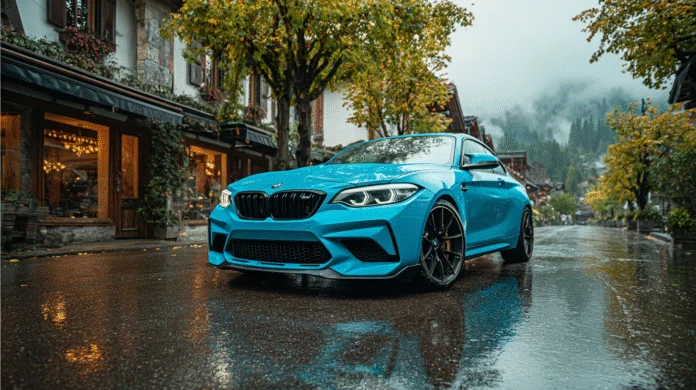
Front-side view of a bright blue BMW M2 parked on a wet cobblestone street in a European alpine village in Munich, with warm shop lights and autumn trees reflecting on the rain-soaked pavement. Misty mountains rise in the background, adding to the moody atmosphere. Designed by VeloxTrend LLC.

It’s a brisk morning just outside Munich. The roads are damp, the clouds are low, and the Alpine air has a bite. But then you hear it — a distinct, assertive growl from behind a row of Bavarian townhomes. It’s not overbearing, but it’s confident. A few moments later, a Brooklyn Grey BMW M2 G87 pulls out onto the road, blending urban practicality with unmistakable performance presence.

This is the modern BMW M2: a compact powerhouse with real-world usability and track-ready dynamics. For 2025, the M2 G87 cements itself as a rare breed — a car that’s equally at home in traffic as it is carving mountain passes.


The Return of the Compact M Car

The G87 M2 continues the legacy of BMW’s smallest M-car, launched originally in 2016. But this is no simple update. With the G87 chassis, BMW has engineered a platform that balances the raw edge of a performance car with the refinement needed for daily driving.

It borrows much of its hardware from the M3 and M4 — including the drivetrain, suspension architecture, and digital interfaces — but compresses it into a more agile, compact footprint. That gives the G87 its distinct identity: M-grade capability in a smaller, more accessible package.


Performance Specs: Power You Can Actually Use

Under the hood sits BMW’s S58 engine — a 3.0-liter twin-turbocharged inline-6 producing:

  • 473 horsepower
  • 406 lb-ft of torque
  • 0–60 mph in 4.1 seconds (manual) or 3.9 seconds (automatic)

You get two transmission options:

  • A 6-speed manual, standard
  • An 8-speed automatic, with lightning-quick shifts and paddle controls

Rear-wheel drive remains the only drivetrain configuration, staying true to M2 tradition. There’s no xDrive here — just balance, precision, and purity.

Unlike larger M cars that can overwhelm the road with size or power, the M2 delivers usable performance. It’s fast, but not so fast that you can’t enjoy it on normal roads.


Suspension and Handling: Built to Dance

The M2 G87 rides on a version of the M4’s suspension system, with adaptive M dampers, forged aluminum control arms, and near 50:50 weight distribution. The track width is also wider than the previous generation, giving it a more planted stance and improved lateral grip.

BMW has tuned the chassis for:

  • Responsive steering
  • Minimal body roll
  • Real feedback, even at moderate speeds

Whether on a twisty backroad or a quick Sunday morning run to the grocery store, the car feels connected and agile. It’s a chassis that encourages exploration without punishing you for commuting.


Interior: Familiar, Tech-Forward, and Driver-Focused

BMW has evolved the interior of the M2 to match its modern performance tone. Inside you’ll find:

  • Curved dual-screen setup (12.3-inch instrument + 14.9-inch infotainment)
  • iDrive 8.5 with voice control and customizable widgets
  • M Sport seats with high bolsters and extended thigh support
  • Optional carbon fiber bucket seats for track enthusiasts

Materials are a mix of leather, aluminum, and soft-touch plastics — with signature M contrast stitching and badges throughout.

Practicality is also a strong point:

  • Rear seats (usable for adults on short drives)
  • 13.8 cu ft trunk
  • Daily comfort features like heated seats, adaptive cruise, and driver assistance tech

Design Philosophy: Aggressive But Accessible

The G87’s styling caused some controversy at launch, but in person it works. The boxy, squared-off fenders, wide stance, and angular bumper design give the car a bold, muscular appearance that fits its mission.

Design highlights:

  • Flared wheel arches for that widebody look
  • Quad exhaust tips
  • Functional air inlets and cooling ducts
  • Optional carbon fiber roof

The M2 is smaller than an M4 but feels just as impactful in person. It’s clearly a performance car — but not so exotic that it looks out of place in a parking lot.


Daily Driver Qualities: How Livable Is It?

While the M2 is capable of high-speed fun, it also behaves well in everyday situations. BMW has added just enough refinement to make it a viable daily driver without sacrificing its M heritage.

Key daily features:

  • Comfort driving mode for relaxed throttle and suspension settings
  • Excellent visibility and small footprint for urban driving
  • Surprisingly good fuel economy for a performance car (17–23 MPG combined)
  • Standard driver aids like blind spot monitoring and parking sensors

The manual transmission makes stop-and-go traffic a bit more involved, but the gearing is smooth and forgiving. If convenience is a priority, the 8-speed auto is refined and responsive.


Weekend Warrior: Track Days, Canyon Runs, and Road Trips

Where the G87 really shines is on weekends. Whether you’re headed to a track day, a winding mountain road, or a long-distance trip with spirited detours, it delivers a connected and exhilarating experience.

On track, the M2’s wide track, sharp turn-in, and high-revving S58 engine give it tremendous composure. Unlike bigger M cars, it doesn’t feel heavy or intimidating.

On backroads, the M2 invites confidence. It transitions quickly, communicates through the steering wheel, and has enough torque to overtake easily in any gear.

And on long trips, features like wireless CarPlay, Harman Kardon audio, and adaptive cruise keep it modern and comfortable.


How It Compares: M3 vs M2 vs M240i

FeatureM2 G87M3 CompetitionM240i xDrive
Power473 hp (RWD)503 hp (AWD opt.)382 hp (AWD std.)
TransmissionManual or AutoAuto only (Comp)Auto only
Curb Weight~3,800 lbs~3,900–4,100 lbs~3,700 lbs
Price (base)~$64,000~$76,000~$51,000
Drive FeelRaw and balancedPowerful, refinedSporty, but softer

If you’re after balance, size, and the engagement of a manual transmission, the M2 G87 stands alone.


Verdict: The M2 G87 Is a Rare Balance

The 2025 BMW M2 G87 represents a dying breed: a rear-wheel-drive, manual transmission, inline-6 sports coupe that works just as well for your morning coffee run as it does for a weekend canyon blast.

It doesn’t try to be the fastest or the flashiest. Instead, it offers a refined yet connected driving experience that rewards skill and encourages use — every day.

For drivers who want one car that can do it all without losing its personality, the M2 G87 hits a very specific and rare sweet spot.


Specifications at a Glance (2025 BMW M2 G87)

  • Engine: 3.0L Twin-Turbo I6 (S58)
  • Horsepower: 473 hp
  • Torque: 406 lb-ft
  • 0–60 mph: 3.9–4.1 seconds
  • Transmission: 6-speed manual or 8-speed automatic
  • Drive: Rear-wheel drive
  • Fuel Economy: ~17 city / 23 highway MPG
  • MSRP: Starting at ~$64,000

Final Word

In a world leaning toward electrification and automated commuting, the M2 G87 is a reminder that driving can still be visceral, mechanical, and joyful — without needing to be impractical.

Whether you’re in traffic Monday morning or at the track on Sunday afternoon, the BMW M2 G87 has you covered.

AWD Sports Cars Under $100K That Survive Snowy Winters

0
AWD sports cars including Audi S5, BMW M240i xDrive, Genesis G70, and Audi A5 Cabriolet driving on a snowy street at sunset in a winter cityscape. Designed by VeloxTrend LLC.

Your 2025 Guide to Year-Round Performance Without Compromise

When winter hits, most performance cars are parked until the snow melts. But for enthusiasts who want to drive year-round, the right car makes all the difference. AWD sports cars combine all-season traction with performance credentials—perfect for slicing through snowy backroads or simply commuting confidently in icy conditions.

In this guide, we’re covering coupes first, convertibles second, and a few select sedans third. All ten cars are AWD, under $100,000, and can be daily-driven without sacrificing fun, even in tough winter climates.


Why AWD Matters in Winter Sports Cars

AWD systems send power to all four wheels, increasing grip on slippery roads. Paired with winter tires, AWD makes performance driving possible even in freezing temperatures. Whether you live in snowbelt states or travel through mountainous terrain, AWD helps maintain stability when RWD cars struggle.


The 10 Best AWD Sports Cars for Winter (2025)


1. Subaru WRX

  • Type: Sedan
  • Price: Starting at $33,000
  • Engine: 2.4L turbo flat-four, 271 hp
  • Drivetrain: Symmetrical AWD
  • Why it survives winter:
    Rally roots, manual transmission, and full-time AWD make the WRX one of the best-value winter sports sedans. It’s capable, reliable, and built to handle poor conditions.

2. Toyota GR Corolla

  • Type: Hatch (hot hatch exception)
  • Price: Starting around $37,000
  • Engine: 1.6L turbo three-cylinder, 300 hp
  • Drivetrain: GR-Four AWD with adjustable torque split
  • Why it survives winter:
    Despite its hatchback layout, the GR Corolla earns a place here due to its AWD system and light, tossable chassis. Three drive modes allow for dynamic adjustments between front and rear torque, ideal for snow-packed roads.

3. Audi S5 Coupe

  • Type: Coupe
  • Price: Starting around $58,000
  • Engine: 3.0L turbo V6, 349 hp
  • Drivetrain: Quattro AWD
  • Why it survives winter:
    Audi’s quattro system gives the S5 dependable winter traction. Heated seats, available heated steering wheel, and a refined cabin make it a year-round luxury sports car.

4. BMW M240i xDrive

  • Type: Coupe
  • Price: Starting around $51,000
  • Engine: 3.0L turbo inline-6, 382 hp
  • Drivetrain: xDrive AWD
  • Why it survives winter:
    Compact yet quick, the M240i xDrive pairs winter traction with excellent performance. Its AWD system seamlessly distributes torque while preserving fun in corners.

5. Porsche 911 Carrera 4 (996 or 997, Used Market)

  • Type: Coupe or Convertible (used)
  • Price: Under $100K in clean condition
  • Engine: Varies by model year (325–370 hp)
  • Drivetrain: AWD
  • Why it survives winter:
    The Carrera 4 and 4S variants offer AWD traction and classic Porsche dynamics. Add winter tires and it becomes a capable cold-weather cruiser that still delivers 911 performance.

6. Audi S3

  • Type: Sedan
  • Price: Around $48,000
  • Engine: 2.0L turbo inline-4, 306 hp
  • Drivetrain: Quattro AWD
  • Why it survives winter:
    Quick and composed, the S3 is a sleeper sports sedan with real winter ability. Its tight footprint, AWD stability, and well-insulated cabin make it a smart pick for urban drivers who love spirited backroad detours.

7. Volkswagen Golf R (2025)

  • Type: Hatch (included for performance + AWD)
  • Price: Starting at $46,000
  • Engine: 2.0L turbo inline-4, 315 hp
  • Drivetrain: AWD with torque vectoring
  • Why it survives winter:
    The Golf R is a practical all-weather performance machine. It delivers outstanding AWD grip and manual or DSG transmission options. Despite being a hatch, it drives like a sports coupe.

8. Infiniti Q60 Red Sport 400 AWD

  • Type: Coupe
  • Price: Around $61,000
  • Engine: 3.0L twin-turbo V6, 400 hp
  • Drivetrain: AWD
  • Why it survives winter:
    A true GT car with real-world performance, the Q60 Red Sport AWD is sleek and surprisingly capable in snow. It offers comfort, power, and security in adverse conditions without dulling the driving experience.

9. BMW 440i xDrive (Coupe or Convertible)

  • Type: Coupe or Convertible
  • Price: Starting around $60,000
  • Engine: 3.0L turbo inline-6, 382 hp
  • Drivetrain: AWD
  • Why it survives winter:
    The 440i xDrive blends top-down freedom with snow-ready AWD and heated everything. It’s one of the few convertibles that can realistically be driven year-round in northern states.

10. Genesis G70 3.3T AWD

  • Type: Sedan
  • Price: Around $52,000
  • Engine: 3.3L twin-turbo V6, 368 hp
  • Drivetrain: AWD
  • Why it survives winter:
    Sharp handling, strong power, and high-value luxury make the G70 3.3T AWD a rising star in winter-capable sports sedans. It is less common than the Germans but offers serious performance and refinement.

What to Look for in a Winter-Ready AWD Sports Car

  • Heated seats and steering wheel: Makes cold starts much easier.
  • Ground clearance: While still a sports car, every millimeter helps.
  • Torque distribution: Variable AWD systems offer more control in snow.
  • Traction and stability control settings: Look for snow or winter modes.
  • Winter tire compatibility: Always equip proper snow tires for best results.

Final Thoughts

Driving does not need to stop when the snow falls. These AWD coupes, sedans, and select convertibles deliver year-round confidence and performance. Whether your budget is $35K or just shy of $100K, the right winter-ready sports car is out there.

AWD gives you traction. Snow tires give you grip. But the car itself? That’s where the passion lives—even in a snowstorm.