Home Blog Page 26

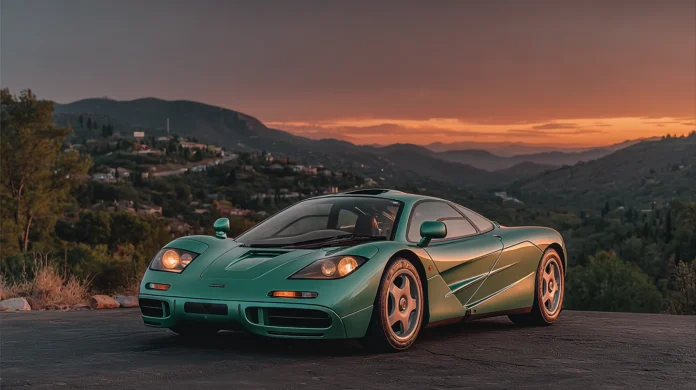
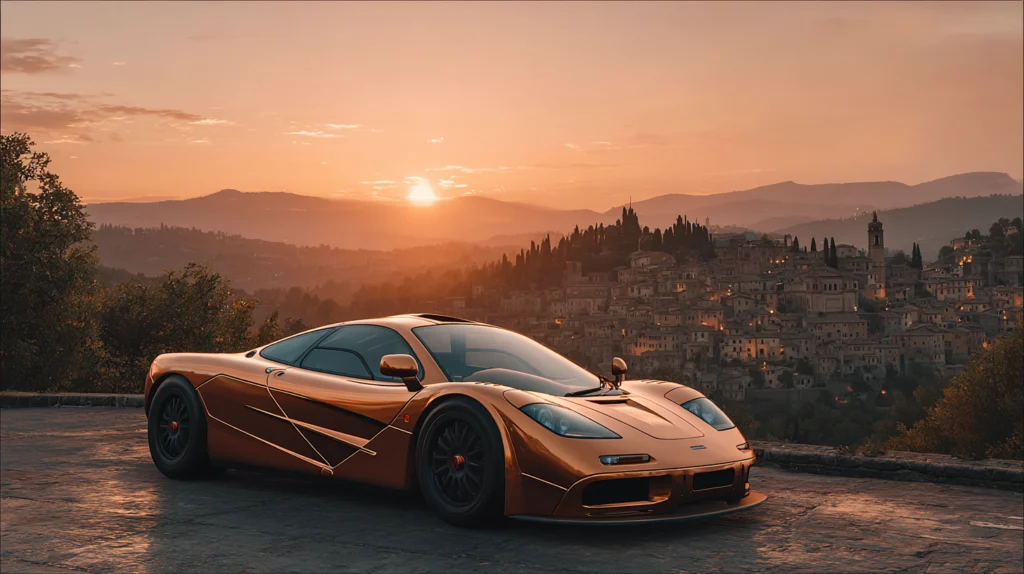
McLaren F1: The Greatest Supercar Ever Made?

0

For more than three decades, a single name has sat atop the list of contenders for the greatest supercar of all time: the McLaren F1. It is a machine that was not merely built but engineered with a singular vision. When it was launched in the 1990s, it redefined what was possible for a road going automobile. Today, it remains the benchmark against which all other supercars are measured, not just for its performance figures, but for the philosophy behind its creation.

This article examines the McLaren F1 in detail. We will explore the engineering principles that guided its development, the records it set, the driving experience it offers, and the reasons it has maintained its legendary status for so long.

The Vision of Gordon Murray

The McLaren F1 was the brainchild of Gordon Murray, a renowned Formula One designer. After years of designing race cars that prioritized lightweight construction and driver feedback, Murray wanted to create a road car that embodied the same principles. His vision was clear. He did not want to build the fastest car in the world simply by adding horsepower. Instead, he wanted to build the ultimate driver’s car by focusing on weight reduction, purity of design, and mechanical integrity.

Murray’s philosophy was rooted in the concept of “total efficiency.” He believed that reducing weight was more effective than adding power. A lighter car accelerates faster, stops shorter, handles better, and uses less fuel. This simple but profound idea became the foundation of the entire F1 project. Every component, from the chassis to the engine to the upholstery, was scrutinized for its weight and its contribution to the driving experience.

Murray also insisted that the car be usable. He wanted it to be comfortable enough for long distance journeys, with luggage space, air conditioning, and a civilized driving manner when not being pushed to its limits. This combination of extreme performance and everyday usability was a revolutionary concept at the time.

Engineering Brilliance: The Central Driving Position

The most immediately distinctive feature of the McLaren F1 is its interior layout. Gordon Murray placed the driver’s seat in the center of the cabin, with two passenger seats slightly set back on either side. This configuration was inspired by the McLaren Formula One cars Murray had designed, where the driver sits directly on the car’s centerline.

The central driving position offers several advantages. It provides the driver with perfect visibility and a symmetrical view of the road ahead. It eliminates the need to offset the driver to one side, which improves weight distribution. It also allows for a narrower body, which reduces aerodynamic drag. For the passenger, it creates a unique and engaging experience, sitting alongside the driver in a space that feels more like a cockpit than a traditional car interior.

The cabin itself was a masterpiece of function and luxury. Murray insisted on using the finest materials, but only where they served a purpose. The lightweight magnesium alloy gear lever, the thin carbon fiber seats, and the exposed gold lining in the engine bay were all chosen for their functional benefits. The gold, for example, was used to reflect heat away from the engine. The result is an interior that feels both exotic and purposeful, a space designed entirely around the act of driving.

The BMW V12 Engine

To power his creation, Murray approached several manufacturers before settling on BMW. He did not want a modified version of an existing engine. He wanted a clean sheet design, built to his exact specifications. BMW’s Motorsport division, led by Paul Rosche, accepted the challenge.

The result was the S70/2, a 6.1 liter naturally aspirated V12 engine. It was a masterpiece of engineering. It produced 627 horsepower, an astonishing figure for a naturally aspirated engine in the mid 1990s. More importantly, it was incredibly light and compact, weighing less than many V8 engines of the era. It was also designed to be reliable and tractable, providing immense power throughout the rev range while remaining smooth and responsive in everyday driving.

The engine was naturally aspirated, a deliberate choice by Murray. He believed that turbocharging, while effective at producing power, introduced complexity and compromised throttle response. The linear power delivery of the S70/2, combined with its glorious intake and exhaust sound, became one of the defining characteristics of the McLaren F1.

Records and Performance

When the McLaren F1 was introduced to the world, it did not merely set a new performance standard. It shattered the existing one. In 1998, a production F1 driven by Andy Wallace achieved a top speed of 240.1 miles per hour at the Volkswagen Group’s Ehra Lessien test track. This set the official Guinness World Record for the fastest production car in the world, a record it would hold for more than a decade.

This top speed was not achieved through brute force alone. It was the result of meticulous attention to aerodynamics, weight, and power. The car’s sleek body, developed with extensive wind tunnel testing, produced minimal drag while generating sufficient downforce to keep the car stable at extreme speeds. The lightweight construction, with its carbon fiber monocoque chassis, allowed the relatively modestly sized V12 to propel the car to velocities that few vehicles have matched even today.

Acceleration was equally staggering. The F1 could sprint from 0 to 60 miles per hour in just over three seconds, a figure that remains competitive with modern hypercars. Its braking and cornering capabilities were similarly advanced, making it a complete performance machine rather than just a straight line specialist.

The Driving Experience

Those who have had the privilege of driving a McLaren F1 describe it as an experience unlike any other. It is not a car that isolates the driver. It is a car that communicates with the driver constantly. The steering is direct and full of feel. The suspension relays information about the road surface with clarity. The engine responds instantly to the slightest input from the throttle.

The gearshift, a five speed manual unit, requires precision and intent. It is a mechanical action that connects the driver directly to the powertrain. There are no electronic aids to smooth over mistakes. The car demands skill and respect, rewarding competent driving with an immersive experience that modern, computer assisted supercars struggle to replicate.

At lower speeds, the F1 is surprisingly docile. The ride is firm but compliant. The visibility from the central seat is excellent. It can be driven through city traffic or across continents without complaint. This duality, the ability to be both a comfortable grand tourer and the fastest production car in the world, is central to the F1’s genius.

Rarity and Collectability

The McLaren F1 was built in extremely limited numbers. Between 1992 and 1998, only 106 examples were produced, including prototypes, road cars, and racing variants. Of these, just 64 were standard road going models. This rarity alone would make it collectible, but the F1’s value extends far beyond its scarcity.

The market for McLaren F1s has consistently broken records. Examples now sell for tens of millions of dollars, making them among the most valuable cars in the world. This appreciation is driven by the car’s historical significance, its engineering excellence, and its status as a cultural icon. Collectors view the F1 not just as a car, but as a piece of automotive history, a masterpiece that represents the pinnacle of a specific era of car making.

The F1’s racing heritage also adds to its allure. A GTR version was developed for competition, and it achieved immediate success, winning the 24 Hours of Le Mans in 1995 against purpose built prototype race cars. This victory cemented the F1’s legacy as a car that could dominate on both the road and the track.
McLaren F1: The Greatest Supercar Ever Made?

The F1’s Influence on Modern Supercars

The McLaren F1 established a blueprint that many subsequent supercars have attempted to follow. Its focus on lightweight carbon fiber construction became the industry standard. Its central driving position inspired other manufacturers to experiment with alternative seating layouts. Its combination of extreme performance and usability set a new expectation for what a supercar should be.

McLaren Automotive, the company that now builds road cars, was founded years after the F1, but the F1’s DNA runs through every model they produce. The commitment to lightweight engineering, driver engagement, and innovative aerodynamics can be traced directly back to Gordon Murray’s original vision. Even competitors have acknowledged the F1’s influence, with many modern hypercars citing it as a benchmark during their development.

Why the Debate Continues

The question of whether the McLaren F1 is the greatest supercar ever made is likely to remain a topic of debate among enthusiasts. There are newer cars that are faster in a straight line. There are cars with more advanced hybrid powertrains. There are cars that generate more downforce and lap racetracks more quickly. However, the F1’s claim to the title rests on something more than raw statistics.

It is the purity of its conception. It was designed by a single visionary with a clear goal, unencumbered by marketing departments or focus groups. It was built without compromise, using the best materials and engineering talent available. It achieved its performance through intelligence and efficiency rather than sheer power. And it remains a car that demands to be driven, rewarding its pilot with an experience that feels alive and connected.

Conclusion

The McLaren F1 stands as a landmark achievement in automotive history. It is a car that broke records, introduced groundbreaking technologies, and established a new standard for what a supercar could be. More than thirty years after its introduction, it continues to command respect and admiration from enthusiasts around the world.

Whether one considers it the greatest supercar ever made is ultimately a matter of personal perspective. However, what cannot be disputed is its significance. The McLaren F1 represents a moment when a small team of passionate engineers, led by a visionary designer, created something truly extraordinary. It remains a testament to the idea that the best cars are not built by committees, but by people with a clear vision and the determination to see it through.
Ferrari F40: The Last Car Enzo Ferrari Personally Approved

0

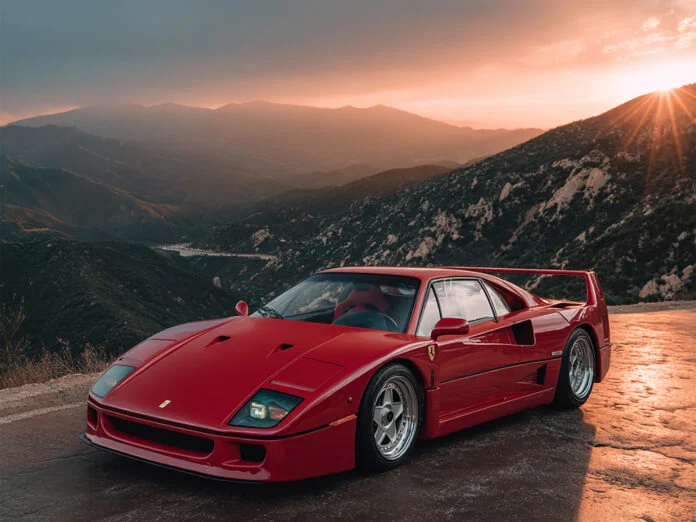
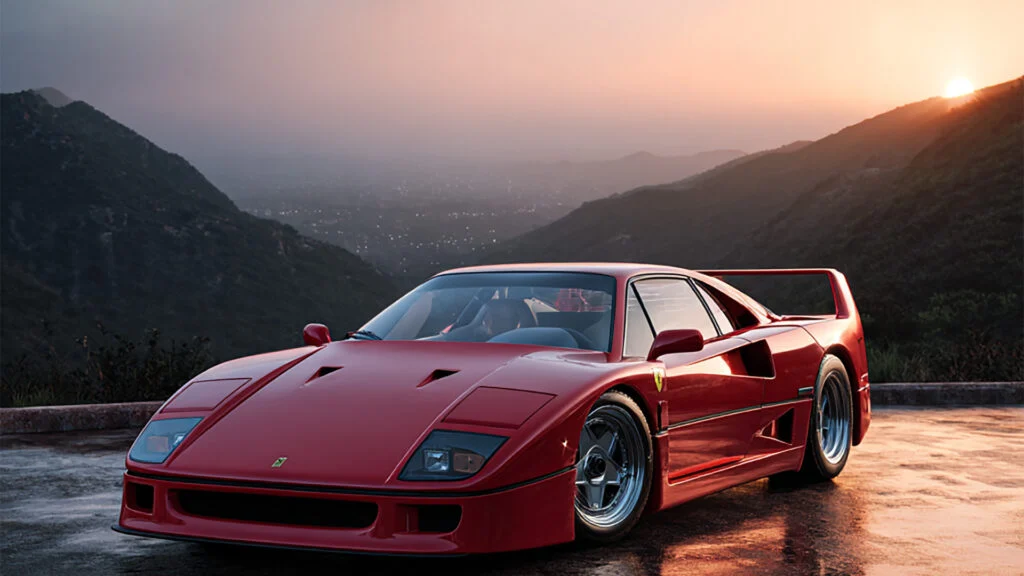
Few automobiles carry the weight of history quite like the Ferrari F40. It stands as a monument to a pivotal moment in automotive history, a machine born from competition and stamped with the final personal approval of the company’s founder. The F40 is not merely a classic car. It is a raw, unfiltered expression of Ferrari’s racing soul, created at a time of transition and unveiled to the world as a statement of enduring dominance.

This article explores the Ferrari F40 in detail, examining the context of its creation, its design and engineering philosophy, the driving experience it offers, and the legacy that has cemented its place as one of the most significant supercars ever built.

The Historical Context: A Legacy on the Line

To understand the F40, one must first understand the circumstances surrounding its birth. The 1980s were a decade of immense change for Ferrari. The company was navigating the complexities of the modern automotive industry while simultaneously competing at the highest levels of motorsport. Enzo Ferrari, Il Commendatore, was in his late eighties. The man who had built the Scuderia Ferrari racing team and later the road car division was nearing the end of his life.

There was a palpable sense within the company that a landmark car was needed. The Ferrari 288 GTO, released in 1984, had been a spectacular success, reestablishing Ferrari’s credentials as a builder of extreme, limited production performance cars. It was a homologation special, built to satisfy racing regulations for Group B. However, by 1986, Group B rallying had been canceled following a series of tragic accidents. Ferrari had already developed an evolution of the 288 GTO, known as the GTO Evoluzione, which never saw its intended track use.

With these purpose built race cars sitting unused, Enzo Ferrari made a decision. He directed his engineers to take the lessons learned from the Evoluzione program and create a new road car. It would be the ultimate expression of Ferrari engineering. It would be fast, uncompromising, and devoid of luxuries. Most importantly, it would be the last car he would personally approve before his death in 1988. This singular fact imbues the F40 with a significance that no other Ferrari can claim.

Design and Engineering: Form Follows Function

The Ferrari F40 was designed with a single objective: performance. There was no committee dictating styling cues for market appeal. The body was shaped by the wind tunnel and the demands of the car’s mechanical components.

Aerodynamics and Construction
Pininfarina, Ferrari’s long standing design partner, penned the body, but the final shape was heavily influenced by the need for aerodynamic efficiency. The low nose, the flush headlamps, and the prominent rear wing were all functional elements designed to manage airflow and generate downforce. The car’s silhouette is unmistakable, a wedge of purposeful aggression.

The construction of the F40 was revolutionary for a road car at the time. To save weight, the body panels were made from a variety of composite materials, including Kevlar, carbon fiber, and aluminum. The chassis itself was a tubular steel space frame, a proven racing solution. This focus on lightweight construction was relentless. The windows were made of lightweight plastic, and there was no sound deadening, no carpeting, and no door handles on the inside. Pull straps sufficed. The result was a curb weight of approximately 2,400 pounds, exceptionally light for a car with such a powerful engine.

The Powertrain
At the heart of the F40 lies its engine. It is a 2.9 liter twin turbocharged V8, a direct descendant of the unit used in the 288 GTO. For the F40, Ferrari’s engineers enlarged the displacement slightly and fitted larger IHI turbochargers with air to air intercoolers. The result was an official output of 471 horsepower, though many enthusiasts believe the actual figure was higher.

The engine was a masterpiece of turbocharging technology for its era. It provided immense thrust, but it also required skill to manage. Turbo lag was significant. The driver had to keep the engine on boost to access its full potential. This characteristic was part of the car’s challenge and part of its reward. Power was sent to the rear wheels through a five speed manual gearbox, a transmission that required a firm hand and offered a direct, mechanical connection to the powertrain.

The Driving Experience: Raw and Unfiltered

To drive a Ferrari F40 is to have a conversation with a machine that offers no pleasantries. It is a demanding and immersive experience that is vastly different from modern supercars with their electronic aids and sophisticated suspensions.

Stepping into the cabin requires a degree of athleticism. The wide carbon fiber sill must be navigated, and once inside, the driver is greeted by a sparse environment. The view forward is dominated by the steeply raked windshield and the large rear view mirror, which offers a glimpse of the engine cover through the slatted rear window. The seats are fixed, with adjustable pedals to accommodate drivers of different sizes.

Starting the engine is an event. The twin turbos spool with a distinctive whistle, and the exhaust note is a raw, mechanical symphony. On the road, the F40 demands respect. The steering is heavy and communicative, transmitting every nuance of the road surface to the driver’s hands. The ride is firm, and the car reacts instantly to inputs. It is not a car for casual cruising. It is a car that requires focus and intent.

The performance, even by modern standards, is startling. When the turbochargers reach full boost, the acceleration is ferocious. The car hunkers down and surges forward with a urgency that pins the driver to the seat. It is this combination of challenge, sensory feedback, and raw speed that defines the F40 experience. It is a pure, analog driving machine.

The Legacy of the Last Approved

The Ferrari F40 was launched in 1987 to celebrate Ferrari’s 40th anniversary. The automotive press and enthusiasts were stunned. It was faster, more extreme, and more focused than anything else available. It immediately set a new benchmark for what a supercar could be. Planned for a production run of 400 units, demand was so overwhelming that Ferrari ultimately built over 1,300 cars.

The death of Enzo Ferrari in August 1988, just as the first F40s were being delivered, added a profound layer of meaning to the car. It became a memorial, a tangible connection to the founder’s vision. Collectors and enthusiasts recognized immediately that this was the end of an era. Every subsequent Ferrari would be developed under the leadership of a new management structure, with different priorities.

In the decades since, the F40’s legend has only grown. It has consistently been ranked among the greatest supercars of all time by automotive publications worldwide. Its value has skyrocketed, making it one of the most coveted collector cars in existence. This appreciation is not merely due to its scarcity or its historical significance. It is because the car itself is so compelling. It represents a philosophical purity that is rare in any field.

F40 vs. Its Contemporaries

The late 1980s and early 1990s were a golden age for supercars, and the F40 did not exist in a vacuum. It had two primary rivals that are often discussed alongside it.

The Porsche 959 was developed alongside the F40 and offered a different philosophy. Where the F40 was raw and track focused, the 959 was technologically advanced, featuring sophisticated all wheel drive, adjustable suspension, and a more luxurious interior. It was a marvel of engineering, but it lacked the F40’s visceral intensity.

Later, the Jaguar XJ220 and the McLaren F1 would arrive, pushing performance even further. The McLaren F1, in particular, would eventually dethrone the F40 as the world’s fastest production car. However, even the McLaren, with its three seat configuration and gold lined engine bay, could not replicate the F40’s connection to Enzo Ferrari’s personal vision. The F40 remained the last word from the founder.

Ferrari F40: The Last Car Enzo Ferrari Personally Approved

The F40 in Popular Culture and Collecting

The Ferrari F40 has transcended its role as an automobile to become a cultural icon. It has appeared in countless video games, films, and magazine covers, instantly recognizable even to those with only a passing interest in cars. Its shape and its reputation have made it a symbol of 1980s excess and automotive passion.

For collectors, owning an F40 is the culmination of a lifetime of dedication. The market for these cars is robust and global. Low mileage, original examples command prices in the millions of dollars. The car’s collectability is underpinned by its historical importance, its performance legacy, and its status as the last Ferrari approved by the founder. It is considered a blue chip investment in the collector car world, a tangible asset that also happens to provide one of the most intense driving experiences ever devised.

Conclusion: The Enduring Icon

The Ferrari F40 is far more than the sum of its specifications. It is a historical document, a piece of engineering art, and a monument to one man’s unwavering commitment to racing. As the last car personally approved by Enzo Ferrari, it carries a significance that no other Ferrari can claim. It represents the final transmission of the founder’s vision directly to the road.

Its design is timeless, its performance is still exhilarating, and its driving experience remains unmatched in its purity. The F40 is not a car that coddles its driver. It is a car that demands engagement, skill, and respect. In return, it offers a connection to the road and to automotive history that is increasingly difficult to find. For these reasons, the Ferrari F40 will forever stand as one of the greatest supercars ever built, the last true Ferrari from the man who started it all.

The 2025 Nissan GT-R T-Spec and Nismo Special Edition: A Detailed Look at Godzilla’s Final Form

0

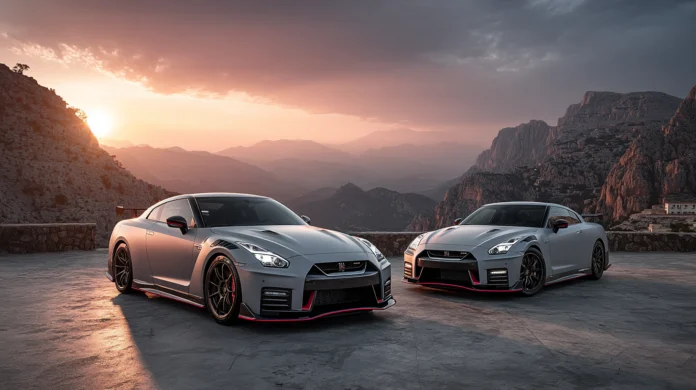
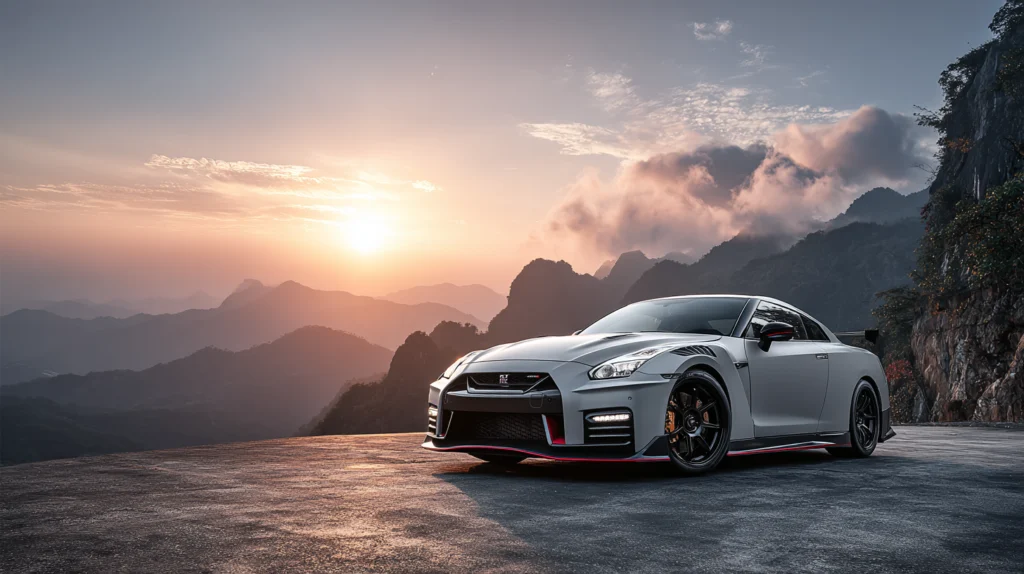
As the automotive world pivots toward electrification, Nissan’s R35 GT-R, affectionately known as “Godzilla,” prepares for its final curtain call. The 2025 model year brings two of the most exclusive variants in the car’s history: the GT-R T-Spec and the Nismo Special Edition. These limited production models represent the pinnacle of a platform that has been evolving for nearly two decades. For collectors and enthusiasts, these are not merely new trim levels. They are the ultimate expression of a modern legend.

This article provides a comprehensive examination of the 2025 Nissan GT-R T-Spec and Nismo Special Edition. We will explore their mechanical specifications, design philosophies, pricing, and what makes them distinct from the standard GT-R lineup.

The Legacy of the R35 Platform

To understand the significance of the 2025 T-Spec and Nismo Special Edition, one must appreciate the history of the R35 chassis. Launched in 2007, the GT-R shattered the supercar establishment by delivering hypercar performance for a fraction of the price. Over the years, Nissan has continuously refined the car, improving aerodynamics, suspension geometry, and power output. The 2025 models are the culmination of this relentless development. They incorporate lessons learned from track testing and customer feedback to create the most cohesive driving experience the R35 has ever offered.

Nissan GT-R T-Spec: Heritage and Elegance

The T-Spec variant is designed for the enthusiast who values a connection to the car’s Japanese heritage as much as raw performance. The “T” stands for “Traction” and “Tradition,” a nod to the car’s enhanced mechanical grip and the classic color palettes that made the Skyline GT-R famous.

Exterior Distinction and Color Palette
The most immediate differentiator for the T-Spec is its paint. Nissan offers this variant in two exclusive colors: Millennium Jade and Midnight Purple. These are not new creations but rather revered hues from the Skyline GT-R (R34) era. Millennium Jade, a subtle, sophisticated green, and Midnight Purple, a complex color that shifts between deep plum and black depending on the light, immediately set the T-Spec apart from any other GT-R on the road.

Beyond the paint, the T-Spec receives a carbon fiber rear spoiler and unique forged aluminum wheels finished in a dark gloss. These wheels, derived from the track focused GT-R Nismo, reduce unsprung weight, contributing to sharper handling. Gold painted Brembo brake calipers peek through the spokes, providing a visual contrast against the dark wheels and exclusive paint.

Mechanical Upgrades
The T-Spec is built on the premise of enhanced traction. It utilizes the wider front fenders and carbon ceramic brake system from the Nismo model. The carbon ceramic brakes, co-developed with Brembo, offer superior stopping power and resistance to fade during aggressive driving. They also reduce rotational mass. The suspension has been tuned specifically for the T-Spec, utilizing components from the Nismo to provide a more planted feel without sacrificing the ride quality expected from a grand tourer.

Nissan GT-R Nismo Special Edition: The Track Focus

If the T-Spec is about heritage and elevated road manners, the Nismo Special Edition is about absolute performance. Nismo, which stands for Nissan Motorsports, has transformed the GT-R into a street legal race car. This variant is for drivers who prioritize lap times and aerodynamic efficiency above all else.

Aerodynamics and Weight Reduction
The Nismo Special Edition is visually aggressive, featuring a carbon fiber front bumper with canards, a revised grille for improved engine cooling, and a large, functional carbon fiber rear wing. The aerodynamic package generates significant downforce without increasing drag, keeping the car planted at high speeds.

Weight reduction is a core tenet of the Special Edition. The roof, front fenders, front and rear bumpers, trunk lid, and the aforementioned rear wing are all crafted from carbon fiber. This extensive use of lightweight materials lowers the car’s center of gravity and improves its power to weight ratio.

Chassis and Powertrain Refinement
Under the skin, the Nismo Special Edition features a suspension tuned by Nismo engineers, with specially calibrated shock absorbers and springs. The vehicle dynamics control system has been reprogrammed to allow for greater driver control on the racetrack.

Powering the Nismo Special Edition is the same hand assembled 3.8 liter twin turbo V6 found in the standard Nismo, producing an estimated 600 horsepower. However, the response has been sharpened. Nismo achieves this through the use of high flow turbochargers derived from GT3 racing, which spool faster and provide immediate throttle response. The six speed dual clutch transmission has also been recalibrated for quicker shifts.

Shared Powertrain and Core Engineering

While the T-Spec and Nismo Special Edition serve different purposes, they share the fundamental engineering excellence of the R35 platform. Both are powered by the VR38DETT engine, an aluminum block V6 that is hand assembled in a clean room environment by a single master technician. This process ensures the highest level of quality and consistency.

The ATTESA E-TS all wheel drive system remains a cornerstone of the GT-R experience. It constantly monitors throttle position, steering angle, and G forces to route torque to the wheels with the most grip. In normal driving, the car behaves as a front engine, rear wheel drive vehicle for efficiency and handling balance. When slip is detected, torque is instantly sent to the front wheels to pull the car through the corner.

Interior Design and Equipment

Inside, both the T-Spec and Nismo Special Edition offer a driver focused environment, though the ambiance differs.

T-Spec Interior
The T-Spec cabin is designed to be a comfortable and exclusive place to spend time. It features unique leather and synthetic suede upholstery with contrasting stitching. The seats are heavily bolstered to hold occupants in place during spirited driving but remain comfortable for long distance touring. A special serial number plate on the center console reminds occupants of the car’s limited edition status.

Nismo Special Edition Interior
The Nismo Special Edition’s interior is more Spartan and functional. It features Recaro carbon fiber bucket seats that provide exceptional support on the track. The steering wheel is wrapped in Alcantara and leather, providing a positive grip. Carbon fiber trim replaces the wood or metallic finishes found in lesser GT-Rs, reinforcing the car’s purpose built nature.

Pricing, Production, and Collectability

The 2025 Nissan GT-R T-Spec and Nismo Special Edition are not mass production vehicles. Nissan has indicated that production will be limited, though exact numbers are allocated based on market demand. This scarcity, combined with their status as the final evolution of the R35, makes them highly collectible.

Pricing reflects their exclusivity and engineering content. The T-Spec commands a significant premium over the standard GT-R Premium trim, justified by its heritage paint options, Nismo sourced components, and carbon ceramic brakes. The Nismo Special Edition sits at the top of the range, with pricing approaching that of exotic European supercars. For collectors, the value proposition lies not just in performance, but in owning a piece of automotive history, the last of a breed.

What Sets Them Apart From the Standard Lineup

It is essential to understand how these new variants fit into the broader GT-R lineup. The standard GT-R remains a formidable performance car. However, the T-Spec and Nismo Special Edition offer distinct advantages:

  • Exclusivity: Limited production runs and unique serialization make them rare.
  • Heritage: Colors and design cues directly reference the legendary Skyline models.
  • Track Capability: The Nismo Special Edition offers race derived technology that is not available on standard models.
  • Investment Potential: Historically, final editions and special variants of iconic cars tend to hold their value better than standard production models.

The Driving Experience: Road vs. Track

The philosophical split between the T-Spec and Nismo Special Edition becomes most apparent behind the wheel. The T-Spec is an exceptional grand tourer. It devours highway miles with composure, yet when a twisty road presents itself, the upgraded suspension and carbon ceramic brakes provide confidence and control. It feels special at any speed.

The Nismo Special Edition, conversely, feels most at home on a racetrack. The stiff suspension, rapid steering response, and immediate turbocharging demand focus. It communicates every detail of the road surface to the driver, providing the feedback necessary to push the car to its limits. It is a sharper, more intense machine that rewards skilled drivers with incredible performance.

The 2025 Nissan GT-R T-Spec and Nismo Special Edition: A Detailed Look at Godzilla’s Final Form

Conclusion: A Fitting Tribute to a Legend

The 2025 Nissan GT-R T-Spec and Nismo Special Edition represent Nissan’s final masterpiece on the R35 platform. They are not simply updated models. They are carefully curated collections of the best engineering, design, and heritage that the GT-R name has to offer. The T-Spec caters to the enthusiast who appreciates style, history, and balanced performance, while the Nismo Special Edition is a raw, uncompromising tool for track day dominance.

As the automotive industry moves forward, these limited editions stand as a tribute to the internal combustion era and Nissan’s commitment to building a world beating supercar. For those fortunate enough to secure an allocation, the 2025 GT-R is more than a car. It is a tangible piece of the Godzilla legacy, refined to perfection.

Toyota GR Supra Manual: Is It Finally Perfect?

0

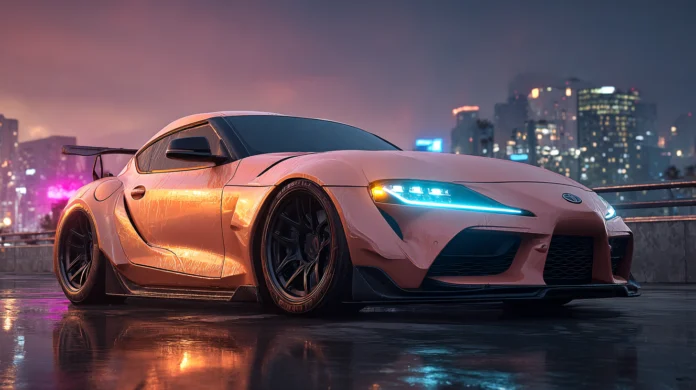
The Toyota GR Supra has occupied a unique space in the sports car market since its reintroduction for the 2020 model year. Born from a partnership with BMW and sharing its platform with the Z4 roadster, the fifth generation Supra faced immediate scrutiny from enthusiasts who questioned its pedigree. Could a car with German mechanicals truly wear the Supra badge with honor?

Over the course of six model years, Toyota’s Gazoo Racing division has steadily refined the formula. The engine gained power. The suspension evolved. And perhaps most significantly for driving enthusiasts, a manual transmission finally joined the lineup. Now, as the current generation reaches the end of its production cycle with the 2026 MkV Final Edition, the question presents itself: has the GR Supra finally achieved perfection?

This article examines the 2026 Toyota GR Supra with the manual transmission, analyzing its specifications, driving character, and position in the current sports car market.

The Evolution of a Modern Icon

The A90 generation Supra arrived in 2019 carrying the weight of an iconic nameplate. The previous generation, the A80, had achieved legendary status through its tuning potential, distinctive styling, and appearances in popular culture. The new car faced the dual challenge of living up to that legacy while adapting to modern engineering realities.

The partnership with BMW provided access to proven powertrain and platform technology. The 3.0 liter turbocharged inline six cylinder engine, shared with the Z4 and various BMW performance models, delivered the smooth power delivery and robust torque that enthusiasts expected from a Supra. The chassis provided a solid foundation for dynamic tuning.

Toyota’s Gazoo Racing division, responsible for the company’s motorsport programs and performance road cars, took the BMW foundation and applied their own calibration philosophy. The result was a car that drove differently than its German cousin, with a distinct character focused on driver engagement and track capability.

The addition of a manual transmission for the 2023 model year addressed the primary complaint from driving purists. The 2026 MkV Final Edition represents the culmination of this development, incorporating lessons learned across the generation’s production run.

2026 Model Year Changes

The 2026 GR Supra lineup continues with three primary trims: the base 3.0, the 3.0 Premium, and the new MkV Final Edition . The Final Edition serves as a sendoff for the current generation, incorporating a range of mechanical and aesthetic enhancements.

Mechanical Upgrades

The Final Edition receives several targeted improvements focused on chassis performance rather than power increases. Engineers revised the differential control logic for improved response during cornering and acceleration. Larger Brembo brake discs enhance stopping capability and resistance to fade during sustained track use.

Suspension bushings are stiffened, increasing chassis rigidity and improving the clarity of feedback transmitted to the driver. The adaptive dampers receive a specific calibration for the Final Edition, balancing compliance for road use with control for track driving.

Aesthetic Distinction

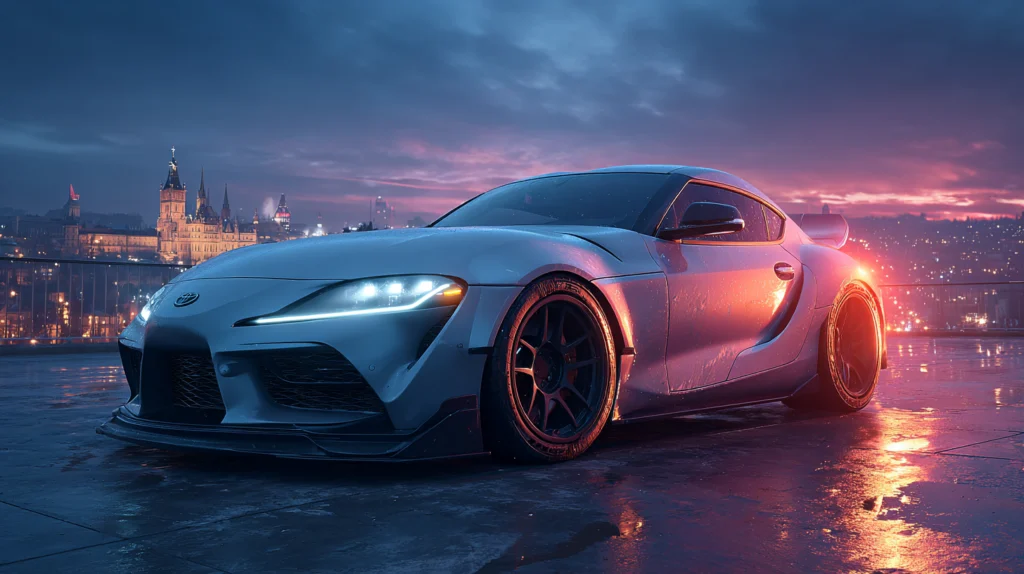
Visual changes for the Final Edition are subtle but purposeful. New 19 inch matte black wheels reduce visual weight while emphasizing the brake package behind them. A carbon fiber ducktail spoiler extends the rear deck, and carbon fiber mirror caps add contrast .

Inside, red seat belts and contrast stitching provide visual interest. The driver’s seat features GR embroidery, and a car cover is included as standard equipment.

Powertrain Specifications

Engine Output

The 2026 GR Supra is powered by a 3.0 liter turbocharged inline six cylinder engine producing 382 horsepower at 5,800 rpm and 368 lb ft of torque at 1,800 rpm. This represents the same output carried forward from previous model years, with no increase for the Final Edition.

The engine’s torque curve is notable for its breadth. Peak torque is available from 1,800 rpm through 5,200 rpm, providing strong acceleration from low engine speeds and sustained pull through the mid range. This broad plateau contributes to the car’s responsiveness in everyday driving and on track.

Transmission Choices

Buyers can choose between a six speed manual and an eight speed automatic transmission across all trims, including the Final Edition. The manual transmission, added for the 2023 model year, represents a significant expansion of the car’s appeal to driving enthusiasts.

The manual transmission features a shift mechanism engineered for precision. The shift lever moves through a 75mm short throw gate, and specially developed synchronizer rings contribute to clean engagement. Shift timing prompts, using algorithms derived from Formula One applications, indicate optimal shift points based on torque demand.

The automatic transmission delivers faster shift times and slightly better acceleration, but the manual provides a level of engagement that cannot be quantified through performance metrics alone.

Acceleration and Performance

With the manual transmission, the GR Supra accelerates from 0 to 60 miles per hour in 3.9 seconds. The automatic transmission is slightly quicker at 3.7 seconds, but the difference is meaningful primarily to those focused on spec sheet comparisons rather than driving experience.

Quarter mile performance is estimated at 12.1 to 12.4 seconds depending on transmission choice. Top speed is electronically limited to 160 miles per hour.

Fuel Economy

The manual transmission carries a fuel economy penalty compared to the automatic. EPA estimates for the manual are 19 miles per gallon city, 26 miles per gallon highway, and 21 miles per gallon combined. The automatic returns 22 city, 29 highway, and 25 combined.

Real world testing has demonstrated that highway fuel economy can exceed EPA estimates. A previous generation Supra with 335 horsepower returned 36 miles per gallon during a 75 miles per hour highway test, suggesting the current model can achieve similar results under steady state cruising.

Chassis and Handling

Suspension System

The GR Supra uses a front MacPherson strut and rear multi link suspension configuration . Adaptive variable suspension is standard across the lineup, allowing the driver to adjust damping characteristics through selectable drive modes.

The system balances conflicting requirements: compliance for daily driving and control for track use. In normal mode, the suspension absorbs road imperfections without transmitting excessive impact energy to occupants. In sportier modes, damping stiffens to control body motion during cornering and provide greater feedback to the driver.

Steering Calibration

Electric power steering is calibrated for direct response and appropriate weighting across speed ranges. The system communicates available grip effectively, allowing the driver to place the car precisely on the road or track.

For the Final Edition, steering response is further optimized through revised calibration and the stiffer suspension bushings mentioned previously. These changes address criticism that earlier Supras felt overly isolated from the road.

Braking System

Standard braking components include 13.7 inch ventilated front discs and 13.6 inch rear discs. The Final Edition upgrades to larger Brembo discs, enhancing heat capacity for track use.

Brake pedal feel is consistent and progressive, allowing precise modulation during corner entry. During track testing, reviewers noted that the brakes maintained performance without softening, even after repeated hard use.

Tires and Wheels

All GR Supras ride on Michelin Pilot Super Sport tires, sized 255/35ZR19 front and 275/35ZR19 rear. These tires provide high levels of grip while maintaining predictable breakaway characteristics at the limit.

The Final Edition’s matte black 19 inch forged wheels reduce unsprung mass compared to standard wheels, contributing to improved suspension response.

Driving Experience

On Road Character

The GR Supra demonstrates a duality in its driving personality that distinguishes it from more focused track machines. On public roads, the car is composed and livable. The suspension absorbs impacts without harshness, and the engine’s broad torque curve means the driver need not constantly work through the gears to access performance.

The manual transmission adds a layer of engagement to everyday driving. The shift action is precise, with mechanical feedback that connects the driver to the powertrain. Clutch pedal effort is moderate, and engagement point consistency allows smooth operation in traffic.

Steering response is direct without being darty. The car tracks faithfully on highways, and lane keeping is effortless. Wind and road noise are present but not excessive, consistent with the car’s performance orientation.

On Track Behavior

When driven at the limit, the GR Supra reveals the depth of its engineering. The chassis balance is neutral, with a slight bias toward understeer at the limit that builds confidence for drivers of varying skill levels. Trail braking can rotate the car into corners, and power application on exit can provoke controlled oversteer.

The manual transmission enhances track engagement. Downshifts can be matched with throttle blips, or the driver can rely on the automatic rev matching function for consistent heel toe performance. The transmission’s gear spacing keeps the engine in its power band across most corner combinations.

Handling is predictable and progressive. When pushed beyond the limit, the car communicates its intentions clearly, allowing the driver to make corrections before losing control. This accessibility makes the Supra rewarding for drivers who may not have extensive track experience.

Comparison to Competitors

The GR Supra’s primary competitors include the Nissan Z, the Porsche 718 Cayman, and the Chevrolet Corvette. Each offers distinct strengths. The Nissan Z provides a more retro inspired aesthetic and slightly lower entry price. The Porsche 718 Cayman sets the benchmark for chassis precision. The Corvette delivers American V8 power in a mid engine configuration.

The Supra’s advantage lies in its combination of attributes. It offers the straight line performance of the Corvette with handling that approaches the Cayman’s standards, all at a price point that undercuts both when comparably equipped. The BMW derived engine provides smooth power delivery and proven reliability, while Toyota’s tuning ensures distinct character.

Interior and Comfort

Seating and Space

The GR Supra’s cabin is designed around the driver. Seat positioning is low, with the hip point closer to the floor than many competitors, creating a sensation of sitting in the car rather than on it. The double bubble roof, while primarily a styling element, provides additional headroom for taller occupants.

Standard 14 way power adjustable seats accommodate a range of body types. Side bolstering is aggressive enough to hold occupants during cornering without being uncomfortable for daily driving. Heated seats are standard across the lineup.

Cabin space is limited, as expected in a two seat sports car. Front seat headroom measures 38.3 inches, leg room is 42.2 inches, and shoulder room is 54.4 inches. Taller drivers, particularly those over six feet two inches, may find headroom tight.

Cargo Capacity

The hatchback design provides access to 10.2 cubic feet of cargo space behind the seats . This is sufficient for several carry on suitcases or a week’s worth of groceries for two people. Longer items can be carried by folding the passenger seat forward, though this compromises the cabin’s two seat configuration.

Material Quality

The interior demonstrates its BMW origins through switchgear and control placement. Buttons and knobs have a solid, damped feel, and materials are appropriate for the car’s price point. The Final Edition adds Alcantara and leather surfaces with red contrast stitching, elevating the cabin’s ambience.

Hard plastics appear in lower visibility areas, but their matte finishes prevent the appearance of cost cutting. Panel gaps are consistent, and assembly quality reflects the maturity of a late production run vehicle.

Technology and Infotainment

Display Systems

The GR Supra features an 8.8 inch central touchscreen running a version of BMW’s iDrive interface with Toyota specific graphics. The system is responsive, and menu logic is straightforward. Physical shortcut buttons and a rotary controller provide alternatives to touchscreen operation for drivers who prefer tactile controls.

A digital instrument cluster displays speed, rpm, and vehicle information in a configurable layout. The display is clear and readable in varying light conditions, with graphics that prioritize function over flash.

Connectivity

Apple CarPlay is standard across the lineup, operating wirelessly on Premium and Final Edition trims. Android Auto is notably absent, a limitation that may influence purchasing decisions for Android users.

A 10 speaker audio system is standard on the base 3.0. The 3.0 Premium and Final Edition upgrade to a 12 speaker JBL system that provides clean sound quality appropriate for the cabin’s dimensions.

Driver Assistance Features

Standard safety equipment includes forward collision warning with pedestrian detection and automatic emergency braking, lane departure warning, lane keep assist, and automatic high beams.

The optional Driver Assist package adds blind spot monitoring with rear cross traffic alert, parking sensors, reverse automatic braking, and adaptive cruise control. Notably, adaptive cruise control is not available with the manual transmission, a common limitation given the difficulty of integrating automated speed control with a clutch pedal.

Toyota GR Supra Manual: Is It Finally Perfect?

Pricing and Value

MSRP by Trim

The 2026 Toyota GR Supra is priced as follows:

  • 3.0: $58,695 including destination
  • 3.0 Premium: $61,845 including destination
  • MkV Final Edition: $69,745 including destination

Value Proposition

The GR Supra occupies a competitive price point in the sports car segment. It undercuts the Porsche 718 Cayman, which starts higher and climbs quickly with options. It is priced similarly to the Nissan Z and slightly below the Chevrolet Corvette’s base configuration.

The Final Edition’s $69,745 price represents a significant premium over the 3.0 Premium, but the mechanical upgrades and exclusivity of a limited production model may justify the additional cost for collectors and enthusiasts. As Car and Driver notes, “springing for the MkV Final Edition is a worthy expenditure if you can swing it”.

Ownership Costs

Insurance costs for the GR Supra are consistent with its performance car classification. Fuel economy is reasonable for the performance on offer, with the manual transmission’s 21 miles per gallon combined falling mid pack among competitors .

Tire replacement intervals will vary based on driving style and conditions. The Michelin Pilot Super Sport tires provide exceptional grip but will wear more quickly than all season alternatives, particularly with track use.

The Manual Transmission Question

Why the Manual Matters

The availability of a manual transmission transforms the GR Supra’s character in ways that extend beyond objective performance metrics. The manual invites the driver to participate more fully in the act of driving, selecting gears not just for optimal power delivery but for the satisfaction of mechanical engagement .

Toyota’s decision to develop a manual for a car already in production demonstrates an understanding of their audience. The Supra’s heritage is built on driver involvement, and an automatic only lineup would have represented a fundamental break from that legacy.

The Manual Experience

The six speed manual in the GR Supra is engineered for precision. Shift throws are short, engagement is positive, and the clutch take up is consistent. Automatic rev matching is available for drivers who prefer consistent downshifts, but can be disabled for those who want to practice traditional heel toe technique.

The manual does carry trade offs. Fuel economy is reduced compared to the automatic. Acceleration is slightly slower. Adaptive cruise control is unavailable. For the target audience, these compromises are acceptable in exchange for the enhanced connection the manual provides.

Is It Finally Perfect?

The question posed in this article’s title requires a nuanced answer. The 2026 Toyota GR Supra, particularly in Final Edition trim with the manual transmission, represents the most resolved version of this generation. It addresses criticisms leveled at earlier models through chassis refinement and the addition of a driver focused transmission.

What It Does Well

The Supra delivers a compelling combination of performance, engagement, and daily usability. The engine provides ample power with a smooth, linear delivery that suits both road and track driving. The chassis communicates clearly with the driver, offering accessible handling that rewards skill without punishing mistakes. The manual transmission completes the package, inviting the driver into a more active relationship with the car.

The Final Edition’s enhancements focus on the aspects of performance that matter most to driving enthusiasts: braking, chassis stiffness, and suspension calibration. By investing in these areas rather than pursuing higher power figures, Toyota demonstrates an understanding that feel matters more than numbers.

Where Compromises Remain

No car achieves perfection without compromise, and the Supra is no exception. The interior, while improved, still reflects its BMW parts bin origins and lacks the visual drama of some competitors. Cargo space is limited, and the cabin can feel tight for larger occupants. Android Auto remains unavailable, a frustration for some users.

The price, particularly for the Final Edition, has climbed significantly from earlier models. At nearly $70,000, the Supra faces competition from cars with greater prestige or different configurations. Whether the driving experience justifies the cost is a matter of individual priority.

The Verdict

The 2026 Toyota GR Supra with manual transmission achieves something rare in the contemporary automotive landscape. It delivers a driving experience focused on engagement rather than numbers, on feel rather than spec sheet victories. It honors the Supra heritage not through retro styling or nostalgic references, but through a commitment to the driver focused values that made the original significant.

Is it perfect? Perfection implies an absence of compromise, and the Supra, like any vehicle, involves trade offs. But for drivers who prioritize the sensation of control, the satisfaction of a well executed shift, and the connection between car and driver that only a manual transmission can provide, the 2026 GR Supra comes remarkably close.

As the automotive industry continues its transition toward electrification and automation, cars like this will become increasingly rare. The GR Supra represents a moment when a major manufacturer chose to invest in the analog experience, refining rather than replacing the elements that make sports cars meaningful to enthusiasts.

For the right buyer, that is perfection enough.

Frequently Asked Questions

What is the horsepower of the 2026 Toyota GR Supra?
The 2026 GR Supra produces 382 horsepower from its 3.0 liter turbocharged inline six cylinder engine, regardless of trim level or transmission choice.

Does the 2026 GR Supra come with a manual transmission?
Yes, a six speed manual transmission is available across all trims, including the 3.0, 3.0 Premium, and MkV Final Edition.

What is the difference between the Final Edition and other trims?
The Final Edition adds larger Brembo brakes, stiffer suspension bushings, revised differential calibration, unique 19 inch matte black wheels, carbon fiber exterior accents, and interior details including red seat belts and GR embroidery.

How fast is the GR Supra with the manual transmission?
The manual transmission Supra accelerates from 0 to 60 miles per hour in 3.9 seconds and covers the quarter mile in approximately 12.4 seconds.

What is the price of the 2026 Toyota GR Supra?
Pricing starts at $58,695 for the 3.0 trim, $61,845 for the 3.0 Premium, and $69,745 for the MkV Final Edition, all including destination charges.

Does the GR Supra have Apple CarPlay?
Yes, Apple CarPlay is standard across the lineup, with wireless operation on Premium and Final Edition trims. Android Auto is not available.

Is the GR Supra based on a BMW?
The GR Supra shares its platform, engine, and many mechanical components with the BMW Z4, though Toyota’s Gazoo Racing division handles suspension tuning and overall character development.

Nissan Z Nismo: Turbo Power and Track Tuning

0

The Nissan Z car lineage stretches back more than five decades to the original Datsun 240Z, a car that established the formula for an affordable, front engine, rear drive sports car with compelling performance and timeless styling. In the decades since, the Z has evolved through multiple generations, each reflecting the era in which it was built while maintaining the core principles of the original.

The latest chapter in this story is the 2026 Nissan Z Nismo. Building on the standard Z platform introduced for the 2023 model year, the Nismo variant represents the most track capable version of the current generation. It arrives with increased power, comprehensive chassis revisions, aerodynamic enhancements, and for the first time, the option of a manual transmission in a Nismo Z.

This article provides a detailed examination of the 2026 Nissan Z Nismo, its specifications, engineering philosophy, and what makes this car stand out in the current sports car market.

The Nismo Philosophy

Nismo, an abbreviation of Nissan Motorsport, functions as the performance division within Nissan. Unlike aftermarket tuners that modify production vehicles, Nismo develops its models alongside the standard variants, with input from the company’s racing programs and engineering resources .

The approach taken with the Z Nismo differs from simply maximizing power output. Engineers focused on creating a balanced platform that could sustain high performance over extended periods, particularly in track environments. This philosophy prioritizes thermal management, chassis rigidity, and predictable handling characteristics over peak power figures .

The 2026 model represents the third generation of Z Nismo vehicles in the United States, following the 2007 350Z Nismo and the 2009 370Z Nismo. Each has carried forward the principles of track focused engineering and visual distinction from standard Z models .

Powertrain Specifications

Engine Output

The 2026 Nissan Z Nismo is powered by a 3.0 liter twin turbocharged V6 engine, designated VR30DDTT. In Nismo specification, this engine produces 420 horsepower at 6,400 rpm and 384 lb ft of torque . This represents an increase of 20 horsepower and 34 lb ft of torque compared to the standard Z, which produces 400 horsepower and 350 lb ft of torque .

The power increase is achieved through several targeted modifications rather than changes to the engine’s internal architecture. Engineers increased turbocharger boost pressure and optimized the turbo speed through revised electronic wastegate control. Ignition timing strategies were refined, drawing from GT R engine development, to optimize combustion and improve throttle response .

Torque Delivery

The torque curve of the Nismo engine is notable for its breadth. Peak torque of 384 lb ft is available from 2,000 rpm through 5,200 rpm, providing strong acceleration from low engine speeds and sustained pull through the mid range . This broad torque plateau contributes to the car’s responsiveness when exiting corners, as power is available without requiring a downshift.

Cooling Enhancements

Sustained high performance driving generates significant heat, which can lead to power reduction if not managed effectively. The Z Nismo incorporates several cooling upgrades to address this challenge. A larger honeycomb grille increases airflow to the engine bay, while an additional intercooler, upgraded engine oil cooler, and auxiliary heat exchanger work to maintain optimal operating temperatures during track sessions . These enhancements allow the car to maintain consistent performance across multiple laps rather than delivering a single impressive acceleration run followed by power reduction due to heat soak.

Nissan Z Nismo: Turbo Power and Track Tuning

Transmission Options

Nine Speed Automatic

For 2026, the Z Nismo continues to offer the nine speed automatic transmission that has been part of the model since its introduction. This transmission has been specifically recalibrated for Nismo duty, with more aggressive shift programming and optimized gear ratios to keep the engine in its power band .

The automatic transmission delivers shift times approximately 50 percent faster than the manual transmission in the standard Z, ensuring uninterrupted power delivery during acceleration. A new Sport+ driving mode further sharpens transmission response, with downshifts occurring more quickly and the transmission holding gears longer during cornering .

Six Speed Manual

The most significant transmission news for 2026 is the availability of a six speed manual transmission in the Z Nismo for the first time . Previously, the Nismo variant was offered exclusively with the automatic, a decision that drew criticism from driving enthusiasts who preferred the engagement of a manual gearbox.

To accommodate the manual transmission while maintaining the performance expected of a Nismo model, engineers made several component upgrades. A higher capacity Exedy clutch handles the increased torque, and a carbon fiber driveshaft reduces rotational inertia for quicker throttle response . The manual transmission also receives a unique engine torque calibration designed to provide linear, predictable power delivery that complements the driver’s control over gear selection .

This addition broadens the appeal of the Z Nismo, offering choices for buyers who prioritize different aspects of the driving experience. The automatic delivers faster shift times and consistent performance, while the manual provides greater driver involvement and control.

Chassis and Suspension

Structural Rigidity

The foundation of the Z Nismo’s handling capability is a chassis with increased structural rigidity compared to the standard Z. Engineers added front and rear crossbars, reinforced the underbody V brace, and installed high rigidity suspension mounting bushings . These changes increase torsional rigidity by approximately 2.5 percent, providing a more stable platform for suspension movement and more predictable response to driver inputs .

Suspension Tuning

The suspension system receives comprehensive revisions specific to the Nismo model. Spring rates are increased, and the passive dampers are retuned with larger diameter pistons five millimeters larger than the previous generation to provide more precise control over wheel movement . Front and rear stabilizer bars are unique to the Nismo, contributing to reduced body roll during cornering .

The front track width is increased, aiding turn in response and initial grip. The rear track is also wider, providing improved stability during corner exit and under power . These geometry changes work with the revised spring and damper rates to create a more planted feel during aggressive driving.

Steering

Electric power steering mapping is revised for the Nismo model, with the goal of providing enhanced feedback and more direct communication of available grip to the driver. The system is calibrated to deliver quicker response to steering inputs while maintaining appropriate effort levels across different driving conditions .

Braking System

The Z Nismo is equipped with an upgraded braking system designed to withstand the demands of track driving. Front brake rotors measure 15.0 inches in diameter, one inch larger than those on the standard Z Performance model . Rear rotors are 13.8 inches in diameter, also larger than the standard components .

Brake calipers are sourced from Akebono, with four piston fixed calipers at the front and two piston calipers at the rear. These calipers feature a red finish and Nismo branding. The brake pad material is unique to the Nismo, formulated with higher friction characteristics and improved heat resistance to maintain consistent pedal feel during extended track sessions .

The front fascia design incorporates ducting that directs cooling air to the brake rotors, helping to manage temperatures during repeated hard braking events .

Wheels and Tires

Wheel Specifications

The Z Nismo rides on 19 inch forged alloy wheels manufactured by RAYS, a supplier known for lightweight, high strength wheels used in motorsport applications . These wheels are wider than those fitted to the standard Z, with the increased width accommodating larger tires and providing a larger contact patch.

Tire Fitment

Tires are Dunlop SP Sport Maxx GT600, a high performance summer tire developed specifically for the Z Nismo application . Front tires are sized 255/40ZR19, while rear tires measure 285/35ZR19. The staggered fitment, with wider tires at the rear, provides the traction necessary to manage the engine’s torque output during acceleration while maintaining responsive turn in from the front axle .

These tires are designed for maximum dry grip and steering response, with a tread pattern and compound formulation that prioritizes performance over tread life. Owners should expect tire replacement intervals shorter than those typical for all season or grand touring tires .

Aerodynamics

The exterior modifications applied to the Z Nismo are functional rather than merely decorative. Engineers used insights gained from Nissan’s GT R and GT500 racing programs to develop aerodynamic enhancements that improve stability and cooling .

Front End Design

The front fascia features a G nose inspired shape, referencing the classic Fairlady 240ZG racing variant from the 1970s . This design extends the nose forward compared to the standard Z, lowering the stagnation point and improving airflow management over the front of the vehicle.

A unique honeycomb grille mesh, the thinnest used on any Nissan production vehicle, maximizes airflow to the engine bay and brakes while maintaining structural integrity . The grille opening is approximately 30 percent larger than the standard Z, contributing to the improved cooling capacity mentioned previously .

Canard style vortex generators are positioned at the front corners. These small winglets generate vortices that create low pressure zones, helping to pull the car down onto the road and improve front end stability at high speeds .

Underbody and Rear Aerodynamics

A flat underbody panel smooths airflow beneath the car, reducing drag and helping to manage lift. At the rear, a three piece spoiler extends higher and wider than the standard Z spoiler, contributing to increased downforce at the rear axle . The rear bumper is reshaped with a more squared off profile to aid air separation as it leaves the vehicle .

The combined aerodynamic package generates approximately 85 kilograms of downforce at highway speeds, improving stability without significantly increasing drag. The drag coefficient remains a respectable 0.30 Cd .

Interior Equipment

Seating

The Z Nismo is equipped with Recaro bucket seats trimmed in leather and Alcantara . These seats feature more aggressive side bolstering than the standard Z seats, holding the driver and passenger in place during cornering. The bolstering is designed to accommodate a range of body types while providing the lateral support necessary for track driving.

Notably, the Nismo seats sacrifice some comfort features in pursuit of weight savings and performance. They are manually adjustable rather than power operated, and they omit the heating elements found in the Z Performance model’s seats . For buyers who prioritize track capability, this trade off is acceptable. For those who intend to use the car primarily for daily driving, it represents a compromise worth considering.

Steering Wheel and Controls

The steering wheel is wrapped in a combination of leather and Alcantara, with a thicker rim than the standard wheel. Red anodized accents appear on the steering wheel and elsewhere in the cabin, distinguishing the Nismo from lesser Z models .

The digital instrument cluster displays Nismo specific graphics, including a unique start up sequence. Information available to the driver includes turbo boost pressure, oil temperature, and other data relevant to performance driving .

Infotainment

The infotainment system uses an 8.0 inch touchscreen display, which is smaller than the screens found in many contemporary vehicles. The graphics are functional but dated in appearance, and the system’s response to inputs is occasionally lagging . Apple CarPlay and Android Auto are standard, though they require a wired connection rather than operating wirelessly.

An eight speaker Bose audio system provides sound quality that exceeds expectations for a performance focused vehicle. Navigation is included as standard equipment .

Performance Metrics

Acceleration

The 2026 Nissan Z Nismo accelerates from 0 to 60 miles per hour in 3.9 seconds when equipped with the automatic transmission . This represents a significant improvement over the standard Z, which completes the same test in 4.3 to 4.5 seconds depending on transmission choice.

Quarter mile performance is equally impressive, with the car covering the distance in 12.4 seconds at 114 miles per hour . These figures place the Z Nismo in competitive territory within the sports car segment, comparable to vehicles costing significantly more.

Top Speed

The Z Nismo has a top speed of 165 miles per hour . This is sufficient for all but the longest straightaways at major race tracks, and exceeds the legal speed limit on any public road by a substantial margin.

Braking and Cornering

Braking performance is strong, with the car stopping from 70 miles per hour in 153 feet during Car and Driver testing . Cornering grip measures 1.02 g on the skidpad, reflecting the effectiveness of the wider tires, revised suspension, and aerodynamic enhancements .

Fuel Economy

The Z Nismo returns EPA fuel economy ratings of 17 miles per gallon city, 24 miles per gallon highway, and 19 miles per gallon combined . Real world testing has demonstrated that highway fuel economy can exceed the EPA estimate, with one reviewer recording 7.8 liters per 100 kilometers, equivalent to approximately 30 miles per gallon, during steady state highway cruising .

Under aggressive driving, fuel consumption increases substantially, as would be expected given the performance on offer.

Driving Experience

On Road Character

The Z Nismo presents a duality in its driving character. In normal driving modes with conservative throttle inputs, the car is civil enough for daily use. The suspension, while firmer than the standard Z, does not punish occupants over road imperfections. The seats remain comfortable for extended periods, and the cabin is adequately quiet for conversation and audio system enjoyment .

However, the compromises made in pursuit of track capability are evident. The stiff suspension tuning transmits more road surface information to the driver than a grand touring car would, and some may find this intrusive over long distances or rough pavement . The tires generate more road noise than all season alternatives, and their soft compound means they pick up and throw small stones against the wheel wells .

On Track Behavior

When driven on a racetrack, the purpose of the Z Nismo’s engineering choices becomes clear. The increased structural rigidity provides a stable platform that communicates available grip clearly to the driver. The suspension maintains control over the body through cornering transitions, and the brakes resist fade lap after lap .

The powertrain delivers its power in a linear, predictable manner that builds driver confidence. The broad torque curve means the driver can focus on corner entry and exit without constantly managing the engine’s power band. The Sport+ driving mode sharpens responses appropriately for track use, and the stability control system, when engaged, allows a measured degree of rear axle movement before intervening .

For drivers who prioritize track performance, the Z Nismo delivers capability that justifies its premium over the standard model.

Pricing and Positioning

MSRP and Market Position

The 2026 Nissan Z Nismo carries a base MSRP of $65,750, excluding destination charges of $1,245 . This positions it approximately $12,800 above the Z Performance model, which starts at $52,970, and nearly $23,000 above the base Z Sport at $42,970.

In the Australian market, where pricing differs due to local conditions, the premium for Nismo specification is approximately $18,200 over the standard Z . This international pricing context illustrates the significant step up that the Nismo represents within the Z lineup.

Competitors

At this price point, the Z Nismo competes with several well established sports cars. The Toyota GR Supra, particularly in Final Edition trim, offers comparable performance with a starting price of approximately $67,950 for the special edition . The Ford Mustang GT Dark Horse provides American V8 competition in a similar price bracket .

Porsche’s 718 Cayman lineup, while more expensive when comparably equipped, represents the benchmark for handling precision in this segment. The Chevrolet Corvette, starting at approximately $72,495, offers a different configuration with its rear mid engine layout and V8 power .

Value Proposition

Whether the Z Nismo represents good value depends on the buyer’s priorities. For those who intend to use the car primarily on public roads, the Z Performance model delivers much of the aesthetic appeal and a significant portion of the performance at a substantially lower price. The standard Z’s suspension tuning, while softer, is better suited to real world road conditions for many drivers .

For buyers who plan to participate in track days and value the enhanced cooling, braking, and handling capability, the Nismo justifies its premium. The modifications are not superficial they address the specific demands of sustained high performance driving in ways that cannot be replicated through simple aftermarket modifications.

What Makes the Z Nismo Stand Out in 2026

The Manual Transmission Option

The availability of a six speed manual transmission in the 2026 Z Nismo distinguishes it from its predecessor and from many competitors. As the automotive industry continues its transition toward electrification and automated transmissions, the option to row one’s own gears has become increasingly rare. Nissan’s decision to invest in developing a manual variant for the Nismo demonstrates an understanding of their core audience and a commitment to serving driving enthusiasts .

Balanced Performance Philosophy

In an era when many performance vehicles chase ever higher horsepower figures, the Z Nismo stands out for its balanced approach. The 420 horsepower output is sufficient for thrilling acceleration without becoming overwhelming or unusable. The focus on thermal management and sustained performance means the car delivers its capability consistently rather than in brief bursts. This philosophy reflects maturity and confidence, prioritizing the quality of the driving experience over bragging rights on a spec sheet .

Heritage and Modernity

The Z Nismo successfully bridges the gap between the model’s long heritage and contemporary performance expectations. The G nose front end references the racing Z cars of the 1970s, while the underlying engineering is thoroughly modern. This connection to history resonates with enthusiasts who appreciate the Z lineage while demanding current generation capability .

Rarity

Production of the Z Nismo is not capped at a specific number, but Nissan’s shift toward a made to order production philosophy means the car will remain relatively rare in the marketplace. The company plans to align production more closely with customer demand rather than building inventory for dealership lots, which should help maintain the model’s exclusivity .

Practical Considerations

Tire Life

Owners should be aware that the Dunlop SP Sport Maxx GT600 tires, while providing exceptional grip, have a limited service life. Reviews indicate that tire replacement may be necessary every 10,000 to 14,000 miles under normal driving, and more frequently with track use . Replacement costs are higher than for standard touring tires, an ongoing expense that should factor into ownership decisions.

Ride Comfort

The stiffer suspension tuning, while beneficial for track performance, results in a firmer ride than the standard Z. On smooth roads this is not an issue, but on rougher pavement the car transmits more impact energy to its occupants. Buyers who prioritize ride comfort should test drive the Nismo on their typical routes before committing to purchase .

Cargo Space

As a two seat coupe, the Z Nismo offers cargo space consistent with its class. The trunk accommodates three carry on suitcases in Car and Driver testing, sufficient for a weekend getaway but not for extended travel with substantial luggage .

Warranty Coverage

The Z Nismo is covered by Nissan’s limited warranty of three years or 36,000 miles, and a powertrain warranty of five years or 60,000 miles. Complimentary maintenance includes up to three oil changes within the first two years or 24,000 miles of ownership .

Conclusion

The 2026 Nissan Z Nismo represents the most capable version of the current generation Z. With 420 horsepower from its twin turbo V6, comprehensive chassis upgrades, functional aerodynamic enhancements, and the newly available manual transmission, it delivers a compelling package for driving enthusiasts.

The car is not without compromises. Its firm ride, short lived tires, and dated infotainment system reflect its focus on track capability over daily driving comfort. For buyers seeking a dedicated track tool or a weekend toy with genuine performance credentials, these trade offs are acceptable. For those wanting a comfortable daily driver with sporting pretensions, the standard Z may be the better choice.

In the broader context of the sports car market in 2026, the Z Nismo stands out for its commitment to driver engagement, its connection to a rich heritage, and its balanced approach to performance. It demonstrates that Nissan’s performance division still understands what makes a sports car rewarding to drive, even as the company’s broader lineup shifts toward crossovers and electric vehicles.

For the right buyer someone who values track capability, appreciates the option of a manual transmission, and connects with the Z’s decades long story the 2026 Nissan Z Nismo delivers an experience that few other vehicles can match at its price point. It is a worthy continuation of the Z legacy and a fitting expression of the Nismo philosophy.

Acura NSX Type S: A Final Tribute to the Hybrid Supercar

0

The story of the Acura NSX is one of ambition, technological leadership, and a quiet confidence that has defined Honda’s approach to engineering for decades. When the second generation NSX arrived in 2016 under the Acura brand for North American markets, it carried the weight of an extraordinary legacy. The original NSX, produced from 1990 to 2005, had redefined what enthusiasts could expect from a sports car. It offered Ferrari performance with Honda reliability and usability.

In 2021, Acura announced that the second generation NSX would reach the end of its production cycle. To mark this transition, the company introduced the NSX Type S, a limited production variant that represented the most powerful and dynamically capable version of the hybrid supercar ever built. As we examine this vehicle in 2026, with production long since concluded, the Type S stands as the final chapter in a story that began more than three decades ago.

This article provides a detailed examination of the Acura NSX Type S, its specifications, its engineering philosophy, and what makes this car stand out in the current automotive landscape of 2026.

The NSX Legacy and the Type S Philosophy

The original NSX, which debuted in 1990, was a revelation. Conceived with input from Formula One World Champion Ayrton Senna, it introduced an all aluminum construction, a high revving V6 engine, and a driving experience that prioritized feedback and precision over outright power. It was a supercar that could be driven daily, a concept that was relatively uncommon at the time. For American buyers, it arrived wearing Acura badges, representing the pinnacle of the brand’s precision crafted performance philosophy.

The “Type S” designation has a specific meaning within Acura’s history. On the first generation NSX, the Type S represented a model focused on sharper handling and reduced weight, positioned below the more extreme Type R. For the second generation, the Type S designation was reserved for the final iteration, a comprehensive update that extracted the full potential from the platform.

The second generation NSX, introduced in 2016, took a different technical path than its predecessor. It adopted a hybrid powertrain, combining a mid mounted twin turbo V6 engine with three electric motors. This system, branded as Sport Hybrid Super Handling All Wheel Drive, used two independent motors at the front axle to provide torque vectoring and a third motor integrated with the transmission at the rear. This complex system was designed to provide exceptional cornering capability and all weather traction, making it uniquely suited for the diverse driving conditions found across the United States.

Acura NSX Type S: A Final Tribute to the Hybrid Supercar

Performance Specifications of the Type S

The NSX Type S represents the peak of the second generation’s performance potential. Acura’s engineers conducted a comprehensive review of the powertrain, suspension, and aerodynamics to create the most capable version of the car.

Powertrain Output

The standard NSX produced 581 horsepower and 476 lb ft of torque. For the Type S, output increased to 600 horsepower and 492 lb ft of torque. This gain of 27 horsepower and 16 lb ft was achieved through several targeted modifications.

Engineers fitted larger fuel injectors and a more efficient intercooler to manage intake temperatures. The turbochargers themselves were sourced from the NSX GT3 Evo race car, providing increased boost pressure and improved flow characteristics. These changes allowed the 3.5 liter V6 to breathe more effectively and produce more power without compromising reliability.

Hybrid System Enhancements

The electrical side of the powertrain also received attention. Engineers increased the battery capacity by 20 percent and improved the output of the electric motors by 10 percent. This was achieved through more efficient motor controllers and revised software calibration. The result was not only more power but also an extended range for pure electric driving at low speeds. The system can now remain in electric mode for longer periods and under more aggressive throttle inputs than the standard car.

Transmission Revisions

The nine speed dual clutch transmission underwent significant recalibration. Shift times were reduced by 50 percent compared to the standard NSX. Engineers achieved this by optimizing the engagement time of the clutches and revising the hydraulic control unit.

A new feature, Rapid Downshift Mode, allows the driver to select the lowest possible gear for a given speed by holding the left paddle shifter for 0.6 seconds. The transmission will skip intermediate gears automatically, placing the engine in the optimal power band for acceleration out of a corner.

Chassis and Dynamic Improvements

Increasing power is only part of the equation. The NSX Type S received comprehensive chassis revisions to ensure the additional performance could be effectively utilized.

Suspension Tuning

The magnetorheological dampers, which use fluid that changes viscosity in response to a magnetic field, were recalibrated for each of the Integrated Dynamics System modes. In Sport and Sport+ modes, the new calibration reduces body roll during cornering and brake dive under hard deceleration. This provides more stable turn in response and greater driver confidence.

The front and rear stabilizer bars were also retuned to work in concert with the revised damper settings. These changes improve the car’s agility without compromising the ride quality that distinguishes the NSX from more track focused competitors.

Wheel and Tire Package

The Type S wears a new five spoke wheel design that increases the track width. The front track increases by 10 millimeters, while the rear track grows by 20 millimeters. This wider stance improves cornering stability and provides a more aggressive visual stance.

Pirelli developed a custom version of its P Zero tire specifically for the Type S. The tire compound and construction were optimized for the car’s weight distribution and hybrid torque delivery characteristics. The front tires are sized 245/35ZR19, with 305/30ZR20 at the rear.

Braking System

Standard braking is handled by Brembo carbon ceramic brakes, which are part of the optional Lightweight Package. These brakes provide exceptional stopping power and resistance to fade during track use. The carbon ceramic rotors are larger in diameter than the standard steel units and are paired with six piston front calipers and four piston rear calipers.

Aerodynamics and Exterior Design

The visual changes applied to the NSX Type S serve functional purposes. Every alteration to the bodywork was driven by the need for improved cooling, reduced lift, or increased downforce.

Front End Modifications

The front bumper features a larger grille opening to feed more air to the cooling systems. Behind the bumper, four additional radiators are positioned to manage the thermal load of the hybrid powertrain under sustained high performance driving. The front splitter is redesigned in carbon fiber to more effectively manage airflow under the car, reducing front axle lift.

Rear End Design

At the rear, the diffuser is reshaped with a more pronounced upward angle and revised fin placement. This generates increased downforce at the rear axle and helps stabilize the car at high speeds. The decklid spoiler is also unique to the Type S, working in conjunction with the diffuser to balance the aerodynamic platform.

Visual Distinctions

The headlight and taillight housings receive a black finish, distinguishing the Type S from standard models. The side mirrors are finished in gloss black, and the exhaust tips receive a dark chrome treatment. A “Type S” badge is applied to the rear quarter panel.

The color palette includes ten exterior options. Two new colors were introduced for the Type S: Long Beach Blue Pearl and Carbon Matte Gray Metallic. The matte gray finish is exclusive to the Type S and is limited to 70 units for the North American market.

Interior and Equipment

The cabin of the NSX Type S maintains the same fundamental architecture as the standard car but adds specific details to mark its significance.

Materials and Trim

The headliner is finished in Alcantara, a suede like material that reduces glare and provides a premium tactile feel. The glove box lid features a “Type S” emblem, and the seat headrests are embossed with the NSX logo.

Buyers can choose between semi aniline leather or a combination of leather and Alcantara for the seating surfaces. Color options include Ebony, Red, and Orchid.

The Lightweight Package

For buyers seeking maximum performance, Acura offered the Lightweight Package. This option deletes approximately 26.2 kilograms from the total curb weight. The weight savings come from three primary sources:

  1. Carbon ceramic brakes replace the standard steel units
  2. A carbon fiber engine cover replaces the standard cover
  3. Carbon fiber interior trim pieces replace standard trim

The package requires an additional investment of $13,000 over the base price of the Type S.

Production Numbers and Market Position

Acura planned a strictly limited production run for the NSX Type S. A total of 350 units were built for the global market, making it an immediately rare vehicle.

North American Allocation

For the United States, this represented approximately 300 units available through Acura dealerships. The remaining 50 cars were distributed to other markets, including Japan and parts of Europe and the Middle East. This allocation strategy ensured that American collectors and enthusiasts had the primary access to the final NSX models.

Pricing Context

The base price for the NSX Type S in the United States was set at $169,500. This positioned it against established competitors such as the Audi R8, Porsche 911 Turbo S, and McLaren GT. The Lightweight Package added $13,000 to the price, and additional options for special paint colors further increased the transaction price for many buyers.

What Makes the NSX Type S Stand Out in 2026

As we examine the automotive landscape in 2026, the NSX Type S occupies a unique position that distinguishes it from both contemporary vehicles and other collector cars.

The Last of Its Kind

In 2026, the NSX Type S stands out primarily because it represents the end of an era. The automotive industry has moved decisively toward full electrification. New supercars from established manufacturers now rely on battery electric powertrains or increasingly complex plug in hybrid systems. The NSX Type S, with its twin turbo V6 and three motor hybrid system, represents a transitional technology that is no longer being developed in the same form.

This makes the Type S a historical artifact in the best sense. It captures a moment when engineers were learning to integrate electric motors with internal combustion engines to enhance performance rather than simply improve fuel economy. The lessons learned from the NSX program directly influenced subsequent Acura products, including the current generation Integra Type S and the performance variants of the TLX.

A Different Philosophy

What sets the NSX Type S apart from its contemporaries in 2026 is its philosophy of usability. Many modern electric supercars prioritize straight line acceleration above all else, with manufacturers competing to achieve the lowest possible zero to sixty times. The NSX Type S takes a more balanced approach.

The car remains approachable for drivers of varying skill levels. It does not intimidate with excessive power that is difficult to manage. Instead, it builds confidence through predictable handling, precise steering, and a chassis that communicates clearly with the driver. This philosophy, inherited from the original NSX, remains distinctive in a market increasingly dominated by software managed performance.

The Sound Factor

In 2026, the sound of the NSX Type S has become one of its most distinguishing features. As electric powertrains become the norm, the acoustic experience of a high revving internal combustion engine paired with electric motors is increasingly rare. The V6, developed with input from the NSX GT3 racing program, produces a distinctive note that changes character across the rev range and between drive modes.

For enthusiasts who value the sensory aspects of driving, this sound has become a significant part of the car’s appeal. It provides feedback that cannot be replicated through a screen or synthesized through speakers.

Collector Market Position

The NSX Type S has established itself as a significant collector vehicle in 2026. The combination of limited production numbers, final edition status, and the historical significance of the NSX nameplate has driven sustained interest from collectors.

Values for well maintained, low mileage examples have remained strong. The Lightweight Package cars and units finished in exclusive colors such as Carbon Matte Gray command premiums in the secondary market. Documentation and service history remain critical factors in determining value, as they do for any limited production exotic vehicle.

Usability as an Asset

Unlike some collector cars that become garage queens too valuable or fragile to drive, the NSX Type S retains its original usability. The hybrid powertrain allows for quiet, emissions free operation at low speeds, making it suitable for urban environments. The suspension absorbs road imperfections without punishing the occupants. The front trunk provides practical storage space.

In 2026, as many collectors seek experiences rather than static investments, this usability has become a significant advantage. Owners can participate in driving events, attend cars and coffee gatherings, and enjoy their vehicles on weekend drives without the logistical challenges associated with more delicate collector cars.

Rarity Within Context

The 350 unit production run ensures that the NSX Type S will never be common. Within the broader context of the approximately 2,500 second generation NSX units produced between 2016 and 2021, the Type S represents the rarest and most desirable variant. This rarity is now fully reflected in the car’s market positioning.

The Driving Experience in 2026

For those fortunate enough to experience the NSX Type S from behind the wheel in 2026, the car offers a perspective on performance that differs from current offerings.

Mode Based Character

The Integrated Dynamics System allows the driver to adjust the car’s character. In Quiet mode, the NSX Type S operates primarily on electric power at low speeds, making it suitable for early morning departures from residential areas. The suspension is compliant, and the engine remains subdued.

Sport mode provides a balance of comfort and response, suitable for everyday driving on varied roads. Sport+ sharpens the throttle response, increases damper firmness, and allows more aggressive shift behavior from the transmission.

Track mode unlocks the full potential of the powertrain and chassis. In this setting, the downshift speed is increased, with the transmission allowed to engage gears at engine speeds up to 1,500 rpm higher than in other modes. The sound generated by the intake and active exhaust is optimized to provide maximum sensory feedback.

Daily Usability

One of the distinguishing characteristics of the NSX has always been its usability, and the Type S retains this quality. The front trunk provides enough space for a set of golf clubs. Visibility is better than many mid engine competitors, with relatively thin roof pillars and a low dashboard.

The suspension, even in its most aggressive settings, does not punish the driver on rough roads. The adaptive dampers absorb impacts effectively while maintaining control of the body.

Conclusion

The Acura NSX Type S serves as the final expression of a concept that Honda and Acura first introduced in 1990. It combines the hybrid technology of the second generation with the focused development that the Type S designation implies.

With 600 horsepower, comprehensive chassis revisions, and a limited production run of 350 units, it represents the most capable version of the NSX ever offered for public sale. It retains the usability that has always distinguished the NSX from its competitors, offering a driving experience that adapts from quiet electric cruising to focused track work at the push of a button.

In 2026, the NSX Type S stands out for reasons that extend beyond its specifications. It represents the end of a technological era, a moment when hybrid systems were reaching maturity before the industry transitioned to full electrification. It offers a driving experience that prioritizes balance and feedback over raw numbers. It provides a sound and sensation that is becoming increasingly rare. And it remains usable in ways that many exotic cars are not.

For enthusiasts and collectors, the NSX Type S marks the end of a line. It is the last new NSX that will be built, the final chapter in a story that began with Ayrton Senna’s input on the original model. As the automotive industry continues its transition toward electrification, the NSX Type S stands as a monument to Acura’s engineering capability and its commitment to building driver focused vehicles.

It is not the loudest supercar, nor the fastest in a straight line. But it is a machine of exceptional capability and surprising versatility, one that rewards the driver not with intimidation but with confidence. And in that regard, it remains true to the spirit of the original NSX that first defined the modern Acura brand.

The Lexus LFA: An Objective Examination of Japan’s V10 Supercar

0

In the world of high performance automobiles, certain vehicles transcend their model designation to become cultural and engineering touchstones. The Lexus LFA is one such machine. Produced for a mere two years between 2010 and 2012, this front engine, rear drive coupe represented a departure from the traditional Lexus philosophy. Instead of focusing on quiet luxury and ride comfort, the brand’s parent company, Toyota, tasked its engineers with building a vehicle that could compete with the established European exotic car hierarchy.

More than a decade after production ceased, the LFA remains a subject of fascination. Its naturally aspirated V10 engine, developed in collaboration with Yamaha, produces a sound that is frequently described as one of the best in automotive history. Its construction utilized advanced carbon fiber reinforced polymer, a material not commonly used at scale by Japanese manufacturers at the time. This article provides a detailed look at the specifications, engineering philosophy, market position, and lasting legacy of the Lexus LFA.

The Genesis of an Icon

The story of the LFA begins not with a market demand analysis, but with an internal desire to prove capability. In the early 2000s, Toyota’s leadership recognized that the brand lacked a halo car—a vehicle that existed not for high sales volume, but to demonstrate the absolute peak of the company’s technological prowess.

The project, initially known as the P280, underwent a lengthy development cycle. Early prototypes featured an all aluminum body and a V8 engine. However, as development progressed and goals shifted, the engineering team decided to pivot toward a more ambitious concept. They abandoned aluminum in favor of carbon fiber composites and replaced the planned V8 with a purpose built V10. This decision delayed the launch but ultimately defined the vehicle’s character.

When the production version was finally unveiled in 2009, it was clear that the development team had created something unique. It was not the fastest car in a straight line compared to its contemporaries from Italy or Germany. It was not the most luxurious grand tourer. Instead, it was a machine built around the driver, prioritizing response, feedback, and emotional engagement.

Engineering Analysis: The 4.8 Liter V10

At the heart of the LFA is its engine. The 4.8 liter V10, codenamed 1LR GUE, was developed in partnership with Yamaha, a company with extensive experience in both musical instruments and engine development for other manufacturers. This partnership influenced two key aspects of the engine: its internal balance and its acoustic properties.

The engine produces 552 horsepower at 8,700 rpm and 354 lb ft of torque at 6,800 rpm. These figures, while impressive, do not tell the full story. The critical element is the engine’s willingness to rev. It can accelerate from idle to its 9,000 rpm redline faster than the engine in many contemporary sports cars. Yamaha’s engineers focused on reducing the rotating mass of the internal components. Titanium connecting rods, forged pistons, and a lightweight crankshaft allow the engine to change speed with minimal inertia.

The lubrication system uses a dry sump design. This allows the engine to be mounted lower in the chassis for a reduced center of gravity and ensures consistent oil pressure during high g cornering. The intake system features individual throttle bodies for each cylinder, contributing to the immediate throttle response.

The Acoustic Signature

The sound produced by the LFA’s exhaust is a primary reason for its continued fame. Unlike forced induction engines that produce a compressed rush of air, or traditional V8s with their burble, the LFA’s V10 creates a high frequency wail.

This was not an accidental byproduct. Yamaha’s acoustic engineers designed the intake and exhaust systems to produce specific harmonic frequencies. The intake snorkel, which draws air from behind the rear wheel, and the titanium exhaust manifold and muffler were tuned to create a clean, musical tone as the engine climbs toward its 9,000 rpm limit.

The result is a sound that climbs in pitch linearly with engine speed, often compared to the sound of a Formula One car from the early 2000s, when the sport also utilized high revving V10 engines. This auditory feedback provides the driver with a constant stream of information about the engine’s state without needing to look at the tachometer.

Carbon Fiber Construction and Chassis Dynamics

When the development team decided to pursue a carbon fiber monocoque, they faced a significant challenge. At the time, producing carbon fiber components in the volumes required for a production vehicle (even a low volume one) was not a core competency for Toyota. To solve this, the company established a new production facility and developed a specific manufacturing process.

The chassis is constructed from carbon fiber reinforced polymer, with aluminum subframes attached at the front and rear to carry the suspension and engine components. The use of carbon fiber allowed the engineers to achieve a high level of structural rigidity while keeping the curb weight to approximately 3,263 pounds. This is notably light for a car with a large engine, rear wheel drive layout, and the safety equipment required for modern road use.

The weight distribution is 48 percent front and 52 percent rear. The suspension consists of double wishbones at all four corners, fabricated from aluminum for low unsprung mass. The brakes, developed in partnership with Brembo, use carbon ceramic rotors to resist fade during repeated hard use.

Transmission and Performance Metrics

The LFA was offered with a single transmission option: a six speed automated sequential gearbox. Unlike modern dual clutch units, this transmission is a single clutch design. It was mounted at the rear axle to improve weight distribution, creating a transaxle layout.

This choice is one of the more frequently discussed aspects of the car. A single clutch transmission cannot shift as quickly as a modern dual clutch unit. However, the engineers prioritized the feel of the shift mechanism. They worked with a supplier to develop a system that would deliver a more positive, mechanical engagement. The shift times can be adjusted by the driver, with settings that quicken the gear changes for track use.

In terms of performance, the LFA records a 0 to 60 miles per time of approximately 3.6 seconds. Its top speed is rated at 202 miles per hour. While these numbers have since been surpassed by less exotic machinery, the manner in which the LFA achieves them is what sets it apart. It does not rely on all wheel drive traction or launch control systems to mask driver error. It requires skill to extract its full potential.

Production Numbers and Rarity

Lexus planned a limited production run for the LFA from the outset. Originally, the company intended to build 500 units. This number was chosen to ensure exclusivity while allowing the specialized production facility to operate efficiently.

The allocation process was unusual. Lexus did not simply take orders from the public. Instead, they invited current customers and collectors to apply for the opportunity to purchase one. This created a gatekept market from the beginning. All 500 units were spoken for before production ended in December 2012.

Of these 500 cars, a small number were designated as Nurburgring Package editions. These featured additional aerodynamic components, a slightly lowered suspension, revised tuning, and a small power increase to 562 horsepower. These models are particularly sought after by collectors.

Market Positioning and Original Pricing

When new, the Lexus LFA carried a base price of approximately $375,000. This placed it in direct competition with established exotic cars from Ferrari, Lamborghini, and Porsche. At that price point, it was the most expensive Japanese production car ever sold.

This pricing strategy was met with some skepticism at launch. Critics questioned whether buyers accustomed to the heritage of Maranello or Stuttgart would embrace a new entrant from a brand known for sedans and SUVs. The LFA did not need to win a sales war, however. Its purpose was to exist, to demonstrate capability, and to change perceptions of the brand.

The business case for the LFA was not built on profitability. Industry analysts have estimated that the development and production costs far exceeded the revenue generated by the 500 units. It was an exercise in brand building and engineering ambition.

The LFA in the Context of Japanese Engineering

To understand the LFA’s significance, it is helpful to consider the history of Japanese performance cars. In the late 1980s and early 1990s, Japanese manufacturers produced a wave of sports cars like the Nissan Skyline GT R, Mazda RX 7, and Toyota Supra. These cars were celebrated for their performance relative to their price.

The LFA took a different approach. It ignored the value proposition entirely. It was engineered without a strict cost ceiling. This allowed the team to use exotic materials and develop a unique engine without the constraints that apply to mass production vehicles. In this sense, it is more closely related to homologation specials like the Toyota GT One than to the Supra.

It demonstrated that a Japanese manufacturer could operate at the highest level of the automotive food chain, not by offering more for less, but by matching or exceeding the engineering rigor of the European establishment.

The Collector Market and Current Valuation

In the years following the end of production, the LFA has experienced a significant appreciation in value. This is common for limited production halo cars, but the trajectory of the LFA has been particularly steep. Well maintained examples with low mileage now trade for prices well above their original window stickers, often exceeding $700,000 or $800,000 at private sales and auctions.

Several factors drive this demand. The limited production run of 500 units ensures scarcity. The car’s unique engine and sound give it a character that cannot be replicated by modern turbocharged hybrids. It also represents a moment in time—the peak of naturally aspirated internal combustion development before the industry shifted toward electrification and forced induction.

The Nurburgring Package editions command the highest premiums. Their rarity, combined with the visual differentiation provided by the fixed rear wing and carbon fiber components, makes them the most desirable variant for serious collectors.

Living with the LFA

For the few owners who choose to drive their LFA rather than store it, the ownership experience is distinct from that of a modern supercar. The interior is functional but not opulent. The materials are high quality, with extensive use of Alcantara and carbon fiber, but the design is focused on the driver rather than on luxury.

The digital instrument cluster moves physically as the revs increase, a mechanical touch that reinforces the car’s focus on the driving experience. Visibility is adequate, and the car is manageable in traffic, though the single clutch transmission is less convenient in stop and go driving than modern torque converter automatics or dual clutch units.

Servicing a carbon fiber vehicle requires specialized knowledge. Body repairs cannot be performed by a standard body shop. The engine, while robust, requires care to reach operating temperature before being pushed to its 9,000 rpm redline. These considerations are part of the ownership commitment for any exotic vehicle.

The LFA and Motorsport Pedigree

To validate the engineering of the LFA and to connect it with Toyota’s racing history, the company developed a track only version known as the LFA Code X. This car was not intended for road use. It featured a stripped interior, a roll cage, and significant aerodynamic modifications. It was used as a test bed for future technologies and as a pace car for various events.

More significantly, the LFA shared engineering DNA with Toyota’s endurance racing efforts. The emphasis on aerodynamic efficiency, weight reduction, and engine response are all traits valued in motorsport. While the LFA itself did not compete in a major racing series, it served as a technological bridge between Toyota’s road car division and its Gazoo Racing motorsport arm, which would later achieve success with cars like the TS050 Hybrid and the GR010.

Why the LFA Matters Today

In the current automotive landscape, where performance is often measured by acceleration times and digital features, the LFA serves as a reminder of a different set of priorities. It was not designed to win spec sheet comparisons. It was designed to provide a sensory experience.

The sound of the V10, the response of the throttle, the feedback through the chassis, and the knowledge that every component was chosen for its contribution to the driving experience make it significant. It represents a point where a major corporation gave its engineers the resources and freedom to build something without compromise.

For those interested in automotive history, the LFA is a case study in ambition. It shows how a brand can redefine itself not through marketing, but through the creation of a physical object that challenges preconceptions. It remains, by any objective measure, one of the most accomplished vehicles to emerge from Japan.

Frequently Asked Questions

What is the redline of the Lexus LFA engine?

The engine is designed to rev safely to 9,000 rpm, providing a broad power band and a distinctive climbing exhaust note.

How many Lexus LFA units were produced?

Lexus built 500 cars for global distribution, with each unit assigned to a specific customer through an application process.

What is the Nurburgring Package?

It is an optional performance package available on approximately 50 of the 500 cars. It adds a fixed rear wing, front canards, forged wheels, retuned suspension, and a slight increase in horsepower.

Is the LFA expensive to maintain?

As a low production exotic vehicle, maintenance costs are higher than for standard vehicles. Parts availability is managed by Lexus, but specialized service is required for the carbon fiber structure and the high performance engine.

Does the LFA hold its value?

Yes. Due to its limited production, unique engineering, and status as a modern collectible, the LFA has appreciated significantly in the secondary market. Values continue to rise as demand from collectors remains strong.

The Lexus LFA: An Objective Examination of Japan’s V10 Supercar

Lotus Emira i4 vs V6: Which One’s Right for You?

0
Two Lotus Emira sports cars, one yellow and one blue, parked side by side in an outdoor setting, showcasing their mid-engine design, aggressive headlights, and sculpted aerodynamic bodywork against a backdrop of trees and clear sky, created by VeloxTrend LLC.

The Lotus Emira i4 and Lotus Emira V6 are two versions of the same philosophy: a lightweight, driver-focused sports car built to bring back the analogue feel that modern performance machines often lack.

Yet the personalities of these two Emiras could not be more different. One is turbocharged, modern, and efficient. The other is old-school, supercharged, and loud enough to rattle the pavement. In 2025, both remain among the most engaging sports cars you can buy under the six-figure mark.

This in-depth guide breaks down the specs, the driving experience, ownership differences, and which Emira is the right pick for your lifestyle.


The Big Picture: i4 vs V6 at a Glance

FeatureEmira i4Emira V6
EngineAMG-derived 2.0L turbo inline-4Toyota-sourced 3.5L supercharged V6
Power~360 hp~400–416 hp
Torque~317 lb-ft~310 lb-ft
Transmission8-speed DCT6-speed manual or 6-speed auto
CharacterModern, quick shifts, refinedLoud, raw, mechanical
Weight~3,100 lbs~3,200 lbs
PriceLowerHigher

Both engines have distinct personalities and target different types of drivers. Before we break down the performance and design, it’s helpful to understand the philosophy behind each model.


Design Philosophy: A Single Car, Two Personalities

The Emira platform blends exotic looks with everyday usability. Both versions share:

  • The same striking exterior
  • Mid-engine balance
  • Hydraulic steering (rare today)
  • Driver-focused cabin
  • Lightweight construction

But behind this shared design lies two different visions.

Emira i4: Modern Efficiency and Precision

The i4 version is built around a symmetrical concept: lighter, sharper, and more accessible. Its AMG-sourced turbo engine and dual-clutch gearbox give it a distinctly modern feeling.

This model targets drivers who want:

  • Quick, seamless shifts
  • Strong low-end torque
  • A contemporary daily-friendly personality
  • Lower operating costs

The i4 feels like the “global Lotus” — refined engineering that can compete directly with Porsche’s modern lineup.

Emira V6: The Last of the Old-School Lotuses

The V6 is Lotus at its most traditional — loud, visceral, mechanical. The supercharged Toyota V6 has been in various Lotus models for over a decade, making it a proven and durable platform.

This version appeals to purists who want:

  • A manual gearbox
  • A wilder exhaust note
  • Linear throttle response
  • A more emotional driving experience

If the i4 is the future, the V6 is a love letter to the past.


Performance Breakdown

Emira i4 Performance

The turbocharged inline-4 delivers strong torque early in the rev range. With the DCT, the throttle response is immediate and sharp, making it feel surprisingly quick on a twisty road.

Highlights

  • Faster shifts thanks to the dual-clutch
  • More efficient power delivery
  • Less dramatic but more consistent performance
  • Noticeably lighter front end

On a track, the i4 feels agile and stable, especially in quick transitions. It doesn’t scream — it surges.

Emira V6 Performance

The V6 is the emotional choice. The supercharger whine, the mechanical feedback, and the option for a manual gearbox give it an involvement level few modern cars offer.

Highlights

  • Best sounding of the two
  • Linear, predictable power curve
  • More dramatic acceleration
  • A more physical, connected driving feel

If you enjoy heel-toe downshifts, supercharger noise, and older-school power delivery, the V6 will feel alive in a way the i4 doesn’t try to replicate.


Transmission Feel: DCT vs Manual

i4 — Dual-Clutch Gearbox

The DCT makes the Emira i4 feel:

  • Quicker in real-world conditions
  • Smoother in daily driving
  • Easier to drive in traffic

If you’re buying the Emira as a daily driver or want modern convenience, the DCT is a huge advantage.

V6 — Manual (and Optional Automatic)

The manual transmission transforms the car’s personality:

  • Longer, mechanical throws
  • Satisfying clutch engagement
  • True driver involvement

The optional automatic is fine, but the manual V6 is the icon — it’s the one enthusiasts talk about.


Handling: Similar Roots, Different Flavors

Both Emiras steer beautifully thanks to hydraulic steering — a rarity today — but the powertrain choice changes the feel.

i4 Handling

  • Lighter nose, better rotation
  • More stable under heavy braking
  • Ideal for technical tracks
  • More predictable for newer drivers

V6 Handling

  • Slightly heavier feel
  • More expressive throttle-steering
  • Sharper on corner exit
  • Better for drivers who like “feel” over precision

The i4 is cleaner.
The V6 is more emotional.


Sound and Emotion

i4 — Sharp but Controlled

  • Turbo whoosh
  • Deep tone
  • Less volume
  • Refined rather than aggressive

Perfect for someone who wants performance without unwanted attention.

V6 — Loud, Raw, Addictive

  • Supercharger whine
  • High-pitched growl
  • Back-road theatre
  • A personality that makes you smile

If you want drama, the V6 wins by a mile.


Ownership Costs: i4 Is More Affordable

The Emira i4 is:

  • More fuel-efficient
  • Lower in upfront cost
  • Cheaper to maintain
  • Backed by newer engine technology

The V6 is:

  • More expensive
  • Slightly thirstier
  • Built around a tried-and-tested Toyota V6
  • Likely more robust long-term

If you’re budget-conscious, the i4 is the easy winner.


Interior & Comfort: Identical, But Experience Differs

Both Emiras share:

  • The same seats
  • The same tech
  • The same materials
  • The same cabin layout

But the feel changes:

  • The i4 is quieter and more relaxed
  • The V6 fills the cabin with noise and vibrations in a good way

The i4 is great for commuting.
The V6 makes every trip feel like a spirited weekend drive.


Which One Is Right for You?

Choose the Emira i4 if you want:

  • A modern sports car feel
  • Faster real-world performance
  • Better efficiency
  • Lower cost
  • Daily-friendly comfort
  • Easier drivability

It’s the rational choice — the one most drivers will enjoy every day.

Choose the Emira V6 if you want:

  • A manual transmission
  • Emotional connection
  • Peak driving purity
  • The best sound
  • A future collectible
  • Old-school Lotus character

It’s the enthusiast’s choice — the one that makes you feel something.


Final Verdict: Two Cars, Two Worlds

In 2025, the Lotus Emira lineup stands out because it offers something no other sports car currently does: a choice between modern turbocharged precision and classic supercharged emotion, all in the same beautifully designed platform.

The i4 is for the driver who wants performance with polish.
The V6 is for the driver who wants passion with personality.

Either way, you’re getting one of the best driver’s cars of this decade.

Rolls-Royce Spectre: Electric Grandeur Arrives

0
Rolls-Royce Spectre driving along the French Riviera, surrounded by lush greenery and hillside villas, showcasing electric grandeur and luxury travel, designed by VeloxTrend LLC.

On a quiet road along the French Riviera, the air feels different when a car passes by without a sound. It is not the rumble of a V12 or the low growl of a twin-turbocharged engine, but the near-silent glide of an all-electric grand tourer carrying a name that has long been synonymous with automotive luxury. The Rolls-Royce Spectre is not just another entry in the world of electric vehicles; it is the beginning of a new era for Rolls-Royce, where timeless grandeur meets modern innovation.

The year 2025 marks the point where the Spectre defines what electric luxury can be, blending performance, design philosophy, and exclusivity in ways that continue to separate Rolls-Royce from every other automaker in the world.


Performance Specs: Silent Power with Presence

At its core, the Rolls-Royce Spectre is a performance vehicle that just happens to be electric. Built on Rolls-Royce’s Architecture of Luxury platform, it shares DNA with the Phantom and Cullinan, giving it the rigid structure and comfort required for long-distance journeys.

  • Power Output: 577 horsepower
  • Torque: 664 lb-ft of instant electric torque
  • 0–60 mph: 4.4 seconds
  • Range: Approximately 260 miles (WLTP estimates closer to 300 miles in ideal conditions)
  • Battery Pack: Over 100 kWh capacity, engineered to balance weight and performance

Despite weighing nearly three tons, the Spectre accelerates with the effortlessness expected of a Rolls-Royce. The instant delivery of electric torque makes the driving experience even smoother than its combustion counterparts. The brand’s engineers refer to it as “the Rolls-Royce of EVs”, not as a tagline but as an accurate description of how the Spectre performs.

The Planar Suspension System has been updated for the electric platform, ensuring that road imperfections disappear beneath the car. Combined with meticulous sound insulation, the cabin remains as silent as a cathedral, amplifying the otherworldly nature of driving an electric Rolls-Royce.


Design Philosophy: Electric Meets Eternal

When Rolls-Royce approached the design of the Spectre, the company faced a challenge: how do you evolve the unmistakable Rolls-Royce identity into an electric future? The result is a car that looks both modern and timeless.

The front grille, though smaller and more aerodynamic than in previous models, is illuminated for the first time in the brand’s history. The Spirit of Ecstasy ornament has been reshaped for aerodynamic efficiency, leaning slightly forward to cut through the air with grace.

From the side profile, the long hood and sweeping fastback rear echo the design cues of classic Rolls-Royce coupes. The rear-hinged coach doors remain a hallmark of exclusivity, opening to reveal a cabin that blends tradition with futuristic luxury.

Inside, Rolls-Royce embraces both heritage craftsmanship and digital innovation. The interior features bespoke wood veneers, hand-stitched leather, and customizable lighting themes that transform the cabin into a personal sanctuary. For the first time, the Starlight Headliner extends into the doors, creating the feeling of being surrounded by constellations.

Every Spectre is essentially a commissioned piece of art. Rolls-Royce offers near-infinite customization, allowing owners to choose unique materials, colors, and finishes that make each car one of one.


Rolls-Royce Spectre: Electric Grandeur Arrives

What Makes the Spectre Stand Out in 2025

By 2025, the luxury car market is filled with electric options. Brands like Mercedes with the EQS, Porsche with the Taycan, and Bentley with its upcoming EV all cater to the high-end electric market. Yet, the Spectre stands apart for three key reasons:

1. The Rolls-Royce Standard of Silence

While other electric cars are quiet, none approach the level of isolation achieved in the Spectre. Engineers added hundreds of pounds of sound-deadening material, ensuring that the absence of engine noise enhances rather than diminishes the Rolls-Royce experience.

2. Heritage with Innovation

Rolls-Royce did not simply electrify an existing model. The Spectre was designed from the ground up to be an EV, ensuring proportions, aerodynamics, and interior packaging work seamlessly with the electric architecture.

3. Exclusivity Beyond Price

With a starting price well above $400,000 and most commissioned builds exceeding $500,000, the Spectre is not positioned as a competitor to mainstream EVs. It is a statement piece, a vehicle that signals both environmental awareness and a commitment to traditional luxury. Owners of the Spectre are not buying an EV to follow a trend. They are buying a car that sets the standard for electric luxury.


The Future of Rolls-Royce in an Electric World

The Spectre is only the beginning. Rolls-Royce has already committed to an all-electric lineup by 2030, meaning every Phantom, Ghost, and Cullinan successor will follow the electric path. The Spectre demonstrates that luxury need not be compromised by the shift to battery power.

In fact, many argue that electrification suits Rolls-Royce better than any other automaker. Silence, smoothness, and effortless torque have always defined the brand. Electricity enhances these traits rather than replaces them.


Conclusion: Grandeur Reimagined

The Rolls-Royce Spectre is more than just the company’s first EV. It represents the fusion of heritage and progress, of tradition and innovation. In 2025, when so many luxury brands are chasing performance benchmarks or tech-driven gimmicks, Rolls-Royce stays true to its mission: to create the most luxurious car in the world, regardless of powertrain.

Gliding silently along the Riviera or through the streets of Monaco, the Spectre proves that grandeur has arrived in the electric age. For those who demand nothing less than perfection, the Rolls-Royce Spectre is the future dressed in the timeless elegance of the past.

Bentley Batur: W12 Finale with Bespoke Luxury

0
A deep green Bentley Batur parked along the shores of Lake Geneva at sunset, with historic villas and cypress-covered hills in the background. The golden light reflects off the water, enhancing the car’s bespoke luxury. Captured for VeloxTrend LLC, this image blends timeless elegance with grand touring performance.

A Grand Morning in Lake Geneva

As dawn broke over the glistening surface of Lake Geneva, the cobblestone promenade echoed under the weight of a car that doesn’t just drive — it makes a statement. The Bentley Batur, draped in a rich, custom shade of copper rose, sat poised in front of the Beau-Rivage Palace. It wasn’t just parked — it was presented, like fine art placed at the center of an open-air gallery.

In a town that’s no stranger to Rolls-Royces and superyachts, the Batur turned heads. Locals on their morning walks slowed their pace, iPhones discreetly rising for a photo. One could hear the soft clicking of camera shutters, barely audible over the low purr of the 6.0-liter W12 engine. This wasn’t just another luxury GT — it was a finale, a masterpiece, and a farewell.

A Tribute to the W12 Legacy

The Batur marks the end of an era — Bentley’s legendary W12 engine is bowing out, and it’s doing so with the kind of grace and fury only Crewe could engineer. This twin-turbocharged 6.0-liter W12 produces a staggering 740 horsepower and 737 lb-ft of torque, making it the most powerful road-going Bentley ever made.

That means 0 to 60 mph in just 3.3 seconds and a top speed that comfortably exceeds 200 mph. But the numbers, impressive as they are, don’t tell the full story. The Batur isn’t just about speed — it’s about sensation, about the way 18 years of W12 engineering crescendos into one final, thunderous note.

Bespoke Craftsmanship, Reimagined

Only 18 units of the Bentley Batur will be produced, and each one is a bespoke commission. Owners worked closely with Bentley’s Mulliner division to personalize every inch of their Batur — from paint finishes made with actual gold dust to interior trim derived from sustainable, low-carbon leather alternatives.

Inside, the cabin wraps you in luxury. The materials are timeless: intricately knurled titanium switches, hand-woven wool carpets, and 3D-printed 18k gold detailing that can be embedded into the dashboard or rotary drive selector. It’s old-world craftsmanship with cutting-edge customization.

Even the name “Batur” is rooted in elegance — taken from Lake Batur in Bali, the car symbolizes serenity, power, and exclusivity. It’s a name that carries weight, just like the vehicle itself.

Exterior Design: The New Bentley Language

The Batur debuts Bentley’s next-generation design language — one that will inform its future EVs. Gone is the more conservative silhouette of the Continental GT. In its place: a low, wide stance with a sharply raked roofline, muscular haunches, and a grille that’s more architectural than automotive.

Slim headlights and contoured flanks signal a new design era while retaining that unmistakable Bentley presence. Every angle feels intentional, every curve sculpted not just for performance, but for presence.

Bentley Batur: W12 Finale with Bespoke Luxury

Limited in Number, Infinite in Impact

The Batur is priced at over $2 million, and all 18 examples were spoken for almost immediately. But for Bentley, this wasn’t about units sold — it was about marking the end of an internal combustion legacy in style. It’s a collectible, a statement, and a rolling piece of luxury automotive history.

What Makes the Batur Stand Out in 2025?

  • Legacy: It’s the final swan song for the W12, which has powered some of the most iconic Bentleys of the last two decades.
  • Performance: The most powerful Bentley ever, it’s a GT car that can keep pace with supercars.
  • Exclusivity: With just 18 built, it’s among the rarest vehicles ever produced by Bentley.
  • Craftsmanship: Mulliner customization allows for near-unlimited personalization, down to the molecular level.
  • Vision: It sets the tone for Bentley’s electric future without losing the soul of what made its combustion cars legendary.

Final Thoughts: The End of Thunder

In an age where silence is becoming the sound of progress, the Batur’s W12 growl feels like a final poem read aloud before turning the page. It’s not just a luxury car — it’s the culmination of Bentley’s engineering philosophy, design mastery, and performance ambition.

The Batur may be the last of its kind, but it leaves a powerful message: when you say goodbye, say it beautifully.