
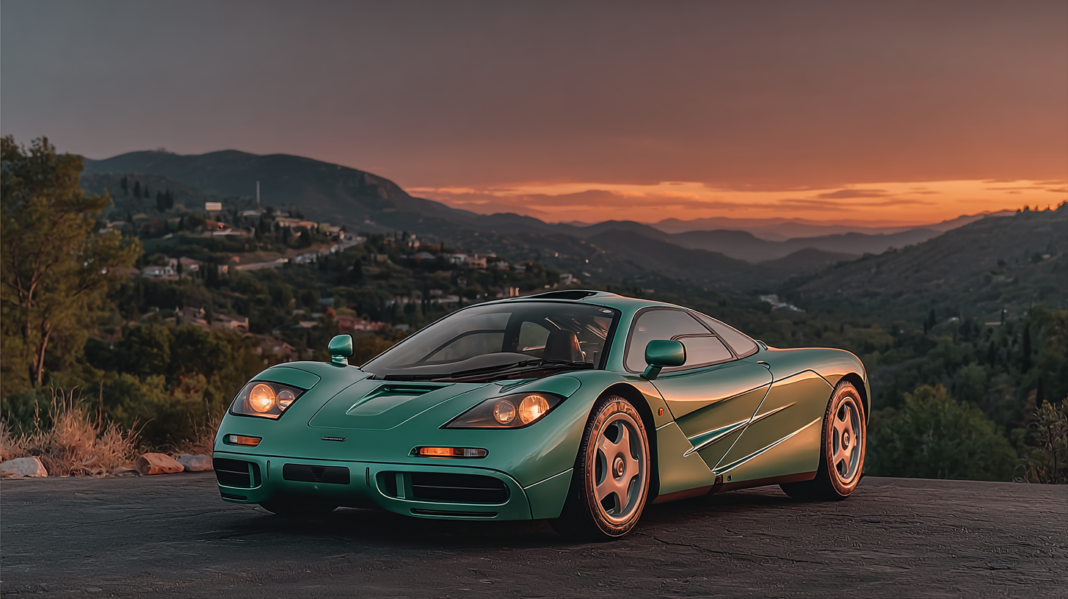
For more than three decades, a single name has sat atop the list of contenders for the greatest supercar of all time: the McLaren F1. It is a machine that was not merely built but engineered with a singular vision. When it was launched in the 1990s, it redefined what was possible for a road going automobile. Today, it remains the benchmark against which all other supercars are measured, not just for its performance figures, but for the philosophy behind its creation.
This article examines the McLaren F1 in detail. We will explore the engineering principles that guided its development, the records it set, the driving experience it offers, and the reasons it has maintained its legendary status for so long.
The Vision of Gordon Murray
The McLaren F1 was the brainchild of Gordon Murray, a renowned Formula One designer. After years of designing race cars that prioritized lightweight construction and driver feedback, Murray wanted to create a road car that embodied the same principles. His vision was clear. He did not want to build the fastest car in the world simply by adding horsepower. Instead, he wanted to build the ultimate driver’s car by focusing on weight reduction, purity of design, and mechanical integrity.
Murray’s philosophy was rooted in the concept of “total efficiency.” He believed that reducing weight was more effective than adding power. A lighter car accelerates faster, stops shorter, handles better, and uses less fuel. This simple but profound idea became the foundation of the entire F1 project. Every component, from the chassis to the engine to the upholstery, was scrutinized for its weight and its contribution to the driving experience.
Murray also insisted that the car be usable. He wanted it to be comfortable enough for long distance journeys, with luggage space, air conditioning, and a civilized driving manner when not being pushed to its limits. This combination of extreme performance and everyday usability was a revolutionary concept at the time.
Engineering Brilliance: The Central Driving Position
The most immediately distinctive feature of the McLaren F1 is its interior layout. Gordon Murray placed the driver’s seat in the center of the cabin, with two passenger seats slightly set back on either side. This configuration was inspired by the McLaren Formula One cars Murray had designed, where the driver sits directly on the car’s centerline.
The central driving position offers several advantages. It provides the driver with perfect visibility and a symmetrical view of the road ahead. It eliminates the need to offset the driver to one side, which improves weight distribution. It also allows for a narrower body, which reduces aerodynamic drag. For the passenger, it creates a unique and engaging experience, sitting alongside the driver in a space that feels more like a cockpit than a traditional car interior.
The cabin itself was a masterpiece of function and luxury. Murray insisted on using the finest materials, but only where they served a purpose. The lightweight magnesium alloy gear lever, the thin carbon fiber seats, and the exposed gold lining in the engine bay were all chosen for their functional benefits. The gold, for example, was used to reflect heat away from the engine. The result is an interior that feels both exotic and purposeful, a space designed entirely around the act of driving.
The BMW V12 Engine
To power his creation, Murray approached several manufacturers before settling on BMW. He did not want a modified version of an existing engine. He wanted a clean sheet design, built to his exact specifications. BMW’s Motorsport division, led by Paul Rosche, accepted the challenge.
The result was the S70/2, a 6.1 liter naturally aspirated V12 engine. It was a masterpiece of engineering. It produced 627 horsepower, an astonishing figure for a naturally aspirated engine in the mid 1990s. More importantly, it was incredibly light and compact, weighing less than many V8 engines of the era. It was also designed to be reliable and tractable, providing immense power throughout the rev range while remaining smooth and responsive in everyday driving.
The engine was naturally aspirated, a deliberate choice by Murray. He believed that turbocharging, while effective at producing power, introduced complexity and compromised throttle response. The linear power delivery of the S70/2, combined with its glorious intake and exhaust sound, became one of the defining characteristics of the McLaren F1.
Records and Performance
When the McLaren F1 was introduced to the world, it did not merely set a new performance standard. It shattered the existing one. In 1998, a production F1 driven by Andy Wallace achieved a top speed of 240.1 miles per hour at the Volkswagen Group’s Ehra Lessien test track. This set the official Guinness World Record for the fastest production car in the world, a record it would hold for more than a decade.
This top speed was not achieved through brute force alone. It was the result of meticulous attention to aerodynamics, weight, and power. The car’s sleek body, developed with extensive wind tunnel testing, produced minimal drag while generating sufficient downforce to keep the car stable at extreme speeds. The lightweight construction, with its carbon fiber monocoque chassis, allowed the relatively modestly sized V12 to propel the car to velocities that few vehicles have matched even today.
Acceleration was equally staggering. The F1 could sprint from 0 to 60 miles per hour in just over three seconds, a figure that remains competitive with modern hypercars. Its braking and cornering capabilities were similarly advanced, making it a complete performance machine rather than just a straight line specialist.
The Driving Experience
Those who have had the privilege of driving a McLaren F1 describe it as an experience unlike any other. It is not a car that isolates the driver. It is a car that communicates with the driver constantly. The steering is direct and full of feel. The suspension relays information about the road surface with clarity. The engine responds instantly to the slightest input from the throttle.
The gearshift, a five speed manual unit, requires precision and intent. It is a mechanical action that connects the driver directly to the powertrain. There are no electronic aids to smooth over mistakes. The car demands skill and respect, rewarding competent driving with an immersive experience that modern, computer assisted supercars struggle to replicate.
At lower speeds, the F1 is surprisingly docile. The ride is firm but compliant. The visibility from the central seat is excellent. It can be driven through city traffic or across continents without complaint. This duality, the ability to be both a comfortable grand tourer and the fastest production car in the world, is central to the F1’s genius.
Rarity and Collectability
The McLaren F1 was built in extremely limited numbers. Between 1992 and 1998, only 106 examples were produced, including prototypes, road cars, and racing variants. Of these, just 64 were standard road going models. This rarity alone would make it collectible, but the F1’s value extends far beyond its scarcity.
The market for McLaren F1s has consistently broken records. Examples now sell for tens of millions of dollars, making them among the most valuable cars in the world. This appreciation is driven by the car’s historical significance, its engineering excellence, and its status as a cultural icon. Collectors view the F1 not just as a car, but as a piece of automotive history, a masterpiece that represents the pinnacle of a specific era of car making.
The F1’s racing heritage also adds to its allure. A GTR version was developed for competition, and it achieved immediate success, winning the 24 Hours of Le Mans in 1995 against purpose built prototype race cars. This victory cemented the F1’s legacy as a car that could dominate on both the road and the track.
The F1’s Influence on Modern Supercars
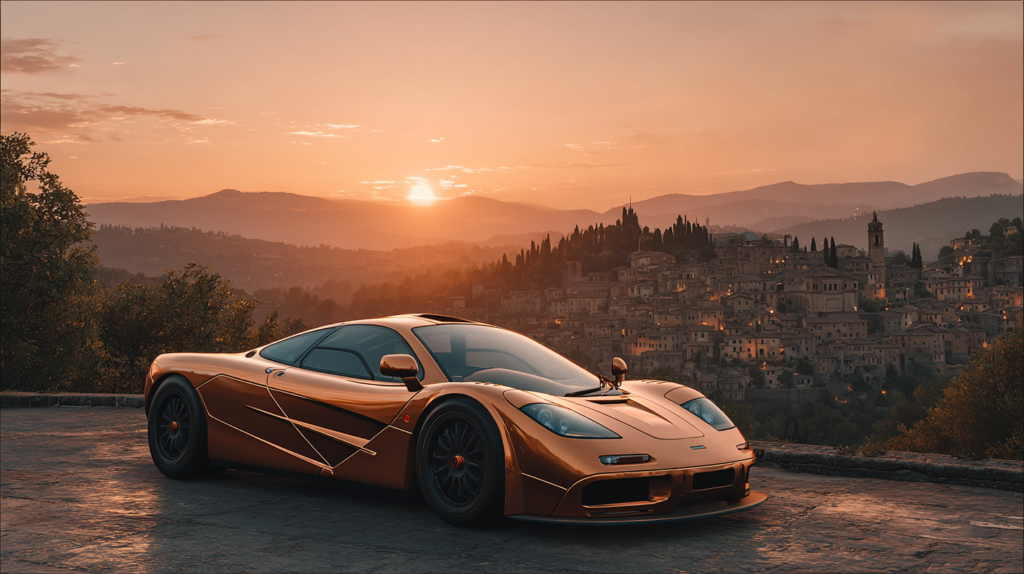
The McLaren F1 established a blueprint that many subsequent supercars have attempted to follow. Its focus on lightweight carbon fiber construction became the industry standard. Its central driving position inspired other manufacturers to experiment with alternative seating layouts. Its combination of extreme performance and usability set a new expectation for what a supercar should be.
McLaren Automotive, the company that now builds road cars, was founded years after the F1, but the F1’s DNA runs through every model they produce. The commitment to lightweight engineering, driver engagement, and innovative aerodynamics can be traced directly back to Gordon Murray’s original vision. Even competitors have acknowledged the F1’s influence, with many modern hypercars citing it as a benchmark during their development.
Why the Debate Continues
The question of whether the McLaren F1 is the greatest supercar ever made is likely to remain a topic of debate among enthusiasts. There are newer cars that are faster in a straight line. There are cars with more advanced hybrid powertrains. There are cars that generate more downforce and lap racetracks more quickly. However, the F1’s claim to the title rests on something more than raw statistics.
It is the purity of its conception. It was designed by a single visionary with a clear goal, unencumbered by marketing departments or focus groups. It was built without compromise, using the best materials and engineering talent available. It achieved its performance through intelligence and efficiency rather than sheer power. And it remains a car that demands to be driven, rewarding its pilot with an experience that feels alive and connected.
Conclusion
The McLaren F1 stands as a landmark achievement in automotive history. It is a car that broke records, introduced groundbreaking technologies, and established a new standard for what a supercar could be. More than thirty years after its introduction, it continues to command respect and admiration from enthusiasts around the world.
Whether one considers it the greatest supercar ever made is ultimately a matter of personal perspective. However, what cannot be disputed is its significance. The McLaren F1 represents a moment when a small team of passionate engineers, led by a visionary designer, created something truly extraordinary. It remains a testament to the idea that the best cars are not built by committees, but by people with a clear vision and the determination to see it through.

