
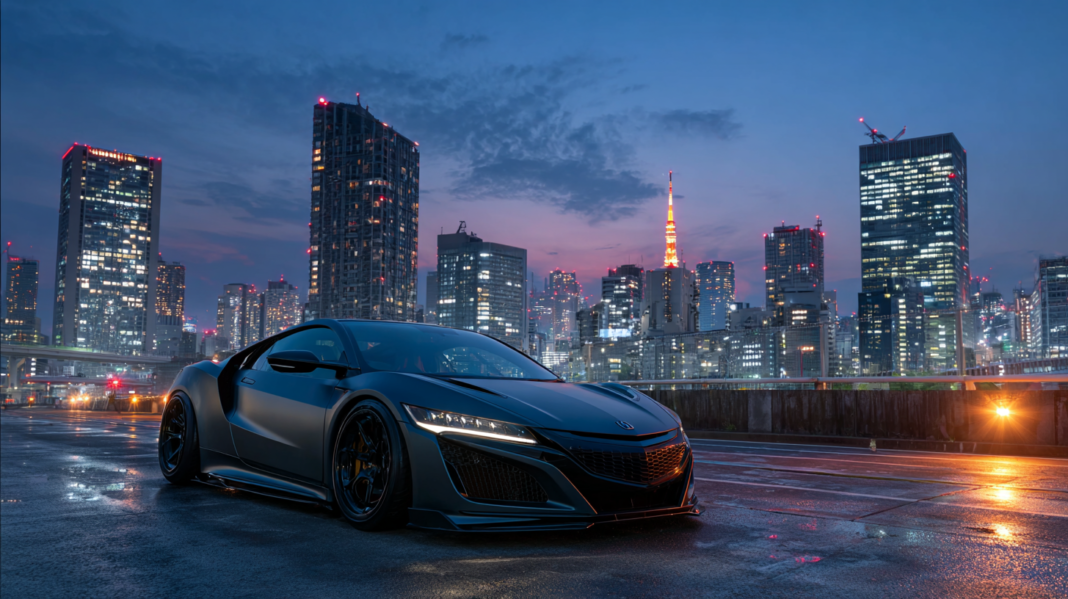
The story of the Acura NSX is one of ambition, technological leadership, and a quiet confidence that has defined Honda’s approach to engineering for decades. When the second generation NSX arrived in 2016 under the Acura brand for North American markets, it carried the weight of an extraordinary legacy. The original NSX, produced from 1990 to 2005, had redefined what enthusiasts could expect from a sports car. It offered Ferrari performance with Honda reliability and usability.
In 2021, Acura announced that the second generation NSX would reach the end of its production cycle. To mark this transition, the company introduced the NSX Type S, a limited production variant that represented the most powerful and dynamically capable version of the hybrid supercar ever built. As we examine this vehicle in 2026, with production long since concluded, the Type S stands as the final chapter in a story that began more than three decades ago.
This article provides a detailed examination of the Acura NSX Type S, its specifications, its engineering philosophy, and what makes this car stand out in the current automotive landscape of 2026.
The NSX Legacy and the Type S Philosophy
The original NSX, which debuted in 1990, was a revelation. Conceived with input from Formula One World Champion Ayrton Senna, it introduced an all aluminum construction, a high revving V6 engine, and a driving experience that prioritized feedback and precision over outright power. It was a supercar that could be driven daily, a concept that was relatively uncommon at the time. For American buyers, it arrived wearing Acura badges, representing the pinnacle of the brand’s precision crafted performance philosophy.
The “Type S” designation has a specific meaning within Acura’s history. On the first generation NSX, the Type S represented a model focused on sharper handling and reduced weight, positioned below the more extreme Type R. For the second generation, the Type S designation was reserved for the final iteration, a comprehensive update that extracted the full potential from the platform.
The second generation NSX, introduced in 2016, took a different technical path than its predecessor. It adopted a hybrid powertrain, combining a mid mounted twin turbo V6 engine with three electric motors. This system, branded as Sport Hybrid Super Handling All Wheel Drive, used two independent motors at the front axle to provide torque vectoring and a third motor integrated with the transmission at the rear. This complex system was designed to provide exceptional cornering capability and all weather traction, making it uniquely suited for the diverse driving conditions found across the United States.
Performance Specifications of the Type S
The NSX Type S represents the peak of the second generation’s performance potential. Acura’s engineers conducted a comprehensive review of the powertrain, suspension, and aerodynamics to create the most capable version of the car.
Powertrain Output
The standard NSX produced 581 horsepower and 476 lb ft of torque. For the Type S, output increased to 600 horsepower and 492 lb ft of torque. This gain of 27 horsepower and 16 lb ft was achieved through several targeted modifications.
Engineers fitted larger fuel injectors and a more efficient intercooler to manage intake temperatures. The turbochargers themselves were sourced from the NSX GT3 Evo race car, providing increased boost pressure and improved flow characteristics. These changes allowed the 3.5 liter V6 to breathe more effectively and produce more power without compromising reliability.
Hybrid System Enhancements
The electrical side of the powertrain also received attention. Engineers increased the battery capacity by 20 percent and improved the output of the electric motors by 10 percent. This was achieved through more efficient motor controllers and revised software calibration. The result was not only more power but also an extended range for pure electric driving at low speeds. The system can now remain in electric mode for longer periods and under more aggressive throttle inputs than the standard car.
Transmission Revisions
The nine speed dual clutch transmission underwent significant recalibration. Shift times were reduced by 50 percent compared to the standard NSX. Engineers achieved this by optimizing the engagement time of the clutches and revising the hydraulic control unit.
A new feature, Rapid Downshift Mode, allows the driver to select the lowest possible gear for a given speed by holding the left paddle shifter for 0.6 seconds. The transmission will skip intermediate gears automatically, placing the engine in the optimal power band for acceleration out of a corner.
Chassis and Dynamic Improvements
Increasing power is only part of the equation. The NSX Type S received comprehensive chassis revisions to ensure the additional performance could be effectively utilized.
Suspension Tuning
The magnetorheological dampers, which use fluid that changes viscosity in response to a magnetic field, were recalibrated for each of the Integrated Dynamics System modes. In Sport and Sport+ modes, the new calibration reduces body roll during cornering and brake dive under hard deceleration. This provides more stable turn in response and greater driver confidence.
The front and rear stabilizer bars were also retuned to work in concert with the revised damper settings. These changes improve the car’s agility without compromising the ride quality that distinguishes the NSX from more track focused competitors.
Wheel and Tire Package
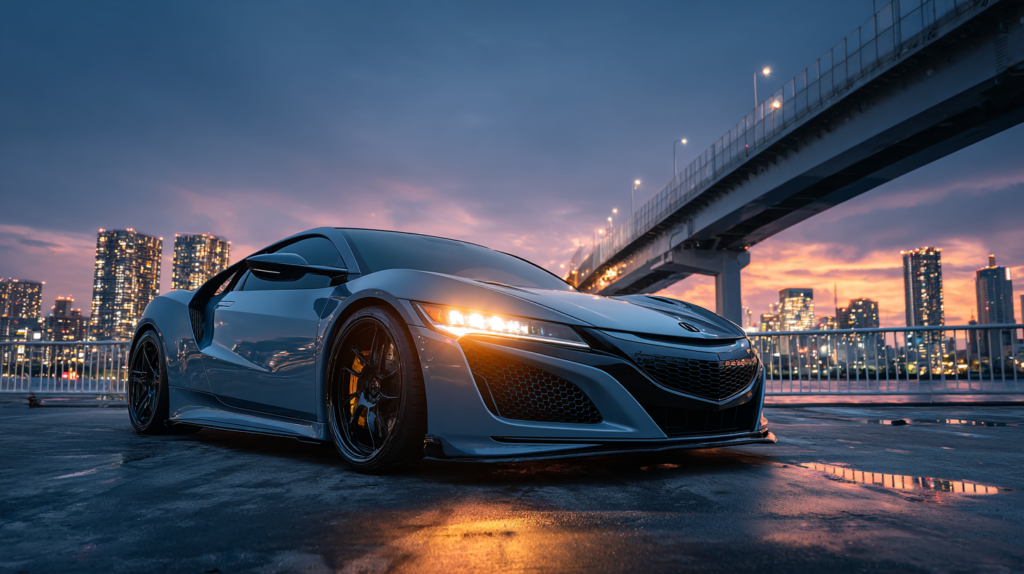
The Type S wears a new five spoke wheel design that increases the track width. The front track increases by 10 millimeters, while the rear track grows by 20 millimeters. This wider stance improves cornering stability and provides a more aggressive visual stance.
Pirelli developed a custom version of its P Zero tire specifically for the Type S. The tire compound and construction were optimized for the car’s weight distribution and hybrid torque delivery characteristics. The front tires are sized 245/35ZR19, with 305/30ZR20 at the rear.
Braking System
Standard braking is handled by Brembo carbon ceramic brakes, which are part of the optional Lightweight Package. These brakes provide exceptional stopping power and resistance to fade during track use. The carbon ceramic rotors are larger in diameter than the standard steel units and are paired with six piston front calipers and four piston rear calipers.
Aerodynamics and Exterior Design
The visual changes applied to the NSX Type S serve functional purposes. Every alteration to the bodywork was driven by the need for improved cooling, reduced lift, or increased downforce.
Front End Modifications
The front bumper features a larger grille opening to feed more air to the cooling systems. Behind the bumper, four additional radiators are positioned to manage the thermal load of the hybrid powertrain under sustained high performance driving. The front splitter is redesigned in carbon fiber to more effectively manage airflow under the car, reducing front axle lift.
Rear End Design
At the rear, the diffuser is reshaped with a more pronounced upward angle and revised fin placement. This generates increased downforce at the rear axle and helps stabilize the car at high speeds. The decklid spoiler is also unique to the Type S, working in conjunction with the diffuser to balance the aerodynamic platform.
Visual Distinctions
The headlight and taillight housings receive a black finish, distinguishing the Type S from standard models. The side mirrors are finished in gloss black, and the exhaust tips receive a dark chrome treatment. A “Type S” badge is applied to the rear quarter panel.
The color palette includes ten exterior options. Two new colors were introduced for the Type S: Long Beach Blue Pearl and Carbon Matte Gray Metallic. The matte gray finish is exclusive to the Type S and is limited to 70 units for the North American market.
Interior and Equipment
The cabin of the NSX Type S maintains the same fundamental architecture as the standard car but adds specific details to mark its significance.
Materials and Trim
The headliner is finished in Alcantara, a suede like material that reduces glare and provides a premium tactile feel. The glove box lid features a “Type S” emblem, and the seat headrests are embossed with the NSX logo.
Buyers can choose between semi aniline leather or a combination of leather and Alcantara for the seating surfaces. Color options include Ebony, Red, and Orchid.
The Lightweight Package
For buyers seeking maximum performance, Acura offered the Lightweight Package. This option deletes approximately 26.2 kilograms from the total curb weight. The weight savings come from three primary sources:
- Carbon ceramic brakes replace the standard steel units
- A carbon fiber engine cover replaces the standard cover
- Carbon fiber interior trim pieces replace standard trim
The package requires an additional investment of $13,000 over the base price of the Type S.
Production Numbers and Market Position
Acura planned a strictly limited production run for the NSX Type S. A total of 350 units were built for the global market, making it an immediately rare vehicle.
North American Allocation
For the United States, this represented approximately 300 units available through Acura dealerships. The remaining 50 cars were distributed to other markets, including Japan and parts of Europe and the Middle East. This allocation strategy ensured that American collectors and enthusiasts had the primary access to the final NSX models.
Pricing Context
The base price for the NSX Type S in the United States was set at $169,500. This positioned it against established competitors such as the Audi R8, Porsche 911 Turbo S, and McLaren GT. The Lightweight Package added $13,000 to the price, and additional options for special paint colors further increased the transaction price for many buyers.
What Makes the NSX Type S Stand Out in 2026
As we examine the automotive landscape in 2026, the NSX Type S occupies a unique position that distinguishes it from both contemporary vehicles and other collector cars.
The Last of Its Kind
In 2026, the NSX Type S stands out primarily because it represents the end of an era. The automotive industry has moved decisively toward full electrification. New supercars from established manufacturers now rely on battery electric powertrains or increasingly complex plug in hybrid systems. The NSX Type S, with its twin turbo V6 and three motor hybrid system, represents a transitional technology that is no longer being developed in the same form.
This makes the Type S a historical artifact in the best sense. It captures a moment when engineers were learning to integrate electric motors with internal combustion engines to enhance performance rather than simply improve fuel economy. The lessons learned from the NSX program directly influenced subsequent Acura products, including the current generation Integra Type S and the performance variants of the TLX.
A Different Philosophy
What sets the NSX Type S apart from its contemporaries in 2026 is its philosophy of usability. Many modern electric supercars prioritize straight line acceleration above all else, with manufacturers competing to achieve the lowest possible zero to sixty times. The NSX Type S takes a more balanced approach.
The car remains approachable for drivers of varying skill levels. It does not intimidate with excessive power that is difficult to manage. Instead, it builds confidence through predictable handling, precise steering, and a chassis that communicates clearly with the driver. This philosophy, inherited from the original NSX, remains distinctive in a market increasingly dominated by software managed performance.
The Sound Factor
In 2026, the sound of the NSX Type S has become one of its most distinguishing features. As electric powertrains become the norm, the acoustic experience of a high revving internal combustion engine paired with electric motors is increasingly rare. The V6, developed with input from the NSX GT3 racing program, produces a distinctive note that changes character across the rev range and between drive modes.
For enthusiasts who value the sensory aspects of driving, this sound has become a significant part of the car’s appeal. It provides feedback that cannot be replicated through a screen or synthesized through speakers.
Collector Market Position
The NSX Type S has established itself as a significant collector vehicle in 2026. The combination of limited production numbers, final edition status, and the historical significance of the NSX nameplate has driven sustained interest from collectors.
Values for well maintained, low mileage examples have remained strong. The Lightweight Package cars and units finished in exclusive colors such as Carbon Matte Gray command premiums in the secondary market. Documentation and service history remain critical factors in determining value, as they do for any limited production exotic vehicle.
Usability as an Asset
Unlike some collector cars that become garage queens too valuable or fragile to drive, the NSX Type S retains its original usability. The hybrid powertrain allows for quiet, emissions free operation at low speeds, making it suitable for urban environments. The suspension absorbs road imperfections without punishing the occupants. The front trunk provides practical storage space.
In 2026, as many collectors seek experiences rather than static investments, this usability has become a significant advantage. Owners can participate in driving events, attend cars and coffee gatherings, and enjoy their vehicles on weekend drives without the logistical challenges associated with more delicate collector cars.
Rarity Within Context
The 350 unit production run ensures that the NSX Type S will never be common. Within the broader context of the approximately 2,500 second generation NSX units produced between 2016 and 2021, the Type S represents the rarest and most desirable variant. This rarity is now fully reflected in the car’s market positioning.
The Driving Experience in 2026
For those fortunate enough to experience the NSX Type S from behind the wheel in 2026, the car offers a perspective on performance that differs from current offerings.
Mode Based Character
The Integrated Dynamics System allows the driver to adjust the car’s character. In Quiet mode, the NSX Type S operates primarily on electric power at low speeds, making it suitable for early morning departures from residential areas. The suspension is compliant, and the engine remains subdued.
Sport mode provides a balance of comfort and response, suitable for everyday driving on varied roads. Sport+ sharpens the throttle response, increases damper firmness, and allows more aggressive shift behavior from the transmission.
Track mode unlocks the full potential of the powertrain and chassis. In this setting, the downshift speed is increased, with the transmission allowed to engage gears at engine speeds up to 1,500 rpm higher than in other modes. The sound generated by the intake and active exhaust is optimized to provide maximum sensory feedback.
Daily Usability
One of the distinguishing characteristics of the NSX has always been its usability, and the Type S retains this quality. The front trunk provides enough space for a set of golf clubs. Visibility is better than many mid engine competitors, with relatively thin roof pillars and a low dashboard.
The suspension, even in its most aggressive settings, does not punish the driver on rough roads. The adaptive dampers absorb impacts effectively while maintaining control of the body.
Conclusion
The Acura NSX Type S serves as the final expression of a concept that Honda and Acura first introduced in 1990. It combines the hybrid technology of the second generation with the focused development that the Type S designation implies.
With 600 horsepower, comprehensive chassis revisions, and a limited production run of 350 units, it represents the most capable version of the NSX ever offered for public sale. It retains the usability that has always distinguished the NSX from its competitors, offering a driving experience that adapts from quiet electric cruising to focused track work at the push of a button.
In 2026, the NSX Type S stands out for reasons that extend beyond its specifications. It represents the end of a technological era, a moment when hybrid systems were reaching maturity before the industry transitioned to full electrification. It offers a driving experience that prioritizes balance and feedback over raw numbers. It provides a sound and sensation that is becoming increasingly rare. And it remains usable in ways that many exotic cars are not.
For enthusiasts and collectors, the NSX Type S marks the end of a line. It is the last new NSX that will be built, the final chapter in a story that began with Ayrton Senna’s input on the original model. As the automotive industry continues its transition toward electrification, the NSX Type S stands as a monument to Acura’s engineering capability and its commitment to building driver focused vehicles.
It is not the loudest supercar, nor the fastest in a straight line. But it is a machine of exceptional capability and surprising versatility, one that rewards the driver not with intimidation but with confidence. And in that regard, it remains true to the spirit of the original NSX that first defined the modern Acura brand.

