Home Blog Page 25

Peugeot 508 PSE: France’s Plug-In Performance Sleeper

0

The automotive landscape in 2026 is dominated by electric vehicles. SUVs have become the default choice for the vast majority of buyers, and high performance sedans and wagons are increasingly rare. In this environment, the Peugeot 508 PSE stands as something of an anomaly, a machine that refuses to follow the crowd.

PSE stands for Peugeot Sport Engineered, the performance division of the French automaker responsible for Le Mans winning race cars and legendary hot hatches. The 508 PSE represents their vision of a modern performance vehicle, one that combines electrification with the driving dynamics that enthusiasts crave. It is a plug in hybrid with 360 horsepower, all wheel drive, and a design that remains striking years after its introduction.

Yet the 508 PSE is also a car that has been largely overlooked in the marketplace. It faces competition from established German players, suffers from aging technology in key areas, and carries a price that places it in rarefied company. This article provides a detailed examination of the Peugeot 508 PSE, its performance specifications, design philosophy, and what makes this French performance sleeper stand out in 2026.

The Peugeot Sport Engineered Philosophy

Peugeot Sport has a distinguished history in motorsport, from rallying victories to multiple Le Mans overall wins. The division’s road car efforts have traditionally focused on hot hatches that earned a reputation for engaging handling, responsive engines, and a level of driver involvement that punched above their weight class.

The PSE sub brand represents a new direction, one that embraces electrification while maintaining the core values of Peugeot Sport. The 508 PSE is the first model to carry the PSE badge, and it represents a significant departure from the hot hatch formula. It is larger, more luxurious, and more technologically complex than anything Peugeot Sport has attempted before.

The engineering team approached the 508 PSE with the same philosophy they apply to race cars: optimize every component, balance the chassis for neutral handling, and create a machine that rewards driver skill. The result is a vehicle that, despite its weight and size, delivers a level of engagement that surprises those who expect a typical French executive car.

Powertrain and Performance

System Configuration

The 508 PSE is powered by a plug in hybrid powertrain that combines an internal combustion engine with two electric motors. The combustion engine is a 1.6 liter four cylinder turbocharged unit producing 200 horsepower and 300 Nm of torque. This engine alone would be adequate for a family hatchback, but in the PSE it serves as part of a more complex system.

An electric motor mounted at the front axle contributes an additional 110 horsepower and 320 Nm of torque. A second electric motor at the rear axle adds 113 horsepower and 166 Nm of torque. This dual motor configuration provides all wheel drive without the need for a mechanical connection between the front and rear axles, allowing for precise torque vectoring that can enhance cornering performance.

Total Output

The combined system output is 360 horsepower and 520 Nm of torque. This figure places the 508 PSE in direct competition with performance oriented versions of German and Swedish executive cars. It is the most powerful production Peugeot ever built.

Acceleration and Top Speed

The 508 PSE accelerates from 0 to 100 kilometers per hour in 5.2 seconds. This is quick enough to surprise many dedicated sports cars, though it falls short of the most potent competitors in its class.

Top speed is electronically limited to 250 kilometers per hour. In electric mode, the car is limited to 135 kilometers per hour, above which the combustion engine engages to provide additional power.

Battery and Electric Range

Power for the electric motors is drawn from a 12.4 kWh lithium ion battery pack mounted beneath the floor. This is where the 508 PSE shows its age most clearly. In 2026, new plug in hybrid models from competitors offer larger battery capacities and greater electric ranges. The Peugeot’s 12.4 kWh pack delivers an official WLTP range of approximately 50 kilometers, with real world driving reducing that further.

The battery can be charged from a wallbox at up to 7.4 kW, taking approximately 1 hour and 40 minutes for a full charge. There is no DC fast charging capability, meaning longer journeys require reliance on the combustion engine once the battery is depleted.

Fuel Consumption

When the battery is fully charged and used for shorter trips, the 508 PSE can achieve remarkably low fuel consumption. The official WLTP combined figure is low, though this depends heavily on regular charging and limited use of the combustion engine.

When the battery is depleted and the car relies on the 1.6 liter engine alone, consumption rises significantly. Real world highway driving at higher speeds returns approximately 7 to 8.5 liters per 100 kilometers, depending on driving style and conditions.

Chassis and Dynamics

Suspension System

The 508 PSE features an adaptive suspension system developed specifically by Peugeot Sport. The dampers can adjust their characteristics based on driving mode and road conditions, providing a range of behavior from comfortable cruising to focused cornering. The springs are stiffer than those on standard 508 models, and the ride height is reduced slightly to lower the center of gravity.

The suspension tuning is widely regarded as the car’s strongest attribute. Its ability to combine comfort over long distances with genuine handling capability on challenging roads is noteworthy. The car remains flat through corners, responds eagerly to steering inputs, and communicates with the driver in a way that increasingly few modern vehicles manage.

Steering

The 508 PSE uses an electric power steering system calibrated for direct response and appropriate weighting. The small diameter steering wheel, part of Peugeot’s i Cockpit design philosophy, contributes to the sensation of agility. The steering provides genuine feedback about what the front tires are doing, allowing the driver to place the car precisely on the road.

The small steering wheel is a divisive feature. Some drivers find it creates a go kart like feeling that enhances engagement. Others struggle to find a seating position that allows a clear view of the instrument cluster over the top of the wheel. A test drive is essential to determine which camp you fall into.

Brakes

The braking system combines regenerative braking from the electric motors with traditional friction brakes. The integration between the two is managed electronically to provide consistent pedal feel regardless of the regeneration level. The front brakes are larger than those on standard 508 models, with calipers finished in the distinctive PSE color scheme.

Some reviewers have noted that the brake pedal feel can be slightly inconsistent, a common challenge with hybrid systems that must blend regenerative and friction braking seamlessly. Under hard use, the brakes provide ample stopping power without fade.

Weight

The 508 PSE weighs approximately 1,860 kilograms, significantly more than its non hybrid counterparts. This weight is distributed between the front and rear axles, with the battery pack mounted low in the chassis to minimize impact on handling. The all wheel drive system provides traction that helps mask the mass during acceleration, and the suspension tuning does an admirable job of controlling body motions.

Design

Exterior Styling

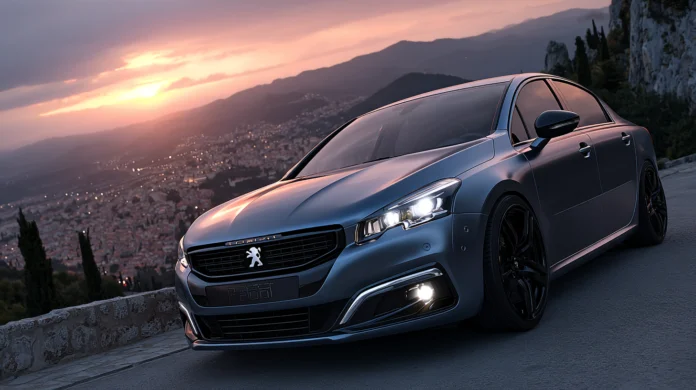
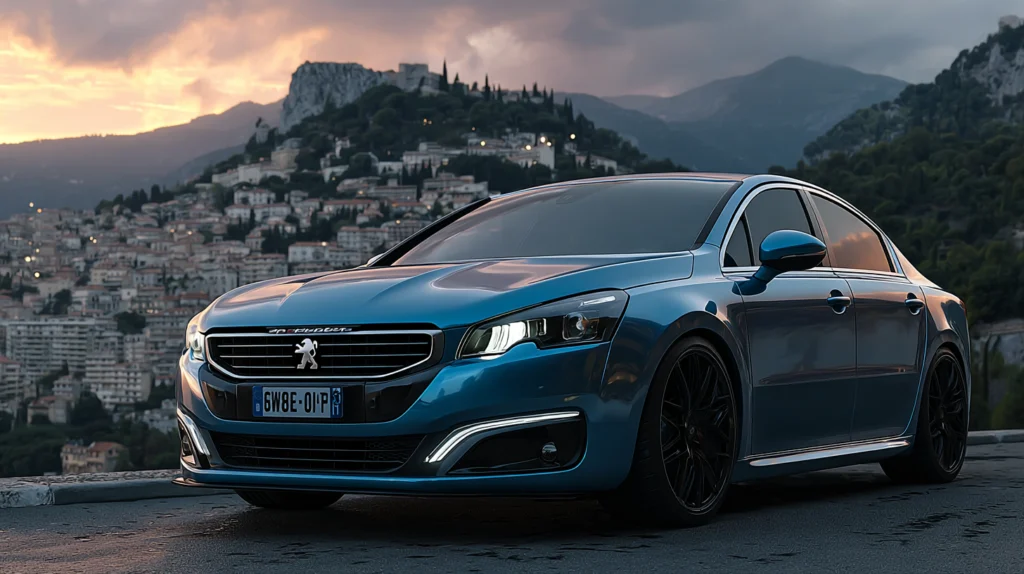
The regular 508 was already one of the most handsome cars in its class when it launched, and the PSE version amplifies those attributes. The car measures approximately 4,750 mm in length, 1,860 mm in width, and just 1,400 mm in height, giving it a low, wide stance that is immediately distinguishable from more upright competitors.

The PSE adds specific styling elements that signal its performance intent. The front bumper incorporates larger air intakes finished with distinctive Kryptonite green accents. The side sills are more pronounced, and the rear diffuser houses twin exhaust outlets. The 20 inch alloy wheels are unique to the model and barely conceal the upgraded brake calipers, also finished in the signature green.

The facelifted model features updated lighting with three claw shaped LED elements that have become a Peugeot signature. The grille is integrated into the bumper in a way that gives the front end a cohesive, almost organic appearance.

In a world increasingly dominated by tall, slab sided SUVs and similarly shaped electric vehicles, the 508 PSE stands out dramatically. It attracts attention from those who notice its distinctive proportions and detailing.

Interior Design

The cabin of the 508 PSE follows the i Cockpit philosophy that Peugeot has championed for years. The driver faces a 12.3 inch digital instrument cluster positioned above a small diameter steering wheel. The central touchscreen measures 10 inches and controls infotainment functions, supplemented by physical toggle switches for shortcut access to key menus.

The PSE treatment adds sport seats upholstered in a combination of leather and Alcantara, with green contrast stitching throughout. The seats are heavily bolstered to hold occupants during cornering, yet remain comfortable enough for long distance touring. They also feature heating and massage functions, a reminder that this is a grand tourer as much as a performance machine.

Material quality is high throughout, with soft touch plastics on the upper surfaces and carefully finished trim pieces. The overall effect is genuinely premium, competitive with German rivals.

Practicality

The 508 is available in both sedan and SW estate body styles. The SW is the more practical choice, offering substantial cargo space with the rear seats in place and even more with them folded. This is considerably more than you get in many competitors, though it falls short of the most capacious offerings in the class.

The sedan offers generous boot space, expanding further with the rear seats folded. Both versions suffer from the battery placement, which reduces underfloor storage and raises the loading lip slightly.

Rear seat space is adequate for adults, though the sloping roofline limits headroom for taller passengers. Knee room is acceptable, and the outer seats are well shaped. The middle seat is best reserved for occasional use or children.

Driving Experience

Electric Mode

In electric mode, the 508 PSE operates as a silent, relaxed cruiser. The instant torque from the electric motors provides effortless acceleration from rest, and the car glides through urban environments without drama. The limited electric range means this mode is best suited to shorter trips, but for those who can charge regularly, it transforms running costs.

Hybrid Mode

In normal hybrid operation, the car seamlessly blends power from the combustion engine and electric motors. The transitions are smooth, and the system does an admirable job of selecting the most efficient power source for the conditions. The all wheel drive traction provides confidence in wet weather, and the instant torque response makes overtaking effortless.

Sport Mode

Engaging Sport mode transforms the character of the 508 PSE. The powertrain becomes more responsive, holding gears longer and using the electric motors to fill any gaps in torque delivery. The adaptive suspension stiffens, reducing body roll and sharpening turn in. The steering weights up, and the car feels genuinely eager to attack corners.

The small steering wheel and responsive chassis create an experience that is genuinely engaging. The car communicates its limits clearly, inviting the driver to explore them. It is not as sharp as the sharpest competitors on a tight, twisty road, but it offers a level of engagement that surprises given its size and weight.

Depleted Battery Behavior

When the battery is depleted, the 508 PSE becomes a different proposition. The 1.6 liter engine must carry nearly 1,900 kilograms of car without electric assistance, and it sounds strained when asked to deliver full performance. The engine note is not particularly inspiring, and the car feels noticeably slower.

This is the car’s greatest weakness. To experience the 508 PSE at its best, the battery must be charged regularly. Owners who cannot charge at home or work will find themselves driving a heavy, thirsty car that never delivers the performance they paid for.
Peugeot 508 PSE: France’s Plug-In Performance Sleeper

What Makes the 508 PSE Stand Out in 2026

The Sleeper Factor

The 508 PSE is a genuine sleeper, a car that does not shout about its capabilities but delivers them when asked. It does not have the brand cachet of German competitors or the visual aggression of some rivals, but it offers comparable real world performance in a package that flies under the radar. For buyers who value discretion, this is a significant advantage.

Design Distinction

In a market segment where most competitors prioritize conservative styling to appeal to the broadest possible audience, the 508 PSE takes risks. Its low, wide stance, distinctive lighting, and sharp lines create a visual identity that stands out in any setting. For buyers who value individuality, this matters.

Rarity

The 508 PSE is not a common sight on roads. Production numbers are limited, and sales have been modest compared to German competitors. For buyers who prefer to drive something different, something that will not be encountered at every stoplight, this rarity is a feature, not a bug.

The Heart over Head Proposition

The 508 PSE is not a rational choice. It is more expensive than many competitors, less efficient than newer plug in hybrids, and compromised in ways that a spreadsheet would highlight. But it offers something that spreadsheets cannot capture: character. The way it drives, the way it looks, the way it makes you feel these are attributes that defy quantification but matter enormously to enthusiasts.

French Character

The 508 PSE embodies a distinctly French approach to performance. It prioritizes ride comfort alongside handling, elegance alongside aggression, and individuality above conformity. In a segment dominated by German engineering, this French character provides genuine differentiation.

Specifications Summary

Powertrain: 1.6L turbo + front motor + rear motor
Total Power: 360 horsepower
Total Torque: 520 Nm
Transmission: 8 speed automatic
Drive: All wheel drive
0-100 km/h: 5.2 seconds
Top Speed: 250 km/h
Battery Capacity: 12.4 kWh
Electric Range: Approximately 50 km (WLTP)
Weight: Approximately 1,860 kg
Length: 4,750 mm
Width: 1,860 mm
Height: 1,400 mm
Body Styles: Sedan and SW estate

Pricing and Positioning

Price

The 508 PSE carries a starting price of approximately 70,000 to 75,000 euros in European markets, depending on country and specification. This positions it against established German competitors, all of which offer comparable or superior performance.

Value Proposition

On paper, the 508 PSE struggles to justify its price. It is less powerful than some competitors, has a smaller battery, and lacks the brand prestige of the German alternatives. But value is not solely determined by specifications. For buyers who connect with the car’s design and character, the price may be entirely reasonable.

Market Position

The 508 PSE occupies an increasingly lonely position in the market. The segment for performance sedans and wagons is shrinking as buyers migrate to SUVs. Peugeot’s commitment to offering this car, despite modest sales, demonstrates a belief that there will always be customers who value something different.

Conclusion

The Peugeot 508 PSE is a car of contradictions. It combines a small, strained engine with electric motors to produce genuinely impressive performance. It wraps cutting edge technology in a body that has aged gracefully. It demands a premium price while offering less objective capability than cheaper alternatives.

Yet for all its compromises, the 508 PSE is a compelling machine. It drives with a verve and engagement that surprises given its size and weight. It looks like nothing else on the road, attracting attention that far more expensive cars cannot match. It offers a level of individuality that is increasingly rare in a homogenized market.

The 508 PSE is not for everyone. It requires a buyer who can charge regularly, who values character over specifications, who appreciates design as much as dynamics. It is a car for the heart, not the head, a machine that rewards those who connect with its unique personality.

In 2026, as the automotive world accelerates toward electrification and homogenization, the 508 PSE stands as a reminder that there is still room for something different. It is France’s plug in performance sleeper, a car that deserves to be discovered by those who refuse to follow the crowd.
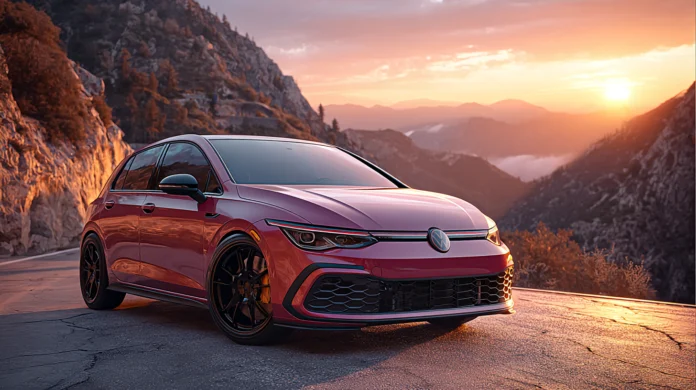
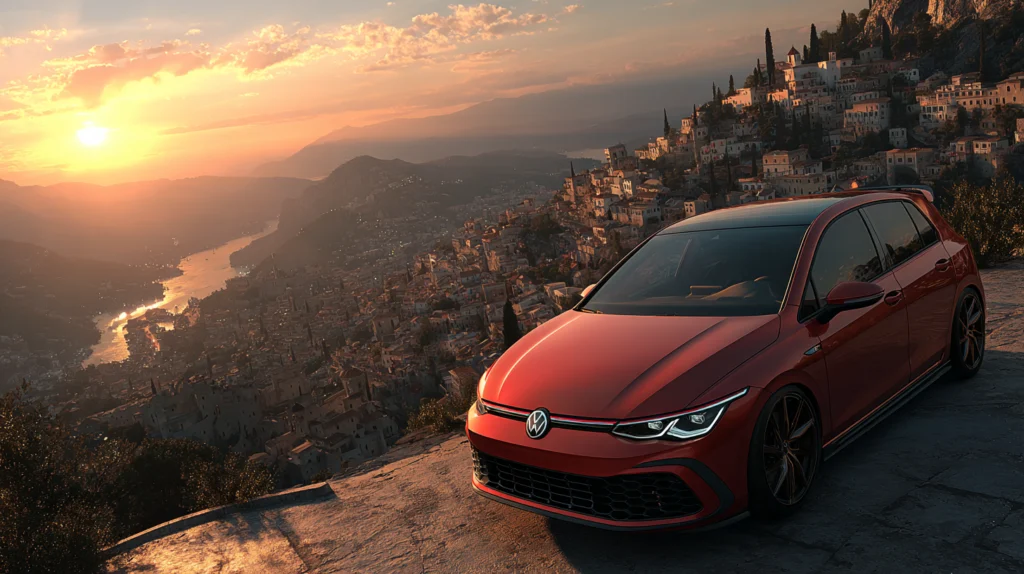
Volkswagen ID. GTI Concept: Affordable Performance, Reborn

0

The year 2026 marks a significant milestone in automotive history. Fifty years ago, Volkswagen introduced the Golf GTI, a car that would define the hot hatch segment and establish the three letters GTI as a global symbol of accessible, engaging performance. What began as a skunkworks project by a small group of enthusiastic engineers grew into a cultural phenomenon, proving that driving pleasure need not be reserved for expensive sports cars.

Now, half a century later, Volkswagen faces a new challenge: how to translate the GTI philosophy into an era of electrification. The answer arrives in the form of the ID. GTI Concept, a vision of how the iconic hot hatch could evolve for a new generation. First unveiled at the 2023 IAA Mobility show in Munich, the concept car has continued to generate interest and speculation about Volkswagen’s plans for electric performance.

This article provides a detailed examination of the Volkswagen ID. GTI Concept, its design philosophy, performance potential, and what this concept signals about the future of affordable performance in 2026 and beyond.

The GTI Legacy: Fifty Years of Accessible Performance

The original Golf GTI debuted in 1976, a time when performance cars were typically large, expensive, and fuel thirsty. Volkswagen’s engineers took a different approach: start with a practical, affordable hatchback, add a fuel injected engine, tighten the suspension, and sprinkle in enough visual cues to signal that this was something special. The result was a car that could carry groceries during the week and attack back roads on the weekend.

Over five decades, the GTI formula has remained remarkably consistent. Every generation has delivered a combination of spirited performance, everyday usability, and a price point within reach of enthusiastic drivers. The red grille accents, the plaid seat upholstery, the golf ball inspired shift knob these details became visual shorthand for a car that prioritized driver engagement above all else.

As Volkswagen transitions to electric vehicles, the company faces the question of whether these qualities can survive the shift. Can an electric car feel like a GTI? The ID. GTI Concept represents the company’s affirmative answer, a design study that explores how the hot hatch formula might translate to the electric age.

The ID. GTI Concept: A Vision of Electric Performance

The ID. GTI Concept is not a single production model but rather a preview of what Volkswagen’s electric GTI family could become. Based on the modular electric drive platform that underpins all ID. models, the concept demonstrates how the brand’s performance heritage can merge with its electric future.

Concept Status

As of 2026, the ID. GTI remains a concept vehicle, though its influence can be seen in Volkswagen’s product planning. The company has announced intentions to bring electric GTI models to production, with the concept serving as a template for the design language and engineering priorities that will define those cars.

The concept has appeared at automotive exhibitions and events since its 2023 debut, generating significant interest from enthusiasts and industry observers. While the specific details may evolve before production, the concept establishes the direction Volkswagen intends to take.

Platform and Architecture

The ID. GTI Concept is built on Volkswagen’s modular electric drive platform, specifically developed for front wheel drive applications. This represents a significant engineering achievement, as the platform was originally designed primarily for rear and all wheel drive configurations.

The concept positions the electric motor at the front axle, delivering power to the front wheels in a deliberate nod to the GTI’s heritage. This configuration requires careful packaging of the motor, power electronics, and cooling systems within the front end, but Volkswagen’s engineers have demonstrated that it is feasible.

The battery pack is mounted low in the floor, providing a center of gravity that enhances handling while preserving interior space. The concept’s proportions a long wheelbase, short overhangs, and a relatively tall roof line are characteristic of dedicated electric vehicle architecture.

Design Philosophy: Honoring the Past, Embracing the Future

Exterior Design

The ID. GTI Concept carries forward the visual language established by fifty years of GTI models, adapted for the electric age. The most recognizable element is the red accent line that has distinguished GTIs since the beginning. On the concept, this line appears in the front fascia, tracing the outline of the closed grille area and signaling the car’s performance intent.

The front end features a closed grille, as expected for an electric vehicle, but the lower fascia incorporates a honeycomb pattern that echoes the grilles of previous GTIs. Large air intakes feed cooling air to the front motor and brakes, while aerodynamic elements manage airflow for efficiency and stability.

In profile, the concept’s proportions reveal its electric architecture. The relatively long wheelbase and short overhangs are characteristic of dedicated EV platforms, while the raised roof line accommodates the battery pack beneath the floor. Large wheels, up to 20 inches in diameter, fill the wheel arches and provide an aggressive stance.

At the rear, a prominent roof spoiler and redesigned diffuser emphasize the car’s sporting intentions. The taillights feature distinctive graphics, and the GTI badging appears in its familiar font, updated for the electric era.

Interior Design

The interior of the ID. GTI Concept represents a careful balance between modern technology and classic GTI cues. The dashboard is dominated by a large digital instrument cluster and a central touchscreen, providing the connectivity and information that modern drivers expect.

But Volkswagen’s designers have hidden an Easter egg for enthusiasts. A dedicated theme switch transforms the digital displays into a recreation of the original Golf GTI’s instrumentation. The instrument cluster adopts the round dial layout of the 1976 car, with a speedometer and tachometer rendered in period appropriate graphics. The central screen can even simulate the appearance of a cassette tape player, a playful nod to the era when the GTI was born.

Physical controls remain for critical functions, a deliberate choice that acknowledges the importance of tactile feedback in a driver’s car. The multifunction steering wheel uses actual buttons rather than touch sensitive surfaces, and climate controls include physical switches.

The seats feature a modern interpretation of the classic GTI tartan pattern, rendered in materials that reflect the car’s sustainable mission. Red contrast stitching appears throughout the cabin, and GTI logos adorn the seats, steering wheel, and door sills.

Potential Powertrain and Performance

Motor Configuration

While the ID. GTI Concept is not a production vehicle with finalized specifications, it previews the powertrain configuration that Volkswagen is developing for future electric GTI models. The concept features a single electric motor mounted at the front axle, delivering power to the front wheels.

This configuration is a deliberate choice by Volkswagen’s engineers, who believe that front wheel drive is essential to the GTI character. While most electric vehicles opt for rear or all wheel drive for efficiency and traction, the concept maintains the front drive layout that has defined the hot hatch segment for five decades.

Estimated Output

Based on the concept and Volkswagen’s existing electric powertrain portfolio, a production version could offer output in the range of 223 to 230 horsepower. This would represent a significant step up from standard ID. models while maintaining the accessible performance character that defines the GTI.

The motor would be tuned for responsive throttle response and linear power delivery, characteristics that GTI drivers have come to expect. Instant torque delivery, inherent to electric motors, would provide strong acceleration from a standstill.

Battery and Range

A production electric GTI would likely offer battery capacity in the range of 52 to 60 kWh, providing an estimated range of approximately 250 to 280 miles on the WLTP cycle. This range figure would be competitive for the segment and sufficient for daily driving as well as weekend adventures.

DC fast charging capability would allow rapid replenishment of the battery, with 10 to 80 percent charges possible in approximately 25 to 30 minutes under ideal conditions.

Chassis and Dynamics

The concept previews several chassis technologies that could appear on production electric GTI models. A sport tuned suspension with reduced ride height would lower the center of gravity and improve handling response. Larger brakes with distinctive calipers would provide stopping power appropriate to the performance.

An electronically controlled front axle differential lock, similar to a mechanical limited slip differential, would manage torque distribution between the front wheels to maximize traction during hard cornering and acceleration. This technology would bring the handling characteristics closer to the combustion GTI experience.

The GTI Community Connection

Heritage Integration

The ID. GTI Concept demonstrates Volkswagen’s understanding that the GTI is more than a car it is a community. The design cues, the tartan seats, the red accents, the hidden Easter egg in the digital displays all of these elements connect the concept to its predecessors and signal to enthusiasts that their heritage is respected.

Volkswagen has engaged with GTI enthusiasts throughout the concept’s development, gathering feedback and gauging reactions. The positive response from early viewings has encouraged the company to move forward with production plans.

The Emotional Value of Driving

The concept represents a belief that the emotional value of driving will remain strong in the era of electrification. This is not an obvious conclusion. Electric cars are quieter, smoother, and often more isolated than their combustion counterparts. The act of driving could become purely functional, a matter of guiding a machine from point to point without engagement.

The ID. GTI Concept suggests that Volkswagen’s engineers are working to ensure that future electric GTIs reward the driver. The throttle response would be calibrated for immediacy. The chassis would communicate through the seat and steering wheel. The sounds, while different from a combustion engine, would provide feedback about what the car is doing. The goal is a car that invites participation, that rewards skill, that makes the driver feel involved.

What Makes the ID. GTI Concept Stand Out in 2026

The Front Drive Choice

The concept’s front wheel drive configuration sets it apart from nearly every other electric performance car on the market. While competitors pursue ever higher horsepower figures and all wheel drive traction, Volkswagen is betting that character matters more than numbers.

For drivers who value the feel of a front drive hot hatch the way it tucks into corners, the way the steering communicates, the way power is metered out through the front tires the concept offers a vision of something that no other electric car can match. It is a deliberate statement that the GTI’s soul can survive electrification.

Heritage and Modernity

The concept bridges fifty years of history with an electric future. The design cues, the tartan seats, the red accents, the hidden Easter egg in the digital displays all of these elements connect the concept to its predecessors. But the underlying technology is thoroughly modern, from the efficient electric motor to the advanced chassis controls.

This balance between heritage and progress is difficult to achieve. Too much nostalgia produces a car that feels like a recreation rather than a genuine evolution. Too much focus on the future severs the connection to what made the original special. The concept appears to strike the right balance, honoring the past while embracing what comes next.

Accessible Performance Vision

The concept envisions a future where accessible performance continues to exist. While exact pricing for a production version has not been determined, Volkswagen has indicated that an electric GTI would be positioned within reach of the same enthusiastic buyers who have kept the nameplate alive for fifty years.

In a market where electric vehicles often command premium prices, this commitment to affordability matters. The concept demonstrates that electrification need not mean exclusivity, that the democratization of driving pleasure can continue into a new era.

Volkswagen ID. GTI Concept: Affordable Performance, Reborn

From Concept to Production

Development Timeline

Volkswagen has announced intentions to bring electric GTI models to production, with the concept serving as the design template. Company representatives have indicated that development is proceeding, though specific launch dates have not been confirmed.

The concept has undergone extensive testing and refinement since its 2023 debut, with engineers gathering data and validating the front wheel drive electric architecture. Production versions, when they arrive, will benefit from this development work.

Production Possibilities

Two potential production models have been discussed based on the concept’s influence. A smaller entry level model, potentially wearing the ID. Polo GTI name, would target the same segment as the original Golf GTI. A larger ID. 3 GTI would offer more space and higher performance for buyers seeking additional capability.

Both models would share the concept’s design language and engineering philosophy while adapting to their respective size and price points.

Market Availability

Volkswagen has confirmed that electric GTI models will be sold in European markets. Availability in other regions, including North America and Asia, remains under study. The company’s representatives have stated that decisions will be based on market demand and competitive positioning.

The Future of GTI

Electrification of the Range

The ID. GTI Concept represents the first step in a broader electrification strategy for Volkswagen’s performance models. Additional electric GTI variants are under consideration, including potential hot hatch versions of other ID. models and perhaps even electric interpretations of the Golf GTI nameplate.

Continued Combustion Production

Volkswagen has adopted a two pillar strategy that maintains internal combustion engine production alongside electric vehicles. The combustion Golf GTI will continue to be produced and updated, serving buyers who are not ready to make the transition to electric power. This dual approach acknowledges that different markets and different customers have different needs, and that the transition to electrification will take time.

The GTI Community

Perhaps the most important element of the GTI’s future is the community that has grown around it. For fifty years, GTI owners have formed clubs, attended gatherings, and shared their passion with each other. Volkswagen has cultivated this community, recognizing that the brand’s strength depends on engaged enthusiasts.

The ID. GTI Concept represents an invitation to this community to embrace a new chapter. The response from early viewings has been positive, with attendees at automotive exhibitions expressing enthusiasm for the design and the concept. Whether that enthusiasm translates to sales remains to be seen, but the foundation is there.

Conclusion

The Volkswagen ID. GTI Concept asks a question that matters not just to Volkswagen but to the entire automotive industry: can the soul of a driver’s car survive electrification?

The answer, based on what the concept demonstrates, appears to be yes. The design study incorporates the essential elements that have defined the GTI for fifty years accessible performance, everyday usability, engaging dynamics, and a connection to the driver that goes beyond transportation. It does this not by pretending to be something it is not, but by interpreting the GTI philosophy for a new era.

The front drive layout, the electronic differential lock, the tuned chassis, the tartan seats, the red accents, the hidden Easter egg in the digital displays all of these elements work together to create a vision of something that feels like a GTI, even though it would be powered by electricity rather than gasoline.

It is not a perfect translation. A production version would be heavier than its combustion predecessors. The driving experience would be different. The sounds would be different. The character would be different. But the essence the commitment to accessible, engaging, everyday performance remains.

For the enthusiasts who have kept the GTI flame alive for fifty years, the concept offers a path forward. It demonstrates that the values they cherish can survive the transition to a new technology. And for a new generation of drivers, it offers an introduction to the GTI philosophy, a chance to discover that driving can be rewarding even in an electric car.

In 2026, as the automotive industry accelerates toward electrification, the ID. GTI Concept stands as proof that affordable performance is not dead. It is simply being reborn.

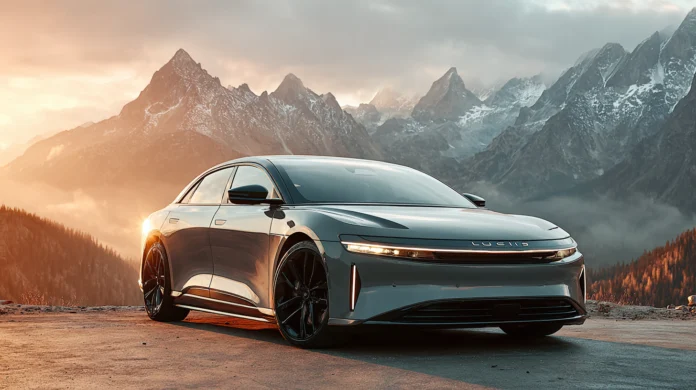
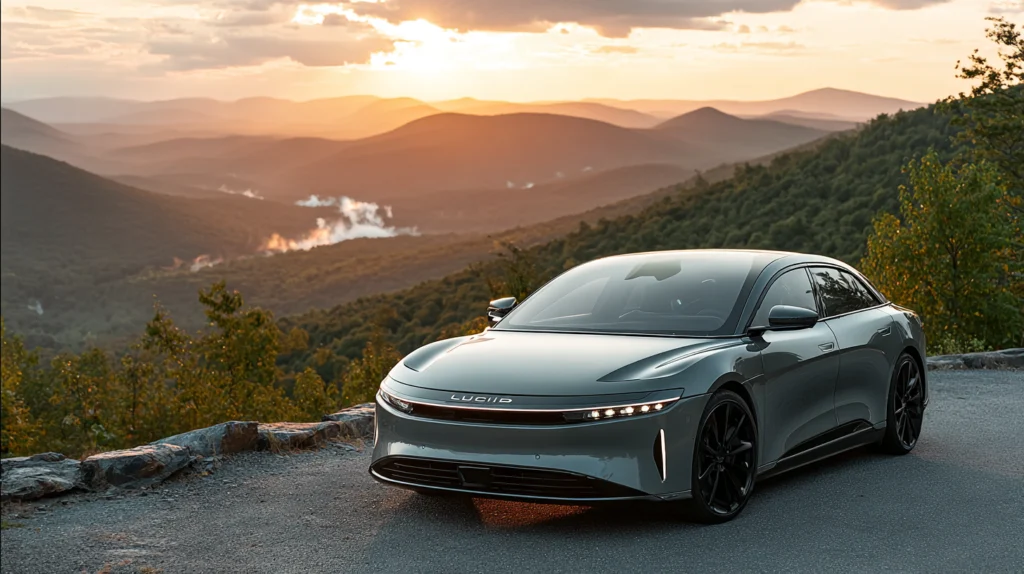
Lucid Gravity: A Fast EV SUV for the Family?

0

The electric vehicle revolution has produced no shortage of impressive machines, from sleek sedans to capable trucks. But the segment that matters most to American families the three row SUV has been slower to embrace electrification without compromise. Buyers have faced choices between limited range, cramped third rows, or price tags that push well into six figures.

The Lucid Gravity arrives in 2026 as the second model from the California based automaker, following the critically acclaimed Air sedan. It promises to deliver what families need: space for up to seven passengers, generous cargo capacity, and real world range that makes electric road trips practical. But it also delivers what enthusiasts want: breathtaking acceleration, engaging handling, and the kind of engineering sophistication that has defined Lucid’s approach since its founding.

With up to 440 miles of range, 828 horsepower in Grand Touring trim, and a starting price just under $80,000 for the new Touring version, the Gravity enters a competitive field that includes the Tesla Model X, Rivian R1S, and Mercedes EQS SUV. This article provides a detailed examination of the Lucid Gravity, its performance specifications, design philosophy, and what makes this electric SUV stand out in 2026.

The Lucid Philosophy

Lucid Motors was founded with a clear mission: to create electric vehicles that advance the state of the art through engineering excellence rather than simply following established formulas. The company’s approach reflects a belief that buyers should not have to choose between performance, efficiency, luxury, and practicality.

This philosophy is evident throughout the Gravity. Rather than designing an SUV that merely accommodates an electric powertrain, Lucid engineered a platform specifically for the three row configuration from the ground up. The result is a vehicle that maximizes interior space without growing to intimidating exterior dimensions, thanks to the company’s miniaturized powertrain components and efficient packaging.

The Gravity also demonstrates Lucid’s forward thinking approach to versatility. The platform was designed from the start to accommodate future technologies without compromising its primary mission as a family vehicle. This adaptability ensures that the Gravity remains relevant as the automotive landscape continues to evolve.

Trim Levels and Pricing

For 2026, Lucid offers the Gravity in three distinct trims, each targeting different priorities and budgets.

Touring

The newly introduced Touring trim serves as the entry point to the Gravity lineup, with a starting price of $79,900. This model makes Lucid’s SUV accessible to a broader range of buyers while maintaining the core attributes that define the vehicle. Standard equipment includes dual motor all wheel drive, a full glass roof, premium audio, and a comprehensive safety suite.

The Touring represents a significant value proposition in the luxury electric SUV segment, undercutting many competitors on price while offering comparable or superior range.

Grand Touring

The Grand Touring trim, priced at $94,900, represents the sweet spot in the lineup for buyers seeking the optimal balance of performance, range, and luxury. This model delivers the full 828 horsepower and up to 440 miles of range that have become the headline figures for the Gravity, along with upgraded interior appointments and additional standard features.

Dream Edition

At the top of the range sits the Dream Edition, with a price of $139,900. This limited production halo model layers on the most advanced performance tuning, premium interior finishes, and exclusive details that position it as a true collector piece. For buyers who want the ultimate expression of what Lucid can achieve, the Dream Edition delivers without reservation.

Powertrain and Performance

Dual Motor Configuration

Every Lucid Gravity features dual electric motors, one at each axle, providing full time all wheel drive. This configuration delivers not only all weather traction but also sophisticated torque vectoring capabilities that enhance handling.

Grand Touring Output

The Grand Touring trim produces 828 horsepower and 909 lb ft of torque from its battery pack. This level of power, combined with Lucid’s advanced powertrain efficiency, enables acceleration from 0 to 60 miles per hour in approximately 3.4 seconds. For context, that is sports car territory in a vehicle capable of seating seven passengers and towing 6,000 pounds.

Touring Output

The Touring trim offers a different value proposition. Its dual motors produce 560 horsepower and 811 lb ft of torque, still more than sufficient for confident passing and merging. The 0 to 60 mph time is a claimed 4.0 seconds, just six tenths slower than the Grand Touring. The Touring uses a smaller battery pack, which contributes to its lower price while still delivering an estimated 330 miles of range.

Charging Capability

One of Lucid’s core competencies is charging speed, and the Gravity benefits directly from the technology developed for the Air sedan. The 900 volt electrical architecture in the Grand Touring enables DC fast charging at up to 300 kilowatts, adding approximately 200 miles of range in as little as 15 minutes under ideal conditions. The Touring uses a slightly lower voltage architecture but still delivers class leading charging speeds.

Range and Efficiency

Grand Touring Range

The Grand Touring achieves an estimated range of up to 440 miles when configured with the standard wheel combination. This figure places the Gravity at the top of the electric SUV segment, significantly exceeding many competitors.

For three row configurations with seven passengers, range is slightly reduced, reflecting the additional weight and slight aerodynamic changes.

Touring Range

The Touring trim delivers an estimated range of 330 miles with its standard wheels. This remains competitive with or superior to many luxury electric SUVs at significantly higher price points. Opting for larger wheel packages reduces range, a typical trade off between aesthetics and efficiency.

Efficiency Factors

Lucid’s efficiency advantage stems from comprehensive engineering attention rather than any single breakthrough. The miniaturized drive units, advanced battery chemistry, and meticulous aerodynamic development all contribute to extracting more miles from each kilowatt hour. The Gravity’s drag coefficient benefits from the same aerodynamic philosophy that made the Air one of the most efficient production vehicles ever tested.

Chassis and Dynamics

Suspension System

The Gravity rides on a multi link suspension at all four corners, with air springs standard across the lineup. This setup provides automatic load leveling and ride height adjustment, improving both aerodynamics at highway speeds and clearance for rough terrain when needed.

An optional Dynamic Handling Package, available on both Touring and Grand Touring trims, adds rear wheel steering and multi chamber air springs that allow different ride characteristics across the drive modes. This system reduces the turning circle in tight maneuvers and enhances high speed stability.

Driving Experience

Early assessments of the Gravity have been remarkably positive regarding its dynamic behavior. It has been described as one of the best driving three row SUVs available, with steering that provides genuine feedback about what the front tires are doing. This level of communication is a rarity in any electric vehicle, let alone a three row SUV weighing nearly three tons.

With the Dynamic Handling Package equipped, the Gravity exhibits minimal but natural body roll through corners, carving through turns with a composure that invites comparison to the best handling SUVs on the market. The available staggered wheel and tire packages undoubtedly contribute to its impressive grip.

Braking

The Gravity features four wheel disc brakes with large diameter ventilated rotors. Regenerative braking, controlled by the electric motors, captures energy during deceleration and can be adjusted to suit driver preference. The integration between regenerative and friction braking is managed by a system that maintains consistent pedal feel regardless of the regeneration level.

Interior Space and Versatility

Seating Configurations

The Gravity offers seating for five, six, or seven passengers depending on configuration. Five seat models feature two rows, while seven seat versions add a third row accessed via power operated tilt and slide second row seats. The second row can be specified with either a three seat bench or two captain’s chairs.

Perhaps most impressively, all three rows are genuinely adult rated. The third row, often an afterthought in SUVs, accommodates adult passengers without the knees up position that plagues many competitors.

Cargo Capacity

The Gravity’s cargo capabilities are exceptional by any measure. With all seats in place, there is substantial space behind the third row. Folding the third row flat expands this significantly. With both second and third rows folded, total cargo volume reaches over 110 cubic feet, enough for furniture, sporting equipment, or a major home improvement run.

A hidden underfloor compartment behind the third row adds secure storage, perfect for valuables or items not wanted visible through the windows. The third row itself folds using a mechanism that allows it to disappear completely into this underfloor area when not in use.

The front trunk, or frunk, adds additional cubic feet of storage. An optional pad turns this space into a two person bench seat complete with built in cup holders, perfect for tailgating or watching outdoor events.

Packaging Quirks

Some packaging oddities are worth noting. When the second row is folded, the mechanism exposes the underside of the seats, revealing components that some owners may find unsightly in a vehicle at this price point. Additionally, a trough behind the second row designed to provide foot room for third row passengers creates a void that can collect small items when the third row is folded.

Interior Design and Technology

Display Systems

The dashboard is dominated by a large curved OLED display that appears to float above the instrument panel. This single uninterrupted screen handles both driver information and infotainment functions, supplemented by a touchscreen mounted on the center console for climate and vehicle controls.

Unlike many competitors that bury functions in touchscreen menus, Lucid has retained physical controls for critical features. Toggle switches manage climate settings, and a tactile knob provides volume control.

Software Experience

Early production vehicles have exhibited some software teething issues common to new vehicle launches. These include intermittent bugs with climate control systems and occasional display errors. Lucid has committed to over the air updates that can address these issues as they are identified, a capability that distinguishes the brand from traditional automakers.

Wireless Apple CarPlay and Android Auto are both supported.

Materials and Craftsmanship

The cabin reflects Lucid’s commitment to sustainable luxury. Standard models feature premium synthetic upholstery, while higher trims offer genuine leather and open pore wood accents. The glass roof, while visually stunning, lacks an electrochromic dimming option, leading some to note that it can allow significant heat in direct sun. A clip in sunshade is available as an accessory.

Towing and Capability

Towing Capacity

The Grand Touring trim can tow up to 6,000 pounds when properly equipped, sufficient for a medium sized boat, travel trailer, or car hauler. This matches or exceeds many competitors, making the Gravity a genuine option for buyers with towing needs.

The Touring trim has a reduced towing capacity of 3,500 pounds, reflecting its smaller battery pack and different powertrain calibration.

Payload

Maximum payload varies by configuration and trim level. The Grand Touring can carry over 1,200 pounds of passengers and cargo, while the Touring’s lighter curb weight allows an even higher payload of approximately 1,600 pounds.

Lucid Gravity: A Fast EV SUV for the Family?

Safety and Driver Assistance

Driver Assistance Systems

Every Lucid Gravity comes standard with a comprehensive suite of advanced driver assistance systems. This includes adaptive cruise control, lane keeping assistance, blind spot monitoring with active intervention, forward collision warning with automatic emergency braking, and rear cross traffic protection.

The system uses multiple sensors, including cameras, radar, and ultrasonic sensors, to provide 360 degree awareness of the vehicle’s surroundings. A highway assist function combines adaptive cruise control with lane centering for reduced driver fatigue on long trips.

Crash Protection

While the Gravity has not yet been tested by all safety agencies, the platform shares engineering DNA with the Air sedan, which earned top safety ratings. The aluminum and steel structure is designed to manage crash energy effectively while protecting occupants.

Child Safety Features

Standard equipment includes child seat anchors, child door locks, and pedestrian detection, making the Gravity suitable for family duty from day one.

What Makes the Lucid Gravity Stand Out in 2026

Segment Leading Range

With up to 440 miles of range, the Gravity eliminates the range anxiety that still concerns many potential EV buyers. A family can load up for a weekend trip and drive for hours without stopping to charge. When charging is necessary, the 900 volt architecture adds 200 miles in about 15 minutes, making rest stops genuinely quick.

Driving Dynamics

The Gravity’s handling sets a new benchmark for three row SUVs. The combination of low center of gravity, sophisticated suspension tuning, and responsive steering creates a vehicle that is genuinely enjoyable to drive, not merely tolerable. Families who appreciate driving will find the Gravity rewarding whether running errands or exploring back roads.

Versatile Interior

The interior packaging demonstrates thoughtful engineering throughout. The flat folding seats, the hidden underfloor storage, the optional frunk bench all of these features show that Lucid considered how families actually use their vehicles, not just how they look on paper.

Future Proof Platform

The platform was designed to accommodate evolving technologies without compromising its primary mission as a family vehicle. This adaptability suggests that Gravity owners are buying into a vehicle designed for the long term, capable of receiving updates and improvements throughout its life.

The Touring Value Proposition

The introduction of the Touring trim at $79,900 makes Gravity accessible to a wider audience. Buyers no longer need to stretch to nearly $100,000 to experience Lucid’s engineering. The Touring delivers much of the capability at a significantly lower price point, a compelling value in the luxury EV segment.

Comparison to Competitors

Tesla Model X

The Model X remains the established player in this segment, with its distinctive falcon wing doors and access to an extensive charging network. However, the Gravity offers significantly more range, a more refined interior, and superior ride quality. Tesla still edges the Gravity on acceleration in its highest performance trim, but for most families, the Lucid is the more well rounded choice.

Rivian R1S

The R1S appeals to buyers with genuine off road aspirations, offering ground clearance and capability that the Gravity cannot match. But for on road duty, where most SUVs spend the vast majority of their time, the Gravity’s superior range, more efficient charging, and more polished on road dynamics make it the better choice for families who prioritize pavement driving.

Mercedes EQS SUV and BMW iX

Both German competitors offer strong luxury credentials and brand cachet. But they fall short in range, interior space, and third row usability compared to the Gravity. The Gravity’s combination of space, efficiency, and driving engagement gives it advantages that the traditional luxury players cannot match.

Conclusion

The Lucid Gravity asks an interesting question: what if a family SUV didn’t require compromise? What if it offered sports car acceleration and genuine three row practicality in the same package? What if it delivered class leading range and could recharge in the time it takes to eat a meal? What if it handled so well that driving it became a pleasure rather than a chore?

The answer, based on the evidence, is that such a vehicle is possible. The Gravity demonstrates that engineering focus and a willingness to start from first principles can produce something genuinely different from the incremental improvements that characterize most new models.

It is not a perfect vehicle. The software needs refinement. Some interior details could be better executed. The glass roof could benefit from a dimming option. But these are quibbles against a backdrop of genuine achievement. The Gravity redefines what an electric SUV can be, and in doing so, raises the bar for everyone else.

For families ready to embrace electric transportation without sacrificing capability or driving enjoyment, the Lucid Gravity makes a compelling case. It is fast, efficient, spacious, and genuinely rewarding to drive. In a segment filled with worthy contenders, it stands out as something special.

Zenvo Aurora: Denmark’s Next-Level Hypercar

0

The world of hypercars is populated by names that carry decades of weight. Ferrari, Lamborghini, Bugatti these are brands with histories stretching back generations, their reputations built on countless victories and iconic designs. But every so often, a new player arrives from an unexpected corner of the world, determined to challenge the established order with fresh thinking and uncompromising ambition.

Zenvo, a small Danish manufacturer based in Præstø, is such a player. Since its founding in 2004, the company has pursued a singular vision: to create extreme, limited production performance machines that combine Scandinavian design sensibility with engineering that pushes boundaries. The TSR series, with its aggressive V8 power and track focused demeanor, established Zenvo’s credentials among enthusiasts who value rarity and raw performance.

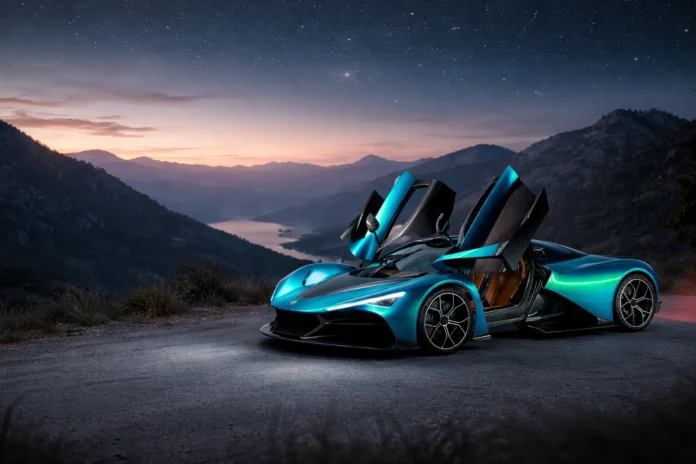
The Aurora, revealed in 2023 and now entering production in 2026, represents a quantum leap for the brand. Named for the ethereal light phenomenon of the aurora borealis, this hypercar is Zenvo’s first hybrid model and its most ambitious project to date. Developed in partnership with a leading British engineering firm, the Aurora introduces an all new V12 engine, advanced electrification, and a choice of two distinct variants tailored to different driving priorities.

With production limited to just 100 units worldwide, split evenly between the track focused Agil and the grand touring Tur, the Aurora is a machine built for collectors who seek something truly extraordinary. This article provides a detailed examination of the Zenvo Aurora, its performance specifications, design philosophy, and what makes this car stand out in 2026.

The Zenvo Approach

A Philosophy of Extremes

Zenvo’s approach to the Aurora project was guided by a clear philosophy: pursue the absolute best possible driver’s car without being constrained by target numbers or competitor benchmarks. The company’s leadership has stated that during development, it was important not to chase specific figures or lap times. The goal was simply to build an uncompromising vehicle for drivers, one that would excel on every level.

This philosophy meant starting from a clean sheet of paper. Rather than adapting existing components or sharing platforms with other manufacturers, Zenvo committed to developing everything from the ground up. The ZM1 modular system, which underpins the Aurora, was designed with structural safety levels comparable to Formula One, providing a foundation capable of handling the immense forces the car would generate.

The Engineering Partnership

A key enabler of the Aurora project was the collaboration with a respected British engineering firm with extensive experience in high performance engine development. Together, Zenvo and its partner created the Mjølner engine, named for Thor’s hammer in Norse mythology. This partnership brought world class engineering resources to bear on Zenvo’s vision, resulting in a powertrain that claims the title of the most powerful V12 ever fitted to a road car.

The company’s leadership noted that a standard system would have been simpler, but it was never an option. The Aurora represents the absence of compromise, and that meant developing a powertrain that exactly matched the company’s vision. Like the car itself, the Mjølner pushes the boundaries of engineering.

The Two Variants: Agil and Tur

The Zenvo Aurora is offered in two distinct configurations, each with its own character and priorities. Both variants share the same basic architecture and the core V12 engine, but their hybrid systems, weight targets, and aerodynamic treatments are tailored to different missions.

Aurora Agil: The Track Weapon

The Agil, meaning agile in Danish, is designed for uncompromising track performance. It features a rear wheel drive configuration with a single electric motor mounted at the rear axle. This motor contributes additional horsepower to the total output, bringing combined system power to approximately 1,470 horsepower and 1,400 Newton meters of torque.

Weight is the priority for the Agil. With a dry mass of just 1,300 kilograms, it is the lightest car Zenvo has ever built. This low weight, combined with the rear drive configuration and a focus on driver involvement, makes the Agil a machine for purists who value connection and feedback over electronic assistance.

The aerodynamic package for the Agil is extreme. At 250 kilometers per hour, it generates 880 kilograms of downforce, pressing the car into the pavement for maximum cornering grip. The result is acceleration from 0 to 100 kilometers per hour in 2.5 seconds, 0 to 200 in 4.6 seconds, 0 to 300 in 10 seconds, and a top speed of 365 kilometers per hour.

Aurora Tur: The Grand Tourer

The Tur, the Danish word for tour, takes a different approach. It is designed to combine breathtaking performance with the comfort and refinement expected of a grand touring hypercar. The Tur adds two additional electric motors at the front axle, creating an all wheel drive system that delivers staggering traction and acceleration.

Total output for the Tur reaches approximately 1,850 horsepower and 1,700 Newton meters of torque. Despite its higher weight of 1,450 kilograms, the Tur is significantly faster than the Agil in a straight line, thanks to its additional power and all wheel drive traction. It accelerates from 0 to 100 kilometers per hour in just 2.3 seconds, reaches 300 in 9 seconds, and can achieve a top speed of 450 kilometers per hour.

The Tur’s aerodynamic treatment is less aggressive than the Agil’s, prioritizing low drag for high speed runs rather than maximum downforce. It can reach 400 kilometers per hour in just 17 seconds from a standstill, a figure that places it among the fastest accelerating production cars in history.

The Mjølner V12 Engine

Engineering Excellence

At the heart of both Aurora variants lies the Mjølner V12, a 6.6 liter quad turbocharged masterpiece co developed with a leading British engineering firm. This engine alone produces 1,250 horsepower without hybrid assistance, making it the most powerful series production V12 ever built for a road car.

The engine features a 90 degree cylinder angle and a hot V configuration with the four turbochargers mounted inside the V. This layout improves packaging, reduces overall engine length, and helps with thermal management. The turbos are arranged to provide responsive boost delivery while maintaining the high rpm character that V12 enthusiasts cherish.

High Revving Character

The Mjølner revs to 9,800 rpm, a figure that ensures the engine delivers its power in a progressive, linear manner. Unlike turbocharged engines that can feel peaky or artificial in their power delivery, the Mjølner combines forced induction with the inherent smoothness of a V12 to create a character that is both torquey and responsive.

Despite its focus on performance, the engine incorporates advanced ignition technology, which enables it to meet global emissions standards. This technology, developed over more than a decade, allows for cleaner combustion without sacrificing power. The goal was to create a combustion engine that is highly emotional and visceral, worthy of honoring the heritage of the noblest V12s, but without renouncing the efficiency and usability of modern engines.

Lightweight Construction

The Mjølner is constructed primarily from aluminum, with careful attention to weight throughout its design. Despite its 6.6 liter displacement and four turbochargers, the complete engine weighs approximately 260 kilograms, a remarkably low figure for a V12 producing this level of power.

This focus on weight extends to every aspect of the powertrain. The engine is designed to be compact and light, contributing to the Aurora’s overall weight targets and helping to maintain the favorable power to weight ratios that define the car’s performance.

Chassis and Structure

ZM1 Carbon Monocoque

The foundation of the Aurora is the ZM1 modular chassis system, a carbon fiber monocoque designed and developed by Zenvo specifically for this project. The monocoque provides exceptional torsional rigidity, rated at 63,000 Newton meters per degree, while weighing just 120 kilograms.

This level of rigidity is critical for precise suspension control and steering response. A stiff chassis allows the suspension to do its job without being compromised by flex in the structure, ensuring that the tires maintain optimal contact with the road surface.

Exposed Structure

One of the most distinctive visual elements of the Aurora is the amount of carbon fiber structure left exposed. Approximately 70 percent of the chassis is visible, a deliberate design choice that celebrates the engineering beneath the skin. The design team has compared this approach to a complex watch, where the inner mechanisms are part of the fascination. The goal was to show as much of the chassis, engine, and suspension as possible.

This exposed structure creates a visual identity that is unique in the hypercar segment. Where many competitors hide their engineering beneath sculpted bodywork, the Aurora displays it proudly, inviting the observer to appreciate the complexity and craftsmanship of the machine.

Crash Safety

Despite its focus on lightness, the ZM1 chassis is designed to meet rigorous crash safety standards. It offers structural safety levels comparable to Formula One cars, ensuring that occupants are protected in the event of an impact. This level of safety, combined with the extreme performance capabilities, demonstrates the depth of engineering that has gone into the Aurora project.

Suspension and Dynamics

Double Wishbone Geometry

Both Aurora variants use double wishbone suspension at all four corners, a configuration that provides precise control over wheel motion and allows for optimal tire contact patch management. The suspension components are manufactured from lightweight materials, contributing to the overall weight targets while maintaining strength and durability.

The geometry is tuned differently for the Agil and Tur, reflecting their distinct missions. The Agil prioritizes ultimate grip and feedback for track driving, while the Tur strikes a balance between handling precision and ride comfort for grand touring.

Braking System

Stopping power is provided by carbon ceramic brakes, with ventilated discs at all four corners. The specific caliper configurations and disc sizes are matched to each variant’s weight and performance capabilities. For the Tur, with its higher top speed and greater mass, the braking system is designed to provide consistent fade free performance even during repeated high speed stops.

The integration of regenerative braking, controlled by the hybrid system’s electric motors, captures energy during deceleration and returns it to the battery. This not only improves efficiency but also reduces wear on the friction brakes during normal driving.

Wheels and Tires

The Aurora rides on forged aluminum wheels, sized 20 inches at the front and 21 inches at the rear for both variants. Tire fitment follows the classic staggered approach, with narrower fronts for steering response and wider rears for traction. Front tires are 265/35 ZR20, while rears measure 325/30 ZR21.

Zenvo has partnered with a leading tire manufacturer to provide high performance rubber engineered to deliver the grip necessary for the Aurora’s extreme capabilities while maintaining predictable behavior at the limit.

Exterior Design

Danish Style

The exterior design of the Aurora is guided by what Zenvo calls Danish style, emphasizing clean lines, simplicity, and a focus on function over ornamentation. The design approach follows the principle that form follows function, with every element of the design serving a purpose related to performance, cooling, or aerodynamics.

The Agil and Tur are visually differentiated to reflect their distinct missions. The Agil features more aggressive aerodynamic elements, including larger intakes and vents that feed cooling air to the brakes and powertrain while generating additional downforce. The Tur, while still dramatic, presents a slightly more restrained appearance that prioritizes high speed stability and low drag.

Aerodynamic Features

The Aurora’s bodywork is shaped by the need to manage airflow effectively. The front end channels air to the radiators and brakes, with carefully positioned outlets allowing heated air to escape. The side profile incorporates a distinctive concave section that reduces drag while managing airflow along the flanks.

At the rear, a large diffuser accelerates airflow beneath the car, generating downforce without the drag penalty of a fixed wing. The Tur, with its higher top speed target, benefits from optimized rear end treatment that balances downforce with minimal drag. The Agil’s aerodynamic package, with its 880 kilograms of downforce at speed, is among the most aggressive ever fitted to a production car.

The rear spoiler on both variants can function as an air brake, deploying to increase drag during heavy braking and improve stability. The centrally mounted quad exhaust outlets are prominently displayed, a visual signature of the V12 powertrain.

Carbon Fiber Construction

The body panels are constructed from carbon fiber, keeping weight to a minimum while allowing for complex shapes that would be difficult to achieve in metal. The carbon fiber is often left exposed, with the weave visible beneath a clear coat, creating a technical aesthetic that communicates the car’s racing DNA.

Zenvo offers extensive customization options for the carbon fiber finish, with patterns and colors that can be tailored to individual customer preferences. This level of personalization is part of the bespoke experience that justifies the Aurora’s exclusivity and price.

Interior Design

Driver Focused Cockpit

The interior of the Aurora is designed entirely around the driver, with minimal distractions and a focus on the essential controls. The Agil, in particular, is spartan in its equipment, with exposed carbon fiber dominating the cabin and luxury amenities kept to a minimum in the pursuit of weight savings.

The instrument cluster combines classic analog style with modern technology. A central circular display, reminiscent of traditional sports car instrumentation, is flanked by two digital screens that can be configured to show various information. These screens are designed to be configurable, allowing for different display modes depending on the driver’s preference.

Controls and Interface

The steering wheel is equipped with multifunction controls and large paddle shifters for the seven speed transmission. The gearbox, developed by a respected engineering firm, is a sequential unit designed for rapid shifts and precise engagement.

Notably, the Aurora’s interior omits a central touchscreen, a deliberate choice in an era when most cars are adding ever larger displays. There are no conventional storage compartments, further emphasizing the car’s focus on driving over convenience. This purity of purpose is part of what distinguishes the Aurora from more mainstream offerings.

Materials and Craftsmanship

The Tur variant offers a higher level of interior refinement, with proper leather upholstery, better sound insulation, and more luxurious seat trim. Even in the Tur, however, the focus remains on the driving experience, with materials chosen for their tactile qualities and durability.

The craftsmanship throughout the cabin reflects the hand built nature of the Aurora. Each car is assembled at Zenvo’s facility in Præstø, with attention to detail that mass production cannot replicate.

Zenvo Aurora: Denmark’s Next-Level Hypercar

Performance Specifications Summary

Aurora Agil

Layout: Rear wheel drive
Engine: 6.6L quad turbo V12, 1,250 horsepower
Hybrid System: Single rear motor
Total Output: Approximately 1,470 horsepower, 1,400 Nm torque
Weight: 1,300 kg dry
0-100 km/h: 2.5 seconds
0-200 km/h: 4.6 seconds
0-300 km/h: 10 seconds
Top Speed: 365 km/h
Downforce: 880 kg at 250 km/h
Production: 50 units

Aurora Tur

Layout: All wheel drive
Engine: 6.6L quad turbo V12, 1,250 horsepower
Hybrid System: Three motors (one rear, two front)
Total Output: Approximately 1,850 horsepower, 1,700 Nm torque
Weight: 1,450 kg dry
0-100 km/h: 2.3 seconds
0-300 km/h: 9 seconds
0-400 km/h: 17 seconds
Top Speed: 450 km/h
Production: 50 units

What Makes the Zenvo Aurora Stand Out in 2026

The Most Powerful Production V12

In an era when many manufacturers are downsizing engines and embracing full electrification, the Aurora’s Mjølner V12 stands as a monument to internal combustion engineering. Its 1,250 horsepower output from a 6.6 liter quad turbocharged configuration makes it the most powerful production V12 ever fitted to a road car.

This engine is not simply a numbers play. Its 9,800 rpm redline, lightweight aluminum construction, and advanced ignition technology demonstrate that extreme power and modern efficiency can coexist. For enthusiasts who value the character of a great internal combustion engine, the Mjølner represents a high water mark.

The Dual Variant Strategy

The decision to offer two distinct variants, Agil and Tur, allows buyers to choose the Aurora that best matches their priorities. The Agil, with its rear drive configuration, lower weight, and extreme downforce, is a track focused tool for drivers who want maximum engagement and lap time capability. The Tur, with its all wheel drive system, higher power output, and greater comfort, is a grand tourer capable of covering continents at speeds that would be illegal on any public road.

This dual approach acknowledges that even within the exclusive world of hypercar buyers, different owners have different priorities. Some will want a car for track days and canyon roads. Others will want a machine for high speed touring and collecting. The Aurora serves both.

Exposed Engineering

The Aurora’s exposed carbon fiber chassis and visible mechanical components set it apart from competitors that hide their engineering beneath sculpted bodywork. This approach, which the design team compares to a complex watch, celebrates the craftsmanship and complexity of the machine. Owners can see the structure that provides the car’s rigidity, the suspension components that control its motion, and the engine that powers it.

This transparency creates a connection between driver and machine that is difficult to achieve when everything is hidden. It also makes the Aurora instantly recognizable, a car that stands out even in the company of other hypercars.

Scandinavian Design Sensibility

The Aurora’s design language, rooted in Danish simplicity and functionalism, distinguishes it from the more flamboyant Italian and German competition. The clean lines, purposeful shapes, and absence of decorative excess create a car that is elegant in its aggression. This Scandinavian sensibility, applied to an extreme performance machine, results in something genuinely different.

The overall effect is a car that looks fast standing still without resorting to visual gimmicks. It communicates its purpose through its form, inviting closer inspection and rewarding it with details that reveal the depth of thought behind the design.

Exclusivity and Craftsmanship

With only 100 units planned for global production, the Aurora is genuinely rare. The split of 50 Agil and 50 Tur ensures that even within this limited run, each variant maintains its own exclusivity. Buyers can be confident that they will not encounter another Aurora at the local cars and coffee, a consideration that matters to collectors who value rarity.

Each car is hand assembled at Zenvo’s facility in Præstø, with the level of craftsmanship that only low volume production can achieve. The carbon fiber work, the interior trim, the mechanical assembly all are attended to by technicians who understand the importance of their work.

Production and Availability

Manufacturing Location

The Aurora is produced at Zenvo’s headquarters in Præstø, Denmark, approximately 80 kilometers south of Copenhagen. This facility has been the heart of Zenvo operations since the company’s founding, and the addition of the Aurora represents a significant expansion of its capabilities.

Production Timeline

First customer deliveries of the Aurora began in 2026, following a development program that included extensive testing and validation. The production timeline has been carefully managed to ensure that each car meets the quality standards expected of a machine at this price point.

Pricing

The Aurora carries a starting price of approximately 2.6 million euros, excluding taxes. This positions it in the upper tier of hypercar pricing, comparable to offerings from established European manufacturers. For this price, buyers receive not only a record setting hypercar but also the involvement of Zenvo’s personalization team, who work with each owner to tailor the car to their specifications.

Market Availability

The Aurora is homologated for global markets, including Europe, North America, the Middle East, and Asia. Distribution is handled directly by Zenvo, with a network of selected partners in key regions.

Conclusion

The Zenvo Aurora represents a remarkable achievement for a small Danish manufacturer operating at the highest level of the automotive industry. With its record setting V12 engine, advanced hybrid technology, and choice of two distinct variants tailored to different driving priorities, it demonstrates that Zenvo can compete with the established players on their own terms.

Yet the Aurora is not defined solely by its specifications. It is defined by the philosophy that guided its creation: a commitment to building the best possible driver’s car without compromise, regardless of the challenges involved. The exposed carbon fiber structure, the visible mechanical components, the focus on driver engagement over electronic assistance all of these choices reflect a clarity of purpose that is increasingly rare.

In 2026, as the automotive industry continues its transition toward electrification, the Aurora stands as a celebration of what internal combustion can achieve when pushed to its limits. The Mjølner V12, with its 9,800 rpm redline and 1,250 horsepower output, is a masterpiece of engineering that honors the traditions of great engines while incorporating the latest technology. The hybrid systems, rather than diluting the experience, enhance it with additional power and capability.

For the 100 buyers who will acquire an Aurora, it offers something beyond extreme performance. It offers the knowledge that their car was designed and built by people who share their passion, who refused to compromise, and who created something genuinely unique. It is a machine that rewards driving with feedback, engagement, and the satisfaction of knowing that one is at the controls of something truly special.

And for the rest of the automotive world, the Aurora offers proof that Denmark, a country not traditionally associated with automotive manufacturing, can produce a hypercar that stands with the best. It is a remarkable achievement, and it deserves recognition as one of the most significant automotive debuts of the decade.

Genesis X Speedium Coupe Concept: Korea’s Take on Grand Touring

0

The name Genesis may be relatively new to the luxury automotive segment, but the Korean brand has rapidly established itself as a serious contender. Since its launch as a standalone luxury division in 2015, Genesis has produced a line of sedans and SUVs that combine distinctive design, generous equipment, and competitive pricing to challenge established players from Germany and Japan. The brand’s product strategy has been methodical and effective, building a foundation of conventional luxury vehicles before expanding into more ambitious territory.

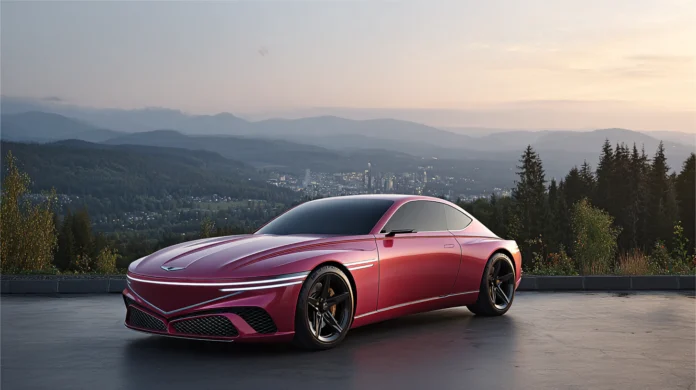
The Genesis X Speedium Coupe Concept represents that expansion. First shown as a concept in 2022, the Speedium Coupe previews the brand’s electric future while celebrating its design philosophy. Named after the Inje Speedium racing circuit in the mountains of South Korea, the concept car embodies Genesis’s belief that the emotional value of driving will remain strong in the era of electrification. It is not merely a show car, but a look into the design processes as the brand explores ideas for the next wave of electric vehicles.

As Genesis moves toward its goal of offering six electric vehicles by 2030, the X Speedium Coupe Concept provides a clear indication of where the brand is heading. While the car remains a concept as of 2026, with no official production confirmation, its influence can already be seen in the design language of Genesis’s growing electric lineup. This article examines the concept’s design philosophy, what we know about its potential specifications, and what makes this Korean interpretation of grand touring stand out in the current automotive landscape.

The Genesis Design Philosophy

Reductive Design

The guiding principle behind the X Speedium Coupe Concept is what Genesis calls reductive design. This philosophy holds that less is more and that genuine, purist design means every detail is chosen for a reason. If something is unnecessary, it is not included. This approach stands in contrast to the increasingly complex and ornamented designs emerging from some competitors, where visual drama often takes precedence over clarity and proportion.

For Genesis, reductive design is about honesty. The surfaces are clean, the lines are purposeful, and the overall shape communicates its intent without relying on decorative elements. This philosophy is applied consistently across the X Speedium Coupe Concept, from the simple parabolic line that defines the side profile to the minimal rocker panels that emphasize the car’s muscular stance.

The Two Line Motif

The most recognizable element of Genesis design is the Two Line motif, a signature that appears on every model the brand produces. The design leadership has described this element as essential to the brand’s identity. On the X Speedium Coupe Concept, the dual headlamps have evolved into a continuous design element that extends across the full width of the front end.

This evolution serves both aesthetic and symbolic purposes. The uninterrupted front end represents Genesis’s transformation into a fully electric brand, with the absence of a traditional grille signaling the concept’s electric nature. The LED illuminated surround that frames the grille area creates a distinctive face that is clearly Genesis while being unmistakably electric.

Hourglass Silhouette

The X Speedium Coupe Concept’s proportions are defined by what Genesis describes as an hourglass silhouette. The pronounced front and rear fenders create a sense of dynamic force, while the elegantly curved parabolic line that connects them softens the overall effect. The body is drawn in at the center by the minimal rocker panels, emphasizing the width of the fenders and the concept’s planted stance.

From above, the hourglass shape is even more apparent, with the body tapering inward between the flared wheel arches. This approach to proportioning creates visual drama without resorting to aggressive creases or complex surfacing, a demonstration of the reductive design philosophy in action.

Exterior Design

Front End Treatment

The face of the X Speedium Coupe Concept represents a significant evolution from previous Genesis designs. The Two Line motif remains, but the dual lamps are now integrated into a continuous light bar that spans the full width of the nose. Below this, the area traditionally occupied by a grille is reinterpreted for the electric age. Rather than a blank panel or a purely decorative element, Genesis has created a distinctive shape framed by LED lighting.

The actual cooling intakes are located in the front fascia below this grille area, providing airflow to the battery cooling systems and front motors while maintaining the clean appearance of the upper face. This separation of functional and aesthetic elements allows the design to serve both purposes without compromise.

Side Profile

The side view of the X Speedium Coupe Concept reveals its grand touring proportions. The long hood, cab rearward greenhouse, and short rear deck recall the classic GT coupes of the 1960s and 1970s, while the execution is thoroughly modern. The parabolic line that arcs from the front fender to the rear creates a sense of forward motion even when the car is stationary.

Compared to earlier Genesis concepts, the Speedium Coupe appears more compact and more aggressively proportioned, with a faster, more sporting roofline that terminates in a pronounced rear spoiler. The flared fenders house wheels pushed to the corners, emphasizing the concept’s width and stability.

Rear Design

At the rear, the Two Line motif continues in the taillights, which echo the shape and proportion of the front lighting. Above, the distinctive elliptical tail houses a V shaped brake light that creates contrast with the elegant curves of the rear bodywork. This V element is a subtle touch that rewards close inspection without shouting for attention.

The pronounced rear spoiler, integrated into the decklid, serves both aerodynamic and aesthetic functions. It manages airflow at the rear of the vehicle while providing a visual capstone to the fastback roofline. Below, the rear fascia is clean and unadorned, with the absence of exhaust outlets confirming the concept’s electric nature.

Inje Green Paint

The X Speedium Coupe Concept is shown in a distinctive metallic paint color called Inje Green, named for the racing circuit that inspired the car. The color evokes the lush, green environment of the track set in the mountains of South Korea. It is described as a classic racing color, one that suits the timeless elegance of this dynamic vehicle.

This choice of color is significant. Rather than a futuristic silver or a dramatic pearlescent white, Genesis chose a deep, rich green that references both the concept’s Korean origins and the grand touring tradition. It is a confident choice that signals the brand’s intention to create cars that are elegant rather than merely flashy.

Interior Design

The Beauty of White Space

The interior of the X Speedium Coupe Concept carries forward the exterior’s design philosophy with a theme Genesis calls the beauty of white space. This approach emphasizes openness, simplicity, and the careful arrangement of elements within the cabin.

The driver sits in an asymmetrically designed cockpit, with the center console arching upward to meet twin towers above the instrument panel. This architectural element is finished in brushed metal trim that covers the driver facing side, making the piece particularly striking. The asymmetry reinforces the driver focus of the cabin while creating visual interest.

Material Choices

Material selection in the X Speedium Coupe Concept reflects Genesis’s commitment to sustainability as well as luxury. The seats, instrument panel, and center console are upholstered in deep Pinegrove Green leather, providing a rich, natural contrast to the cabin’s architecture. The remainder of the interior is finished in Monterey Gold, creating a deliberate contrast between the two sides of the cabin.

The upper cabin surfaces use a new, breathable grain material manufactured with reduced water and chemical usage compared to conventional alternatives. The remaining leather is vegetable tanned, avoiding the harsh chemicals used in conventional tanning processes. The steering wheel is wrapped in woven leather made from recycled scraps left over from seat production, with the threads used to join the pieces made from recycled plastic.

Technology Integration

The center console houses a tilted touchscreen display for infotainment functions, positioned for easy access by the driver while maintaining the clean lines of the dashboard. The instrument cluster is fully digital, providing configurable information displays that can be tailored to the driver’s preferences.

Genesis partnered with a high end audio equipment manufacturer to create a dedicated sound system for the X Speedium Coupe Concept. This collaboration, unusual for a concept car, suggests that Genesis is thinking seriously about the sensory experience of driving, not just the visual elements.

Powertrain and Performance

Electric Platform

While Genesis has not released detailed powertrain specifications for the X Speedium Coupe Concept, the car is clearly positioned as an electric vehicle. The absence of a traditional grille, the clean front fascia, and the brand’s stated commitment to electrification all point to an electric powertrain beneath the bodywork.

The X Speedium Coupe Concept is built on the same electric platform that underpins Genesis’s production EVs. This architecture, developed within the Hyundai Motor Group, has already proven itself in models like the Genesis GV60 and the related Hyundai Ioniq 5 and Kia EV6. It supports both rear wheel drive and all wheel drive configurations, with dual motor setups available for higher performance variants.

Performance Expectations

As a concept vehicle, the X Speedium Coupe has not been assigned official performance figures. However, given its positioning as a grand touring coupe, a production version would likely target performance levels appropriate to the segment. Existing models on the same platform provide a baseline for what the architecture can deliver, with outputs ranging from modest single motor configurations to high performance dual motor setups producing approximately 430 horsepower.

Acceleration targets for a potential production version would likely place the car competitively within the grand touring segment. Zero to sixty miles per hour in the mid three second range would be achievable with appropriate powertrain tuning, providing performance that satisfies the GT brief without sacrificing the refinement expected of a luxury coupe.

Range expectations would similarly align with the platform’s capabilities. Existing models offer between 235 and 280 miles of range depending on configuration. A more aerodynamically efficient coupe shape could potentially improve on those numbers. Real world range of 250 to 300 miles would be competitive in the grand touring segment.

Charging Capability

The platform’s 800 volt architecture enables ultra fast charging at compatible stations. Under ideal conditions, a 10 to 80 percent charge can be completed in approximately 18 minutes. This capability makes long distance travel practical, an essential characteristic for a grand tourer designed to cover ground efficiently and comfortably.

Genesis X Speedium Coupe Concept: Korea’s Take on Grand Touring

Concept to Production: The Path Forward

Current Status

As of 2026, the X Speedium Coupe remains a concept vehicle. It has appeared at automotive events and exhibitions since its 2022 debut, generating significant interest from enthusiasts and industry observers. However, Genesis has not announced official production plans for the model.

Design Influence

While the concept itself may not reach production, its design language has already influenced Genesis’s production vehicles. The Two Line motif evolution, the clean front fascia treatment for electric models, and the emphasis on proportion and surface quality can all be seen in current Genesis electric vehicles. The brand’s commitment to reductive design, as demonstrated by the X Speedium Coupe Concept, continues to shape its approach to造型.

Market Considerations

The grand touring coupe segment is relatively small compared to the SUV and sedan categories where Genesis currently competes. A production version of the X Speedium Coupe would require a business case that justifies the investment in a dedicated model. The brand’s goal of offering six electric vehicles by 2030 could accommodate a halo coupe, but no decision has been announced.

What Makes the X Speedium Coupe Concept Stand Out in 2026

The Korean Interpretation of Grand Touring

The X Speedium Coupe Concept represents a distinctly Korean take on the grand touring concept. While European manufacturers have defined the GT category for decades, Genesis brings a fresh perspective shaped by different cultural and design influences. The result is a concept that respects the traditions of the segment while expressing them in a new way.

The Inje Speedium circuit inspiration grounds the concept in its Korean origins, connecting it to a place and a culture rather than simply borrowing from European templates. This authenticity matters in a luxury segment where buyers increasingly value distinctiveness over imitation. A Korean grand tourer offers something genuinely different from the established German, British, and Italian alternatives.

Design as Differentiator

In an era when many electric vehicles are adopting similar shapes dictated by aerodynamic efficiency, the X Speedium Coupe Concept stands out for its commitment to proportion and surface quality. The hourglass silhouette, the parabolic line, the careful management of volumes these are the concerns of a design team working at a high level, not simply optimizing for drag coefficients.

Genesis has demonstrated with its production vehicles that it can execute distinctive design at scale. The X Speedium Coupe Concept suggests that this capability will continue to evolve, with cars that are recognizable as Genesis from any angle. The Two Line motif, the crest grille shape reinterpreted for electric power, the clean surfacing all of these elements work together to create a cohesive identity.

The Reductive Philosophy

The reductive design approach, with its insistence on removing anything unnecessary, produces a concept that is calm rather than busy, elegant rather than aggressive. In a market segment where many competitors rely on visual drama to attract attention, the X Speedium Coupe Concept’s restraint is itself distinctive.

This philosophy extends beyond the exterior to the interior, where the focus on white space and careful material selection creates a cabin that feels both luxurious and calm. The sustainable materials, integrated thoughtfully rather than highlighted as features, demonstrate that environmental responsibility need not compromise luxury. The result is a space that invites relaxation and engagement in equal measure.

The Emotional Value of Driving

The X Speedium Coupe Concept represents a belief that the emotional value of driving will remain strong in the era of electrification. This speaks to a concern shared by many enthusiasts. As cars become faster and more capable, there is a risk that they also become more isolated, more digital, more removed from the driver.

The concept suggests that Genesis understands this concern. The car is designed to be driven, not merely piloted. The driver focused cockpit, the attention to the sensory experience, the connection to a racing circuit all point to a vehicle that values engagement as much as capability. The sound system collaboration, the material choices, the careful attention to ergonomics all serve the goal of creating a car that rewards the act of driving.

The Concept as Statement

Even as a concept that may never reach production, the X Speedium Coupe serves an important purpose. It demonstrates Genesis’s design capabilities and its vision for the future. It signals to customers, competitors, and the industry at large that the brand intends to compete not just in mainstream luxury segments but in the enthusiast oriented niches that define brand passion.

For a relatively young brand like Genesis, concept vehicles like the X Speedium Coupe build credibility and generate excitement. They show what the brand is capable of when freed from production constraints, and they provide a roadmap for future design directions.

The Future of Genesis Electrification

The Six EV Strategy

Genesis has announced plans to offer six electric vehicles by 2030, a commitment that will transform the brand’s lineup over the coming years. The current electric offerings, including the Electrified G80 sedan and the GV60 and Electrified GV70 SUVs, represent the first wave of this transition.

Future models will include additional sedans and SUVs, as well as the potential for dedicated electric vehicles inspired by concepts like the X Speedium Coupe. The brand’s design language, as previewed by the concept, will continue to evolve while maintaining the distinctive identity that Genesis has established.

Design Leadership

The appointment of design leadership with experience at Bentley and Lamborghini signaled Genesis’s ambition to compete at the highest levels of automotive design. The X Speedium Coupe Concept reflects this influence, combining European sophistication with Korean sensibility.

As Genesis moves toward its electric future, design will remain a primary differentiator. The brand cannot compete with German manufacturers on heritage or with Japanese competitors on volume, but it can offer something genuinely different in terms of visual identity. The X Speedium Coupe Concept suggests that the brand understands this opportunity and is prepared to seize it.

Market Positioning

A production version of the X Speedium Coupe, should it materialize, would enter a segment currently dominated by European manufacturers. Electric grand tourers from Audi, BMW, Mercedes Benz, and Porsche represent the established competition, with their own interpretations of what a luxury GT should be.

Genesis would position its offering as an alternative to these established players, offering comparable performance and superior design at a more accessible price point. This approach has worked for the brand in the sedan and SUV segments, and it could succeed in the GT category as well.

Conclusion

The Genesis X Speedium Coupe Concept represents a significant statement from Korea’s fastest growing luxury brand. It demonstrates that Genesis understands the grand touring tradition and has the design capability to interpret it in a fresh, distinctive way. It shows that the brand’s commitment to electrification does not mean abandoning the emotional value of driving. And it suggests that Genesis’s electric future will be defined by cars that are beautiful, engaging, and unmistakably Korean.

In 2026, as the automotive industry continues its transition toward electrification, the X Speedium Coupe Concept stands as proof that electric cars can have soul. While it remains a concept with no confirmed production plans, its influence can already be seen in the design language of Genesis’s growing electric lineup. It is not simply a collection of performance figures or range estimates, though those would matter if a production version arrives. It is a car designed to be experienced, to be driven, to be enjoyed. It honors the grand touring tradition while looking firmly toward the future.

For Genesis, the X Speedium Coupe Concept represents both a destination and a point of departure. It shows where the brand is heading while providing a roadmap for how it will get there. And for the rest of the automotive world, it offers compelling evidence that Korea’s take on grand touring is worth taking seriously.

Pininfarina Battista: Design Meets Electric Speed

0

The name Pininfarina carries a weight in automotive history that few others can claim. For more than nine decades, this Italian design house has been responsible for some of the most beautiful cars ever created, with a client list that includes Ferrari, Alfa Romeo, Maserati, and Lancia. The shapes that emerged from the Pininfarina studios in Cambiano, Turin, have defined generations of automotive aesthetics, from the timeless elegance of 1960s Ferraris to the dramatic lines of modern supercars.

But the Battista represents something new. It is the first production vehicle to wear the Pininfarina badge as a manufacturer, not just a design house. Named for company founder Battista “Pinin” Farina, this electric hypercar fulfills a dream that the patriarch held nearly a century ago: to create automobiles bearing the family name. Chairman Paolo Pininfarina has stated that it was always his grandfather’s dream for Pininfarina to produce cars carrying its own badge, and the Battista is the realization of that vision.

Now in full production for the 2026 model year, the Battista represents the convergence of Pininfarina’s design heritage with the electric vehicle technology of Rimac, the Croatian engineering firm known for creating some of the world’s most advanced electric powertrains. The result is a machine that delivers 1,900 horsepower, sub two second acceleration to sixty miles per hour, and a design that honors the company’s legacy while pointing toward its future.

This article provides a detailed examination of the Pininfarina Battista, its performance specifications, design philosophy, and what makes this car stand out in the current automotive landscape.

The Pininfarina Story: From Design House to Manufacturer

For most of its existence, Pininfarina operated as an independent design and engineering firm, creating bodies and interiors for other manufacturers. The relationship with Ferrari, beginning in the 1950s, produced some of the most celebrated automotive designs of the twentieth century, including the 250 GT, the Daytona, and the Testarossa. The company also worked with Alfa Romeo, Maserati, Lancia, and even mass market manufacturers like Peugeot and Hyundai.

The transition from design house to automobile manufacturer became possible through the backing of Mahindra, the Indian industrial conglomerate that acquired a majority stake in Pininfarina. With Mahindra’s financial support and strategic vision, Automobili Pininfarina was established as a separate entity dedicated to producing luxury electric vehicles under the Pininfarina name.

The Battista serves as the halo car for this new venture, a low volume hypercar that demonstrates the company’s capabilities and establishes its credentials in the luxury performance segment. It is followed by plans for additional models, including the B95 open top hypercar and a luxury SUV positioned at a lower price point for broader market appeal.

Powertrain Specifications

Electric Motor Configuration

The Pininfarina Battista is powered by four electric motors, one mounted at each wheel. This quad motor configuration provides all wheel drive and enables sophisticated torque vectoring capabilities. By varying power delivery to individual wheels, the system can enhance cornering performance, rotating the car into turns and providing optimal traction during exit.

Total system output reaches 1,900 horsepower and 1,696 lb ft of torque in standard form. The Anniversario and Novantacinque special editions increase output slightly to 1,926 horsepower, marking the 95th anniversary of Pininfarina’s founding. This makes the Battista the most powerful road legal car ever to come out of Italy.

Battery and Range

Power for the electric motors is drawn from a 120 kWh battery pack developed by Rimac, the Croatian electric hypercar manufacturer with extensive experience in high performance battery systems. The T shaped pack is mounted low in the chassis, positioned in the central tunnel and behind the seats to optimize weight distribution and lower the center of gravity.

The battery provides an estimated range of approximately 300 miles on the WLTP cycle, which tends to be more optimistic than the EPA cycle used in the United States. Real world range under mixed driving conditions is likely closer to 250 miles, while sustained high speed driving will reduce range further.

DC fast charging is supported at up to 180 kW, allowing a 20 to 80 percent charge in approximately 25 minutes under ideal conditions. This charging capability makes long distance travel feasible, though the car’s primary mission remains performance rather than touring.

Acceleration Performance

The Battista accelerates from 0 to 60 miles per hour in 1.79 seconds, placing it among the quickest production vehicles in the world. The 0 to 120 miles per hour sprint takes approximately 4.5 seconds, and 0 to 186 miles per hour is achieved in under 12 seconds.

These figures exceed the acceleration of current Formula One cars off the line, a fact that Pininfarina notes with understandable pride. The instant torque delivery of electric motors, combined with the traction provided by all wheel drive and sophisticated launch control systems, enables performance that was impossible with internal combustion engines.

Top Speed

The Battista has a top speed of 217 miles per hour, electronically limited to preserve tire integrity and battery cooling capacity. This figure, while lower than some competitors, reflects the car’s focus on acceleration and handling rather than outright top speed. The trade off is appropriate for a vehicle designed to excel on road courses rather than high speed ovals.

Chassis and Structure

Carbon Fiber Monocoque

The foundation of the Battista is a carbon fiber monocoque, providing exceptional rigidity and occupant protection while minimizing weight. The monocoque is manufactured to aerospace standards, with careful attention to fiber orientation and layup sequence to achieve the desired combination of stiffness and energy absorption.

A carbon fiber and aluminum rear subframe supports the electric motors and suspension components, while the front structure is similarly constructed to manage crash loads while keeping weight to a minimum. The complete chassis is claimed to be among the stiffest in production, providing a stable platform for suspension tuning and precise handling.

Suspension System

The Battista uses double wishbone suspension at all four corners, with components manufactured from lightweight aluminum and carbon fiber where appropriate. The suspension geometry is designed to maintain optimal tire contact patch through the full range of wheel travel, providing consistent grip and predictable handling.

Height adjustable coilover dampers allow the ride height to be lowered by 15 to 20 millimeters for track driving, reducing the center of gravity and improving aerodynamic performance. The suspension can be raised for speed bumps and driveway approaches, preserving usability in real world conditions.

Braking System

Stopping power is provided by carbon ceramic brakes from Brembo, the Italian supplier with extensive Formula One and road car experience. The system uses large diameter discs with multi piston calipers at all four corners, providing fade free stopping power lap after lap.

Regenerative braking, controlled by the electric motors, captures energy during deceleration and returns it to the battery. The regenerative system is integrated with the friction brakes through a brake by wire controller that blends the two sources seamlessly, providing consistent pedal feel regardless of the balance between regeneration and friction.

Wheels and Tires

The Battista rides on forged aluminum wheels, sized 20 inches at the front and 21 inches at the rear for the standard model. The Anniversario edition receives specially designed forged wheels with aerodynamic inserts that reduce drag and improve cooling.

Tires are developed specifically for the Battista in partnership with Michelin, using the Pilot Sport Cup 2 compound and construction. These tires provide the grip necessary to transmit the car’s massive power to the pavement while maintaining predictable breakaway characteristics at the limit.

Aerodynamics and Design

Functional Aesthetics

The exterior design of the Battista is the work of Pininfarina’s in house styling team, led by Chief Design Officer Dave Amantea. The team was given the freedom to create without the constraints of adapting an existing platform or sharing components with other models, resulting in a design that is both beautiful and functional.

The body surfaces are shaped to manage airflow for both aerodynamic efficiency and cooling requirements. The front end channels air to the radiators that cool the electric motors and power electronics, while side exits allow heated air to escape from the wheel wells. The rear diffuser accelerates airflow beneath the car, generating downforce without the drag penalty of a large rear wing.

Downforce Generation

The Battista is designed to produce substantial downforce with a relatively low drag coefficient. This balance is achieved through careful attention to the overall shape, with specific elements such as the front splitter, side blades, and rear diffressor contributing to the aerodynamic package.

At high speeds, the car generates enough downforce to significantly increase cornering grip without requiring the drag inducing wings that characterize many competitors. This approach reflects Pininfarina’s belief that aerodynamic efficiency and visual elegance can coexist.

The Anniversario and Novantacinque Editions

For 2026, Pininfarina offers two special editions of the Battista that build on the standard car’s capabilities. The Battista Anniversario, limited to just five units, celebrates the company’s 90th anniversary with an exclusive paint scheme incorporating three signature colors: Bianco Sestriere, Iconica Blue, and Grigio Antonelliano. The complex paint application requires weeks to complete by hand at Pininfarina’s design center in Cambiano.

The Anniversario also features the Furiosa aerodynamic package, which includes a revised carbon fiber front splitter, side blades, and a rear diffuser for extra downforce and improved high speed stability. Special forged wheels and unique interior trim complete the package.

The Battista Novantacinque, limited to 150 units, marks the company’s 95th anniversary with red carbon fiber accents and the number 95 discreetly placed on the bodywork. This edition shares the standard car’s performance specifications while adding anniversary commemorations.

Visual Identity

The Battista establishes a visual language that will carry forward to future Pininfarina models. The illuminated charging port, positioned under the rear window and dubbed the E Heart, creates a distinctive signature at night. The proportions are classic front mid engine, with a long hood, cabin positioned rearward, and short rear deck that recalls the great GT cars of the 1960s.

Interior Design

Driver Focused Cockpit

The interior of the Battista is organized around the driver, with all primary controls positioned for intuitive operation. Three digital displays provide information: one mounted behind the steering wheel for driving data, one to the left for vehicle systems, and one to the right for infotainment and navigation.

The steering wheel itself is redesigned for production, with controls that fall readily to hand. Unlike some competitors that bury functions in touchscreen menus, the Battista retains physical controls for critical functions, allowing the driver to operate the car without taking attention from the road.

Materials and Craftsmanship

Materials throughout the cabin are chosen for both aesthetics and sustainability. The leather is environmentally tanned using natural processes. The carpet is made from recycled fishing nets, recovered from oceans and processed into fiber. These choices reflect Pininfarina’s commitment to reducing environmental impact without compromising luxury.

The carbon fiber trim is finished to display its weave, a visual reminder of the car’s advanced construction. Metal switches and controls are machined from solid aluminum, with precise detents and smooth operation that communicates quality.

Seating and Space

The seats are designed for both comfort and support, trimmed in leather and Alcantara with contrast stitching. They provide adequate lateral support for spirited driving without becoming uncomfortable on long journeys. However, tall passengers may find headroom limited, a consequence of the low roof line required for aerodynamic efficiency.

The cabin is hand finished by skilled craftsmen at the Pininfarina facility in Cambiano, with each car requiring hundreds of hours of labor. This handcrafted approach ensures a level of detail that mass production cannot replicate.

Driving Experience

On Road Character

Despite its extreme capabilities, the Battista is designed to be usable on public roads. The suspension, while firm, absorbs impacts without punishing occupants. The adjustable drive modes allow the driver to select a softer setting for cruising, with reduced power output and more compliant damping.

The silence of electric operation, a topic of much discussion among enthusiasts, becomes an asset in daily use. The car glides through urban environments without drawing unwanted attention, and long distances can be covered without the fatigue that accompanies constant engine noise. Pininfarina has developed a subtle sound signature for the car, inspired by low frequency earth tones, that provides auditory feedback without artificial theatrics.

On Track Performance

When driven at the limit, the Battista reveals its true purpose. The combination of all wheel drive traction, torque vectoring, and the low center of gravity enabled by the battery placement allows the car to accelerate out of corners with authority. The suspension maintains control over body motions, and the carbon ceramic brakes provide consistent stopping power lap after lap.

The steering is communicative for an electric vehicle, providing feedback about available grip and allowing the driver to place the car precisely. The chassis balance is neutral, with the ability to rotate on corner entry and put power down effectively on exit.

The Sound Question

Electric vehicles are often criticized for their silence, and the Battista does not attempt to fake the sound of a combustion engine. Instead, it offers a different acoustic experience: the whine of electric motors under load, the rush of air over the bodywork, the protest of tires at the limit of adhesion.

For drivers who measure experience by engagement rather than by decibels, this soundscape can be as rewarding as the roar of a V12. It communicates speed and load effectively, providing the feedback necessary to drive quickly without relying on artificial noise.

Pininfarina Battista: Design Meets Electric Speed

What Makes the Pininfarina Battista Stand Out in 2026

The Design Pedigree

In a market segment increasingly dominated by aggressively styled machines that prioritize visual drama over elegance, the Battista stands out for its restraint. The design draws on Pininfarina’s nine decades of experience creating timeless shapes, resulting in a car that looks right from every angle without relying on exaggerated wings or fussy details.

This design philosophy extends to the interior, where clarity and craftsmanship take precedence over screen count and digital effects. The Battista feels like a car designed by people who understand what makes a great GT, not simply a collection of the latest technology trends.

The Rimac Partnership

The collaboration with Rimac brings proven electric vehicle technology to the Battista program. Rimac’s experience developing the Nevera, itself one of the world’s most capable electric hypercars, informs every aspect of the Battista’s powertrain and chassis. The battery, motors, and control systems are battle tested in one of the most demanding applications possible.

This partnership allows Pininfarina to focus on what it does best design, craftsmanship, and the creation of a distinctive brand experience while relying on a proven technology partner for the complex engineering that enables electric performance.

Italian Craftsmanship

The Battista is hand built in Italy, at Pininfarina’s historic facility in Cambiano. Each car requires hundreds of hours of labor, with skilled craftsmen attending to details that automated production would miss. The leather is stitched by hand, the carbon fiber is finished to show its weave, and the painted surfaces are polished to a depth that only handwork can achieve.

For buyers who value the human touch in their automobiles, this craftsmanship is a significant part of the Battista’s appeal. It connects the car to the tradition of Italian coachbuilding that Pininfarina helped establish, while looking toward an electric future.

Exclusivity

With only 150 examples planned for production, the Battista is genuinely rare. The Anniversario edition, limited to just five cars, represents the ultimate expression of exclusivity within an already exclusive model line. Owners can be confident that they will not encounter another Battista at the local cars and coffee, a consideration that matters to collectors who value rarity.

This limited production also allows Pininfarina to maintain the handcrafted approach that defines the car. Building more would require compromises in quality and attention to detail that the company is unwilling to make.

The Halo Effect

The Battista serves as a halo car for the entire Pininfarina brand, demonstrating what the company can achieve when given the freedom to create without compromise. The technology, design language, and craftsmanship developed for the Battista will filter down to future models, including the B95 open top hypercar and the planned luxury SUV.

For buyers who acquire a Battista, this halo effect means they are not simply purchasing a car but participating in the establishment of a new automotive brand. They become part of the Pininfarina story, connected to the company’s heritage and its future.

Production and Availability

Manufacturing Location

The Battista is hand assembled at Pininfarina’s facilities in Cambiano, Italy, near Turin. This location has been the heart of Pininfarina operations for decades, and the addition of automobile production represents a return to the company’s roots as a manufacturer rather than simply a design house.

Production Timeline

First customer deliveries of the Battista commenced in 2025, with production continuing through 2026 for the remaining allocations. The Anniversario edition, limited to five units, has already been reserved by collectors. The Novantacinque edition, celebrating 95 years of Pininfarina, entered production in late 2025.

Pricing

The Pininfarina Battista carries a base price of approximately $2.2 million to $2.25 million, depending on market and specification. The Anniversario edition, with its exclusive paint and aerodynamic package, commands a premium at approximately 2.6 million euros.

For this price, buyers receive not only a record setting hypercar but also the involvement of Pininfarina’s personalization team, who work with each owner to tailor the car to their specifications. The result is a vehicle that is unique to its owner, reflecting their preferences while maintaining the integrity of the original design.

Market Availability

The Battista is homologated for approximately 50 markets worldwide, including the United States, Europe, the Middle East, Japan, and Canada. Distribution is handled through a network of selected partners, with Louwman Exclusive serving as the Dutch dealer and similar arrangements in other key markets.

The Future of Pininfarina

The B95 Open Top Hypercar

Following the Battista, Pininfarina has introduced the B95, an open top hypercar based on the same mechanical platform. The B95 shares the Battista’s 1,900 horsepower powertrain but replaces the fixed roof with a dramatic speedster configuration. Only a handful of examples will be built, each tailored to its owner’s specifications.

The Planned SUV

For buyers who find the Battista’s exclusivity and price point beyond reach, Pininfarina plans to introduce a luxury SUV positioned at approximately 300,000 euros. This model will share the brand’s design language and commitment to sustainability while offering greater practicality and lower pricing. Production volumes will be higher than the Battista, though still limited by luxury car standards.

The Electric Future

Pininfarina’s commitment to electrification is absolute. All future models will be battery electric, building on the technology and experience gained from the Battista program. The company believes that electric powertrains offer the best path to sustainable luxury, combining performance with environmental responsibility in ways that internal combustion cannot match.

Conclusion

The Pininfarina Battista represents a remarkable achievement: an electric hypercar that honors nine decades of design heritage while pointing toward an electric future. With 1,900 horsepower, sub two second acceleration, and a body shaped by one of history’s great design houses, it delivers performance that rivals anything on the road while maintaining the elegance that Pininfarina is known for.

Yet the Battista is not defined solely by its specifications. It is defined by how it was created: hand assembled in Italy by skilled craftsmen, designed by a team that understands proportion and surface, and backed by technology from Rimac that represents the state of the art in electric powertrains. It fulfills a dream that Battista Farina held nearly a century ago, and it establishes a foundation for the Automobili Pininfarina brand going forward.

In 2026, as the automotive industry continues its transition toward electrification, the Battista stands as proof that electric cars can have soul, style, and substance. It is not simply a collection of performance figures, though those figures are impressive. It is a car designed to be experienced, to be driven, to be lived with. It demonstrates that the values enthusiasts cherish design, craftsmanship, driver engagement can survive the shift to electric power.

For the 150 buyers who will acquire a Battista, it offers something beyond electric performance. It offers the knowledge that their car was designed by one of history’s great automotive design houses, built by hand in Italy, and engineered to deliver an experience that is unique in the world. And for the rest of the automotive world, it offers proof that electrification need not mean the end of beauty in automobile design.

Scuderia Cameron Glickenhaus 004S: American-Built, Race-Bred

0

The name Scuderia Cameron Glickenhaus may not carry the centuries old heritage of Ferrari or the marketing muscle of Lamborghini, but within the world of dedicated automotive enthusiasts, it represents something increasingly rare: a genuine, race-bred supercar built in America by a company that prioritizes driving involvement over electronic intervention. Founded by filmmaker and financier James Glickenhaus, the eponymous manufacturer has pursued a singular vision of creating road cars that are first and foremost racing cars adapted for street use.

The SCG 004S represents the culmination of this philosophy. Designed as a road legal version of the SCG 004C race car, the 004S combines a proven powertrain, a lightweight carbon fiber structure, and a seating configuration that places the driver front and center, literally and figuratively. After years of development, rigorous testing, and the inevitable delays that accompany any low volume manufacturing effort, the 004S is now approaching customer deliveries in 2026.

This article provides a detailed examination of the Scuderia Cameron Glickenhaus 004S, its performance specifications, design philosophy, and what makes this car stand out in the current automotive landscape.

The Glickenhaus Philosophy

Scuderia Cameron Glickenhaus operates on principles that differ fundamentally from mainstream automakers. James Glickenhaus, a lifelong car enthusiast and collector, founded the company not to maximize shareholder value or capture market share, but to build the cars he wanted to drive. This approach, while financially unconventional, has resulted in vehicles with a clarity of purpose that mass produced machines often lack.

The company’s philosophy centers on the concept of race bred road cars. Every SCG model is first developed as a competition vehicle, campaigned in events like the Nürburgring 24 Hours, and then adapted for road use. This sequence ensures that the engineering priorities performance, durability, and driver engagement are established by the demands of racing rather than by marketing focus groups.

The 004 project began with this principle firmly in place. The 004C race car was developed to compete in GT class events, with the 004S road car following as its civilian counterpart. This reverse engineering approach, building the road car from the race car rather than the other way around, distinguishes the 004S from nearly every other vehicle in its segment.

Development Timeline

The journey from concept to customer for the 004S has been longer and more complex than initially anticipated. First announced with plans for production beginning in 2020, the 004S faced the typical challenges of low volume automotive manufacturing, compounded by the unique requirements of its design.

A significant hurdle in the development process was the modification of the car’s structure to accommodate two rear passenger seats, mirroring the iconic seating arrangement of the McLaren F1. This adjustment added years to the project timeline and incurred millions in additional costs. However, Glickenhaus believes this unique feature will set the 004S apart in the supercar market, offering an unparalleled driving experience.

The supercar has successfully undergone rigorous crash testing, simulated road trials covering 100,000 miles, and extensive high and low temperature testing. These developments signify SCG’s commitment to delivering a vehicle that not only excels in performance but also meets the high standards of road safety and durability.

With the 004C race car actively competing, including appearances at the Nürburgring 24 Hours, the development feedback loop between track and street has remained active. Lessons learned in competition have been incorporated into the road car, ensuring that the 004S benefits from real world racing experience.

Powertrain Specifications

Engine Evolution

The powertrain story of the 004S involves a significant strategic shift during development. The car was originally announced with a 650 horsepower twin turbo V8 engine of unspecified origin. However, founder James Glickenhaus later confirmed a change in direction, opting instead for a Nissan GT R engine.

The decision was driven by practical considerations. Glickenhaus explained that the Nissan GT R engine is “practically bulletproof,” citing its proven reliability in both road and competition use. The VR38DETT, a 3.8 liter twin turbocharged V6, has powered the GT R since its introduction in 2007 and has demonstrated remarkable durability in countless modified applications. For a low volume manufacturer like SCG, adopting a proven powerplant eliminates the development risk and reliability concerns associated with a bespoke engine.

Output and Tuning

In its highest factory tune offered by Nissan in the GT R NISMO, the VR38DETT produces 600 horsepower and 481 lb ft of torque. For the 004S, SCG has developed its own calibration, increasing output to 690 horsepower for the entry level version. Higher trim levels are planned with even more power, though specific figures for those variants have not been disclosed.

The 690 horsepower output represents a substantial increase over the Nissan factory calibration, achieved through revised turbocharger mapping, enhanced engine management, and improved cooling systems. The engine’s compact dimensions and relatively low weight contribute to the 004S’s favorable power to weight ratio.

Transmission Choices

The 004S offers buyers a choice between two transmissions, reflecting the car’s dual mission as both a road going grand tourer and a track capable machine. A six speed manual gearbox is available for drivers who prioritize engagement and control, allowing direct mechanical connection to the powertrain. A paddle shift automatic transmission, likely a dual clutch design, provides faster shift times and more consistent performance for drivers focused on lap times or simply preferring the convenience of automated shifts.

Both transmissions send power to the rear wheels, maintaining the traditional rear wheel drive configuration that driving enthusiasts prefer. The choice of gearbox allows buyers to tailor the car’s character to their preferences without compromising the core engineering.

Weight and Power to Weight

The 004S has a target dry weight of approximately 2,600 pounds. This remarkably low figure, enabled by extensive use of carbon fiber for the chassis and bodywork, places the 004S in an elite weight class. To put this in context, a McLaren 720S weighs approximately 3,100 pounds dry, making the 004S significantly lighter despite its more accessible price point.

The combination of 690 horsepower and 2,600 pounds yields a power to weight ratio that exceeds 530 horsepower per ton. This figure positions the 004S competitively against supercars costing significantly more, and the weight advantage translates directly to improved handling, braking, and responsiveness.

Chassis and Structure

Carbon Fiber Construction

The foundation of the 004S is a carbon fiber monocoque chassis, providing exceptional rigidity and occupant protection while minimizing weight. Carbon fiber construction, once the exclusive domain of Formula One and multi million dollar hypercars, has become more accessible to low volume manufacturers like SCG through advances in manufacturing techniques and supply chain development.

The chassis is designed to accommodate the unique three seat configuration, with the driver positioned centrally ahead of two passenger seats. This layout requires specific structural considerations to maintain rigidity while providing the necessary occupant space.

Suspension System

Detailed suspension specifications for the 004S are limited, but the race bred heritage suggests a sophisticated double wishbone design at all four corners. The 004C race car, from which the 004S derives, uses competition grade suspension components tuned for the demands of endurance racing. The road car adaptation retains this fundamental architecture while recalibrating dampers and spring rates for road use.

The suspension tuning reflects the car’s dual mission. On road surfaces, it must provide compliance and comfort for long distance touring. On track, it must deliver the control and feedback necessary for fast lap times. Achieving this balance without resorting to complex adaptive systems is a testament to the engineering team’s skill.

Braking System

Stopping power is provided by high performance brakes appropriate to the car’s weight and power. While specific component details are not confirmed, the use of race derived hardware is likely, with multi piston calipers clamping ventilated discs at all four corners. Carbon ceramic rotors, offering reduced unsprung weight and superior heat management, are a probable option if not standard equipment.

The Three Seat Configuration

McLaren F1 Inspiration

The most distinctive feature of the 004S is its three seat layout, with the driver positioned centrally ahead of two passenger seats. This configuration, most famously used in the McLaren F1, offers several advantages over traditional side by side seating. The central driving position provides optimal visibility, with the driver able to see past both A pillars and place the car more precisely on the road or track. Weight distribution is improved by concentrating mass toward the centerline. And the experience of driving from the center, with passengers flanking the driver, is genuinely unique.

Glickenhaus has acknowledged the McLaren F1 as an inspiration, but the 004S implementation differs in execution. The F1 placed the driver slightly forward of the passengers, while the 004S positions all three seats in a more side by side arrangement. This choice affects visibility, interior space, and the overall feel of the cabin.

Development Challenges

Implementing the three seat configuration proved to be one of the most challenging aspects of the 004S development. Modifying the car’s structure to accommodate two rear passenger seats added years to the project timeline and incurred millions in additional costs. Crash structure development, occupant protection systems, and interior packaging all required bespoke solutions that off the shelf components could not provide.

The investment reflects Glickenhaus’s conviction that the three seat layout is central to the 004S’s identity. In a market segment where many cars offer similar performance figures and increasingly homogenized designs, the three seat configuration provides genuine differentiation.

Interior Experience

The interior of the 004S is organized around the driver. All primary controls are positioned for access from the central seat, with instrumentation and switchgear focused on the driver’s position. Passengers sit slightly behind and to either side, with their own footwells and seat adjustments.

This arrangement creates a social dynamic unusual in a supercar. Driver and passengers can converse normally, sharing the experience in a way that side by side seating with a central tunnel does not allow. For drivers who value sharing the experience with friends or family, this configuration offers a compelling alternative to traditional two seaters.

Scuderia Cameron Glickenhaus 004S: American-Built, Race-Bred

Aerodynamics and Design

Race Derived Aero

The 004S exterior shape is determined by aerodynamic requirements derived from the 004C race car. The front splitter manages airflow under the car, reducing lift and improving high speed stability. Side skirts channel air along the flanks, feeding cooling ducts and managing boundary layer separation. The rear diffuser, a prominent feature of the design, accelerates airflow beneath the car to generate downforce without the drag penalty of a large rear wing.

A fixed rear spoiler, integrated into the decklid, provides additional downforce at the rear axle. The specific angle and chord length are optimized for the balance of drag and downforce appropriate to a road car, representing a slight compromise from the race car’s maximum downforce setup.

Cooling Requirements

The twin turbocharged engine generates substantial heat, particularly under sustained high performance driving. The 004S bodywork incorporates extensive cooling ducts to manage thermal loads. The front fascia is designed to direct air to radiators, while side vents allow heated air to exit the wheel wells. An engine cover with integrated vents allows hot air to escape from the engine bay, maintaining consistent intake temperatures.

Visual Identity

The 004S presents a purposeful, functional appearance that prioritizes aerodynamic efficiency over stylistic flourish. The body surfaces are clean and taut, shaped by the demands of airflow management rather than decorative impulse. This functional aesthetic communicates the car’s racing heritage effectively, signaling to observers that the 004S is a machine built for driving rather than simply for being seen.

The car’s proportions are classic front mid engine, with a long hood, cabin positioned rearward, and short rear deck. This layout places the engine behind the driver but ahead of the rear axle, optimizing weight distribution for handling.

Driving Experience

On Road Character

The 004S is designed to be driven, not simply collected. The central driving position provides visibility that is genuinely different from conventional cars, allowing the driver to place the car more precisely on the road. The light weight, enabled by the carbon fiber construction, means the car responds to steering inputs with immediacy that heavier machines cannot match.

The manual transmission option, for buyers who choose it, provides direct mechanical engagement. The shift action, clutch take up, and throttle response are calibrated to reward skilled operation while remaining accessible to drivers who may not have extensive manual experience.

The suspension, tuned for both road and track use, absorbs imperfections without transmitting excessive impact to occupants. The car is capable of covering long distances in comfort, supported by the luggage space that a grand touring role requires.

On Track Performance

When driven at the limit, the 004S reveals its racing DNA. The chassis balance is neutral, with the ability to rotate on corner entry and put power down effectively on exit. The brakes provide consistent stopping power lap after lap, and the cooling systems maintain performance without fade.

The power delivery from the twin turbo V6 is strong and linear, with boost building progressively rather than arriving in an abrupt surge. This predictability allows the driver to manage traction precisely, adjusting throttle input to maintain the desired cornering attitude.

The Sound

The acoustic experience of the 004S is shaped by its racing heritage. The V6 produces a distinctive note, different from the V8s and V12s that dominate the supercar segment. At high rpm, with turbospooling and wastegates operating, the sound is purposeful and mechanical. It communicates engine load and rpm effectively, providing auditory feedback that complements the tactile information from the chassis and steering.

Scuderia Cameron Glickenhaus 004S: American-Built, Race-Bred, photo 2

What Makes the SCG 004S Stand Out in 2026

The Three Seat Configuration

In a market where most supercars offer two seats arranged side by side, the 004S’s central driving position with two passenger seats is genuinely distinctive. This layout, inspired by the McLaren F1 but executed in a way that suits the 004S’s character, provides a driving experience that no other current production car can match. The ability to share the experience with two passengers, conversing normally as you drive, changes the social dynamic of supercar ownership.

The Proven Powertrain

The use of the Nissan GT R engine represents a pragmatic choice that benefits owners. The VR38DETT is one of the most thoroughly developed and reliable performance engines in production. Its aftermarket support is extensive, with tuning expertise and replacement parts readily available. For buyers who intend to drive their 004S extensively, this reliability and support network is a genuine advantage over bespoke engines that may require specialized attention.

Race Bred Development

The 004S’s development path, from race car to road car, is increasingly rare. Most manufacturers develop road cars first and then create racing versions for homologation or marketing purposes. SCG reversed this sequence, ensuring that the fundamental engineering priorities were established by competition requirements. The result is a road car that benefits from genuine racing experience, not simply styling cues borrowed from motorsport.

American Manufacturing

The 004S is designed and built in America, a distinction that matters to buyers who value domestic engineering and manufacturing. While the supercar segment has long been dominated by European manufacturers, SCG demonstrates that American companies can compete at the highest level. The 004S holds its own against established competitors on performance, while offering unique features that European brands cannot match.

The Personal Connection

James Glickenhaus’s direct involvement in the company creates a personal connection that large manufacturers cannot replicate. Buyers know that the cars are designed by an enthusiast, for enthusiasts, and that the founder’s passion infuses every aspect of the vehicle. This personal touch extends to the ownership experience, with SCG offering a level of direct communication and customization that mass market brands cannot match.

Production and Availability

Manufacturing Location

The 004S is assembled at SCG’s facility, with production managed by the small team that has developed the car. The low volume approach allows for a level of craftsmanship and attention to detail that mass production cannot achieve. Each car is built to customer specification, with the assembly process overseen by technicians who understand the vehicle intimately.

Production Numbers

SCG plans to build approximately 250 examples of the 004S. This limited production run ensures exclusivity while allowing the company to maintain the hands on approach that defines its operations. The initial batch of 25 Founders Edition cars sold out quickly, demonstrating demand for the unique combination of features the 004S offers.

Pricing

The 004S is priced around £350,000, positioning it competitively against established European supercars. For this price, buyers receive a car that offers performance comparable to vehicles costing significantly more, combined with the unique three seat configuration and the personal involvement of a dedicated manufacturer.

Market Availability

The 004S is legal in 49 United States, making it accessible to American buyers across most of the country. International availability varies by market, with SCG working to certify the car in additional regions as production ramps up.

Conclusion

The Scuderia Cameron Glickenhaus 004S represents a distinctive approach to the supercar formula. It combines a proven, reliable powertrain with lightweight carbon fiber construction and a three seat configuration that sets it apart from every competitor. Its development path, from race car to road car, ensures that its engineering priorities are those that matter on the track, not simply on the spec sheet.

In 2026, as the automotive industry accelerates toward electrification and automation, the 004S stands as a counterargument. It demonstrates that there is still demand for analog engagement, for driver focused design, and for the involvement of a passionate founder who builds the cars he wants to drive. It is not the fastest supercar in a straight line, nor the most technologically advanced. But it offers something that spec sheets cannot capture: a genuine connection to racing, a unique driving position, and the knowledge that it was built by enthusiasts who share their owners’ priorities.

For the 250 buyers who will acquire a 004S, it offers an experience that no other car can provide. And for the rest of the automotive world, it offers proof that American manufacturers can still compete at the highest level of the supercar segment, not by copying established formulas, but by forging their own path.

Gordon Murray T.33 Spider: Old-School Fun, Modern Precision

0

The name Gordon Murray carries a specific weight in automotive circles. As the designer of the McLaren F1, widely regarded as one of the greatest driver’s cars ever built, Murray established a philosophy that prioritizes lightweight construction, analog engagement, and timeless design over chasing horsepower figures and electronic complexity. His post-McLaren career has been defined by a return to these principles through his own company, Gordon Murray Automotive.

The T.33 Spider, revealed in 2023 and now approaching customer deliveries in 2026, represents the open-top expression of Murray’s vision for an “everyday supercar.” It follows the T.33 coupe, which was first shown in 2022, and shares its core engineering with that model while adding the sensory experience of roof-open driving. Developed in parallel with the coupe from the earliest sketches, the Spider was designed to maintain the structural integrity and driving dynamics of the closed car without the weight penalties that typically accompany convertible conversions.

This article provides a detailed examination of the Gordon Murray T.33 Spider, its performance specifications, design philosophy, and what makes this car stand out in the current automotive landscape.

The Gordon Murray Philosophy

Gordon Murray Automotive operates differently from conventional car manufacturers. Based in Windlesham, England, the company produces vehicles in strictly limited numbers, with each car assembled by hand at its new global headquarters. The T.33 Spider represents the fourth model in the company’s portfolio, joining the T.50, T.50s, and T.33 coupe.

The company’s approach is guided by seven core principles: Driving Perfection, Lightweight, Engineering Art, Premium Brand, A Return to Beauty, Exclusivity, and a personalized Customer Journey. These principles inform every decision, from material selection to suspension tuning, and they explain why the T.33 Spider exists in an automotive world increasingly dominated by electrification and automation.

Murray has described the T.33 as a car for those who appreciate the purity of the driving experience. It is not designed to win spec sheet comparisons or to claim the highest top speed. It is designed to reward the driver with feedback, precision, and engagement every time they get behind the wheel.

Development Timeline and Production Status

The journey from concept to customer for the T.33 Spider has been longer than originally anticipated. The T.33 coupe was first revealed in early 2022, with first deliveries initially planned for 2024. However, delays in the production of the limited-run T.50, of which only 100 examples were built, pushed back the timeline for the T.33 program.

Production of the T.50 was completed in July 2025, allowing Gordon Murray Automotive to shift its focus fully to the T.33. A fresh investment of 90 million pounds secured at the end of 2025 has accelerated preparations for production and the development of additional variants. The T.33 has now completed its final development phase, including winter testing in Sweden where three prototypes were spotted on public roads for the first time.

These cold weather tests, conducted near the Arctic Circle, represent the last step before the planned production start in late 2026. The prototypes, designated AP1, AP2, and AP3, were seen running in formation on snow and ice, collecting data on chassis, steering, and electronic systems under extreme conditions. The T.33 has also received full homologation for the United States market, a critical step for a low volume manufacturer seeking global reach.

All 100 examples of the T.33 coupe were sold within a week of its unveiling in 2022, at a price of approximately 1.37 million pounds. The Spider variant, also limited to 100 units, followed the same trajectory, with allocations claimed quickly by collectors and enthusiasts who understood what Murray was creating.

Powertrain Specifications

Engine Design and Development

The heart of the T.33 Spider is a 3.9 liter naturally aspirated V12 engine developed in partnership with Cosworth, the British engineering firm with decades of Formula One and motorsport experience. Designated the Cosworth GMA.2, this engine is a derivative of the unit used in the T.50 but has been specifically tuned for the T.33’s character.

The engine produces 617 horsepower at 10,250 rpm in some specifications, with other sources citing 606 to 609 horsepower depending on the market and testing cycle. Torque is rated at 333 lb ft or 451 Newton meters. While these figures may appear modest compared to turbocharged competitors producing 800 or 1,000 horsepower, they must be understood in context. The engine’s responsiveness and the car’s low weight combine to deliver performance that feels immediate and accessible rather than overwhelming.

High Revving Character

The V12 spins to 11,100 rpm, a figure that places it among the highest revving production engines ever built. This willingness to rev is central to the driving experience. Unlike turbocharged engines that produce peak torque early and then fade, the T.33 Spider’s naturally aspirated V12 builds power progressively as the rpm climbs, rewarding the driver who works through the gears and keeps the engine on the boil.

Ninety percent of peak torque is available from 4,500 rpm to 10,500 rpm, providing a broad power band that suits both road and track driving. The specific output of 158 horsepower per liter demonstrates the efficiency of the design, which uses gear driven double overhead camshafts, four valves per cylinder, and a ram induction air intake with four throttle bodies.

Transmission

Power is sent to the rear wheels through a six speed manual transmission developed specifically for Gordon Murray Automotive by Xtrac, a respected British motorsport specialist. The transmission uses an H pattern shift gate, providing the mechanical engagement that enthusiasts value. It weighs only 82 kilograms, a remarkably low figure that contributes to the car’s overall weight target.

The clutch is a 184 millimeter diameter low inertia unit, designed for quick engagement and precise modulation. A limited slip differential of Salisbury type manages power delivery to the rear wheels, providing traction during hard acceleration while allowing the driver to adjust cornering attitude through throttle application.

Weight and Power to Weight

The T.33 Spider has a target dry weight of 1,108 kilograms, or approximately 2,443 pounds. This is just 18 kilograms more than the coupe, a remarkable achievement for an open top vehicle. To put this figure in context, it is comparable to the weight of a Mazda MX-5 Miata, a car with less than one third the power.

The power to weight ratio exceeds 550 horsepower per ton, ensuring that the T.33 Spider can compete with much more powerful machines while maintaining the agility that only low mass can provide.

Chassis and Structure

iStream Ultralight Construction

The T.33 Spider is built around Gordon Murray Technologies’ iStream Ultralight carbon monocoque system. This construction method combines carbon fiber composite panels bonded to an extruded aluminum tube structure, which is triangulated at precision die cast aluminum nodes. The result is a body structure that provides exceptional torsional rigidity and occupant protection while minimizing weight.

Crucially, the T.33 program was Spider led from the beginning. This means that all torsional rigidity targets were set for the open top version, ensuring that no structural compromises were required when converting from coupe to Spider. The traditional approach of designing a coupe first and then adding reinforcements to create a convertible typically results in weight increases of 100 kilograms or more. By designing the Spider first, Murray’s team avoided this penalty entirely.

Suspension

The T.33 Spider uses double wishbone suspension at all four corners, with components manufactured from lightweight aluminum. The high pressure monotube dampers are of coilover design and are also made from aluminum. Unlike many modern performance cars, the T.33 does not offer adaptive damping. Murray’s vehicle dynamics team has meticulously calibrated fixed rate bump and rebound settings to deliver what they consider the ideal balance of ride comfort and handling precision.

Following motorsport practice, the powertrain is semi structural, with the rear suspension mounted directly to the transmission casing. This approach reduces weight and improves stiffness, but requires careful isolation to prevent noise, vibration, and harshness from reaching the cabin. Gordon Murray Automotive’s Inclined Axis Shear Mounting system uses flexible mountings to provide exactly the right amount of isolation for refinement while maintaining the precise handling that the chassis delivers.

Steering

The T.33 Spider features electrohydraulic power steering, a system that combines the feel and feedback of traditional hydraulic assistance with the energy efficiency of electric operation. An on demand electric pump provides power assistance only when needed, removing the parasitic losses of an engine driven pump while preserving the steering feel that enthusiasts value.

The steering rack is mounted directly to the chassis, and the column is adjustable for both rake and reach, allowing drivers of different sizes to find their ideal position.

Brakes

Stopping power is provided by a carbon ceramic matrix braking system developed specifically for the T.33. Front brakes use 370 millimeter by 34 millimeter discs clamped by six piston monobloc calipers. Rear brakes use 340 millimeter by 34 millimeter discs with four piston monobloc calipers. This system delivers high thermal resistance, low unsprung mass, and reduced wear, ensuring fade free deceleration under all driving conditions.

The handbrake is a manual twin cable light alloy caliper, a traditional mechanical system that avoids the weight and complexity of electronic parking brakes.

Wheels and Tires

The T.33 Spider rides on forged aluminum wheels, sized 19 inches at the front and 20 inches at the rear. Each wheel weighs less than 7 kilograms, contributing to low unsprung mass and responsive suspension behavior.

Tires are Michelin Pilot Sport 4 S, sized 235/35 ZR19 front and 295/30 ZR20 rear. Notably, these tires are smaller and narrower than those typically fitted to supercars with comparable power outputs. This is a deliberate choice, enabled by the car’s low weight. Narrower tires reduce rolling resistance, improve ride comfort, and enhance steering feel while still providing ample grip for the T.33’s performance capabilities.

Aerodynamics

Passive Aerodynamic Concept

The T.33 Spider takes a different aerodynamic approach than its T.50 stablemate. The T.50 used an active fan system, inspired by the Brabham Formula One cars that Murray designed in the 1970s, to manage underbody airflow. The T.33 dispenses with this complexity in favor of a passive ground effect system.

A front inlet directs low pressure air under the floor, where it is channeled to a rear diffuser featuring Passive Boundary Layer Control. This system, first introduced on the T.33 coupe and further refined for the Spider, manages the boundary layer of air flowing beneath the car to maximize the efficiency of the diffuser.

Active Rear Spoiler

The only active aerodynamic element on the T.33 Spider is a deployable rear spoiler. This small flap can be raised or lowered as needed, providing additional downforce or drag reduction depending on driving conditions. In high downforce mode and brake boost mode, the spoiler optimizes aerodynamic balance for cornering and braking.

At 150 miles per hour, the aerodynamic package generates 150 kilograms of downforce. At the car’s 208 miles per hour top speed, downforce increases to 312 kilograms. This level of aerodynamic grip enhances stability without compromising the car’s clean, uncluttered appearance.

Spider Specific Aerodynamics

The fixed rear section of the roof, which provides rollover protection, has been carefully shaped to minimize drag and buffeting when the roof panels are removed. This faired in design is more streamlined than the traditional twin humps behind the seats found on many speedster style convertibles. It maintains the T.33’s aerodynamic efficiency in open top configuration while contributing to the car’s distinctive visual identity.

Exterior Design

Timeless Styling Philosophy

Gordon Murray has been explicit about his design intent for the T.33 Spider. He wanted to create a car with timeless proportions, drawing inspiration from the sports cars of the 1960s that he admired in his youth. The result is a shape defined by clean surfaces, flowing curves, and an absence of aggressive aerodynamic appendages.

Every surface from the A pillar backward is unique to the Spider, yet it clearly shares its design language with the coupe. Murray has stated that he sketched both versions simultaneously to ensure that the proportions would work for the open top car, and that challenge of maintaining the purity and balance of the design while accommodating the removable roof was one of the project’s most demanding aspects.

Distinctive Features

The T.33 Spider is characterized by several visual signatures. The ram induction airbox, mounted directly to the engine and separate from the chassis, protrudes through the rear deck, feeding air to the V12 while also amplifying and enhancing its sound. This feature becomes even more distinctive with the roof panels removed, as it sits prominently in the driver’s line of sight.

The rear haunches are muscular and pronounced, housing the two 90 liter stowage compartments. The louvered rear deck aids engine cooling while adding visual interest. Vertically arranged light units at the rear and a central twin exhaust outlet complete the design.

The dihedral doors open upward and forward, providing access to the cabin while requiring less clearance than butterfly doors. They are light and easy to operate, and unlike some exotic car doors, they can be opened in confined spaces.

Roof Panels

The removable roof panels are constructed from lightweight carbon composite and can be specified in a range of colors. When not in use, they stow neatly in the front luggage compartment, a feature that Murray insisted upon to maintain usability. A rear glass panel drops behind the bulkhead at the push of a button, whether the roof is on or off, completing the open air experience and allowing the V12’s sound to fill the cabin.

Interior Design

Driver Focused Environment

The interior of the T.33 Spider embodies Murray’s philosophy of simplicity and driver focus. The dominant element is a 120 millimeter analog rev counter, floodlit and defiantly analog, positioned centrally in the instrument cluster. Calibrated to 11,100 rpm, it serves as a constant reminder of the engine’s capabilities.

Flanking the central tachometer are two secondary displays that provide climate control and infotainment information. There is no central touchscreen, a deliberate rejection of the current trend toward screen dominated interiors. Wireless Apple CarPlay and Android Auto are available through the infotainment system, but they do not intrude on the analog character of the cabin.

Tactile Controls

All primary controls are designed for tactile satisfaction. The carbon fiber steering wheel is trimmed in leather. The pedals, gear shift lever, and switchgear are machined from aluminum alloy, providing a precision feel that plastic components cannot match. The shift lever moves through an H pattern gate with mechanical engagement that communicates directly with the transmission.

Seating and Materials

The lightweight, race inspired carbon fiber seats are trimmed in a combination of leather and Alcantara. Each car is tailored to its owner’s specifications as part of the personalized customer journey that Gordon Murray Automotive provides.

A unique interior feature of the Spider is the rear bulkhead trim between the seats, which is now body colored rather than black or gray. With the roof panels removed and the rear glass lowered, this color flash flows into the cabin, subtly enhancing the feeling of openness and connecting the interior to the exterior.

Storage and Practicality

Despite its exotic nature, the T.33 Spider is designed for usability. Total luggage capacity is 295 liters, distributed among three compartments. The front trunk, or frunk, provides storage for the roof panels when they are removed, and also accommodates additional luggage. Two side compartments, located ahead of the rear wheels and accessed through doors concealed in the rear haunches, each offer 90 liters of capacity.

This level of storage is sufficient for six suitcases, making the T.33 Spider a genuine grand tourer capable of covering long distances with two occupants and their belongings. The fuel tank holds 75 liters, providing a range of approximately 400 miles with standard gearing or 440 miles with an optional overdrive sixth gear.

Gordon Murray T.33 Spider: Old-School Fun, Modern Precision

Driving Experience

On Road Character

The T.33 Spider is designed to be driven, not simply collected. Its low weight, responsive steering, and linear power delivery combine to create a car that communicates with the driver constantly. Every surface irregularity, every change in camber, every shift in available grip is transmitted through the chassis and steering, allowing the driver to place the car precisely on the road.

The naturally aspirated V12 provides power in a progressive, predictable manner. There is no sudden surge of boost, no electronic intervention to manage torque delivery. The driver modulates throttle input directly, feeling the engine build power as the revs climb toward the 11,100 rpm redline. The sound, amplified by the ram induction airbox and the open roof, provides constant feedback on engine load and rpm.

On Track Behavior

When driven at the limit, the T.33 Spider reveals the depth of its engineering. The double wishbone suspension maintains tire contact through cornering, braking, and acceleration. The carbon ceramic brakes provide fade free stopping power lap after lap. The aerodynamic package generates downforce that presses the car into the pavement at high speeds, enhancing stability without compromising the car’s balance.

The rear wheel drive configuration, combined with the limited slip differential and the driver adjustable traction and stability control systems, allows the driver to rotate the car on corner entry and manage power delivery on exit. The electronic aids can be switched off entirely for experienced drivers who prefer to manage the car’s behavior without intervention.

The Sound

The acoustic experience of the T.33 Spider is central to its appeal. The Cosworth V12 produces a high frequency wail as it climbs toward its redline, a sound that is increasingly rare in an era of turbocharging and electrification. The ram induction airbox is specifically designed to amplify and enhance the engine’s sound, delivering it directly to the cabin.

With the roof panels removed and the rear glass lowered, the sound is even more immediate. The engine sits directly behind the cabin, and there is no roof to reflect or absorb its voice. The driver hears every induction pulse, every exhaust note, every mechanical movement of the valvetrain.

Usability

Despite its performance capabilities, the T.33 Spider is designed for daily use. The suspension, while precisely calibrated, is not punishing on rough roads. The steering is light enough for maneuvering at low speeds but weights up appropriately as velocity increases. The luggage capacity is sufficient for weekend trips, and the 400 mile range means fewer stops for fuel.

Gordon Murray has described the T.33 as the car you should have if you can only have one supercar. It is designed to fulfill multiple roles: weekend toy, track day tool, grand tourer, and daily driver. Few vehicles in this performance tier can make that claim.

What Makes the T.33 Spider Stand Out in 2026

The Naturally Aspirated V12

In 2026, a naturally aspirated V12 engine is an anomaly. The automotive industry has moved decisively toward turbocharging, hybridization, and electrification. Small displacement turbocharged engines produce equivalent power with lower emissions and better fuel economy, but they cannot replicate the throttle response, the linear power delivery, or the acoustic experience of a high revving naturally aspirated twelve.

The Cosworth GMA.2 represents the culmination of decades of engine development experience. It is lightweight, compact, and responsive in ways that forced induction engines cannot match. For enthusiasts who value the sensory aspects of driving, this engine alone justifies the T.33 Spider’s existence.

The Manual Transmission

The six speed manual gearbox is equally significant. Automatic transmissions, whether traditional torque converter units or modern dual clutch designs, shift faster and deliver better acceleration numbers. But they remove the driver from the act of selecting gears, reducing engagement to pressing a paddle or simply letting the car decide.

The H pattern shifter in the T.33 Spider requires the driver to participate actively in the driving process. Matching revs on downshifts, selecting the right gear for a corner exit, feeling the mechanical engagement as the synchromesh does its work these experiences are central to the T.33’s appeal. An automatic rev matching function is available for drivers who want consistent downshifts, but it can be disabled for those who prefer to heel toe themselves.

Lightweight Construction

At 1,108 kilograms dry, the T.33 Spider is exceptionally light by modern supercar standards. Most competitors weigh 1,500 kilograms or more, carrying the mass of hybrid systems, luxury equipment, and structural reinforcements. The T.33’s low weight pays dividends in every aspect of its performance: acceleration, braking, cornering, and fuel efficiency.

The iStream construction method makes this low weight possible without compromising safety or rigidity. The carbon aluminum monocoque provides the strength of a racing structure at a fraction of the weight of a traditional steel chassis. Every component, from the transmission casing to the wheels, has been optimized to shed grams without sacrificing durability.

Usability and Practicality

The T.33 Spider offers a level of practicality that is unusual in its segment. The 295 liter luggage capacity, the 400 mile range, the ability to stow the roof panels onboard these features mean the car can be used for actual travel, not just for Sunday morning drives.

Gordon Murray’s insistence on usability reflects his belief that supercars should be driven, not stored. The T.33 Spider is designed to cover distance, to accommodate luggage, to provide comfort for long journeys. It is a car for people who actually drive, not simply collect.

Timeless Design

The exterior styling of the T.33 Spider deliberately avoids trendy elements that would date quickly. There are no oversized grilles, no floating roofs, no complex creases that will look dated in a decade. Instead, Murray has created a shape defined by proportion, surface quality, and balance principles that have characterized great car design for generations.

This timeless approach means the T.33 Spider will age gracefully. It will not look like a product of its era in ways that become embarrassing as fashion moves on. It will simply look right, now and in the future.

Production and Exclusivity

Hand Built Craftsmanship

Each T.33 Spider is hand built at Gordon Murray Automotive’s new headquarters at Highams Park in Windlesham, England. A single technician oversees the assembly of each car from start to finish, stamping their name on the completed vehicle. This approach ensures a level of attention to detail that mass production cannot replicate.

Buyers are invited to visit the factory during construction, to meet the person building their car, and to specify every detail of the interior and exterior. This personalized customer journey is one of the seven principles that guide the company, and it creates a connection between owner and machine that is rare in the modern automotive world.

Limited Production

Only 100 examples of the T.33 Spider will be built, matching the production run of the coupe. This exclusivity ensures that the car will remain rare, but it also reflects the company’s commitment to quality over quantity. Building more cars would require compromises in craftsmanship and attention to detail that Gordon Murray Automotive is unwilling to make.

All 100 Spiders were allocated to buyers quickly, many of them existing Gordon Murray Automotive customers who understood what the car represents. While the official price was approximately 1.37 million pounds at launch, secondary market values have already appreciated as collectors recognize the significance of the model.

The Future of Gordon Murray Automotive

The T.33 S Variant

In addition to the coupe and Spider, Gordon Murray Automotive is developing a more track focused T.33 S variant. This model will offer increased power, reduced weight, and more aggressive aerodynamic elements for buyers who prioritize circuit performance over road comfort. Specific details have not yet been released, but the S model is expected to follow the same limited production formula as its siblings.

The T.50 and T.50s

The T.50 coupe and T.50s track car represent the halo models in the Gordon Murray Automotive lineup. The T.50, with its three seat layout and active fan aerodynamics, is a direct spiritual successor to the McLaren F1. Production of these models is now complete, with all 100 examples delivered to customers.

The Special Vehicle Division

Gordon Murray Automotive has established a Special Vehicle Division to create ultra limited, high cost variants for collectors who demand the ultimate expression of the company’s capabilities. The S1 LM, a track only evolution of the T.50s, sold at auction for 15.8 million pounds, demonstrating the demand for these bespoke creations.

Conclusion

The Gordon Murray T.33 Spider represents a remarkable achievement in an automotive world that has largely moved away from the values it embodies. It offers a naturally aspirated V12 engine that spins to 11,100 rpm, a six speed manual transmission with an H pattern gate, a lightweight carbon aluminum structure, and a timeless design that prioritizes proportion over aggression.

Yet the T.33 Spider is not simply a collection of specifications. It is the product of a clear philosophy, applied consistently by a designer who has spent decades thinking about what makes a great driver’s car. It prioritizes feel over numbers, engagement over convenience, and driving pleasure over spec sheet victories.

In 2026, as the automotive industry accelerates toward electrification and automation, the T.33 Spider stands as a counterargument. It demonstrates that there is still demand for analog engagement, for mechanical precision, for the connection between car and driver that only a lightweight, responsive, driver focused machine can provide.

For the 100 buyers who will acquire a T.33 Spider, it offers something beyond performance. It offers the knowledge that their car was designed by one of history’s greatest automotive engineers, built by hand by craftsmen who care about their work, and engineered to deliver an experience that is becoming increasingly rare. It is a car for people who drive, not simply for people who collect.

And in that regard, it is a fitting continuation of the legacy that Gordon Murray began with the McLaren F1 more than three decades ago. The T.33 Spider is not a retro car, not a recreation, not a nostalgia play. It is a modern machine built on timeless principles, and it will reward its owners for as long as they choose to drive it.

Ariel Hipercar: EV Madness in a Lightweight Shell

0

The name Ariel has long been synonymous with a particular breed of performance vehicle. From the Atom, a skeletal tube frame roadster that prioritized power to weight above all else, to the Nomad, an off road buggy with the same manic energy, the British manufacturer has built its reputation on machines that are light, loud, and utterly focused on driving engagement.

For years, the prospect of an electric Ariel seemed unlikely. Batteries are heavy. Ariel vehicles are not. The two concepts appeared fundamentally incompatible. Yet in 2026, the Ariel Hipercar is a reality. With up to 1,180 horsepower, a lightweight bonded aluminum chassis, and an optional jet turbine range extender, it represents one of the most unusual and technically ambitious electric vehicles ever conceived for road use.

This article provides a detailed examination of the Ariel Hipercar, its performance specifications, engineering philosophy, and what makes this car stand out in the current automotive landscape.

The Ariel Philosophy

Ariel Motor Company operates differently from mainstream automakers. Based in Somerset, England, the company produces vehicles in extremely limited numbers, with each car assembled by hand from start to finish by a single technician. This approach prioritizes craftsmanship and attention to detail over production volume. It also creates a direct connection between the builder and the machine, a relationship that Ariel extends to its customers by inviting them to witness their vehicle’s creation.

The Hipercar, whose name is an acronym for HIgh PERformance CARbon Reduction, represents a significant departure for the company. It is the first Ariel designed with a roof, a necessity driven by aerodynamic requirements and the need to house the roof scoop that feeds air to the optional turbine. It is also the first Ariel to use a battery electric powertrain, a technology that posed significant challenges for a company built around lightweight engineering.

The development of the Hipercar was made possible through UK government funding supporting green technology initiatives. This support allowed Ariel to undertake a project that would otherwise have been financially out of reach for a small, privately owned manufacturer.

Powertrain Specifications

Motor Configuration

The Ariel Hipercar offers buyers a choice between two powertrain configurations. The rear wheel drive variant uses two electric motors mounted at the rear axle, producing a combined 590 horsepower and 662 lb ft of torque. For those seeking maximum performance, the all wheel drive configuration adds two additional motors at the front axle, bringing total output to 1,180 horsepower and 1,342 lb ft of torque.

Each motor produces 295 horsepower independently, allowing for sophisticated torque vectoring capabilities. By varying power delivery to individual wheels, the system can enhance cornering performance, rotating the car into turns and providing optimal traction during exit.

Battery and Range

Power for the electric motors is drawn from a 62.2 kWh battery pack developed in partnership with Cosworth, the renowned British engineering firm with extensive motorsport experience. This battery provides an estimated range of 150 miles on the WLTP cycle, which tends to be more optimistic than the EPA cycle used in the United States.

The battery incorporates a patented liquid cooling system that circulates a temperature controlled gel to every cell pack within the unit. This system addresses one of the primary challenges of electric vehicle performance: maintaining consistent power output during sustained track use by preventing the battery from overheating.

The Turbine Range Extender

For buyers who require additional range, Ariel offers an optional Cosworth turbine range extender. This unit functions as a generator, spinning at 110,000 rpm to produce 47 horsepower. The turbine charges the battery while driving, effectively eliminating range anxiety for longer journeys without adding the weight of a larger battery pack.

The turbine draws air through a roof mounted scoop, which directs flow to the unit. This placement serves both functional and aesthetic purposes, creating a visual signature that distinguishes the Hipercar from conventional electric vehicles.

Acceleration Performance

With the full 1,180 horsepower configuration, the Ariel Hipercar accelerates from 0 to 60 miles per hour in 2.09 seconds. The 0 to 100 miles per hour sprint takes 4.42 seconds, placing it among the quickest accelerating production vehicles in the world. Top speed is electronically limited to 155 miles per hour, a figure that prioritizes stability and energy efficiency over outright velocity.

Weight and Structure

Chassis Construction

The foundation of the Hipercar is a bonded aluminum tub, a structure that provides the necessary rigidity while maintaining the lightweight ethos that defines the Ariel brand. This aluminum chassis is then clothed in carbon fiber body panels, which contribute to the car’s low overall weight while allowing for complex aerodynamic shapes.

Weight Considerations

At 3,185 pounds for the all wheel drive version, the Hipercar is heavy by Ariel’s historical standards. The Atom weighs approximately 1,300 pounds, and the Nomad tips the scales at 1,477 pounds. The additional mass of the battery pack, four electric motors, and the turbine range extender necessarily increases the vehicle’s heft.

However, in the context of electric performance vehicles, the Hipercar’s weight is remarkably low. It undercuts competitors with similar power outputs by a significant margin, a direct result of the company’s focus on lightweight construction and the use of the relatively small 62.2 kWh battery pack. The two motor rear wheel drive variant is even lighter, weighing under 3,086 pounds.

Chassis and Suspension

Suspension Geometry

The Hipercar uses double wishbone suspension at all four corners, with unequal length control arms designed to optimize tire contact patch through the full range of wheel travel. This geometry is standard for high performance vehicles, providing the control necessary for precise handling.

Dampers and Brakes

Bilstein adaptive dampers are fitted as standard equipment, allowing the driver to adjust suspension characteristics to suit road conditions or personal preference. The braking system comes from AP Racing, a supplier with extensive motorsport credentials. Six piston calipers clamp the front rotors, while four piston units handle rear braking duties. These components provide the stopping power necessary to match the car’s substantial acceleration capabilities.

Tires

Michelin Pilot Sport Cup 2 tires are mounted at all four corners. These tires represent the current state of the art in road legal track day rubber, offering high levels of grip while maintaining acceptable behavior on public roads. The specific compound and construction were developed in consultation with Michelin to suit the Hipercar’s weight distribution and performance characteristics.

Aerodynamics and Design

Functional Styling

The exterior appearance of the Ariel Hipercar is determined almost entirely by functional requirements. Every surface, every vent, and every protrusion serves a purpose related to aerodynamic efficiency, cooling, or turbine operation. The vertical fins at each corner and the fin running along the centerline of the rear deck manage airflow and contribute to high speed stability.

The roof mounted scoops direct air to the turbine range extender, ensuring consistent operation regardless of vehicle speed or ambient conditions. This placement also creates a visual signature that distinguishes the Hipercar from conventional electric vehicles, signaling its unusual powertrain configuration to observers.

Cooling Requirements

Electric vehicles generate significant heat during sustained high performance driving, particularly when operating at the 1,180 horsepower output level. The Hipercar’s bodywork incorporates extensive cooling ducts and openings to manage thermal loads. The front fascia is designed to direct air to the radiators that cool the electric motors and power electronics, while side vents allow heated air to exit the wheel wells.

The Roof

For the first time in an Ariel production vehicle, the Hipercar provides a roof over the occupants’ heads. This departure from the company’s traditional open air philosophy was necessitated by two factors. First, a closed cabin improves aerodynamic efficiency, reducing drag and increasing range. Second, the roof provides a mounting point for the turbine air scoop, which requires clear access to undisturbed airflow.

Interior and Driver Controls

Craftsmanship Approach

Consistent with Ariel’s manufacturing philosophy, each Hipercar interior is hand finished by a single technician who oversees the entire assembly process. This approach ensures a level of attention to detail that mass production cannot replicate. Buyers are invited to visit the Somerset factory to witness their car’s construction and meet the person building it.

Adjustable Systems

The driver can adjust several parameters of the vehicle’s behavior to suit conditions or personal preference. Regenerative braking strength is configurable, allowing the driver to choose between maximum energy recovery or a more natural lift off feel. Traction control intervention levels can be tailored, and torque vectoring characteristics are adjustable to suit different driving scenarios.

These adjustments allow the Hipercar to transform its character from efficient grand tourer to focused track machine at the push of a button, adapting to the driver’s needs without requiring compromise.

Information Display

The instrument panel provides the driver with essential information in a clear format. Given the car’s performance capabilities, the focus is on presenting data that matters: speed, charge level, and system status without unnecessary distraction. The specific configuration of displays and controls is developed in consultation with each buyer, reflecting Ariel’s bespoke approach to vehicle creation.

Driving Experience

On Road Character

Despite its extreme capabilities, the Hipercar is designed to be usable on public roads. The adjustable suspension allows compliance over rough surfaces, and the ability to moderate power delivery through the driver adjustable systems means the car can be driven gently when conditions or mood require.

The turbine range extender, for those who option it, eliminates the range anxiety that can accompany electric vehicle ownership. With the turbine spinning at 110,000 rpm to generate electricity, the Hipercar can cover distances far exceeding its 150 mile battery range, making it suitable for grand touring as well as local exploits.

On Track Performance

When driven at the limit, the Hipercar reveals its true purpose. The combination of all wheel drive traction, torque vectoring, and the low weight enabled by the bonded aluminum and carbon fiber construction allows the car to accelerate out of corners with authority. The Bilstein dampers maintain control over body motions, and the AP Racing brakes provide consistent stopping power lap after lap.

The patented liquid cooling system for the battery ensures that performance does not degrade as the battery heats up during track use. This is a critical distinction from many electric vehicles, which can deliver one impressive acceleration run followed by reduced power due to thermal management strategies.

The Sound

Electric vehicles are often criticized for their silence, but the Hipercar offers a different acoustic experience. The turbine range extender, when operating, spins at 110,000 rpm, producing a distinctive high frequency whine that is unlike any conventional internal combustion engine. This sound, combined with the characteristic noise of the electric motors under load, creates an auditory signature that is unique to the Hipercar.

For drivers who value the sensory aspects of performance driving, this sound provides feedback and engagement that purely silent electric vehicles cannot match.

Production and Availability

Manufacturing Location

The Ariel Hipercar is manufactured at the company’s facility in Somerset, England, alongside the Atom and Nomad models. This location has been the heart of Ariel’s operations for decades, and the addition of the Hipercar represents a significant expansion of the company’s manufacturing capabilities.

Production Timeline

The Hipercar was officially launched as a prototype, with the company planning to deliver first customer examples approximately two years after the debut. By 2026, those initial deliveries are underway, with production ramping to meet demand.

Pricing

Ariel has stated that the Hipercar will be priced at less than one million pounds. This positions it in competition with other low volume electric hypercars from established manufacturers and boutique startups alike. The exact price varies based on configuration, with the rear wheel drive variant costing less than the full power all wheel drive version, and the turbine range extender representing an additional option.

Customization

Consistent with Ariel’s philosophy, each Hipercar is built to customer specification. Buyers work directly with the factory to select powertrain configuration, exterior finish, interior materials, and optional equipment. This bespoke approach ensures that no two cars are exactly alike, and that each owner receives a vehicle tailored to their preferences.

What Makes the Ariel Hipercar Stand Out in 2026

The Lightweight Approach

In an era when electric vehicles are growing ever heavier, with battery packs swelling to accommodate range anxiety and luxury features accumulating mass, the Ariel Hipercar takes a different approach. Its 3,185 pound curb weight, while heavy by Ariel standards, is remarkably light for a 1,180 horsepower electric vehicle. This focus on weight reduction pays dividends in handling response, braking performance, and driving engagement.

The Turbine Range Extender

The optional Cosworth turbine range extender sets the Hipercar apart from virtually every other electric vehicle on the market. While range extended electric vehicles are not new, the use of a high speed turbine rather than a piston engine is unusual. The 110,000 rpm unit provides electrical generation without the vibration and mechanical complexity of a reciprocating engine, and its roof mounted air scoop creates a visual signature that is unmistakably Ariel.

Handcrafted Production

In an automotive industry increasingly dominated by automation and robotics, Ariel remains committed to hand assembly by skilled technicians. Each Hipercar is built from start to finish by a single person. This approach, combined with the invitation for buyers to visit the factory during construction, creates a level of connection between owner and machine that mass production cannot replicate.

The Ariel Ethos Translated to Electric

The Hipercar demonstrates that the Ariel philosophy minimalist design, obsessive weight reduction, and focus on driver engagement can survive the transition to electric power. It is not simply an electric vehicle built by a company that used to make lightweight sports cars. It is an Ariel through and through, applying the same engineering priorities to a new type of powertrain.

British Engineering

The Hipercar represents a collaboration between two iconic British engineering firms: Ariel and Cosworth. The battery and turbine development by Cosworth brings decades of motorsport experience to the project, ensuring that the electrical systems meet the durability and performance standards expected of a vehicle wearing the Ariel badge. This partnership demonstrates that British engineering remains capable of world class innovation.

The Future of Ariel

Electrification of the Range

Ariel has indicated that the Hipercar represents the first step in a broader electrification strategy. Company leadership has stated that the rest of its model range will eventually be electrified, following the path established by the Hipercar. This suggests that future generations of the Atom and Nomad may adopt electric powertrains, adapted to the specific requirements of those vehicles.

Continued Focus on Lightweight

Despite the inherent weight penalty of battery electric systems, Ariel remains committed to lightweight construction. The lessons learned in developing the Hipercar’s bonded aluminum chassis and carbon fiber bodywork will inform future models, ensuring that even as the company transitions to electric power, its vehicles retain the agility and responsiveness that define the brand.

Limited Production

Ariel shows no interest in becoming a high volume manufacturer. The company’s value proposition depends on exclusivity, craftsmanship, and the personal connection between builder and buyer. Future models, whether electric or otherwise, will likely follow the same limited production model that has sustained Ariel for decades.

Conclusion

The Ariel Hipercar represents a remarkable achievement: an electric vehicle that honors the lightweight, driver focused philosophy of a company built on skeletal sports cars. With up to 1,180 horsepower from four wheel motors, a bonded aluminum chassis clothed in carbon fiber, and an optional jet turbine range extender spinning at 110,000 rpm, it is unlike anything else on the road.

Yet the Hipercar is not defined solely by its specifications. It is defined by how it was created: hand assembled by a single craftsman in Somerset, built to the exact requirements of each buyer, and supported by engineering partnerships with firms like Cosworth that share Ariel’s commitment to performance.

In 2026, as the automotive industry continues its transition toward electrification, the Hipercar stands as proof that the values enthusiasts cherish driver engagement, lightweight construction, and mechanical integrity can survive the shift. It is not simply an electric car built by a company that used to make lightweight sports cars. It is an Ariel, through and through, applying the same engineering priorities to a new type of powertrain.

For the small number of buyers who will acquire a Hipercar, it offers something beyond electric performance. It offers the knowledge that their vehicle was built by hand, tailored to their specifications, and engineered to deliver the kind of driving experience that has defined Ariel for decades. And for the rest of the automotive world, it offers a glimpse of how electrification can coexist with the values that make driving rewarding.

Czinger 21C: 3D-Printed, Hybrid, and Insanely Fast

0

The automotive world has witnessed countless supercars and hypercars over the decades, each promising to push the boundaries of performance. Most deliver on that promise through incremental improvements in power, weight reduction, or aerodynamics. But every few decades, a machine arrives that does not simply advance the metrics. It changes the method.

The Czinger 21C is such a machine. Built by a young American company in Los Angeles, the 21C combines a hybrid powertrain producing 1,250 horsepower with a manufacturing process that owes more to aerospace and defense technology than to traditional automotive assembly lines. It uses artificial intelligence to design components, 3D printing to create them, and robotic assembly to fit them together with surgical precision.

As we examine the Czinger 21C in 2026, with production underway and records already broken, this article provides a detailed look at its performance specifications, design philosophy, and what makes this car stand out in the current automotive landscape.

The Czinger Story

Most automakers begin with an idea for a car and then construct a factory to build it. Kevin and Lukas Czinger, the father and son team behind Czinger Vehicles, reversed that sequence. Kevin founded Divergent Technologies with a vision for a new industrial base. The question was not how to build a car but rather how to build things more efficiently, with less weight, less waste, and greater structural integrity.

The answer became the Divergent Adaptive Production System. This platform integrates artificial intelligence design software, proprietary 3D printing technology, and robotic assembly to manufacture complex structures that would be impossible to create using traditional methods. Once the system was proven, the question became what to build to demonstrate its capability.

The answer was the 21C.

Lukas Czinger serves as president and CEO of both Czinger Vehicles and Divergent Technologies. He describes the mission not as building a hypercar, but as creating the industrial base for the twenty first century. The 21C is proof of concept, a rolling demonstration that a new way of manufacturing is not only viable but capable of record setting performance.

Powertrain Specifications

Engine Configuration

The heart of the Czinger 21C is a 2.88 liter twin turbocharged V8 engine designed by Czinger and built in partnership with suppliers. Despite its small displacement, this engine produces 750 horsepower on pump gasoline. With higher octane fuel, output increases to 850 horsepower from the internal combustion side alone.

The engine is remarkable not only for its specific output but for its operating characteristics. It revs to 11,000 rpm, a figure more commonly associated with motorcycle engines or Formula One power units from the early 2000s than with road going V8s. This high revving capability allows the engine to produce power across a broad range while maintaining the compact dimensions necessary to fit within the 21C’s tightly packaged chassis.

Hybrid System

Two electric motors mounted at the front axle contribute an additional 500 horsepower to the total output. These motors operate independently, providing torque vectoring capability that can direct power to the left or right front wheel as conditions demand. This independent control enhances cornering performance by allowing the outside wheel to receive more power during turns.

A third electric motor is integrated with the transmission, handling functions such as starting the engine and recharging the 4.2 kWh battery pack. The battery is relatively small by hybrid standards, reflecting the car’s focus on power delivery and weight management rather than electric only range.

Total Output and Performance

Combined system output reaches 1,250 horsepower. This power is delivered to all four wheels through a transmission mounted at the rear, with the front electric motors providing additional traction when needed.

The performance numbers that result from this powertrain are substantial. The 21C accelerates from 0 to 62 miles per hour in 1.9 seconds. Quarter mile times are not officially published, but the acceleration curve suggests times in the high eight second range at speeds exceeding 160 miles per hour.

Top speed varies by configuration. The V Max variant, optimized for high speed running with a longer tail and reduced drag, reaches 253 miles per hour. More track focused variants trade some top end for increased downforce.

Weight and Power Density

Dry weight is listed at approximately 3,520 pounds. This is not a lightweight figure by traditional sports car standards, but must be considered in context of the hybrid powertrain, all wheel drive system, and the structural requirements of a road legal hypercar.

The resulting power to weight ratio exceeds 780 horsepower per ton, placing the 21C among the most power dense road cars ever produced.

Manufacturing Innovation

Generative Design

The creation of the 21C begins not with a clay model or CAD drawing, but with a set of engineering requirements. Engineers specify the mounting points, the volume a component must occupy, and the structural loads it must withstand. This data is fed into artificial intelligence software that explores millions of potential shapes to find the most material efficient geometry that meets the requirements.

The resulting designs often appear organic, resembling bone structures or natural formations more than traditional automotive components. This is form following function to an unprecedented degree. The AI is not constrained by what a human designer might consider feasible or aesthetically conventional. It optimizes purely for structural performance and weight reduction.

3D Printing

Once the design is finalized, it is manufactured using additive manufacturing techniques. Czinger and Divergent have developed proprietary 3D printers that can produce larger components with greater speed and detail than standard industrial printers.

The printers use laser sintering technology, fusing metal powder layer by layer to build up components. The alloys used are developed in house, formulated to provide the strength necessary for load bearing applications while remaining compatible with the printing process.

Approximately 20 percent of the 21C’s structural components are produced through this method, including suspension uprights, subframes, cooling system channels, and transmission housings. Components that are too large to print as a single piece are bonded together using robotic arms with tolerances down to nearly one twentieth of a millimeter.

Robotic Assembly

The printed components are assembled by robots that position and join them with precision that would be difficult to achieve consistently with human labor. This automated assembly ensures that each 21C meets the same exacting standards, regardless of when it is built or which technician might have worked on it.

The complete process reduces the number of components required for complex assemblies. Where a traditional structure might require 200 individual parts, the 3D printed equivalent can often be produced as four to ten pieces. This reduction in part count simplifies assembly, reduces potential failure points, and contributes to weight savings.

Chassis and Aerodynamics

Carbon Fiber Monocoque

The foundation of the 21C is a carbon fiber tub manufactured by external partners to Czinger’s specifications. This monocoque provides the structural core around which the 3D printed subframes and suspension components are attached.

The tub is designed to meet crash safety standards while maintaining minimal weight. Tolerances are held to standards more typical of aerospace than automotive production.

Suspension System

The suspension uses double wishbone geometry at all four corners, with components manufactured through the additive process. The 3D printed uprights and control arms achieve the necessary strength with minimal material, reducing unsprung mass and improving suspension response.

Electronically adjustable dampers allow the driver to select between drive modes, altering the car’s character from road compliant to track focused. The system can be adjusted through Street, Sport, Track, and Track Plus modes.

Aerodynamic Development

The 21C’s exterior shape is the result of extensive aerodynamic development rather than stylistic whim. Every surface serves a purpose in managing airflow, generating downforce, or cooling the powertrain.

The car’s most distinctive visual feature is its tandem seating arrangement, which places the passenger directly behind the driver rather than beside them. This configuration, inspired by the SR 71 Blackbird spy plane, allows the frontal area to be minimized while still accommodating two occupants. A narrower frontal profile reduces drag and improves aerodynamic efficiency.

The V Max variant, optimized for top speed, features a longer tail section that reduces drag at the expense of some downforce. Track focused variants prioritize downforce for cornering performance, with larger wings and more aggressive aerodynamic elements.

Interior and Driving Position

Tandem Seating

Entering the 21C requires a deliberate sequence of movements. The butterfly doors open upward, and the driver must lower themselves into the narrow cockpit. Once seated, the driver sits centrally, with the passenger positioned directly behind.

This arrangement provides the driver with an unobstructed view forward, framed by the wheel arches that bulge visibly from the driver’s perspective. The sensation is more reminiscent of a fighter jet than a conventional automobile, which is precisely the effect the designers intended.

Controls and Displays

The steering wheel is octagonal in shape, deviating from the traditional round form. Controls fall readily to hand, with buttons and switches positioned for intuitive operation without requiring the driver to look away from the road.

The instrument display provides essential information in a clear, uncluttered format. Given the car’s performance capabilities, the driver’s attention should remain focused on the road ahead rather than on interpreting complex graphics.

Material Choices

Interior surfaces are finished in materials appropriate to the car’s mission. Carbon fiber appears where structural integrity is required. Alcantara provides grip and reduces glare. There is no pretense of luxury for its own sake. Every material choice serves a functional purpose.

Czinger 21C: 3D-Printed, Hybrid, and Insanely Fast

Driving Experience

On Road Character

Driving the 21C on public roads reveals a machine that is surprisingly manageable given its extreme capabilities. The hybrid system allows electric only operation at low speeds, making the car suitable for urban environments without the drama of the V8. In this mode, the 21C is nearly silent, moving with a stealth that contrasts sharply with its visual presence.

When the V8 awakens, the character transforms. The engine spins to 11,000 rpm with a sound that is both mechanical and organic, competing initially with the noise of road particles beneath the car. The ride height in Street mode is approximately 3.6 inches, meaning that every surface irregularity is transmitted to the occupants.

The suspension, while firm, is not punishing. It communicates road conditions clearly without transmitting impacts harshly. The steering provides feedback that allows the driver to place the car precisely, and the brake by wire system modulates stopping force with natural feel despite its electronic intervention.

On Track Performance

On a racetrack, the 21C reveals the full extent of its capability. The combination of all wheel drive traction, active aerodynamics, and the torque vectoring front motors allows the car to accelerate out of corners with authority. Downforce generated at speed presses the car into the pavement, providing grip that mechanical systems alone could not achieve.

The car responds to driver inputs with immediacy. Turn in is sharp, transitions are stable, and power application on exit can be modulated with precision. The driver is connected to the machine in a way that modern electronics often filter out.

Record Setting Performance

To demonstrate the 21C’s capability, Czinger embarked on a tour of California’s premier racetracks. The car was driven on public roads between circuits, covering more than 1,000 miles, and set production car lap records at each location.

The tracks and times included WeatherTech Raceway Laguna Seca, Willow Springs International Raceway, Sonoma Raceway, Thunderhill Raceway Park, and The Thermal Club. At Laguna Seca, the 21C beat the previous record by a significant margin on a circuit where every tenth counts.

Production and Pricing

Manufacturing Location

The 21C is assembled at Czinger’s facility in Torrance, California, an area with deep roots in Southern California’s automotive and aerospace industries. The facility houses the assembly operations where the carbon tub, 3D printed components, and sourced parts come together.

Production Numbers

Czinger plans to build approximately 80 examples of the 21C. This limited production run ensures exclusivity while allowing the company to refine its manufacturing processes and demonstrate the viability of its production system.

Pricing

The base price for the 21C is $2.35 million. This positions it in the upper tier of hypercar pricing, comparable to offerings from established European manufacturers. For this price, buyers receive not only a record setting hypercar but also a piece of manufacturing history.

What Makes the Czinger 21C Stand Out in 2026

The Manufacturing Revolution

In 2026, the most significant aspect of the Czinger 21C is not its performance figures, impressive as they are. It is the method of its creation. The 21C demonstrates that generative design, 3D printing, and robotic assembly can produce a vehicle that competes with and beats the established players on their own terms.

This has implications beyond the hypercar segment. Major automakers are already taking notice of the technology developed for the 21C. The components these companies purchase are manufactured using the same technology developed for the 21C. What begins as a proof of concept in a low volume hypercar can scale to influence mass production.

The hope is that within a decade, this technology will be applied to city cars, producing millions of parts for vehicles that ordinary people can afford. The 21C is not an end in itself. It is a demonstration that a new way of building things is possible.

The Tandem Seating Configuration

The tandem seating arrangement, inspired by the SR 71 Blackbird, distinguishes the 21C from every other hypercar on the market. This is not a styling gimmick but a functional solution to the problem of aerodynamic efficiency. By narrowing the frontal area, Czinger reduces drag while still accommodating a passenger.

The driving experience this configuration creates is unique. The central seating position, combined with the glass canopy and the view forward over the wheel arches, creates a sensation more akin to piloting than driving. It is a deliberate departure from the norm, and it contributes meaningfully to the car’s character.

The American Hypercar

The Czinger 21C is the first American made hypercar to operate in this performance tier with this price point and this level of technological sophistication. While the United States has produced world beating supercars before, none have combined this level of performance with this manufacturing approach.

The 21C demonstrates that American engineering and manufacturing can compete at the absolute pinnacle of the automotive industry. It does so not by copying the formulas established by European manufacturers, but by developing an entirely new approach.

The Sound

At a time when electrification is silencing the automotive world, the 21C’s V8 spinning to 11,000 rpm provides an acoustic experience that is becoming increasingly rare. The sound is not artificially amplified or synthesized. It is the natural product of a small displacement, high revving engine working at the limits of its capability.

For enthusiasts who value the sensory aspects of driving, this sound is a significant part of the car’s appeal. It communicates engine load, rpm, and performance in ways that a digital display cannot replicate.

The Future of Czinger

Focus on the 21C

Czinger has made a strategic decision to focus on the 21C platform rather than expanding its model lineup. Previously announced plans for a grand tourer and an SUV have been shelved indefinitely.

Instead, the company will develop additional variants of the 21C, extending the model’s life into the next decade. These variants could include versions with more traditional side by side seating or even more extreme performance configurations building on the current car’s capabilities.

Technology Licensing

The long term business model for Czinger and Divergent is not dependent on hypercar sales. The real opportunity lies in licensing the production technology to other manufacturers. By demonstrating the system’s capability through the 21C, Czinger provides proof that the technology works at the highest performance levels.

The goal is to eventually produce millions of parts for major automakers. The hypercar serves as a showcase, attracting customers who value cutting edge technology and demonstrating what the system can achieve.

Conclusion

The Czinger 21C represents something rare in the automotive world: a genuine paradigm shift. It is not simply faster or more powerful than its competitors, though it certainly is both. It is built differently, designed differently, and conceived differently from anything that has come before.

The use of generative AI to create organically optimized structures, the 3D printing of load bearing components from proprietary alloys, the robotic assembly with aerospace tolerances these are not incremental improvements to existing methods. They represent a fundamental rethinking of how vehicles can be designed and manufactured.

The performance numbers validate the approach. A 1.9 second zero to sixty time, a 253 mile per hour top speed, lap records at major circuits these are not theoretical capabilities but demonstrated achievements. The 21C does what its creators claim it can do.

Yet the car’s significance extends beyond its own performance. It serves as proof that a new industrial model is viable, that additive manufacturing can produce components strong enough and precise enough for the most demanding applications, and that American ingenuity can still create something that challenges the established order.

For the 80 buyers who will acquire a 21C, the car offers something beyond speed or exclusivity. It offers a glimpse of the future, delivered today. And for the rest of the automotive industry, it offers a challenge: adapt to new methods, or be left behind.

In 2026, the Czinger 21C stands alone. Not because no other car can match its performance, but because no other car is built the way it is built, designed the way it is designed, or conceived the way it is conceived. It is not just a hypercar. It is a declaration that the rules have changed.