
Home Blog Page 24

Lexus LFA Successor: What We Know So Far

0

The Lexus LFA occupies a unique place in automotive history. Produced between 2010 and 2012, it was a car that prioritized engineering purity over commercial success, featuring a hand built 4.8 liter V10 engine that revved to 9,000 rpm and produced 552 horsepower. Only 500 units were built, and each was sold at a significant loss per vehicle. Today, the LFA is widely regarded as one of the greatest driver’s cars ever made, with values on the secondary market exceeding $1 million.

For more than a decade, enthusiasts have wondered whether Lexus would ever produce a true successor. The RC F and LC offered performance, but neither carried the LFA’s halo car status. Now, as the automotive industry accelerates toward electrification, Lexus appears ready to answer that question. The LFA successor, widely expected to be named the LFR, is in advanced development, with prototypes testing on circuits around the world.

This article compiles everything known about the upcoming Lexus LFA successor, including its expected powertrain, design, performance targets, and how it stacks up against rivals in performance, design, and value.

The Name: LFR

While Lexus has not officially confirmed the name, extensive reporting and prototype sightings indicate the LFA successor will be called the LFR. This naming convention follows Lexus’s existing performance nomenclature, where F denotes high performance models like the IS F and RC F. The R likely stands for Racing, reflecting the car’s close development relationship with the GR GT3 racing program.

The car has been spotted testing in multiple configurations on the Nürburgring and other circuits, and Lexus has shown related concept vehicles at automotive events, providing a clear preview of the production model’s design direction.

Powertrain: V8 Hybrid

The original LFA was celebrated for its naturally aspirated V10 engine, which produced a distinctive high frequency wail that many consider one of the best sounding engines ever made. The successor will take a different approach, reflecting changes in technology and emissions regulations.

Engine Specifications

The LFR is expected to be powered by a 4.0 liter twin turbocharged V8 engine. This represents a departure from the LFA’s V10, but the addition of hybrid technology is expected to more than compensate for the reduction in cylinder count. The engine is being developed in conjunction with Toyota’s Gazoo Racing division and shares technology with the GR GT3 race car.

Hybrid System and Total Output

The V8 engine will be paired with a self charging hybrid system, positioning the LFR as a hybrid rather than a plug in hybrid. The electric motor or motors are expected to be mounted at the rear, behind the driver and passenger, with some prototypes showing visible components when camouflage was removed.

Total system output is widely reported to be approximately 900 horsepower. This represents a substantial increase over the LFA’s 552 horsepower and places the LFR in direct competition with the most powerful hybrid supercars from European manufacturers.

Acceleration and Performance

With 900 horsepower and the instant torque provided by the hybrid system, the LFR is expected to accelerate from 0 to 100 kilometers per hour in approximately 2.5 seconds. This would make it significantly quicker than the LFA, which achieved the same sprint in approximately 3.6 seconds.

Top speed has not been confirmed, but given the power output and aerodynamic development, a figure in excess of 200 miles per hour is virtually certain. The car’s focus appears to be on track performance and acceleration rather than outright top speed records.

Transmission and Drive Configuration

The LFR is expected to feature a nine speed automatic transmission, with paddle shifters mounted on the steering wheel for manual control. The transmission is likely a dual clutch unit or a high performance torque converter design capable of handling the engine’s substantial torque output.

Drive configuration is expected to be all wheel drive, with the internal combustion engine driving one axle and the electric motor or motors driving the other. This configuration provides the traction necessary to deploy 900 horsepower effectively while also enabling torque vectoring capabilities that enhance cornering performance.

Chassis and Construction

Carbon Fiber and Aluminum

The LFR is expected to feature a carbon fiber body, reducing weight and providing the structural rigidity required for precise handling. The chassis itself is reported to be an aluminum spaceframe, combining the rigidity of a race derived structure with the repairability that road cars require.

This construction approach, combining carbon fiber body panels with an aluminum structure, is similar to that used by competitors in the supercar segment. It allows for a relatively low curb weight while maintaining the structural integrity needed for both road and track use.

Dimensions and Proportions

The LFR is expected to be larger than the original LFA, which measured 4,505 mm in length, 1,895 mm in width, and 1,220 mm in height. The new car’s dimensions will reflect modern safety standards and the packaging requirements of the hybrid powertrain, but the overall proportions a long hood, a rearward cabin, and a short rear deck will remain consistent with the front engine, rear drive layout.

Suspension and Brakes

The LFR is expected to use independent double wishbone suspension at all four corners, a configuration that provides precise control over wheel motion and allows for optimal tire contact patch management. The brakes will be carbon ceramic units with large diameter discs and multi piston calipers, providing the stopping power necessary for track use.

Prototypes have been spotted with large ceramic brake discs and substantial calipers visible through the wheels, indicating that the production car will have braking capability commensurate with its power output.

Design and Aerodynamics

Exterior Design

The LFR’s exterior design has been previewed by both concept vehicles shown at automotive events and the heavily camouflaged prototypes spotted on test circuits. The design is characterized by a low, wide stance, a long hood with sculpted vents, and aggressive aerodynamic elements.

The front fascia features large air intakes that feed cooling air to the engine and brakes. The headlights are expected to incorporate Lexus’s signature L shaped daytime running lights, executed as vertical elements that flank the main lighting units. The front splitter is substantial, contributing to the car’s downforce generation.

The side profile shows a long hood, a rearward cabin, and muscular haunches that house the rear wheels. Large vents behind the front wheels manage airflow from the wheel wells and feed cooling air to the rear mounted hybrid components.

The rear end is defined by a full width taillight assembly, a substantial diffuser, and quad exhaust outlets. Depending on the variant, a large fixed rear wing may be fitted, providing additional downforce for track oriented versions.

Aerodynamic Development

The LFR has been developed with significant attention to aerodynamics, a priority that is evident in the multiple prototype configurations spotted during testing. Three distinct versions have been observed: one with a large rear wing and aggressive front splitter, one with a smaller wing, and one with no wing at all.

This suggests that Lexus plans to offer the LFR in multiple variants with different aerodynamic packages, allowing buyers to choose between maximum downforce for track use and reduced drag for higher top speed.

The car’s aerodynamic development has been conducted alongside the GR GT3 race car, ensuring that the road car benefits from the same wind tunnel and computational fluid dynamics work that supports the racing program.

Multiple Variants

Beyond the aerodynamic packages, there are indications that Lexus may offer the LFR in multiple performance tiers. Some reports suggest three distinct versions: an entry level model, a mid level aero optimized variant, and a top level model with a large rear wing and carbon fiber front splitter. These variants could be distinguished by power output, with the top model receiving more aggressive tuning of the hybrid system.

Interior and Driver Focus

Cockpit Design

Prototype interiors have been photographed, revealing a cabin that appears nearly production ready. The interior features a combination of black and red materials, with carbon fiber trim and Alcantara upholstery contributing to the performance focused atmosphere.

The driver faces a flat bottom steering wheel with large paddle shifters mounted directly on the wheel rather than on the steering column. This placement allows the driver to keep their hands on the wheel while shifting during cornering. A digital instrument cluster provides essential driving information, and a central touchscreen handles infotainment functions.

Controls and Layout

The center console features a toggle switch gear selector, a departure from the traditional shift lever found in many sports cars. Climate controls are located below the central touchscreen, with physical buttons that allow operation without navigating through menus.

The seating position is low, as expected in a car with this performance focus. The seats themselves are expected to be carbon fiber shell units that provide lateral support during cornering while remaining comfortable enough for road use.

Technology Features

The LFR is expected to offer a full suite of modern technology features, including a premium audio system, navigation, and connectivity options. The infotainment system appears production ready on the prototypes, with a responsive interface and clear graphics.

Driver assistance features are likely to be available, though the car’s performance focus may limit the extent of automation. Systems such as adaptive cruise control and lane keeping assistance may be offered, but the LFR is unlikely to prioritize autonomous driving capability over driver engagement.

Racing Pedigree

GT3 Development

One of the most significant aspects of the LFR program is its close relationship with GT3 racing. Lexus has been developing a GR GT3 race car, and the LFR is expected to be the road legal version of that racing platform. This reverse engineering approach building the road car from the race car rather than the other way around ensures that the LFR’s engineering priorities are established by competition requirements.

The GR GT3 race car is expected to make its competition debut in 2026, with the road legal LFR following later in the year. This timeline aligns with the expected production schedule for the LFR.

Competition Intent

The development of a GT3 version signals that Lexus intends to compete seriously in international GT racing. The GT3 category is one of the most competitive in motorsport, with entries from Ferrari, Lamborghini, McLaren, Porsche, Mercedes AMG, and Aston Martin. Lexus’s commitment to developing a car capable of competing in this category demonstrates the seriousness of the LFR program.

For buyers, the racing connection adds authenticity to the LFR’s performance claims. A car developed alongside a GT3 racer benefits from the same engineering rigor, the same aerodynamic development, and the same focus on durability and performance.

Lexus LFA Successor: What We Know So Far

Market Position and Competition

Expected Pricing

The original LFA carried a price of $375,000 when new, a figure that was widely discussed at the time. The LFR is expected to be significantly more accessible. Reports suggest a starting price of approximately $185,000 for the base model, positioning it as a more attainable halo car than its predecessor.

This pricing would place the LFR in competition with the Porsche 911 Turbo S, the Mercedes AMG GT, and the Audi R8, while still commanding a premium over the more mainstream performance cars in Lexus’s lineup. Higher performance variants with additional aerodynamic equipment and more aggressive tuning would likely carry higher prices.

Direct Competitors

The LFR’s primary competitors will be hybrid supercars from European manufacturers. The Ferrari 296 GTB, with its 819 horsepower V6 hybrid powertrain, is a direct rival. The McLaren 750S, while not hybridized, offers similar performance levels. The Lamborghini Temerario, which replaces the Huracán, is expected to feature a hybrid V8 powertrain and will compete in the same segment.

The Mercedes AMG GT 63 S E Performance, with its 805 horsepower plug in hybrid system, has been used as a benchmark during LFR development, with prototypes spotted following an AMG GT during testing. This suggests that Lexus is targeting performance levels comparable to or exceeding Mercedes’s most powerful hybrid.

Value Proposition

The LFR’s value proposition will be defined by its combination of performance, technology, and brand prestige. At an expected starting price of approximately $185,000, it would undercut the Ferrari 296 GTB and McLaren 750S by a substantial margin while offering comparable or superior power.

The LFA’s status as a collectible, with values that have appreciated significantly since production ended, may also influence the LFR’s appeal. If the LFR can capture a similar combination of engineering excellence and limited availability, it could follow the LFA’s trajectory as a desirable collector car.

The Electric LFA Concept

In late 2025, Lexus revealed an LFA Concept that has caused some discussion about the direction of the LFA successor. This concept, presented as a battery electric vehicle, features a completely different design language and powertrain from the hybrid LFR prototypes that have been spotted testing.

The electric LFA Concept is described as a bold reinterpretation of the LFA for the EV era, with a low slung coupe silhouette, an aluminum spaceframe, and an all electric powertrain. It is significantly larger than the original LFA.

The relationship between this electric concept and the hybrid LFR is not entirely clear. It may represent a separate model, perhaps an all electric variant that will join the LFR in Lexus’s performance lineup. Alternatively, it could be a design study that previews future Lexus sports cars without directly predicting the LFR’s final form.

What is clear is that Lexus is pursuing multiple paths for its performance future. The hybrid LFR, with its V8 engine and racing connection, represents one direction. The electric LFA Concept suggests that an all electric sports car is also under consideration.

How the LFR Stacks Up Against Rivals

Against Ferrari 296 GTB

The Ferrari 296 GTB combines a 3.0 liter V6 with a hybrid system to produce 819 horsepower. It accelerates from 0 to 100 km/h in approximately 2.9 seconds and has a top speed of over 330 km/h. The LFR’s expected 900 horsepower and 2.5 second 0 to 100 time would give it a significant advantage in straight line acceleration.

The Ferrari’s advantage lies in its brand prestige and its character. The V6, while smaller than the LFR’s V8, is tuned to deliver the emotional engagement that Ferrari customers expect. The LFR will need to match that engagement to compete effectively.

Against McLaren 750S

The McLaren 750S uses a 4.0 liter twin turbocharged V8 without hybrid assistance to produce 740 horsepower. It accelerates from 0 to 100 km/h in 2.7 seconds. The LFR’s hybrid system gives it a power advantage, and the electric motor’s instant torque should provide superior low end response.

McLaren’s advantage is its focus on lightweight construction and its reputation for handling precision. The 750S weighs significantly less than the LFR’s expected curb weight. Lexus will need to demonstrate that its carbon fiber and aluminum construction can deliver comparable handling.

Against Porsche 911 Turbo S

The Porsche 911 Turbo S uses a 3.7 liter twin turbocharged flat six to produce 640 horsepower. It accelerates from 0 to 100 km/h in 2.6 seconds. The LFR’s power advantage is substantial, but the 911 Turbo S benefits from Porsche’s decades of development and a loyal customer base.

Porsche’s advantage is its daily usability and its reputation for reliability. The 911 Turbo S can serve as both a track car and a daily driver, a combination that has made it one of the most successful performance cars on the market. The LFR will need to demonstrate similar versatility to compete.

Against Lamborghini Temerario

The Lamborghini Temerario, expected to replace the Huracán, will feature a hybrid V8 powertrain producing in excess of 900 horsepower. It will be the LFR’s most direct competitor, combining similar power levels with Lamborghini’s distinctive design and brand appeal.

Lamborghini’s advantage lies in its dramatic styling and its position as an established exotic car brand. The LFR will need to offer comparable visual impact and performance to compete with Lamborghini’s offering.

What We Still Don’t Know

Official Specifications

Lexus has not released official specifications for the LFR. The power output, acceleration figures, and pricing discussed in this article are based on reporting and speculation. Until Lexus makes an official announcement, these figures should be considered estimates.

Exact Release Date

The LFR is expected to debut in 2026, with some reports suggesting a debut at major motorsport events and others pointing to later in the year. The GT3 race car is expected to appear first, with the road legal version following.

North American Availability

While the LFR is expected to be sold in global markets, including North America, official confirmation is pending. Lexus’s commitment to the GT3 racing program suggests that the car will be homologated for sale in major markets.

Production Numbers

The LFA was limited to 500 units. Whether the LFR will follow a similar limited production strategy or be produced in larger numbers has not been announced. The car’s development alongside a GT3 race car suggests that a minimum production volume is required for homologation, but the ultimate number may be higher than the LFA’s 500 units.

Conclusion

The Lexus LFA successor, expected to be called the LFR, represents a significant moment for the brand. After more than a decade without a true halo car, Lexus is preparing to enter the hybrid supercar segment with a machine that combines a 4.0 liter twin turbo V8, a hybrid system, and an estimated 900 horsepower.

The car’s development alongside a GT3 race car ensures that its engineering priorities are established by competition requirements. The multiple prototype configurations observed during testing suggest that Lexus plans to offer variants with different aerodynamic packages and performance levels. The expected starting price of approximately $185,000 would make the LFR significantly more accessible than its predecessor while still positioning it as a premium offering.

The LFR will face formidable competition from Ferrari, McLaren, Lamborghini, and Porsche. These brands have decades of experience in the supercar segment and loyal customer bases. To succeed, the LFR will need to offer a combination of performance, character, and value that distinguishes it from these established players.

The original LFA achieved a kind of immortality through its engineering purity, its extraordinary V10 engine, and its rarity. The LFR cannot simply repeat that formula; the automotive landscape has changed too much. But it can honor the LFA’s legacy by pursuing the same commitment to engineering excellence, the same focus on driver engagement, and the same refusal to compromise.

For enthusiasts who have waited more than a decade for a proper LFA successor, the LFR appears to be shaping up as a worthy heir. It remains to be seen whether it can capture the same magic, but the signs are promising. The LFR is real, it is coming, and it promises to be one of the most significant performance cars of the decade.


SSC Tuatara Striker: America’s Hypercar Arms Race

0

The hypercar segment has long been defined by European manufacturers. Italy, Germany, and the United Kingdom have produced the benchmarks for extreme performance for decades, with names like Ferrari, Lamborghini, and McLaren setting the standard for what a road legal performance machine can achieve. But in recent years, a new front has opened in the hypercar arms race, and it is being fought on American soil.

SSC North America, formerly known as Shelby SuperCars, has been a participant in this race since its founding. The company’s Ultimate Aero held the production car speed record from 2007 to 2010, a claim that established SSC as a legitimate contender. The Tuatara, introduced in 2020, represented the next step in the company’s evolution, with a top speed claim of 316 miles per hour that sparked debate and controversy within the automotive community.

The Tuatara Striker, unveiled in 2024, represents a new direction for SSC. Rather than focusing solely on top speed records, the Striker is engineered for track performance, with aggressive aerodynamics, a stripped interior, and a chassis tuned for cornering grip. It is a car designed to compete not on salt flats but on road courses, a machine that prioritizes driver engagement over outright velocity.

This article provides a detailed examination of the SSC Tuatara Striker, its performance specifications, design philosophy, and what makes this American hypercar stand out in the competitive landscape of 2026.

The SSC Story: From Washington to the World

SSC North America was founded in 1999 by Jerod Shelby, a mechanical engineer with a singular ambition: to build the fastest production car in the world. The company’s first model, the Ultimate Aero, achieved that goal in 2007 when it recorded a top speed of 256 miles per hour, surpassing the Bugatti Veyron. The record stood for three years, establishing SSC as a serious player in the hypercar segment.

The Tuatara, named for a New Zealand reptile known for its evolutionary distinctiveness, was a decade in development. Introduced in 2020, it featured a 5.9 liter twin turbocharged V8 engine, a carbon fiber monocoque, and a top speed claim of 316 miles per hour. The car’s production was limited to 100 units, and it represented the culmination of everything SSC had learned in its first two decades.

The Striker variant, announced in 2024, represents a shift in philosophy. While the standard Tuatara was designed primarily for top speed runs, the Striker is engineered for track use. It retains the core architecture of the Tuatara but adds aerodynamic elements, suspension revisions, and interior changes that prioritize lap times over straight line velocity.

Powertrain: The Heart of the Striker

Engine Architecture

The Tuatara Striker is powered by the same 5.9 liter twin turbocharged V8 engine that underpins the standard Tuatara. This engine, designed and built by SSC in partnership with Nelson Racing Engines, is a flat plane crank V8 with a compact, lightweight construction. The engine features a bespoke aluminum block and cylinder heads, forged internals, and a dry sump lubrication system that allows it to withstand sustained high speed running.

The twin turbochargers are mounted in a configuration that minimizes lag while providing the airflow necessary for the engine’s extraordinary output. The intercooling system uses a water to air setup that maintains consistent intake temperatures even under the demands of track driving.

Power Output

In the Striker, the engine produces 1,600 horsepower when running on premium pump gasoline. This represents a reduction from the standard Tuatara’s 1,750 horsepower output, a deliberate choice that reflects the Striker’s focus on reliability and sustained performance over peak power. The torque output is rated at 1,300 lb ft, delivered across a broad power band that makes the car tractable on track.

The engine’s power delivery is linear and predictable, with boost building progressively rather than arriving in an abrupt surge. This characteristic allows the driver to modulate throttle input precisely, managing traction on corner exit without the need for intrusive electronic intervention.

Transmission and Drivetrain

Power is transmitted to the rear wheels through a seven speed single clutch automated manual transmission developed in partnership with CIMA, a specialist in high performance gearboxes. This transmission is designed to handle the engine’s torque while providing rapid, consistent shifts. The gear ratios are optimized for track use, with closer spacing than the standard Tuatara’s ratios to keep the engine in its power band during cornering.

The transmission features three shift modes. In Track mode, shifts are executed at the maximum possible speed, with the clutch engagement calibrated for aggressive power delivery. In Sport mode, shifts are slightly slower but smoother, suitable for road use. In Manual mode, the driver controls shift timing using the steering wheel mounted paddles, with the transmission holding the selected gear until the driver commands a change.

The Striker retains the standard Tuatara’s rear wheel drive configuration, a choice that prioritizes driver engagement and weight reduction over all wheel drive traction. The limited slip differential is calibrated to provide predictable power delivery on corner exit, with the ability to manage torque distribution between the rear wheels to maximize grip.

Chassis and Structure

Carbon Fiber Monocoque

The Striker is built around the same carbon fiber monocoque that underpins the standard Tuatara. This structure, manufactured in Italy by a supplier with extensive Formula One experience, provides exceptional torsional rigidity while keeping weight to a minimum. The monocoque weighs approximately 100 kilograms and offers a level of stiffness that allows the suspension to do its work without being compromised by chassis flex.

The carbon fiber construction extends to the body panels, which are formed from the same material to minimize weight. The Striker’s dry weight is listed at approximately 2,750 pounds, a remarkable figure for a car with a 1,600 horsepower engine and the structural reinforcements required for its performance capabilities.

Suspension System

The Striker features a double wishbone suspension at all four corners, with components machined from aluminum and carbon fiber to reduce unsprung mass. The suspension is adjustable, allowing the driver to fine tune the car’s behavior to suit different tracks and conditions.

The system includes adjustable ride height, spring rates, and damper settings, with the ability to store multiple configurations for different circuits. The dampers are supplied by a motorsport specialist and feature a remote reservoir that allows for consistent performance even under sustained track use.

The suspension geometry is revised from the standard Tuatara, with increased negative camber that improves grip during cornering. The track width is also increased, with wider wheel arches accommodating larger tires and providing a more planted stance.

Aerodynamics

The Striker’s aerodynamic package is the most significant departure from the standard Tuatara. Where the standard car features a sleek, low drag body optimized for top speed runs, the Striker adds elements that generate substantial downforce at the expense of some top end velocity.

The most prominent addition is the large fixed rear wing, which replaces the active wing of the standard car. This wing is mounted on two carbon fiber struts and is adjustable, allowing the driver to tailor the downforce balance to suit different tracks and conditions. The wing generates up to 1,000 pounds of downforce at high speeds, pressing the car into the pavement for maximum cornering grip.

The front fascia is also revised, with larger air intakes and a more pronounced splitter that directs airflow under the car. The front wheel arches incorporate vents that reduce pressure buildup in the wheel wells, improving stability and reducing lift. The rear diffuser is more aggressive than the standard car’s, accelerating airflow beneath the vehicle to generate additional downforce.

The combined aerodynamic package generates over 2,500 pounds of downforce at the car’s top speed of 260 miles per hour, a figure that significantly exceeds the standard Tuatara’s downforce capability.

Braking System

The Striker is equipped with a carbon ceramic braking system designed for sustained track use. The front discs measure 400 millimeters in diameter and are clamped by six piston calipers, while the rear discs measure 380 millimeters with four piston calipers. The system includes cooling ducts that direct air to the brakes, managing temperatures during extended sessions.

The brake pedal feel is consistent and progressive, with a hydraulic system that provides direct feedback to the driver. The anti lock braking system is calibrated for track use, allowing the driver to brake deep into corners without the system intervening prematurely.

Wheels and Tires

The Striker rides on forged aluminum wheels sized 19 inches at the front and 20 inches at the rear. The wheels are wrapped in specially developed Michelin Pilot Sport Cup 2R tires that are designed for maximum grip on track surfaces. The tire compound is soft, providing exceptional adhesion at the expense of tread life, and the tire construction is optimized for the car’s weight and power.

Interior and Driver Experience

Stripped Back Cockpit

The interior of the Striker is significantly revised from the standard Tuatara, with a focus on weight reduction and driver engagement. The seats are carbon fiber racing buckets with minimal padding, upholstered in Alcantara to provide grip during cornering. The seats are fixed in position, with the pedal box adjustable to accommodate drivers of different sizes.

The dashboard is minimalist, with a digital instrument cluster that displays essential information such as speed, rpm, gear position, and lap times. The cluster can be configured to show data from the car’s telemetry system, including sector times, lateral acceleration, and brake pressure.

The steering wheel is a flat bottom unit with integrated controls for the car’s systems. The wheel features a quick release mechanism that facilitates entry and exit, and it is wrapped in Alcantara for grip. The shift paddles are mounted on the steering column, ensuring they remain in the same position regardless of steering angle.

Driver Controls

The driver interacts with the car through a series of controls designed for use on track. The traction control and stability control systems are adjustable, with settings ranging from full intervention to completely disabled. The system includes a rain mode that calibrates the intervention levels for wet conditions, providing a safety net for track days in variable weather.

A lap timer is integrated into the instrument cluster, with the ability to record sector times and display them in real time. The data acquisition system can log information such as speed, rpm, throttle position, brake pressure, and lateral acceleration, allowing drivers to analyze their performance after each session.

Weight Reduction

The Striker’s interior reflects a commitment to weight reduction. The air conditioning system is retained, but it is a simplified version designed to provide cooling without adding unnecessary weight. The audio system is deleted entirely, as is the sound deadening material found in the standard car. The door panels are carbon fiber with simple fabric pulls replacing the standard electric window switches.

The total effect is a cabin that feels purposeful and focused. There is no pretense of luxury; every element is chosen for its contribution to performance or driver engagement.

Performance Capabilities

Acceleration

The Tuatara Striker accelerates from 0 to 60 miles per hour in approximately 2.5 seconds. The 0 to 100 miles per hour sprint takes about 4.5 seconds, and 0 to 200 requires approximately 12 seconds. These figures place the Striker among the quickest accelerating production vehicles available.

The launch control system is calibrated for consistent performance, with the ability to manage wheelspin across varying track surfaces. The system uses data from the car’s sensors to adjust power delivery in real time, ensuring that each launch is as effective as the last.

Cornering

The Striker’s cornering capability is its defining performance attribute. The combination of the aerodynamic downforce, the stiffened suspension, and the wide tires allows the car to generate lateral grip exceeding 1.5 g under ideal conditions. This level of grip allows the Striker to carry significant speed through corners, rewarding drivers who maintain momentum rather than relying on power to make up time.

The car’s handling is neutral and predictable, with a slight tendency toward understeer at the limit that builds driver confidence. Trail braking into corners can rotate the car, and power application on exit is smooth and progressive. The rear wheel drive configuration requires the driver to manage throttle input carefully, but the linear power delivery and responsive chassis make this task manageable for skilled drivers.

Top Speed

The Striker’s top speed is rated at 260 miles per hour, a reduction from the standard Tuatara’s 316 mile per hour claim. This reduction is a deliberate trade off, with the added downforce of the wing and splitter generating drag that limits the ultimate speed. For track use, this compromise is acceptable; few circuits have straightaways long enough to exceed 200 miles per hour.

Braking

The carbon ceramic braking system provides stopping power that matches the car’s cornering capability. The Striker can brake from 100 miles per hour to a stop in under 100 meters, with consistent pedal feel and no fade even after repeated hard stops. The system’s thermal capacity allows for extended track sessions without the brakes losing effectiveness.

SSC Tuatara Striker: America’s Hypercar Arms Race

What Makes the Striker Stand Out in 2026

American Engineering

The Tuatara Striker is one of the few hypercars designed, engineered, and assembled entirely in the United States. Its engine is developed in partnership with a California based racing specialist, its chassis is manufactured in Italy but assembled in Washington, and its final assembly takes place at SSC’s facility in Richland. For buyers who value domestic engineering and manufacturing, this is a significant distinction.

The car demonstrates that American engineering can compete at the highest level of the hypercar segment. The 1,600 horsepower output, the 260 mile per hour top speed, the 1.5 g cornering capability these figures place the Striker alongside the best from Europe.

Track Focus

The Striker is one of the few hypercars designed specifically for track use. The adjustable aerodynamics, the stiffened suspension, the stripped interior all of these elements are chosen to maximize lap times rather than comfort or convenience. For drivers who plan to use their car on track, this focus is valuable. The Striker is a tool designed for a specific purpose, and it delivers on that purpose without compromise.

The Engine Character

The 5.9 liter twin turbocharged V8 has a character distinct from the V12s and W16s that dominate the hypercar segment. The flat plane crank configuration allows the engine to rev quickly and produce a high frequency exhaust note that sets it apart from cross plane V8s. The engine’s responsiveness, its linear power delivery, and its willingness to rev to its 8,800 rpm redline make it a rewarding partner on track.

Exclusivity

The Striker is a limited production model, with only 10 units planned for global production. This rarity ensures that the car will remain a collector’s item, and the track focused configuration distinguishes it from the standard Tuatara. The allocation of these 10 cars was managed carefully, with priority given to existing SSC customers and collectors who have supported the brand.

The Pursuit of a Different Goal

The Striker represents a shift in philosophy for SSC. Rather than chasing the top speed record that defined the company’s early years, the Striker pursues a different goal: track performance, driver engagement, and the satisfaction of a well executed lap. This evolution reflects the maturity of the hypercar segment and the changing priorities of its buyers.

Production and Availability

Manufacturing Location

The Tuatara Striker is assembled at SSC’s facility in Richland, Washington. This facility has been expanded to accommodate the production of the Striker and its variants, with dedicated assembly areas for the carbon fiber chassis, the engine, and the final assembly. Each car is built to customer specification, with a team of technicians overseeing the process from start to finish.

Production Timeline

Production of the Striker began in 2025, with the first customer deliveries occurring in early 2026. The production run of 10 units is being completed throughout the year, with each car built to the specifications of its owner.

Pricing

The Tuatara Striker carries a starting price of approximately $3.0 million, placing it in the upper tier of hypercar pricing. This figure reflects the car’s exclusivity, its engineering complexity, and its performance capabilities. The limited production run and the track focused configuration contribute to the car’s value proposition.

Conclusion

The SSC Tuatara Striker represents a significant achievement for American automotive engineering. It is a track focused hypercar that combines a 1,600 horsepower twin turbocharged V8 engine with a lightweight carbon fiber chassis, aggressive aerodynamics, and suspension tuned for circuit performance. It is designed to reward skilled drivers on demanding tracks, delivering lap times that compete with the best from Europe.

Yet the Striker is not defined solely by its specifications. It is defined by the evolution it represents: a shift from chasing top speed records to pursuing track performance, from straight line dominance to cornering capability, from raw numbers to driver engagement. It is a car that acknowledges the changing priorities of the hypercar segment while remaining true to the engineering ambition that defined SSC from its founding.

For the 10 buyers who will acquire a Striker, it offers something beyond performance. It offers the knowledge that their car was designed and built in the United States, by people who share their passion for speed and engineering excellence. It offers the opportunity to be part of a story that continues to unfold, a story of American innovation and ambition in the rarefied world of hypercars.

In 2026, as the automotive industry continues its transition toward electrification and hybridization, the Striker stands as a celebration of what internal combustion can still achieve. It is a car that prioritizes driver engagement, that rewards skill and commitment, and that delivers the kind of raw, unfiltered experience that enthusiasts value. It is a Texas born, Washington built machine, and it deserves its place among the world’s most extraordinary hypercars.

Hennessey Venom F5 Revolution: Texas-Built Speed Machine

0

The pursuit of speed has long been dominated by European manufacturers. Italy, Germany, and the United Kingdom have produced the fastest production cars for generations, with names like Ferrari, Lamborghini, and McLaren defining the upper limits of automotive performance. But in recent years, a new contender has emerged from an unexpected location: Sealy, Texas.

Hennessey Performance Engineering began as a tuning company, modifying cars to extract more power and sharper handling. Over the years, the company grew into a manufacturer in its own right, building the Venom GT, which held the production car speed record for a time. The Venom F5 represents the next step, a car designed from the ground up to be one of the fastest production vehicles in history.

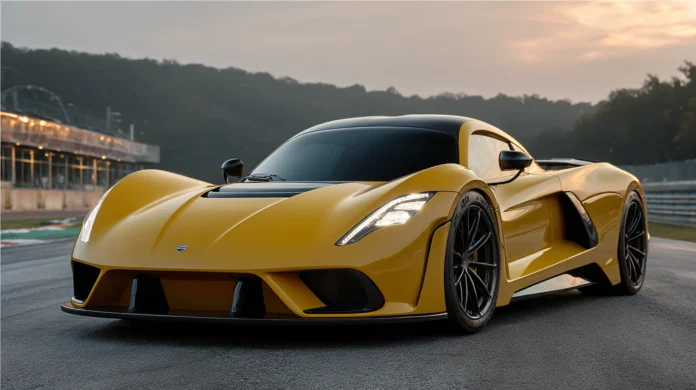
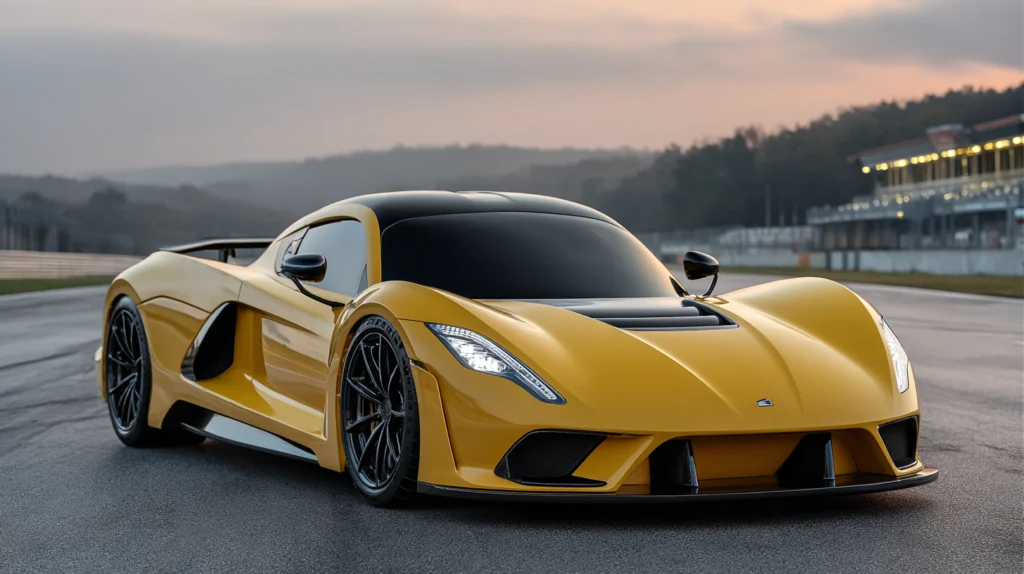
The Venom F5 Revolution, introduced as a track focused variant of the standard F5, takes this pursuit of speed in a different direction. While the standard F5 was designed primarily for top speed runs, the Revolution prioritizes cornering grip, aerodynamic downforce, and sustained track performance. It is a car built for circuits rather than salt flats, a machine that combines Texas engineering with world class performance.

This article provides a detailed examination of the Hennessey Venom F5 Revolution, its performance specifications, design philosophy, and what makes this American speed machine stand out in 2026.

The Hennessey Story

Hennessey Performance Engineering was founded by John Hennessey, a former racer and automotive enthusiast who began modifying cars in the 1990s. The company grew from a small tuning shop into one of the most respected names in high performance automotive engineering. Hennessey’s tuned vehicles, particularly modified Dodge Vipers, established a reputation for extreme power and reliability.

The Venom GT, introduced in 2011, marked Hennessey’s transition from tuner to manufacturer. Built around a lightweight carbon fiber chassis with a twin turbocharged V8 engine producing over 1,200 horsepower, the Venom GT set a production car speed record of 270 miles per hour. It established Hennessey as a legitimate competitor to the established European hypercar manufacturers.

The Venom F5, named for the highest rating on the Fujita tornado scale, represents the culmination of everything Hennessey has learned. It is a clean sheet design, with a carbon fiber monocoque, an aerodynamically optimized body, and a 6.6 liter twin turbocharged V8 engine that produces 1,817 horsepower. The standard F5 was designed with a singular goal: to achieve a top speed of 311 miles per hour, making it the fastest production car in the world.

The Revolution variant takes this platform in a different direction. Rather than chasing the absolute top speed, the Revolution is engineered for track performance, with aerodynamic elements that prioritize downforce over drag reduction.

The Venom F5 Revolution: Track Focused Performance

Design Philosophy

The Revolution shares its basic architecture with the standard Venom F5, but the exterior design is significantly different. Where the standard F5 features a sleek, low drag body optimized for top speed runs, the Revolution adds aerodynamic elements that generate substantial downforce at the expense of some top end velocity.

The most prominent addition is the large fixed rear wing, which replaces the active wing of the standard car. This wing is mounted on two struts and is adjustable, allowing the driver to tailor the downforce balance to suit different tracks and conditions. The wing is constructed from carbon fiber and is designed to provide stable, predictable downforce even at the highest speeds.

The front fascia is also revised, with larger air intakes and a more pronounced splitter that directs airflow under the car. The front wheel arches incorporate vents that reduce pressure buildup in the wheel wells, improving stability and reducing lift. The rear diffuser is more aggressive than the standard car’s, accelerating airflow beneath the vehicle to generate additional downforce.

The body is constructed entirely from carbon fiber, keeping weight to a minimum while providing the structural rigidity required for high speed stability. The Revolution’s dry weight is approximately 3,000 pounds, a remarkable figure for a car with a 1,817 horsepower engine.

Powertrain

The heart of the Revolution is the same 6.6 liter twin turbocharged V8 engine that powers the standard Venom F5. This engine, designed and built by Hennessey, produces 1,817 horsepower at 8,000 rpm and 1,193 lb ft of torque at 5,500 rpm. It is one of the most powerful production engines ever fitted to a road car.

The engine features a bespoke block and cylinder heads, forged internals, and a dry sump lubrication system that allows it to withstand sustained high speed running. The twin turbochargers are mounted in a configuration that minimizes lag while providing the airflow necessary for the engine’s extraordinary output.

Power is transmitted to the rear wheels through a single clutch automated manual transmission developed specifically for the F5. This transmission is designed to handle the engine’s torque while providing rapid, consistent shifts. The gear ratios are optimized for track use, with closer spacing than the standard F5’s ratios to keep the engine in its power band during cornering.

Performance Figures

The Revolution’s performance figures reflect its track focused mission. The car accelerates from 0 to 60 miles per hour in approximately 2.6 seconds. The 0 to 100 miles per hour sprint takes about 4.7 seconds, and 0 to 200 requires approximately 12.5 seconds.

The top speed is reduced compared to the standard F5, with Hennessey quoting a figure of approximately 280 miles per hour for the Revolution. This is a deliberate trade off, with the added downforce of the wing and splitter generating drag that limits the ultimate speed. For track use, this compromise is acceptable; few circuits have straightaways long enough to exceed 200 miles per hour.

The car’s cornering capability is significantly improved over the standard F5. The combination of the aerodynamic downforce, the stiffened suspension, and the wider track allows the Revolution to generate lateral grip that exceeds 1.5 g under ideal conditions.

Chassis and Dynamics

The Revolution shares the carbon fiber monocoque of the standard F5, but the suspension is revised for track duty. The springs are stiffer, the dampers are recalibrated, and the anti roll bars are thicker. The result is a car that responds more directly to steering inputs and maintains better body control through corners.

The suspension is adjustable, allowing the driver to fine tune the car’s behavior to suit different tracks and conditions. The system includes adjustable ride height, spring rates, and damper settings, with the ability to store multiple configurations for different tracks.

The wheels are forged aluminum units sized 19 inches at the front and 20 inches at the rear, wrapped in Michelin Pilot Sport Cup 2R tires that are designed for maximum grip on track surfaces. The tire compound is soft, providing exceptional adhesion at the expense of tread life.

The braking system uses carbon ceramic discs with six piston front calipers and four piston rear calipers. The discs are sized to provide the thermal capacity necessary for sustained track use, with cooling ducts that direct air to the brakes to manage temperatures.

Interior and Driver Experience

Cabin Design

The interior of the Revolution is stripped back compared to the standard F5, with a focus on weight reduction and driver engagement. The seats are carbon fiber racing buckets with minimal padding, upholstered in Alcantara to provide grip during cornering. The seats are fixed in position, with the pedal box adjustable to accommodate drivers of different sizes.

The dashboard is minimalist, with a digital instrument cluster that displays essential information such as speed, rpm, gear position, and lap times. The steering wheel is a flat bottom unit with integrated controls for the car’s systems, allowing the driver to keep their hands on the wheel while adjusting settings.

The cabin lacks many of the amenities found in the standard F5. There is no infotainment screen, no premium audio system, and no sound deadening. The air conditioning is retained, but it is a simplified system designed to provide cooling without adding unnecessary weight.

Driver Controls

The driver interacts with the car through a series of controls designed for use on track. The shift paddles are mounted on the steering column, ensuring they remain in the same position regardless of steering angle. The traction control and stability control systems are adjustable, with settings ranging from full intervention to completely disabled.

A lap timer is integrated into the instrument cluster, with the ability to record sector times and display them in real time. The data acquisition system can log information such as speed, rpm, throttle position, brake pressure, and lateral acceleration, allowing drivers to analyze their performance after each session.

Personalization

Despite its track focus, the Revolution offers a degree of personalization. Buyers can choose from a range of exterior colors and interior trim options, and Hennessey’s team works with each customer to tailor the car to their preferences. The level of personalization is limited compared to the standard F5, reflecting the car’s focus on function over form.

What Makes the Venom F5 Revolution Stand Out in 2026

American Engineering

The Venom F5 Revolution is one of the few hypercars built entirely in the United States. Its engine is designed and assembled in Texas, its chassis is manufactured in North America, and its final assembly takes place at Hennessey’s facility in Sealy. For buyers who value domestic engineering and manufacturing, this is a significant distinction.

The car demonstrates that American engineering can compete at the highest level of the hypercar segment. The 1,817 horsepower output, the 280 mile per hour top speed, the 1.5 g cornering capability these figures place the Revolution alongside the best from Europe.

Track Focus

The Revolution is one of the few hypercars designed specifically for track use. While many manufacturers offer track focused variants, the Revolution’s level of commitment to circuit performance is unusual. The adjustable aerodynamics, the stiffened suspension, the stripped interior all of these elements are chosen to maximize lap times rather than comfort or convenience.

For drivers who plan to use their car on track, this focus is valuable. The Revolution is a tool designed for a specific purpose, and it delivers on that purpose without compromise.

The Engine

The 6.6 liter twin turbocharged V8 is a remarkable piece of engineering. Its 1,817 horsepower output makes it one of the most powerful production engines ever built, and its character is distinct from the V12s and W16s that dominate the hypercar segment. The engine’s sound, its power delivery, and its response are all tuned for the driving experience.

Exclusivity

The Revolution is a limited production model, with only 30 units planned for global production. This rarity ensures that the car will remain a collector’s item, and the track focused configuration distinguishes it from the standard F5.

The allocation of these 30 cars was managed carefully, with priority given to existing Hennessey customers and collectors who have supported the brand. The cars sold out quickly after the announcement, and secondary market values are already reflecting the car’s significance.

The Hennessey Story

The Venom F5 Revolution is part of a larger story: the rise of Hennessey from a small tuning shop to a manufacturer of world class hypercars. For buyers who appreciate this story, the Revolution represents the culmination of decades of engineering passion and entrepreneurial ambition.

Production and Availability

Manufacturing Location

The Venom F5 Revolution is built at Hennessey’s facility in Sealy, Texas, approximately 50 miles west of Houston. This facility has been expanded to accommodate the production of the F5 and its variants, with dedicated assembly areas for the carbon fiber chassis, the engine, and the final assembly.

Production Timeline

Production of the Revolution began in 2025, with the first customer deliveries occurring in early 2026. The production run of 30 units is being completed throughout the year, with each car built to the specifications of its owner.

Pricing

The Venom F5 Revolution carries a starting price of approximately $3.0 million, placing it in the upper tier of hypercar pricing. This figure reflects the car’s exclusivity, its engineering complexity, and its performance capabilities.

Hennessey Venom F5 Revolution: Texas-Built Speed Machine

Specifications Summary

SpecificationValue
Engine6.6L twin turbocharged V8
Power1,817 horsepower at 8,000 rpm
Torque1,193 lb ft at 5,500 rpm
TransmissionSingle clutch automated manual
DriveRear wheel drive
0-60 mph2.6 seconds
0-100 mph4.7 seconds
0-200 mph12.5 seconds
Top Speed280 mph (rated)
WeightApproximately 3,000 lb dry
Production30 units
Base Price$3.0 million

Conclusion

The Hennessey Venom F5 Revolution represents a significant achievement for American automotive engineering. It is a track focused hypercar that combines a 1,817 horsepower twin turbocharged V8 engine with a lightweight carbon fiber chassis, aggressive aerodynamics, and suspension tuned for circuit performance. It is designed to reward skilled drivers on the world’s most demanding tracks, delivering lap times that compete with the best from Europe.

Yet the Revolution is not defined solely by its specifications. It is defined by the story of its creation: a Texas tuning shop that grew into a manufacturer of world class hypercars, a pursuit of speed that began with modified Vipers and culminated in one of the most powerful production engines ever built.

For the 30 buyers who will acquire a Revolution, it offers something beyond performance. It offers the knowledge that their car was designed and built in the United States, by people who share their passion for speed and engineering excellence. It offers the opportunity to be part of the Hennessey story, a story that continues to unfold.

In 2026, as the automotive industry continues its transition toward electrification, the Revolution stands as a celebration of what internal combustion can still achieve. It is a car that prioritizes driver engagement, that rewards skill and commitment, and that delivers the kind of raw, unfiltered experience that enthusiasts value. It is a Texas built speed machine, and it deserves its place among the world’s most extraordinary hypercars.

Bugatti Mistral: The Final Open-Air W16 Roar

0

The name Bugatti carries a weight in automotive history that few others can claim. From the legendary Type 35 that dominated racing in the 1920s to the Type 57 Atlantic that defined automotive art, the brand has always represented the pinnacle of engineering and design. The modern era of Bugatti, beginning with the Veyron in 2005, established a new benchmark: the combination of extraordinary performance with uncompromising luxury.

The W16 engine, a 8.0 liter quad turbocharged powerplant that has powered every modern Bugatti, is the heart of this era. It is an engine unlike any other, producing 1,001 horsepower in its first iteration and evolving to 1,600 horsepower in the Chiron Super Sport. It is an engine that defines an era, one that is now coming to a close.

The Bugatti Mistral, unveiled in 2022, represents the final production car to be powered by the W16 engine. It is an open top roadster, a configuration that has been relatively rare in Bugatti’s modern history, and it serves as a farewell to the engine that has defined the brand for two decades. With a top speed of over 260 miles per hour, it is the fastest open top car the company has ever produced.

This article provides a detailed examination of the Bugatti Mistral, its performance specifications, design philosophy, and what makes this final open-air W16 car stand out in 2026.

The End of an Era: The W16 Engine

The W16 engine is one of the most remarkable production engines ever created. Its configuration combines two narrow angle V8 engines sharing a common crankshaft, creating a W shape that is both compact and powerful. The 8.0 liter displacement is fed by four turbochargers, and the engine produces its peak power at the highest reaches of its rev range.

This engine first appeared in the Veyron, where it produced 1,001 horsepower and propelled the car to a top speed of over 250 miles per hour. It was an engine that defied conventional thinking, delivering power that had previously been reserved for racing cars in a package that was also luxurious and usable.

Over the years, the W16 evolved. It gained power, efficiency, and sophistication. The Chiron version produced 1,500 horsepower, and the Super Sport variant pushed that figure to 1,600 horsepower. Each iteration refined the engine’s character, making it more responsive, more refined, and more capable.

The Mistral represents the final application of this engine. It is the last production car to carry the W16, the end of a line that began with the Veyron in 2005. For Bugatti, this is a significant moment, marking the transition to a new era of electrified powertrains. For enthusiasts, it is the last chance to experience one of the most extraordinary engines ever built.

The Mistral: An Open Top Tribute

Design Philosophy

The Mistral is designed as an open top roadster, a configuration that Bugatti has explored only rarely. The company’s modern history has been dominated by coupes, with the Veyron Grand Sport and the Chiron Sport being the only open top variants. The Mistral takes the open top concept further, with a design that is unique to the roadster rather than being a simple conversion of the coupe.

The design is inspired by the Type 57 Roadster Grand Raid, a classic Bugatti from the 1930s that combined elegant proportions with open air motoring. The Mistral’s windshield is curved and wraps around to the A pillars, a shape that required extensive engineering to achieve the necessary structural rigidity without a fixed roof.

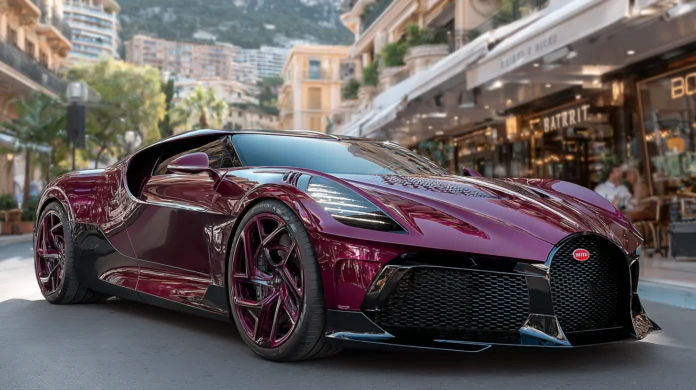
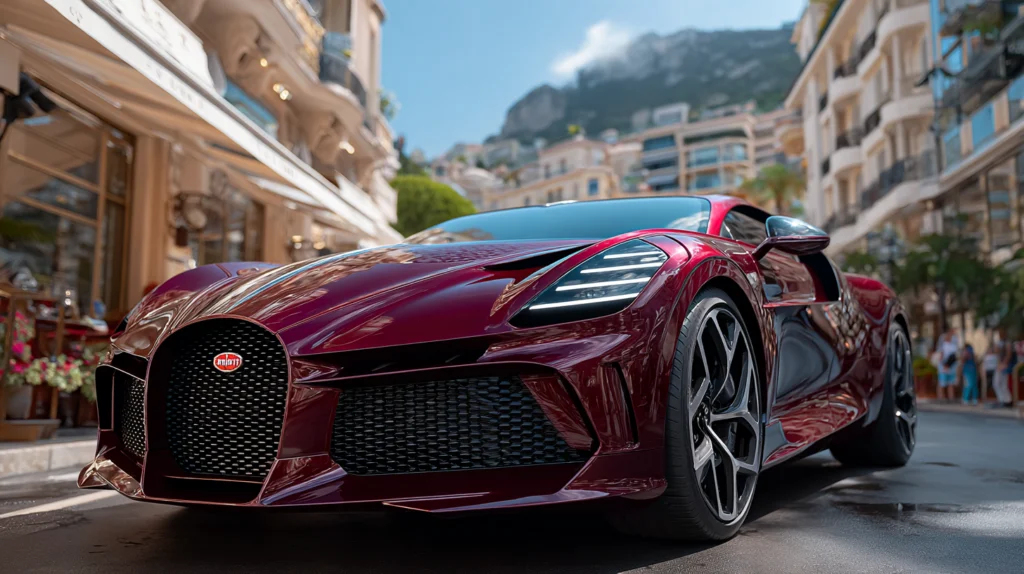
The rear end is the most distinctive element of the Mistral. The engine cover is designed to look like a helmet visor, a visual element that references the aerodynamic helmets worn by racing drivers in the early days of motorsport. The X shaped taillights, made from a single piece of machined aluminum, create a distinctive light signature that sets the Mistral apart from other Bugatti models.

The car retains the horseshoe grille that has been a Bugatti signature since the Type 35, though it is reshaped for the Mistral’s front end. The grille is flanked by vertical air intakes that feed cooling air to the engine and brakes, and the front splitter is shaped to manage airflow under the car.

Powertrain and Performance

The Mistral is powered by the same 8.0 liter quad turbocharged W16 engine that has powered the Chiron and its variants. In the Mistral, the engine produces 1,600 horsepower, matching the output of the Chiron Super Sport. This power is transmitted to all four wheels through a seven speed dual clutch transmission and Bugatti’s advanced all wheel drive system.

The performance figures that result from this powertrain are extraordinary for an open top car. The Mistral accelerates from 0 to 100 kilometers per hour in approximately 2.5 seconds. The 0 to 200 kilometers per hour sprint takes about 5.5 seconds, and 0 to 300 requires approximately 12 seconds.

The top speed is rated at 260 miles per hour, making the Mistral the fastest open top production car Bugatti has ever built. Achieving this speed with a removable roof required extensive aerodynamic development, including careful management of airflow over the occupants and around the cockpit.

Chassis and Structure

The Mistral is built around the same carbon fiber monocoque that underpins the Chiron, though significant modifications were required to accommodate the open top configuration. The removal of the fixed roof reduced structural rigidity, requiring reinforcements in the sills and around the windshield to maintain the stiffness necessary for precise handling.

The suspension uses double wishbones at all four corners, with electronically adjustable dampers that can vary their characteristics based on driving mode. The system is designed to provide both the compliance required for road use and the control necessary for high speed driving.

The wheels are forged aluminum units sized 20 inches at the front and 21 inches at the rear, wrapped in specially developed Michelin Pilot Sport Cup 2 tires that are rated for speeds exceeding 260 miles per hour. The braking system uses carbon ceramic discs with eight piston front calipers and six piston rear calipers, providing stopping power that matches the acceleration capability.

Interior and Craftsmanship

The interior of the Mistral reflects Bugatti’s commitment to luxury and craftsmanship. The seats are trimmed in fine leather, with diamond quilting that references the pattern used in classic Bugatti models. The dashboard is finished in a combination of leather and carbon fiber, with machined aluminum accents throughout.

The gear selector is carved from a single piece of aluminum and crystal, a detail that requires hours of hand finishing. The door panels incorporate leather straps that reference the Type 35’s interior, a subtle nod to Bugatti’s racing heritage.

The convertible top is a lightweight fabric unit that can be operated at speeds up to 30 miles per hour. When stowed, it occupies a minimal amount of space, preserving the car’s clean lines when open.

What Makes the Mistral Stand Out in 2026

The Final W16

The most significant aspect of the Mistral is its engine. The W16 is the defining element of the modern Bugatti era, an engine that has set benchmarks for power, refinement, and engineering sophistication. The Mistral is the last production car to carry this engine, making it the final opportunity to experience the W16 in a new car.

For collectors and enthusiasts, this significance is substantial. The Mistral represents the end of a line, a car that will be remembered as the final open air expression of one of the most remarkable engines ever built.

Open Air Performance

The Mistral combines the performance of the Chiron Super Sport with the experience of open top driving. Achieving a top speed of 260 miles per hour with the roof removed required extensive engineering, including careful management of airflow around the cockpit and over the occupants. The result is a car that delivers the visceral experience of high speed open air motoring without compromising safety or stability.

Design Distinction

The Mistral’s design sets it apart from other Bugatti models. The curved windshield, the helmet visor engine cover, the X shaped taillights these elements create a visual identity that is unique to the Mistral. It is not simply a Chiron with the roof removed; it is a car designed from the ground up as an open top roadster.

The design also references Bugatti’s heritage, from the Type 57 Roadster Grand Raid to the Type 35 racing cars. This connection to history adds depth to the car’s appeal, making it more than a collection of performance figures.

Rarity and Exclusivity

The Mistral is limited to 99 units, a number that reflects Bugatti’s strategy of creating exclusivity through limited production. This rarity ensures that the Mistral will remain a collector’s item, and the significance of the final W16 engine adds to its long term value.

All 99 units were allocated shortly after the car’s unveiling, with priority given to existing Bugatti customers and collectors. The cars have been sold out for years, and secondary market prices are already reflecting the car’s significance.

Craftsmanship

The Mistral’s interior reflects Bugatti’s commitment to craftsmanship, with details that reward close inspection. The crystal and aluminum gear selector, the leather door straps, the diamond quilted seats all of these elements demonstrate a level of attention to detail that mass production cannot replicate.

For buyers who value the human touch in their automobiles, this craftsmanship is a significant part of the Mistral’s appeal.

Bugatti Mistral: The Final Open-Air W16 Roar

The End of the W16 Era

Transition to Electrification

The Mistral marks the end of the W16 era for Bugatti. The company’s next generation of hypercars will be powered by hybrid powertrains, a necessary transition as the automotive industry moves toward electrification. The W16, for all its engineering brilliance, cannot meet modern emissions standards without significant compromises.

Bugatti has announced that its next model, currently in development, will feature a hybrid powertrain developed in partnership with Rimac, the Croatian electric hypercar manufacturer. This new era promises different performance characteristics, different sounds, and a different driving experience.

The Significance of the Farewell

For enthusiasts who have followed Bugatti’s modern history, the Mistral represents a significant moment. It is the last chance to experience the W16 in a new production car, the final roar of an engine that has defined the brand for two decades.

The Mistral is not simply a car; it is a farewell. It acknowledges the end of an era while celebrating what that era achieved.

Specifications Summary

SpecificationValue
Engine8.0L quad turbocharged W16
Power1,600 horsepower
Transmission7 speed dual clutch
DriveAll wheel drive
0-100 km/h2.5 seconds
0-200 km/h5.5 seconds
0-300 km/h12 seconds
Top Speed260 mph (rated)
Production99 units

Conclusion

The Bugatti Mistral represents a significant moment in automotive history. It is the final production car powered by the W16 engine, the powerplant that has defined the modern Bugatti era. It is an open top roadster that combines the performance of the Chiron Super Sport with the visceral experience of open air driving.

Yet the Mistral is not defined solely by its specifications or its engine. It is defined by what it represents: the end of an era, the final chapter in a story that began with the Veyron in 2005. The W16 engine is one of the most remarkable production engines ever created, and the Mistral is its last expression.

For the 99 buyers who will acquire a Mistral, it offers something beyond performance. It offers the knowledge that their car is the last of its kind, a tribute to an engine that redefined what was possible. It offers a connection to Bugatti’s history, from the Type 35 to the Veyron to the Chiron.

In 2026, as the automotive industry continues its transition toward electrification, the Mistral stands as a celebration of what internal combustion engineering achieved. It is a car that honors its heritage while looking toward the future, that delivers extraordinary performance while remaining usable, and that demonstrates that Bugatti’s commitment to excellence remains as strong as ever. It is the final open-air W16 roar, and it is a fitting farewell to an extraordinary engine.

Koenigsegg CC850: A Tribute to the Start of It All

0

The name Koenigsegg carries a specific weight in the world of hypercars. It represents a singular vision pursued with relentless engineering intensity, a story that began in a small Swedish workshop and grew into one of the most respected names in automotive performance. The company’s founder, Christian von Koenigsegg, started this journey with a simple goal: to build the world’s greatest sports car. That dream became the CC8S, the first production Koenigsegg, unveiled in 2002.

Twenty years later, Koenigsegg introduced the CC850 as a tribute to that original car. The CC850 is not merely a commemorative edition; it is a reinterpretation of the CC8S’s design and philosophy using the engineering capabilities that Koenigsegg has developed over two decades. It combines classic proportions with modern technology, a manual automatic transmission that allows the driver to choose their level of engagement, and the raw performance that defines the brand.

This article provides a detailed examination of the Koenigsegg CC850, its performance specifications, design philosophy, and what makes this tribute hypercar stand out in 2026.

The Origin: The Koenigsegg CC8S

The story of Koenigsegg begins with a young Swedish entrepreneur who believed he could build a car that would compete with the best from Italy and Germany. The result, after years of development, was the CC8S. Introduced in 2002, it was a mid engine, rear drive hypercar powered by a 4.7 liter supercharged V8 producing 655 horsepower. It featured a carbon fiber monocoque, a removable hardtop, and a design that was both functional and elegant.

The CC8S established the template that Koenigsegg would follow for the next two decades: lightweight construction, innovative engineering, and a focus on driver engagement. Only six examples of the CC8S were built, making it one of the rarest and most sought after modern hypercars.

The CC850 pays tribute to this original car. It takes the design language of the CC8S the rounded headlights, the sweeping roofline, the distinctive side vents and updates it with the engineering advancements that Koenigsegg has developed in the intervening years. The result is a car that looks like a modern interpretation of the original while delivering performance that far exceeds what was possible in 2002.

The CC850: A Modern Tribute

Design Philosophy

The CC850’s exterior design is a deliberate nod to the CC8S. The front end features rounded headlight housings that echo the original car’s shape, though the lighting technology within is thoroughly modern. The front bumper incorporates a more aggressive splitter and larger air intakes than the CC8S, reflecting the increased cooling requirements of the more powerful powertrain.

The side profile is defined by the sweeping roofline that was a signature of the CC8S, a shape that flows from the windshield to the rear deck without interruption. The side vents, which on the original car provided cooling air to the engine, are larger and more sculpted on the CC850, incorporating active aerodynamic elements that adjust based on driving conditions.

The rear end features a fixed wing that echoes the CC8S’s spoiler, though its shape has been optimized through computational fluid dynamics to provide downforce without excessive drag. The taillights are arranged in a circular pattern that references the original car, and the centrally mounted exhaust outlets are positioned in the same location as on the CC8S.

The overall effect is a car that is unmistakably a Koenigsegg, and unmistakably a tribute to the original, while being clearly a product of the brand’s current engineering capabilities.

Powertrain and Performance

The CC850 is powered by a 5.0 liter twin turbocharged V8 engine, a development of the engine that has powered Koenigsegg models for years. This engine produces 1,185 horsepower when running on regular gasoline, and 1,385 horsepower when running on E85 fuel. This flexibility allows owners to choose between the convenience of pump fuel and the increased performance of renewable ethanol.

The engine is mounted longitudinally behind the passenger compartment, as in the original CC8S, and drives the rear wheels through a revolutionary transmission that Koenigsegg calls the Light Speed Transmission. This unit, which the company has developed over years of refinement, offers a unique capability: it can function as both a nine speed automatic and a six speed manual, depending on the driver’s preference.

In automatic mode, the transmission provides seamless shifts, with the ability to skip multiple gears at once for rapid acceleration. In manual mode, the driver operates a clutch pedal and a physical shifter that provides the tactile engagement of a traditional manual gearbox. The shift gates are arranged in a pattern that references the CC8S’s original gearbox, and the clutch pedal is hydraulically assisted to provide consistent feel.

The performance figures that result from this powertrain are substantial. The CC850 accelerates from 0 to 100 kilometers per hour in 2.5 seconds, 0 to 200 in 5.9 seconds, and 0 to 300 in 10.1 seconds. The top speed is rated at 320 miles per hour, though this figure is achieved only in specific configurations and conditions.

Chassis and Structure

The CC850 is built around a carbon fiber monocoque, a technology that Koenigsegg pioneered with the original CC8S and has continued to refine. The monocoque provides exceptional torsional rigidity while keeping weight to a minimum. The dry weight of the car is listed at approximately 1,385 kilograms, a remarkable figure for a vehicle with this level of power and equipment.

The suspension uses double wishbones at all four corners, with electronically adjustable dampers that can vary their characteristics based on driving mode. The system is designed to provide both the compliance required for road use and the control necessary for track driving. The ride height can be adjusted through the car’s lift system, allowing the driver to raise the front end for speed bumps and driveways.

The wheels are forged aluminum units sized 20 inches at the front and 21 inches at the rear, wrapped in Michelin Pilot Sport Cup 2R tires that provide the grip necessary to handle the car’s power and weight. The braking system uses carbon ceramic discs with multi piston calipers, providing stopping power that matches the acceleration capability.

The Engage Clutch System

One of the most distinctive features of the CC850 is the Engage Clutch System, the mechanism that enables the transmission to function as both a manual and an automatic. The system uses a series of clutches and gears that can be reconfigured electronically, allowing the driver to choose their preferred mode at any time.

When in manual mode, the driver operates a traditional H pattern shifter and a clutch pedal. The system provides the mechanical engagement that enthusiasts value, with the shifter moving through a defined gate and the clutch engaging at a predictable point. When in automatic mode, the transmission functions as a conventional automatic, with the car handling gear selection and clutch operation.

This capability allows the CC850 to serve as both a focused track car and a more relaxed grand tourer, adapting to the driver’s mood and the conditions. It is a demonstration of Koenigsegg’s engineering ingenuity, solving a problem that has challenged performance car manufacturers for years.

Interior and Driver Experience

Cabin Design

The interior of the CC850 reflects the car’s dual personality as both a tribute to the original and a modern hypercar. The seats are trimmed in leather with contrasting stitching, and the dashboard is finished in a combination of leather and carbon fiber. The overall effect is luxurious without being ostentatious, reflecting the Scandinavian design sensibility that has always characterized Koenigsegg.

The driver faces a digital instrument cluster that can be configured to display information in different layouts depending on the driving mode. The steering wheel is wrapped in leather and features integrated controls for the car’s systems, allowing the driver to keep their hands on the wheel while adjusting settings.

The shifter and clutch pedal are the centerpieces of the cabin. The shifter is machined from aluminum and finished with a leather boot, and the H pattern gate is illuminated to indicate the selected gear. The clutch pedal is positioned for easy operation, with a weight that is appropriate for the car’s performance.

Practicality

As with most hypercars, the CC850 prioritizes performance over practicality. The cabin is snug, with seating for two adults and limited storage space. The front trunk provides enough space for a weekend’s worth of luggage, and the removable hardtop can be stored in the trunk when not in use.

The car is designed to be driven, however, not simply collected. The adjustable suspension and lift system allow it to navigate urban environments, and the dual mode transmission makes it equally suited to highway cruising and back road attacks.

What Makes the CC850 Stand Out in 2026

The Dual Mode Transmission

The CC850’s Light Speed Transmission with Engage Clutch System is the most distinctive feature of the car, and one of the most innovative engineering solutions in any production vehicle. The ability to switch between a nine speed automatic and a six speed manual at the push of a button addresses a fundamental tension in the performance car market: the desire for both convenience and engagement.

For drivers who value the involvement of a manual gearbox, the CC850 offers a solution that does not compromise on performance. For those who prefer the ease of an automatic, it delivers that capability as well. The system is a testament to Koenigsegg’s willingness to pursue unconventional solutions to engineering challenges.

Heritage with Substance

The CC850 is a tribute car, but it is not merely a styling exercise. It incorporates the design language of the original CC8S while delivering performance that far exceeds what was possible in 2002. The result is a car that honors its heritage without being limited by it.

The production run of 50 units directly references the original CC8S, which was built in a quantity of 50 including prototypes and test cars. This connection to the original adds to the car’s collectability and significance.

Engineering Innovation

Koenigsegg has built its reputation on engineering innovation, and the CC850 continues this tradition. The dual mode transmission, the flexible fuel capability, the lightweight construction all of these elements demonstrate the brand’s commitment to pushing boundaries.

The car’s 1,385 horsepower output on E85 fuel is achieved without hybridization, a deliberate choice that reflects Koenigsegg’s belief that internal combustion still has potential to be developed. This focus on combustion engineering sets the CC850 apart from many competitors that have embraced hybrid and electric powertrains.

Rarity and Exclusivity

With only 50 units planned for global production, the CC850 is genuinely rare. This limited production ensures that the car will remain a collector’s item, and the connection to the original CC8S adds to its significance.

The allocation of these 50 cars was managed carefully, with priority given to existing Koenigsegg customers and collectors who have supported the brand over the years. The cars sold out quickly after the announcement, demonstrating the strength of demand.

The Scandinavian Design Aesthetic

The CC850 reflects the Scandinavian design sensibility that has always characterized Koenigsegg: clean lines, purposeful shapes, and an absence of decorative excess. The car is elegant without being flashy, aggressive without being aggressive. This restraint distinguishes it from the more flamboyant designs of some competitors.

Koenigsegg CC850: A Tribute to the Start of It All

Production and Availability

Manufacturing Location

The CC850 is built at Koenigsegg’s facility in Ängelholm, Sweden, the same location where the original CC8S was produced. This continuity of location adds to the car’s connection to its heritage.

Production Timeline

Production of the CC850 began in 2024, with the first customer deliveries occurring in 2025. By 2026, the majority of the 50 units have been delivered, with production continuing to fulfill the remaining orders.

Pricing

The CC850 carries a starting price of approximately $3.7 million, placing it in the upper tier of hypercar pricing. This figure reflects the car’s exclusivity, its engineering complexity, and its significance as a tribute to the original Koenigsegg.

Specifications Summary

SpecificationValue
Engine5.0L twin turbocharged V8
Power1,185 hp (gasoline), 1,385 hp (E85)
TransmissionLight Speed Transmission with Engage Clutch System
DriveRear wheel drive
0-100 km/h2.5 seconds
0-200 km/h5.9 seconds
0-300 km/h10.1 seconds
Top Speed320 mph (rated)
Weight1,385 kg dry
Production50 units

Conclusion

The Koenigsegg CC850 represents a rare achievement in the world of hypercars: a tribute to a brand’s origins that is also a showcase of its current capabilities. It honors the original CC8S through its design language, its proportions, and its limited production numbers, while delivering performance that the original car could not have imagined.

The dual mode transmission is the centerpiece of the car’s engineering, a solution to a challenge that has long frustrated enthusiasts. The ability to switch between manual and automatic operation at will allows the CC850 to serve as both a focused track car and a relaxed grand tourer, adapting to the driver’s mood and the conditions.

For the 50 buyers who will acquire a CC850, it offers something beyond performance. It offers the connection to a story that began with a young Swedish entrepreneur who believed he could build the world’s greatest sports car. It offers the knowledge that their car is part of a lineage, a tribute to the car that started it all.

In 2026, as the automotive industry continues its transition toward electrification and automation, the CC850 stands as a celebration of what internal combustion engineering can still achieve. It is a car that honors its heritage while looking forward, that prioritizes driver engagement while delivering extraordinary performance, and that demonstrates that Koenigsegg’s commitment to innovation remains as strong as ever.

Mini John Cooper Works GP EV: A Hot Hatch Reboot

0

The letters JCW GP carry a specific weight among hot hatch enthusiasts. They represent the most extreme expression of Mini’s performance philosophy, a car stripped of pretense and focused entirely on driving engagement. The GP name has appeared only twice before: the 2006 GP kit that added power and sharpened handling, and the 2012 GP2 that introduced a more aggressive aerodynamic package and track focused tuning. Each was rare, each was uncompromising, and each commanded a devoted following.

In 2026, the John Cooper Works GP name returns in a new form. The GP EV represents the first fully electric generation of Mini’s ultimate hot hatch, a car that seeks to translate the GP formula into the electric age. It is based on the recently launched electric JCW hatchback, but adds a level of track focused development that distinguishes it from its more accessible sibling.

This article provides a detailed examination of the Mini John Cooper Works GP EV, its performance specifications, design philosophy, and what makes this electric hot hatch stand out in 2026.

The GP Legacy: A Brief History

The original Mini Cooper S with the GP Kit, introduced in 2006, was the first time Mini offered a factory tuned, track focused version of its front wheel drive hot hatch. With 218 horsepower from a supercharged 1.6 liter engine, a stripped interior, and suspension tuned for cornering grip, it was a limited edition that sold out quickly.

The 2012 Mini John Cooper Works GP, known as the GP2, took the formula further. With 218 horsepower from a turbocharged 1.6 liter engine, a fixed rear wing, and an interior that removed the rear seats entirely, it was a more aggressive interpretation of the GP concept. Only a limited number of units were built, and it remains a sought after collector car.

Both GP models were defined by a clear philosophy: prioritize performance above all else, accept the compromises that come with that focus, and create a car that rewards skilled drivers on track and on demanding roads. The GP EV seeks to continue this tradition, adapted for an electric powertrain.

The Electric JCW Foundation

Platform and Architecture

The GP EV is built on the same dedicated electric platform that underpins the current Mini Cooper and John Cooper Works electric models. This platform positions the battery low in the chassis and allows for the compact dimensions that have always defined Mini.

The car retains the three door body style that has been a GP signature, with a length of approximately 3,858 mm, width of 1,756 mm, and height of 1,458 mm. The wheelbase measures 2,526 mm, providing a stable foundation while maintaining the short overhangs that contribute to the car’s agility.

Motor and Powertrain

The GP EV uses the same front mounted permanent magnet synchronous motor found in the standard JCW electric, but with specific tuning that reflects the GP’s performance focus. The motor produces 258 horsepower and 350 Nm of torque, with a boost function that adds additional power for short periods during hard acceleration.

This power output places the GP EV in line with the standard JCW electric, a deliberate choice that shifts the focus from chasing higher numbers to optimizing the delivery and chassis integration of that power. The motor is paired with a single speed transmission that delivers power to the front wheels, maintaining the front wheel drive layout that has defined the JCW hot hatch formula.

Battery and Range

Power is drawn from a 51.5 kWh lithium ion battery pack, positioned low in the floor to lower the center of gravity. The battery provides an estimated WLTP range of approximately 370 kilometers.

Charging capability is provided by 95 kW DC fast charging, which can replenish the battery from 10 to 80 percent in approximately 30 minutes. While this charging rate is not class leading, it is sufficient for the car’s intended use as a city focused performance vehicle rather than a long distance tourer.

GP Specific Enhancements

Suspension and Chassis Tuning

The GP EV receives a specifically tuned suspension setup that distinguishes it from the standard JCW electric. While the standard JCW already features a sport oriented suspension with adaptive dampers, the GP version adds stiffer springs, revised damper calibration, and a lowered ride height that further sharpens the car’s responses.

The suspension geometry is optimized for track use, with increased negative camber that improves grip during cornering. The rear multi link suspension, a departure from the torsion beam setup used in earlier Minis, provides better control over wheel motion and contributes to the car’s composed handling.

Braking System

The GP EV features an upgraded braking system with larger rotors and performance oriented pads that provide improved stopping power and better resistance to fade during track use. The calipers are painted in the distinctive red that has become a JCW signature.

Aerodynamics

The most visually distinctive element of the GP EV is its aerodynamic treatment. The car features a prominent rear roof spoiler that directly references the 2012 GP2, a design choice that signals the car’s performance intent while providing functional downforce at the rear axle.

The front fascia incorporates larger air intakes that feed cooling air to the motor and brakes, while the side skirts and rear diffuser are shaped to manage airflow under the car. These elements are not merely decorative; they serve genuine aerodynamic and cooling purposes that support sustained performance.

Weight Considerations

The GP EV carries a curb weight of approximately 1,730 kilograms, a figure that reflects the reality of electric vehicle packaging. While this is heavier than the previous generation GP, it is consistent with the weight of the standard JCW electric and represents a focus on structural integrity and crash safety.

The added weight is managed through the chassis tuning and the low center of gravity provided by the battery placement. The result is a car that feels planted and stable through corners, even if it lacks the featherweight agility of its internal combustion predecessors.

Interior and Driver Focus

Track Focused Cabin

The interior of the GP EV is stripped back compared to the standard JCW, with a focus on driver engagement and weight reduction. The rear seats are removed, a GP tradition that creates additional space while reducing weight. The rear seat area is finished with a carpeted floor, and the space can be used for additional cargo or track day equipment.

The front seats are upgraded to performance oriented bucket seats that provide improved lateral support during cornering. These seats are upholstered in a combination of leather and Alcantara, with red contrast stitching and GP branding on the headrests.

Technology Integration

The GP EV features the same central OLED display found in other current Minis, a 9.4 inch circular screen that serves as the primary interface for infotainment and vehicle functions. The system provides access to navigation, media, and vehicle settings.

A head up display provides essential driving information directly in the driver’s line of sight, allowing the driver to keep their attention on the road. The system is configurable, with the driver able to select which information is displayed.

A premium audio system is retained, providing sound quality that exceeds what might be expected in a track focused vehicle.

Digital GP Heritage

A specific GP drive mode is included, accessible through the central display. This mode adjusts the throttle response, steering weight, and suspension damping to a setting calibrated for track use. The digital instrument cluster adopts a GP specific graphic theme when this mode is selected, providing visual feedback that reinforces the car’s performance character.

Performance and Driving Experience

Acceleration and Speed

The GP EV accelerates from 0 to 100 kilometers per hour in 5.9 seconds, matching the standard JCW electric. This figure represents a significant improvement over the internal combustion GP2, while falling short of more powerful electric competitors.

Top speed is electronically limited to 200 kilometers per hour, a figure that reflects the car’s focus on acceleration and cornering rather than outright top end. For the car’s intended use on twisty roads and racetracks, this limit is rarely reached.

Cornering and Grip

The GP EV’s cornering capability is its strongest attribute. The combination of the low center of gravity provided by the battery placement, the stiffened chassis, and the GP specific suspension tuning delivers lateral grip that exceeds the standard JCW. The car changes direction with immediacy, and the front end grips tenaciously when entering corners.

The electronic stability control system is calibrated to allow a degree of slip before intervening, giving the driver room to explore the car’s limits. The boost function, which adds power for short periods, is particularly effective when accelerating out of corners, providing an extra surge of torque that complements the car’s handling.

Steering Feel

The electric power steering is calibrated to provide genuine feedback about what the front tires are doing. The system weights up naturally as cornering forces increase, and the short wheelbase contributes to a sense of agility that is characteristic of Minis. The steering communicates available grip clearly, allowing the driver to place the car precisely.

Braking Performance

The upgraded brake system provides stopping power that matches the car’s cornering capability. The larger rotors and performance pads deliver consistent pedal feel and fade resistance during repeated hard stops, essential for track day use. Regenerative braking, controlled by the electric motors, captures energy during deceleration and can be adjusted through the drive mode selector.

The Sound Question

Electric vehicles are often criticized for their silence, and the GP EV does not attempt to fake the sound of a combustion engine. Instead, it offers a different acoustic experience: the whine of the electric motor under load, the rush of air over the bodywork, and the mechanical noises of suspension and brakes working at the limit.

For drivers who value the sensory aspects of driving, this soundscape provides its own form of feedback. The absence of engine noise allows other sounds to become more apparent, and the connection between throttle input and motor response is immediate and direct.

Mini John Cooper Works GP EV: A Hot Hatch Reboot

What Makes the GP EV Stand Out in 2026

Heritage and Identity

The GP EV is the first fully electric car to wear the GP badge, a significant moment for Mini’s performance heritage. It acknowledges that the GP formula can be translated into electric power, not by pretending to be something it is not, but by focusing on the elements that have always defined the GP: handling precision, driver engagement, and a willingness to compromise comfort for performance.

The rear spoiler that references the GP2, the removed rear seats, the track focused suspension these elements connect the GP EV to its predecessors while acknowledging the reality of electric power.

The Focus on Handling over Power

In an era when electric vehicles are increasingly defined by acceleration figures and straight line speed, the GP EV takes a different approach. Its 258 horsepower output is modest compared to competitors, but the focus on chassis tuning, weight distribution, and steering feel delivers a driving experience that rewards skill and engagement.

This philosophy reflects the GP’s traditional strengths. The original GP was not the most powerful hot hatch on the market, but it was one of the most rewarding to drive. The GP EV continues this tradition, prioritizing balance over brute force.

The Rarity Factor

The GP EV is a limited production model, with production numbers expected to follow the tradition of approximately 2,000 units globally. This limited availability adds to the car’s collectability and ensures that it will remain a rare sight on roads.

For buyers who value exclusivity and a connection to Mini’s performance heritage, this rarity is a significant part of the GP EV’s appeal.

The Challenge of Electric Performance

The GP EV arrives at a time when the electric performance market is becoming more complicated. Straight line speed has become commoditized, and many buyers now define EVs by efficiency and incentives rather than excitement. The GP EV faces the challenge of proving that electric performance can still be emotionally engaging, that character cannot simply be programmed, and that the GP name still means something.

The car’s development reflects an awareness of this challenge. The focus on handling, the retention of the front wheel drive layout, the specific suspension tuning all of these choices are intended to create a car that feels alive, not simply fast.

The Connection to Enthusiasts

Mini has cultivated a dedicated enthusiast community over decades, and the GP EV is aimed directly at that audience. It is a car for people who remember the original GP, who value driving engagement over specifications, and who are willing to accept the compromises that come with a track focused vehicle.

For these buyers, the GP EV offers a path forward into electrification without abandoning the values that made the GP name meaningful.

Specifications Summary

SpecificationValue
MotorPermanent magnet synchronous, front mounted
Power258 hp, 350 Nm
Boost FunctionAdditional power for short periods
Battery51.5 kWh lithium ion
RangeApproximately 370 km WLTP
Charging95 kW DC fast charging
0-100 km/h5.9 seconds
Top Speed200 km/h
WeightApproximately 1,730 kg
Length3,858 mm
Width1,756 mm
Height1,458 mm
Wheelbase2,526 mm
DriveFront wheel drive
SuspensionFront MacPherson, rear multi link
BrakesUpgraded performance brakes with red calipers

Production and Availability

Production Timeline

The GP EV is scheduled for production in 2026, following the launch of the standard electric JCW models. Production will take place alongside other Mini electric vehicles, utilizing the brand’s manufacturing capabilities.

Pricing

The GP EV carries a premium over the standard JCW electric, reflecting its upgraded components and limited production status. The limited edition nature and the additional content justify the increased cost.

Market Availability

The GP EV will be offered in markets where the JCW electric is sold, including Europe, Asia, and other regions. Availability will be limited by the production numbers, and interested buyers are advised to contact their local dealers early.

Conclusion

The Mini John Cooper Works GP EV represents a significant moment in the evolution of the hot hatch. It is the first electric car to carry the GP badge, a name that has always stood for uncompromising performance and driver engagement. It faces the challenge of translating that formula into electric power without losing the character that made the GP special.

The car’s strengths are rooted in the traditional GP formula: handling precision, suspension tuning, and a willingness to accept compromises in the pursuit of performance. The removed rear seats, the track focused suspension, the upgraded brakes all of these elements connect the GP EV to its predecessors.

Yet the GP EV is also a product of its time. It is heavier than its internal combustion predecessors, quieter, and defined by a different kind of performance. The acceleration is instant, the chassis is planted, and the car delivers its power in a way that is both immediate and controlled.

For the enthusiast who values driving engagement, who remembers the original GP, and who is willing to embrace electric power, the GP EV offers something rare. It is a car that honors its heritage while looking forward, that prioritizes handling over straight line speed, and that rewards the driver who seeks to explore its limits.

In 2026, as the automotive industry continues its transition toward electrification, the GP EV stands as a statement that performance cars can survive this shift. It is not a perfect translation of the GP formula, but it is a worthy continuation of a legacy that began with a small, supercharged hatchback nearly two decades ago. And for the limited number of buyers who will acquire one, it offers the chance to be part of the next chapter in Mini’s performance story.

Toyota GR86 Trueno Edition: 90s Vibes, Modern Grip

0

The Toyota GR86 has occupied a special place in the sports car market since its debut as the second generation of the rear drive coupe that began with the Scion FR-S and Subaru BRZ. It is a car designed for enthusiasts who value balance, feedback, and affordability over straight line speed. It is a car that rewards driver skill and invites exploration of its limits on back roads and racetracks alike.

For 2026, Toyota has introduced the GR86 Trueno Edition, a limited production variant that pays homage to the iconic AE86 Sprinter Trueno of the 1980s, the car that established Toyota’s reputation for lightweight, engaging rear drive sports cars and later became a cultural phenomenon through its starring role in popular racing culture. The Trueno Edition combines retro styling cues with the GR86’s already capable chassis, creating a package that appeals to enthusiasts who appreciate both heritage and modern performance.

This article provides a detailed examination of the Toyota GR86 Trueno Edition, its performance specifications, design philosophy, and what makes this limited edition sports car stand out in 2026.

The AE86 Legacy

The original Toyota Sprinter Trueno, known by its AE86 chassis code, debuted in 1983 as a lightweight, rear wheel drive coupe and hatchback. It featured a high revving 4A-GE engine producing approximately 130 horsepower, a five speed manual transmission, and a chassis that prioritized balance and feedback over outright power. The AE86 became a favorite among driving enthusiasts for its predictable handling, communicative chassis, and the accessibility of its performance limits.

The car’s legacy extended far beyond its original production run through its prominence in popular culture. The AE86 became the hero car in a series of manga and films that celebrated the art of driving on mountain passes, exposing a generation of enthusiasts to the virtues of lightweight rear drive sports cars. The AE86 remains a highly sought after collector car, with well preserved examples commanding prices far beyond their original window stickers.

The GR86 Trueno Edition draws directly from this heritage. It is Toyota’s acknowledgment that the AE86’s spirit continues to influence the company’s approach to sports car engineering, and that there remains a dedicated audience for cars that prioritize driver engagement above all else.

The GR86 Foundation

Chassis and Platform

The GR86 is built on a dedicated rear wheel drive platform developed in partnership with Subaru. This platform features a low center of gravity enabled by the boxer engine configuration, with the engine mounted low and far back in the chassis to achieve ideal weight distribution. The result is a car with neutral handling characteristics that respond predictably to driver inputs.

The chassis is constructed with high tensile steel and features significant structural reinforcements that provide the rigidity necessary for precise handling. The suspension uses MacPherson struts at the front and double wishbones at the rear, a configuration that balances cornering grip with ride compliance.

Engine and Powertrain

Power comes from a 2.4 liter naturally aspirated boxer four cylinder engine, a significant upgrade from the previous generation’s 2.0 liter unit. This engine produces 228 horsepower at 7,000 rpm and 184 lb ft of torque at 3,700 rpm. The increase in displacement addresses the primary criticism of the first generation car, providing stronger low end torque while maintaining the high revving character that enthusiasts value.

The engine features Toyota’s D-4S direct and port injection system, which combines the efficiency of direct injection with the intake valve cleaning benefits of port injection. The system automatically selects the optimal injection mode based on driving conditions, contributing to both performance and reliability.

A six speed manual transmission is standard equipment on the Trueno Edition, as it is across the GR86 lineup. The manual transmission features a short throw shifter with mechanical engagement that provides direct feedback to the driver. A six speed automatic with paddle shifters is available as an option for buyers who prefer it.

Handling Characteristics

The GR86’s handling is defined by its low curb weight, which comes in at approximately 2,800 to 2,900 pounds depending on configuration. This weight figure is remarkably low for a modern sports car, and it pays dividends in every aspect of the car’s dynamic behavior.

The car’s balance is nearly 50:50 front to rear, a figure that engineers pursued to achieve neutral handling. Combined with the low center of gravity provided by the boxer engine, this weight distribution allows the GR86 to change direction quickly and maintain composure through corners. The car communicates available grip clearly through the steering wheel and seat, allowing the driver to explore its limits with confidence.

The Trueno Edition: Design and Features

Exterior Styling

The Trueno Edition distinguishes itself from standard GR86 models through a combination of exterior design elements that reference the AE86 while updating them for the modern car.

The most prominent feature is the black hood, a direct nod to the two tone paint scheme that was popular on the AE86 and many other Japanese sports cars of the 1980s. On the Trueno Edition, the hood is finished in gloss black, creating contrast with the body color while highlighting the GR86’s sculpted hood lines.

The roof is also finished in black, extending the two tone treatment across the top of the car. This visual element reduces the perceived height of the greenhouse and emphasizes the car’s low, wide stance.

The Trueno Edition is offered in a specific exterior color palette that includes Track bRed, which echoes the red that was popular on the AE86, along with other GR86 colors. The car also features black painted 18 inch alloy wheels with a spoke design that evokes the classic mesh wheels often fitted to AE86s in period photographs.

Aerodynamic Additions

A subtle rear duckbill spoiler, finished in black to match the hood and roof, provides visual distinction while contributing to aerodynamic balance. The spoiler is designed to reduce lift at the rear axle without adding significant drag, complementing the GR86’s already optimized aerodynamics.

Badging and Details

The Trueno Edition carries unique badging that identifies it as a special model. The Trueno name appears on the rear deck, and the fenders feature a retro inspired emblem that references the AE86’s lineage. These details are executed in a style that pays homage to the original while maintaining the GR86’s contemporary aesthetic.

Interior Details

Inside the cabin, the Trueno Edition features unique touches that connect it to its heritage. The seats are upholstered in a combination of leather and Alcantara, with contrast stitching that echoes the exterior color. The seats also feature the Trueno name embossed on the headrests.

The shift knob is a retro inspired design that references the golf ball texture of classic Toyota sports cars. The interior trim includes silver accents that complement the black and red color scheme, and the door sills feature Trueno Edition branding.

Mechanical Upgrades

Beyond the visual treatments, the Trueno Edition includes several mechanical upgrades that enhance the GR86’s already capable chassis. The car rides on Sachs performance dampers, which provide improved body control and more precise wheel motion compared to the standard suspension. The dampers are tuned specifically for the Trueno Edition, balancing comfort for daily driving with the control required for spirited back road driving.

The brake system is upgraded with larger rotors and performance oriented pads, providing improved stopping power and better resistance to fade during extended use. These brake upgrades complement the chassis enhancements, ensuring that the car’s stopping capability matches its cornering performance.

The wheel and tire package is also upgraded. The Trueno Edition wears 18 inch wheels fitted with Michelin Pilot Sport 4 tires, which provide high levels of grip and responsive steering feel. The tire compound and tread pattern are optimized for both dry and wet conditions, making them suitable for year round driving in many climates.

Performance and Driving Experience

Acceleration and Speed

With 228 horsepower and a curb weight under 2,900 pounds, the GR86 Trueno Edition accelerates from 0 to 60 miles per hour in approximately 6.1 seconds. This figure places it behind more powerful competitors like the Ford Mustang Ecoboost and Volkswagen Golf GTI in a straight line, but the GR86’s strengths lie elsewhere.

Top speed is approximately 140 miles per hour, sufficient for any legal driving scenario and most track day applications.

Cornering and Grip

The GR86’s cornering capability is where it truly shines. The combination of low weight, balanced chassis, and the Trueno Edition’s upgraded suspension and tires delivers lateral grip that exceeds 0.95 g on the skidpad. This level of grip allows the car to carry significant speed through corners, rewarding drivers who maintain momentum rather than relying on power to make up time.

The car’s handling is neutral and predictable, with a slight tendency toward understeer at the limit that builds driver confidence. Trail braking into corners can rotate the car, and power application on exit is smooth and progressive. The limited slip differential, standard on the Trueno Edition, manages torque distribution between the rear wheels to maximize traction during cornering.

Steering Feel

The electric power steering is calibrated to provide genuine feedback about what the front tires are doing. The system is weighted appropriately for a sports car, with effort building naturally as cornering forces increase. This communication is essential to the GR86’s appeal, allowing the driver to place the car precisely and sense the approach of the traction limit.

Braking Performance

The upgraded brake system provides stopping power that matches the car’s cornering capability. The larger rotors and performance pads deliver consistent pedal feel and fade resistance during repeated hard stops. For drivers who plan to track their Trueno Edition, this brake upgrade is a significant benefit over the standard GR86.

Toyota GR86 Trueno Edition: 90s Vibes, Modern Grip

The Driving Experience

On Road Character

The GR86 Trueno Edition is designed to be driven, not simply collected. On public roads, it rewards drivers who seek out winding back roads and appreciate the feedback that comes through the chassis and steering. The car is small enough to place precisely in a lane, and the naturally aspirated engine responds immediately to throttle inputs.

The ride quality, even with the upgraded Sachs dampers, is firm but not punishing. The car absorbs road imperfections without transmitting excessive impact to occupants, making it suitable for daily driving. The interior is comfortable for two adults, with sufficient space for a weekend’s worth of luggage in the trunk.

On Track Behavior

When driven at the limit on a racetrack, the Trueno Edition reveals the depth of its engineering. The chassis remains composed through high speed corners, and the brakes provide consistent performance lap after lap. The engine, while not powerful by modern standards, delivers its power in a linear, predictable manner that rewards smooth driving.

The car is accessible to drivers of varying skill levels. Beginners will find it forgiving and easy to control, while experienced drivers will appreciate the precision with which they can place the car and the feedback that allows them to explore the limits safely.

The Sound

The naturally aspirated boxer engine produces a distinctive sound that builds as the revs climb toward the 7,400 rpm redline. The induction noise is present without being intrusive, and the exhaust note is tuned to provide auditory feedback about engine speed without being obtrusive during highway cruising.

What Makes the GR86 Trueno Edition Stand Out in 2026

Heritage with Substance

The Trueno Edition is not merely a sticker package. The mechanical upgrades, including the Sachs dampers, upgraded brakes, and performance tires, provide tangible benefits that enhance the driving experience. For buyers who appreciate the AE86 legacy, these upgrades represent a meaningful connection to that heritage, not simply cosmetic styling.

The Manual Transmission

In 2026, the availability of a six speed manual transmission in an affordable sports car is increasingly rare. Toyota’s commitment to offering the manual across the GR86 lineup, and making it standard on the Trueno Edition, reflects an understanding of their core audience. For drivers who value the engagement of shifting their own gears, the GR86 remains one of the few choices in its price class.

Lightweight Philosophy

At approximately 2,800 pounds, the GR86 is significantly lighter than most modern sports cars. This focus on weight reduction pays dividends in handling, braking, and overall feel. The car responds to inputs with immediacy that heavier vehicles cannot match, and its modest power output becomes an asset rather than a liability when the driver learns to maintain momentum through corners.

Affordable Performance

The GR86 Trueno Edition is priced competitively within the sports car market, making it accessible to a broad range of buyers. For the cost of a well equipped family sedan, buyers can acquire a purpose built rear wheel drive sports car that delivers genuine driving engagement. This affordability is essential to the GR86’s mission and reflects the same philosophy that made the AE86 accessible to a generation of enthusiasts.

The Connection to Driving Culture

The Trueno Edition’s connection to the AE86 and the driving culture that surrounds it gives the car an authenticity that few competitors can claim. For buyers who grew up admiring the AE86, this limited edition offers a chance to own a piece of that legacy, updated with modern engineering and safety features.

Specifications Summary

Engine: 2.4L naturally aspirated boxer 4 cylinder
Horsepower: 228 hp at 7,000 rpm
Torque: 184 lb ft at 3,700 rpm
Transmission: 6 speed manual (standard), 6 speed automatic (optional)
Drive: Rear wheel drive
Suspension: Sachs performance dampers
Brakes: Upgraded rotors and performance pads
Wheels: 18 inch black painted alloy
Tires: Michelin Pilot Sport 4
Weight: Approximately 2,800 to 2,900 pounds
0-60 mph: Approximately 6.1 seconds
Top Speed: Approximately 140 mph

Production and Availability

Limited Production

The Trueno Edition is a limited production model, with only a specified number of units available for the 2026 model year. This limited availability adds to the car’s collectability and ensures that it will remain a rare sight on roads.

Pricing

The Trueno Edition carries a premium over the standard GR86, reflecting its upgraded mechanical components and unique styling. The exact pricing varies by market, but the limited edition nature and the additional content justify the increased cost.

Market Availability

The Trueno Edition is offered in markets where the GR86 is sold, with allocations distributed to Toyota dealerships. Given the limited production numbers and the enthusiasm for the model, interested buyers are advised to contact their local dealers early in the model year.

Conclusion

The Toyota GR86 Trueno Edition represents a thoughtful celebration of the company’s sports car heritage. It combines the modern engineering of the GR86 with visual and mechanical upgrades that reference the legendary AE86. The black hood and roof, the retro badging, the Sachs dampers, and the upgraded brakes all contribute to a package that feels cohesive and purposeful.

Yet the Trueno Edition is not defined solely by its heritage connections. It is defined by what the GR86 already offers: a lightweight, rear wheel drive chassis, a responsive naturally aspirated engine, a manual transmission, and handling that rewards driver skill. The Trueno Edition amplifies these attributes with meaningful upgrades that enhance the driving experience.

For the enthusiast who values balance over power, feedback over acceleration, and engagement over convenience, the GR86 Trueno Edition offers something rare in the modern automotive landscape. It is a car designed for drivers, built for back roads, and priced for accessibility. It honors a legacy without being trapped by it, and it delivers an experience that is both familiar and thoroughly contemporary.

In 2026, as the automotive industry continues its transition toward electrification and automation, the GR86 Trueno Edition stands as a reminder that the joy of driving can be found in simplicity, in balance, and in the connection between car and driver. It is a worthy tribute to the AE86, and a reminder that Toyota still understands what makes sports cars special.

Subaru WRX TR: Return of the Rally Icon

0

The letters WRX carry a specific weight in automotive culture. They evoke images of blue sedans sliding through forest stages, of boxer engines revving toward redline, of a rally bred performance pedigree that has few equals. Since the original Impreza WRX arrived in the United States in 2001, the nameplate has represented accessible all wheel drive performance with a direct connection to Subaru’s motorsport success.

For the 2026 model year, Subaru has made significant moves to reinvigorate the WRX lineup. After a challenging period, the company has cut prices across the range, reintroduced a base model, and added a limited edition Series.Yellow variant. But the most significant addition for enthusiasts may be the WRX TR, a performance focused trim that debuted in 2024 and continues into 2026 as the bridge between the standard WRX and the discontinued STI.

This article provides a detailed examination of the Subaru WRX TR, its performance specifications, design philosophy, and what makes this rally inspired sedan stand out in 2026.

The WRX Legacy: From Rally Stage to Showroom

Subaru’s performance heritage traces back to the 1970s with the first mass production four wheel drive passenger car from a Japanese manufacturer. Over the following decades, Subaru leveraged its all wheel drive expertise to achieve extraordinary success in rallying, securing championship victories globally. The WRX name emerged as a road going distillation of that success, bringing rally technology to customers who wanted the experience of a competition car in a practical sedan package.

The current generation WRX, introduced for the 2022 model year, represented a significant evolution. Built on the Subaru Global Platform, it debuted with a larger 2.4 liter turbocharged engine and a stiffer chassis designed to deliver the handling precision that WRX drivers expect. The discontinuation of the STI variant left a gap in the lineup, one that Subaru has sought to fill with performance oriented trims like the tS and the TR.

The WRX TR: Track Tuned Performance

The WRX TR was positioned as a performance focused variant that bridges the gap between the standard WRX and the more hardcore STI that enthusiasts still remember. The TR designation, meaning Tuner Ready, signals a focus on handling precision and driver engagement rather than simply chasing higher horsepower numbers.

Engine and Powertrain

The WRX TR is powered by the same 2.4 liter turbocharged BOXER engine found throughout the WRX lineup. This engine produces 271 horsepower at 5,600 rpm and 258 lb ft of torque from 2,000 to 5,200 rpm. The flat four configuration provides a low center of gravity that contributes to the car’s handling characteristics, while the signature boxer engine sound remains a defining feature of the WRX experience.

The 2.4 liter engine uses a twin scroll turbocharger to reduce lag and provide responsive power delivery. Unlike some competitors that require high revs to access their power, the WRX engine delivers 90 percent of its peak torque from just 2,000 rpm. This broad torque curve makes the car responsive in everyday driving while providing the flexibility needed for spirited back road driving.

Power is transmitted to all four wheels through Subaru’s Symmetrical All Wheel Drive system, a hallmark of the brand’s engineering philosophy. The system positions the engine and transmission along the vehicle’s centerline, creating balanced weight distribution and predictable handling characteristics. This architecture has been refined through decades of rally competition and remains a distinguishing feature of the WRX.

Transmission

The WRX TR is available exclusively with a six speed manual transmission. This decision reflects the TR’s focus on driver engagement, positioning it as the choice for enthusiasts who value the connection that only a manual gearbox can provide. The transmission features incline start assist, making hill starts easier in everyday driving while preserving the direct mechanical feel that drivers expect.

Chassis and Handling Upgrades

The WRX TR distinguishes itself from lesser trims through a range of chassis and brake upgrades that enhance its track capability.

Suspension

Subaru engineers fitted the TR with stiffer springs and a revised suspension setup compared to the standard WRX. The track tuned suspension is calibrated to provide quicker steering response and improved body control during cornering. The goal is a car that feels more composed at the limit, capable of handling the demands of track day driving while remaining compliant enough for daily use.

Braking System

Perhaps the most significant upgrade on the TR is the braking system. The car features Brembo brakes with six piston front calipers and two piston rear calipers, all finished in red. The front brake discs measure 340 mm in diameter, while the rear discs are 326 mm. This combination provides improved stopping power, better resistance to fade during repeated hard use, and a more confident pedal feel compared to the standard WRX brakes.

For drivers who plan to track their WRX, this brake upgrade addresses one of the primary limitations of the standard car. The six piston calipers provide consistent performance lap after lap, while the larger discs help manage the heat generated during hard braking.

Wheels and Tires

The TR rides on 19 inch wheels wrapped in summer performance tires sized 245/35 R19. These tires are designed to provide high levels of grip in both dry and wet conditions, contributing to the car’s cornering capability. The tire compound and tread pattern are optimized for responsive steering and predictable behavior at the limit.

Interior and Driver Focus

Recaro Seats

The WRX TR features new Recaro seats for the driver and front passenger. These performance seats are upholstered in black and gray Ultrasuede, a suede like material that provides grip during cornering while remaining comfortable for longer journeys. The seats feature Recaro logos embossed on the backrest, and the driver’s seat includes eight way power adjustment for finding the ideal driving position.

The Recaro seats provide significantly better lateral support than the standard WRX seats, holding occupants firmly in place during cornering. This is an essential upgrade for drivers who plan to explore the car’s handling limits, whether on track or on winding back roads.

Exterior Distinctions

Visually, the TR is distinguished by its more subdued appearance compared to other performance variants. Notably, the TR does not feature a large fixed rear wing. Instead, it comes standard with an integrated lip spoiler painted to match the body color. The exterior also features red Brembo calipers visible through the 19 inch wheels, subtle TR badging, and the functional hood scoop that has been a WRX signature since the first generation. This scoop directs air to the top mounted intercooler, a design that originated in rally competition and remains a visual identifier of the WRX lineage.

The 2026 WRX Lineup

The WRX TR sits within a broader lineup for 2026 that includes several notable additions and changes.

Pricing and Value

Subaru has significantly reduced pricing for the 2026 WRX lineup. The base model now starts at approximately $32,500, a reduction from previous years. The Premium trim starts at $34,000, the Limited at $39,000, and the GT at $45,000. The new tS trim, which features STI tuned suspension and adaptive dampers, starts at approximately $45,000.

This pricing strategy represents a return to the WRX’s roots as an accessible performance sedan. The 2026 WRX, adjusted for inflation, is priced comparably to the original Impreza WRX when it debuted in the United States. This affordability is critical for the WRX’s target demographic, which tends to be younger than the typical Subaru buyer and often stretches to afford the performance they desire.

The Series.Yellow Edition

For 2026, Subaru has introduced the WRX Series.Yellow, a limited edition variant based on the tS trim. Only a limited number of units will be produced, making it a highly collectible addition to the lineup. The Series.Yellow features Sunrise Yellow paint, matte black 19 inch wheels, and Recaro Performance Design front seats with yellow contrast stitching and yellow accents in the seat perforations.

Mechanically, the Series.Yellow shares the tS trim’s performance hardware, including STI tuned suspension with electronically adjustable dampers and Brembo brakes. It is available exclusively with the six speed manual transmission, emphasizing its focus on driver engagement.

The tS Trim

The tS, which stands for tuned by Subaru Tecnica International, represents the most capable WRX variant for 2026. It features electronically adjustable dampers developed with STI input, allowing the driver to tailor the suspension characteristics to their preferences. The tS also includes the same Brembo brake system found on the TR, along with unique wheel and interior treatments. For drivers seeking the sharpest handling WRX available, the tS is the choice.

Driving Experience

On Road Character

The WRX TR delivers a driving experience that honors its rally heritage while accommodating the realities of daily driving. The turbocharged engine provides strong low end torque, making city driving effortless. The six speed manual transmission has a mechanical feel that rewards precise shifts.

The suspension, while firmer than the standard WRX, remains compliant enough for daily use. The stiffer springs and revised tuning do not punish occupants on rough pavement, but they provide noticeable improvements in body control during cornering. The steering is precise and communicative, giving the driver confidence to place the car accurately on the road.

On Track Capability

When driven at the limit, the TR reveals the purpose of its upgrades. The Brembo brakes provide consistent stopping power lap after lap, with a pedal feel that inspires confidence. The 19 inch summer tires deliver high grip levels, and the revised suspension tuning keeps the car composed through corners. The all wheel drive system provides traction that allows early power application on corner exit, a characteristic that distinguishes the WRX from front drive competitors.

The TR is not a dedicated track car. The 271 horsepower output, while adequate, falls short of some competitors. But for drivers who value balanced handling and all weather capability over peak horsepower numbers, the TR delivers a compelling package.

All Weather Capability

Where the WRX truly distinguishes itself from competitors is in all weather conditions. The Symmetrical All Wheel Drive system, combined with the torquey engine and responsive chassis, makes the WRX a car that can be driven confidently in rain, snow, and on mixed surfaces. This versatility is rooted in the car’s rally heritage and remains a core advantage over front drive competitors.

Subaru WRX TR: Return of the Rally Icon

Technology and Safety

Infotainment

The 2026 WRX features an 11.6 inch Subaru Multimedia Plus touchscreen, standard across the lineup. The vertically oriented screen provides access to audio, navigation, and vehicle settings. Wireless Apple CarPlay and Android Auto are included, along with Bluetooth connectivity and multiple USB ports. The system has been updated for 2026 with improved response times and a cleaner interface.

Higher trims, including the TR, add an 11 speaker Harman Kardon premium audio system and a reconfigurable digital instrument cluster that can display real time performance data such as boost pressure and g forces.

Driver Assistance

Every 2026 WRX comes standard with Subaru’s EyeSight Driver Assist Technology, a comprehensive suite of safety systems. This includes adaptive cruise control, forward automatic emergency braking with pedestrian detection, lane departure warning with lane keep assist, and lead vehicle start alert. The system uses a dual camera setup mounted behind the windshield to monitor the road ahead.

The WRX has earned top safety ratings, reflecting the structural integrity of the Subaru Global Platform and the effectiveness of the EyeSight system.

What Makes the WRX TR Stand Out in 2026

The Manual Transmission

In 2026, the availability of a six speed manual transmission is increasingly rare. Subaru’s decision to offer the TR exclusively with a manual, and to make the manual standard across most trims, reflects an understanding of their core audience. For drivers who value the engagement of shifting their own gears, the WRX remains one of the few choices in its segment.

The Brembo Brakes

The TR’s six piston front Brembo brakes are a significant upgrade over the standard WRX and represent genuine performance value. For buyers who intend to drive their WRX enthusiastically, this brake system addresses a key limitation of the standard car. The confidence provided by strong, fade resistant brakes transforms the driving experience, whether on track or on demanding back roads.

Accessible Pricing

The 2026 WRX lineup’s reduced pricing makes it one of the most affordable all wheel drive performance sedans on the market. Starting at approximately $32,500, the WRX undercuts many competitors while offering comparable all weather capability. This accessibility returns the WRX to its roots as a car that enthusiastic drivers can aspire to own.

Rally Heritage

No other car in its segment can claim the same direct connection to rallying. The WRX’s design, engineering, and character are shaped by decades of competition success. The hood scoop, the boxer engine, the all wheel drive system all of these elements trace their lineage to Subaru’s motorsport program. For buyers who value that heritage, the WRX offers an authenticity that competitors cannot match.

The TR’s Focused Mission

The TR occupies a specific niche within the WRX lineup. It offers the manual transmission that enthusiasts demand, the brake upgrade that track driving requires, and a suspension tune that sharpens the car’s responses. It does this without the complexity and cost of electronically adjustable dampers, making it a more focused, more accessible performance package.

Specifications Summary

Engine: 2.4L turbocharged BOXER 4 cylinder
Horsepower: 271 hp at 5,600 rpm
Torque: 258 lb ft from 2,000 to 5,200 rpm
Transmission: 6 speed manual
Drive: Symmetrical All Wheel Drive
Brakes: Brembo 6 piston front, 2 piston rear
Brake Discs: 340 mm front, 326 mm rear
Wheels: 19 inch
Tires: 245/35 R19 summer performance
Seats: Recaro with Ultrasuede
Base WRX Price: $32,495

Conclusion

The Subaru WRX TR represents a focused effort to deliver the driving experience that enthusiasts expect from the WRX name. It combines the 2.4 liter turbocharged boxer engine with a six speed manual transmission, adds significant brake and suspension upgrades, and wraps it in a package that remains practical for daily use.

The TR is not the most powerful car in its segment. It does not chase lap time records or horsepower figures. What it offers is a balanced, engaging driving experience rooted in decades of rally competition. The all wheel drive system provides confidence in any weather. The manual transmission invites the driver to participate fully in the act of driving. The Brembo brakes provide the stopping power that enthusiastic driving demands.

In 2026, as the automotive industry continues its transition toward electrification and automation, the WRX TR stands as a reminder of what made performance cars compelling in the first place. It is a car for drivers, not for spec sheets. It rewards skill, communicates clearly, and delivers its performance in a way that feels honest and direct.

For the enthusiast who values all weather capability, driver engagement, and a connection to motorsport heritage, the WRX TR remains one of the most compelling choices in its class. It is not the return of the STI, but it is a worthy continuation of the WRX legacy, and a reminder that affordable, engaging performance still has a place on American roads.

Polestar 6: Volvo’s Sporty EV Roadster

0

The transformation of Polestar from a discreet performance tuning partner for Volvo into a standalone electric performance brand has been one of the more deliberate and strategic evolutions in the modern automotive industry. Launched initially as a division responsible for high output Volvos with subtle styling cues, Polestar has since established itself as a manufacturer of dedicated electric vehicles that combine Scandinavian design sensibility with genuine performance credentials.

The Polestar 6 represents the brand’s most ambitious statement yet. First shown as the Polestar O2 concept in March 2022 at the Los Angeles Auto Show, the roadster generated sufficient enthusiasm that Polestar made the rare decision to fast track it to production. Now, as we approach its planned 2026 launch, the Polestar 6 stands poised to enter a segment with few competitors: the electric four seat roadster.

With 884 horsepower, a bonded aluminum platform shared with the forthcoming Polestar 5, and a design that evolved from the acclaimed Precept concept, the Polestar 6 aims to demonstrate that electrification and open top driving pleasure can coexist harmoniously. This article provides a detailed examination of the Polestar 6, its performance specifications, design philosophy, and what makes this electric roadster stand out in 2026.

From Concept to Production: The Polestar 6 Story

The Polestar O2 Concept

The Polestar 6 began life as the Polestar O2 concept, unveiled in Los Angeles in early 2022. The concept was designed to showcase Polestar’s vision for an electric sports car, one that would combine the brand’s design language with genuine driving engagement. The response from customers and media was sufficiently strong that Polestar’s leadership decided to put the car into production, a decision announced in August 2022.

This rapid progression from concept to production has become something of a pattern for Polestar. The Polestar 5, a four door grand tourer, followed a similar path from the Precept concept to confirmed production. This approach allows Polestar to gauge customer interest before committing the significant resources required to bring a new model to market.

Production Timeline

The Polestar 6 is scheduled to enter production in 2026, with first customer deliveries expected later that year. The car will be built alongside other Polestar models, utilizing the brand’s manufacturing capabilities and supply chain relationships.

The LA Concept Edition

To celebrate the production announcement and honor the concept’s debut, Polestar created the LA Concept Edition, a limited run of 500 vehicles distinguished by unique Sky Blue exterior paint, light colored interior leather, and 21 inch wheels. Despite a price tag approaching $200,000, all 500 examples sold out within one week of the announcement, demonstrating the strength of demand for an electric roadster from Polestar.

Following this initial sellout, Polestar’s leadership confirmed that production would not be limited to these 500 units. CEO Thomas Ingenlath stated that the brand “would not stop at 500 if people want it,” indicating that the Polestar 6 will remain in production as long as sufficient demand exists.

Platform and Architecture

Bonded Aluminum Platform

The Polestar 6 utilizes a new bonded aluminum platform developed by Polestar’s engineering team in the United Kingdom. This platform represents a significant investment in lightweight construction technology, employing techniques previously reserved for low volume sports cars with exotic price tags.

Bonded aluminum construction offers several advantages over traditional steel fabrication. It provides exceptional rigidity relative to its weight, which is critical for both handling precision and crash safety. For an open top car like the Polestar 6, chassis rigidity is particularly important because the absence of a fixed roof removes a primary structural element. The bonded aluminum platform is designed to deliver the stiffness required for responsive handling without the weight penalties of traditional construction methods.

The platform is shared with the Polestar 5, a four door grand tourer scheduled for earlier release. This sharing of core architecture across multiple models allows Polestar to amortize development costs while maintaining the engineering integrity of each vehicle.

800 Volt Architecture

The Polestar 6 features an 800 volt electrical architecture, placing it among the most advanced electric vehicles in terms of charging capability. Higher voltage systems reduce current for a given power level, which in turn reduces heat generation and allows for thinner, lighter cabling.

The 800 volt system enables DC fast charging at rates that significantly reduce time spent at charging stations. Combined with the battery capacity necessary for its performance targets, this architecture makes the Polestar 6 suitable for longer journeys as well as local driving.

Weight Distribution and Center of Gravity

The placement of the battery pack low in the chassis provides a center of gravity that enhances handling. The bonded aluminum platform allows engineers to position the heaviest components optimally, contributing to balanced weight distribution between front and rear axles.

Powertrain and Performance

Dual Motor Configuration

The Polestar 6 is powered by dual electric motors, one mounted at each axle, providing full time all wheel drive. This configuration delivers not only all weather traction but also sophisticated torque vectoring capabilities that enhance cornering performance.

Power Output

Total system output is rated at 884 horsepower and 900 Nm of torque. This figure places the Polestar 6 among the most powerful production roadsters ever built, electric or otherwise. The instant torque delivery characteristic of electric motors ensures that this power is available immediately upon demand.

Acceleration

The Polestar 6 accelerates from 0 to 100 kilometers per hour in 3.2 seconds. This performance rivals dedicated supercars and exceeds what most drivers will ever be able to exploit on public roads. The combination of all wheel drive traction and instant electric torque enables launch control systems that deliver consistent, repeatable acceleration.

Top Speed

Top speed is electronically limited to 250 kilometers per hour. This figure reflects a focus on acceleration and handling rather than outright top end, a sensible prioritization for a roadster intended primarily for engaging driving on real world roads.

Range

The Polestar 6 offers an estimated range of approximately 480 kilometers on the WLTP testing cycle. This range figure makes it practical for longer journeys as well as local driving, though real world range will vary based on driving style, conditions, and use of performance modes.

Design Philosophy

Evolution from Precept

The Polestar 6 carries forward the design language established by the Precept concept, which itself set the direction for the brand’s future models. This language emphasizes clean surfaces, purposeful proportions, and a distinctive lighting signature that makes Polestar vehicles instantly recognizable.

Maximilian Missoni, Head of Design at Polestar, has described the design philosophy as finding a meeting point between technology and art, between precision and sculpture. The result is a car with a determined but not aggressive posture, one that communicates its performance capabilities without shouting.

Exterior Proportions

The Polestar 6 measures approximately 4,606 mm in length with a wheelbase of 2,735 mm. These dimensions create classic sports car proportions: low and wide, with minimal overhangs and a long wheelbase that provides both visual drama and practical space for the 2+2 seating configuration.

The low body height and wide track give the Polestar 6 a planted stance, while the compact cabin design emphasizes the car’s sporting intent. The folding hard top allows the car to transform from closed coupe to open roadster, providing flexibility for different driving conditions and preferences.

Lighting Signature

Polestar’s distinctive lighting treatment carries forward on the 6. The headlights feature a split design that echoes the brand’s logo, with separate elements for low and high beam functions. The taillights are equally distinctive, designed as a continuous bar that stretches across the rear of the vehicle. These lights also serve an aerodynamic function, acting as air blades that reduce turbulence behind the car.

Aerodynamic Development

Aerodynamics play a significant role in the Polestar 6 design, with every surface optimized for efficiency and stability. Concealed ducts integrated into the bodywork improve laminar airflow over the wheels and along the flanks, reducing drag and increasing range. The carefully shaped underbody manages airflow to reduce lift and improve high speed stability.

The folding hard top mechanism is designed to maintain aerodynamic efficiency whether open or closed, ensuring that range and handling are not compromised when the roof is stowed.

Aerodynamic Blades

The rear lights are not merely decorative but serve as functional aerodynamic elements. They are shaped to act as air blades, managing airflow as it leaves the vehicle and reducing turbulence that would otherwise increase drag. This integration of design and function is characteristic of Polestar’s approach.

Interior Design

2+2 Seating Configuration

The Polestar 6 features a 2+2 seating layout, providing space for two adults in the front and two smaller passengers or children in the rear. This configuration is traditional for grand touring roadsters and adds versatility that pure two seaters cannot match.

As with most cars in this class, the rear seats are best suited for occasional use or for additional luggage space when folded. Their presence does, however, provide flexibility for short trips with four occupants.

Sustainable Materials

Polestar has made sustainability a core brand value, and the 6 interior reflects this commitment. The car utilizes recycled polyester fibers for interior soft components, including foam, adhesives, and fabrics. This mono material approach simplifies recycling at the end of the vehicle’s life while maintaining the premium feel expected in this price class.

The seats feature surfaces that combine advanced materials with traditional craftsmanship, creating an environment that is both modern and inviting. The color palette draws inspiration from Scandinavian design, with light, airy tones that complement the exterior finishes.

Interior Technology

The dashboard is dominated by a large central touchscreen that controls infotainment and vehicle functions. A smaller digital instrument cluster provides essential driving information directly in the driver’s line of sight. The interface runs on Android Automotive OS, providing seamless integration with Google services and access to apps optimized for in car use.

Physical controls remain for critical functions, allowing operation without taking attention from the road. The steering wheel integrates controls for driver assistance systems and infotainment.

Craftsmanship

The attention to detail throughout the cabin reflects Polestar’s Scandinavian heritage. Materials are carefully selected and assembled with precision, creating an environment that feels both luxurious and purposeful. The hidden Polestar logos integrated throughout the interior, a detail borrowed from luxury goods, reward close inspection.

Driving Experience

Open Air Motoring

The Polestar 6 is designed to deliver the visceral experience of open air driving combined with the instant response of electric power. The folding hard top allows the car to transform from a secure, quiet coupe to an open roadster at the touch of a button, adapting to conditions and driver preference.

Wind management is addressed through careful aerodynamic development, with the goal of creating a comfortable environment for occupants even at higher speeds with the top down. Heated seats and a heated steering wheel extend the comfortable operating season for open air driving.

Daily Usability

Despite its performance credentials, the Polestar 6 is intended to serve as a daily driver. Maximilian Missoni has described the goal as creating an everyday sports car for the electric age, one that can be used for commuting, errands, and weekend adventures alike.

The 2+2 seating provides flexibility for carrying additional passengers or luggage, while the range and charging capability make longer journeys practical. The ride and handling balance is tuned to provide comfort on rough roads while maintaining the precision expected of a sports car.

Handling Characteristics

The bonded aluminum platform and low center of gravity provide the foundation for engaging handling. Polestar’s engineers have tuned the suspension to deliver responsive turn in, controlled body motions, and predictable behavior at the limit.

The all wheel drive system provides traction that builds driver confidence while allowing the handling character to remain playful. Torque vectoring can adjust power delivery between the rear wheels to rotate the car on corner entry and provide maximum traction on exit.

Steering and Feedback

The steering system is calibrated to provide genuine feedback about what the front tires are doing, communicating available grip to the driver. This connection between driver and machine is essential to the sports car experience and has been a priority in the Polestar 6 development program.

The Sound Question

Electric vehicles present a challenge for sports car enthusiasts who value the acoustic experience of driving. The Polestar 6 does not attempt to fake the sound of a combustion engine, instead offering the characteristic whine of its electric motors under load, the rush of air over the bodywork, and the protest of tires at the limit.

This soundscape, while different from a traditional roadster, provides its own form of feedback and engagement. The absence of engine noise allows other sounds the mechanical noises of suspension and brakes, the subtle changes in motor pitch to become more apparent.

Polestar 6: Volvo’s Sporty EV Roadster

Special Editions and Variants

LA Concept Edition

The LA Concept Edition, limited to 500 units, celebrates the production announcement and honors the concept’s Los Angeles debut. These cars feature unique Sky Blue exterior paint, light colored leather interiors, and 21 inch wheels. All 500 examples sold out within one week of announcement, demonstrating the strength of demand.

BST Concept

In July 2024, Polestar unveiled the Concept BST at the Goodwood Festival of Speed. BST, a contraction of Beast, represents a design study for a more extreme version of the Polestar 6. The concept features aggressive front splitters, an enormous rear wing, vents in the bonnet, flared arches, and 22 inch forged alloy wheels.

Polestar CEO Thomas Ingenlath described the Concept BST as “a demonstration of how far we can push our performance brand Polestar turned up to 11, if you will and a demonstration of how we could apply the BST formula to our line up in the future.”

While the Concept BST is not confirmed for production, it previews potential future variants that could appeal to buyers seeking even sharper performance and more aggressive styling. The BST name has previously been applied to limited production versions of the Polestar 2, suggesting that a production version of the BST could follow if demand warrants.

What Makes the Polestar 6 Stand Out in 2026

The Rare Electric Roadster

In 2026, the Polestar 6 occupies a sparsely populated segment. Electric roadsters are rare, with most manufacturers focusing on SUVs, sedans, and coupes. The combination of open top driving and electric power is one that few brands have pursued, leaving Polestar with limited direct competition.

This scarcity makes the Polestar 6 distinctive by definition. For buyers who value the experience of open air motoring and have embraced electrification, the Polestar 6 offers something that few other manufacturers provide.

The 2+2 Configuration

The 2+2 seating layout adds versatility that pure two seaters cannot match. While the rear seats are not intended for regular adult occupancy, they provide space for children, additional luggage, or the occasional short trip with friends. This flexibility makes the Polestar 6 more practical as a primary vehicle than a strict two seater.

Scandinavian Design Sensibility

The Polestar 6 embodies a distinctly Scandinavian approach to design, one that prioritizes clean lines, purposeful forms, and restraint over excess. In a segment where many competitors rely on aggressive styling to communicate performance, the Polestar 6’s relative subtlety is itself distinctive.

This design sensibility extends to the interior, where sustainable materials and thoughtful details create an environment that feels both modern and timeless. The hidden logos, the careful material combinations, the light filled cabin all reflect a design culture that values quality over quantity.

Performance Credentials

With 884 horsepower and 3.2 second acceleration to 100 kilometers per hour, the Polestar 6 delivers genuine supercar performance. These figures place it among the quickest production vehicles available, electric or otherwise, ensuring that the driving experience matches the visual promise.

The Bonded Aluminum Platform

The use of bonded aluminum construction, developed by Polestar’s UK engineering team, provides a level of chassis sophistication that is rare at any price. This technology, previously reserved for low volume exotics, delivers the rigidity and light weight essential to engaging handling.

Daily Usability

The Polestar 6 is designed to be driven, not simply collected. The range, charging capability, and interior space make it suitable for daily use, while the performance ensures that every drive can be rewarding. This combination of capability and usability distinguishes it from more focused track toys.

Production and Availability

Manufacturing Location

The Polestar 6 will be manufactured alongside other Polestar models, utilizing the brand’s global production capabilities. Specific manufacturing locations have not been announced, but Polestar’s relationship with the Volvo and Geely manufacturing network ensures access to world class facilities.

Production Timeline

First customer deliveries are scheduled for 2026, following the completion of development and validation testing. The LA Concept Edition cars will be built first, with regular production following.

Pricing

The Polestar 6 carries a starting price of approximately $200,000, positioning it in the upper tier of the sports car market. The LA Concept Edition commands a premium due to its limited availability and unique specifications.

Market Availability

The Polestar 6 will be sold in global markets, including North America, Europe, and Asia. The initial allocation of LA Concept Edition cars for China was limited to 10 units, reflecting the brand’s careful management of supply across regions.

The Future of Polestar

Product Roadmap

The Polestar 6 is one of several new models planned as part of Polestar’s aggressive expansion. The Polestar 3, a performance SUV, and Polestar 4, a coupe SUV, have already launched. The Polestar 5, a four door grand tourer, is scheduled before the 6, with the roadster representing the halo of the lineup.

This product offensive aims to establish Polestar as a global player in the premium electric segment, competing directly with established German manufacturers and newer entrants like Tesla.

Design Language Evolution

The Polestar 6 carries forward the design language established by the Precept concept, and this language will continue to evolve across future models. The distinctive lighting, the clean surfaces, the careful proportions all of these elements will become increasingly familiar as Polestar expands its lineup.

Sustainability Commitment

Polestar has positioned sustainability as a core brand value, and the 6 reflects this commitment through its use of recycled materials and efficient manufacturing processes. The mono material approach to interior components, the careful selection of suppliers, and the focus on circularity all demonstrate that performance and environmental responsibility need not be mutually exclusive.

Conclusion

The Polestar 6 represents a significant achievement for a brand that began as a modest performance tuning division. It is a dedicated electric roadster with 884 horsepower, bonded aluminum construction, and a design that honors the Scandinavian tradition of clean, purposeful form.

Yet the Polestar 6 is not defined solely by its specifications. It is defined by its character: the promise of open air driving combined with instant electric response, the versatility of 2+2 seating, the sustainability of its materials, the restraint of its design. It is a car for those who value the experience of driving as much as the numbers on a spec sheet.

In 2026, as the automotive industry continues its transition toward electrification, the Polestar 6 stands as proof that sports cars can survive this shift. It demonstrates that open air motoring, engaging handling, and driver focused design can coexist with electric power. It offers a vision of a future where driving remains rewarding, where cars continue to stir emotions, and where the experience of the open road remains accessible to those who seek it.

For the buyers who will acquire a Polestar 6, it offers something beyond performance. It offers the knowledge that they are participating in a new chapter of automotive history, one where electrification and driving pleasure need not be in conflict. And for the rest of the automotive world, it offers a glimpse of what the sports car of tomorrow can become.

Renault R5 Turbo 3E: Retro Design, Electric Power

0

The automotive world has witnessed countless reinterpretations of classic nameplates, with varying degrees of success. Some efforts merely borrow a badge, applying it to a generic vehicle with little connection to the original. Others capture the spirit while updating the technology for a new era. The Renault R5 Turbo 3E falls decisively into the latter category, and perhaps goes several steps further.

First shown as a concept in late 2024, the production version of the R5 Turbo 3E is now moving toward customer deliveries. It represents a radical departure from the standard Renault 5 electric hatchback, sharing little more than a name and a silhouette with its more practical stablemate. With up to 555 horsepower delivered to the rear wheels through innovative in-wheel motors, a carbon fiber body, and a production run limited to 1,980 units, it is a machine that defies easy categorization.

This article provides a detailed examination of the Renault R5 Turbo 3E, its performance specifications, design philosophy, and what makes this electric reinterpretation of a rally legend stand out in 2026.

The R5 Turbo Legacy

The original Renault 5 Turbo arrived in 1980, a homologation special built to satisfy regulations for Group B rallying. Renault took the humble 5 supermini and transformed it into something entirely different. The rear seats were removed to make room for a 1.4 liter turbocharged engine mounted amidships, driving the rear wheels through a five speed gearbox. The body was widened dramatically to accommodate larger wheels and tires, and the result was a compact machine with 160 horsepower and handling characteristics that demanded respect from even the most skilled drivers.

Approximately 1,980 examples of the original Turbo and Turbo 2 were built between 1980 and 1984, creating a collectable legacy that has only grown in stature over the intervening decades. The car’s boxy, aggressive stance and rallying success cemented its place in automotive history.

The new R5 Turbo 3E pays homage to this heritage while projecting it into an electric future. The production run of 1,980 units directly references the original’s launch year, and the design language echoes the wide body, aggressive stance, and functional aesthetic of its predecessor.

From Concept to Production

Concept Debut

The R5 Turbo 3E concept first appeared in late 2024, generating immediate excitement from enthusiasts. Unlike many concept vehicles that serve primarily as design exercises with little intention of reaching production, the Turbo 3E was always intended as a reality. Renault confirmed production plans shortly after the concept’s debut, with development continuing through 2025 and 2026.

Current Status

As of 2026, the R5 Turbo 3E is in an advanced stage of development. Prototypes have been tested extensively, including demonstration runs and passenger rides at various events. Reservations are open in some markets, with first deliveries scheduled for 2027.

Production Location

Production will take place at the Alpine factory in Dieppe, France, leveraging the expertise of Renault’s performance division. This connection to Alpine is significant, as the Turbo 3E’s platform will eventually underpin the electric replacement for the Alpine A110.

Powertrain and Performance

In-Wheel Motor Technology

The most distinctive technical feature of the R5 Turbo 3E is its use of in-wheel electric motors. Rather than mounting motors within the chassis and sending power through half shafts, the Turbo 3E places two electric motors directly inside the rear wheels.

This configuration offers several advantages. It eliminates the need for a conventional transmission, reduces mechanical losses, and frees up space within the chassis for other components. More importantly, it allows for exceptionally precise torque control at each rear wheel, effectively replicating the function of a locked or limited slip differential without the mechanical complexity.

Power Output

The dual in-wheel motors produce a combined output of approximately 555 horsepower. This power output places the Turbo 3E firmly in supercar territory. Torque figures are substantial, though the exact measurement varies depending on whether wheel torque or motor torque is quoted. The availability of instant electric torque ensures devastating acceleration.

Acceleration and Top Speed

The R5 Turbo 3E accelerates from 0 to 62 miles per hour in under 3.5 seconds. This performance rivals or exceeds that of many dedicated sports cars and supercars, making it one of the quickest vehicles in its segment.

Top speed is quoted at approximately 168 miles per hour, a figure that reflects the car’s focus on acceleration and cornering rather than absolute top end.

Battery and Range

Power is drawn from a 70 kWh battery pack, which provides an estimated range of approximately 250 miles under the WLTP testing cycle. This range figure is competitive for a performance oriented electric vehicle, though real world driving, particularly on track, will reduce it significantly.

Charging Capability

The Turbo 3E utilizes an 800 volt electrical architecture, enabling DC fast charging at high power rates. Under ideal conditions, this allows a 15 to 80 percent charge in approximately 15 minutes. This charging speed makes longer journeys practical, though the car’s primary mission is clearly performance.

Chassis and Structure

Carbon Fiber Construction

The R5 Turbo 3E is built around a carbon fiber structure that provides exceptional rigidity while keeping weight in check. The curb weight is approximately 1,450 kilograms, a remarkable figure for a vehicle with a 70 kWh battery pack and the structural reinforcements required for its performance capabilities.

Suspension and Handling

The suspension has been developed with input from Alpine, with the petrol powered A110 serving as a benchmark for dynamics. Early ride impressions suggest that while there is noticeable body roll under hard cornering, grip levels are exceptionally high and the car remains playful and engaging.

The in-wheel motors contribute to handling by enabling torque vectoring that can rotate the car on corner entry and provide maximum traction on exit. A hydraulic handbrake, mounted vertically alongside the driver, allows for traditional rally style drift maneuvers.

Braking

Regenerative braking, controlled by the electric motors, captures energy during deceleration and reduces wear on the friction brakes. The integration between regenerative and friction braking is managed by a system that maintains consistent pedal feel. During testing, the brakes have demonstrated ample stopping power.

Exterior Design

Proportions and Stance

The R5 Turbo 3E measures approximately 4,080 mm in length, 2,030 mm in width, and 1,380 mm in height. At over two meters wide, it matches the track of a Lamborghini Aventador, giving it an aggressive, planted stance that is immediately distinguishable from the standard Renault 5.

The width is achieved through dramatic fender flares that house the 20 inch wheels and the in-wheel motors. The front overhang is short, the windshield is raked back, and the overall silhouette echoes the original Turbo while being thoroughly modern in execution.

Aerodynamic Elements

The bodywork incorporates numerous functional aerodynamic elements. Large air intakes ahead of the rear wheels feed cooling air to the motors and brakes. A prominent rear spoiler and diffuser manage airflow beneath the car, generating downforce at speed. The side intakes and vents are not decorative but serve genuine cooling and aerodynamic purposes.

Carbon Fiber Body Panels

The body is constructed from carbon fiber, contributing to the low overall weight while allowing for complex shapes that would be difficult to achieve in metal. The material is often left exposed, with the weave visible beneath a clear coat, creating a technical aesthetic that communicates the car’s racing DNA.

Visual Connection to the Original

Designers have incorporated numerous references to the original R5 Turbo. The boxy fender flares, the rear wing, the overall proportion of greenhouse to body all echo the 1980s original while being unmistakably contemporary. The color schemes, including the classic yellow and black combination, further reinforce the connection.

Interior Design

Racing Inspired Cockpit

The interior of the R5 Turbo 3E is stripped back and focused on the driving experience. Prototypes feature lightweight windows, exposed structural elements, and minimal sound deadening. The production version will likely add some refinement while maintaining the essential character.

Seats and Restraints

Sculpted bucket seats are equipped with multi point racing harnesses, holding driver and passenger securely during high speed maneuvers. The seating position is low and purposeful, with the driver surrounded by controls that prioritize function over luxury.

Controls and Interface

A vertical hydraulic handbrake stands alongside the driver, a nod to the car’s rally heritage and a tool for those who wish to explore its sideways capabilities. The digital instrument cluster provides essential information.

The cabin reflects the car’s prototype status in its current form, but extensive personalization options will be available to buyers, allowing each of the 1,980 units to be tailored to individual preferences.

Renault R5 Turbo 3E: Retro Design, Electric Power

Driving Experience

On Track Character

Passenger rides in development prototypes have revealed a machine with unique character. The acceleration is immediate, pinning occupants into their seats with force comparable to the fastest electric vehicles. The lack of engine noise means the dominant sounds are mechanical whine from the motors and the protest of tires at the limit.

Despite its low center of gravity and wide track, the prototype exhibited noticeable body roll during early testing, which is expected to be addressed in production versions. Grip levels are exceptionally high, and the torque vectoring enabled by the in-wheel motors allows for precise cornering control.

Playful Nature

The hydraulic handbrake and rear drive configuration make the Turbo 3E inherently playful. During demonstration runs, drivers have demonstrated its ability to rotate the rear end on command, holding drifts with apparent ease. This character distinguishes it from more clinical performance EVs and connects it directly to the rally heritage of the original.

Sound

Electric vehicles are often criticized for their silence, and the Turbo 3E does not attempt to fake the sound of a combustion engine. Instead, it offers a different acoustic experience: the whine of the in-wheel motors under load, the rush of air over the bodywork, the mechanical noises of brakes and suspension working hard.

What Makes the R5 Turbo 3E Stand Out in 2026

The In-Wheel Motor Technology

The use of in-wheel motors sets the Turbo 3E apart from virtually every other electric performance car on the market. This configuration enables torque vectoring capabilities that traditional drivetrains cannot match and frees up space within the chassis for other components. It represents a genuine engineering innovation, not simply a familiar formula applied to a new powertrain.

Heritage with Substance

Many retro inspired vehicles capture the look of their predecessors while missing the underlying spirit. The Turbo 3E appears to avoid this trap. Its wide body, rear drive, and playful handling directly reference the original’s character, not just its visual cues. The production run of 1,980 units honors the original’s production numbers and ensures exclusivity.

Performance Credentials

With 0 to 62 miles per hour in under 3.5 seconds and a top speed approaching 170 miles per hour, the Turbo 3E delivers genuine supercar performance in a package the size of a small hatchback. This combination of compact dimensions and extreme capability is increasingly rare and increasingly appealing to enthusiasts who value agility as much as straight line speed.

The Alpine Connection

Development by Alpine, Renault’s performance division, ensures that the Turbo 3E benefits from genuine motorsport expertise. The platform will underpin the next generation A110, suggesting that the engineering is robust enough for a dedicated sports car. This connection adds credibility to the performance claims.

Limited Production Exclusivity

With only 1,980 units planned for global production, the Turbo 3E is genuinely rare. Buyers can be confident that they will not encounter another at the local cars and coffee. The extensive personalization options will make each car unique to its owner, further enhancing the sense of exclusivity.

Production and Availability

Manufacturing Location

Production will take place at the Alpine factory in Dieppe, France, a facility with decades of experience building performance vehicles. This location ensures that the craftsmanship and attention to detail meet the standards expected of a limited edition model.

Production Timeline

First customer deliveries are scheduled for 2027, following the completion of development and validation testing. Reservations are open in some markets, with allocations expected to fill quickly given the limited production run.

Pricing

The R5 Turbo 3E carries a starting price of approximately £135,000, with extensive personalization options potentially increasing that figure. This positions it in competition with dedicated sports cars and grand tourers from established luxury brands, a testament to the perceived value of this unique machine.

Market Availability

The Turbo 3E will be sold in European markets, the Middle East, Japan, and Australia. Availability in North America has not been confirmed, reflecting the complexity of homologation and the relatively small numbers involved.

Conclusion

The Renault R5 Turbo 3E represents a remarkable achievement: a limited edition electric vehicle that honors a rally legend while pushing technological boundaries. Its in-wheel motors, carbon fiber construction, and 555 horsepower output deliver performance that rivals dedicated sports cars, while its wide body, aggressive stance, and rally inspired controls connect it directly to its heritage.

Yet the Turbo 3E is not defined solely by its specifications. It is defined by its character: playful, engaging, and unapologetically extreme. In an era when many performance vehicles prioritize numbers over feel, the Turbo 3E promises to reward drivers who value the experience as much as the statistics.

It is not a practical vehicle. The cabin is tight, the ride is firm, the real world range is limited, and the price places it far beyond the reach of ordinary enthusiasts. But that is precisely the point. The original R5 Turbo was not a practical vehicle either. It was a homologation special, a machine built to satisfy regulations and to dominate rally stages. Its appeal lay in its extremity, its focus, its refusal to compromise.

The Turbo 3E continues this tradition. It is a showcase of Renault’s ambitions, a demonstration that electric performance can be exciting, characterful, and worthy of the most revered nameplates. For the 1,980 buyers who will acquire one, it offers something genuinely unique: a piece of automotive history, reimagined for the electric age, and built to be driven, not simply collected.

And for the rest of the automotive world, it offers proof that the spirit of the hot hatch can survive electrification, and that sometimes, the most compelling way forward is to look back.