Home Blog Page 23

Lamborghini Revuelto: The V12 Hybrid That Replaces the Aventador

0

The Lamborghini Aventador, produced from 2011 to 2022, established itself as one of the most iconic supercars of its era. With its 6.5 liter V12 engine, scissor doors, and aggressive styling, it was a car that defined Lamborghini’s modern era. But the Aventador’s successor faced a significant challenge: how to honor the V12 legacy while embracing the hybrid technology that the automotive industry increasingly demands.

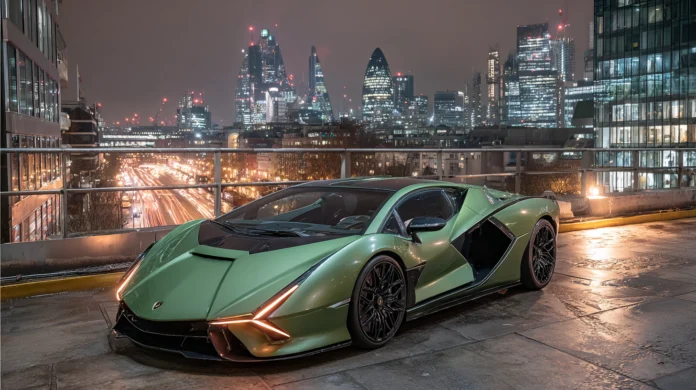
The Revuelto is the answer. Introduced in 2023 as the first production hybrid Lamborghini, the Revuelto combines a 6.5 liter V12 with three electric motors to produce 1,001 horsepower. It is a car that retains the drama and emotion of the Aventador while adding the sophistication and efficiency of modern hybrid technology. This article provides a comprehensive review of the Lamborghini Revuelto, examining its performance specifications, design philosophy, hybrid engineering, and what it represents for Lamborghini’s electrified future.

The Aventador Legacy: A Difficult Act to Follow

The Lamborghini Aventador was introduced in 2011 as the successor to the Murciélago. It featured a 6.5 liter V12 engine producing 690 horsepower in its base form, with later versions reaching 759 horsepower in the SVJ and 769 horsepower in the Ultimae. The car was characterized by its sharp, angular styling, its scissor doors, and its single clutch automated manual transmission.

The Aventador sold approximately 11,000 units over its 11 year production run, making it one of the most successful Lamborghini models ever. It established a template for the modern Lamborghini supercar: a mid engine V12, aggressive styling, and a driving experience that prioritized drama and emotion.

The Revuelto was developed to replace the Aventador, and the engineering team faced a clear brief: create a car that honors the V12 legacy while meeting the performance and efficiency requirements of a new era.

The Revuelto: A New Era for Lamborghini

The V12 Engine

The Revuelto’s heart is a 6.5 liter V12 engine, designated L545. This engine is a significant evolution of the unit that powered the Aventador, with several key changes. The engine is rotated 180 degrees compared to its predecessor, allowing it to be mounted lower in the chassis. It is lighter, with a weight of 218 kilograms compared to the Aventador’s 235 kilograms.

The engine produces 814 horsepower at 9,250 rpm, an increase of 45 horsepower over the Aventador Ultimae. The specific output is 125 horsepower per liter, and the engine revs to 9,500 rpm. The sound is unmistakably Lamborghini, with a sharp, high pitched wail that builds to a crescendo as the revs climb.

The Hybrid System

The Revuelto features three electric motors: one integrated into the eight speed dual clutch transmission, and one on each front wheel. The combined output of the electric motors is 187 horsepower, bringing total system output to 1,001 horsepower.

The front motors provide torque vectoring, allowing independent control of power delivery to each front wheel. This enhances cornering performance by pulling the car into turns and providing maximum traction on exit. The rear motor, integrated into the transmission, provides additional power during acceleration and fills the torque gap during gear changes.

The electric motors are powered by a 3.8 kWh lithium ion battery pack, mounted in the central tunnel. The battery is designed for power delivery rather than range, with a focus on providing the electric assistance needed for performance. The electric range is approximately 8 to 10 kilometers, sufficient for low speed urban driving.

Transmission

The Revuelto features an eight speed dual clutch transmission, a significant departure from the Aventador’s single clutch automated manual. The dual clutch unit provides faster shifts, smoother operation, and improved efficiency. The transmission is mounted transversely behind the engine, a configuration that allows for a shorter overall length and improved weight distribution.

The gearbox features a unique layout, with the clutch and gear sets separated to optimize packaging. The result is a compact unit that fits within the Revuelto’s mid engine architecture.

Powertrain and Performance

Total Output

The combined output of the V12 engine and the three electric motors is 1,001 horsepower and 593 lb ft of torque. This figure places the Revuelto among the most powerful production Lamborghinis ever built, exceeding the Aventador SVJ’s 759 horsepower and approaching the limited edition Sián’s 808 horsepower.

Acceleration and Speed

The Revuelto accelerates from 0 to 100 kilometers per hour in 2.5 seconds. The 0 to 200 kilometers per hour sprint takes approximately 7.0 seconds. The quarter mile is completed in approximately 10.0 seconds.

Top speed is rated at over 350 kilometers per hour, a figure that is more than sufficient for any legal driving scenario.

Electric Range

The 3.8 kWh battery provides an electric range of approximately 8 to 10 kilometers. The electric mode is intended for low speed, urban driving, allowing the car to operate silently and without emissions in city centers. The transition from electric to hybrid mode is seamless, with the V12 starting when additional power is required or when the battery charge is depleted.

Weight and Balance

The Revuelto weighs approximately 1,800 kilograms, a figure that reflects the complexity of the hybrid system and the structural requirements of the mid engine architecture. The weight distribution is 44 percent front, 56 percent rear, contributing to the car’s agile handling.

Chassis and Dynamics

Carbon Fiber Monocoque

The Revuelto is built around a carbon fiber monocoque that is lighter and stiffer than the Aventador’s. The monocoque is manufactured using a process that combines hand layup with automated production techniques, allowing for greater precision and consistency.

The front structure is constructed from carbon fiber, a departure from the aluminum used in the Aventador. This contributes to weight reduction and improves the car’s front end rigidity.

Suspension System

The Revuelto features a double wishbone suspension at all four corners, with semi active dampers that can adjust their characteristics based on driving mode and road conditions. The system provides a range of behavior, from compliant for daily driving to firm for track use.

The front motors add weight to the front axle, but the chassis tuning compensates effectively. The car’s body control is exceptional, with minimal roll through corners and stable behavior under hard braking.

Steering

The electric power steering is calibrated for the Revuelto’s performance focus. The system provides appropriate weighting and feedback, with a level of communication that is good for an electric system. The steering ratio is quick, requiring minimal input to change direction.

The optional rear wheel steering, introduced on the Aventador S, is carried over to the Revuelto. The system turns the rear wheels in the opposite direction to the front wheels at low speeds, reducing the turning circle, and in the same direction at high speeds, enhancing stability.

Brakes

The braking system uses carbon ceramic discs with 16.1 inch front discs and ten piston calipers, and 15.4 inch rear discs with four piston calipers. The system provides exceptional stopping power, with consistent pedal feel and resistance to fade during track use.

The regenerative braking system is integrated with the friction brakes through a brake by wire system that maintains consistent pedal feel regardless of the regeneration level.

Wheels and Tires

The Revuelto rides on 20 inch front wheels and 21 inch rear wheels, wrapped in Bridgestone Potenza Sport tires. The tire sizes are 265/35 ZR20 front and 345/30 ZR21 rear.

Design

Exterior Styling

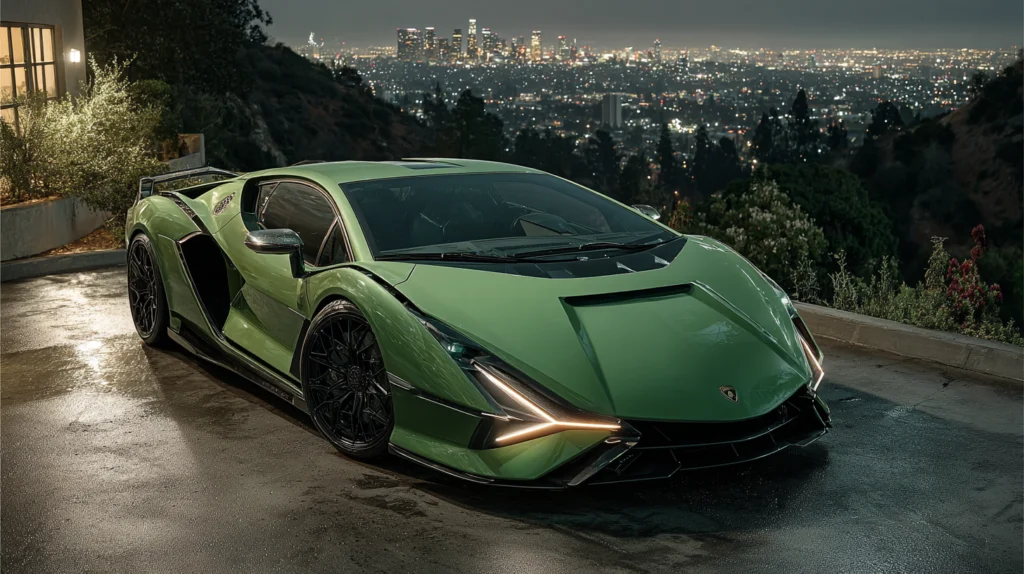
The Revuelto’s exterior design builds on the sharp, angular language established by the Aventador, with several distinctive elements that set it apart. The front end features a prominent grille and Y shaped LED headlights that have become a Lamborghini signature. The hood is sculpted, with a deep central channel that directs air over the roof.

The side profile shows the mid engine proportions, with a long wheelbase, short overhangs, and a cabin positioned forward of the rear axle. The scissor doors, a Lamborghini hallmark since the Countach, are retained. The side intakes are larger than those on the Aventador, feeding air to the engine and brakes.

The rear end is characterized by a high mounted exhaust, a prominent diffuser, and a full width light bar. The exhaust outlets are hexagonal, a design element that references the Aventador’s successors.

Aerodynamics

The Revuelto’s aerodynamic development focused on generating downforce without excessive drag. The front splitter directs air under the car, while the underbody panels manage airflow to reduce drag and minimize lift. The rear diffuser accelerates airflow beneath the car, generating downforce at the rear axle.

The car’s active aerodynamic elements include a rear spoiler that deploys at high speeds to increase downforce. The system is integrated with the car’s electronic controls, adjusting automatically based on speed and driving mode.

Color and Personalization

The Revuelto is offered with a range of exterior colors, including the classic Giallo Orion yellow that has become synonymous with Lamborghini. The brand’s Ad Personam personalization program allows buyers to specify unique colors, materials, and details.

Interior and Accommodations

Cabin Design

The interior of the Revuelto reflects Lamborghini’s focus on the driver. The dashboard features a 12.3 inch digital instrument cluster that can be configured to display performance data, navigation, and vehicle information. A 8.4 inch central touchscreen handles infotainment functions, and a 9.1 inch passenger display provides access to vehicle information and entertainment.

The steering wheel is flat bottom, with integrated controls for the car’s systems. The paddle shifters are mounted on the steering column, ensuring they remain in the same position regardless of steering angle.

Seating and Space

The Revuelto is a two seat configuration, with no rear seats. The seats are heavily bolstered to hold occupants during cornering, with leather and Alcantara upholstery. The seats are power adjustable with heating and optional ventilation.

The trunk, located behind the engine, offers sufficient space for a weekend’s worth of luggage. The battery pack, mounted in the central tunnel, does not intrude on passenger or cargo space.

Materials and Craftsmanship

The interior materials reflect Lamborghini’s commitment to craftsmanship. The leather is sourced from premium tanneries, and the Alcantara is applied with care. The carbon fiber trim is finished to show its weave, and the metal accents are machined from solid aluminum.

Technology Features

The Revuelto is equipped with a comprehensive suite of technology features. The infotainment system includes navigation, Apple CarPlay, Android Auto, and a premium audio system. The digital instrument cluster can be configured to display performance data, including g forces, lap times, and power distribution.

Driver assistance features include adaptive cruise control, lane departure warning, and automatic emergency braking.

Driving Experience

On Road Character

The Revuelto is a car that commands attention. Its sharp angles, scissor doors, and V12 sound draw looks wherever it goes. In normal driving, the car is surprisingly civil. The suspension absorbs road imperfections without transmitting harshness to the cabin, and the seats are comfortable for extended periods.

When the driver selects Corsa mode, the character transforms. The V12 comes alive, with a sharp, metallic wail as the revs climb toward the 9,500 rpm redline. The acceleration is immediate and relentless, pushing occupants into their seats with force that is both thrilling and intimidating. The car feels light, responsive, and eager.

On Track Behavior

When driven on a track, the Revuelto reveals the depth of its engineering. The brakes provide consistent stopping power lap after lap, with a pedal feel that inspires confidence. The chassis remains composed through corners, with the torque vectoring system managing power delivery to maximize grip.

The rear wheel steering enhances agility, and the active aerodynamics keep the car planted at high speeds. The Revuelto is a car that rewards skilled drivers, with a level of precision and feedback that is among the best in its class.

The Sound

The V12 engine’s sound is one of the Revuelto’s defining characteristics. The engine has a distinct character, with a high pitched wail as the revs climb toward the 9,500 rpm redline. The sound is sharp, urgent, and deeply satisfying, with a quality that distinguishes it from the V8s and V6s that dominate the supercar segment.

Electric Mode

In electric mode, the Revuelto operates silently. The car can be driven in this mode for approximately 8 to 10 kilometers at speeds up to 140 kilometers per hour. The transition from electric to hybrid mode is seamless, with the V12 starting when additional power is required or when the battery charge is depleted.

Lamborghini’s Electrified Future

The Road to 2030

The Revuelto represents the first step in Lamborghini’s electrification strategy. The company has announced plans to electrify its entire lineup by 2030, with a transition that includes hybrid versions of the Urus SUV and the Huracán replacement.

The Revuelto’s hybrid system is designed to be a bridge between the pure V12 era and an electric future. It retains the emotion and drama of the V12 while adding the sophistication and efficiency of electric power.

Future Models

Following the Revuelto, Lamborghini will introduce a hybrid version of the Urus, likely in 2027 or 2028. The Huracán replacement, expected to be named the Temerario, will also feature a hybrid powertrain, with a V8 engine combined with electric motors.

A fully electric fourth model is planned for the end of the decade, representing Lamborghini’s entry into the electric vehicle market.

The V12 Legacy

The Revuelto’s V12 is the last pure V12 that Lamborghini will develop. Future V12s, if they appear, will be part of hybrid systems, with electric motors providing additional power and efficiency. The Revuelto’s engine represents the culmination of a lineage that began with the 350 GT in 1964.
Lamborghini Revuelto: The V12 Hybrid That Replaces the Aventador

How the Revuelto Stacks Up Against Rivals

Against the Ferrari SF90 Stradale

The Ferrari SF90 Stradale is a mid engine hybrid supercar with a 4.0 liter twin turbocharged V8 and three electric motors producing 986 horsepower.

The SF90’s advantage is its power and its technology. The Ferrari produces slightly less power than the Revuelto, but its hybrid system is more sophisticated, with a larger battery and greater electric range. The SF90’s handling is also exceptional, with a level of precision that is widely praised.

The Revuelto’s advantage is its V12. The engine’s sound, its character, and its connection to Lamborghini’s heritage are qualities that the Ferrari’s V8 cannot match. The Revuelto is also more dramatic, with sharper styling and a more aggressive presence.

Against the Porsche 918 Spyder

The Porsche 918 Spyder was a hybrid hypercar that set benchmarks for performance and efficiency. While it is no longer in production, it remains a reference point for the segment.

The 918 Spyder’s advantage is its engineering. The car’s 6.8 horsepower per kilogram power to weight ratio, its 0 to 60 time of 2.5 seconds, and its 21 mpg combined fuel economy were exceptional for its time.

The Revuelto’s advantage is its power and its modernity. With 1,001 horsepower, the Revuelto produces 113 more horsepower than the 918 Spyder. The Revuelto also benefits from a decade of technological advancement, with more sophisticated electronics, better aerodynamics, and improved interior quality.

Against the McLaren P1

The McLaren P1 was another hybrid hypercar from the same era as the 918 Spyder. It featured a 3.8 liter twin turbocharged V8 combined with an electric motor for a total output of 903 horsepower.

The P1’s advantage is its weight and its handling. The McLaren was the lightest of the hybrid hypercars, with a dry weight of approximately 1,400 kilograms. Its chassis tuning was exceptional, with precise steering and a level of feedback that is widely praised.

The Revuelto’s advantage is its power and its V12. With 1,001 horsepower, the Revuelto produces 98 more horsepower than the P1. The V12’s sound and character also set it apart from the McLaren’s V8.

Against the Bugatti Veyron

The Bugatti Veyron was the car that redefined the boundaries of performance in the 2000s. With its 8.0 liter quad turbocharged W16 producing 1,001 horsepower, it was the first production car to exceed 1,000 horsepower.

The Veyron’s advantage is its legacy. The car established the hypercar segment and set benchmarks that stood for years.

The Revuelto’s advantage is its modernity. The Lamborghini benefits from two decades of technological advancement, with more sophisticated electronics, better handling, and improved efficiency. The Revuelto is also lighter and more agile than the Veyron.

Value Proposition

Pricing

The Lamborghini Revuelto carries a base price of approximately $600,000, with final prices varying based on options and personalization. This pricing places it in the upper tier of the supercar segment, above the Ferrari SF90 Stradale and approaching the limited edition hypercars from Bugatti and Koenigsegg.

Depreciation

Lamborghinis traditionally hold their value well, particularly V12 models. The Revuelto, as the successor to the Aventador, is expected to depreciate less than the V8 and V10 models, though not as slowly as limited edition models like the Sian or the Veneno.

Ownership Costs

Maintaining a Lamborghini involves higher costs than mainstream cars. Service intervals are annual or every 10,000 miles, with costs varying based on the service required. The Revuelto is covered by Lamborghini’s new vehicle warranty for three years with unlimited mileage, with extended warranty options available.

The Experience Factor

For many buyers, the value proposition of a Lamborghini extends beyond financial considerations. The brand’s heritage, the V12 engine, the scissor doors, and the sense of occasion that comes with owning a Lamborghini are factors that cannot be quantified on a spreadsheet.

Specifications Summary

SpecificationValue
Engine6.5L V12
Electric Motors3 (2 front, 1 transmission)
Combined Power1,001 hp
Combined Torque593 lb ft
Transmission8 speed dual clutch
DriveAll wheel drive
0-100 km/h2.5 seconds
0-200 km/h7.0 seconds
Top Speed350+ km/h
Electric Range8 10 km
Battery3.8 kWh
Weight1,800 kg
Base Price$600,000

Conclusion

The Lamborghini Revuelto represents a significant moment in the evolution of the supercar. It is the first production hybrid Lamborghini, a car that combines a 6.5 liter V12 with three electric motors to produce 1,001 horsepower. It retains the drama and emotion that have defined the brand for decades while adding the sophistication and efficiency of modern hybrid technology.

The V12 engine, with its 9,500 rpm redline and 814 horsepower output, is a masterpiece of engineering. Its sound, its responsiveness, and its power delivery are worthy successors to the engines that have powered Lamborghini’s greatest cars. The hybrid system adds instant torque and allows for electric only operation, expanding the car’s capabilities without diluting its character.

Against its rivals, the Revuelto holds its own. It offers more power than the Ferrari SF90 Stradale, more drama than the Porsche 918 Spyder, more V12 character than the McLaren P1, and more modernity than the Bugatti Veyron. It is a car that can be driven daily, enjoyed on weekends, and appreciated for its engineering excellence.

The Revuelto also represents Lamborghini’s path forward. It is the first step in the company’s electrification strategy, a bridge between the pure V12 era and an electric future. For enthusiasts who value the sound and feel of a V12, the Revuelto offers a chance to experience the best of both worlds: the emotion of a naturally aspirated engine and the sophistication of hybrid technology.

For buyers seeking a supercar that combines Lamborghini’s heritage with the demands of a new era, the Revuelto makes a compelling case. It is a car that honors the past while embracing the future, and it stands as one of the most complete supercars in its class.
Ferrari 296 GTS: Hybrid Power Meets Open-Air Thrills

0

The Ferrari 296 series represents a significant shift for the Italian marque. It is the first Ferrari to use a V6 engine in a mid engine road car since the Dino of the 1960s and 1970s, and it introduces hybrid technology as a core element of the driving experience rather than an add on for efficiency. The 296 GTB coupe established the formula; the 296 GTS extends it to open top motoring.

Introduced in 2022, the 296 GTS combines a 3.0 liter twin turbocharged V6 with an electric motor to produce a combined 819 horsepower. It is a car that can accelerate from 0 to 100 kilometers per hour in 2.9 seconds, reach a top speed of over 330 kilometers per hour, and travel up to 25 kilometers on electric power alone. It is also a car that retains the open air experience that has defined Ferrari’s GTS models for generations.

This article provides a comprehensive review of the Ferrari 296 GTS, examining its performance specifications, hybrid engineering, design philosophy, interior accommodations, and what makes this supercar unique in 2026.

The 296 Series: A New Direction for Ferrari

The Return of the V6

Ferrari’s history with V6 engines stretches back to the Dino of the 1960s, a car that Enzo Ferrari himself viewed as a necessary step into the mid engine market. The Dino 206 GT and 246 GTS were powered by a 2.0 liter and 2.4 liter V6 respectively, and they established a template for mid engine Ferrari sports cars that would later be filled by the V8 powered 308, 328, and 348.

The 296 series revives this lineage. The 3.0 liter V6, designated F163, is a 120 degree V6 with the turbochargers mounted inside the V. This hot V configuration reduces lag, improves throttle response, and allows for a more compact engine package. The engine produces 654 horsepower on its own, with the electric motor contributing an additional 165 horsepower.

The F163 V6 Engine

The F163 engine is a significant engineering achievement. Its 120 degree angle is unusual for a V6; most V6 engines use a 60 or 90 degree configuration. The wide angle allows the turbochargers to be mounted centrally, reducing the distance the exhaust gases must travel to reach the turbines. The result is immediate throttle response, with minimal lag even at low engine speeds.

The engine’s specific output is 218 horsepower per liter, one of the highest figures for any production engine. It revs to 8,500 rpm, and its character is described by Ferrari as “a symphony of mechanical music.” The sound is distinct from the V8s that have dominated Ferrari’s mid engine lineup for decades, with a higher pitched, more urgent quality as the revs climb.

The Hybrid System

The electric motor, designated MGU-K (Motor Generator Unit Kinetic), is integrated into the transmission. It provides additional power during acceleration, fills the torque gap during gear changes, and allows the car to operate in electric only mode for limited distances. The motor is powered by a 7.45 kWh battery pack mounted low in the chassis, contributing to the car’s low center of gravity.

The hybrid system is designed to enhance performance, not simply improve efficiency. The electric motor provides instant torque, filling the low end of the rev range while the turbochargers spool. The result is a power delivery that is linear and immediate, with none of the lag that has traditionally characterized turbocharged engines.

Powertrain and Performance

Total Output

The combined output of the V6 engine and the electric motor is 819 horsepower and 546 lb ft of torque. This figure places the 296 GTS among the most powerful production Ferraris ever built, exceeding the F8 Tributo’s 710 horsepower and approaching the SF90 Stradale’s 986 horsepower.

Acceleration and Speed

The 296 GTS accelerates from 0 to 100 kilometers per hour in 2.9 seconds. The 0 to 200 kilometers per hour sprint takes 7.6 seconds. The quarter mile is completed in approximately 10.3 seconds.

Top speed is rated at over 330 kilometers per hour, a figure that is more than sufficient for any legal driving scenario.

Electric Range

The 7.45 kWh battery provides an electric range of approximately 25 kilometers under WLTP testing. In real world conditions, this figure is reduced to approximately 15 to 20 kilometers. The electric mode is intended for low speed, urban driving, allowing the car to operate silently and without emissions in city centers.

Weight and Balance

The 296 GTS weighs approximately 1,600 kilograms dry, with a curb weight of approximately 1,700 kilograms. This represents a slight increase over the coupe, reflecting the additional structure required for the retractable hardtop. The weight distribution is 40.5 percent front, 59.5 percent rear, contributing to the car’s agile handling.

Transmission

Power is transmitted to the rear wheels through an eight speed dual clutch transmission. The gearbox is mounted transversely behind the engine, a configuration that allows for a shorter overall length and improved weight distribution. The transmission provides rapid shifts, with shift times measured in milliseconds in the most aggressive driving modes.

The GTS: Open Air Experience

Retractable Hardtop

The 296 GTS features a retractable hardtop that can be opened or closed in 14 seconds at speeds up to 45 kilometers per hour. The top folds into a compact space behind the seats, preserving the car’s proportions whether open or closed.

The roof mechanism is designed to maintain the car’s structural integrity. The B pillars and rear bulkhead are reinforced to compensate for the loss of the fixed roof, ensuring that the GTS’s torsional rigidity is within 10 percent of the coupe’s.

Wind Management

Ferrari engineers have paid careful attention to wind management in the GTS. An electrically operated wind deflector, mounted behind the seats, can be deployed to reduce turbulence in the cabin when the roof is open. With the windows up and the deflector raised, occupants can maintain conversation at highway speeds.

The side windows are designed to work with the roof mechanism, sealing effectively to reduce wind noise when the top is up and providing protection from buffeting when the top is down.

Open Air Experience

The 296 GTS offers a sensory experience that the coupe cannot match. The sound of the V6 is more immediate with the roof open, the connection to the environment is more direct, and the sense of speed is heightened. The car is designed to be enjoyed with the top down, and the engineering supports this mission.

Chassis and Dynamics

Suspension System

The 296 GTS features an adaptive suspension system with magnetorheological dampers that can adjust their characteristics in milliseconds based on road conditions and driving mode. The system is tuned for the GTS’s weight distribution and performance capabilities.

The suspension provides a range of behavior, from compliant for daily driving to firm for track use. The car’s body control is exceptional, with minimal roll through corners and stable behavior under hard braking.

Steering

The electric power steering is calibrated for the 296’s performance focus. The system provides appropriate weighting and feedback, with a level of communication that is good for an electric system. The steering ratio is quick, requiring minimal input to change direction.

Brakes

The braking system uses carbon ceramic discs with 15.7 inch front discs and six piston calipers, and 14.4 inch rear discs with four piston calipers. The system provides exceptional stopping power, with consistent pedal feel and resistance to fade during track use.

The regenerative braking system is integrated with the friction brakes through a brake by wire system that maintains consistent pedal feel regardless of the regeneration level.

Wheels and Tires

The 296 GTS rides on 20 inch front wheels and 21 inch rear wheels, wrapped in Michelin Pilot Sport Cup 2 tires. The tire sizes are 245/35 ZR20 front and 305/35 ZR21 rear.

Assetto Fiorano Package

The optional Assetto Fiorano package adds a range of track focused enhancements, including stiffer springs, Multimatic dampers, carbon fiber aerodynamic elements, and a track oriented tire compound. The package reduces weight by approximately 15 kilograms and increases downforce by 10 percent.

Design

Exterior Styling

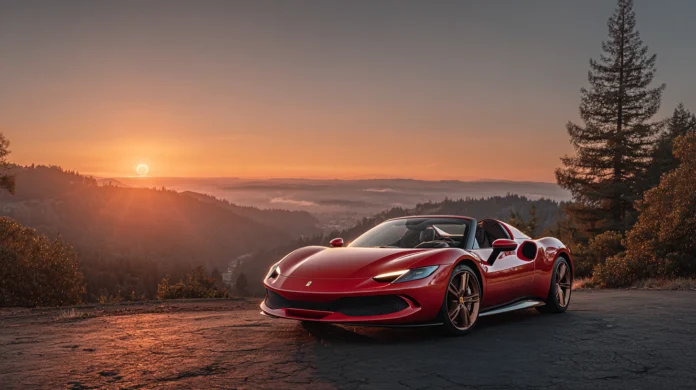
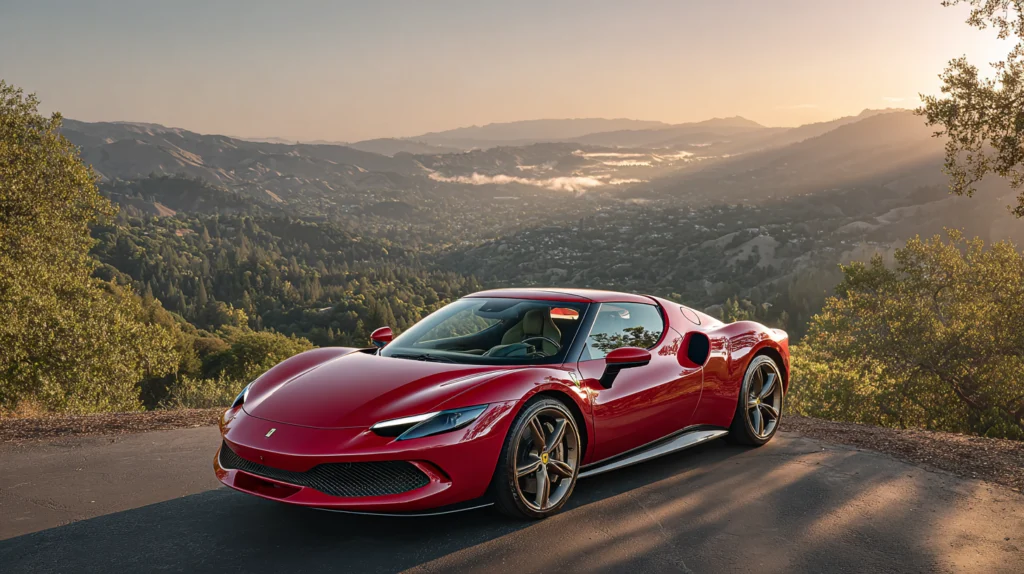
The 296 GTS shares its design language with the GTB coupe, with a few distinctions that reflect the open top configuration. The front end features a prominent grille and slim LED headlights. The side profile shows the mid engine proportions, with a long wheelbase, short overhangs, and a cabin positioned forward of the rear axle.

The rear end is characterized by a full width light bar and a prominent diffuser that houses the quad exhaust outlets. The retractable hardtop folds into a rear deck that is sculpted to manage airflow.

Aerodynamics

The 296 GTS’s aerodynamic development focused on managing airflow with the roof both up and down. The front splitter directs air under the car, while the underbody panels manage airflow to reduce drag and minimize lift. The rear diffuser accelerates airflow beneath the car, generating downforce at the rear axle.

The car’s active aerodynamic elements include a rear spoiler that deploys at high speeds to increase downforce. The system is integrated with the car’s electronic controls, adjusting automatically based on speed and driving mode.

Color and Personalization

The 296 GTS is offered with a range of exterior colors, including the classic Rosso Corsa red that has become synonymous with Ferrari. The brand’s extensive personalization program, known as Tailor Made, allows buyers to specify unique colors, materials, and details.

Interior and Accommodations

Cabin Design

The interior of the 296 GTS reflects Ferrari’s focus on the driver. The dashboard features a 16 inch curved digital instrument cluster that can be configured to display performance data, navigation, and vehicle information. The passenger faces a dedicated 8.8 inch touchscreen that provides access to infotainment and vehicle functions.

The steering wheel is flat bottom, with integrated controls for the car’s systems. The paddle shifters are mounted on the steering column, ensuring they remain in the same position regardless of steering angle.

Seating and Space

The 296 GTS is a two seat configuration, with no rear seats. The seats are heavily bolstered to hold occupants during cornering, with leather and Alcantara upholstery. The seats are power adjustable with heating and optional cooling.

The trunk, located behind the engine, offers sufficient space for a weekend’s worth of luggage. The retractable hardtop folds into a compartment behind the seats, which reduces storage space when the top is stowed.

Materials and Craftsmanship

The interior materials reflect Ferrari’s commitment to craftsmanship. The leather is sourced from premium tanneries, and the Alcantara is applied with care. The carbon fiber trim is finished to show its weave, and the metal accents are machined from solid aluminum.

Technology Features

The 296 GTS is equipped with a comprehensive suite of technology features. The infotainment system includes navigation, Apple CarPlay, Android Auto, and a premium audio system. The digital instrument cluster can be configured to display performance data, including g forces, lap times, and power distribution.

Driver assistance features include adaptive cruise control, lane departure warning, and automatic emergency braking.

Driving Experience

On Road Character

The 296 GTS is a car that rewards the driver in any setting. In urban environments, the electric mode allows the car to operate silently and efficiently, with enough range for short trips. The suspension absorbs road imperfections without transmitting harshness to the cabin, and the seats are comfortable for extended periods.

When the driver selects a more aggressive mode, the character transforms. The V6 comes alive, with a sharp, metallic wail as the revs climb. The acceleration is immediate and relentless, pushing occupants into their seats with force that is both thrilling and accessible. The car feels light, responsive, and eager.

On Track Behavior

When driven on a track, the 296 GTS reveals the depth of its engineering. The brakes provide consistent stopping power lap after lap, with a pedal feel that inspires confidence. The chassis remains composed through corners, with the torque vectoring system managing power delivery to maximize grip.

The car’s mid engine layout provides exceptional agility, and the active aerodynamics keep the car planted at high speeds. The 296 GTS is a car that rewards skilled drivers, with a level of precision and feedback that is among the best in its class.

The Sound

The V6 engine’s sound is one of the 296’s defining characteristics. The engine has a distinct character, with a high pitched wail as the revs climb toward the 8,500 rpm redline. The sound is sharp, urgent, and deeply satisfying, with a quality that distinguishes it from Ferrari’s V8s.

With the roof open, the sound is more immediate, and the connection between throttle input and engine response is direct and engaging.

Electric Mode

In electric mode, the 296 GTS operates silently. The car can be driven in this mode for up to 25 kilometers at speeds up to 135 kilometers per hour. The transition from electric to hybrid mode is seamless, with the engine starting when additional power is required or when the battery charge is depleted.

Ferrari 296 GTS: Hybrid Power Meets Open-Air Thrills

How the 296 GTS Stacks Up Against Rivals

Against the McLaren Artura

The McLaren Artura is the 296’s most direct competitor. It is a mid engine hybrid supercar with a 3.0 liter V6 producing 671 horsepower, a seven speed dual clutch transmission, and a 7.4 kWh battery.

The Artura’s advantage is its weight and its handling. The McLaren is lighter than the Ferrari, with a dry weight of approximately 1,500 kilograms. The car’s chassis tuning is exceptional, with precise steering and a level of feedback that is widely praised.

The 296’s advantage is its power and its character. The Ferrari produces 148 more horsepower than the Artura, and its V6 engine has a more distinctive sound. The 296’s interior is also more luxurious, with higher quality materials and more advanced technology.

In value terms, the two cars are closely priced, with the Ferrari carrying a slight premium.

Against the Porsche 911 Turbo S Cabriolet

The Porsche 911 Turbo S Cabriolet is a rear engine, all wheel drive convertible with a 3.7 liter twin turbocharged flat six producing 640 horsepower.

The 911 Turbo S’s advantage is its daily usability and its all weather capability. The Porsche’s rear engine layout and all wheel drive system provide exceptional traction in all conditions, and the car’s interior is spacious and well appointed.

The 296’s advantage is its character and its driving experience. The Ferrari is more engaging, with a sound and a feel that the Porsche cannot match. The mid engine layout provides a different kind of handling, and the hybrid system adds a layer of sophistication.

Against the Lamborghini Huracán Tecnica

The Lamborghini Huracán Tecnica is a mid engine V10 supercar with 640 horsepower and a seven speed dual clutch transmission.

The Huracán’s advantage is its drama. The V10 engine produces a sound that is among the best in the industry, and the car’s aggressive styling and sharp angles create a visual presence that few competitors can match.

The 296’s advantage is its technology and its efficiency. The Ferrari’s hybrid system provides instant torque and allows for electric only operation, while its fuel consumption is significantly lower than the Lamborghini’s. The 296 is also more refined, with a more comfortable ride and a quieter cabin.

Against the Aston Martin Vantage Roadster

The Aston Martin Vantage Roadster is a front engine, rear drive convertible with a 4.0 liter twin turbocharged V8 producing 503 horsepower.

The Vantage’s advantage is its style and its character. The Aston Martin’s design is elegant and understated, and its V8 engine produces a muscular, traditional sound.

The 296’s advantage is its performance. The Ferrari is significantly quicker than the Vantage, with more power, better handling, and more advanced technology. The 296 is also more exclusive, with a price that reflects its higher position in the market.

Value Proposition

Pricing

The Ferrari 296 GTS carries a base price of approximately $350,000, with final prices varying based on options and personalization. The Assetto Fiorano package adds approximately $30,000 to the price.

This pricing places the 296 GTS in the upper tier of the supercar segment, above the McLaren Artura and Porsche 911 Turbo S Cabriolet, but below the Ferrari SF90 Stradale and Lamborghini Revuelto.

Depreciation

Ferraris traditionally hold their value well, particularly open top models. The 296 GTS, as a mid engine convertible, is expected to depreciate less than the coupe, though not as slowly as limited edition models like the 812 Competizione.

Ownership Costs

Maintaining a Ferrari involves higher costs than mainstream cars. Service intervals are annual or every 10,000 miles, with costs varying based on the service required. The 296 GTS is covered by Ferrari’s new vehicle warranty for three years with unlimited mileage, with extended warranty options available.

The Experience Factor

For many buyers, the value proposition of a Ferrari extends beyond financial considerations. The brand’s heritage, the driving experience, and the sense of occasion that comes with owning a Ferrari are factors that cannot be quantified on a spreadsheet.

Specifications Summary

SpecificationValue
Engine3.0L twin turbocharged V6
Electric MotorMGU K
Combined Power819 hp
Combined Torque546 lb ft
Transmission8 speed dual clutch
DriveRear wheel drive
0-100 km/h2.9 seconds
0-200 km/h7.6 seconds
Top Speed330+ km/h
Electric Range25 km (WLTP)
Battery7.45 kWh
Weight1,600 kg dry
Base Price$350,000

Conclusion

The Ferrari 296 GTS represents a significant achievement in the evolution of the supercar. It combines a 819 horsepower hybrid powertrain with the open air experience of a convertible, delivering performance that rivals the best in the world while offering the efficiency and sophistication of modern hybrid technology.

The V6 engine, with its 120 degree angle and hot V configuration, is a masterpiece of engineering. Its sound, its responsiveness, and its power delivery are worthy successors to the V8s that have dominated Ferrari’s mid engine lineup. The hybrid system adds instant torque and allows for electric only operation, expanding the car’s capabilities without diluting its character.

Against its rivals, the 296 GTS holds its own. It offers more power than the McLaren Artura, more character than the Porsche 911 Turbo S Cabriolet, more efficiency than the Lamborghini Huracán Tecnica, and more performance than the Aston Martin Vantage Roadster. It is a car that can be driven daily, enjoyed on weekends, and appreciated for its engineering excellence.

For buyers seeking a supercar that combines hybrid technology with open air motoring, the Ferrari 296 GTS makes a compelling case. It is a car that honors Ferrari’s tradition while embracing the future, and it stands as one of the most complete convertibles in its class.

Tesla Roadster Review: Vaporware or Game-Changer?

0

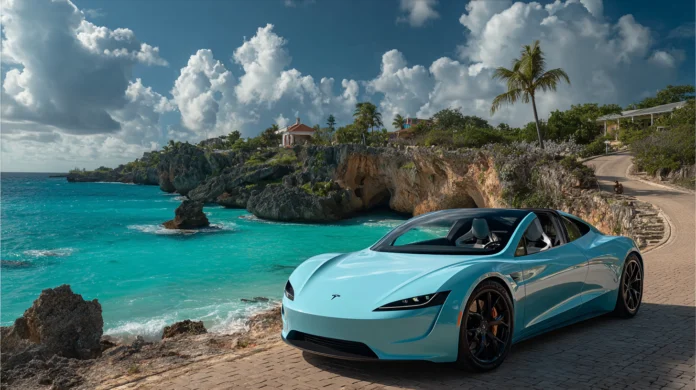
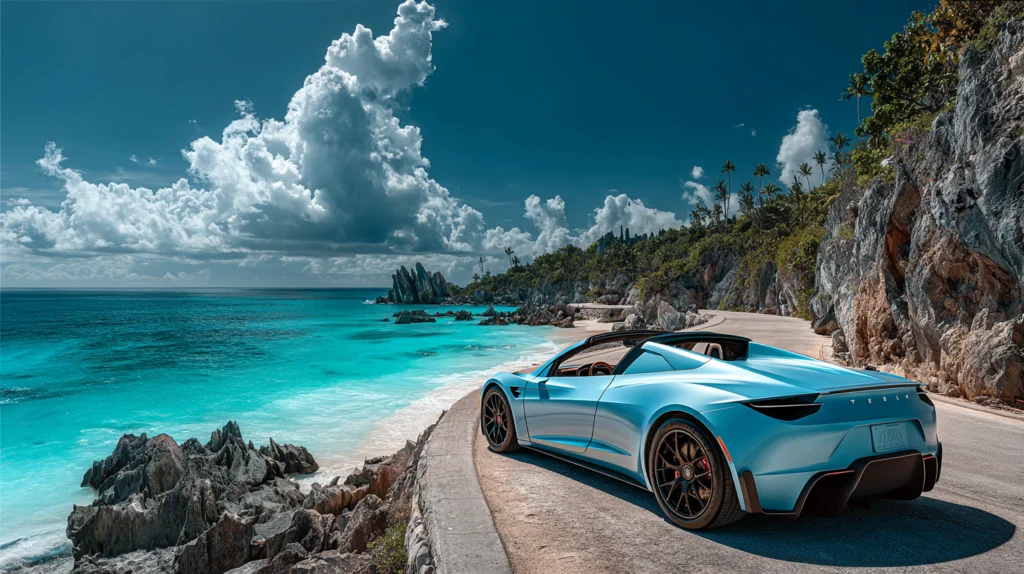
For nearly a decade, the Tesla Roadster has occupied a peculiar space in the automotive world. It exists in the collective imagination of enthusiasts, in the official specifications on Tesla’s website, and in the promise of a future that never seems to arrive. First unveiled in 2017 with a promised 2020 launch date, the second generation Roadster has become something of a legend through its absence.

Now, after multiple delays and years of silence, there is finally a concrete update. In March 2026, Elon Musk announced that the Roadster is scheduled for an April 2026 unveiling, with production to follow in 2027 or 2028. This has reignited the debate that has followed the car since its debut: is the Roadster a genuine game-changer, or is it destined to remain vaporware?

This article examines everything known about the 2026 Tesla Roadster, its claimed specifications, the context of its delayed development, and how it stacks up against rivals in performance, design, and value.

The Roadster Story: A Decade of Promise and Delay

The Original Roadster

The Tesla Roadster story began in 2008, when the company delivered its first production vehicle based on the Lotus Elise platform. That car, with approximately 220 miles of range and a near 4.0 second 0 to 60 time, proved that electric vehicles could be desirable performance machines. Approximately 2,450 units were sold before production ended in 2012.

The Second Generation

The second generation Roadster was unveiled in November 2017, alongside the Tesla Semi. It was presented as a prototype with claimed specifications that seemed almost unbelievable: 0 to 60 miles per hour in 1.9 seconds, a top speed exceeding 250 miles per hour, and a range of 620 miles. Production was promised for 2020.

That date came and went. Then 2021 passed, then 2022, then 2023. Each year brought occasional mentions from Musk about progress, but no production vehicle materialized. The reasons varied: prioritizing Model 3 and Model Y production, developing the Cybertruck, supply chain challenges, and the need to perfect the technology required to meet the ambitious claims.

The 2026 Announcement

In March 2026, Musk announced via social media that the Roadster would be unveiled in April 2026, with production to follow 12 to 18 months later. The announcement came shortly after Tesla reported that Model Y had achieved three consecutive years as the global sales leader, a context that suggests the company is using its mass market success to fund a halo car.

Official Specifications: What Tesla Claims

According to the Tesla website and official statements, the 2026 Roadster will deliver the following specifications:

Powertrain

The car features a three motor all wheel drive system, with one motor at the front and two at the rear. The claimed wheel torque figure is 10,000 Nm, though this is likely torque at the wheels rather than motor torque, a common distinction in electric vehicle marketing. A more realistic projection places total system horsepower in the range of 800 to 1,000.

Acceleration and Speed

The claimed 0 to 60 miles per hour time is 1.9 seconds for the base model, with a 0 to 100 km/h time of 2.1 seconds. A SpaceX package, incorporating approximately 10 cold gas thrusters, is claimed to reduce the 0 to 60 time to as low as 1.1 seconds. The quarter mile is claimed at 8.8 seconds.

Top speed is claimed to exceed 250 miles per hour, with some sources citing over 400 km/h.

Battery and Range

The Roadster will use a 200 kWh battery pack, one of the largest ever fitted to a production electric vehicle. Claimed range is 620 miles on the WLTP cycle.

Charging

The car will support high power fast charging, with claims of 600 km of range added in 15 minutes.

Design

The Roadster is a four seat, two door coupe with a removable glass roof that can be stored in the trunk for open top driving. The exterior design is characterized by a low, wide stance, a closed front grille with a light bar, and aerodynamic features including a large rear diffuser and a deployable rear wing.

The SpaceX Package: Rocket Propulsion for a Road Car

One of the most unusual features claimed for the Roadster is the optional SpaceX package. According to Musk, this option adds approximately 10 cold gas thrusters mounted around the vehicle, using high pressure nitrogen to provide additional acceleration, braking, and cornering capability.

The claimed effects include reducing the 0 to 60 time to 1.1 seconds, improving lateral grip, and potentially allowing the car to achieve “short hops” or a brief hover. The technology is reportedly derived from SpaceX’s work on reaction control systems for spacecraft.

It is worth noting that no detailed technical explanation of this system has been provided, and its inclusion in a production vehicle remains speculative.

The Vaporware Argument: Reasons for Skepticism

A Decade of Delays

The Roadster was first shown in 2017 with a promised 2020 launch. Nine years later, no production vehicle exists. Each year has brought new promises, new timelines, and new reasons for delay. This pattern of missed deadlines is the primary evidence for the vaporware argument.

Tesla’s Track Record

While Tesla has successfully brought several vehicles to market, it has also repeatedly delayed others. The Cybertruck, unveiled in 2019, did not begin deliveries until late 2023. The Semi, also unveiled in 2017, began limited production in 2022. The Roadster’s delay is consistent with Tesla’s pattern, but the length of the delay is exceptional.

Skeptical Claims

The claimed specifications stretch credibility. A 200 kWh battery producing 620 miles of range while delivering 1.9 second 0 to 60 times and a 250 mph top speed would represent a significant breakthrough in battery energy density and thermal management. The SpaceX package, with its cold gas thrusters, is unlike any technology currently offered in a production vehicle.

The Context of Tesla’s Challenges

In 2025, Tesla faced significant headwinds. Global sales declined, while competitors gained ground. Profit fell significantly. The company announced plans to discontinue Model S and Model X due to low sales.

In this context, the Roadster may serve a strategic purpose as a halo car to restore brand prestige, but it does not address the fundamental challenges of aging product lines and increased competition in the mass market segments where Tesla generates its revenue.

The Game-Changer Argument: Reasons for Optimism

The Technical Precedent

Tesla has a history of delivering vehicles that meet or exceed initial claims. The Model S Plaid, with its 1,020 horsepower and sub 2.0 second 0 to 60 time, demonstrated that Tesla could produce a production vehicle with hypercar level acceleration. The 4680 battery cell technology, while slower to scale than anticipated, represents genuine advancement in battery manufacturing.

Recent Progress Indicators

In early 2026, Tesla filed a patent for new seat designs specifically for the Roadster, indicating ongoing engineering work. The company also posted job listings for Roadster program positions in recent months. These are concrete signs of activity, not just promises.

The March 2026 Announcement

The April 2026 unveiling date was announced with specificity, not the vague “next year” language that has characterized previous Roadster updates. The announcement was made with a clear timeline for production: 12 to 18 months after unveiling.

The Model Y Context

The Roadster announcement came shortly after Tesla announced that Model Y had achieved three consecutive years as the global sales leader. This suggests that Tesla is using its mass market success to fund halo projects, a sustainable business model that has worked for other automakers.

How the Roadster Stacks Up Against Rivals

Against the Rimac Nevera

The Rimac Nevera is the current benchmark for electric hypercars. With 1,914 horsepower, a 0 to 60 time of 1.85 seconds, and a top speed of 258 mph, it represents the state of the art. The Nevera’s 120 kWh battery delivers approximately 300 miles of range.

The Roadster’s claimed advantage is its range and its price. At $200,000, the Roadster is priced at less than one third of the Nevera’s approximately $2.2 million starting price. The claimed 620 mile range would also significantly exceed the Nevera’s.

The Nevera’s advantage is its proven capability. It has been tested independently, delivered to customers, and validated on tracks worldwide. The Roadster’s claims remain unproven.

Against the Ferrari SF90 Stradale

The Ferrari SF90 Stradale is a plug in hybrid with 986 horsepower and a 0 to 60 time of 2.5 seconds. It represents the pinnacle of Italian supercar engineering, with a V8 engine that produces a sound and sensation that no electric car can match.

The Roadster’s advantage is its acceleration and its efficiency. The claimed 1.9 second 0 to 60 time would significantly outperform the SF90. The Roadster also offers the practicality of four seats and a trunk, while the SF90’s rear seats are vestigial.

The SF90’s advantage is its character. The V8 engine, the Ferrari badge, and the visceral experience of driving an Italian supercar are qualities that electric vehicles have not yet replicated.

Against the Porsche 911 Turbo S

The Porsche 911 Turbo S is a 640 horsepower, 2.6 second 0 to 60 sports car with a legacy of engineering excellence. It is widely regarded as one of the most usable supercars, capable of daily driving and long distance touring.

The Roadster’s advantage is its claimed performance. The 1.9 second 0 to 60 time would significantly outpace the 911 Turbo S, and the 620 mile range would exceed any Porsche EV.

The 911 Turbo S’s advantage is its polish. Porsche’s chassis tuning, interior quality, and reliability are the results of decades of refinement. The 911 is a proven product with a devoted following.

Against the Lucid Air Sapphire

The Lucid Air Sapphire is a four door electric sedan with 1,234 horsepower, a 1.89 second 0 to 60 time, and 427 miles of range. It is currently one of the most capable electric vehicles on the market.

The Roadster’s advantage is its claimed range and its body style. The 620 mile range would exceed the Sapphire’s 427, and the two door coupe configuration offers a different driving experience.

The Sapphire’s advantage is its proven capability. Independent testing has validated its performance claims, and customer deliveries are underway. The Sapphire also offers the practicality of four doors and a spacious trunk.

Against the Chinese Competition

Chinese manufacturers have entered the electric supercar segment with impressive offerings. The BYD Yangwang U9 produces 1,300 horsepower, accelerates to 60 mph in 2.36 seconds, and has a top speed of 244 mph. The Xiaomi SU7 Ultra produces 1,527 horsepower and accelerates to 60 mph in 1.98 seconds.

The Roadster’s advantage is its claimed range. The U9 delivers approximately 280 miles of range, while the SU7 Ultra delivers approximately 320 miles. The Roadster’s 620 mile claim would be a significant advantage.

The Chinese competitors’ advantage is their availability. Both are in production or near production, while the Roadster remains a promise.

Tesla Roadster Review: Vaporware or Game-Changer?

The Strategic Purpose: Why Tesla Needs the Roadster

Replacing Model S and Model X

Tesla has announced plans to discontinue Model S and Model X production. These vehicles, once the flagships of the brand, accounted for a small fraction of Tesla’s sales in 2025 and utilized only a fraction of their production capacity.

The Roadster is positioned as a replacement for these models in terms of brand positioning. It will serve as the halo vehicle that attracts attention and demonstrates Tesla’s technological capabilities.

Countering Competition

In markets worldwide, Tesla faces increasing competition from manufacturers who have matched or exceeded the brand in interior quality, technology features, and driving dynamics. The Roadster serves as a statement of Tesla’s continued engineering leadership.

Technology Demonstration

The Roadster is designed to showcase technologies that may eventually filter down to mass market models. The 200 kWh battery, the thermal management system, and the high speed motor technology could inform future iterations of mass market models.

The Delivery Timeline: What to Expect

Unveiling

The Roadster is scheduled for unveiling in April 2026. This event is expected to reveal the production version of the car, with finalized design and specifications.

Production Start

According to Musk, production will begin 12 to 18 months after the unveiling, placing first deliveries in late 2027 or early 2028. This timeline suggests that customers who reserve now can expect delivery in approximately two years.

Pricing

The base Roadster is expected to start at approximately $200,000, with a Founders Series limited edition priced at $250,000. Reservations require a deposit.

Is the Roadster Vaporware or a Game-Changer?

The answer may be neither, or it may be both.

The Roadster is not vaporware in the sense of being a complete fabrication. There is evidence of ongoing engineering work, patent filings, and specific announcements with concrete timelines. The technical claims, while ambitious, are not implausible given Tesla’s existing capabilities.

But the Roadster is also not likely to be the game-changer that Tesla claims. A $200,000, low volume supercar cannot reverse the company’s fortunes or address the fundamental challenges it faces in the mass market segments where it generates the majority of its revenue.

The Roadster is, instead, a halo car. It is designed to capture attention, demonstrate technical capability, and restore brand prestige. Its value to Tesla is not in the number of units sold but in the message it sends about the company’s continued engineering ambition.

For enthusiasts, the Roadster represents a promise: that the electric vehicle can deliver not just efficiency but also excitement, not just practicality but also passion. Whether it delivers on that promise remains to be seen. But after nine years of waiting, there is finally reason to believe that the answer may come within the next few years.

Specifications Summary

SpecificationClaimed Value
Powertrain3 motor all wheel drive
Horsepower800 to 1,000 (estimated)
Wheel Torque10,000 Nm
0-60 mph1.9 seconds (base), 1.1 seconds (SpaceX)
Top Speed250+ mph
Battery200 kWh
Range620 miles
Seating4 seats
RoofRemovable glass hardtop
Base Price$200,000
Expected Delivery2027 to 2028

Conclusion

The 2026 Tesla Roadster sits at the intersection of promise and skepticism. Its claimed specifications would place it among the most capable production vehicles ever built: 1.9 second 0 to 60 acceleration, 250 mph top speed, and 620 miles of range. The optional SpaceX package, with its cold gas thrusters, would be unlike anything offered in a production car.

Yet the Roadster is also defined by its absence. Announced in 2017, promised for 2020, it has become a symbol of Tesla’s tendency to overpromise and delay. The 2026 announcement provides a specific timeline, and there is evidence of ongoing development, but the production vehicle remains unproven.

For buyers considering the Roadster, the calculus is straightforward. It is a $200,000 car that will not be delivered for at least two years, with specifications that have not been independently validated. It is a car for early adopters who trust Tesla’s claims and who value the experience of being among the first to own a potentially revolutionary vehicle.

For the broader automotive industry, the Roadster serves a different purpose. It is a statement of intent, a demonstration that Tesla remains committed to pushing boundaries. It may not save the company from the challenges of aging product lines and increased competition, but it may remind the world of what made Tesla special in the first place.

In the end, the Roadster will be judged not by its specifications or its promises but by what it delivers. If it achieves its claimed performance, it will be a game-changer. If it never arrives, it will be remembered as vaporware. The answer is not yet written.

Dodge Charger Daytona SRT Review: The Muscle EV Future

0

For decades, the Dodge brand has been defined by a simple formula: big engines, bold styling, and unapologetic performance. The Hemi V8, the Scat Pack, the Hellcat these are names that resonate with enthusiasts who value power above all else. The Dodge Charger and Challenger have been the last bastions of the traditional American muscle car, with V8 engines producing 700 or more horsepower in their most extreme forms.

But the automotive landscape is changing. Emissions regulations, fuel economy standards, and consumer preferences are pushing manufacturers toward electrification. For Dodge, the question was not whether to electrify but how to do so without losing the character that defines the brand.

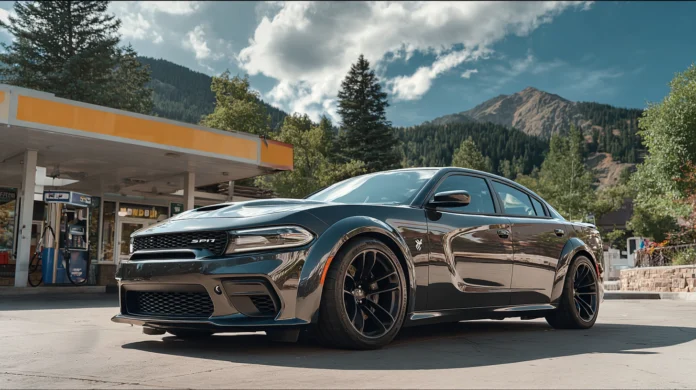
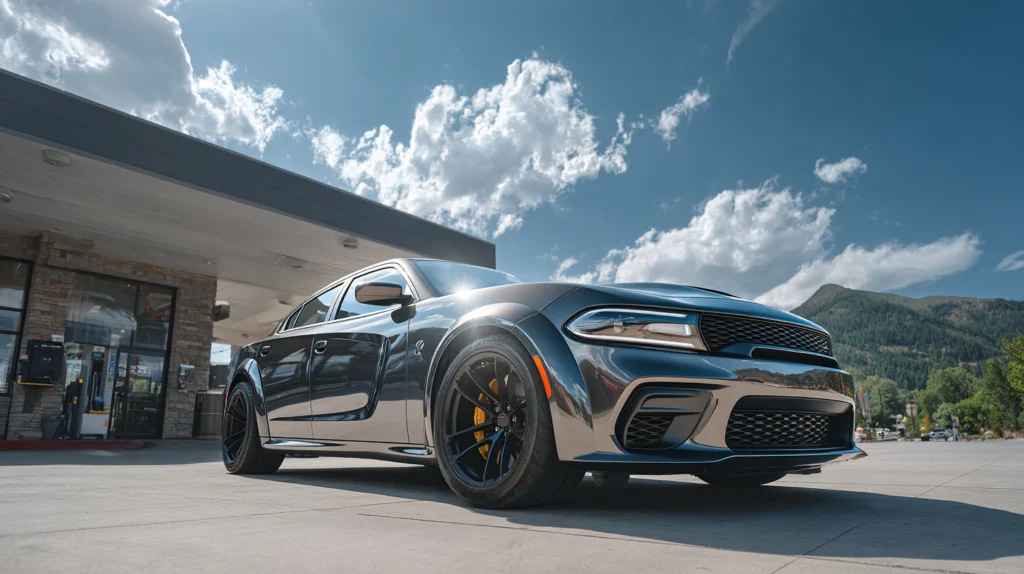
The Charger Daytona SRT is the answer. Introduced as a concept in 2022 and entering production for the 2024 model year, the Daytona is the first electric muscle car from an American manufacturer. It is a car designed to prove that electric powertrains can deliver the visceral experience that muscle car enthusiasts demand. This article provides a comprehensive review of the Dodge Charger Daytona SRT, examining its performance specifications, design philosophy, interior accommodations, and how it stacks up against rivals in performance, design, and value.

The Muscle Car Formula: Reimagined for Electric

The traditional muscle car formula is simple: a front engine, rear drive coupe or sedan with a large displacement V8, aggressive styling, and straight line speed. The Charger Daytona SRT retains the spirit of this formula while updating it for the electric age.

The car is built on a dedicated electric platform, with a 400 volt electrical architecture. It features a front motor producing 335 horsepower and a rear motor producing 335 horsepower, for a total system output of 670 horsepower in the standard configuration. A high performance version, called the Daytona SRT Banshee, produces up to 807 horsepower.

The car retains the Charger’s four door sedan body style, with aggressive styling that echoes the current generation Charger while incorporating design elements that signal its electric powertrain. The result is a car that looks like a muscle car, sounds like a muscle car, and performs like a muscle car, but without the V8 engine.

Powertrain and Performance

Dual Motor Configuration

The Charger Daytona SRT uses two electric motors, one at the front axle and one at the rear, providing all wheel drive. The system is designed to mimic the behavior of a traditional rear wheel drive muscle car, with a rear bias in most driving conditions.

In the standard Daytona SRT, the combined output is 670 horsepower and 627 lb ft of torque. The Banshee version, which features upgraded motors and a more powerful inverter, produces 807 horsepower and 702 lb ft of torque.

Transmission and Drivetrain

Unlike most electric vehicles, which have a single speed transmission, the Charger Daytona SRT features a multi speed transmission. The unit is a two speed gearbox that allows the car to deliver strong acceleration from a standstill while maintaining efficiency at highway speeds.

The transmission is controlled through paddle shifters, allowing the driver to select gears manually. The system is designed to provide the engagement of a traditional performance car, with shift points that can be adjusted through the car’s drive modes.

Acceleration and Speed

The standard Daytona SRT accelerates from 0 to 60 miles per hour in 3.3 seconds. The Banshee version achieves the same sprint in 2.7 seconds. Both figures are competitive with the most powerful internal combustion muscle cars, including the Hellcat and Demon.

The quarter mile is completed in approximately 11.5 seconds at 120 miles per hour for the standard version and 10.5 seconds at 130 miles per hour for the Banshee. Top speed is 137 miles per hour for the standard version and 150 miles per hour for the Banshee.

Battery and Range

The Charger Daytona SRT is powered by a 100.5 kWh battery pack, mounted low in the floor to lower the center of gravity. The standard version has an EPA estimated range of 260 miles, while the Banshee version has a range of approximately 230 miles due to its higher power output.

The battery can be charged at up to 350 kW, allowing a 10 to 80 percent charge in approximately 20 minutes. The car also features vehicle to load capability, allowing it to power external devices.

Weight and Balance

The Charger Daytona SRT weighs approximately 5,800 pounds, a figure that reflects the size of the battery pack and the structural reinforcements required for its performance. Despite this weight, the car’s low center of gravity and sophisticated suspension tuning allow it to handle with surprising agility.

The weight distribution is approximately 48 percent front, 52 percent rear, contributing to the car’s balanced handling.

The Fratzonic Chambered Exhaust

The Sound Question

One of the defining characteristics of a muscle car is its sound. The rumble of a V8 at idle, the roar at wide open throttle these are sensory experiences that enthusiasts value. Electric vehicles, by contrast, are quiet.

Dodge’s engineers developed a solution: the Fratzonic Chambered Exhaust. This system uses a series of amplifiers and resonators to produce a sound that mimics a V8 engine. The sound is not a recording; it is synthesized in real time based on throttle position, vehicle speed, and motor rpm.

How It Works

The Fratzonic system is mounted in the rear of the car, where the exhaust would be on a traditional Charger. It uses two amplifiers producing 600 watts each, driving speakers that generate sound waves. The waves are directed through tuned resonators that shape the sound, giving it the character of a V8.

The result is a sound that is surprisingly authentic. At idle, there is a deep rumble. Under acceleration, the sound builds to a roar. On deceleration, there is a burble and crackle that mimics the sound of an internal combustion engine.

Controversy and Reception

The Fratzonic system has been controversial. Some enthusiasts appreciate the effort to preserve the auditory experience of a muscle car. Others find it artificial, a simulation rather than the real thing.

Dodge’s position is that the system is a necessary part of the muscle car experience. The company has stated that it will continue to develop the technology, with the goal of making it indistinguishable from a V8.

Chassis and Dynamics

Suspension System

The Charger Daytona SRT features an adaptive suspension system with air springs and continuously variable dampers. The system can adjust ride height and damping characteristics in milliseconds based on road conditions and driving mode.

The suspension is tuned for the car’s performance focus, with a balance of comfort and handling. The car’s body control is good, with minimal roll through corners and stable behavior under hard braking.

Steering

The electric power steering is calibrated for the Daytona’s performance focus. The system provides appropriate weighting and feedback, with a level of communication that is good for an electric system. The steering ratio is quick, requiring minimal input to change direction.

Brakes

The braking system uses 15.7 inch front discs with six piston Brembo calipers and 15.4 inch rear discs with four piston calipers. The system provides strong stopping power, with consistent pedal feel and resistance to fade during hard use.

The regenerative braking system is integrated with the friction brakes through a brake by wire system that maintains consistent pedal feel regardless of the regeneration level.

Wheels and Tires

The Daytona rides on 20 inch front wheels and 21 inch rear wheels, wrapped in high performance summer tires. The tire sizes are 275/40 ZR20 front and 315/35 ZR21 rear. The tires are developed specifically for the Daytona, with a compound and construction that provide the grip necessary for the car’s performance.

Drive Modes

The Charger Daytona SRT features six selectable drive modes: Auto, Sport, Track, Drag, Wet, and Custom. Each mode adjusts the settings of the powertrain, suspension, steering, and sound system.

Drag mode is designed for straight line acceleration, with the suspension set for maximum weight transfer and the powertrain calibrated for the quickest launches. Track mode sharpens the chassis responses for circuit driving.

Design

Exterior Styling

The Charger Daytona SRT’s exterior design builds on the aggressive styling of the current Charger, adding elements that signal its electric powertrain. The front end features a full width light bar and a prominent grille that incorporates the Fratzonic exhaust system. The hood is sculpted, with a functional air intake that feeds cooling air to the powertrain.

The side profile shows the classic Charger proportions, with a long hood, a fastback roofline, and a short rear deck. The doors are flush mounted, and the side mirrors are aerodynamically shaped. The rear end features a full width light bar, a prominent diffuser, and the Fratzonic exhaust outlets.

The car is available in a range of exterior colors, including the exclusive Daytona Blue that is unique to the model.

Aerodynamics

The Daytona’s aerodynamic development focused on managing airflow for stability and cooling. The front splitter directs air under the car, while the underbody panels manage airflow to reduce drag and minimize lift. The rear diffuser accelerates airflow beneath the car, generating downforce at the rear axle.

The car’s drag coefficient is 0.28, a figure that is good for a performance sedan.

Interior and Accommodations

Cabin Design

The interior of the Charger Daytona SRT reflects the car’s dual personality as both a muscle car and a modern electric vehicle. The seats are heavily bolstered to hold occupants during cornering, with leather and Alcantara upholstery. The front seats are power adjustable with heating, cooling, and massage functions.

The dashboard features a 12.3 inch digital instrument cluster and a 12.3 inch central touchscreen. The instrument cluster can be configured to display performance data, including g forces, lap times, and power output. The infotainment system includes navigation, Apple CarPlay, Android Auto, and a premium audio system.

The steering wheel is flat bottom, with integrated controls for the car’s systems. The paddle shifters control the two speed transmission, allowing the driver to select gears manually.

Seating and Space

The Charger Daytona SRT seats five passengers comfortably. The front seats offer excellent support and comfort, with a driving position that is low and sporty. The rear seats are shaped for comfort, with sufficient legroom and headroom for adult passengers.

The trunk offers 16 cubic feet of space, sufficient for a weekend’s worth of luggage or a set of golf clubs.

Technology Features

The Daytona is equipped with a comprehensive suite of technology features. The infotainment system includes wireless Apple CarPlay and Android Auto, a premium audio system, and integrated navigation. The digital instrument cluster includes a track mode that displays performance data in a format suited to circuit driving.

Driver assistance features include adaptive cruise control, lane departure warning with lane keep assist, blind spot monitoring, and automatic emergency braking.

Dodge Charger Daytona SRT Review: The Muscle EV Future

Driving Experience

On Road Character

The Charger Daytona SRT is a car that commands attention. Its aggressive styling and the Fratzonic exhaust sound draw looks wherever it goes. In normal driving, the car is civil and composed. The suspension absorbs road imperfections without transmitting harshness to the cabin, and the cabin is quiet enough for conversation.

When the driver presses the accelerator, the character transforms. The acceleration is immediate and relentless, pushing occupants into their seats with force that is impressive. The Fratzonic exhaust sound builds to a roar, creating a sensory experience that is surprisingly authentic.

On Track Behavior

When driven on a track, the Daytona reveals the depth of its engineering. The brakes provide consistent stopping power lap after lap, with a pedal feel that inspires confidence. The chassis remains composed through corners, with the all wheel drive system providing traction that allows early power application on exit.

The car’s weight is evident during hard cornering, but the low center of gravity and the sophisticated suspension tuning allow it to handle with agility that belies its mass. The car is balanced and predictable, with a slight tendency toward understeer at the limit that builds driver confidence.

The Sound Experience

The Fratzonic exhaust system is a defining feature of the Daytona experience. The sound is not a perfect imitation of a V8; it has a synthetic quality that some drivers find artificial. But it is a genuine effort to preserve the auditory experience of a muscle car, and for many drivers, it succeeds.

How the Charger Daytona SRT Stacks Up Against Rivals

Against the Tesla Model S Plaid

The Tesla Model S Plaid is the Daytona’s most obvious competitor, with a three motor powertrain producing 1,020 horsepower and a 0 to 60 time of 1.99 seconds.

The Model S Plaid’s advantage is its performance. The Tesla is significantly quicker than the Daytona, with acceleration that few cars can match. The car also offers access to Tesla’s extensive Supercharger network, which provides reliable fast charging across the country.

The Daytona’s advantage is its character. The Fratzonic exhaust sound, the aggressive styling, and the muscle car heritage create an experience that the Tesla cannot match. The Daytona also offers a more traditional interior layout, with physical controls and a conventional dashboard.

Against the Lucid Air Sapphire

The Lucid Air Sapphire is a four door electric sedan with a three motor powertrain producing 1,234 horsepower and a 0 to 60 time of 1.89 seconds.

The Air Sapphire’s advantage is its performance and its range. The Lucid is quicker than the Daytona, and its 427 mile range is significantly higher. The interior is also more luxurious, with higher quality materials and more advanced technology.

The Daytona’s advantage is its character and its price. The Dodge is designed to be a muscle car, with a sound and a feel that the Lucid cannot match. The Daytona is also significantly less expensive, with a starting price approximately $100,000 lower than the Air Sapphire.

Against the Porsche Taycan Turbo GT

The Porsche Taycan Turbo GT is a four door electric sedan with a dual motor powertrain producing 1,092 horsepower and a 0 to 60 time of 2.2 seconds.

The Taycan Turbo GT’s advantage is its handling. Porsche’s chassis tuning is widely regarded as the benchmark in the electric performance segment, and the Taycan’s steering, suspension, and brake feel are exceptional.

The Daytona’s advantage is its muscle car character. The Dodge offers a different kind of experience, one based on power, sound, and attitude rather than precision. The Daytona is also less expensive than the Taycan.

Against the Ford Mustang Mach-E GT

The Ford Mustang Mach-E GT is an electric crossover with a dual motor powertrain producing 480 horsepower and a 0 to 60 time of 3.5 seconds.

The Mach-E GT’s advantage is its price and its practicality. The Ford is significantly less expensive than the Daytona, and its crossover body style offers more cargo space and easier entry and exit.

The Daytona’s advantage is its performance and its character. The Dodge is quicker, more powerful, and more engaging to drive than the Mach-E GT. The Daytona also offers a more traditional muscle car experience, with a sound and a feel that the Ford cannot match.

Against the Chevrolet Corvette E-Ray

The Chevrolet Corvette E-Ray is a hybrid sports car with a 6.2 liter V8 and an electric motor producing a combined 655 horsepower and a 0 to 60 time of 2.5 seconds.

The E-Ray’s advantage is its character and its handling. The Corvette’s V8 engine produces a sound that no electric car can match, and its mid engine chassis provides exceptional handling.

The Daytona’s advantage is its practicality and its space. The Dodge offers four doors, a spacious interior, and a trunk, making it a car that can be used for daily driving as well as weekend adventures.

Value Proposition

Pricing

The Dodge Charger Daytona SRT carries a base price of approximately $75,000. The Banshee version starts at approximately $85,000. This pricing places the Daytona in the upper tier of the electric performance sedan market, above the Ford Mustang Mach-E GT but below the Lucid Air Sapphire and Porsche Taycan Turbo GT.

Depreciation

Dodge vehicles traditionally hold their value reasonably well, though the long term depreciation of the Daytona is not yet established. Early indications suggest that the Daytona, as a halo model for the brand, may hold its value better than standard Charger models.

Ownership Costs

Maintaining a Charger Daytona involves lower costs than internal combustion muscle cars. There are no oil changes, no spark plugs, and no engine air filters. The brake pads are expected to last longer than those on internal combustion cars due to regenerative braking. The tires, sized 275/40 ZR20 front and 315/35 ZR21 rear, are expensive to replace.

The Experience Factor

For many buyers, the Daytona’s value proposition extends beyond financial considerations. The car’s character, its sound, and its connection to the muscle car heritage are factors that cannot be quantified on a spreadsheet.

Specifications Summary

SpecificationStandard Daytona SRTBanshee Version
Motors2 motor (1 front, 1 rear)2 motor (1 front, 1 rear)
Horsepower670 hp807 hp
Torque627 lb ft702 lb ft
Battery100.5 kWh100.5 kWh
Range260 miles230 miles
0-60 mph3.3 seconds2.7 seconds
Quarter Mile11.5 seconds @ 120 mph10.5 seconds @ 130 mph
Top Speed137 mph150 mph
Weight5,800 lb5,800 lb
Base Price$75,000$85,000

Conclusion

The Dodge Charger Daytona SRT represents a significant moment in the evolution of the muscle car. It is the first electric muscle car from an American manufacturer, and it is a car that attempts to preserve the character of the muscle car while embracing the advantages of electric power.

The Daytona is not a perfect translation of the muscle car formula. It is heavy, its range is limited, and its Fratzonic exhaust sound is a simulation rather than the real thing. But it offers performance that rivals the most powerful internal combustion muscle cars, handling that is surprisingly capable, and a character that is unmistakably Dodge.

Against its rivals, the Daytona holds its own. It offers more character than the Tesla Model S Plaid, more value than the Lucid Air Sapphire, more practicality than the Chevrolet Corvette E-Ray, and a more traditional muscle car experience than the Ford Mustang Mach-E GT.

The Daytona is a car that will appeal to enthusiasts who are ready to embrace electric power but are not ready to give up the sensory experience of a muscle car. It is a car that demonstrates that electric powertrains can deliver power, that they can deliver character, and that they can deliver the thrill of driving.

In 2026, as the automotive industry continues its transition toward electrification, the Charger Daytona SRT stands as a statement that the muscle car is not dead. It is evolving, changing, adapting to a new era. But the spirit remains.

Mazda RX-Vision Concept: Will the Rotary Return?

0

The rotary engine occupies a unique place in automotive history. It is an engine that has inspired passionate devotion from enthusiasts, a powerplant that powered Mazda to victory at Le Mans, and a technology that the company has never fully abandoned. The rotary is inefficient by modern standards, consuming more fuel and producing more emissions than piston engines of similar output. But it is also smooth, compact, and capable of revving to heights that piston engines cannot match.

The Mazda RX-Vision Concept, first unveiled in 2015, represented a promise: that the rotary would return. The concept car was a stunningly beautiful front engine, rear drive coupe with proportions that recalled the legendary RX-7. It was a design study, not a production preview, but it signaled Mazda’s intent to keep the rotary flame alive.

Now, more than a decade after the RX-Vision Concept first appeared, the question remains: will the rotary return? This article examines the history of the rotary engine, the RX-Vision Concept, Mazda’s current rotary developments, and what a production rotary sports car might look like in 2026.

The Rotary Legacy: From the Cosmo to the RX-8

The rotary engine, also known as the Wankel engine, was developed by German engineer Felix Wankel in the 1950s. Mazda acquired the rights to the engine in the 1960s and committed to making it work, a decision that would define the company for decades.

The first production rotary powered car was the Mazda Cosmo Sport, introduced in 1967. It was a low volume sports car that established Mazda’s reputation for engineering innovation. Over the following decades, Mazda produced a range of rotary powered cars, including the RX-2, RX-3, RX-4, and the iconic RX-7.

The RX-7, produced from 1978 to 2002, became the definitive rotary sports car. Its three generations the FB, FC, and FD evolved from a simple, lightweight sports car to a sophisticated, turbocharged performance machine. The FD RX-7, with its 1.3 liter twin turbocharged rotary engine producing 255 horsepower, remains a highly sought after collector car.

The RX-8, produced from 2003 to 2012, was the last rotary powered Mazda sold in the United States. It featured a 1.3 liter naturally aspirated rotary engine producing 232 horsepower, with a unique four door, four seat configuration. The RX-8 was praised for its handling but criticized for its fuel consumption and oil consumption issues.

Since the RX-8 was discontinued, Mazda has not produced a rotary powered sports car. The company has continued to develop rotary technology, however, using it as a range extender in the MX-30 electric vehicle. But for enthusiasts, the question remains: will there be another RX sports car?

The RX-Vision Concept: A Design Study

Exterior Design

The Mazda RX-Vision Concept was unveiled at the 2015 Tokyo Motor Show. It was a front engine, rear drive coupe with proportions that recalled the FD RX-7. The car was 4,389 mm long, 1,850 mm wide, and 1,160 mm tall, with a wheelbase of 2,700 mm. These dimensions placed it between the Mazda MX-5 and the larger MX-6 in size.

The design was characterized by a long hood, a rearward cabin, and a short rear deck. The front end featured Mazda’s Kodo design language, with a prominent grille and slim headlights. The side profile showed a low, sweeping roofline and muscular haunches. The rear end featured a full width taillight assembly and quad exhaust outlets.

The RX-Vision Concept was widely praised for its beauty. Critics called it one of the most beautiful concept cars of the decade, and enthusiasts immediately began clamoring for a production version.

Powertrain

The RX-Vision Concept was powered by a next generation rotary engine, which Mazda called the SkyActiv R. The engine was a 1.6 liter twin rotor unit with direct injection and a turbocharger. Mazda claimed it would produce approximately 450 horsepower, a figure that would place it in competition with the Porsche 911 and other premium sports cars.

The engine was mounted longitudinally, driving the rear wheels through a six speed manual transmission. The combination of a rotary engine, front engine, rear drive layout, and manual transmission was precisely what enthusiasts wanted.

Why It Didn’t Go Into Production

Despite the positive reception, the RX-Vision Concept never entered production. Mazda cited several reasons: the difficulty of meeting modern emissions standards with a rotary engine, the high cost of developing a dedicated sports car platform, and the limited market for a rotary powered sports car.

The company’s resources were also focused on developing its SkyActiv technology, which was being rolled out across its mainstream lineup. A rotary sports car was a low volume, high cost project that was difficult to justify.

Mazda’s Current Rotary Developments

The MX-30 Rotary Range Extender

In 2023, Mazda introduced a version of the MX-30 electric vehicle with a rotary range extender. The MX-30 R-EV uses a 830 cc single rotor engine as a generator, charging the battery when it runs low. The engine does not drive the wheels directly; it only charges the battery.

The MX-30 R-EV is not a sports car, but it demonstrates that Mazda has not abandoned rotary technology. The engine is compact, smooth, and capable of running on multiple fuels. It is a proof of concept for a modern rotary engine that meets emissions standards.

The Iconic SP Concept

In 2023, Mazda unveiled the Iconic SP Concept, a sports car that many observers interpreted as a successor to the RX-Vision. The Iconic SP was a compact coupe with a rotary hybrid powertrain, combining a twin rotor engine with electric motors for a combined output of 365 horsepower.

The Iconic SP was smaller than the RX-Vision, with dimensions closer to the original RX-7. Its design was more production ready, with functional headlights, door handles, and mirrors. The car generated significant enthusiasm, and Mazda indicated that it was exploring production possibilities.

Current Status

As of 2026, Mazda has not confirmed production of a rotary sports car. The company continues to develop its electric and hybrid technology, with plans to electrify its entire lineup by 2030. A rotary sports car remains a possibility, but it is not a certainty.

Mazda’s leadership has indicated that the company is interested in creating a spiritual successor to the RX-7, but that such a car would need to make business sense. The company would need to develop a dedicated sports car platform, which could be shared with other models to amortize development costs.

What a Production Rotary Sports Car Might Look Like

Powertrain

A production rotary sports car would almost certainly use a hybrid powertrain. The rotary engine would be smaller than the 1.6 liter unit in the RX-Vision Concept, likely a 1.0 to 1.3 liter twin rotor engine, combined with one or more electric motors.

The hybrid system would serve multiple purposes. It would provide additional power, filling in the rotary’s torque deficit at low rpm. It would also improve fuel economy and allow the car to operate in electric only mode for short distances, helping meet emissions standards.

Total system output would likely be in the range of 400 to 500 horsepower, competitive with the Porsche 911 Carrera S and other premium sports cars.

Platform

A production rotary sports car would need a dedicated platform. Mazda does not have a front engine, rear drive sports car platform in its current lineup; the MX-5 uses a different architecture, and the larger Mazda6 sedan is front wheel drive.

Developing a new platform would be expensive, but Mazda could potentially share it with other manufacturers. The company has a history of collaboration, including its partnership with Fiat on the MX-5 platform.

Design

A production rotary sports car would likely draw heavily from the RX-Vision and Iconic SP concepts. The design would be characterized by a long hood, a rearward cabin, and a short rear deck. The Kodo design language would be evident, with a prominent grille, flowing surfaces, and a muscular stance.

Pricing

A rotary sports car would likely be positioned above the MX-5 but below the company’s luxury models. A starting price of approximately $40,000 to $50,000 would be plausible, placing it in competition with the Nissan Z, Toyota GR Supra, and Ford Mustang.

Mazda RX-Vision Concept: Will the Rotary Return?

How a Rotary Sports Car Would Stack Up Against Rivals

Against the Nissan Z

The Nissan Z is a front engine, rear drive coupe with a 3.0 liter twin turbocharged V6 producing 400 horsepower. It is a traditional sports car with a strong enthusiast following.

A rotary sports car would offer a different experience. The rotary engine would be smaller, lighter, and smoother than the Nissan’s V6. It would rev more freely and produce a distinctive sound. The car would likely be lighter and more agile than the Z.

Against the Toyota GR Supra

The Toyota GR Supra is a front engine, rear drive coupe with a 3.0 liter turbocharged inline six producing 382 horsepower. It is a refined, capable sports car with strong performance.

A rotary sports car would offer a more emotional experience. The rotary engine’s character, with its high revving nature and distinctive sound, would set it apart from the Supra’s more conventional six cylinder. The car would likely be more engaging for drivers who value connection over refinement.

Against the Ford Mustang

The Ford Mustang is a front engine, rear drive coupe with a range of engines, including a 5.0 liter V8 producing 480 horsepower. It is a larger, more substantial car than a rotary sports car would likely be.

A rotary sports car would be smaller, lighter, and more agile than the Mustang. It would offer a different kind of performance, one based on momentum and handling rather than brute power. The rotary engine’s sound would also be distinctive.

Against the Porsche 718 Cayman

The Porsche 718 Cayman is a mid engine sports car with a 2.0 liter turbocharged flat four producing 300 horsepower in base form. It is widely regarded as one of the best handling sports cars in its class.
A rotary sports car would face a significant challenge competing with the Cayman. Porsche’s chassis tuning is exceptional, and the Cayman’s mid engine layout provides handling advantages that a front engine car cannot match. A rotary sports car would need to offer exceptional handling of its own to compete.

The Enthusiast Appeal

The Rotary Experience

The rotary engine’s character is unique. It revs quickly and smoothly, with a distinctive high pitched sound that builds to a crescendo as the revs climb. The engine is compact and light, allowing it to be mounted low in the chassis for a low center of gravity.

For enthusiasts who experienced the RX-7 and RX-8, the rotary engine is a source of passion. It is an engine that rewards those who work it, that communicates through its sound and its feel, that connects the driver to the car in a way that more conventional engines cannot.

The Emotional Value

A rotary sports car would not be a rational choice. It would be less efficient than a piston engine, more difficult to service, and likely less reliable. But for enthusiasts, rationality is not the point. The rotary sports car would be about emotion, about the experience of driving, about the connection to Mazda’s history.

The Community

The rotary community is one of the most passionate in the automotive world. Owners of RX-7s and RX-8s gather at events, share knowledge, and keep these cars on the road. A new rotary sports car would tap into this community, bringing a new generation of enthusiasts into the fold.

The Business Case

Development Costs

Developing a new rotary engine and a dedicated sports car platform would be expensive. Mazda would need to invest hundreds of millions of dollars in engineering, tooling, and testing. The company would need to sell enough cars to recover this investment.

Production Volume

A rotary sports car would be a low volume vehicle. Mazda sold approximately 100,000 RX-8s over its nine year production run, an average of about 11,000 per year. A new rotary sports car would likely sell in similar numbers.

Shared Platforms

To make the business case work, Mazda would likely need to share the platform with other models or other manufacturers. The MX-5 platform, for example, was shared with Fiat for the 124 Spider. A similar arrangement could be possible for a rotary sports car.

The Halo Effect

A rotary sports car would serve as a halo vehicle for Mazda, drawing attention to the brand and generating enthusiasm that could boost sales of other models. This halo effect is difficult to quantify, but it is a factor in the decision.

Conclusion

The Mazda RX-Vision Concept represented a promise: that the rotary engine would return. More than a decade later, that promise remains unfulfilled. Mazda has continued to develop rotary technology, using it as a range extender in the MX-30 and showcasing it in the Iconic SP Concept. But a production rotary sports car has not materialized.

The challenges are significant. Meeting modern emissions standards with a rotary engine is difficult. Developing a dedicated sports car platform is expensive. The market for a rotary sports car is limited. But the passion for the rotary remains strong, both within Mazda and among enthusiasts.

Mazda’s leadership has indicated that the company is interested in creating a spiritual successor to the RX-7. The Iconic SP Concept suggests that the company is actively exploring possibilities. But whether a production car will emerge is uncertain.

If Mazda does produce a new rotary sports car, it would be a significant moment for the brand and for enthusiasts. It would be a car that honors the company’s history, that celebrates engineering innovation, and that offers a driving experience that no other car can provide.

In 2026, the rotary sports car remains a possibility, not a certainty. It would be a car that defies the trends toward electrification and automation, a car that prioritizes emotion over efficiency. For enthusiasts who remember the RX-7, who fell in love with the rotary, the question remains: will the rotary return? The answer is still unclear, but the hope endures.

Lucid Air Sapphire Review: Can EVs Keep Up with Supercars?

0

The question of whether electric vehicles can compete with traditional supercars has been debated since the first high performance EVs began appearing. Early electric performance cars offered impressive acceleration figures but often fell short in areas like sustained track performance, handling precision, and the emotional engagement that enthusiasts value. The Lucid Air Sapphire was designed to answer this question definitively.

Introduced as the high performance variant of the Lucid Air sedan, the Sapphire represents the most extreme expression of Lucid’s engineering capabilities. With 1,234 horsepower, a three motor powertrain, and a chassis tuned for track use, it is a car that challenges the notion that EVs are merely quick in a straight line. It is a car designed to compete with the best from Ferrari, Lamborghini, and Porsche, not just on paper but on the road and the track.

This article provides a comprehensive review of the Lucid Air Sapphire, examining its performance specifications, design philosophy, interior accommodations, and how it stacks up against rivals in performance, design, and value.

The Lucid Philosophy: Engineering First

Lucid Motors was founded with a clear mission: to create electric vehicles that advance the state of the art through engineering excellence. The company’s first model, the Air sedan, established a benchmark for efficiency, range, and power density. The Sapphire takes this foundation and applies it to performance, demonstrating that electric vehicles can deliver not only straight line speed but also the handling, braking, and track capability that define supercars.

The Sapphire was developed with input from Lucid’s engineering team, many of whom have backgrounds in Formula One, IndyCar, and high performance automotive engineering. The car was tested extensively on race tracks, including Laguna Seca, where it set production sedan lap records. The goal was not simply to create a fast electric car but to create a car that could compete with the best internal combustion supercars on any metric.

Powertrain and Performance

Three Motor Configuration

The Lucid Air Sapphire is powered by a three motor powertrain, with one motor at the front axle and two motors at the rear. This configuration provides all wheel drive with independent torque control at each rear wheel, enabling sophisticated torque vectoring capabilities.

The front motor produces 375 horsepower, while the two rear motors produce 860 horsepower combined, for a total system output of 1,234 horsepower. The torque figure is 1,430 lb ft, a staggering number that contributes to the car’s acceleration.

Battery and Range

Power is drawn from a 118 kWh battery pack, the same unit used in the Lucid Air Grand Touring. Despite the Sapphire’s performance focus, the car retains impressive range, with an EPA estimated 427 miles. This range figure is exceptional for a vehicle with this level of power, demonstrating the efficiency of Lucid’s powertrain.

Acceleration and Speed

The Sapphire accelerates from 0 to 60 miles per hour in 1.89 seconds, making it one of the quickest production vehicles ever tested. The 0 to 100 miles per hour sprint takes approximately 3.8 seconds, and the quarter mile is completed in 9.1 seconds at 154 miles per hour.

Top speed is 205 miles per hour, a figure that reflects the car’s aerodynamic development and the capability of its powertrain.

Weight and Balance

The Air Sapphire weighs approximately 5,200 pounds, a figure that reflects the size of the battery pack, the three motors, and the luxury equipment. Despite this weight, the car’s low center of gravity, provided by the battery mounted in the floor, and its sophisticated suspension tuning allow it to handle with remarkable agility.

The weight distribution is approximately 48 percent front, 52 percent rear, contributing to the car’s balanced handling.

Chassis and Dynamics

Suspension System

The Air Sapphire features an adaptive suspension system with air springs and continuously variable dampers. The system can adjust ride height and damping characteristics in milliseconds based on road conditions and driving mode. The Sapphire specific tuning includes stiffer spring rates, revised damper calibration, and a 0.4 inch lower ride height compared to other Air models.

The suspension provides a range of behavior, from compliant for daily driving to firm for track use. The car’s body control is exceptional, with minimal roll through corners and stable behavior under hard braking.

Steering

The electric power steering is calibrated for the Sapphire’s performance focus. The system provides appropriate weighting and feedback, with a level of communication that is good for an electric system. The steering ratio is quick, requiring minimal input to change direction.

Brakes

The braking system is one of the Sapphire’s most significant upgrades over other Air models. The car features carbon ceramic brakes with 15.7 inch front discs and six piston calipers, and 15.4 inch rear discs with four piston calipers. The system provides exceptional stopping power, with consistent pedal feel and resistance to fade during track use.

The regenerative braking system is integrated with the friction brakes through a brake by wire system that maintains consistent pedal feel regardless of the regeneration level.

Wheels and Tires

The Sapphire rides on 20 inch front wheels and 21 inch rear wheels, wrapped in Michelin Pilot Sport 4S tires. The tire sizes are 265/35 ZR20 front and 295/30 ZR21 rear. The tires are developed specifically for the Sapphire, with a compound and construction that provide the grip necessary for the car’s performance.

Aerodynamics

The Sapphire features a specific aerodynamic package that distinguishes it from other Air models. The front end incorporates a more aggressive splitter and larger air intakes that feed cooling air to the motors and brakes. The rear end features a fixed carbon fiber wing that provides downforce at the rear axle, and a redesigned diffuser that manages airflow under the car.

The car’s drag coefficient is 0.21, a figure that is exceptionally low for a performance vehicle and contributes to the car’s range and top speed.

Design

Exterior Styling

The Lucid Air Sapphire’s exterior design builds on the elegant foundation of the standard Air, adding performance oriented details that signal its capabilities. The front end features a larger grille opening and carbon fiber trim, while the side skirts are more pronounced. The rear end features the fixed carbon fiber wing, a carbon fiber diffuser, and unique badging.

The Sapphire is offered in a range of exterior colors, including the exclusive Sapphire Blue that is unique to the model. Other colors include white, black, silver, and gray.

Interior Design

The interior of the Air Sapphire reflects the car’s dual personality as both a luxury sedan and a performance machine. The seats are heavily bolstered to hold occupants during cornering, with leather and Alcantara upholstery. The front seats are power adjustable with heating, cooling, and massage functions.

The dashboard features the same 34 inch curved Glass Cockpit display found in other Air models, with a 12.3 inch central screen for infotainment functions. The Sapphire specific details include unique stitching, carbon fiber trim, and Sapphire badging on the seats and door sills.

Technology Features

The Air Sapphire is equipped with a comprehensive suite of technology features. The infotainment system includes navigation, Apple CarPlay, Android Auto, and a premium audio system. The digital instrument cluster can be configured to display performance data, including g forces, lap times, and power output.

Driver assistance features include adaptive cruise control, lane keeping assistance, blind spot monitoring, and automatic emergency braking.

Driving Experience

On Road Character

The Lucid Air Sapphire is a car that defies expectations. Despite its 1,234 horsepower and 1.89 second 0 to 60 time, it is civil and refined in normal driving. The suspension absorbs road imperfections without transmitting harshness to the cabin, and the cabin is quiet enough for conversation. The car is comfortable enough for daily driving, with a ride quality that is exceptional for a performance vehicle.

When the driver presses the accelerator, the character transforms. The acceleration is immediate and relentless, pushing occupants into their seats with force that is difficult to describe. The car reaches triple digit speeds in the time it takes to merge onto a highway, and the power is delivered with a smoothness that internal combustion engines cannot match.

On Track Behavior

When driven on a track, the Air Sapphire reveals the depth of its engineering. The brakes provide consistent stopping power lap after lap, with a pedal feel that inspires confidence. The chassis remains composed through corners, with the torque vectoring system managing power delivery to maximize grip.

The car’s weight is evident during hard cornering, but the low center of gravity and the sophisticated suspension tuning allow it to handle with agility that belies its mass. The car is balanced and predictable, with a slight tendency toward understeer at the limit that builds driver confidence.

The Sound Question

The Air Sapphire does not attempt to fake the sound of an internal combustion engine. Instead, it offers the characteristic whine of its electric motors under load, the rush of air over the bodywork, and the protest of tires at the limit. For drivers who value the sensory aspects of driving, this soundscape provides its own form of feedback.

How the Air Sapphire Stacks Up Against Rivals

Against the Porsche Taycan Turbo GT

The Porsche Taycan Turbo GT is the Air Sapphire’s most direct competitor. It is a four door electric sedan with a 1,092 horsepower, a two speed transmission, and a track focused chassis.

The Taycan Turbo GT’s advantage is its handling. Porsche’s chassis tuning is widely regarded as the benchmark in the electric performance segment, and the Taycan’s steering, suspension, and brake feel are exceptional. The car’s track performance is proven, with lap records at multiple circuits.

The Air Sapphire’s advantage is its power and its range. The Lucid produces 142 more horsepower than the Taycan, and its 427 mile range is significantly higher than the Taycan’s approximately 300 miles. The Sapphire’s acceleration is also quicker, with a 1.89 second 0 to 60 time compared to the Taycan’s approximately 2.2 seconds.

In value terms, the two cars are closely priced, with the Sapphire carrying a slight premium over the Taycan Turbo GT.

Against the Tesla Model S Plaid

The Tesla Model S Plaid is the Air Sapphire’s most obvious competitor, with a three motor powertrain producing 1,020 horsepower and a 0 to 60 time of 1.99 seconds.

The Model S Plaid’s advantage is its price. The Tesla starts at approximately $90,000, less than half the price of the Sapphire. The car also offers access to Tesla’s extensive Supercharger network, which provides reliable fast charging across the country.

The Air Sapphire’s advantage is its refinement and its performance. The Lucid’s interior is significantly more luxurious than the Tesla’s, with higher quality materials and more comfortable seats. The Sapphire’s handling and braking are also superior, with a level of track capability that the Model S Plaid cannot match.

Against the Ferrari SF90 Stradale

The Ferrari SF90 Stradale is a plug in hybrid supercar with a 4.0 liter twin turbocharged V8 and three electric motors, producing a combined 986 horsepower.

The Ferrari’s advantage is its character and its brand cachet. The SF90’s V8 engine produces a sound and a sensation that electric cars cannot replicate, and the Ferrari badge carries a prestige that few manufacturers can match.

The Air Sapphire’s advantage is its power and its practicality. The Lucid produces 248 more horsepower than the Ferrari, and its four door sedan body style offers far more passenger and cargo space. The Sapphire’s range is also significantly higher, making it more practical for long distance travel.

Against the Lamborghini Revuelto

The Lamborghini Revuelto is a plug in hybrid supercar with a 6.5 liter V12 and three electric motors, producing a combined 1,001 horsepower.

The Revuelto’s advantage is its drama. The V12 engine, the scissor doors, the aggressive styling all of these elements create an experience that is visceral and emotional. The car is designed to be a spectacle, and it delivers.

The Air Sapphire’s advantage is its efficiency and its usability. The Lucid is more refined, more comfortable, and more practical than the Revuelto. The Sapphire’s acceleration is also quicker, and its range is effectively unlimited compared to the Lamborghini’s limited electric range.

Against the Rimac Nevera

The Rimac Nevera is an all electric hypercar with four motors producing 1,914 horsepower. It is one of the most powerful and fastest production cars ever built.

The Nevera’s advantage is its sheer performance. The car’s acceleration, top speed, and handling are at the absolute pinnacle of what is possible. The Nevera is a limited edition hypercar designed for collectors and enthusiasts who want the ultimate electric performance machine.

The Air Sapphire’s advantage is its practicality and its price. The Lucid starts at approximately $250,000, less than one third the price of the Nevera. The Sapphire also offers four doors, a spacious interior, and a trunk, making it a car that can be used for daily driving as well as weekend adventures.

Lucid Air Sapphire Review: Can EVs Keep Up with Supercars?

Value Proposition

Pricing

The Lucid Air Sapphire carries a base price of approximately $250,000. This pricing places it in the upper tier of the electric performance sedan segment, above the Porsche Taycan Turbo GT and far above the Tesla Model S Plaid.

Depreciation

Lucid is a new brand, and the long term depreciation of its vehicles is not yet established. Early indications suggest that the Air Sapphire, as a limited production halo model, may hold its value better than standard Air models. The car’s performance and exclusivity should help preserve its value over time.

Ownership Costs

Maintaining an Air Sapphire involves lower costs than internal combustion supercars. There are no oil changes, no spark plugs, and no engine air filters. The brake pads are expected to last longer than those on internal combustion cars due to regenerative braking. The tires, sized 265/35 ZR20 front and 295/30 ZR21 rear, are expensive to replace, and the carbon ceramic brakes carry significant replacement costs.

The Experience Factor

For many buyers, the Air Sapphire’s value proposition extends beyond financial considerations. The car’s performance, its technology, and its role as a flagship for the Lucid brand are factors that cannot be quantified on a spreadsheet.

Specifications Summary

SpecificationValue
Motors3 motor (1 front, 2 rear)
Horsepower1,234 hp
Torque1,430 lb ft
Battery118 kWh
Range427 miles
0-60 mph1.89 seconds
Quarter Mile9.1 seconds at 154 mph
Top Speed205 mph
Weight5,200 lb
Base Price$250,000

Conclusion

The Lucid Air Sapphire answers the question of whether electric vehicles can keep up with supercars with a definitive yes. It accelerates quicker than a Ferrari SF90 Stradale, handles with composure on track, and offers range and practicality that no internal combustion supercar can match. Its 1,234 horsepower, 1.89 second 0 to 60 time, and 427 mile range place it at the pinnacle of the electric performance segment.

Against its rivals, the Sapphire holds its own. It offers more power than the Porsche Taycan Turbo GT, more refinement than the Tesla Model S Plaid, more practicality than the Ferrari SF90 Stradale and Lamborghini Revuelto, and more value than the Rimac Nevera. It is a car that can be driven to the track, set competitive lap times, and drive home in comfort.

The Sapphire is not the most dramatic car in its class; it lacks the V12 roar of a Lamborghini or the prancing horse badge of a Ferrari. But it offers a level of performance and refinement that is difficult to find elsewhere. For buyers who value acceleration, efficiency, and usability, the Lucid Air Sapphire makes a compelling case.

In 2026, as the automotive industry continues its transition toward electrification, the Air Sapphire stands as proof that electric vehicles can not only keep up with supercars but exceed them in many ways. It is a car that challenges assumptions, pushes boundaries, and demonstrates that the future of performance is electric.

Alfa Romeo 33 Stradale Review: Limited Edition, Unlimited Emotion

0

The name Alfa Romeo carries a weight in automotive history that few others can claim. From the pre war racing successes of the 8C 2300 to the post war elegance of the Giulietta, from the dramatic styling of the Montreal to the cult status of the GTV6, the brand has always prioritized emotion over calculation. Alfas are not cars purchased for their reliability ratings or resale values; they are cars purchased for how they make the driver feel.

The 33 Stradale is the purest expression of this philosophy. The original 33 Stradale, built in 1967, is widely regarded as one of the most beautiful cars ever made. With its butterfly doors, central V8 engine, and stunning proportions, it was a road going version of the Tipo 33 race car, and only 18 examples were produced. Today, those 18 cars are among the most valuable and sought after collector cars in the world.

In 2023, Alfa Romeo announced that it would produce a modern interpretation of the 33 Stradale, a limited edition model that would honor the original while embracing modern technology. Production has now concluded, with all 33 units delivered to customers. This article provides a comprehensive review of the Alfa Romeo 33 Stradale, examining its performance specifications, design philosophy, interior accommodations, and how it stacks up against rivals in performance, design, and value.

The Original 33 Stradale: A Benchmark for Beauty

The original Alfa Romeo 33 Stradale debuted at the 1967 Turin Motor Show. It was based on the Tipo 33 race car, which had been developed for the World Sportscar Championship. The road car retained the race car’s 2.0 liter V8 engine, its mid engine layout, and its advanced for the time chassis. But it was the bodywork, designed by Franco Scaglione at Carrozzeria Marazzi, that captured the world’s attention.

The 33 Stradale was impossibly low, with a height of just 39 inches. Its butterfly doors opened upward, its headlights were retractable, and its surfaces were sculpted with a purity that has rarely been matched. The car was not designed to be a commercial success; it was designed to be a showcase of Alfa Romeo’s engineering and design capabilities.

Only 18 examples were built, each hand assembled. Today, those 18 cars are valued at tens of millions of dollars each, and they are considered by many to be the most beautiful cars ever made.

The modern 33 Stradale is a tribute to this car. It is not a replica; it is an interpretation, using modern technology to capture the spirit of the original.

The Modern 33 Stradale: A Tribute Reimagined

Design Philosophy

The modern 33 Stradale was designed by the Alfa Romeo Centro Stile, led by Alejandro Mesonero Romanos. The design team was given a clear brief: create a car that captures the spirit of the original 33 Stradale, while being unmistakably modern. The result is a car that shares the original’s proportions, its butterfly doors, and its purity of line, but with surfaces and details that reflect contemporary design language.

The front end features Alfa Romeo’s signature V shaped grille, reinterpreted for the mid engine layout. The headlights are thin, integrated into the bodywork, and the front bumper is minimal, emphasizing the car’s low, wide stance. The hood is sculpted, with vents that feed air to the radiators.

The side profile is defined by the butterfly doors, which open upward and forward, providing access to the cabin. The body side is clean, with a strong character line that runs from the front wheel arch to the rear air intake. The wheels are pushed to the corners, emphasizing the mid engine proportions.

The rear end is dominated by a full width taillight assembly, with a diffuser that houses the quad exhaust outlets. The rear deck is short, and the engine cover is transparent, allowing a view of the engine beneath.

Powertrain Options

The modern 33 Stradale was offered with two powertrain options, reflecting the changing automotive landscape. The internal combustion version uses a 3.0 liter twin turbocharged V6, the same engine that powers the Giulia Quadrifoglio and Stelvio Quadrifoglio, but with significant modifications. This engine produces 620 horsepower at 6,500 rpm and 530 lb ft of torque from 3,000 to 5,500 rpm.

The electric version, offered to buyers who preferred zero emissions, uses a three motor setup producing 750 horsepower, with all wheel drive and a 100 kWh battery.

The internal combustion version was the more popular choice, with approximately 70 percent of buyers selecting it. For these buyers, the V6’s character and sound were essential parts of the 33 Stradale experience.

Transmission and Drive

The internal combustion version features an eight speed dual clutch transmission, mounted behind the engine in a transaxle configuration. This layout improves weight distribution, with 50 percent of the weight over the front axle and 50 percent over the rear. The transmission provides rapid shifts, with the ability to change gears in milliseconds in the most aggressive driving modes.

Drive is to the rear wheels only, a deliberate choice that reflects the original car’s configuration. The electric version, with its three motors, provides all wheel drive and torque vectoring capabilities.

Performance

The internal combustion 33 Stradale accelerates from 0 to 100 kilometers per hour in 3.0 seconds. The 0 to 200 kilometers per hour sprint takes approximately 8.5 seconds, and top speed is rated at 333 kilometers per hour.

The electric version is quicker, with a 0 to 100 time of 2.5 seconds, reflecting the instant torque of the electric motors. However, for buyers who chose the internal combustion version, the slightly lower acceleration figures were offset by the engine’s character and sound.

Weight and Balance

The internal combustion 33 Stradale weighs approximately 1,500 kilograms dry, a figure that reflects its carbon fiber construction and the compact V6 engine. The weight distribution is 50:50, a figure that engineers pursued to achieve neutral handling.

The electric version is heavier, at approximately 1,800 kilograms, due to the battery pack. The weight is distributed with a slight rear bias, reflecting the placement of the motors and battery.

Chassis and Structure

Carbon Fiber Construction

The 33 Stradale is built around a carbon fiber monocoque, providing exceptional rigidity and occupant protection while minimizing weight. The monocoque is manufactured using aerospace grade materials and processes, with careful attention to fiber orientation and layup sequence.

The body panels are also carbon fiber, and the butterfly doors are constructed from carbon fiber, keeping weight to a minimum.

Suspension

The 33 Stradale uses double wishbone suspension at all four corners, with components manufactured from lightweight aluminum. The suspension features adaptive dampers that can adjust their characteristics based on driving mode and road conditions.

The system provides a range of behavior, from compliant for road use to firm for track driving. The suspension geometry is optimized for the mid engine layout, with a focus on cornering grip and stability.

Brakes

The braking system uses carbon ceramic discs with six piston front calipers and four piston rear calipers. The front discs are 390 mm in diameter, and the rear discs are 360 mm. The system provides exceptional stopping power, with consistent pedal feel and resistance to fade during track use.

Wheels and Tires

The 33 Stradale rides on 20 inch front wheels and 21 inch rear wheels, wrapped in specially developed Michelin Pilot Sport Cup 2 tires. The tire sizes are 245/30 ZR20 front and 305/30 ZR21 rear.

Interior and Accommodations

Cabin Design

The interior of the 33 Stradale is minimalist and driver focused. The seats are carbon fiber bucket units, upholstered in leather and Alcantara, with power adjustment and heating. The dashboard is clean and uncluttered, with a digital instrument cluster that can be configured to display performance data.

The steering wheel is flat bottom, with integrated controls for the car’s systems. The shift paddles are mounted on the steering column, ensuring they remain in the same position regardless of steering angle.

The butterfly doors provide wide access to the cabin, and the seating position is low, with the driver connected directly to the car.

Materials and Craftsmanship

The interior materials reflect the car’s limited production status. The leather is sourced from premium tanneries, and the Alcantara is applied with care. The carbon fiber trim is finished to show its weave, and the metal accents are machined from solid aluminum.

Each car was built to the specifications of its owner, with extensive personalization options available through Alfa Romeo’s Tailor Made program. Buyers could choose from a range of interior colors, materials, and trim options, ensuring that each of the 33 cars was unique.

Technology Features

The 33 Stradale is equipped with a modest suite of technology features, reflecting its focus on driving engagement. The infotainment system includes navigation, Apple CarPlay, and a premium audio system. The digital instrument cluster can display performance data, including lap times, g forces, and power output.

Driver assistance features are limited, with only the essentials such as parking sensors and a rearview camera included.

Driving Experience

On Road Character

The 33 Stradale is a car that demands to be driven. The V6 engine’s sound, with its distinctive Alfa Romeo character, fills the cabin. The engine is responsive, with power building smoothly to the redline. The dual clutch transmission provides rapid shifts, and the chassis communicates every detail of the road surface.

The car’s low seating position and the butterfly doors create a sense of occasion that few other cars can match. Driving the 33 Stradale is not transportation; it is an experience.

On Track Behavior

When driven on a track, the 33 Stradale reveals the depth of its engineering. The chassis is balanced and predictable, with a slight tendency toward oversteer at the limit that rewards skilled drivers. The brakes provide consistent stopping power lap after lap, and the suspension controls body motion effectively.

The car’s weight is low for a modern supercar, and its mid engine layout provides exceptional agility. The 33 Stradale is a car that rewards skill and invites exploration of its limits.

The Sound

The V6 engine’s sound is one of the 33 Stradale’s defining characteristics. The engine has a distinctive Alfa Romeo character, with a deep, growling tone at low speeds and a sharp, metallic wail as the revs climb. The sound is immediate and engaging, connecting the driver to the car in a way that few modern engines can match.

Rarity and Exclusivity

Production Numbers

Only 33 examples of the modern 33 Stradale were built, a deliberate nod to the original’s production number. Each car was hand assembled, with a team of craftsmen working on each unit. The cars were sold to a select group of collectors and enthusiasts, many of whom were existing Alfa Romeo customers.

Pricing

The 33 Stradale carried a base price of approximately $2.2 million, with final prices varying based on the extensive personalization options. The electric version was priced similarly to the internal combustion version.

This pricing placed the 33 Stradale in the upper tier of the hypercar market, competing with models from Bugatti, Koenigsegg, and Pagani.

Collector Appeal

The combination of the Alfa Romeo name, the connection to the original 33 Stradale, and the limited production numbers made the 33 Stradale an immediate collector’s item. All 33 units were sold before production began, and values on the secondary market have already appreciated significantly.

For buyers who acquired a 33 Stradale, the car represents not only a driving experience but also a significant investment.

How the 33 Stradale Stacks Up Against Rivals

Against the Ferrari 296 GTB

The Ferrari 296 GTB is a mid engine hybrid supercar with a 3.0 liter V6 producing 819 horsepower. It is a more powerful car than the 33 Stradale, with a 0 to 100 time of 2.9 seconds.

The Ferrari’s advantage is its power and its brand cachet. Ferrari is the dominant name in the supercar segment, and the 296 GTB is a technologically advanced machine with exceptional performance.

The 33 Stradale’s advantage is its rarity and its connection to history. Only 33 units exist, compared to thousands of 296 GTBs. The Alfa Romeo’s design is also more distinctive, with a purity of line that sets it apart.

Against the McLaren Artura

The McLaren Artura is a mid engine hybrid supercar with a 3.0 liter V6 producing 671 horsepower. It is a lighter and more agile car than the 33 Stradale, with a focus on handling precision.

The McLaren’s advantage is its engineering focus. The Artura is designed to be a driver’s car, with exceptional handling and feedback.

The 33 Stradale’s advantage is its emotional appeal. The Alfa Romeo is a car that connects with the driver on an emotional level, with a design and sound that the McLaren cannot match.

Against the Porsche 911 S/T

The Porsche 911 S/T is a limited edition, lightweight version of the 911, with a 4.0 liter naturally aspirated flat six producing 518 horsepower. It is a car designed for driving engagement, with a manual transmission and a focus on weight reduction.

The Porsche’s advantage is its usability and its engineering. The 911 S/T can be driven daily, and its engine is one of the best in the business.

The 33 Stradale’s advantage is its exclusivity and its design. The Alfa Romeo is rarer and more visually striking than the 911 S/T, and its mid engine layout provides a different driving experience.

Against the Bugatti Mistral

The Bugatti Mistral is an open top hypercar with a 8.0 liter quad turbocharged W16 producing 1,600 horsepower. It is one of the most powerful and exclusive cars ever built.

The Bugatti’s advantage is its sheer performance and its engineering. The Mistral is a car that pushes the boundaries of what is possible.

The 33 Stradale’s advantage is its design and its connection to history. The Alfa Romeo is more beautiful, by most accounts, and its connection to the original 33 Stradale gives it a depth of meaning that the Bugatti cannot match.

Alfa Romeo 33 Stradale Review: Limited Edition, Unlimited Emotion

Value Proposition

Price vs. Performance

At $2.2 million, the 33 Stradale is not a value proposition in the traditional sense. It offers less power and slower acceleration than cars costing half as much. But for buyers in this segment, value is not measured in horsepower per dollar.

Investment Potential

The 33 Stradale’s limited production, its connection to the original car, and the Alfa Romeo brand’s emotional appeal make it a strong investment candidate. The original 33 Stradale has appreciated from approximately $50,000 in the 1980s to tens of millions today. The modern car may follow a similar trajectory.

The Emotional Value

For the 33 buyers who acquired a 33 Stradale, the car’s value lies not in its investment potential but in the experience it provides. The sound of the V6, the feel of the chassis, the sight of the butterfly doors opening these are the things that make the 33 Stradale worth its price.

Specifications Summary

SpecificationValue
Engine3.0L twin turbocharged V6
Horsepower620 hp at 6,500 rpm
Torque530 lb ft from 3,000 to 5,500 rpm
Transmission8 speed dual clutch
DriveRear wheel drive
0-100 km/h3.0 seconds
0-200 km/h8.5 seconds
Top Speed333 km/h
Weight1,500 kg dry
Production33 units
Base Price$2.2 million

Conclusion

The Alfa Romeo 33 Stradale represents a rare achievement in the automotive world: a modern car that captures the spirit of a legendary original without being constrained by it. It honors the 1967 original through its proportions, its butterfly doors, and its focus on emotion over calculation. But it is not a replica; it is a car of its time, with a twin turbocharged V6, a carbon fiber monocoque, and performance that rivals the best in the world.

Against its rivals, the 33 Stradale holds its own. It does not have the power of a Bugatti, the brand cachet of a Ferrari, or the engineering precision of a McLaren. But it offers something that these rivals cannot match: a connection to history, a purity of design, and an emotional appeal that is difficult to quantify.

Only 33 people in the world own a modern 33 Stradale. They are collectors and enthusiasts who understand that a car is more than a collection of specifications. For these 33 owners, the 33 Stradale is not simply a car; it is a piece of automotive art, a tribute to a legend, and an experience that cannot be replicated.

In an automotive world increasingly dominated by electric vehicles, SUVs, and autonomous technology, the 33 Stradale stands as a reminder of what cars can be. It is limited edition, it is expensive, and it is emotionally charged. It is, in every sense, an Alfa Romeo.

Ford Mustang Dark Horse Review: Old School V8s Still Kick

0

The Ford Mustang has been a fixture of the American automotive landscape for more than six decades. Through fuel crises, changing consumer preferences, and the rise of SUVs, the Mustang has endured. It has evolved from a sporty secretary’s car to a genuine performance machine, from a pony car to a global sports car. Throughout its history, one constant has remained: the V8 engine.

The Mustang Dark Horse represents the latest expression of this tradition. Introduced for the 2024 model year as a new performance tier above the GT, the Dark Horse is designed for enthusiasts who want a V8 powered, rear wheel drive sports car that prioritizes handling and track capability alongside straight line speed. It is the most track focused Mustang short of the Shelby GT500, and it arrives at a time when V8s are increasingly rare.

This article provides a comprehensive review of the Ford Mustang Dark Horse, examining its performance specifications, design philosophy, interior accommodations, and how it stacks up against rivals in performance, design, and value.

The Mustang Legacy: More Than Six Decades of V8 Power

The Ford Mustang debuted in April 1964, creating the pony car segment and capturing the imagination of a generation. The V8 engine was available from the beginning, with a 4.7 liter unit producing 210 horsepower. Over the following decades, the Mustang’s V8 evolved, gaining power, sophistication, and character.

The current generation Mustang, introduced for the 2024 model year, represents the seventh generation of the nameplate. It retains the front engine, rear wheel drive layout that has defined the Mustang from the beginning, while adding modern technology and refinement.

The Dark Horse is the new performance tier in the Mustang lineup, positioned between the GT and the Shelby GT500. It is designed for enthusiasts who want a car that can perform on track as well as on the street, with enhancements to the engine, chassis, aerodynamics, and cooling that make it capable of sustained high performance driving.

Powertrain and Performance

Engine Specifications

The Mustang Dark Horse is powered by a 5.0 liter naturally aspirated V8 engine, designated Coyote. This engine has been a mainstay of the Mustang lineup for years, but the Dark Horse receives a version with specific enhancements. The engine produces 500 horsepower at 7,250 rpm and 418 lb ft of torque at 4,900 rpm.

The enhancements for the Dark Horse include a revised intake manifold that improves airflow at high rpm, forged connecting rods and a forged crankshaft for increased durability, and upgraded oil and cooling systems that allow the engine to sustain performance during track use. The engine also features a dual throttle body intake system that improves throttle response.

Transmission Options

The Mustang Dark Horse is offered with two transmission choices: a six speed manual and a ten speed automatic. The manual transmission is the enthusiast’s choice, featuring a revised gearset and a short throw shifter that provides direct mechanical engagement. The transmission also includes rev matching capability, which can be enabled or disabled at the driver’s preference.

The ten speed automatic transmission is a conventional torque converter unit with paddle shifters. It is capable of rapid shifts and is tuned to keep the engine in its power band during spirited driving. For drivers who prioritize lap times or convenience, the automatic is the choice.

Acceleration and Speed

The Mustang Dark Horse accelerates from 0 to 60 miles per hour in 4.1 seconds with the manual transmission and 3.8 seconds with the automatic. The quarter mile is completed in approximately 12.2 seconds at 118 miles per hour with the manual and 11.9 seconds at 120 miles per hour with the automatic.

Top speed is 166 miles per hour for the manual and 168 miles per hour for the automatic. These figures place the Dark Horse among the quickest naturally aspirated V8 cars in its class.

Weight and Balance

The Mustang Dark Horse weighs approximately 3,800 pounds, a figure that reflects its size, V8 engine, and the structural reinforcements required for its performance. The weight distribution is approximately 53 percent front, 47 percent rear, reflecting the front engine layout.

The car’s curb weight is higher than some competitors, but the engine’s power and the chassis tuning compensate effectively.

Chassis and Dynamics

Suspension System

The Mustang Dark Horse features a double wishbone front suspension and a multi link rear suspension, both significantly revised for the Dark Horse model. The front suspension uses stiffer springs and revised damper tuning compared to the GT, while the rear suspension incorporates a unique toe link that improves cornering stability.

The car features MagneRide adaptive dampers as standard, a system that uses magnetorheological fluid to adjust damping characteristics in milliseconds. The system provides a range of behavior from compliant for daily driving to firm for track use.

Steering

The electric power steering is calibrated for the Dark Horse’s performance focus. The system provides appropriate weighting and feedback, with a level of communication that is good for an electric system. The steering ratio is quick, requiring minimal input to change direction.

Brakes

The braking system is one of the Dark Horse’s most significant upgrades over the GT. The car features 16.0 inch front discs with six piston Brembo calipers and 14.6 inch rear discs with four piston calipers. The front rotors are two piece units that reduce unsprung weight and improve heat dissipation.

This system provides exceptional stopping power, with consistent pedal feel and resistance to fade during track use. The brakes are capable of repeated hard stops without degradation, a critical feature for a car designed for track days.

Wheels and Tires

The Mustang Dark Horse rides on 19 inch forged aluminum wheels wrapped in high performance summer tires. The standard tires are Pirelli P Zero, with Michelin Pilot Sport Cup 2 tires available as part of the Handling Package. The tire sizes are 255/40 ZR19 front and 275/40 ZR19 rear, with the rear tires wider to manage the engine’s torque.

The Handling Package adds wider wheels and tires, with 305/30 ZR19 tires at all four corners, significantly increasing grip.

Aerodynamics

The Dark Horse features a specific aerodynamic package that distinguishes it from the GT. The front end incorporates a more aggressive splitter that directs air under the car, while the rear end features a large fixed wing that provides downforce at the rear axle. The side skirts are shaped to manage airflow along the flanks.

The car’s aerodynamic development focused on generating downforce without excessive drag. The result is a car that feels planted at high speeds and stable through corners.

Design

Exterior Styling

The Mustang Dark Horse’s exterior design is characterized by its aggressive stance and distinctive details. The front end features a larger grille than the GT, with a honeycomb pattern and a unique Dark Horse badge. The lower fascia incorporates large air intakes that feed cooling air to the engine and brakes.

The side profile shows the classic Mustang proportions: a long hood, a short rear deck, and a fastback roofline. The Dark Horse adds unique side skirts and a subtle rear haunch that emphasizes the car’s width.

The rear end features the large fixed wing, a prominent diffuser, and quad exhaust outlets. The taillights retain the classic Mustang triple bar design, executed with modern LED technology.

Exterior Colors

The Dark Horse is offered with a range of exterior colors, including the exclusive Blue Ember metallic that is unique to the model. Other colors include Shadow Black, Oxford White, Race Red, and Grabber Blue.

Dark Horse Specific Details

The Dark Horse features unique badging throughout, with a stylized horse emblem on the grille and rear deck. The hood vents are functional, extracting hot air from the engine bay. The side mirrors are finished in black, and the window trim is gloss black.

Interior and Accommodations

Cabin Design

The interior of the Mustang Dark Horse reflects the car’s performance focus. The seats are heavily bolstered to hold occupants during cornering, with leather and Alcantara upholstery. The front seats are power adjustable with heating and cooling.

The dashboard features a 12.4 inch digital instrument cluster that can be configured to display performance data, including g forces, lap times, and engine parameters. The 13.2 inch central touchscreen handles infotainment functions, with a SYNC 4 system that includes navigation, Apple CarPlay, and Android Auto.

The flat bottom steering wheel is wrapped in Alcantara, with a red centering stripe and integrated controls for the car’s systems. The Dark Horse specific details include unique stitching, a numbered dash plaque, and Dark Horse branding on the seats and door sills.

Seating and Space

The Mustang Dark Horse seats four passengers, though the rear seats are best suited for children or for occasional use. The front seats offer excellent support and comfort, with a driving position that is low and sporty.

The cargo area, accessed through the trunk lid, offers 13.5 cubic feet of space, sufficient for a weekend’s worth of luggage or a set of golf clubs.

Technology Features

The Dark Horse is equipped with a comprehensive suite of technology features. The infotainment system includes wireless Apple CarPlay and Android Auto, a premium Bang & Olufsen audio system, and integrated navigation. The digital instrument cluster includes a track mode that displays performance data in a format suited to circuit driving.

Driver Assistance

The Mustang Dark Horse includes a range of driver assistance features, including adaptive cruise control, lane departure warning, blind spot monitoring, and automatic emergency braking. These systems can be adjusted or disabled through the infotainment interface.

The Dark Horse Experience

On Road Character

The Mustang Dark Horse is a car that commands attention. Its V8 engine produces a distinctive rumble at idle, and the exhaust note builds to a sharp roar as the revs climb. The car’s presence on the road is substantial, with a wide stance and aggressive styling that draws looks.

In normal driving, the Dark Horse is civil and composed. The suspension absorbs road imperfections without transmitting harshness to the cabin, and the engine provides ample torque without requiring high revs. The car is comfortable enough for daily driving, though the firm suspension and wide tires produce more road noise than a standard Mustang.

When the driver presses the accelerator, the character transforms. The V8 responds with immediacy, pulling strongly from low rpm and building power to the 7,500 rpm redline. The engine’s sound fills the cabin, and the car accelerates with authority.

On Track Behavior

When driven on a track, the Mustang Dark Horse reveals the depth of its engineering. The brakes provide consistent stopping power lap after lap, with a pedal feel that inspires confidence. The chassis remains composed through corners, with the MagneRide suspension controlling body motion effectively.

The car’s weight is evident during hard cornering, but the chassis tuning and the wide tires provide substantial grip. The car is balanced and predictable, with a slight tendency toward understeer at the limit that builds driver confidence. The rear wheel drive layout allows the driver to adjust cornering attitude with the throttle, and the standard limited slip differential manages power delivery effectively.

The Handling Package, with its wider wheels and tires and additional aerodynamic elements, further sharpens the car’s track capability. The Michelin Pilot Sport Cup 2 tires provide exceptional grip, though they require warm up to reach their optimal operating temperature.

The Sound

The 5.0 liter V8’s sound is one of the Dark Horse’s defining characteristics. The engine has a deep, muscular tone at low speeds, with a sharp, aggressive note as the revs climb. The active exhaust system, with four adjustable settings, allows the driver to control the volume from subdued to track loud.

At full throttle, the engine produces a classic V8 roar that communicates power and intent. The sound is visceral and engaging, connecting the driver to the car in a way that turbocharged engines cannot match.

Ford Mustang Dark Horse Review: Old School V8s Still Kick

How the Mustang Dark Horse Stacks Up Against Rivals

Against the Chevrolet Camaro SS 1LE

The Chevrolet Camaro SS 1LE is the Mustang Dark Horse’s most direct competitor. It features a 6.2 liter naturally aspirated V8 producing 455 horsepower, a six speed manual transmission, and a track focused suspension package.

The Camaro’s advantage is its handling. The Alpha platform that underpins the Camaro is widely regarded as one of the best chassis in the segment, and the 1LE package adds adjustable dampers, wider tires, and enhanced cooling. The car is agile and responsive, with exceptional cornering grip.

The Mustang’s advantage is its engine and its livability. The 5.0 liter V8 produces more power than the Camaro’s 6.2 liter, and it revs more freely to its 7,500 rpm redline. The Mustang also offers better visibility, more interior space, and a more refined cabin than the Camaro.

In value terms, the two cars are closely matched, with the Mustang carrying a slightly higher price but offering more power and more features.

Against the BMW M2

The BMW M2 represents a different approach to the performance coupe. It features a 3.0 liter twin turbocharged inline six producing 453 horsepower, an eight speed automatic transmission, and rear wheel drive.

The M2’s advantage is its refinement and its handling. The car is smaller and lighter than the Mustang, with a chassis that is both agile and composed. The interior is more luxurious, with higher quality materials and more advanced technology. The engine, while lacking the V8’s character, delivers its power with smoothness and responsiveness.

The Mustang’s advantage is its character and its value. The V8 provides a sensory experience that the turbocharged six cannot match, and the Mustang’s price undercuts the M2 by a significant margin. The Mustang also offers more interior space and a larger trunk.

Against the Nissan Z Nismo

The Nissan Z Nismo is a front engine, rear drive coupe with a 3.0 liter twin turbocharged V6 producing 420 horsepower. It is designed as a track focused performance car, with upgraded suspension, brakes, and aerodynamics.

The Z Nismo’s advantage is its agility. The car is smaller and lighter than the Mustang, with a chassis that responds quickly to inputs. The turbocharged V6 provides strong low end torque, and the car’s handling is balanced and predictable.

The Mustang’s advantage is its power and its sound. The V8 produces 80 more horsepower than the Z’s V6, and its character is more dramatic. The Mustang also offers more interior space and a more substantial presence.

Against the Toyota GR Supra

The Toyota GR Supra is a front engine, rear drive coupe with a 3.0 liter turbocharged inline six producing 382 horsepower. It shares its platform with the BMW Z4 and is designed as a grand touring sports car.

The Supra’s advantage is its balance and its refinement. The car’s chassis is well sorted, with precise steering and composed handling. The interior is more modern than the Mustang’s, and the car’s smaller size makes it easier to maneuver in tight spaces.

The Mustang’s advantage is its power and its value. The V8 produces 118 more horsepower than the Supra’s six, and the Mustang’s price is comparable to the Supra’s. The Mustang also offers more interior space and a more dramatic presence.

Value Proposition

Pricing

The Ford Mustang Dark Horse carries a base price of approximately $65,000. The Handling Package adds approximately $4,500, and the automatic transmission adds approximately $1,600. Final prices vary based on options and dealer markup.

This pricing places the Dark Horse in the upper tier of the Mustang lineup, above the GT and below the Shelby GT500. It is competitively priced against the Chevrolet Camaro SS 1LE, the BMW M2, and the Nissan Z Nismo.

Depreciation

Mustangs traditionally hold their value reasonably well, though not as strongly as some competitors. The Dark Horse, as a limited production model, may hold its value better than standard Mustangs, particularly if production numbers are limited.

Ownership Costs

Maintaining a Mustang involves lower costs than European competitors. Service intervals are annual or every 10,000 miles, with costs that are reasonable for a performance car. The tires, particularly the 305 width tires on the Handling Package, are expensive to replace, and fuel costs are a consideration given the V8’s fuel consumption.

The Experience Factor

For many buyers, the Mustang Dark Horse’s value proposition extends beyond financial considerations. The V8 engine’s character, the car’s presence, and the connection to six decades of Mustang heritage are factors that cannot be quantified on a spreadsheet.

Specifications Summary

SpecificationValue
Engine5.0L naturally aspirated V8
Horsepower500 hp at 7,250 rpm
Torque418 lb ft at 4,900 rpm
Transmission6 speed manual, 10 speed auto
DriveRear wheel drive
0-60 mph4.1 sec (manual), 3.8 sec (auto)
Quarter Mile12.2 sec @ 118 mph (manual), 11.9 sec @ 120 mph (auto)
Top Speed166 mph (manual), 168 mph (auto)
Weight3,800 lb
Fuel Economy14 mpg city, 22 mpg highway (estimated)
Base Price$65,000

Conclusion

The Ford Mustang Dark Horse represents a significant achievement for the Mustang nameplate. It is a car that combines the character of a traditional V8 performance car with the capability to perform on track. Its 5.0 liter V8 produces 500 horsepower and revs to 7,500 rpm, its chassis is tuned for cornering precision, and its brakes are capable of sustained track use.

Against its rivals, the Dark Horse holds its own. It offers more power than the Chevrolet Camaro SS 1LE and the BMW M2, a more engaging character than the Nissan Z Nismo, and a more substantial presence than the Toyota GR Supra. Its V8 engine provides a sensory experience that turbocharged and naturally aspirated six cylinder engines cannot match.

The Dark Horse is not the most powerful Mustang; that distinction belongs to the Shelby GT500. It is not the lightest or most agile car in its class; the BMW M2 and Nissan Z Nismo are smaller and more nimble. But it offers a combination of attributes that is difficult to find elsewhere: V8 character, track capability, and everyday usability.

For buyers who value the sound and feel of a naturally aspirated V8, who want a car that can be driven to the track, perform for a full session, and drive home comfortably, the Mustang Dark Horse makes a compelling case. It is a reminder that, even in 2026, the old school V8 still kicks.

Audi RS6 Avant Performance Review: Family Wagon, Supercar DNA

0

The concept of a family wagon that can outperform dedicated sports cars seems like a contradiction. Station wagons have traditionally been associated with practicality, carrying children and cargo with efficiency rather than excitement. The Audi RS6 Avant has spent more than two decades challenging this notion, combining the utility of a spacious estate car with the performance of a supercar.

The RS6 Avant Performance represents the latest evolution of this formula. It is a car that can accelerate from 0 to 60 miles per hour in 3.2 seconds, carry five passengers in comfort, and swallow enough luggage for a weeklong family vacation. It is a car that embodies the idea that performance and practicality need not be mutually exclusive.

This article provides a comprehensive review of the Audi RS6 Avant Performance, examining its performance specifications, design philosophy, interior accommodations, and how it stacks up against rivals in performance, design, and value.

The RS6 Legacy: 20 Years of Performance Wagons

The RS6 name first appeared in 2002, with a twin turbocharged V8 producing 444 horsepower. It was the first high performance wagon to challenge the dominance of sedans and coupes in the performance car market. The RS6 proved that a family car could deliver supercar levels of performance without sacrificing practicality.

Over four generations, the RS6 has evolved. The second generation introduced a V10 engine borrowed from the Lamborghini Gallardo. The third generation returned to a V8, with 552 horsepower. The current generation, introduced in 2020, features a 4.0 liter twin turbocharged V8 with mild hybrid technology, producing 591 horsepower in standard form and 621 horsepower in the Performance variant.

The RS6 Avant Performance represents the pinnacle of this lineage. It is the most powerful and capable RS6 ever built, with enhancements to the engine, chassis, and aerodynamics that sharpen its performance without compromising its practicality.

Powertrain and Performance

Engine Specifications

The RS6 Avant Performance is powered by a 4.0 liter twin turbocharged V8 engine, designated EA825. This engine, developed in partnership with Porsche, features a hot V configuration with the turbochargers mounted inside the V between the cylinder banks. This layout reduces lag, improves throttle response, and allows for a more compact engine package.

In Performance specification, the engine produces 621 horsepower at 6,000 rpm and 627 lb ft of torque from 2,300 to 4,500 rpm. This represents an increase of 30 horsepower and 37 lb ft of torque over the standard RS6.

The engine incorporates mild hybrid technology, with a 48 volt belt alternator starter that can recover up to 12 kW of energy during deceleration. This system powers a electric compressor that can spool the turbochargers when the engine is under light load, reducing lag and improving response.

Transmission and Drive

Power is transmitted to all four wheels through an eight speed automatic transmission and Audi’s Quattro all wheel drive system. The transmission is tuned for rapid shifts, with the ability to change gears in milliseconds in dynamic driving modes.

The Quattro system uses a self locking center differential that distributes torque between the front and rear axles. Under normal conditions, the split is 40 percent front, 60 percent rear. Under hard acceleration or when traction is limited, the system can send up to 85 percent of torque to the rear axle or 70 percent to the front, depending on conditions.

A sport differential at the rear can actively distribute torque between the rear wheels, enhancing cornering performance by pushing the car into turns.

Acceleration and Speed

The RS6 Avant Performance accelerates from 0 to 60 miles per hour in 3.2 seconds. This figure places it among the quickest production wagons ever built, with acceleration that rivals dedicated sports cars.

The 0 to 100 miles per hour sprint takes approximately 7.5 seconds, and the quarter mile is completed in approximately 11.3 seconds at 122 miles per hour. Top speed is electronically limited to 174 miles per hour, though this can be increased to 190 miles per hour with the optional Dynamic Plus package.

Weight and Balance

The RS6 Avant Performance weighs approximately 4,700 pounds, a figure that reflects its substantial dimensions, all wheel drive system, and luxury equipment. Despite its weight, the car’s torque vectoring systems and adaptive suspension allow it to handle with remarkable agility.

The weight distribution is approximately 55 percent front, 45 percent rear, reflecting the front heavy layout of the V8 engine and Quattro system.

Chassis and Dynamics

Suspension System

The RS6 Avant Performance features a five link suspension at both the front and rear axles, with adaptive air springs that can adjust ride height and firmness based on driving conditions. The system can lower the car by 10 mm at highway speeds to reduce drag and improve stability, and raise it for speed bumps and driveways.

The RS specific tuning includes stiffer springs, revised damper calibration, and increased negative camber that improves cornering grip. The suspension can be adjusted through Audi’s drive select system, with modes ranging from Comfort for daily driving to Dynamic for spirited back road driving.

Steering

The RS6 Avant Performance uses an electromechanical power steering system with variable ratio. The system is speed sensitive, with light assistance for parking and low speed maneuvers and heavier weighting at highway speeds for stability.

Dynamic steering, available as an option, adds a variable ratio that changes based on steering angle, providing quicker responses in corners while maintaining stability in straight line driving.

Brakes

The standard braking system uses 16.3 inch ventilated discs at the front with ten piston calipers, and 14.5 inch discs at the rear with single piston calipers. The optional carbon ceramic brakes, part of the Dynamic Plus package, feature 17.3 inch front discs with ten piston calipers and 14.5 inch rear discs with single piston calipers.

The carbon ceramic brakes provide improved stopping power, reduced fade during track use, and lower unsprung weight. The calipers are finished in gray or red, depending on the specification.

Wheels and Tires

The RS6 Avant Performance rides on 21 inch wheels as standard, with 22 inch wheels available as an option. The wheels are wrapped in high performance summer tires, sized 285/30 ZR22 at all four corners.

The tire and wheel package is designed to provide the grip necessary for the car’s performance while maintaining acceptable ride comfort. The 22 inch wheels contribute to the car’s aggressive stance and fill the wheel arches effectively.

Design and Aerodynamics

Exterior Styling

The RS6 Avant Performance’s exterior design is characterized by its wide stance, aggressive bodywork, and the elongated silhouette of the Avant wagon body style. The car is 4,995 mm long, 1,951 mm wide, and 1,460 mm tall, with a wheelbase of 2,929 mm.

The front end features a large single frame grille with a honeycomb pattern, flanked by aggressive air intakes that feed cooling air to the engine and brakes. The headlights are Matrix LED units with Audi’s signature daytime running light design.

The side profile shows the wagon body style, with a long roof line and a rear overhang that accommodates the substantial cargo area. The wheel arches are flared to accommodate the wide track, and the side skirts are sculpted to manage airflow.

The rear end features a prominent diffuser that houses the dual oval exhaust outlets. The taillights are full width, a design element that emphasizes the car’s width. A roof spoiler contributes to aerodynamic balance.

Aerodynamics

The RS6 Avant Performance’s aerodynamic development focused on managing airflow for stability and cooling. The front splitter directs air under the car, while the underbody panels manage airflow to reduce drag and minimize lift.

The car’s drag coefficient is 0.33, a respectable figure for a high performance wagon with aggressive styling and wide tires. The aerodynamic package generates downforce at the rear axle, contributing to high speed stability.

RS Performance Distinctions

The Performance variant adds several visual distinctions. The exterior trim, including the grille surround, window trim, and roof rails, is finished in matte gray. The side mirrors are finished in carbon fiber, and the exhaust outlets are finished in black.

The wheels are a unique design for the Performance variant, with a five spoke pattern and a matte finish. The car also features RS badging on the grille and tailgate.

Interior and Accommodations

Cabin Design

The interior of the RS6 Avant Performance reflects Audi’s commitment to luxury and technology. The dashboard is dominated by a trio of screens: a 12.3 inch digital instrument cluster, a 10.1 inch central infotainment display, and an 8.6 inch climate control screen.

The RS specific touches include a flat bottom steering wheel with RS mode buttons, RS badging on the seats and door sills, and contrast stitching in the chosen interior color. The upholstery is a combination of leather and Alcantara, with diamond quilting on the seats.

Seating and Space

The RS6 Avant Performance seats five passengers comfortably. The front seats are power adjustable with heating and ventilation, and they offer excellent lateral support for spirited driving. The rear seats are shaped for comfort, with sufficient legroom and headroom for adult passengers.

The cargo area is the RS6’s greatest practical asset. With the rear seats in place, the cargo capacity is 30 cubic feet. Folding the rear seats expands this to 68 cubic feet, sufficient for large items such as furniture, sporting equipment, or luggage for a family vacation. The cargo area is accessed through a power liftgate.

Technology Features

The RS6 Avant Performance is equipped with a comprehensive suite of technology features. The infotainment system includes navigation, Apple CarPlay, Android Auto, and a premium Bang & Olufsen audio system with 3D sound.

The digital instrument cluster can be configured to display performance data, including g forces, lap times, and power output. The optional head up display projects speed, navigation directions, and driver assistance information onto the windshield.

Driver Assistance

The RS6 Avant Performance includes a full suite of driver assistance features as standard. These include adaptive cruise control with traffic jam assist, lane departure warning with lane keep assist, blind spot monitoring with rear cross traffic alert, and automatic emergency braking with pedestrian detection.

The parking system includes front and rear sensors and a 360 degree camera system that provides a bird’s eye view of the car.

The Performance Variant: What’s Different

Engine Tuning

The Performance variant’s 30 horsepower and 37 lb ft torque increase is achieved through revised engine calibration, higher boost pressure from the turbochargers, and improved cooling that allows the engine to sustain peak output for longer periods.

Suspension Tuning

The suspension in the Performance variant features stiffer spring rates and revised damper calibration compared to the standard RS6. The car sits 10 mm lower than the standard model, lowering the center of gravity and improving aerodynamic efficiency.

Weight Reduction

The Performance variant incorporates several weight saving measures. The standard wheels are 5 kg lighter than the standard RS6 wheels, and the optional carbon ceramic brakes reduce unsprung weight by approximately 34 kg.

Exhaust System

The Performance variant features a sport exhaust system as standard, with adjustable valves that can be opened to provide a more aggressive sound. The system is designed to amplify the V8’s character, with a deep burble at low speeds and a sharper note at high rpm.

Driving Experience

On Road Character

The RS6 Avant Performance reveals its dual nature the moment the driver settles into the seat. In Comfort mode, the car is relaxed and refined, absorbing road imperfections without transmitting harshness to the cabin. The engine is subdued, the transmission shifts smoothly, and the cabin is quiet enough for conversation.

In Dynamic mode, the character transforms. The suspension stiffens, the throttle response sharpens, and the exhaust opens. The car feels taut and responsive, ready to attack corners with enthusiasm. The steering weights up, and the all wheel drive system provides the traction to deploy the 621 horsepower effectively.

The car’s size is noticeable in tight spaces, but the 360 degree camera system and parking sensors help navigate urban environments. The turning circle is 41 feet, which is larger than smaller cars but manageable for a vehicle of this size.

On Track Behavior

When driven on a track, the RS6 Avant Performance demonstrates that its performance claims are not merely theoretical. The car accelerates with authority, the brakes provide consistent stopping power lap after lap, and the chassis remains composed through corners.

The car’s weight is evident during hard cornering, but the torque vectoring systems work to mitigate understeer and maintain grip. The car is not as agile as a dedicated sports car, but it handles with a competence that belies its size and mass.

The Sound

The V8 engine produces a sound that is a significant part of the RS6’s appeal. The engine has a deep, muscular tone at low speeds, with a sharper, more aggressive note as the revs climb. The sport exhaust system, with its adjustable valves, allows the driver to control the volume.

At full throttle, the engine produces a distinctive V8 roar that communicates power and intent. During downshifts, the transmission blips the throttle, producing a satisfying bark from the exhaust.

Practicality

The RS6 Avant Performance’s practicality is its defining characteristic. The cargo area accommodates a week’s worth of luggage for a family of four, and the rear seats fold to create a flat floor for larger items. The power liftgate makes loading and unloading easy.

The cabin provides ample storage for small items, with door pockets, a center console bin, and cup holders for front and rear passengers. The rear seat passengers have their own climate controls and USB ports.

Audi RS6 Avant Performance Review: Family Wagon, Supercar DNA

How the RS6 Avant Performance Stacks Up Against Rivals

Against the Mercedes AMG E63 S Wagon

The Mercedes AMG E63 S Wagon is the RS6’s most direct competitor. It features a 4.0 liter twin turbocharged V8 producing 603 horsepower, a nine speed automatic transmission, and all wheel drive.

The E63 S Wagon’s advantage is its power and its character. The engine produces more torque than the RS6, and the car’s handling is more playful, with a rear bias that allows for controlled oversteer. The interior is more luxurious, with higher quality materials and a more sophisticated infotainment system.

The RS6’s advantage is its design and its all around competence. The Audi’s exterior styling is more aggressive and distinctive, and the car’s chassis is more composed and confidence inspiring. The RS6 also offers slightly more cargo space than the E63 S.

In value terms, the two cars are closely matched, with the RS6 generally priced slightly lower than the E63 S.

Against the BMW M5 Touring

The BMW M5 Touring, reintroduced for the current generation, features a 4.4 liter twin turbocharged V8 producing 617 horsepower, an eight speed automatic transmission, and all wheel drive.

The M5 Touring’s advantage is its power and its handling. The car is slightly quicker than the RS6 in acceleration testing, and its chassis is tuned for a more engaging driving experience. The interior is modern and well appointed, with BMW’s latest iDrive infotainment system.

The RS6’s advantage is its design and its legacy. The RS6 has been in continuous production for more than 20 years, establishing a reputation that the M5 Touring, absent for a generation, must rebuild. The Audi’s exterior styling is also more distinctive than the BMW’s.

In value terms, the two cars are comparable, with the RS6 generally slightly less expensive than the M5 Touring.

Against the Porsche Cayenne Turbo GT

The Porsche Cayenne Turbo GT is an SUV, not a wagon, but it competes with the RS6 in terms of performance and price. It features a 4.0 liter twin turbocharged V8 producing 631 horsepower, an eight speed automatic transmission, and all wheel drive.

The Cayenne Turbo GT’s advantage is its handling. Porsche’s SUV defies expectations with cornering grip and precision that rivals sports cars. The car’s acceleration is also slightly quicker than the RS6.

The RS6’s advantage is its body style. The Avant wagon offers a lower center of gravity than the Cayenne, and its lower roofline makes it easier to load cargo. Some buyers also prefer the aesthetic of a wagon to that of an SUV.

Against the Tesla Model S Plaid

The Tesla Model S Plaid represents a different approach to performance. It is an electric sedan with 1,020 horsepower, all wheel drive, and acceleration from 0 to 60 miles per hour in 1.99 seconds.

The Model S Plaid’s advantage is its performance. No internal combustion wagon can match its acceleration, and its electric powertrain provides instant torque and smooth power delivery. The car’s range of approximately 400 miles makes it practical for long distance travel.

The RS6’s advantage is its character and its practicality. The V8 engine provides a sensory experience that electric cars cannot replicate, and the wagon body style offers more cargo space than the Model S sedan. Some buyers also prefer the traditional luxury of the Audi to the minimalist interior of the Tesla.

Value Proposition

Pricing

The Audi RS6 Avant Performance carries a base price of approximately $125,000, with final prices varying based on options and packages. The Dynamic Plus package, which adds carbon ceramic brakes and increases the top speed, adds approximately $6,000 to the price.

This pricing places the RS6 in the upper tier of the performance wagon segment, comparable to the Mercedes AMG E63 S Wagon and BMW M5 Touring.

Depreciation

Audi RS models traditionally hold their value reasonably well, though not as strongly as limited production models or Porsche vehicles. The RS6’s status as the ultimate performance wagon helps preserve its value, and the Avant body style is particularly desirable in markets where wagons are rare.

The Performance variant, with its additional power and equipment, is likely to hold its value slightly better than the standard RS6.

Ownership Costs

Maintaining an RS6 involves higher costs than mainstream Audis. Service intervals are 10,000 miles or annually, with costs varying based on the service required. The tires, sized 285/30 ZR22, are expensive to replace, and the carbon ceramic brakes, if equipped, carry significant replacement costs.

The car’s fuel economy, at an EPA estimated 14 miles per gallon city and 20 highway, is a consideration for buyers who cover significant mileage.

The Experience Factor

For many buyers, the value proposition of the RS6 extends beyond financial considerations. The car’s combination of performance and practicality is unique in the market, and the experience of driving a 621 horsepower wagon that can also carry a family is difficult to quantify.

Audi RS6 Avant Performance Review: Family Wagon, Supercar DNA, photo 2

Specifications Summary

SpecificationValue
Engine4.0L twin turbocharged V8
Horsepower621 hp at 6,000 rpm
Torque627 lb ft from 2,300 to 4,500 rpm
Transmission8 speed automatic
DriveQuattro all wheel drive
0-60 mph3.2 seconds
Top Speed174 mph (190 mph with Dynamic Plus)
Weight4,700 lb
Fuel Economy14 mpg city, 20 mpg highway
Cargo Capacity30 cu ft (seats up), 68 cu ft (seats folded)
Base Price$125,000

Conclusion

The Audi RS6 Avant Performance represents the culmination of more than two decades of development. It combines a 621 horsepower twin turbocharged V8 with the practicality of a spacious wagon body style, the all weather capability of Quattro all wheel drive, and the luxury of a premium interior.

It is a car that can accelerate from 0 to 60 miles per hour in 3.2 seconds, yet still accommodate a family of five and their luggage for a weeklong vacation. It is a car that can attack a twisty back road with enthusiasm, yet absorb highway miles in comfort. It is a car that embodies the idea that performance and practicality need not be mutually exclusive.

Against its rivals, the RS6 holds its own. It offers a more distinctive design than the BMW M5 Touring, a more composed chassis than the Mercedes AMG E63 S Wagon, and a lower center of gravity than the Porsche Cayenne Turbo GT. Its V8 engine provides a sensory experience that electric competitors like the Tesla Model S Plaid cannot match.

The RS6 Avant Performance is not for everyone. Its price places it out of reach for many buyers, its fuel economy is a consideration for those who cover significant mileage, and its size can be challenging in urban environments. But for buyers who need the practicality of a wagon and desire the performance of a supercar, the RS6 Avant Performance is one of the few cars that can deliver both.

It is a fitting continuation of a legacy that began with the first RS6 in 2002, and it stands as one of the most complete performance vehicles on the market. For those who can afford it, the RS6 Avant Performance offers a combination of attributes that few other cars can match.

Ferrari Roma Spider Review: Style, Simplicity, Speed

0

Ferrari has long been associated with dramatic styling, high strung engines, and a racing pedigree that few manufacturers can claim. The company’s history is filled with cars that shout their performance credentials, from the flamboyant Testarossa to the aggressively styled F40. But every so often, Ferrari produces a car that takes a different approach, one that prioritizes elegance over aggression and restraint over excess.

The Roma Spider is such a car. Introduced as the open top version of the Roma coupe, the Spider represents Ferrari’s interpretation of the grand touring tradition. It is a front engine, rear drive convertible with seating for four, a twin turbocharged V8 producing over 600 horsepower, and a design that draws inspiration from the classic Ferrari grand tourers of the 1950s and 1960s.

This article provides a comprehensive review of the Ferrari Roma Spider, examining its performance specifications, design philosophy, interior accommodations, and how it stacks up against rivals in performance, design, and value.

The Roma Philosophy: A Return to Elegance

When Ferrari unveiled the Roma coupe in 2019, it represented a deliberate departure from the brand’s recent design language. Where the F8 Tributo and SF90 Stradale featured aggressive aerodynamics and complex surfaces, the Roma was clean, simple, and elegant. The design was inspired by the grand tourers of Ferrari’s past, cars like the 250 GT Lusso and the 365 GTC/4, which prioritized style and refinement alongside performance.

The Roma Spider extends this philosophy to the open top format. It is a car designed for drivers who value the experience of grand touring as much as lap times, who appreciate the sound of a V8 with the roof down, and who want a Ferrari that can be used for weekend getaways as well as spirited drives.

The Spider’s development was integrated with the coupe from the beginning, ensuring that the open top version maintains the structural rigidity and handling balance of the closed car. Unlike convertibles that are developed after the coupe and suffer from weight penalties and compromised dynamics, the Roma Spider was designed as a convertible from the outset.

Powertrain and Performance

Engine Specifications

The Roma Spider is powered by the same 3.9 liter twin turbocharged V8 engine that has become Ferrari’s premier powerplant. This engine, which has won numerous awards for its performance and character, produces 612 horsepower at 5,750 rpm and 561 lb ft of torque from 3,000 to 5,750 rpm.

The engine is part of Ferrari’s V8 family that debuted in the 488 GTB and has since been refined for the F8 Tributo, the Portofino, and the Roma. It features a flat plane crankshaft, which gives it the high revving character and distinctive sound traditionally associated with Ferrari V8s. The twin turbochargers are mounted in the V between the cylinder banks, a configuration that reduces lag and improves throttle response.

Transmission

Power is transmitted to the rear wheels through an eight speed dual clutch transmission. This unit, developed in house by Ferrari, represents a significant advancement over the seven speed unit used in earlier models. The gearbox is designed for rapid shifts, with the ability to change gears in milliseconds in the most aggressive driving modes.

The transmission offers a range of shift characteristics depending on the selected drive mode. In Comfort and Sport modes, shifts are smooth and unobtrusive, suited to relaxed grand touring. In Race mode, the shifts become more aggressive, with a sharp, mechanical feel that adds to the sense of engagement.

Acceleration and Speed

The Roma Spider accelerates from 0 to 100 kilometers per hour in 3.4 seconds. The 0 to 200 kilometers per hour sprint takes 9.7 seconds. These figures place the Spider slightly behind the coupe, which achieves the same benchmarks in 3.2 and 9.3 seconds respectively, reflecting the additional weight of the convertible mechanism.

Top speed is rated at 320 kilometers per hour. For most owners, this figure is academic; the car’s performance is more than sufficient for any legal driving scenario.

Weight and Balance

The Roma Spider weighs approximately 1,670 kilograms dry, with a curb weight of approximately 1,770 kilograms including fluids. This represents a weight increase of approximately 100 kilograms over the coupe, primarily due to the retractable hardtop mechanism and the structural reinforcements required to maintain rigidity.

Despite the added weight, the Spider maintains the coupe’s near perfect weight distribution, with 49 percent of the weight over the front axle and 51 percent over the rear. This balance contributes to the car’s neutral handling characteristics.

Chassis and Dynamics

Structure and Rigidity

The Roma Spider’s chassis is based on the same aluminum architecture as the coupe, with modifications to accommodate the open top configuration. The A pillars are reinforced, the sills are strengthened, and the rear bulkhead incorporates additional bracing to compensate for the loss of the fixed roof.

Ferrari engineers claim that the Spider’s torsional rigidity is within 10 percent of the coupe, a remarkable achievement for a convertible. This rigidity is essential for precise handling and consistent steering feedback.

Suspension

The Roma Spider uses double wishbone suspension at the front and a multi link setup at the rear. The system features magnetorheological dampers that can adjust their characteristics in milliseconds based on road conditions and driving mode.

The suspension is tuned for a balance of comfort and handling, consistent with the car’s grand touring mission. In Comfort mode, the car absorbs road imperfections without transmitting harshness to the occupants. In Race mode, the suspension stiffens, reducing body roll and sharpening responses for spirited driving.

Steering and Brakes

The electric power steering is calibrated to provide appropriate weighting and feedback across speed ranges. The system is less communicative than the hydraulic systems of older Ferraris, but it is precise and provides sufficient feedback for confident cornering.

The brakes are carbon ceramic units with 390 mm discs at the front and 360 mm discs at the rear. The six piston front calipers and four piston rear calipers provide exceptional stopping power, with consistent pedal feel and resistance to fade during repeated hard stops.

Driving Modes

The Roma Spider features Ferrari’s manettino switch on the steering wheel, allowing the driver to select from five driving modes: Comfort, Sport, Race, Wet, and ESC Off. Each mode adjusts the settings of the engine, transmission, suspension, stability control, and exhaust.

Comfort mode is suited to relaxed touring, with softer suspension, smoother shifts, and reduced exhaust volume. Sport mode sharpens responses without becoming aggressive. Race mode is intended for track use, with the fastest shift times, stiffest suspension, and minimal stability control intervention.

Design and Aerodynamics

Exterior Styling

The Roma Spider’s exterior design is defined by clean surfaces, flowing lines, and an absence of aggressive aerodynamic elements. The front end features a prominent grille with a mesh pattern that references Ferrari’s classic grand tourers. The headlights are slim and integrated into the bodywork, with LED elements that provide distinctive lighting.

The side profile is characterized by a long hood, a rearward cabin, and a fastback roofline that flows into the tail. The doors are flush mounted, contributing to the car’s clean appearance. The rear end features a subtle integrated spoiler and quad exhaust outlets.

The Spider’s retractable hardtop is a significant engineering achievement. It can be opened or closed in approximately 14 seconds at speeds up to 60 kilometers per hour. The top folds into a compact space behind the rear seats, preserving the car’s proportions whether open or closed.

Aerodynamics

The Roma Spider’s aerodynamic development focused on managing airflow both with the roof up and with the roof down. The front splitter directs air under the car, while the underbody panels manage airflow to reduce drag and minimize lift.

When the roof is open, a wind deflector integrated into the rear bulkhead can be deployed to reduce buffeting in the cabin. This deflector is electrically operated and can be adjusted to suit different driving conditions.

Color and Personalization

The Roma Spider is offered with a range of exterior colors, including the classic Rosso Corsa red that has become synonymous with Ferrari. The brand’s extensive personalization program, known as Tailor Made, allows buyers to specify unique colors, materials, and details, ensuring that each car reflects its owner’s preferences.

Interior and Accommodations

Cabin Design

The interior of the Roma Spider continues the theme of elegance and simplicity. The dashboard is clean and uncluttered, with a prominent central screen that serves as the primary interface for infotainment and vehicle functions. The instrument cluster is fully digital, with a configurable display that can be tailored to the driver’s preferences.

The passenger faces a dedicated touchscreen that provides access to infotainment and climate controls. This screen can be hidden when not in use, preserving the clean lines of the dashboard.

Seating and Space

The Roma Spider features a 2+2 seating configuration, with two full size front seats and two rear seats intended for occasional use. The front seats are comfortable and supportive, with power adjustment and heating as standard. The rear seats are best suited for children or for additional luggage space when folded.

The convertible top’s operation does not significantly compromise rear seat space or trunk capacity. The trunk, located behind the rear seats, offers sufficient space for weekend luggage, with capacity for two carry on suitcases.

Materials and Craftsmanship

The interior materials reflect Ferrari’s commitment to craftsmanship. The seats are trimmed in fine leather, with optional contrast stitching and embroidery. The dashboard and door panels incorporate a combination of leather and aluminum trim, with careful attention to fit and finish.

Buyers can specify a range of interior colors and materials through the Tailor Made program, including Alcantara upholstery, carbon fiber trim, and special stitching patterns.

Technology Features

The Roma Spider is equipped with a comprehensive suite of technology features. The infotainment system includes navigation, Apple CarPlay, Android Auto, and a premium audio system. The digital instrument cluster can display navigation directions, performance data, and vehicle information.

Driver assistance features include adaptive cruise control, lane departure warning, blind spot monitoring, and automatic emergency braking. These systems can be adjusted or disabled through the infotainment interface.

The Open Top Experience

Roof Operation

The retractable hardtop is one of the Roma Spider’s defining features. The mechanism is electrically operated and can be controlled through a button on the center console. The operation is smooth and quiet, with the top folding into the rear deck in approximately 14 seconds.

When open, the top creates a sense of freedom that is difficult to replicate in a coupe. The sound of the V8 becomes more present, and the connection to the environment is immediate.

Wind Management

Ferrari engineers have paid careful attention to wind management in the Roma Spider. The electrically operated wind deflector, mounted behind the rear seats, can be deployed to reduce turbulence in the cabin. With the windows up and the deflector raised, occupants can maintain conversation at highway speeds.

The side windows are designed to work with the roof mechanism, sealing effectively to reduce wind noise when the top is up and providing protection from buffeting when the top is down.

The Sound

The 3.9 liter V8 produces a distinctive sound that is a significant part of the Roma Spider’s appeal. The flat plane crankshaft gives the engine a high pitched wail at high rpm, while the turbochargers provide a deep burble at lower speeds. With the roof down, the sound is immediate and engaging, providing auditory feedback that connects the driver to the car.

How the Roma Spider Stacks Up Against Rivals

Against the Aston Martin DB12 Volante

The Aston Martin DB12 Volante is the Roma Spider’s most direct competitor. Both are front engine, rear drive grand tourers with V8 engines, convertible tops, and 2+2 seating configurations. The DB12 Volante uses a 4.0 liter twin turbocharged V8 producing 671 horsepower, a significant advantage over the Roma Spider’s 612.

The DB12 Volante’s advantage in power is balanced by the Roma Spider’s advantage in weight and handling. The Ferrari is lighter and more agile, with sharper responses and more precise steering. The Aston Martin offers a more relaxed driving experience, with a softer suspension and a more isolated cabin.

In design, the two cars take different approaches. The Roma Spider emphasizes clean, simple lines, while the DB12 Volante is more muscular and aggressive. Which design appeals more is a matter of personal preference.

In value terms, the Roma Spider is priced slightly lower than the DB12 Volante, though both occupy the same segment of the luxury grand touring market.

Against the Porsche 911 Turbo S Cabriolet

The Porsche 911 Turbo S Cabriolet takes a different approach to the grand touring convertible. It is rear engine, all wheel drive, and features a 3.7 liter twin turbocharged flat six producing 640 horsepower. The 911 Turbo S Cabriolet accelerates from 0 to 100 km/h in 2.8 seconds, significantly quicker than the Roma Spider.

The 911 Turbo S Cabriolet’s advantage in acceleration and all weather capability comes with trade offs in character and design. The Porsche is more technologically advanced and offers exceptional performance, but some drivers find it less emotionally engaging than the Ferrari. The 911’s rear engine layout also affects handling characteristics, with a different feel than the front engine Roma.

In design, the 911 is instantly recognizable but has evolved incrementally over generations, while the Roma Spider represents a fresh direction for Ferrari. Value wise, the 911 Turbo S Cabriolet is priced in the same range as the Roma Spider.

Against the Mercedes AMG SL63

The Mercedes AMG SL63 is a front engine, all wheel drive convertible with a 4.0 liter twin turbocharged V8 producing 577 horsepower. It is larger and heavier than the Roma Spider, with a focus on comfort and luxury rather than pure performance.

The SL63’s advantage lies in its daily usability and its extensive technology features. The cabin is more spacious, the infotainment system is more advanced, and the ride is more compliant. The Mercedes is a car that can serve as a daily driver without compromise.

The Roma Spider offers a more focused driving experience, with sharper handling and a stronger connection to the road. For buyers who prioritize driving engagement over comfort and technology, the Ferrari is the better choice.

Ferrari Roma Spider Review: Style, Simplicity, Speed

Against the Maserati GranCabrio

The Maserati GranCabrio uses a 3.0 liter twin turbocharged V6 producing 550 horsepower. It is a front engine, all wheel drive convertible with seating for four. The GranCabrio is positioned as a more accessible alternative to the Roma Spider, with a lower price point.

The GranCabrio’s advantage is its value proposition and its distinctive Italian styling. However, it falls short of the Roma Spider in performance, with slower acceleration and less precise handling. The interior materials and craftsmanship also lag behind the Ferrari.

For buyers who can afford the premium, the Roma Spider offers a more complete grand touring experience.

Value Proposition

Pricing

The Ferrari Roma Spider carries a base price of approximately $250,000, with final prices varying based on options and personalization. This positions it in the upper tier of the grand touring convertible segment.

Depreciation

Ferraris traditionally hold their value well, particularly limited production models and convertibles. The Roma Spider is expected to depreciate less than its competitors, though not as slowly as limited edition models like the 812 Competizione.

Ownership Costs

Maintaining a Ferrari involves higher costs than mainstream vehicles. Service intervals are annual or every 10,000 miles, with costs varying based on the service required. The Roma Spider is covered by Ferrari’s new vehicle warranty for three years with unlimited mileage, with extended warranty options available.

The Experience Factor

For many buyers, the value proposition of a Ferrari extends beyond financial considerations. The brand’s heritage, the driving experience, and the sense of occasion that comes with owning a Ferrari are factors that cannot be quantified on a spreadsheet.

What Makes the Roma Spider Stand Out in 2026

The Elegant Design

In a segment where many competitors rely on aggressive styling to attract attention, the Roma Spider’s clean, elegant design is distinctive. It is a car that appeals to buyers who value sophistication over drama, who want a Ferrari that can be driven to a nice restaurant without announcing its presence.

The Convertible Experience

The Roma Spider’s retractable hardtop combines the security of a coupe with the open air freedom of a convertible. The mechanism is quick and quiet, and the top folds into a compact space that preserves the car’s proportions. For drivers who value the experience of open top motoring, this capability is essential.

The Balanced Performance

The Roma Spider’s 612 horsepower and 3.4 second 0 to 100 km/h time are more than sufficient for any road driving scenario. The car’s performance is accessible and usable, not intimidating or overwhelming. This balance makes the Roma Spider a car that can be enjoyed by drivers of varying skill levels.

The Grand Touring Focus

The Roma Spider is designed for driving, not for setting lap times. The suspension is tuned for comfort, the cabin is refined, and the roof allows occupants to enjoy the environment. For drivers who value the journey as much as the destination, this focus is appealing.

The Ferrari Heritage

The Roma Spider carries the Ferrari badge, with all the heritage and prestige that entails. For many buyers, this is a significant part of the car’s appeal. The Ferrari ownership experience, from the personalized delivery to the exclusive events, adds value beyond the car itself.

Specifications Summary

SpecificationValue
Engine3.9L twin turbocharged V8
Horsepower612 hp at 5,750 rpm
Torque561 lb ft from 3,000 to 5,750 rpm
Transmission8 speed dual clutch
DriveRear wheel drive
0-100 km/h3.4 seconds
0-200 km/h9.7 seconds
Top Speed320 km/h
Weight1,670 kg dry
Fuel EconomyCombined 18.5 mpg (estimated)
Base Price$250,000

Conclusion

The Ferrari Roma Spider represents a distinct interpretation of the grand touring convertible. It combines a 612 horsepower twin turbocharged V8 with a retractable hardtop, a clean and elegant design, and an interior focused on comfort and craftsmanship. It is a car for drivers who value the experience of grand touring as much as performance figures, who appreciate style and refinement alongside speed.

Against its rivals, the Roma Spider holds its own. It offers a more focused driving experience than the Mercedes SL63, a more elegant design than the Porsche 911 Turbo S Cabriolet, and a more refined character than the Aston Martin DB12 Volante. Its 612 horsepower and 3.4 second 0 to 100 km/h time place it competitively within the segment.

The Roma Spider is not the fastest car in its class, nor the most technologically advanced, nor the most spacious. But it offers a combination of attributes that is difficult to find elsewhere: Ferrari heritage, elegant design, open top freedom, and a driving experience that rewards without intimidating.

For buyers seeking a grand tourer that can be driven daily, enjoyed on weekends, and appreciated for its style and sophistication, the Ferrari Roma Spider makes a compelling case. It is a car that honors Ferrari’s grand touring tradition while embracing modern technology, and it stands as one of the most complete convertibles in its class.