Home Blog Page 22

BMW XM Label Red: BMW’s Most Powerful Production Car

0

The BMW M division has a long history of producing high performance vehicles that combine luxury with track capability. From the original M1 supercar to the M3 and M5 sedans that defined the sports sedan segment, the M badge has always represented the pinnacle of BMW’s engineering. The XM Label Red represents a new chapter in this history.

Introduced as a high performance variant of the XM plug in hybrid SUV, the Label Red is the most powerful production car BMW has ever built. With 738 horsepower from its V8 hybrid powertrain, it exceeds even the limited edition M5 CS and the M8 Competition. It is a car that combines the practicality of a luxury SUV with the performance of a supercar.

This article provides a comprehensive review of the BMW XM Label Red, examining its performance specifications, hybrid engineering, design philosophy, and what makes it the most powerful production car in BMW’s history.

The XM: A New Direction for M

The BMW XM was introduced in 2022 as the first standalone M model since the M1 of the 1970s. Unlike other M models, which are based on existing BMW production vehicles, the XM was developed from the ground up as a dedicated M vehicle. It is a plug in hybrid, a configuration that allows it to combine the power of a V8 with the efficiency of electric propulsion.

The XM Label Red builds on this foundation. It takes the XM’s already impressive powertrain and pushes it to new extremes, with higher power output, revised chassis tuning, and a distinctive design that signals its performance capabilities.

Powertrain: The Most Powerful BMW Ever

Engine Specifications

The XM Label Red is powered by a 4.4 liter twin turbocharged V8 engine, designated the S68. This engine is an evolution of the S63 that has powered M models for years, with significant modifications for the XM’s hybrid application. The engine produces 577 horsepower on its own, with the electric motor contributing an additional 194 horsepower.

The V8 features a hot V configuration, with the twin turbochargers mounted inside the V between the cylinder banks. This layout shortens the exhaust path to the turbines, reducing lag and improving throttle response. The engine also features a cross bank exhaust manifold that improves the sound character and contributes to the distinctive M exhaust note.

Electric Motor

The electric motor is integrated into the eight speed automatic transmission, providing power to all four wheels through the xDrive all wheel drive system. The motor draws power from a 29.5 kWh lithium ion battery pack, one of the largest ever fitted to a plug in hybrid vehicle.

The electric motor provides instant torque at low speeds, filling the gaps that traditionally characterize turbocharged engines. It also allows the XM Label Red to operate in electric only mode for up to 30 miles, making it suitable for urban driving without using the V8.

Total Output

The combined output of the V8 engine and the electric motor is 738 horsepower and 738 lb ft of torque. This represents an increase of 88 horsepower and 59 lb ft over the standard XM, making the Label Red the most powerful production BMW ever built.

Transmission and Drive

Power is transmitted to all four wheels through an eight speed automatic transmission and BMW’s xDrive all wheel drive system. The transmission is tuned for the Label Red’s performance focus, with faster shift times and a more aggressive calibration in sport modes.

The xDrive system can vary torque distribution between the front and rear axles, with a rear bias in sport modes that allows for controlled oversteer. The system also includes a rear axle differential lock that maximizes traction during cornering.

Performance

Acceleration and Speed

The XM Label Red accelerates from 0 to 60 miles per hour in 3.7 seconds. The quarter mile is completed in approximately 11.8 seconds at 120 miles per hour. Top speed is 155 miles per hour as standard, with an optional M Driver’s Package raising the limiter to 180 miles per hour.

These figures place the XM Label Red among the quickest SUVs on the market, with acceleration that rivals dedicated sports cars.

Weight and Balance

The XM Label Red has a curb weight of approximately 6,000 pounds. This weight reflects the size of the vehicle, the complexity of the hybrid system, and the luxury equipment. The weight distribution is optimized for handling, with the battery mounted low in the chassis to lower the center of gravity.

Electric Range

The 29.5 kWh battery provides an EPA estimated electric range of approximately 30 miles. The battery can be charged through a Level 2 charger in approximately 3 hours, or through regenerative braking during driving. The electric mode is suitable for urban driving and short commutes, allowing the car to operate without using the V8 engine.

Chassis and Dynamics

Suspension System

The XM Label Red features an adaptive suspension system with air springs and electronically controlled dampers. The system can adjust ride height and damping characteristics based on driving mode and road conditions. The suspension is tuned for the Label Red’s performance focus, with stiffer springs and revised damper calibration compared to the standard XM.

The car features an active roll stabilization system that uses electric motors to counteract body roll during cornering. The system can apply up to 1,000 Nm of force to each axle, keeping the car flat and stable even during hard cornering.

Steering

The electric power steering is calibrated for the Label Red’s performance focus. The system provides appropriate weighting and feedback, with a level of communication that is good for a vehicle of this size. The steering ratio is quick, requiring minimal input to change direction.

Brakes

The braking system uses 16.1 inch front discs and 15.6 inch rear discs, with six piston front calipers and single piston rear calipers. The system provides strong stopping power, with consistent pedal feel and resistance to fade during repeated hard stops. The regenerative braking system is integrated with the friction brakes, capturing energy during deceleration.

Wheels and Tires

The XM Label Red rides on 22 inch wheels as standard, with 23 inch wheels available as an option. The tires are developed specifically for the Label Red, with a compound and construction that provide the grip necessary for the car’s performance. The tire sizes are 275/40 ZR22 front and 315/35 ZR22 rear.

Design

Exterior Styling

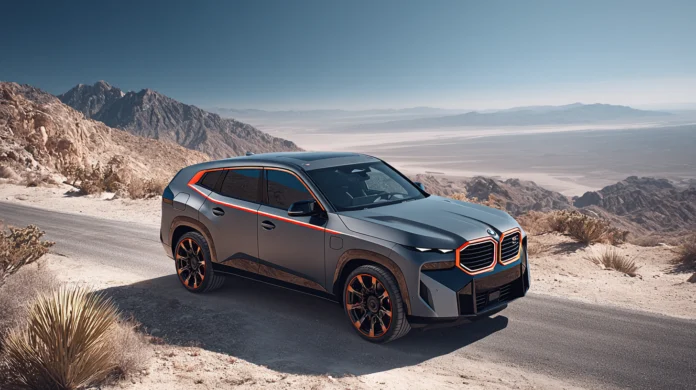
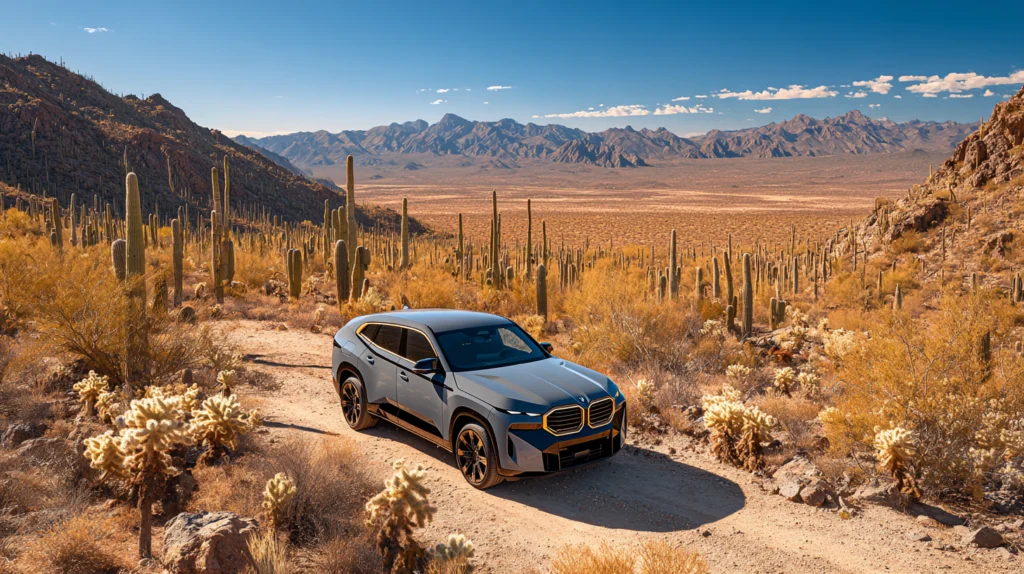
The XM Label Red’s exterior design is aggressive and distinctive. The front end features a prominent kidney grille, larger than any other BMW model, with a unique double bar design and a red accent that gives the Label Red its name. The headlights are slim and split, with the daytime running lights positioned above the main units.

The side profile shows the SUV proportions, with a long wheelbase, short overhangs, and a sloping roofline that gives the car a coupe like silhouette. The wheel arches are flared to accommodate the wide track, and the side skirts are sculpted to manage airflow.

The rear end features a prominent diffuser that houses the quad exhaust outlets. The taillights are full width, a design element that emphasizes the car’s width. The rear window is split, with a lower section that is fixed and an upper section that opens with the liftgate.

Label Red Distinctions

The Label Red is distinguished from the standard XM by several design elements. The grille surround, window trim, and wheels are finished in a unique gold bronze color. The car also features red accents on the grille, side skirts, and rear diffuser.

The interior features red accents on the seats, dashboard, and door panels. The Label Red badging appears throughout the cabin, and the headliner is finished in Alcantara with a unique pattern.

Carbon Fiber Components

The XM Label Red makes extensive use of carbon fiber to manage weight. The roof, front splitter, rear diffuser, and various interior elements are all available in carbon fiber. The optional carbon fiber wheels reduce unsprung weight by approximately 30 pounds.

Interior and Luxury

Cabin Design

The interior of the XM Label Red reflects the car’s dual personality as both a performance vehicle and a luxury SUV. The dashboard features a curved display that combines a 12.3 inch digital instrument cluster and a 14.9 inch central touchscreen. The system runs BMW’s latest iDrive software, with wireless Apple CarPlay and Android Auto.

The seats are heavily bolstered to hold occupants during cornering, with leather and Alcantara upholstery. The front seats are power adjustable with heating, cooling, and massage functions. The rear seats are equally well appointed, with heating and ventilation.

Rear Seat Experience

The XM Label Red is designed as a driver’s car, but it does not neglect rear seat passengers. The rear seats feature a unique design inspired by luxury lounges, with a sculpted center console that separates the two outer seats. The rear passengers have their own climate controls, USB ports, and a dedicated touchscreen that can control infotainment functions.

The rear seats are power adjustable, with a recline function that improves comfort on long journeys. The headroom and legroom are generous, making the XM Label Red suitable for four adults.

Cargo Space

The cargo area, accessed through a power liftgate, offers approximately 18 cubic feet of space with the rear seats in place. Folding the rear seats expands this to approximately 54 cubic feet. The battery pack, mounted under the floor, does not intrude on cargo space.

Technology Features

The XM Label Red is equipped with a comprehensive suite of technology features. The infotainment system includes navigation, Apple CarPlay, Android Auto, and a premium Bowers & Wilkins audio system. The car also features a head up display, a surround view camera system, and BMW’s Intelligent Personal Assistant voice control.

Driver assistance features include adaptive cruise control with stop and go, lane departure warning with lane keep assist, blind spot monitoring, and automatic emergency braking.

Driving Experience

On Road Character

The XM Label Red is a car that is surprisingly refined given its performance credentials. In electric mode, the car operates silently, with the electric motor providing smooth, linear power. The suspension absorbs road imperfections without transmitting harshness to the cabin, and the cabin is quiet enough for conversation.

When the V8 engages, the character transforms. The engine produces a deep, muscular roar that builds as the revs climb. The acceleration is immediate and relentless, pushing occupants into their seats with force that is impressive for a vehicle of this size.

On Track Behavior

When driven on a track, the XM Label Red reveals the depth of its engineering. The brakes provide consistent stopping power, and the chassis remains composed through corners. The active roll stabilization system keeps the car flat, and the xDrive system provides traction that allows early power application on corner exit.

The car’s weight is evident during hard cornering, but the sophisticated suspension tuning and all wheel drive system allow it to handle with agility that belies its mass. The XM Label Red is not a track car in the sense of a dedicated sports car, but it is capable of sustained performance that exceeds what most drivers will demand.

The Sound

The V8 engine’s sound is a significant part of the XM Label Red’s appeal. The engine has a deep, muscular tone at low speeds, with a sharper, more aggressive note as the revs climb. The active exhaust system allows the driver to control the volume, from subdued for urban driving to aggressive for spirited back road driving.

How the XM Label Red Stacks Up Against Rivals

Against the Lamborghini Urus

The Lamborghini Urus is a high performance SUV with a 4.0 liter twin turbocharged V8 producing 657 horsepower.

The Urus’s advantage is its brand cachet and its drama. The Lamborghini’s aggressive styling and sharp angles create a visual presence that the BMW cannot match. The Urus is also lighter and more agile than the XM.

The XM Label Red’s advantage is its power and its hybrid capability. With 738 horsepower, the XM produces 81 more horsepower than the Urus. The plug in hybrid system also provides electric only range, allowing the XM to operate silently in urban environments.

Against the Aston Martin DBX707

The Aston Martin DBX707 is a high performance SUV with a 4.0 liter twin turbocharged V8 producing 697 horsepower.

The DBX707’s advantage is its styling and its interior. The Aston Martin’s design is elegant and understated, and its interior is more luxurious than the XM’s.

The XM Label Red’s advantage is its power and its technology. With 738 horsepower, the XM produces 41 more horsepower than the DBX707. The plug in hybrid system also provides electric only range, and the XM’s infotainment system is more advanced.

Against the Porsche Cayenne Turbo GT

The Porsche Cayenne Turbo GT is a high performance SUV with a 4.0 liter twin turbocharged V8 producing 631 horsepower.

The Cayenne Turbo GT’s advantage is its handling. Porsche’s chassis tuning is widely regarded as the benchmark in the SUV segment, and the Cayenne’s steering, suspension, and brake feel are exceptional.

The XM Label Red’s advantage is its power and its luxury. With 738 horsepower, the XM produces 107 more horsepower than the Cayenne. The XM’s interior is also more spacious and more luxurious than the Porsche’s.

Against the Ferrari Purosangue

The Ferrari Purosangue is a high performance SUV with a 6.5 liter naturally aspirated V12 producing 715 horsepower.

The Purosangue’s advantage is its engine and its brand. The V12’s sound and character are qualities that the XM’s V8 cannot match, and the Ferrari badge carries a prestige that BMW cannot equal.

The XM Label Red’s advantage is its power and its practicality. With 738 horsepower, the XM produces 23 more horsepower than the Purosangue. The XM’s plug in hybrid system also provides electric only range, and the BMW offers more interior space.
BMW XM Label Red: BMW’s Most Powerful Production Car

Value Proposition

Pricing

The BMW XM Label Red carries a base price of approximately $185,000. This pricing places it in the upper tier of the high performance SUV segment, above the Porsche Cayenne Turbo GT and approaching the Lamborghini Urus and Aston Martin DBX707.

Depreciation

BMW M models traditionally hold their value reasonably well, though not as strongly as limited production models from Ferrari and Lamborghini. The XM Label Red, as the most powerful production BMW ever built, may hold its value better than standard XM models.

Ownership Costs

Maintaining an XM Label Red involves higher costs than standard BMW models. The tires are expensive to replace, and the hybrid system adds complexity that may increase service costs. However, compared to competitors, the XM is less expensive to own and maintain.

Specifications Summary

SpecificationValue
Engine4.4L twin turbocharged V8
Electric Motor194 hp
Combined Power738 hp
Combined Torque738 lb ft
Transmission8 speed automatic
DrivexDrive all wheel drive
0-60 mph3.7 seconds
Top Speed155 mph (180 mph with M Driver’s Package)
Electric Range30 miles
Battery29.5 kWh
Weight6,000 lb
Base Price$185,000

Conclusion

The BMW XM Label Red represents a significant achievement for the BMW M division. It is the most powerful production car the company has ever built, with a 738 horsepower V8 hybrid powertrain that combines the character of a traditional M engine with the efficiency of electric propulsion. It is a car that can be driven silently through city streets, yet accelerate with the force of a supercar when the V8 engages.

The XM Label Red is not a traditional performance car. It is heavy, it is large, and its focus on luxury and comfort means it is not as sharp as dedicated sports cars. But it offers a combination of attributes that is difficult to find elsewhere: the practicality of an SUV, the luxury of a premium vehicle, the performance of a supercar, and the efficiency of a plug in hybrid.

Against its rivals, the XM Label Red holds its own. It offers more power than the Lamborghini Urus and Aston Martin DBX707, more luxury than the Porsche Cayenne Turbo GT, and more practicality than the Ferrari Purosangue. It is a car that can be driven daily, enjoyed on weekends, and appreciated for its engineering excellence.

For buyers seeking the ultimate expression of BMW M performance, the XM Label Red makes a compelling case. It is a car that honors the M division’s history while embracing the future of automotive technology. It is the most powerful production BMW ever built, and it stands as one of the most complete high performance SUVs on the market.
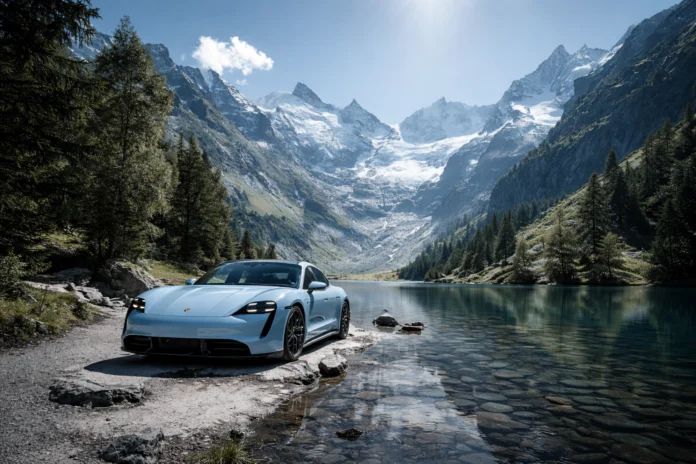
Porsche Taycan Turbo GT: The Fastest Porsche EV Yet

0

The Porsche Taycan has been a landmark vehicle for the brand since its introduction in 2019. It was Porsche’s first fully electric vehicle, a car that proved that zero emissions did not mean zero character. The Taycan combined the handling precision that Porsche is known for with the instant torque and efficiency of electric power, establishing a new benchmark for the luxury electric sedan segment.

The Taycan Turbo GT takes this formula to its logical extreme. Introduced as the most powerful and fastest accelerating production Porsche ever built, the Turbo GT represents the pinnacle of Porsche’s electric performance engineering. With 1,092 horsepower, a 0 to 60 time of 2.1 seconds, and a top speed of 180 miles per hour, it is a car that redefines what an electric vehicle can be.

This article provides a comprehensive review of the Porsche Taycan Turbo GT, examining its performance specifications, engineering, design, and what makes it the fastest Porsche EV yet.

The Taycan Evolution

The Taycan lineup has expanded significantly since the original model’s debut. From the base rear drive Taycan to the performance oriented Turbo S, each variant has offered a different balance of power, range, and capability. The Turbo GT represents the apex of this evolution, a car designed for enthusiasts who want the ultimate expression of Porsche electric performance.

The Turbo GT was developed with input from Porsche’s motorsport division, and it benefits directly from the lessons learned in Formula E and other racing programs. The car’s powertrain, chassis, and aerodynamics are all optimized for track performance, making it the most capable Taycan ever built.

Powertrain: The Most Powerful Porsche Ever

Motor Configuration

The Taycan Turbo GT is powered by a dual motor setup, with one motor at the front axle and one at the rear. The system uses Porsche’s permanent magnet synchronous motors, which are designed for high power density and efficiency.

The rear motor is the most powerful ever fitted to a production Porsche. It uses a new silicon carbide inverter that improves efficiency and allows for higher current flow. The result is a peak power output of 1,092 horsepower in launch control mode, with a maximum torque figure of 1,111 lb ft.

Boost Function

The Turbo GT features a push to pass boost function that provides an additional 184 horsepower for short periods. The system is activated through a button on the steering wheel, and it provides the extra power for approximately 10 seconds. This function is designed for track use, allowing the driver to access maximum power for overtaking or accelerating out of corners.

Battery and Charging

The Turbo GT uses a 105 kWh battery pack, the largest ever fitted to a Taycan. The battery is designed for high power delivery, with a focus on maintaining performance during sustained track use. The cell chemistry is optimized for power density rather than energy density, reflecting the car’s performance focus.

The battery can be charged at up to 320 kW, allowing a 10 to 80 percent charge in approximately 18 minutes under ideal conditions. The range is rated at approximately 290 miles on the WLTP cycle, a figure that is sufficient for track days and longer journeys.

Performance: Numbers That Define a New Class

Acceleration

The Taycan Turbo GT accelerates from 0 to 60 miles per hour in 2.1 seconds with the launch control system engaged. The 0 to 100 miles per hour sprint takes approximately 4.9 seconds. The quarter mile is completed in approximately 9.4 seconds at 145 miles per hour.

These figures make the Turbo GT the fastest accelerating production Porsche ever built, surpassing the 918 Spyder hybrid hypercar and every other model in the company’s history.

Top Speed

The top speed is 180 miles per hour, a figure that is limited by the car’s aerodynamic profile and the gearing of the transmission. For the Weissach Package version, which removes the rear seats and adds aerodynamic elements, the top speed is 190 miles per hour.

Track Performance

The Taycan Turbo GT set a lap time of 7 minutes 7.55 seconds at the Nürburgring Nordschleife, making it the fastest four door electric vehicle to lap the circuit. The time is also faster than many dedicated sports cars and supercars, demonstrating the car’s track capability.

The car’s performance at the Nürburgring is a testament to its engineering. The combination of the high power output, the advanced cooling system, and the chassis tuning allows the Turbo GT to sustain performance lap after lap, a challenge that has traditionally been difficult for electric vehicles.

Chassis and Dynamics

Suspension System

The Turbo GT features Porsche’s adaptive air suspension with Porsche Active Suspension Management. The system can adjust damping characteristics in milliseconds based on road conditions and driving mode, providing a balance of comfort for road use and control for track driving.

The suspension is tuned specifically for the Turbo GT, with stiffer springs, revised damper calibration, and a lower ride height compared to other Taycan models. The car sits approximately 10 millimeters lower than the Taycan Turbo S, lowering the center of gravity and improving aerodynamic efficiency.

Rear Axle Steering

Rear axle steering is standard on the Turbo GT, a feature that improves maneuverability at low speeds and stability at high speeds. The system can turn the rear wheels up to 2.8 degrees in the opposite direction to the front wheels at low speeds, reducing the turning circle, and in the same direction at high speeds, enhancing stability.

Braking System

The braking system uses Porsche’s Surface Coated Brake discs, which are an alternative to traditional carbon ceramic brakes. The discs are coated with tungsten carbide, providing improved braking performance, reduced wear, and less brake dust compared to standard steel discs. The system is paired with ten piston front calipers and four piston rear calipers.

The regenerative braking system, controlled by the electric motors, captures energy during deceleration and can provide up to 0.5 g of deceleration without engaging the friction brakes. The integration between regenerative and friction braking is managed by a brake by wire system that maintains consistent pedal feel regardless of the regeneration level.

Wheels and Tires

The Turbo GT rides on 21 inch wheels as standard, with 20 inch front and 21 inch rear wheels available as an option. The tires are developed specifically for the Turbo GT, with a compound and construction that provide the grip necessary for the car’s performance.

The Weissach Package adds a set of lightweight wheels that reduce unsprung weight by approximately 10 kilograms. The wheels are finished in a unique color and are paired with track focused tires.

Aerodynamics

Active Aerodynamics

The Taycan Turbo GT features an active rear spoiler that adjusts its angle based on speed and driving mode. The spoiler is designed to provide downforce without excessive drag, balancing stability and efficiency.

The front end incorporates an active cooling system that opens and closes based on thermal demands. The system improves aerodynamic efficiency when cooling is not needed, reducing drag and increasing range.

Weissach Package Aerodynamics

The Weissach Package adds a range of aerodynamic enhancements. The package includes a fixed rear wing, a more aggressive front splitter, and underbody aero elements that increase downforce by approximately 15 percent compared to the standard Turbo GT.

The fixed wing is adjustable, allowing drivers to tailor the downforce balance to suit different tracks and conditions. The wing is constructed from carbon fiber, keeping weight to a minimum while providing the necessary structural rigidity.

Design

Exterior Styling

The Taycan Turbo GT builds on the elegant design of the standard Taycan, with several distinctive elements that signal its performance capabilities. The front end features a revised bumper with larger air intakes and a more aggressive splitter. The side skirts are more pronounced, and the rear diffuser is larger and more complex.

The Turbo GT is available with a range of unique colors, including the exclusive Victory Blue that was used on the car’s reveal. The Weissach Package adds carbon fiber components for the front splitter, side skirts, and rear wing.

Interior Design

The interior of the Turbo GT reflects the car’s performance focus. The seats are heavily bolstered to hold occupants during cornering, with leather and Alcantara upholstery. The seats are power adjustable with heating and ventilation.

The dashboard features a curved digital instrument cluster and a central touchscreen that handles infotainment functions. The passenger has a dedicated touchscreen that provides access to vehicle information and entertainment.

Weissach Package Interior

The Weissach Package removes the rear seats and replaces them with a lightweight storage compartment. The package also adds carbon fiber trim throughout the cabin and removes the electric seat adjustment from the front seats, reducing weight.

The result is a weight reduction of approximately 40 kilograms compared to the standard Turbo GT, contributing to improved acceleration and handling.

Driving Experience

On Road Character

The Taycan Turbo GT is surprisingly civil for a car with 1,092 horsepower. In normal driving modes, the suspension is compliant, the cabin is quiet, and the power delivery is smooth and progressive. The car can be driven in electric only mode for short distances, making it suitable for urban environments.

When the driver selects Sport Plus mode, the character transforms. The suspension stiffens, the throttle response sharpens, and the rear spoiler extends. The car accelerates with a force that pushes occupants into their seats, and the sound, while not the roar of a combustion engine, provides feedback about power delivery.

On Track Behavior

When driven on a track, the Taycan Turbo GT reveals the depth of its engineering. The brakes provide consistent stopping power lap after lap, with a pedal feel that inspires confidence. The chassis remains composed through corners, with the rear axle steering and torque vectoring system managing power delivery to maximize grip.

The car’s weight is evident during hard cornering, but the low center of gravity and the sophisticated suspension tuning allow it to handle with agility that belies its mass. The push to pass boost function provides additional power for overtaking, and the cooling system maintains performance throughout a full session.

The Sound

The Taycan Turbo GT does not attempt to fake the sound of a combustion engine. Instead, it offers the characteristic whine of its electric motors under load, the rush of air over the bodywork, and the protest of tires at the limit. For drivers who value the sensory aspects of driving, this soundscape provides its own form of feedback.

How the Taycan Turbo GT Stacks Up Against Rivals

Against the Tesla Model S Plaid

The Tesla Model S Plaid is the Taycan Turbo GT’s most obvious competitor, with a three motor powertrain producing 1,020 horsepower and a 0 to 60 time of 1.99 seconds.

The Model S Plaid’s advantage is its acceleration and its range. The Tesla is slightly quicker to 60 miles per hour, and its range of approximately 400 miles exceeds the Taycan’s. The car also offers access to Tesla’s extensive Supercharger network.

The Taycan Turbo GT’s advantage is its handling and its track capability. The Porsche’s chassis tuning, steering feel, and brake performance are superior to the Tesla’s, and the car’s ability to sustain performance on track sets it apart. The Taycan’s interior is also more luxurious, with higher quality materials and more advanced technology.

Against the Lucid Air Sapphire

The Lucid Air Sapphire is a four door electric sedan with a three motor powertrain producing 1,234 horsepower and a 0 to 60 time of 1.89 seconds.

The Air Sapphire’s advantage is its power and its range. The Lucid produces 142 more horsepower than the Taycan, and its 427 mile range is significantly higher. The interior is also more spacious, with a focus on luxury and comfort.

The Taycan Turbo GT’s advantage is its track performance and its brand heritage. The Porsche’s chassis tuning and brake performance are superior to the Lucid’s, and the car’s ability to perform on track is proven by its Nürburgring lap time. The Taycan also benefits from Porsche’s decades of motorsport experience.

Against the Rimac Nevera

The Rimac Nevera is a hypercar with a four motor powertrain producing 1,914 horsepower and a 0 to 60 time of 1.85 seconds.

The Nevera’s advantage is its sheer performance. The car’s acceleration, top speed, and handling are at the absolute pinnacle of what is possible. The Nevera is a limited edition hypercar designed for collectors and enthusiasts.

The Taycan Turbo GT’s advantage is its practicality and its price. The Porsche starts at approximately $230,000, less than one tenth the price of the Nevera. The Taycan also offers four doors, a spacious interior, and a trunk, making it a car that can be used for daily driving as well as track days.

Porsche Taycan Turbo GT: The Fastest Porsche EV Yet

Value Proposition

Pricing

The Porsche Taycan Turbo GT carries a base price of approximately $230,000. The Weissach Package adds approximately $30,000 to the price.

This pricing places the Turbo GT in the upper tier of the electric performance sedan market, above the Tesla Model S Plaid and approaching the Lucid Air Sapphire.

Depreciation

Porsche electric vehicles have held their value reasonably well, though not as strongly as the brand’s combustion sports cars. The Turbo GT, as the flagship of the Taycan lineup, is expected to depreciate more slowly than other Taycan models.

Ownership Costs

Maintaining a Taycan Turbo GT involves lower costs than internal combustion performance cars. There are no oil changes, no spark plugs, and no engine air filters. The brake pads are expected to last longer than those on internal combustion cars due to regenerative braking. The tires, sized for high performance, are expensive to replace.

Specifications Summary

SpecificationValue
Motors2 motor (1 front, 1 rear)
Horsepower1,092 hp (with launch control)
Torque1,111 lb ft
Battery105 kWh
Range290 miles (WLTP)
0-60 mph2.1 seconds
Quarter Mile9.4 seconds at 145 mph
Top Speed180 mph (190 mph with Weissach)
Charging320 kW DC fast charging
WeightApproximately 5,000 lb
Base Price$230,000

Conclusion

The Porsche Taycan Turbo GT represents a significant achievement in the evolution of the electric performance car. It is the most powerful and fastest accelerating production Porsche ever built, with 1,092 horsepower and a 0 to 60 time of 2.1 seconds. It is a car that can lap the Nürburgring Nordschleife in 7 minutes 7.55 seconds, making it the fastest four door electric vehicle to ever complete the circuit.

The Turbo GT is not simply a faster Taycan; it is a redefinition of what an electric vehicle can be. Its powertrain, chassis, and aerodynamics are optimized for track performance, demonstrating that electric vehicles can deliver not only straight line speed but also the handling, braking, and sustained capability that enthusiasts demand.

Against its rivals, the Turbo GT holds its own. It offers better handling than the Tesla Model S Plaid, more track capability than the Lucid Air Sapphire, and more practicality than the Rimac Nevera. It is a car that can be driven to the track, set competitive lap times, and drive home in comfort.

For buyers seeking the ultimate expression of Porsche electric performance, the Taycan Turbo GT makes a compelling case. It is a car that honors the brand’s racing heritage while embracing the future of automotive technology. It is the fastest Porsche EV yet, and it stands as one of the most capable electric vehicles on the market.

Corvette ZR1 vs Ferrari 296 GTB: Supercar Value Showdown

0

The supercar market has long been dominated by European manufacturers. Ferrari, Lamborghini, McLaren, and Porsche have set the standard for performance, engineering, and prestige for decades. American manufacturers have occasionally challenged this dominance, but rarely with a car that could compete on all fronts.

The Corvette ZR1 changes that. With 1,064 horsepower from a twin turbocharged 5.5 liter V8, 1,200 pounds of downforce, and a top speed of 233 miles per hour, it is a car that meets or exceeds the performance of European supercars costing two to three times as much. The Ferrari 296 GTB, with its 819 horsepower V6 hybrid powertrain and Ferrari’s storied heritage, represents the established order.

This comparison examines the Corvette ZR1 and Ferrari 296 GTB across the dimensions that matter to supercar buyers: performance, engineering, driving experience, design, and value.

Performance: The Numbers

Powertrain

The Corvette ZR1 is powered by a 5.5 liter twin turbocharged V8 engine producing 1,064 horsepower and 828 lb ft of torque. The engine features a flat plane crankshaft, titanium connecting rods, and a hot V turbocharger configuration that minimizes lag. Power is transmitted to the rear wheels through an eight speed dual clutch transmission.

The Ferrari 296 GTB uses a 3.0 liter twin turbocharged V6 paired with an electric motor, producing a combined 819 horsepower and 546 lb ft of torque. The V6 is a 120 degree unit with the turbochargers mounted inside the V, and the electric motor is integrated into the transmission. The car features a plug in hybrid system with a 7.45 kWh battery that provides approximately 15 miles of electric range. Power is transmitted to the rear wheels through an eight speed dual clutch transmission.

Acceleration

The ZR1 accelerates from 0 to 60 miles per hour in 2.3 seconds. The quarter mile is completed in 9.6 seconds at 150 miles per hour.

The 296 GTB accelerates from 0 to 60 miles per hour in 2.5 seconds. The quarter mile is completed in approximately 10.2 seconds at 140 miles per hour.

The ZR1 holds a clear advantage in straight line acceleration, with its additional 245 horsepower and 282 lb ft of torque providing a significant performance margin.

Top Speed

The ZR1 has a top speed of 233 miles per hour. The 296 GTB has a top speed of 205 miles per hour. The ZR1’s higher top speed reflects its greater power and aerodynamic efficiency in low drag configuration.

Track Performance

The ZR1 generates 1,200 pounds of downforce at top speed with its ZTK Performance Package, providing exceptional cornering grip. The 296 GTB generates approximately 360 kilograms of downforce, a figure that is substantial but significantly less than the Corvette’s.

Lap times at reference circuits are not directly comparable due to differences in testing conditions, but the ZR1’s power and downforce advantage suggest it would be faster on circuits with long straights and high speed corners. The 296 GTB’s lighter weight and hybrid system may give it an advantage on tighter, more technical circuits.

Engineering: Different Approaches

Engine Philosophy

The ZR1’s LT7 engine represents the traditional American approach to performance: displacement, forced induction, and brute force. Its 5.5 liter displacement is substantial, and the twin turbochargers push it to power levels that were previously the domain of hypercars. The engine’s flat plane crankshaft and titanium connecting rods demonstrate advanced engineering, but the fundamental approach is one of maximizing power output.

The 296 GTB’s F163 engine represents a different philosophy: smaller displacement, higher specific output, and hybridization. The 3.0 liter V6 produces 273 horsepower per liter, one of the highest specific outputs of any production engine. The electric motor adds instant torque and fills the gaps in the power band, creating a seamless delivery that masks the engine’s displacement disadvantage.

Weight and Distribution

The ZR1 has a curb weight of approximately 3,700 pounds. Its weight distribution is 40 percent front, 60 percent rear, a figure that is typical for mid engine supercars.

The 296 GTB has a dry weight of approximately 3,200 pounds, with a curb weight of approximately 3,500 pounds. Its weight distribution is 40.5 percent front, 59.5 percent rear.

The Ferrari is approximately 200 pounds lighter than the Corvette, a difference that contributes to its agility and responsiveness. The ZR1’s weight disadvantage is partially offset by its power advantage, but the Ferrari’s lighter weight is evident in its handling characteristics.

Aerodynamics

The ZR1’s aerodynamic package is among the most aggressive ever fitted to a production car. The ZTK package includes a large fixed rear wing, a substantial front splitter, and underbody aero elements that collectively generate 1,200 pounds of downforce at top speed. This level of downforce is typically found only in dedicated race cars.

The 296 GTB’s aerodynamic package is more subtle. The car features active aerodynamic elements, including a rear spoiler that deploys at speed, but its downforce figures are significantly lower than the ZR1’s. The Ferrari’s approach prioritizes low drag and stability over maximum downforce.

Cooling and Thermal Management

The ZR1 features 14 separate heat exchangers to manage the thermal demands of its twin turbocharged engine. The front end is almost entirely dedicated to cooling, with large grille openings and ducts that direct air to the various heat exchangers. The system is designed to maintain consistent performance during sustained track use.

The 296 GTB’s cooling system is less complex, reflecting its smaller engine and hybrid assistance. The electric motor reduces the thermal load on the V6 during hard acceleration, and the car’s lower power output generates less heat overall.

Driving Experience

On Road Character

The ZR1 is a car that demands respect. Its power is ever present, and the chassis communicates every detail of the road surface. The car is firm, with the magnetic ride control suspension transmitting impacts that a grand tourer would absorb. The cabin is focused on the driver, with minimal luxury features and a cockpit that prioritizes function over comfort.

Yet the ZR1 is surprisingly usable for a car with 1,064 horsepower. The engine produces ample torque from low speeds, making it effortless in traffic. The dual clutch transmission shifts smoothly, and the ride, while firm, is not punishing. The car can be driven to the track, perform at its limit, and drive home without issue.

The 296 GTB offers a different experience. The hybrid system allows the car to operate silently in electric mode, making it suitable for early morning departures and urban environments. When the V6 engages, the character transforms, with the engine building power smoothly and the electric motor filling the gaps. The car is more refined than the ZR1, with a more compliant ride and a quieter cabin.

On Track Behavior

When driven at the limit, the ZR1 reveals the depth of its engineering. The brakes provide consistent stopping power lap after lap, with a pedal feel that inspires confidence. The chassis remains composed through corners, with the aerodynamic downforce providing grip that mechanical systems alone could not achieve. The car’s rear wheel drive configuration requires skill to manage the power, but the chassis is balanced and predictable.

The 296 GTB offers a different track experience. The car’s lighter weight and hybrid system provide agility that the ZR1 cannot match. The electric motor’s instant torque fills the gaps during gear changes, creating a seamless power delivery. The chassis is precise and communicative, with a level of feedback that is among the best in the industry.

The Sound

The ZR1’s LT7 produces a sound that is distinct from the naturally aspirated LT6 in the Z06. The turbochargers mute some of the high frequency wail, adding a deeper, more muscular tone. The sound is mechanical and purposeful, with a character that communicates power.

The 296 GTB’s V6 produces a sound that is higher pitched and more urgent. The engine’s 8,500 rpm redline and flat plane crankshaft create a sharp, metallic wail that is distinctive and engaging. The sound is less muscular than the ZR1’s V8, but it is no less satisfying.

Design

Exterior Styling

The ZR1’s exterior design is aggressive and functional. The front end features large grille openings and a prominent splitter, while the rear is dominated by the massive fixed wing of the ZTK package. The car’s proportions are unmistakably Corvette, with the mid engine layout giving it a wedge shape that is both purposeful and dramatic.

The 296 GTB’s exterior design is more elegant. The car’s lines are clean and flowing, with subtle curves and sculpted surfaces. The design is restrained compared to the ZR1, with none of the aggressive aerodynamic elements that characterize the Corvette. The 296 GTB is a car that prioritizes beauty over aggression.

Interior Design

The ZR1’s interior is focused on the driver. The seats are heavily bolstered, the controls are within easy reach, and the digital displays are configurable to show performance data. The materials are of good quality, with leather and Alcantara throughout, but the emphasis is on function over luxury.

The 296 GTB’s interior is more luxurious. The materials are of higher quality, with fine leather, carbon fiber trim, and metal accents. The passenger has a dedicated touchscreen, and the seats are both supportive and comfortable. The Ferrari’s interior is a place to be, not just a place to drive.

Prestige and Heritage

Brand Value

Ferrari is one of the most prestigious brands in the world. The Prancing Horse badge carries a weight that few other manufacturers can match. Owning a Ferrari is a statement, an entry into an exclusive community of enthusiasts and collectors.

Chevrolet does not have the same brand cachet. The Corvette is respected, and the ZR1 is recognized as a serious performance car, but it does not carry the same prestige as a Ferrari. For buyers who value status and exclusivity, the Ferrari has a clear advantage.

Heritage

The Corvette has been in continuous production since 1953, and the ZR1 name has been associated with extreme performance since 1970. The car’s heritage is American, with a focus on power, value, and accessibility.

Ferrari’s heritage is longer and more storied. The company has been building cars since 1947, and its history is filled with legendary models, racing victories, and cultural significance. The 296 GTB’s V6 engine connects it to the Dino, a car that Enzo Ferrari himself considered a necessary step into the mid engine market.

Corvette ZR1 vs Ferrari 296 GTB: Supercar Value Showdown

Value Proposition

Pricing

The Corvette ZR1 carries a base price of approximately $180,000. With the ZTK Performance Package and carbon fiber wheels, the price rises to approximately $205,000.

The Ferrari 296 GTB carries a base price of approximately $350,000. With options and personalization, the price can rise to $400,000 or more.

The ZR1 is approximately half the price of the 296 GTB, a significant advantage for buyers who prioritize value.

Depreciation

Ferraris traditionally hold their value exceptionally well. The 296 GTB, as a limited production model with a hybrid powertrain, is expected to depreciate slowly, with strong demand from collectors.

Corvettes traditionally depreciate more than Ferraris, but the ZR1’s limited production and extreme performance may help it hold its value better than standard models. The C6 and C7 ZR1 have maintained strong values in the collector market.

Ownership Costs

Maintaining a Ferrari involves higher costs than maintaining a Corvette. Service intervals are more frequent, parts are more expensive, and the network of qualified technicians is more limited. The 296 GTB’s hybrid system adds additional complexity.

The ZR1 is less expensive to own and maintain. Parts are readily available, service costs are lower, and the car’s mechanical simplicity reduces the risk of expensive repairs.

The Value Equation

The ZR1 offers more power, more downforce, and faster acceleration for half the price of the 296 GTB. For buyers who prioritize performance over prestige, the ZR1 represents exceptional value.

The 296 GTB offers a different kind of value. Its hybrid technology, its refinement, and its brand cachet are qualities that the Corvette cannot match. For buyers who value these attributes, the premium is justified.

Summary Comparison

CategoryCorvette ZR1Ferrari 296 GTB
Engine5.5L twin turbo V83.0L twin turbo V6 hybrid
Horsepower1,064 hp819 hp
Torque828 lb ft546 lb ft
0-60 mph2.3 seconds2.5 seconds
Top Speed233 mph205 mph
Downforce1,200 lb (ZTK)360 kg
Weight3,700 lb3,500 lb
Transmission8 speed DCT8 speed DCT
DriveRear wheel driveRear wheel drive
Electric RangeN/A15 miles
Base Price$180,000$350,000

Conclusion

The Corvette ZR1 and Ferrari 296 GTB represent two different philosophies of supercar engineering. The ZR1 is about power, downforce, and value. It uses a large displacement V8, aggressive aerodynamics, and a focus on track performance to deliver numbers that rival cars costing three times as much. It is a car that prioritizes performance over refinement, capability over luxury.

The 296 GTB is about sophistication, technology, and heritage. It uses a small displacement V6 with hybrid assistance to deliver power that is both immediate and efficient. Its design is elegant, its interior is luxurious, and its brand carries a prestige that the Corvette cannot match.

For the buyer who prioritizes performance above all else, the ZR1 is the clear choice. Its 1,064 horsepower, 233 mph top speed, and 1,200 pounds of downforce are figures that the Ferrari cannot match. Its $180,000 price makes it accessible to a broader audience.

For the buyer who values refinement, technology, and brand prestige, the 296 GTB makes a compelling case. Its hybrid system, elegant design, and Ferrari heritage are qualities that the Corvette cannot replicate. For these buyers, the premium is justified.

The ZR1 and 296 GTB are not direct competitors in the traditional sense. They appeal to different buyers, prioritize different attributes, and occupy different positions in the market. But for anyone considering a supercar in 2026, both deserve serious consideration. The ZR1 offers American performance at an accessible price. The 296 GTB offers Italian sophistication at a premium. The choice depends on what the buyer values most.

2025 Corvette ZR1: America’s Most Powerful Corvette

0

The Chevrolet Corvette has represented American performance for seven decades. From the original 1953 model with its modest inline six to the C8 generation’s mid engine revolution, the Corvette has evolved from a sports car to a genuine supercar contender. The ZR1 nameplate has always represented the pinnacle of this evolution, reserved for the most extreme, most powerful, and most capable Corvettes ever built.

The 2025 Corvette ZR1 continues this tradition. Introduced as the most powerful production Corvette ever created, the ZR1 represents a significant step forward for the nameplate. With a twin turbocharged 5.5 liter V8 producing over 1,000 horsepower, advanced aerodynamics derived from the racing program, and a chassis tuned for track performance, it is a car designed to compete with the best from Europe.

This article provides a comprehensive review of the 2025 Corvette ZR1, examining its performance specifications, engineering, design philosophy, and how it stacks up against European supercars.

The ZR1 Legacy

The ZR1 name first appeared in 1970, as a performance package for the C3 Corvette. That car, with its 370 horsepower LT1 engine, was a rare and sought after model. The ZR1 name returned in 1990 with the C4 generation, featuring a 5.7 liter V8 with dual overhead camshafts, a Lotus developed engine that produced 375 horsepower and established a new benchmark for Corvette performance.

The C6 ZR1, introduced in 2009, was a significant moment for the Corvette. With a supercharged 6.2 liter V8 producing 638 horsepower, it was the first Corvette to exceed 600 horsepower and the first to feature carbon ceramic brakes. It established a template for the ZR1: extreme power, track focused engineering, and a price that undercut European competitors.

The C7 ZR1, introduced in 2018, pushed the formula further. With a supercharged 6.2 liter V8 producing 755 horsepower, a massive rear wing, and aggressive aerodynamics, it was the most extreme front engine Corvette ever built. It was also the last front engine ZR1, as the C8 generation moved the engine behind the driver.

The 2025 ZR1 is the first mid engine ZR1, and it represents the culmination of everything Chevrolet has learned from the C8 platform.

Powertrain: The LT7 V8

Engine Specifications

The 2025 Corvette ZR1 is powered by a 5.5 liter twin turbocharged V8 engine, designated LT7. This engine is a derivative of the naturally aspirated LT6 that powers the Corvette Z06, with the addition of twin turbochargers and supporting modifications.

The engine produces 1,064 horsepower at 7,000 rpm and 828 lb ft of torque at 6,000 rpm. The specific output is 193 horsepower per liter, a figure that places it among the most powerful production engines ever built.

The LT7 features a flat plane crankshaft, a design that promotes balanced firing across both cylinder banks and improves exhaust flow. The flat plane crankshaft contributes to the engine’s ability to rev quickly and smoothly, with a character that is more akin to a racing engine than a traditional American V8.

The engine’s rotating assembly is engineered for high performance and durability. Forged pistons, titanium connecting rods, and a lightweight crankshaft reduce rotating mass, allowing the engine to rev freely to its 7,000 rpm redline. The turbochargers are mounted in the hot V configuration, between the cylinder banks, reducing lag and improving throttle response.

Cooling Systems

The ZR1’s cooling system is one of its most significant engineering achievements. The engine features 14 separate heat exchangers, including intercoolers for the turbochargers, engine oil coolers, transmission coolers, and differential coolers. The system is designed to maintain consistent performance during sustained track use, preventing the power reductions that can affect turbocharged engines under high stress.

The front end of the car is almost entirely dedicated to cooling. The grille openings are larger than any other Corvette, and the front fascia incorporates ducts that direct air to the various heat exchangers. The hood features a prominent air extractor that draws hot air out of the engine bay, reducing underhood temperatures.

Transmission

Power is transmitted to the rear wheels through an eight speed dual clutch transmission. The transmission is mounted behind the engine in a transaxle configuration, contributing to the car’s near perfect weight distribution.

The transmission is upgraded for the ZR1’s additional power and torque, with stronger clutches, revised gear ratios, and enhanced cooling. Shift times are measured in milliseconds in the most aggressive driving modes, and the transmission can be operated in fully automatic mode or via paddle shifters.

Performance

Acceleration and Speed

The Corvette ZR1 accelerates from 0 to 60 miles per hour in 2.3 seconds. The 0 to 100 miles per hour sprint takes approximately 5.0 seconds. The quarter mile is completed in approximately 9.6 seconds at 150 miles per hour.

Top speed is rated at 233 miles per hour, making the ZR1 the fastest production Corvette ever built. This figure is achieved with the low drag rear wing configuration; the high downforce configuration reduces top speed slightly in exchange for increased cornering grip.

Weight and Balance

The ZR1 has a curb weight of approximately 3,700 pounds. This figure reflects the additional hardware required for the twin turbochargers, intercoolers, and cooling systems. Despite the weight, the car’s mid engine layout and near perfect weight distribution contribute to its agile handling.

The weight distribution is 40 percent front, 60 percent rear, a figure that is typical for mid engine supercars and contributes to the car’s balanced handling characteristics.

Chassis and Dynamics

Suspension System

The ZR1 features a double wishbone suspension at all four corners, with magnetic ride control dampers that can adjust their characteristics in milliseconds based on road conditions and driving mode. The suspension is tuned for the ZR1’s performance focus, with stiffer springs, revised damper calibration, and increased negative camber compared to the Stingray and Z06.

The car sits lower than other Corvette models, lowering the center of gravity and improving aerodynamic efficiency. The front end lift system, which raises the nose to clear speed bumps and driveways, is retained.

Brakes

The braking system uses carbon ceramic discs with 15.7 inch front discs and six piston calipers, and 15.4 inch rear discs with four piston calipers. The system provides exceptional stopping power, with consistent pedal feel and resistance to fade during track use.

The brake cooling is enhanced compared to the Z06, with larger ducts and additional air flow management. The system is designed to maintain performance during sustained track sessions, even with the increased speeds that the ZR1’s power enables.

Wheels and Tires

The ZR1 rides on 20 inch front wheels and 21 inch rear wheels, wrapped in Michelin Pilot Sport Cup 2 R tires. The tire sizes are 275/30 ZR20 front and 345/25 ZR21 rear.

The Cup 2 R tires are designed for maximum grip on track, with a compound that provides exceptional adhesion once warmed up. The rear tires are among the widest ever fitted to a production Corvette, providing the traction necessary to manage the engine’s torque.

Aerodynamics

The ZR1 is offered with two aerodynamic configurations. The standard configuration features a rear spoiler and front splitter that provide balanced downforce for most driving conditions. The ZTK Performance Package adds a high downforce rear wing, a larger front splitter, and underbody aero elements that increase downforce significantly.

With the ZTK package, the ZR1 generates 1,200 pounds of downforce at top speed, a figure that places it among the most aerodynamically advanced production cars on the market. The downforce is distributed to maintain balance across the car’s speed range, providing stable handling at high speeds.

Design

Exterior Styling

The ZR1’s exterior design builds on the C8’s mid engine proportions, with several distinctive elements that signal its performance capabilities. The front end features a larger grille opening and more aggressive air intakes than the Stingray or Z06, feeding air to the turbocharger intercoolers and other heat exchangers.

The hood incorporates a prominent air extractor that draws hot air out of the engine bay, and the front fenders feature louvered vents that reduce pressure buildup in the wheel wells. The side air intakes are larger than those on other Corvette models, providing cooling air to the engine and transmission.

The rear end features a prominent diffuser that accelerates airflow beneath the car, generating downforce at the rear axle. The quad exhaust outlets are larger in diameter than those on the Z06, reflecting the increased airflow of the twin turbocharged engine.

ZTK Performance Package

The ZTK Performance Package adds a range of track focused enhancements. The package includes a large fixed rear wing, a larger front splitter, underbody aero strakes, and stiffer suspension tuning. The package also includes the Cup 2 R tires, which are not available on the standard ZR1.

The ZTK wing is adjustable, allowing drivers to tailor the downforce balance to suit different tracks and conditions. The wing is constructed from carbon fiber, keeping weight to a minimum while providing the necessary structural rigidity.

Carbon Fiber Components

The ZR1 makes extensive use of carbon fiber to manage weight. The roof, hood, front splitter, rear wing, and various aerodynamic elements are all available in carbon fiber. The optional carbon fiber wheels, which reduce unsprung weight by approximately 18 pounds, are also available.

Interior and Driver Focus

Cabin Design

The interior of the ZR1 reflects the car’s performance focus. The seats are heavily bolstered to hold occupants during cornering, with leather and Alcantara upholstery. The seats are power adjustable with heating and ventilation, and they are available in either GT or Competition configurations.

The dashboard features a digital instrument cluster that can be configured to display performance data, including g forces, lap times, and power distribution. The central touchscreen handles infotainment functions, with a dedicated performance menu that provides access to track oriented features.

The steering wheel is flat bottom, with integrated controls for the car’s systems. The paddle shifters are mounted on the steering column, ensuring they remain in the same position regardless of steering angle.

Technology Features

The ZR1 is equipped with a comprehensive suite of technology features. The infotainment system includes navigation, Apple CarPlay, Android Auto, and a premium audio system. The car also features a performance data recorder that can capture video and telemetry data for analysis after track sessions.

Driver assistance features include a front end lift system for clearing speed bumps and driveways, a rearview camera, and parking sensors. The car is not equipped with adaptive cruise control or other advanced driver assistance features, reflecting its focus on performance.

Driving Experience

On Road Character

The ZR1 is a car that is surprisingly manageable given its performance credentials. The twin turbocharged V8 produces abundant torque from low engine speeds, making it effortless to drive in traffic. The magnetic ride control suspension absorbs road imperfections without transmitting harshness to the cabin, and the seats are comfortable for extended periods.

When the driver presses the accelerator, the character transforms. The engine builds power with a linear urgency, and the turbochargers spool with minimal lag. The car accelerates with a force that pushes occupants into their seats, and the sound is a mechanical wail that builds to a crescendo as the revs climb toward the 7,000 rpm redline.

On Track Behavior

When driven on a track, the ZR1 reveals the depth of its engineering. The brakes provide consistent stopping power lap after lap, with a pedal feel that inspires confidence. The chassis remains composed through corners, with the aerodynamic downforce providing grip that mechanical systems alone could not achieve.

The car’s mid engine layout provides exceptional agility, and the rear wheel drive configuration requires skill to manage the power. The car can be rotated on corner entry with trail braking, and the throttle can be used to adjust the cornering attitude on exit. The ZR1 is a car that rewards skilled drivers and punishes mistakes, but for those who can manage its power, it is one of the most rewarding cars on the market.

The Sound

The LT7 engine produces a sound that is distinct from the Z06’s naturally aspirated LT6. The turbochargers mute some of the high frequency wail, adding a deeper, more muscular tone. The sound is still unmistakably a Corvette, with a mechanical character that communicates power and intent.

How the ZR1 Stacks Up Against European Supercars

Against the Ferrari 296 GTB

The Ferrari 296 GTB is a mid engine hybrid supercar with a V6 producing 819 horsepower.

The 296 GTB’s advantage is its hybrid sophistication and its brand prestige. The Ferrari’s plug in hybrid system provides electric only capability, and the Prancing Horse badge carries a cachet that the Corvette cannot match.

The ZR1’s advantage is its power and its value. With 1,064 horsepower, the ZR1 produces 245 more horsepower than the Ferrari, and its price is approximately one third of the 296 GTB’s. The ZR1’s naturally aspirated character, with its high revving V8, also provides a different kind of experience.

Against the Lamborghini Revuelto

The Lamborghini Revuelto is a V12 hybrid supercar with 1,001 horsepower.

The Revuelto’s advantage is its engine character and its styling. The V12’s sound and the Lamborghini’s dramatic angles create a visceral experience that the Corvette cannot match.

The ZR1’s advantage is its value and its track capability. The ZR1 produces 63 more horsepower than the Revuelto, and its price is less than half. The ZR1’s aerodynamic package and chassis tuning also make it a more focused track tool.

Against the Porsche 911 Turbo S

The Porsche 911 Turbo S is a rear engine, all wheel drive sports car with 640 horsepower.

The 911 Turbo S’s advantage is its daily usability and its refinement. The Porsche is more comfortable, more practical, and more reliable than the ZR1.

The ZR1’s advantage is its performance and its drama. With 1,064 horsepower, the ZR1 produces 424 more horsepower than the Porsche, and its mid engine layout and aggressive styling create a more dramatic experience.

Against the McLaren 750S

The McLaren 750S is a mid engine supercar with 740 horsepower.

The 750S’s advantage is its weight and its handling. The McLaren is significantly lighter than the ZR1, and its chassis tuning is exceptional.

The ZR1’s advantage is its power and its value. The ZR1 produces 324 more horsepower than the McLaren, and its price is significantly lower. The ZR1’s aerodynamic package also provides downforce that the McLaren cannot match.

2025 Corvette ZR1: America’s Most Powerful Corvette

Value Proposition

Pricing

The 2025 Corvette ZR1 carries a base price of approximately $180,000. The ZTK Performance Package adds approximately $10,000, and the carbon fiber wheels add an additional $15,000. This pricing places the ZR1 in a unique position in the supercar market, offering performance that rivals cars costing three to four times as much.

Depreciation

Corvettes traditionally depreciate more than European supercars, but the ZR1’s limited production numbers and extreme performance may help it hold its value better than standard models. Early indications suggest that the ZR1 will follow the pattern of previous ZR1 models, which have maintained strong values in the collector market.

Ownership Costs

Maintaining a ZR1 involves higher costs than standard Corvettes. The tires, sized 275/30 ZR20 front and 345/25 ZR21 rear, are expensive to replace, and the carbon ceramic brakes carry significant replacement costs. However, compared to European competitors, the ZR1 is significantly less expensive to own and maintain.

Specifications Summary

SpecificationValue
Engine5.5L twin turbocharged V8
Horsepower1,064 hp at 7,000 rpm
Torque828 lb ft at 6,000 rpm
Transmission8 speed dual clutch
DriveRear wheel drive
0-60 mph2.3 seconds
Quarter Mile9.6 seconds at 150 mph
Top Speed233 mph
Downforce1,200 lb (with ZTK package)
Weight3,700 lb
Base Price$180,000

Conclusion

The 2025 Corvette ZR1 represents a significant achievement for American automotive engineering. It is the most powerful production Corvette ever built, with a twin turbocharged 5.5 liter V8 producing 1,064 horsepower. It is one of the most aerodynamically advanced production cars on the market, with 1,200 pounds of downforce at top speed. And it is one of the fastest production cars ever built, with a 0 to 60 time of 2.3 seconds and a top speed of 233 miles per hour.

Against its European rivals, the ZR1 holds its own. It offers more power than the Ferrari 296 GTB and Lamborghini Revuelto, more downforce than the McLaren 750S, and more value than any of them. It is a car that can be driven to the track, set competitive lap times, and drive home, all for a fraction of the price of its competitors.

The ZR1 is not a car for everyone. Its power demands respect, its ride is firm, and its interior lacks the luxury of European competitors. But for buyers who value performance above all else, who appreciate American engineering, and who want a car that can compete with the best from Europe, the Corvette ZR1 makes a compelling case. It is America’s most powerful Corvette, and it stands as a statement that American performance can compete at the highest level.

Lamborghini Temerario: The Successor to the Huracán

0

The Lamborghini Huracán, produced for a decade, established itself as one of the most successful supercars of its era. With its naturally aspirated 5.2 liter V10 engine, sharp styling, and a production run that exceeded any previous Lamborghini model, it was a car that brought Lamborghini performance to a broader audience than ever before. The Huracán’s V10, with its distinctive howl and linear power delivery, became a defining characteristic of the modern Lamborghini experience.

But the automotive landscape is changing. Emissions regulations, fuel economy standards, and the industry-wide shift toward electrification have forced even the most committed manufacturers to adapt. For Lamborghini, the question was how to replace the beloved V10 without losing the character that defined the Huracán.

The Temerario is the answer. Introduced as the successor to the Huracán, the Temerario represents a significant departure from its predecessor. It replaces the naturally aspirated V10 with a 4.0 liter twin turbocharged V8 hybrid powertrain, producing a combined 920 horsepower. It is a car that honors the Huracán’s legacy while embracing the technology of a new era.

This article provides a comprehensive review of the Lamborghini Temerario, examining its performance specifications, hybrid engineering, design philosophy, and what makes this next generation supercar stand out in 2026.

The End of the V10 Era

The Huracán’s 5.2 liter naturally aspirated V10 was one of the defining engines of its generation. With over 600 horsepower in its most extreme forms, an 8,500 rpm redline, and a sound that was unmistakably Lamborghini, it was an engine that rewarded drivers who worked it to its limits. The V10’s linear power delivery, immediate throttle response, and mechanical character were qualities that enthusiasts valued.

But the V10 could not survive the tightening emissions regulations that have reshaped the automotive industry. Its fuel consumption was high, its CO2 emissions were significant, and its architecture was not easily adapted to hybrid assistance. Lamborghini faced a choice: develop a new V10 with hybrid technology, or start from a clean sheet.

The company chose the latter. The Temerario’s V8 hybrid powertrain represents a fresh approach, one that combines forced induction with electrification to deliver performance that exceeds the Huracán while meeting modern emissions standards.

The Powertrain: A New Kind of Lamborghini Heart

The V8 Engine

The Temerario is powered by a 4.0 liter twin turbocharged V8 engine developed entirely in house at Lamborghini’s Sant’Agata Bolognese headquarters. This engine represents a significant departure from the V8 engines used in other vehicles within the corporate family.

The engine features a hot V configuration, with the twin turbochargers mounted inside the V between the cylinder banks. This layout shortens the exhaust path to the turbines, reducing lag and improving throttle response. It also allows for a more compact engine package, which helps with packaging and weight distribution.

The engine incorporates a flat plane crankshaft, a design that promotes balanced firing across both cylinder banks and improves exhaust flow. The flat plane crankshaft contributes to the engine’s ability to rev quickly and smoothly, with a character that is more akin to a naturally aspirated engine than a traditional turbocharged unit.

The internal components are engineered for high performance and durability. Titanium connecting rods reduce weight and rotational mass, allowing the engine to rev more freely. The sliding rocker arms feature a specialized coating that reduces friction and wear, enhancing durability at high engine speeds.

The V8 engine alone produces 800 horsepower and revs to 10,000 rpm, making the Temerario one of the few current production supercars capable of reaching that engine speed.

The Hybrid System

The Temerario features three electric motors. Two motors are mounted on the front axle, providing all wheel drive with independent torque vectoring at each front wheel. The third motor is mounted between the engine and the eight speed dual clutch transmission, providing additional torque during acceleration and filling the gaps during gear changes.

The motors draw power from a battery pack mounted low in the chassis to maintain a low center of gravity. The battery can be charged through three methods: via an AC charging port, through regenerative braking, or directly from the V8 engine. The electric range is sufficient for low speed urban driving in electric only mode.

Total Output

The combined output of the V8 engine and the three electric motors is 920 horsepower. This represents a significant increase over the Huracán’s output, placing the Temerario among the most powerful production supercars in its class.

Performance

Acceleration and Speed

The Temerario accelerates from 0 to 100 kilometers per hour in 2.7 seconds. The 0 to 200 kilometers per hour sprint takes approximately 7.0 seconds. Top speed is rated at over 340 kilometers per hour.

Weight and Balance

The Temerario has a dry weight of approximately 1,690 to 1,715 kilograms, depending on specification. This represents a weight increase over the Huracán, due to the hybrid system, the larger physical dimensions, and the structural reinforcements required for the new platform.

The weight distribution is optimized for handling, with the engine mounted low in the chassis and the battery positioned to maintain a low center of gravity. The all aluminum spaceframe provides exceptional torsional rigidity, which contributes to the car’s precise handling characteristics.

Chassis and Dynamics

Suspension System

The Temerario features double wishbone suspension at all four corners, a configuration that provides precise control over wheel motion and allows for optimal tire contact patch management. The suspension is tuned for the car’s performance focus, with a balance of compliance for road use and control for track driving.

Steering and Brakes

The electric power steering is calibrated for the Temerario’s performance focus, providing appropriate weighting and feedback. The steering ratio is quick, requiring minimal input to change direction.

The braking system uses carbon ceramic discs with large diameter rotors and multi piston calipers. The system provides exceptional stopping power, with consistent pedal feel and resistance to fade during track use.

Wheels and Tires

The Temerario rides on 20 inch front wheels and 21 inch rear wheels, wrapped in high performance tires developed specifically for the car. The tire compound and construction provide the grip necessary for the car’s performance.

Driving Modes

The Temerario features multiple selectable drive modes. Citta mode allows the car to operate in front wheel drive, electric only mode for low speed urban driving. Strada mode balances performance and efficiency for everyday driving. Sport mode sharpens the car’s responses and allows a degree of oversteer. Corsa mode is intended for track use, with the fastest shift times and most aggressive chassis settings.

A dedicated Drift mode is available, allowing the driver to adjust the car’s behavior to suit their drifting preferences. The mode can be configured through the car’s infotainment system, with settings for the degree of slip angle and the stability control intervention.

Aerodynamics

Downforce and Efficiency

The Temerario’s aerodynamic development focused on generating downforce without excessive drag. The aerodynamic package includes a prominent front splitter, sculpted side skirts, and a rear diffuser that accelerates airflow beneath the car. A fixed rear wing provides additional downforce at the rear axle.

Alleggerita Package

The Alleggerita package, which means “lightened” in Italian, adds a range of track focused enhancements. The package includes carbon fiber components for the front splitter, side skirts, rear engine cover, and rear wing. It also includes carbon fiber wheels and carbon fiber interior trim.

The Alleggerita package reduces weight and improves aerodynamic efficiency, with the carbon fiber rear wing contributing to increased downforce.

Design

Exterior Styling

The Temerario’s exterior design builds on the sharp, angular language established by the Huracán, with several distinctive elements that set it apart. The front end features a prominent hexagonal grille, flanked by aggressive air intakes that feed cooling air to the engine and brakes. The headlights incorporate Y shaped LED elements, a design signature that has become a Lamborghini hallmark.

The side profile shows the mid engine proportions, with a long wheelbase, short overhangs, and a cabin positioned forward of the rear axle. The dimensions make the Temerario slightly larger than the Huracán in every direction.

The rear end features a full width light bar, a prominent diffuser, and high mounted exhaust outlets. The design is more angular and aggressive than the Huracán, with sharper creases and more pronounced surfaces.

Interior Design

The interior of the Temerario reflects Lamborghini’s focus on driver engagement and usability. The cabin features a digital instrument cluster that can be configured to display performance data, navigation, and vehicle information. A central touchscreen handles infotainment functions, and a passenger display provides access to vehicle information and entertainment.

The steering wheel is flat bottom, with integrated controls for the car’s systems. The paddle shifters are mounted on the steering column, ensuring they remain in the same position regardless of steering angle. The start button is located under a flip up cover on the center console, a design element that references fighter jet cockpits.

Seating and Space

The Temerario features two seats, with significantly more interior space than the Huracán. The longer wheelbase provides additional legroom, and the deeper windshield improves visibility. The seats are power adjustable with heating and ventilation, and they are available in either comfort or sport configurations. The interior materials include leather and Alcantara, with carbon fiber trim available as an option.

Technology Features

The Temerario is equipped with a comprehensive suite of technology features. The infotainment system includes navigation, Apple CarPlay, Android Auto, and a premium audio system. The car also features a telemetry system that can record and analyze driving performance.

Driving Experience

On Road Character

The Temerario is a car that is surprisingly manageable given its performance credentials. The electric motors provide instant torque at low speeds, eliminating the lag that has traditionally characterized turbocharged engines. The car can be driven in electric only mode for short distances, allowing for quiet, emissions free operation in urban environments.

When the V8 engine engages, the character transforms. The engine builds power smoothly and linearly, with a character that recalls naturally aspirated engines more than traditional turbocharged units. The sound is hard edged and mechanical, with a flat plane crankshaft wail that is distinctive and engaging.

On Track Behavior

When driven on a track, the Temerario reveals the depth of its engineering. The car’s all wheel drive system provides exceptional traction, and the torque vectoring front motors can rotate the car on corner entry. The chassis is balanced and predictable, with a level of feedback that inspires confidence.

The car’s weight is evident during hard cornering, but the low center of gravity and the sophisticated suspension tuning allow it to handle with agility that belies its mass. The car is capable of sustained high performance without overheating or fading.

The Sound

The Temerario’s V8 produces a sound that is different from the Huracán’s V10. The flat plane crankshaft and high revving character create a sharp, mechanical wail that is engaging in its own right. While it cannot match the V10’s distinctive howl, it offers a character that is uniquely modern.

How the Temerario Stacks Up Against Rivals

Against the Ferrari 296 GTB

The Ferrari 296 GTB is a mid engine hybrid supercar with a V6 powertrain. It is the Temerario’s most direct competitor.

The 296 GTB’s advantage is its power to weight ratio and its hybrid sophistication. The Ferrari is lighter than the Temerario, and its plug in hybrid system provides greater electric range.

The Temerario’s advantage is its engine character and its all wheel drive traction. The V8’s 10,000 rpm redline and flat plane crankshaft character provide a unique experience, and the all wheel drive system provides traction that the rear drive Ferrari cannot match.

Against the McLaren 750S

The McLaren 750S is a mid engine supercar with a twin turbocharged V8. It is lighter and more agile than the Temerario.

The 750S’s advantage is its weight and its handling. The McLaren is significantly lighter than the Temerario, and its chassis tuning is exceptional.

The Temerario’s advantage is its power and its all weather capability. With 920 horsepower, the Temerario produces more power than the 750S, and its all wheel drive system provides traction that the rear drive McLaren cannot match.

Against the Porsche 911 Turbo S

The Porsche 911 Turbo S is a rear engine, all wheel drive sports car with a twin turbocharged flat six.

The 911 Turbo S’s advantage is its daily usability and its reliability. The Porsche is more refined, more comfortable, and more practical than the Temerario.

The Temerario’s advantage is its performance and its drama. The Lamborghini produces significantly more power than the Porsche, and its styling and character are far more dramatic.

Lamborghini Temerario: The Successor to the Huracán

Value Proposition

Pricing

The Lamborghini Temerario carries a base price in the range of $440,000 to $585,000 depending on market and specification. This pricing places the Temerario in the upper tier of the supercar segment.

Depreciation

Lamborghinis traditionally hold their value well, particularly V12 models and limited editions. The Temerario, as the successor to the Huracán, is expected to depreciate at a rate consistent with other Lamborghini models.

The Experience Factor

For many buyers, the value proposition of a Lamborghini extends beyond financial considerations. The brand’s heritage, the high revving engine, and the sense of occasion that comes with owning a Lamborghini are factors that cannot be quantified on a spreadsheet.

Specifications Summary

SpecificationValue
Engine4.0L twin turbocharged V8
Engine Power800 hp
Electric Motors3 motors (2 front, 1 rear)
Combined Power920 hp
Transmission8 speed dual clutch
DriveAll wheel drive
0-100 km/h2.7 seconds
0-200 km/h7.0 seconds
Top Speed340+ km/h
Weight1,690 to 1,715 kg dry
Length4,706 mm
Width1,996 mm
Height1,201 mm
Wheelbase2,658 mm

Conclusion

The Lamborghini Temerario represents a significant moment in the evolution of the supercar. It is the successor to the Huracán, one of the most successful Lamborghini models ever built, and it replaces the beloved V10 with a 920 horsepower V8 hybrid powertrain. It is a car that honors the Huracán’s legacy while embracing the technology of a new era.

The V8 engine, with its 10,000 rpm redline, flat plane crankshaft, and hot V configuration, is a masterpiece of engineering. Its character is different from the V10, but it is no less engaging. The hybrid system adds instant torque and allows for electric only operation, expanding the car’s capabilities without diluting its character.

Against its rivals, the Temerario holds its own. It offers more power than the Ferrari 296 GTB, more drama than the McLaren 750S, and more character than the Porsche 911 Turbo S. It is a car that can be driven daily, enjoyed on weekends, and appreciated for its engineering excellence.

The Temerario also represents Lamborghini’s path forward. It is the first in a new generation of hybrid Lamborghinis, a bridge between the naturally aspirated V10 era and an electric future. For enthusiasts who value the sound and feel of a Lamborghini, the Temerario offers a chance to experience the best of both worlds: the emotion of a high revving engine and the sophistication of hybrid technology.

For buyers seeking a supercar that combines Lamborghini’s heritage with the demands of a new era, the Temerario makes a compelling case. It is a car that honors the past while embracing the future, and it stands as one of the most complete supercars in its class.

Ferrari Purosangue: Is It Really an SUV?

0

For decades, Ferrari resisted the SUV trend. While rivals like Porsche, Lamborghini, and Aston Martin embraced the luxury utility vehicle market with increasing success, Ferrari remained committed to sports cars and grand tourers. The company’s leadership repeatedly stated that an SUV was not in the brand’s DNA, that Ferrari would not follow the market into a segment that seemed at odds with its performance heritage.

The Purosangue changed that. Introduced in 2022 as Ferrari’s first production four door, four seat vehicle, the Purosangue is a car that defies easy categorization. Ferrari does not call it an SUV. The company prefers the term “FUV” for Ferrari Utility Vehicle, a designation that emphasizes its distinctiveness from the growing field of luxury performance SUVs. But regardless of the label, the Purosangue is a significant departure for the brand.

This article provides a comprehensive review of the Ferrari Purosangue, examining its performance specifications, design philosophy, interior accommodations, and how it compares to rivals in the luxury performance utility segment.

The Purosangue Philosophy: A Ferrari First

The name Purosangue translates to “thoroughbred” in Italian, a deliberate choice that signals the car’s connection to Ferrari’s core identity. The Purosangue was not designed to be an SUV that happens to have a Ferrari badge; it was designed to be a Ferrari that happens to have four doors and a raised ride height.

The development team approached the Purosangue with the same philosophy that guides Ferrari’s sports cars. The car features a naturally aspirated V12 engine, a configuration that Ferrari has largely abandoned in its other models in favor of turbocharged V8s and hybrid V6s. The engine is mounted in the front, but the car’s weight distribution is optimized for handling, with the transaxle mounted at the rear and the engine positioned behind the front axle line.

The result is a vehicle that drives like a Ferrari, not like an SUV. It is a car that prioritizes performance and driver engagement above cargo capacity or off road capability. It is a Ferrari first, and a utility vehicle second.

Powertrain and Performance

The V12 Engine

The Purosangue is powered by a 6.5 liter naturally aspirated V12 engine, designated F140 IA. This engine is a derivative of the unit that powered the 812 Superfast and the Daytona SP3, with modifications to suit the Purosangue’s packaging requirements.

The engine produces 715 horsepower at 7,750 rpm and 528 lb ft of torque at 6,250 rpm. The specific output is 110 horsepower per liter, and the engine revs to 8,250 rpm. The sound is unmistakably Ferrari, with a deep, muscular tone at low speeds and a sharp, high pitched wail as the revs climb.

The naturally aspirated V12 is a rarity in the modern automotive landscape, where turbocharging and electrification have become the norm. Its inclusion in the Purosangue is a statement of Ferrari’s commitment to preserving the character that has defined the brand for decades.

Transmission and Drive

Power is transmitted to all four wheels through an eight speed dual clutch transmission. The gearbox is mounted at the rear of the car in a transaxle configuration, contributing to the car’s near perfect weight distribution. The transmission provides rapid shifts, with shift times measured in milliseconds in the most aggressive driving modes.

The all wheel drive system is a development of the system used in the FF and GTC4Lusso. Under normal conditions, the system sends power primarily to the rear wheels, with front wheel engagement only when needed for traction or stability. The system can also distribute torque between the front wheels, providing torque vectoring that enhances cornering performance.

Acceleration and Speed

The Purosangue accelerates from 0 to 100 kilometers per hour in 3.3 seconds. The 0 to 200 kilometers per hour sprint takes approximately 11.0 seconds. The quarter mile is completed in approximately 11.2 seconds.

Top speed is rated at over 310 kilometers per hour, making the Purosangue one of the fastest production SUVs ever built.

Weight and Balance

The Purosangue has a dry weight of approximately 2,030 kilograms, with a curb weight of approximately 2,300 kilograms. Despite this weight, the car’s weight distribution is 49 percent front, 51 percent rear, a figure that contributes to its agile handling.

The low center of gravity, achieved through careful packaging of the engine and transmission, helps to minimize body roll and maintain composure through corners.

Chassis and Dynamics

Suspension System

The Purosangue features a double wishbone front suspension and a multi link rear suspension, both constructed from lightweight aluminum. The system includes semi active dampers that can adjust their characteristics based on driving mode and road conditions.

Ferrari has developed a unique active suspension system for the Purosangue that uses electric motors to control wheel motion. This system, which the company calls Ferrari Active Suspension Technology, provides exceptional body control while maintaining ride comfort. The system can actively counteract body roll during cornering, keeping the car flat and stable.

Steering

The electric power steering is calibrated for the Purosangue’s performance focus. The system provides appropriate weighting and feedback, with a level of communication that is exceptional for a vehicle in this class. The steering ratio is quick, requiring minimal input to change direction.

The rear wheel steering system, which turns the rear wheels in the opposite direction to the front wheels at low speeds and in the same direction at high speeds, enhances agility and stability.

Brakes

The braking system uses carbon ceramic discs with 16.1 inch front discs and six piston calipers, and 15.0 inch rear discs with four piston calipers. The system provides exceptional stopping power, with consistent pedal feel and resistance to fade during repeated hard stops.

Wheels and Tires

The Purosangue rides on 22 inch front wheels and 23 inch rear wheels as standard, with 21 inch and 22 inch options available. The tires are developed specifically for the Purosangue, with a compound and construction that balance performance and comfort. The tire sizes are 255/35 ZR22 front and 315/30 ZR23 rear.

Design

Exterior Styling

The Purosangue’s exterior design is unmistakably Ferrari. The front end features a prominent grille with a mesh pattern that references Ferrari’s classic grand tourers. The headlights are slim and integrated into the bodywork, with LED elements that provide distinctive lighting.

The side profile shows the proportions of a four door vehicle, but with a fastback roofline that gives it the silhouette of a shooting brake. The rear doors are rear hinged, a design element that improves access to the rear seats and echoes the doors of the Ferrari 500 Superfast from the 1960s. The rear hinges require the front doors to be opened first, but the system provides a wide opening for entry and exit.

The rear end features a full width light bar, a prominent diffuser, and quad exhaust outlets. The design is clean and understated, with none of the aggressive aerodynamic elements that characterize Ferrari’s sports cars.

Aerodynamics

The Purosangue’s aerodynamic development focused on managing airflow for stability and cooling. The front splitter directs air under the car, while the underbody panels manage airflow to reduce drag and minimize lift. The rear diffuser accelerates airflow beneath the car, generating downforce at the rear axle.

The car’s active aerodynamic elements include a rear spoiler that deploys at high speeds to increase downforce. The system is integrated with the car’s electronic controls, adjusting automatically based on speed and driving mode.

Color and Personalization

The Purosangue is offered with a range of exterior colors, including the classic Rosso Corsa red that has become synonymous with Ferrari. The brand’s Tailor Made personalization program allows buyers to specify unique colors, materials, and details, ensuring that each car reflects its owner’s preferences.

Interior and Accommodations

Cabin Design

The interior of the Purosangue reflects Ferrari’s commitment to luxury and driver engagement. The dashboard features a 10.2 inch digital instrument cluster that can be configured to display performance data, navigation, and vehicle information. The passenger faces a dedicated 10.2 inch touchscreen that provides access to infotainment and vehicle functions.

The driver’s seat is positioned slightly forward of the passenger seat, a design element that creates a sense of separation and emphasizes the driver focus. The steering wheel is flat bottom, with integrated controls for the car’s systems. The paddle shifters are mounted on the steering column, ensuring they remain in the same position regardless of steering angle.

Seating and Space

The Purosangue features four individual seats, each with its own shape and support. The seats are heavily bolstered to hold occupants during cornering, with leather and Alcantara upholstery. The front seats are power adjustable with heating, cooling, and massage functions. The rear seats are equally well appointed, with power adjustment and heating.

The rear seats are mounted slightly higher than the front seats, providing a theater seating arrangement that improves visibility for rear passengers. The legroom and headroom in the rear are generous, making the Purosangue suitable for four adults on long journeys.

Cargo Space

The cargo area, accessed through a power liftgate, offers sufficient space for luggage or sporting equipment. With the rear seats in place, the cargo capacity is approximately 15 cubic feet. Folding the rear seats expands this to approximately 45 cubic feet, providing space for larger items.

Materials and Craftsmanship

The interior materials reflect Ferrari’s commitment to craftsmanship. The leather is sourced from premium tanneries, and the Alcantara is applied with care. The carbon fiber trim is finished to show its weave, and the metal accents are machined from solid aluminum.

Technology Features

The Purosangue is equipped with a comprehensive suite of technology features. The infotainment system includes navigation, Apple CarPlay, Android Auto, and a premium audio system. The digital instrument cluster can be configured to display performance data, including g forces, lap times, and power distribution.

Driver assistance features include adaptive cruise control, lane departure warning, blind spot monitoring, and automatic emergency braking.

Is It Really an SUV?

The SUV Question

Ferrari has been careful to avoid the SUV label. The company calls the Purosangue an FUV, or Ferrari Utility Vehicle, a designation that emphasizes its distinctiveness from the growing field of luxury performance SUVs. But by any objective measure, the Purosangue fits the SUV definition: it is a four door, four seat vehicle with a raised ride height and all wheel drive.

However, the Purosangue differs from traditional SUVs in several key ways. Its naturally aspirated V12 engine, its rear transaxle layout, and its focus on performance over utility set it apart from competitors like the Lamborghini Urus and Aston Martin DBX. The Purosangue is a Ferrari first, and a utility vehicle second.

How It Differs from Traditional SUVs

The Purosangue’s driving experience is significantly different from a traditional SUV. The car’s low center of gravity, rear weight bias, and active suspension system allow it to handle with composure that rivals many sports cars. The steering is precise and communicative, the engine responds immediately to throttle inputs, and the chassis remains flat through corners.

The car’s interior is also different from a traditional SUV. The four individual seats, the driver focused cockpit, and the high quality materials create an environment that is more sports car than family hauler.

How It Compares to Sports Cars

The Purosangue is not a sports car. Its weight, its ride height, and its dimensions prevent it from matching the agility of a mid engine Ferrari like the 296 GTB or the F8 Tributo. But it offers a level of performance that is exceptional for a vehicle of its size, and it provides the practicality and space that sports cars cannot match.

For buyers who need four seats and cargo capacity but do not want to compromise on performance, the Purosangue offers a solution that no sports car can provide.

How the Purosangue Stacks Up Against Rivals

Against the Lamborghini Urus

The Lamborghini Urus is the Purosangue’s most direct competitor. It is a four door SUV with a 4.0 liter twin turbocharged V8 producing 657 horsepower.

The Urus’s advantage is its power and its drama. The Lamborghini produces more power than the Purosangue, and its aggressive styling and sharp angles create a visual presence that the Ferrari cannot match.

The Purosangue’s advantage is its engine and its handling. The naturally aspirated V12 provides a sound and a character that the Urus’s turbocharged V8 cannot match. The Ferrari’s chassis tuning is also more refined, with a level of composure and feedback that the Urus cannot achieve.

Against the Aston Martin DBX707

The Aston Martin DBX707 is a four door SUV with a 4.0 liter twin turbocharged V8 producing 697 horsepower.

The DBX707’s advantage is its power and its interior. The Aston Martin produces slightly less power than the Purosangue, but its interior is more luxurious, with higher quality materials and more advanced technology.

The Purosangue’s advantage is its engine and its driving dynamics. The V12’s character and sound are qualities that the Aston Martin’s V8 cannot match. The Ferrari’s chassis tuning is also more engaging, with a level of feedback that the DBX cannot achieve.

Against the Porsche Cayenne Turbo GT

The Porsche Cayenne Turbo GT is a four door SUV with a 4.0 liter twin turbocharged V8 producing 631 horsepower.

The Cayenne Turbo GT’s advantage is its handling. Porsche’s chassis tuning is widely regarded as the benchmark in the SUV segment, and the Cayenne’s steering, suspension, and brake feel are exceptional.

The Purosangue’s advantage is its engine and its exclusivity. The V12 provides a character that the Porsche’s V8 cannot match, and the Ferrari’s limited production numbers make it a rarer, more exclusive vehicle.

Against the Rolls Royce Cullinan

The Rolls Royce Cullinan is a four door SUV with a 6.7 liter twin turbocharged V12 producing 563 horsepower.

The Cullinan’s advantage is its luxury. The Rolls Royce’s interior is unmatched in the segment, with materials, craftsmanship, and ride quality that set the standard for luxury.

The Purosangue’s advantage is its performance and its driving dynamics. The Ferrari is significantly quicker than the Cullinan, and its handling is far more engaging. The Purosangue is a driver’s car, while the Cullinan is a passenger’s car.

Against the BMW XM

The BMW XM is a four door SUV with a 4.4 liter twin turbocharged V8 hybrid producing 738 horsepower.

The XM’s advantage is its power and its efficiency. The BMW produces more power than the Purosangue, and its plug in hybrid system provides electric only capability.

The Purosangue’s advantage is its engine and its character. The V12’s sound and feel are qualities that the BMW’s V8 cannot match. The Ferrari’s driving dynamics are also more engaging, with a level of feedback that the XM cannot achieve.

Ferrari Purosangue: Is It Really an SUV?

Value Proposition

Pricing

The Ferrari Purosangue carries a base price of approximately $400,000, with final prices varying based on options and personalization. This pricing places it in the upper tier of the luxury performance SUV segment, above the Lamborghini Urus and Aston Martin DBX707, and approaching the Rolls Royce Cullinan.

Depreciation

Ferraris traditionally hold their value well, and the Purosangue is expected to follow this trend. As the brand’s first four door vehicle, it may benefit from collector interest, though its production numbers are expected to be higher than limited edition models.

Ownership Costs

Maintaining a Purosangue involves higher costs than mainstream vehicles. Service intervals are annual or every 10,000 miles, with costs varying based on the service required. The tires, sized 255/35 ZR22 front and 315/30 ZR23 rear, are expensive to replace.

The Experience Factor

For many buyers, the value proposition of a Ferrari extends beyond financial considerations. The brand’s heritage, the V12 engine, and the sense of occasion that comes with owning a Ferrari are factors that cannot be quantified on a spreadsheet.

Specifications Summary

SpecificationValue
Engine6.5L naturally aspirated V12
Horsepower715 hp at 7,750 rpm
Torque528 lb ft at 6,250 rpm
Transmission8 speed dual clutch
DriveAll wheel drive
0-100 km/h3.3 seconds
0-200 km/h11.0 seconds
Top Speed310+ km/h
Weight2,030 kg dry
Cargo Capacity15 cu ft (seats up), 45 cu ft (seats folded)
Base Price$400,000

Conclusion

The Ferrari Purosangue is a car that defies easy categorization. It is a four door, four seat vehicle with a raised ride height and all wheel drive, but Ferrari prefers to call it an FUV, not an SUV. It is powered by a naturally aspirated V12 engine, a configuration that Ferrari has largely abandoned in its other models. It is a car that prioritizes performance and driver engagement above cargo capacity or off road capability.

The Purosangue is not an SUV in the traditional sense. Its driving dynamics, its engine character, and its interior focus are all distinctly Ferrari. It is a car that can be driven on a winding road with the same composure that a 296 GTB brings to a racetrack. It is a car that rewards the driver with feedback, precision, and engagement.

Against its rivals, the Purosangue holds its own. It offers more character than the Lamborghini Urus, more engagement than the Aston Martin DBX707, more exclusivity than the Porsche Cayenne Turbo GT, more performance than the Rolls Royce Cullinan, and more refinement than the BMW XM. It is a car that combines the practicality of a four door vehicle with the soul of a Ferrari.

For buyers who need four seats and cargo capacity but do not want to compromise on performance, the Purosangue makes a compelling case. It is a Ferrari first, and a utility vehicle second. And in 2026, it stands as one of the most distinctive and capable vehicles in its class.

Porsche 911 Dakar: Rally Heritage Meets Modern Performance

0

The Porsche 911 has spent six decades establishing itself as one of the most successful sports cars in history. It has won races, set records, and earned a reputation for precision and capability on paved roads. But the 911’s history extends beyond asphalt. The car has a genuine rally pedigree, one that includes overall victories at the Monte Carlo Rally and the East African Safari Rally. The Porsche 911 Dakar is a celebration of this heritage.

Introduced in 2022 as a limited edition model, the 911 Dakar was designed to honor Porsche’s victory in the 1984 Paris Dakar Rally, where a 911 driven by René Metge and Dominique Lemoyne took the overall win. The Dakar is not merely a cosmetic package; it is a comprehensively reengineered 911 with raised suspension, off road tires, and a driving mode that prioritizes loose surface performance. It is a car that can tackle gravel roads, desert tracks, and mountain passes with the same composure that a standard 911 brings to a racetrack.

This article provides a comprehensive review of the Porsche 911 Dakar, examining its rally heritage, performance specifications, design philosophy, and what makes this off road capable sports car stand out in 2026.

The Rally Heritage: Porsche’s Off Road History

The Porsche 911’s rally history stretches back to the 1960s. The 911 made its rally debut in 1965, and over the following decades, it competed in events around the world. The 911’s rear engine layout, with its weight over the driven wheels, provided exceptional traction on loose surfaces, and its robust mechanicals could withstand the punishing conditions of endurance rallying.

The most significant victory came in 1984, when a modified 911, designated the 953, won the Paris Dakar Rally. The car was based on the 911 Carrera 3.2, with all wheel drive, raised suspension, and specialized off road tires. It was driven by René Metge and Dominique Lemoyne, with a support vehicle driven by Jacky Ickx and Claude Brasseur. The victory was a landmark moment for Porsche, demonstrating that the 911 could conquer not only racetracks but also the world’s most demanding off road endurance event.

The 911 Dakar pays tribute to this victory. Its name, its design, and its engineering all reference the 1984 car. It is a modern interpretation of a rally legend, a car that brings the spirit of the Dakar to the road.

The 911 Dakar: Engineering for Off Road Performance

Chassis and Suspension

The 911 Dakar’s most significant modification is its suspension. The car rides approximately 50 millimeters higher than a standard 911 Carrera, with an additional 30 millimeters of lift available through the standard air suspension system. In the highest setting, the Dakar has approximately 190 millimeters of ground clearance, enough to navigate rough terrain without damaging the underbody.

The suspension geometry is revised to accommodate the increased ride height and the different forces generated during off road driving. The springs are stiffer, and the dampers are recalibrated to manage the car’s weight on uneven surfaces. The result is a car that can absorb impacts without transmitting excessive harshness to the cabin.

Tires and Wheels

The 911 Dakar rides on specialized off road tires, developed in partnership with Pirelli. The Scorpion All Terrain Plus tires, sized 245/45 ZR19 at the front and 295/40 ZR20 at the rear, feature a tread pattern designed for loose surfaces, with reinforced sidewalls to resist punctures. The tires are capable of handling gravel, sand, and mud, while still providing acceptable grip on paved roads.

For owners who prioritize road performance, Porsche offers an alternative tire set: summer performance tires mounted on the same wheels. The Dakar can be equipped with either set, allowing owners to tailor the car to their driving needs.

Powertrain

The 911 Dakar is powered by the same 3.0 liter twin turbocharged flat six engine that powers the 911 Carrera 4 GTS. The engine produces 473 horsepower at 6,500 rpm and 420 lb ft of torque from 2,300 to 5,000 rpm. This output is sufficient to propel the Dakar from 0 to 60 miles per hour in 3.2 seconds, with a top speed of 150 miles per hour.

The engine is paired with an eight speed dual clutch transmission and Porsche’s all wheel drive system. The transmission is calibrated for the Dakar’s off road mission, with revised shift points and a dedicated off road mode that alters the shift logic for loose surfaces.

Driving Modes

The 911 Dakar features two driving modes that are unique to the model: Rallye and Offroad. Rallye mode is designed for loose surfaces such as gravel and dirt, with a focus on rear wheel drive bias to allow controlled oversteer. Offroad mode is intended for more challenging terrain, with a focus on traction and stability.

Both modes adjust the settings of the powertrain, transmission, stability control, and suspension to suit the conditions. The car’s rear axle steering is also recalibrated in these modes, providing greater stability at higher speeds and improved maneuverability at low speeds.

Exterior Design: Rally Inspired Details

Visual Distinctions

The 911 Dakar is visually distinct from other 911 models. The most obvious difference is the raised suspension, which gives the car a taller, more aggressive stance. The wheel arches are extended to accommodate the larger tires, and the front and rear bumpers are redesigned to improve approach and departure angles.

The Dakar features a fixed rear wing that is similar to the one used on the 911 GT3, providing downforce and visual drama. The front end incorporates a skid plate that protects the underbody from rocks and debris. The car also features red tow hooks at the front and rear, a functional detail that references its rally heritage.

Roof Basket and Accessories

The 911 Dakar can be equipped with an optional roof basket that provides additional storage for off road adventures. The basket is mounted on the roof rails and can carry up to 100 kilograms of equipment, including fuel cans, spare wheels, and luggage. The roof basket also includes integrated LED lights for improved visibility in low light conditions.

For owners who prioritize weight reduction, Porsche offers a carbon fiber roof that eliminates the roof basket option. The carbon fiber roof reduces the car’s center of gravity and contributes to its overall performance.

Rallye Design Package

The optional Rallye Design Package adds a distinctive livery that references the 1984 Dakar winning car. The livery features a white base with blue and red stripes, a color scheme that was originally used on the Porsche 953. The package also includes white painted wheels and a number plate on the doors, further enhancing the rally aesthetic.

The Rallye Design Package is not merely cosmetic; it is a tribute to Porsche’s rally heritage and a way for owners to connect their car to the 1984 victory.

Interior Design: Function Meets Heritage

Cabin Focus

The interior of the 911 Dakar reflects the car’s dual mission as both a performance car and an off road capable machine. The seats are 18 way adjustable sports seats with leather and Alcantara upholstery, providing support during cornering and comfort on long journeys. The seats feature the Dakar logo embossed on the headrests.

The dashboard features the same digital instrument cluster and central touchscreen found in other 911 models, with the addition of a dedicated off road display that shows steering angle, pitch, and roll. This information helps the driver navigate challenging terrain with confidence.

Lightweight Materials

The 911 Dakar incorporates lightweight materials to offset the weight of the raised suspension and off road tires. The hood is made of carbon fiber, and the rear seat is removed as standard, replaced by a lightweight storage compartment. The result is a curb weight of approximately 3,600 pounds, a figure that is only slightly higher than the 911 Carrera 4 GTS.

For owners who prioritize weight reduction, Porsche offers a full carbon fiber interior package that replaces the rear seat with a lightweight storage compartment and adds carbon fiber trim throughout the cabin.

Driving Experience

On Road Character

The 911 Dakar is surprisingly composed on paved roads. The raised suspension and off road tires do not significantly compromise the car’s handling, thanks to Porsche’s careful engineering. The car feels stable at highway speeds, and the steering is precise and communicative. The engine provides ample power for passing and merging, and the transmission shifts smoothly.

The trade off is a slight increase in road noise and a firmer ride compared to a standard 911. The off road tires produce more noise on asphalt, and the raised suspension transmits more impact from road imperfections. For owners who plan to use the Dakar primarily on paved roads, the optional summer performance tires provide a more refined experience.

Off Road Behavior

When driven off road, the 911 Dakar reveals its true character. The raised suspension and off road tires provide the ground clearance and traction needed to navigate gravel roads, dirt tracks, and moderate trails. The Rallye mode allows the car to slide predictably on loose surfaces, with the stability control calibrated to allow a degree of oversteer.

The car’s rear engine layout, with its weight over the driven wheels, provides exceptional traction on loose surfaces. The all wheel drive system can send power to the front wheels when needed, and the rear axle steering improves maneuverability in tight spaces.

The Roof Basket

For owners who equip the optional roof basket, the Dakar gains additional utility. The basket can carry spare tires, fuel cans, and luggage, making the car suitable for extended off road trips. The integrated LED lights provide improved visibility in low light conditions, and the basket’s design minimizes wind noise and drag.

What Makes the 911 Dakar Stand Out in 2026

Rally Heritage

The 911 Dakar’s connection to Porsche’s rally history is a significant part of its appeal. The car honors the 1984 Paris Dakar victory with its name, its design, and its engineering. For enthusiasts who value this heritage, the Dakar offers a way to connect with a lesser known chapter of Porsche’s history.

Versatility

The 911 Dakar is one of the most versatile cars in the Porsche lineup. It can be driven on paved roads with the composure of a sports car, yet it can tackle gravel roads and dirt tracks with the capability of an off road vehicle. This versatility is rare in the sports car market, and it makes the Dakar a compelling choice for owners who value adventure.

Exclusivity

The 911 Dakar is a limited edition model. Porsche built approximately 2,500 units for global markets, with a production run that was completed in 2024. This limited availability ensures that the Dakar remains a rare sight on roads, and its collector value has already begun to appreciate.

The Emotional Appeal

The 911 Dakar is a car that appeals to the heart as much as the head. Its raised suspension, off road tires, and rally inspired design create a sense of adventure that few other cars can match. It is a car that invites exploration, that encourages owners to seek out unpaved roads and discover new places.

How the 911 Dakar Stacks Up Against Rivals

Against the Lamborghini Huracán Sterrato

The Lamborghini Huracán Sterrato is the 911 Dakar’s most direct competitor. It is a raised, off road capable version of the Huracán, with a 5.2 liter V10 producing 602 horsepower.

The Sterrato’s advantage is its power and its drama. The V10 engine produces a sound that is among the best in the industry, and the car’s aggressive styling and scissor doors create a visual presence that the 911 cannot match.

The 911 Dakar’s advantage is its heritage and its usability. The Porsche’s rally history gives it a depth of meaning that the Lamborghini cannot claim. The 911 is also more usable on paved roads, with a more refined ride and a more practical interior.

Against the Ford Bronco Raptor

The Ford Bronco Raptor is a dedicated off road vehicle with a 3.0 liter twin turbocharged V6 producing 418 horsepower. It is larger, heavier, and more capable off road than the 911 Dakar.

The Bronco Raptor’s advantage is its off road capability. The Ford is designed for serious off road use, with locking differentials, a disconnecting sway bar, and terrain management systems that the Porsche cannot match.

The 911 Dakar’s advantage is its on road performance. The Porsche is a sports car first, with handling and acceleration that the Bronco cannot match. For owners who want a vehicle that can handle both paved roads and dirt tracks, the 911 offers a more balanced package.

Against the Audi RS6 Avant

The Audi RS6 Avant is a high performance wagon with a 4.0 liter twin turbocharged V8 producing 621 horsepower. It is not designed for off road use, but it offers exceptional performance on paved roads and substantial cargo capacity.

The RS6’s advantage is its practicality. The wagon body style provides significantly more cargo space than the 911, and the all wheel drive system provides all weather capability.

The 911 Dakar’s advantage is its off road capability and its character. The Porsche can tackle dirt roads and gravel tracks in ways that the Audi cannot. The 911’s rear engine layout and rally heritage also give it a unique character that the RS6 cannot match.

Porsche 911 Dakar: Rally Heritage Meets Modern Performance

Value Proposition

Pricing

The Porsche 911 Dakar carried a base price of approximately $220,000 when new. The optional Rallye Design Package added approximately $15,000, and the roof basket added an additional $5,000.

This pricing placed the Dakar above the standard 911 Carrera 4 GTS and below the 911 Turbo S. The limited production numbers and the car’s unique mission have contributed to its collectability.

Depreciation

Early indications suggest that the 911 Dakar is holding its value well. The limited production run of 2,500 units, combined with the car’s unique character and connection to Porsche’s rally history, has made it a desirable collector car. Values on the secondary market have already appreciated above the original list price.

Ownership Costs

Maintaining a 911 Dakar involves higher costs than standard 911 models. The off road tires wear more quickly than summer performance tires, and the raised suspension requires periodic inspection. However, Porsche’s reliability and the widespread availability of parts make ownership manageable.

Specifications Summary

SpecificationValue
Engine3.0L twin turbocharged flat six
Horsepower473 hp at 6,500 rpm
Torque420 lb ft from 2,300 to 5,000 rpm
Transmission8 speed dual clutch
DriveAll wheel drive
0-60 mph3.2 seconds
Top Speed150 mph
Ground Clearance190 mm (maximum)
TiresPirelli Scorpion All Terrain Plus
Weight3,600 lb
Production2,500 units
Base Price$220,000

Conclusion

The Porsche 911 Dakar represents a unique chapter in the 911’s long history. It is a car that honors the brand’s rally heritage while delivering modern performance and capability. With its raised suspension, off road tires, and dedicated driving modes, it can tackle gravel roads, dirt tracks, and mountain passes with the same composure that a standard 911 brings to a racetrack.

The Dakar is not the most practical off road vehicle, nor is it the fastest 911. But it offers a combination of attributes that is rare in the automotive world: the heritage of a rally legend, the performance of a sports car, and the capability of an off road vehicle. It is a car for drivers who value adventure, who seek out unpaved roads, and who appreciate the connection to Porsche’s rally history.

Against its rivals, the Dakar holds its own. It offers more heritage than the Lamborghini Huracán Sterrato, more on road performance than the Ford Bronco Raptor, and more character than the Audi RS6 Avant. It is a limited edition model, with only 2,500 units built, and its collector value has already begun to appreciate.

For enthusiasts who remember the 1984 Paris Dakar victory, the 911 Dakar is a tribute to a legendary achievement. For drivers who value versatility, it is a car that can handle any road. And for those who appreciate the 911’s long history, it is a reminder that the car’s capabilities extend far beyond the racetrack. The Porsche 911 Dakar is a celebration of rally heritage, and it stands as one of the most distinctive and capable 911s ever built.

McLaren Automotive 750S: Evolution of a Lightweight Supercar

0

Introduction to the McLaren 750S

The McLaren 750S represents a focused evolution of the brand’s lightweight supercar philosophy. Developed as the successor to the 720S, this model refines performance, aerodynamics, and driver engagement without changing the core principles that define McLaren’s engineering approach.

This article explores how McLaren enhanced its formula for speed, balance, and responsiveness while maintaining a strong emphasis on lightweight construction.

McLaren 750S Overview and Key Specifications

The 750S sits within McLaren’s Super Series lineup, designed to deliver a balance between road usability and track capability. It builds on the foundation of the 720S while introducing targeted improvements across multiple systems.

Key highlights include:

  • Increased power output from a twin-turbocharged V8 engine
  • Reduced overall weight through material optimization
  • Revised suspension and chassis tuning
  • Updated aerodynamics for improved airflow management

These refinements position the 750S as a precise and responsive supercar rather than a complete redesign.

Lightweight Engineering as a Core Principle

Weight reduction remains central to McLaren’s identity. The 750S continues this approach by minimizing mass wherever possible without compromising structural rigidity.

The car uses a carbon fiber monocoque known as the Monocage II. This structure provides high strength while keeping weight low. Additional measures include:

  • Lighter wheels that reduce unsprung mass
  • Thinner glass components
  • Revised interior materials designed for efficiency

Reducing weight improves acceleration, braking, and cornering performance. It also enhances driver feedback, which is essential for engagement.

Powertrain Enhancements and Performance Output

The McLaren 750S is powered by an updated version of the M840T twin-turbocharged V8 engine. Engineers have increased output to deliver stronger acceleration and improved responsiveness.

Performance upgrades include:

  • Higher horsepower compared to the 720S
  • Faster throttle response due to recalibrated engine mapping
  • Revised transmission for quicker gear shifts

These changes allow the 750S to deliver consistent performance across different driving conditions, from everyday roads to track environments.

Aerodynamic Refinement for Stability and Efficiency

Aerodynamics play a critical role in the 750S. McLaren has refined airflow management to improve both downforce and efficiency.

Key aerodynamic features include:

  • Redesigned front bumper and air intakes
  • Active rear wing that adjusts based on speed and braking
  • Optimized underbody airflow for reduced drag

These updates contribute to better high-speed stability and more predictable handling characteristics.

Suspension and Chassis Development

One of the most significant improvements in the 750S lies in its suspension system. McLaren has updated its Proactive Chassis Control technology to deliver improved ride quality and handling precision.

Enhancements include:

  • Revised spring and damper settings
  • Faster response from adaptive suspension components
  • Improved balance between comfort and performance

This system allows the car to adapt to different driving scenarios while maintaining consistent control.

Driver Engagement and Steering Feedback

Driver engagement is a defining characteristic of the McLaren 750S. The brand has focused on delivering clear feedback through steering, throttle, and braking systems.

Key aspects include:

  • Hydraulic steering system for precise input
  • Reduced electronic interference to enhance driver control
  • Improved brake feel for consistent performance

These elements work together to create a connected driving experience that prioritizes control and confidence.

Interior Design and Driver-Focused Layout

Inside the 750S, the cabin reflects McLaren’s emphasis on functionality. The design is clean and focused, with controls positioned to support driving performance.

Interior highlights:

  • Lightweight seats designed for support and comfort
  • Digital instrument cluster that adjusts based on driving mode
  • Simplified interface for performance settings

The interior balances usability with a focus on reducing unnecessary weight.

Comparison with the McLaren 720S

The 750S builds directly on the 720S platform, but introduces meaningful improvements rather than a complete redesign.

Key differences include:

  • Increased power output
  • Reduced weight for improved agility
  • Enhanced suspension tuning for better ride quality
  • Updated aerodynamics for greater stability

These changes reflect McLaren’s strategy of continuous refinement rather than radical reinvention.

McLaren Automotive 750S: Evolution of a Lightweight Supercar

Position in the Supercar Segment

The McLaren 750S competes in a segment that includes models from brands such as Ferrari and Lamborghini. Its focus on lightweight engineering and driver engagement distinguishes it from competitors that may prioritize luxury or raw power.

By maintaining a balance between performance and usability, the 750S appeals to drivers who value precision and responsiveness.

The Role of Lightweight Design in Modern Supercars

The 750S demonstrates that reducing weight remains one of the most effective ways to improve performance. While electrification is becoming more common in the automotive industry, McLaren continues to prioritize mechanical efficiency and structural optimization.

This approach ensures that the driving experience remains engaging while meeting modern performance expectations.

Conclusion: Continuous Evolution of the McLaren Formula

The McLaren 750S represents a clear example of incremental innovation. By refining key aspects such as weight, power delivery, and chassis dynamics, McLaren has created a supercar that builds on its predecessor’s strengths.

Rather than introducing unnecessary complexity, the 750S focuses on improving the fundamentals of speed, balance, and driver engagement. This makes it a significant step in the evolution of McLaren’s lightweight supercar philosophy.

Ferrari SF90 XX Stradale: Ferrari’s Most Extreme Road Car

0

Introduction to the Ferrari SF90 XX Stradale

The Ferrari SF90 XX Stradale represents a significant evolution in the brand’s approach to performance engineering. Built upon the foundation of the SF90 Stradale, this model pushes the limits of what a road-legal supercar can achieve. It blends hybrid technology with track-focused design, resulting in a vehicle that bridges the gap between road cars and Ferrari’s exclusive XX experimental program.

This article explores how Ferrari transformed hybrid performance into a track-ready machine, while maintaining road legality and usability.

What Makes the SF90 XX Stradale Different

Ferrari’s XX program has historically been reserved for track-only vehicles. With the SF90 XX Stradale, Ferrari brings that philosophy to public roads for the first time. The result is a car that prioritizes aerodynamics, weight reduction, and performance optimization without sacrificing compliance with road regulations.

Key differences include:

  • Enhanced aerodynamics with a fixed rear wing
  • Revised power delivery for sharper response
  • Increased downforce compared to the standard SF90
  • Lightweight materials throughout the chassis and interior

These upgrades position the SF90 XX Stradale as a focused driving tool rather than a traditional grand touring supercar.

Hybrid Powertrain as a Performance Advantage

At the core of the SF90 XX Stradale is Ferrari’s advanced plug-in hybrid system. Unlike many hybrids designed primarily for efficiency, this system is engineered for performance.

The setup includes:

  • A twin-turbocharged V8 engine
  • Three electric motors
  • A combined output exceeding 1,000 horsepower

This configuration allows for immediate torque delivery and sustained high-speed performance. Electric motors provide instant acceleration, while the combustion engine maintains power at higher speeds.

Ferrari has recalibrated the hybrid system specifically for the XX variant. The result is more aggressive power deployment, reduced lag, and improved throttle response on track.

Aerodynamics Inspired by Motorsport

Aerodynamics play a central role in the SF90 XX Stradale’s performance. Ferrari has introduced features typically seen only in race cars.

Notable aerodynamic elements include:

  • A fixed rear wing that increases downforce significantly
  • Redesigned front splitter and air intakes
  • Underbody enhancements to improve airflow management

These components work together to generate substantial downforce, improving stability during high-speed cornering and braking.

Unlike previous road-going Ferraris, the inclusion of a fixed rear wing signals a shift toward uncompromised track performance.

Weight Reduction and Structural Efficiency

Weight reduction is essential for maximizing performance. Ferrari has implemented several strategies to reduce mass while maintaining structural integrity.

These include:

  • Extensive use of carbon fiber materials
  • Simplified interior components
  • Lightweight wheels and braking systems

By reducing weight, Ferrari improves acceleration, handling precision, and braking efficiency. The result is a more responsive and engaging driving experience.

Driving Dynamics and Track Capability

The SF90 XX Stradale is engineered for drivers who prioritize control and precision. Ferrari has refined the vehicle’s dynamics to deliver consistent performance under demanding conditions.

Enhancements include:

  • Advanced traction control systems
  • Improved suspension tuning for track use
  • Brake-by-wire technology for precise stopping power

These systems work together to provide confidence at high speeds. Drivers can push the car closer to its limits while maintaining stability and control.

Interior Focused on Performance

Inside the SF90 XX Stradale, the focus remains on the driver. The cabin reflects a minimalist approach, emphasizing function over luxury.

Key interior features:

  • Lightweight materials such as Alcantara and carbon fiber
  • Simplified controls for driving modes and performance settings
  • Digital interfaces that provide real-time performance data

The interior design supports the car’s purpose as a track-focused machine, while still offering essential comfort for road use.

Positioning in the Supercar Market

The Ferrari SF90 XX Stradale occupies a unique position within the supercar segment. It combines elements of hypercars, track-only vehicles, and hybrid innovation.

Its closest competitors include high-performance models from brands like McLaren and Lamborghini, but few offer the same integration of hybrid technology and track-focused engineering.

Ferrari’s approach highlights a broader industry trend where electrification enhances performance rather than limiting it.

Ferrari SF90 XX Stradale: Ferrari’s Most Extreme Road Car

The Future of Hybrid Performance Cars

The SF90 XX Stradale demonstrates how hybrid systems can redefine performance benchmarks. Instead of focusing solely on emissions reduction, Ferrari uses electrification to improve speed, responsiveness, and handling.

This approach is likely to influence future high-performance vehicles across the automotive industry. Hybrid and electric technologies will continue to play a larger role in achieving both performance and regulatory goals.

Conclusion

The Ferrari SF90 XX Stradale stands as a milestone in automotive engineering. It represents Ferrari’s ability to merge hybrid innovation with track-focused performance in a road-legal package.

By combining advanced aerodynamics, lightweight construction, and a powerful hybrid system, Ferrari has created one of its most extreme road cars to date. The SF90 XX Stradale is not just an evolution of the SF90 platform, but a clear indication of where high-performance vehicles are headed.

Porsche 911 GT3 RS: Aerodynamics Taken to the Extreme

0

The Porsche 911 GT3 RS occupies a unique position in the automotive world. It is a car that prioritizes track performance above all else, a machine that sacrifices comfort, convenience, and even practicality in the pursuit of lap times. It is the most extreme version of the 911 that remains road legal, and it represents the culmination of Porsche’s decades of experience in motorsport.

The current generation 992 GT3 RS, introduced in 2022, takes the RS formula to a new level. Its aerodynamic development, derived directly from Porsche’s racing programs, produces downforce that rivals dedicated race cars. Its 4.0 liter naturally aspirated flat six revs to 9,000 rpm and produces 518 horsepower. Its chassis is tuned for precision and feedback, with a level of communication that few cars can match.

This article provides a comprehensive review of the Porsche 911 GT3 RS, examining its aerodynamic engineering, performance specifications, chassis dynamics, and what makes it one of the most capable driver cars in 2026.

The GT3 RS Legacy: From the 996 to the 992

The first 911 GT3 RS appeared in 2003, based on the 996 generation. It was a homologation special, designed to meet regulations for GT racing. With 380 horsepower, a stripped interior, and a fixed rear wing, it established the template for the RS models that would follow.

Over the following decades, the GT3 RS evolved. The 997 generation added wider tracks, more power, and more aggressive aerodynamics. The 991 generation introduced a 4.0 liter engine, rear wheel steering, and a level of sophistication that made it usable on the road as well as the track. The 992 generation takes the formula to its extreme, with a level of aerodynamic development that sets it apart from every other road car in its class.

Each generation of GT3 RS has been defined by a clear philosophy: prioritize track performance above all else, accept the compromises that come with that focus, and create a car that rewards skilled drivers with precision, feedback, and capability.

Aerodynamics: The Defining Feature

Downforce Figures

The 992 GT3 RS generates 860 kilograms of downforce at 177 miles per hour. This figure is more than double the downforce of the 991.2 GT3 RS and approaches the levels of dedicated race cars. The downforce is distributed with 40 percent at the front axle and 60 percent at the rear, providing stable, predictable handling at high speeds.

To put this figure in context, the GT3 RS generates more downforce than many GT3 race cars, including the 911 GT3 R that competes in the IMSA WeatherTech Championship.

Active Aerodynamics

The GT3 RS features active aerodynamic elements that adjust based on speed, steering angle, and driver selected mode. The front splitter is adjustable, with a hydraulic system that can change its angle to balance downforce distribution. The rear wing is fixed, but its angle is adjustable to suit different tracks and conditions.

The front fenders feature louvered vents that reduce pressure buildup in the wheel wells, reducing lift and improving stability. The rear fenders feature similar vents, and the rear diffuser is shaped to accelerate airflow beneath the car.

The Swan Neck Rear Wing

The most distinctive aerodynamic feature of the GT3 RS is its swan neck rear wing. The wing is mounted on two struts that attach from above rather than below, creating a clean underside surface that maximizes efficiency. The wing is large, spanning the width of the car, and its angle can be adjusted through four settings.

The wing is not merely a styling element; it is a functional piece of engineering that contributes significantly to the car’s downforce. The swan neck design is derived from Porsche’s GT racing programs and has been proven in competition.

The Double Wishbone Front Suspension

For the first time on a production 911, the GT3 RS uses a double wishbone front suspension. This configuration, derived from the 911 RSR race car, replaces the MacPherson struts used on other 911 models. The double wishbone layout provides greater camber control, improving grip during cornering and under braking.

The double wishbone suspension also allowed Porsche’s engineers to optimize the front end aerodynamics. The upper wishbone is shaped to manage airflow around the wheel well, and the suspension components are integrated with the front splitter to create a cohesive aerodynamic package.

Powertrain and Performance

Engine Specifications

The GT3 RS is powered by a 4.0 liter naturally aspirated flat six engine, designated the MA2.75. This engine produces 518 horsepower at 8,500 rpm and 342 lb ft of torque at 6,300 rpm. The redline is 9,000 rpm, a figure that is increasingly rare in an era of turbocharging and electrification.

The engine features individual throttle bodies, a magnesium oil pan, and titanium connecting rods. It is designed to be lightweight and responsive, with a character that rewards high revving driving.

Transmission

The GT3 RS is offered exclusively with a seven speed dual clutch transmission. The gear ratios are shorter than those on the standard GT3, optimized for track acceleration rather than highway cruising. The transmission provides rapid shifts, with shift times measured in milliseconds in the most aggressive modes.

A six speed manual transmission is not available on the GT3 RS, reflecting the car’s focus on lap times over driver engagement. For enthusiasts who value the manual gearbox, the standard GT3 remains the choice.

Acceleration and Speed

The GT3 RS accelerates from 0 to 60 miles per hour in 3.0 seconds. The 0 to 100 miles per hour sprint takes approximately 6.5 seconds. The quarter mile is completed in approximately 10.9 seconds at 128 miles per hour.

Top speed is 184 miles per hour. This figure is lower than the standard GT3’s 198 miles per hour, reflecting the aerodynamic drag generated by the large rear wing and other aerodynamic elements.

Weight and Balance

The GT3 RS weighs approximately 3,200 pounds, a figure that is light for a modern performance car. The weight distribution is 39 percent front, 61 percent rear, reflecting the rear engine layout that has defined the 911 for six decades.

The car’s weight is reduced through the use of lightweight materials, including carbon fiber for the hood, roof, and front fenders. Magnesium wheels are available as an option, further reducing unsprung weight.

Chassis and Dynamics

Suspension Tuning

The GT3 RS features a double wishbone front suspension and a multi link rear suspension. The springs are stiffer than those on the standard GT3, and the dampers are tuned for track use. The car sits 30 millimeters lower than a standard 911, lowering the center of gravity and improving aerodynamic efficiency.

The suspension is adjustable, with settings for compression and rebound that can be tuned to suit different tracks and conditions. The car’s ride height can also be adjusted, though this is typically done at the track rather than on the road.

Steering

The electric power steering is calibrated for the GT3 RS’s performance focus. The system provides exceptional feedback, with a level of communication that is rare in electric systems. The steering ratio is quick, requiring minimal input to change direction.

Brakes

The braking system uses carbon ceramic discs with 16.1 inch front discs and six piston calipers, and 15.4 inch rear discs with four piston calipers. The system provides exceptional stopping power, with consistent pedal feel and resistance to fade during track use.

The brake pads are designed for track use, with a compound that provides consistent performance at high temperatures. The trade off is increased dust and some noise in daily driving.

Wheels and Tires

The GT3 RS rides on 20 inch front wheels and 21 inch rear wheels, wrapped in Michelin Pilot Sport Cup 2 R tires. The tire sizes are 275/35 ZR20 front and 335/30 ZR21 rear.

The Cup 2 R tires are designed for maximum grip on track, with a compound that provides exceptional adhesion once warmed up. The tires are not recommended for use in cold or wet conditions, reflecting the car’s track focus.

Interior and Driver Focus

Cabin Design

The interior of the GT3 RS is stripped back compared to other 911 models, with a focus on weight reduction and driver engagement. The rear seats are removed as standard, replaced by a storage shelf or an optional roll cage. The door panels are lightweight, with fabric door pulls instead of traditional handles.

The seats are carbon fiber racing buckets with minimal padding, upholstered in Alcantara to provide grip during cornering. The seats are fixed in position, with the pedal box adjustable to accommodate drivers of different sizes.

Weissach Package

The optional Weissach Package adds further weight reduction and track focused features. The package includes magnesium wheels, carbon fiber anti roll bars, and additional carbon fiber interior trim. The package also adds a carbon fiber roof and a roll cage made of titanium.

The Weissach Package reduces weight by approximately 25 kilograms, improving acceleration, braking, and handling.

Technology Features

The GT3 RS is equipped with a modest suite of technology features. The infotainment system includes a central touchscreen with navigation, Apple CarPlay, and a premium audio system. The digital instrument cluster can be configured to display performance data, including lap times, g forces, and power output.

Driver assistance features are limited, with only the essentials such as parking sensors and a rearview camera included.

Driving Experience

On Road Character

The GT3 RS is a car that is defined by its compromises. On public roads, it is firm, loud, and demanding. The suspension transmits every imperfection in the road surface to the cabin, and the engine’s sound is ever present. The car is not uncomfortable, but it is not relaxing. It demands attention, engagement, and a willingness to accept the trade offs that come with track focused engineering.

Yet for drivers who value engagement above all else, the GT3 RS rewards. The steering is precise, the chassis communicates every detail, and the engine responds immediately to throttle inputs. The car feels alive, responsive, and connected in ways that few modern cars can match.

On Track Behavior

When driven on a track, the GT3 RS reveals the depth of its engineering. The brakes provide consistent stopping power lap after lap, with a pedal feel that inspires confidence. The chassis remains composed through corners, with the aerodynamic downforce providing grip that mechanical systems alone could not achieve.

The car’s rear engine layout and rear wheel drive configuration require skill to drive quickly. The car can be rotated on corner entry with trail braking, and the throttle can be used to adjust the cornering attitude on exit. The GT3 RS is a car that rewards experience and punishes mistakes, but for skilled drivers, it is one of the most rewarding cars ever built.

The Sound

The 4.0 liter flat six produces a sound that is among the best in the industry. The engine has a sharp, metallic wail as the revs climb toward the 9,000 rpm redline. The sound is immediate and engaging, connecting the driver to the car in a way that turbocharged engines cannot match.

At full throttle, the engine produces a sound that is both mechanical and musical, a high pitched crescendo that builds to a climax as the revs approach the redline. The sound is one of the defining characteristics of the GT3 RS, and it is a significant part of the car’s appeal.

What Makes the GT3 RS Stand Out in 2026

The Aerodynamic Package

The GT3 RS’s aerodynamic development sets it apart from every other road car in its class. The 860 kilograms of downforce at 177 miles per hour is a figure that was previously the domain of dedicated race cars. The swan neck rear wing, the double wishbone front suspension, and the active aerodynamic elements all contribute to a level of aerodynamic sophistication that is unmatched.

The Naturally Aspirated Engine

In an era of turbocharging and electrification, the GT3 RS’s 4.0 liter naturally aspirated flat six is a rarity. Its 9,000 rpm redline, its immediate throttle response, and its distinctive sound are qualities that enthusiasts value. The engine is a reminder of what made sports cars special before turbochargers and hybrid systems became the norm.

The Focus on Driver Engagement

The GT3 RS is a car that prioritizes driver engagement above all else. It has no rear seats, no sound deadening, and no luxury features that would add weight. It is a car for drivers who value the experience of driving over comfort or convenience. In an era of autonomous technology and digital interfaces, this focus is increasingly rare.

The Racing Pedigree

The GT3 RS is derived directly from Porsche’s racing programs. The double wishbone front suspension, the swan neck rear wing, and the aerodynamic development all trace their lineage to the 911 RSR race car. For enthusiasts who value a connection to motorsport, this pedigree is a significant part of the car’s appeal.

The Usability Paradox

Despite its track focus, the GT3 RS remains usable on public roads. The suspension, while firm, is not punishing. The seats, while supportive, are comfortable for extended periods. The car can be driven to the track, perform for a full session, and drive home. This usability is a hallmark of the 911, and it distinguishes the GT3 RS from more extreme competitors.

Porsche 911 GT3 RS: Aerodynamics Taken to the Extreme

How the GT3 RS Stacks Up Against Rivals

Against the Lamborghini Huracán STO

The Lamborghini Huracán STO is a track focused version of the Huracán, with a 5.2 liter V10 producing 631 horsepower and a fixed rear wing.

The STO’s advantage is its power and its drama. The V10 produces a sound that is among the best in the industry, and the car’s aggressive styling and scissor doors create a visual presence that the GT3 RS cannot match.

The GT3 RS’s advantage is its aerodynamics and its handling. The Porsche’s 860 kilograms of downforce is significantly more than the STO’s, and its chassis tuning is more precise and communicative. The GT3 RS is also more usable on public roads, with a more compliant ride and a more refined cabin.

Against the Ferrari 296 GTB

The Ferrari 296 GTB is a hybrid supercar with a 3.0 liter V6 producing 819 horsepower and a 0 to 60 time of 2.9 seconds.

The 296 GTB’s advantage is its power and its technology. The Ferrari produces 301 more horsepower than the GT3 RS, and its hybrid system provides instant torque and electric only capability.

The GT3 RS’s advantage is its focus and its engagement. The Porsche is a more focused track tool, with aerodynamics and chassis tuning that prioritize lap times. The naturally aspirated engine also provides a different kind of experience, with a sound and a response that the Ferrari’s turbocharged V6 cannot match.

Against the McLaren 750S

The McLaren 750S is a mid engine supercar with a 4.0 liter twin turbocharged V8 producing 740 horsepower and a 0 to 60 time of 2.7 seconds.

The 750S’s advantage is its power and its handling. The McLaren is lighter than the GT3 RS, and its mid engine layout provides exceptional agility.

The GT3 RS’s advantage is its aerodynamics and its character. The Porsche’s downforce provides grip that the McLaren cannot match, and the naturally aspirated flat six provides a sound and a response that the turbocharged V8 cannot replicate.

Against the Chevrolet Corvette Z06

The Chevrolet Corvette Z06 is a mid engine sports car with a 5.5 liter naturally aspirated V8 producing 670 horsepower and a 0 to 60 time of 2.6 seconds.

The Z06’s advantage is its power and its value. The Corvette produces 152 more horsepower than the GT3 RS, and its price is approximately half of the Porsche’s.

The GT3 RS’s advantage is its aerodynamics and its refinement. The Porsche’s downforce is significantly more than the Z06’s, and its chassis tuning is more precise. The GT3 RS also offers a level of interior quality and attention to detail that the Corvette cannot match.

Value Proposition

Pricing

The Porsche 911 GT3 RS carries a base price of approximately $240,000. The Weissach Package adds approximately $30,000 to the price, and the optional magnesium wheels add an additional $20,000.

This pricing places the GT3 RS in the upper tier of the sports car segment, above the Chevrolet Corvette Z06 and approaching the Lamborghini Huracán STO and McLaren 750S.

Depreciation

Porsche GT models traditionally hold their value exceptionally well. The GT3 RS, as the most extreme version of the 911, is expected to depreciate slowly, with limited production numbers contributing to its collectability.

Ownership Costs

Maintaining a GT3 RS involves higher costs than standard 911 models. The tires are expensive to replace, and the carbon ceramic brakes carry significant replacement costs. The engine’s high redline and track focus mean that service intervals are shorter than for standard models.

The Experience Factor

For many buyers, the value proposition of the GT3 RS extends beyond financial considerations. The car’s engineering, its performance, and its connection to Porsche’s racing heritage are factors that cannot be quantified on a spreadsheet.

Specifications Summary

SpecificationValue
Engine4.0L naturally aspirated flat six
Horsepower518 hp at 8,500 rpm
Torque342 lb ft at 6,300 rpm
Redline9,000 rpm
Transmission7 speed dual clutch
DriveRear wheel drive
0-60 mph3.0 seconds
Top Speed184 mph
Downforce860 kg at 177 mph
Weight3,200 lb
Base Price$240,000

Conclusion

The Porsche 911 GT3 RS represents the pinnacle of the 911 lineage. It is a car that prioritizes track performance above all else, with a level of aerodynamic development that sets it apart from every other road car in its class. Its 4.0 liter naturally aspirated flat six revs to 9,000 rpm, producing 518 horsepower and a sound that is among the best in the industry. Its chassis is tuned for precision and feedback, with a level of communication that few cars can match.

The GT3 RS is not a car for everyone. It is firm, loud, and demanding. It sacrifices comfort, convenience, and practicality in the pursuit of lap times. But for drivers who value engagement above all else, it is one of the most rewarding cars ever built.

Against its rivals, the GT3 RS holds its own. It offers more downforce than the Lamborghini Huracán STO, more focus than the Ferrari 296 GTB, more character than the McLaren 750S, and more refinement than the Chevrolet Corvette Z06. It is a car that can be driven to the track, set competitive lap times, and drive home.

The GT3 RS is also a reminder of what makes Porsche special. It is a car that honors the company’s racing heritage, that pushes the boundaries of engineering, and that delivers an experience that is both visceral and precise. In 2026, as the automotive industry continues its transition toward electrification and automation, the GT3 RS stands as a statement that the pure driving experience still has a place. It is a car for drivers, and it is one of the most capable driver cars in its class.