Home Blog Page 2

Honda Prelude: A Nameplate Returns as a Hybrid Coupe – A Night in Portland, Oregon

0

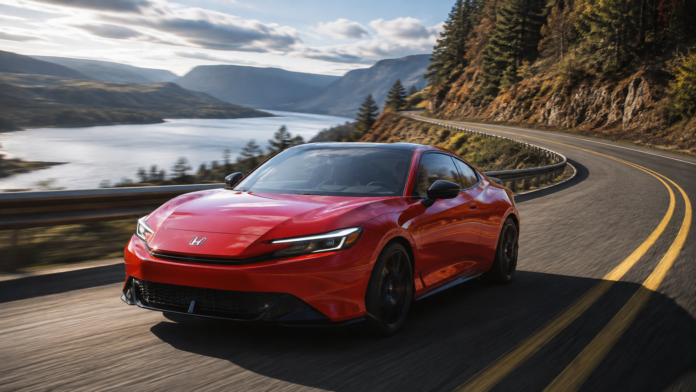
The lights of the St. Johns Bridge glow in the distance as a low, sleek silhouette carves through the curves of the winding roads above the Willamette River. The sound is not the roar of a VTEC engine or the whine of a turbocharger. It is the quiet hum of a hybrid powertrain, working in harmony with a chassis that has been tuned for grand touring comfort. This is the 2026 Honda Prelude, a nameplate that has returned after a 25-year hiatus, and it arrives as a hybrid coupe that prioritizes style, efficiency, and comfort over outright performance.

The Prelude name carries significant weight with enthusiasts. The last version, the 1997 Type SH, used clever torque-vectoring hardware and strong-for-the-era performance to earn a reputation as a real driver’s car. The new Prelude is not a direct successor to that legacy. It is a different car for a different era, one that combines the Civic’s hybrid powertrain with Civic Type R chassis hardware, wrapped in a striking body that turns heads.

The Powertrain: Hybrid Efficiency, 200 Horsepower

The heart of the new Prelude is Honda’s two-motor hybrid system, which combines a 2.0-liter Atkinson-cycle four-cylinder engine with two electric motors. The system produces a combined 200 horsepower and 232 lb-ft of torque, sent to the front wheels through a direct-drive setup with no traditional transmission.

The performance figures are modest by sports car standards. The Prelude accelerates from 0 to 60 mph in approximately 6.4 seconds, slightly slower than the Civic Hybrid with which it shares its powertrain. The quarter mile is completed in 15.2 seconds at 90.7 mph. The car is quick enough for daily driving, but its pace does not quite match the promise of its aggressive stance and wide tires.

Where the Prelude excels is efficiency. The EPA estimates fuel economy at 46 mpg city, 41 mpg highway, and 44 mpg combined, making it one of the most fuel-efficient coupes on the market. The hybrid system delivers smooth, near-instant electric torque at low speeds, making the car feel responsive around town.

The S+ Shift System: Simulated Engagement

The Prelude marks the debut of Honda’s S+ Shift system, an innovative drive mode that simulates a performance transmission experience. The system uses paddle shifters to mimic the characteristics of a dual-clutch automatic, with downshift blips, rev matching, gear holding, and enhanced engine sounds.

The system is a clever attempt to add character to the hybrid powertrain, but it is not fully convincing. There is little real interruption in power delivery, and the sound does not truly mimic a conventional transmission working through ratios. The car was also slower to 60 mph when using the system in testing. For drivers who truly want to shift gears, this system simply cannot match the authenticity of a proper manual transmission.

The Chassis: Civic Type R Hardware

Underneath the striking bodywork, the Prelude borrows suspension, steering, and brake hardware from the Civic Type R. The dual-axis strut front suspension, adaptive dampers, and Brembo four-piston front calipers are all derived from the iconic hot hatch.

The result is a chassis that is properly sorted. The Prelude is planted, direct, and tidy on the road, with immediate turn-in, well-controlled body roll, and a mostly neutral chassis balance. The adaptive dampers make a difference, and Sport mode tightens everything up a notch. The brakes are strong and confidence-inspiring, with the lightweight two-piece front rotors and Brembo calipers providing exceptional stopping power.

However, the driving experience never quite comes alive. The steering is direct but a bit numb and too light in every mode other than Sport, in which it becomes just tight enough. The chassis feels seriously capable but somehow underutilized. The car grips and goes, but it lacks the rear-drive fluency of a Toyota GR86, the intimacy of a Mazda MX-5, and the involvement of a Civic Si.

The Design: Striking and Modern

The Prelude’s styling is one of its strongest qualities. It is low-slung, sleek, and visually striking in a way modern Hondas rarely are. The design is not retro cosplay, yet it still looks the part of a Prelude. The long tail, sharp nose, and clean surfaces give it real concept-car presence on the road.

The car sits on a chopped version of the Civic Hybrid’s platform, with a 130 mm shorter wheelbase. It is marginally shorter than the Civic but 47 mm longer than the Civic, showing how styling has stretched the body to suit its sporty classification. The 19-inch wheels and wide track give it a purposeful stance.

The Interior: A Mix of Quality and Compromise

The cabin is a mix of smart Honda restraint and some cost-cutting measures. The front seats are the highlight, combining blue and white elements beautifully and giving the cabin a sense of occasion that is missing from a normal Civic Hybrid. The driver’s seat is shaped differently to the passenger seat, with firmer padding and more prominent bolsters to handle lateral forces during spirited driving.

The rear seats are where the compromises become apparent. The back seats are a cheap-feeling black cloth, which breaks the blue contrast-stitching theme running through the cabin and makes the second row feel like it came from another car. Rear space is more usable than in a GR86, but headroom remains limited, and adults will not appreciate being put back there.

The boot is a 264-liter VDA unit, expandable to 663 liters with the rear seats folded, making the Prelude more practical than its silhouette suggests. The liftback tailgate gives it a more useful cargo area than a conventional coupe boot would.

The Portland Night

The Prelude has completed its drive through the winding roads above Portland. Its hybrid powertrain has delivered the 200 horsepower that makes it one of the most fuel-efficient coupes on the market. The Civic Type R chassis hardware has kept it composed through the curves. The driver, cocooned in the supportive front seat, has experienced a level of comfort that is as refined as it is engaging.

The Prelude is not a car for everyone. It is a car for those who value style, efficiency, and comfort over outright performance, who are willing to accept the compromises of a hybrid powertrain and a simulated gearbox. But it represents a significant moment in Honda’s history. It is the return of a beloved nameplate, and it proves that Honda can still build a car that is stylish, efficient, and engaging to drive.
Hyundai Ioniq 5 N: The EV That Fakes a Gearbox and Gets Away With It – A Morning at the Anglesey Circuit

0

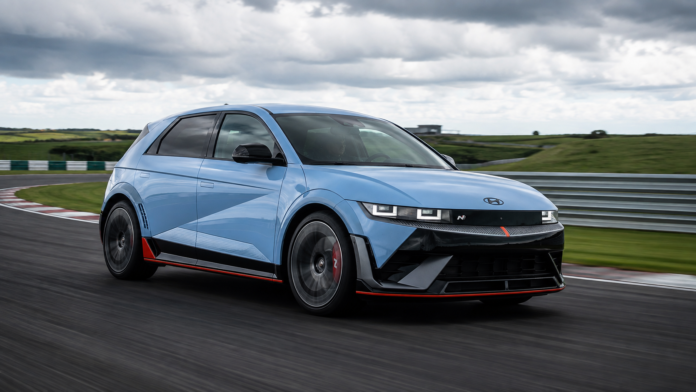
The sun is just beginning to burn through the coastal mist at the Anglesey Circuit in Wales. The track is quiet, but the air hums with anticipation. A car sits in the pit lane, its silhouette familiar yet transformed, its design unmistakably Hyundai but unlike any electric vehicle the company has built before. This is the Hyundai Ioniq 5 N, the first electric performance car that enthusiasts actually recommend, and it achieves this by doing something that should not work: it fakes a gearbox and gets away with it.

The Ioniq 5 N is the high-performance variant of Hyundai’s retro-futuristic electric crossover, and it represents a fundamental shift in how enthusiasts think about electric vehicles. It weighs 2,275 kilograms, it has a 650-horsepower dual-motor powertrain, and it can accelerate from 0 to 100 km/h in 3.4 seconds. But those figures, impressive as they are, do not explain why the Ioniq 5 N has won over the skeptics. The explanation lies in two systems: N e-Shift and N Active Sound+.

The N e-Shift System: Simulating the Real Thing

The N e-Shift system emulates the behavior of an eight-speed dual-clutch transmission. It is not a physical gearbox; it is a software layer that sits on top of the single-speed electric drivetrain. But the effect is uncanny. The system creates virtual shift points, complete with a momentary power cut, a brief surge of acceleration, and a subtle vibration that accompanies the upshift. The driver can even accelerate to the virtual redline, hitting a 7,700 rpm limiter before shifting to the next gear.

The system is controlled by paddles behind the steering wheel, allowing the driver to shift through eight virtual gears while accelerating and braking. The experience is not a gimmick; it is a genuine attempt to replicate the engagement of a traditional performance car. The system even creates a gear-specific drag torque, mimicking the engine-braking behavior of a combustion car.

This is not a feature that Hyundai has kept secret. The company has been clear about its intentions. The Ioniq 5 N is designed for drivers who adore being behind the wheel, for enthusiasts who want to take the driving of an electric vehicle to the next level. The N e-Shift system is the tool that achieves this, offering a sensory response that performance fans miss in an electric vehicle.

The N Active Sound+ System: A Soundtrack for the Drive

The N e-Shift system is complemented by the N Active Sound+ system, which provides a synthetic engine note that matches the virtual gear changes. The sound is not a generic electric hum; it is designed to mimic the sound of a four-cylinder turbocharged engine, with the pitch and intensity changing based on throttle position and virtual rpm. The system is adjustable, allowing the driver to choose between different sound profiles, including a more futuristic “electric” sound or a more traditional combustion engine note.

The combination of N e-Shift and N Active Sound+ transforms the Ioniq 5 N into something that is greater than the sum of its parts. The car’s weight, 2,275 kilograms, is still substantial. The chassis is still that of a crossover. But the experience, the engagement, the connection between driver and machine is genuinely different.

The Industry is Following

Hyundai is not alone in this approach. Porsche, which previously argued that simulated gear changes were unnecessary, has changed its position. The company has introduced an E-Shift system for the 2026 Taycan, complete with eight virtual gears, a virtual rev limiter, and a synthetic soundtrack that varies by model. Porsche’s engineers have even praised Hyundai’s system, describing it as “really, really good.”

Mercedes-AMG is also adopting the technology. The GT 4-Door Coupe features simulated gear shifts via the paddles, mimicking the company’s nine-speed automatic transmission. BMW’s electric M3, due next year, is expected to include a similar feature.

The Anglesey Morning

The Ioniq 5 N has completed its demonstration laps. Its N e-Shift system has delivered the engagement that makes it one of the most convincing electric performance cars on the road. The N Active Sound+ system has provided the soundtrack. The driver, cocooned in the performance-focused cabin, has experienced a level of engagement that is as exclusive as it is convincing.

The Ioniq 5 N is not a car for everyone. It is expensive, with a starting price of approximately €78,000. It is a car that prioritizes engagement over efficiency, and it is a car that represents a significant shift in how electric vehicles are perceived. But it is also a car that proves the electric performance car can be engaging, that the joy of driving can be found in a battery-powered crossover, and that faking a gearbox can be, against all odds, a good thing.

Lotus Emeya: A Four-Door Lotus Nobody Expected – A Morning at the Sepang Circuit

0

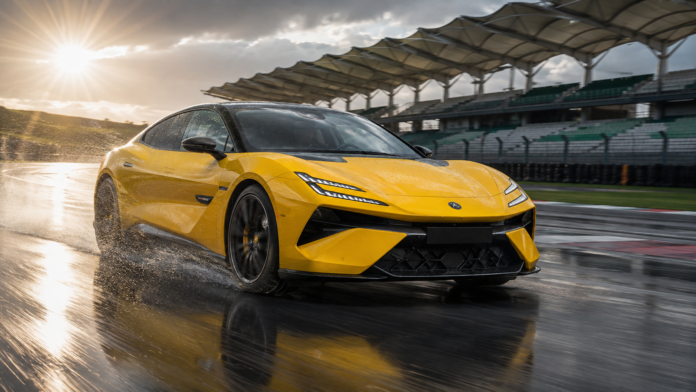
The sun is burning through the tropical haze over the Sepang International Circuit in Malaysia. The track is quiet, but the air hums with the echo of a recent record. A car sits in the pit lane, its silhouette low and purposeful, its design unmistakably Lotus yet unlike anything the company has built before. This is the Lotus Emeya, a four-door electric hyper-GT that represents the most significant departure from the brand’s lightweight philosophy since Colin Chapman founded the company.

The Emeya is the third electric model from Lotus, following the Evija hypercar and the Eletre SUV. It is a car that bridges Hethel’s heritage and its electric future, with unapologetic performance, a refined appearance, and abundant levels of luxury and technology. It is also the car that proves Lotus can build a four-door saloon without entirely abandoning its driver-focused DNA. It is a car that has already set a lap record at Sepang, and it is a car that challenges the established order in the electric luxury segment.

The Record: 2 Minutes 20.317 Seconds

The Emeya’s credentials were established at the Sepang International Circuit, where the Emeya completed a lap in 2 minutes 20.317 seconds. The time was set by GT champion Daniel Lu, and it was over seven seconds faster than the previous best electric car time at the circuit. The 5.5-kilometer layout, with its long straights and varied corners, demanded a balance of power, braking, stability, and cornering speed. The Emeya delivered.

Chong Yok Meng, Lotus’s senior director of Chassis and Vehicle Dynamics, said the result reflects the dedication of the engineering team and the commitment to delivering an exceptional driving experience, with precision and outstanding performance. For Lotus, the circuit has always been the ultimate test bench, and the Emeya passed.

The Powertrain: 918 HP and a Two-Speed Transmission

The Emeya is offered in two powertrain families: the 600 and the 900. The 600 models use a dual-motor all-wheel-drive system producing 612 horsepower, enough for 0 to 100 km/h in 4.15 seconds and a top speed of 250 km/h. The 900 models produce 918 horsepower, accelerating from 0 to 100 km/h in just 2.78 seconds. The top speed remains 250 km/h, but the 900’s acceleration is in hypercar territory.

The 900 models feature a two-speed transmission on the rear axle, a solution that improves both acceleration and high-speed efficiency. The gearbox allows the Emeya to maintain strong performance at autobahn speeds, a trait that distinguishes it from many electric rivals. The rear motor revs to over 17,000 rpm, allowing the Emeya to develop power and torque for longer than competitors. The effect is twofold: the Emeya is among the most autobahn-capable EVs, but it also avoids the nausea-inducing full-power surge from low speeds that some electric cars deliver. It is a car that rewards smooth driving.

The Driving Experience: For the Drivers, But Different

The Emeya is a Lotus, and it has been developed under the “For The Drivers” philosophy. The steering, chassis setup, and suspension response are designed to maintain the precision and agility that have historically defined the brand. The aim was not simply to create a fast electric car, but to ensure it still feels like a Lotus behind the wheel.

In practice, the Emeya delivers a composed, comfortable ride that is remarkably refined for a car with this level of power. The 600 models are well-judged, offering a balance of performance and daily usability. The 900 models are more extreme, with active anti-roll bars, four-wheel steering, and an active aero package that includes a front splitter that drops closer to the ground and a rear spoiler that folds out at speed.

The Emeya’s braking performance is exceptional. It outbraked all the EV rivals tested by one publication on both dry and wet surfaces, with no fade. The brake pedal is firmer than the mushy pedals in some rivals, though it can be sensitive at parking speeds. The 600 models feel more cohesive, while the 900 can feel a bit big and boisterous.

The Weight: The Fundamental Contradiction

The Emeya weighs approximately 2.5 tonnes, a figure that is almost impossible to reconcile with the Lotus philosophy of lightweight construction. The weight is the result of the 102 kWh battery pack, the dual motors, the luxury equipment, and the structural requirements of a four-door saloon. It is a car that is heavy, and it feels heavy.

The weight dulls the performance edge that a lighter car would provide. The Emeya lacks the steering feel and agility of a traditional Lotus such as the Emira. It is a car that composes itself well at speed, but it can go soft and gooey like a marshmallow when pushed into a corner at the limit. For 99 percent of drives, this is not an issue. But for the enthusiast, it is a reminder that this is not the Lotus of old.

The Interior: Luxury and Technology

The Emeya’s cabin is a world away from the spartan interiors of Lotus’s past. The interior features premium materials, digital displays, and advanced systems that create an immersive experience. A 15.6-inch OLED infotainment screen is powered by ultra-fast processors, with a bespoke Lotus system that is easy to navigate. Wireless Apple CarPlay and Android Auto are standard, along with built-in Spotify and TIDAL, best enjoyed through the 15-speaker KEF sound system.

The driving position is low and well-judged, comparable to a Porsche Taycan’s, but the scuttle is lower, making the cabin feel airier. The seats are comfortable and supportive, with the seats automatically hugging the driver in Sport or Track mode. Rear passengers are well catered for in terms of knee room, though the floor feels high and headroom is limited.

The Sepang Morning

The Emeya has completed its demonstration laps. Its 918 horsepower has delivered the performance that makes it one of the most extreme electric cars on the road. The active aerodynamics and four-wheel steering have kept it planted through the curves. The driver, cocooned in the luxurious cabin, has experienced a level of performance that is as exclusive as it is engaging.

The Emeya is not a car for everyone. It is expensive, with prices starting at approximately $130,000. It is a car that prioritizes luxury and technology over lightweight agility, and it is a car that represents a fundamental shift in Lotus’s identity. But it is also a car that proves Lotus can build a four-door electric saloon without entirely abandoning its driver-focused DNA. It is a car that is fast, comfortable, and capable. And it is a car that, for better or worse, is the future of Lotus.

Caterham Project V: Can Caterham Go Electric Without Losing the Plot? – A Morning at the Anglesey Circuit

0

The sun is just beginning to burn through the coastal mist at the Anglesey Circuit in Wales. The track is quiet, but the air hums with anticipation. A car sits in the pit lane, its silhouette low and purposeful, its design unmistakably Caterham yet unlike anything the company has built before. This is the Caterham Project V, the British brand’s first electric car, and it represents the biggest gamble in the company’s history.

Caterham has built its reputation on a single, enduring formula: lightweight, simple, and pure. The Seven has been in continuous production for over 60 years, and it has never needed a roof, a radio, or a battery pack to deliver driving pleasure. But the Project V changes that. It is a coupe, with a fixed roof, four seats, and an electric motor supplied by Yamaha. It is a car that Caterham hopes will prove that electrification does not have to mean the end of driving engagement.

The Weight: The First Compromise

The Project V has been in development since 2022, and the journey has not been straightforward. The concept, unveiled in 2023, promised a weight of 1,190 kg and a 0-62 mph time of under 4.5 seconds. But the first running prototype, revealed at the Tokyo Auto Salon in January 2026, has told a different story.

The production-ready prototype weighs 1,430 kg, a significant increase from the target. The additional mass comes from the battery pack, which is a 47 kWh unit mounted in two packs, one behind the front seats and one ahead of the rear axle, to optimize weight distribution. The 0-62 mph time has slipped to under 5.0 seconds, a figure that is still respectable but no longer class-leading. The top speed is 143 mph, and the range is a claimed 249 miles.

The Powertrain: Yamaha Power, Caterham Tuning

The heart of the Project V is a rear-mounted electric motor supplied by Yamaha, producing 268 horsepower. The motor is a 400-volt e-axle that integrates the inverter, reduction gear, and motor into a single compact unit. It is a proven design, used in other applications, but Caterham has tuned it to suit the car’s character.

The motor’s power delivery is linear, with peak torque available from standstill. The car is rear-wheel drive, maintaining the traditional Caterham layout, and the torque vectoring system is calibrated to provide a playful, adjustable balance.

The Chassis: A New Direction

The Project V rides on a tubular spaceframe chassis, a departure from the Seven’s ladder frame. The suspension is independent, with double wishbones at the front and a multi-link setup at the rear. The body is made from carbon fiber, keeping weight to a minimum.

The design was penned by Anthony Jannarelly, a Seven owner and designer known for his work on the Ferrari SP3JC. The exterior is a modern interpretation of Caterham’s design language, with a long hood, a short rear deck, and a prominent oval grille. The interior is minimalist, with a flat dashboard reminiscent of the Seven, a circular digital display, and a 2+2 seating layout.

The Market: A Bold Price

The Project V is expected to cost approximately $135,000, placing it in direct competition with the Porsche 718 Cayman and the Alpine A110. It is a bold positioning, reflecting Caterham’s confidence in the car’s appeal. The Project V will be sold globally, including in the United States, a market that Caterham has traditionally neglected.

The Anglesey Morning

The Project V has completed its demonstration laps. Its Yamaha motor has delivered the 268 horsepower that makes it one of the most engaging electric cars on the road. The lightweight chassis and rear-wheel drive have kept it playful through the curves. The driver, cocooned in the minimalist cabin, has experienced a level of performance that is as exclusive as it is engaging.

The Project V is not a car for everyone. It is expensive, with a price that approaches that of a Porsche 911. It is a car that prioritizes driving engagement over comfort and convenience, and it is built in small numbers by hand. But it represents a significant moment in Caterham’s history. It is the car that proves the company can go electric without losing the plot, that the formula of lightweight, simple, and pure can survive a battery pack, and that the joy of driving can still be found in a car that is built by hand, driven with intent, and cherished as art.

Ariel Atom 4R: A Track Weapon With No Bodywork – A Morning at the Anglesey Circuit

0

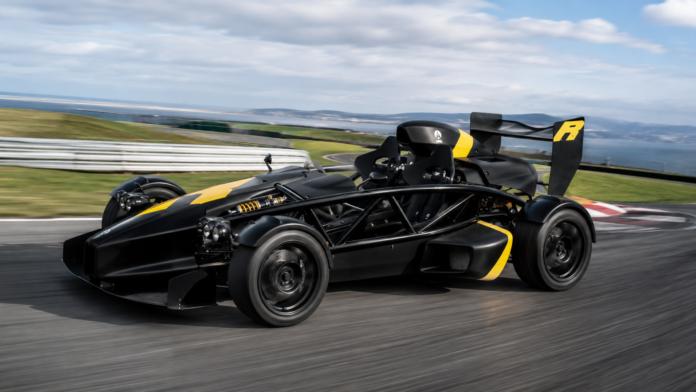
The sun is just beginning to burn through the coastal mist at the Anglesey Circuit in Wales. The track is quiet, but the air already hums with anticipation. A vehicle sits in the pit lane, its exoskeleton chassis gleaming, its turbocharged engine idling with a purposeful rasp. This is the Ariel Atom 4R, a machine that strips away everything except the essentials: a turbocharged Honda four-cylinder engine, a lightweight chassis, and a set of wheels and tires.

The Atom 4R is the most track-focused road-legal car Ariel has ever built. With 400 horsepower from a tuned Honda Civic Type R engine, a curb weight of approximately 1,400 pounds, and a lap time at the Top Gear test track that embarrasses hypercars costing five times as much, it is a testament to the principle that lightness is the ultimate performance advantage.

The Powertrain: Honda Heart, Race-Grade Soul

The heart of the Atom 4R is a 2.0-liter turbocharged four-cylinder engine sourced from the Honda Civic Type R. Ariel’s engineers have extensively modified the engine to produce 406 horsepower and 369 lb-ft of torque, a significant increase over the standard output. The upgrades include improved cooling, a reworked ECU, and a bespoke exhaust system.

The engine is mated to a six-speed sequential gearbox, allowing for rapid, clutchless upshifts. This combination propels the Atom 4R from 0 to 60 mph in just 2.7 seconds and on to a top speed of 170 mph. The engine’s power delivery is sharp and immediate, with a surge of boost that requires the driver’s full attention.

The Track Record: Humiliating Hypercars

The Atom 4R’s performance is best demonstrated by its lap times. With The Stig at the wheel, it lapped the Top Gear test track in 1 minute 13.7 seconds. This time eclipses the Ariel Atom V8 (1:15.1) and places it ahead of the Pagani Huayra, the Lamborghini Sesto Elemento, and the BAC Mono.

The Atom 4R achieved this time on the same circuit, in the same conditions, driven by the same driver. The result is a clear demonstration of the car’s capabilities. In the real world, this translates to a car that can keep pace with a McLaren 675LT, a vehicle costing several times as much and offering far more in the way of luxury.

The Chassis: No Bodywork, No Compromise

The Atom 4R’s design is defined by what it lacks. There is no roof, no doors, no bodywork to speak of. The driver and passenger sit exposed to the elements, with only a small windshield for protection. This lack of bodywork is not a compromise; it is the point. The car’s weight is kept to an absolute minimum, allowing the engine to deliver its power with devastating effect.

The chassis is a tubular steel frame, a design that has been refined over years of Atom production. The suspension is fully adjustable, allowing the driver to fine-tune the car’s handling to suit a particular track or driving style. The brakes are uprated, with larger discs and calipers to handle the car’s performance.

The Anglesey Morning

The Atom 4R has completed its demonstration laps. Its turbocharged Honda engine has delivered the 406 horsepower that makes it one of the most extreme track cars on the road. The lightweight chassis and sticky tires have provided immense grip through the curves. The driver, cocooned in the minimalist cockpit, has experienced a level of performance that is as exclusive as it is thrilling.

The Atom 4R is not a car for everyone. It is a car for those who value the raw, unfiltered experience of driving, who are willing to accept the compromises of a vehicle that prioritizes performance above all else. But it represents a significant moment in automotive history. It is a reminder that lightness is a performance advantage that no amount of horsepower can replace, and that the thrill of driving can still be found in its purest form.

Morgan Supersport: Old-School Charm, Modern BMW Power – A Morning in the Malvern Hills

0

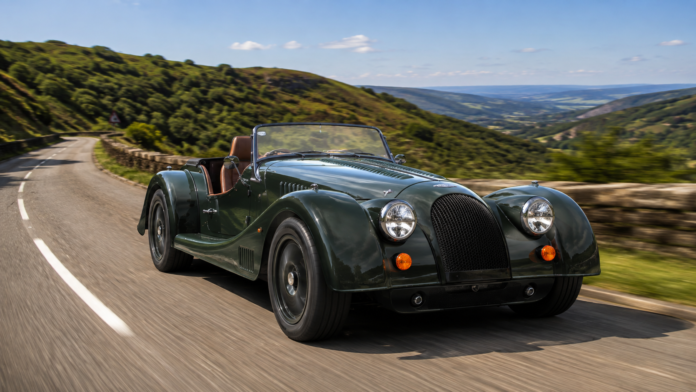
The sun is rising over the Malvern Hills in Worcestershire, casting long shadows across the narrow lanes that wind through the English countryside. The air is cool and damp, the scent of grass and earth drifting through the open cabin of a car that is both timeless and thoroughly modern. This is the Morgan Supersport, a car that combines the charm of a handcrafted British roadster with the power and refinement of a BMW straight-six engine.

The Supersport is Morgan’s new flagship model, the successor to the Plus Six, and it represents the most significant step forward in the company’s 116-year history. It rides on a bonded aluminum chassis that delivers a level of rigidity and refinement that Morgan owners could only dream of a decade ago. Yet it retains the traditional craftsmanship that defines the brand: hand-formed aluminum bodywork over an ash wood frame. It is a car that proves old-school charm and modern performance can coexist.

The Powertrain: A BMW Straight-Six, Perfected

The heart of the European-spec Supersport 400 is the BMW B58 engine, a 3.0-liter turbocharged straight-six that produces 408 PS (402 horsepower) and 500 Nm of torque. This is the same engine that powers the Toyota GR Supra, the BMW M340i, and the Z4 M40i, but in the Morgan, it is paired with a car that weighs just 1,170 kilograms.

The power-to-weight ratio is exceptional. At 2.93 kg per PS, the Supersport 400 outperforms many six-figure supercars. The performance figures reflect this: 0 to 100 km/h in 3.6 seconds, a top speed of 290 km/h, and a power-to-weight ratio of 257 kW per tonne. The engine is paired with a ZF eight-speed automatic transmission, with an optional aluminum gear selector available. An optional limited-slip differential is available for those who want maximum traction on corner exit.

The US-spec Supersport is powered by a BMW B46 engine, a 2.0-liter turbocharged four-cylinder producing 255 horsepower. This is a concession to US emissions regulations, but the car still delivers an engaging driving experience thanks to its low weight and chassis tuning. The US version is homologated under the Replica Vehicle legislation established by the FAST Act, allowing Morgan to sell up to 325 vehicles annually.

The Chassis: Bonded Aluminum and Ash Wood

The Supersport is built on the bonded aluminum platform, a significant evolution of the CX platform that Morgan introduced in 2019. The move from the steel ladder frame that Morgan used for 84 years to the bonded aluminum chassis yielded an improvement of “several hundred percent” in torsional rigidity. The new chassis weighs just over 200 pounds, contributing to a dry weight of 2,233 pounds.

The body is hand-formed aluminum, crafted using traditional techniques, and is mounted over a semi-structural ash wood frame. The combination of the bonded aluminum chassis and the ash wood frame is a testament to Morgan’s ability to blend tradition with modern engineering.

The Dynamic Handling Pack: Precision and Control

The Supersport 400 comes standard with the Dynamic Handling Pack, which includes adjustable Nitron dampers with 24 levels of adjustment, revised suspension geometry, and a specific calibration for the model. The result is a chassis that is more precise and communicative, responding clearly to steering inputs while maintaining a fluid and secure driving experience on a wide variety of roads.

The optional limited-slip differential improves traction control and stability. The car rides on 19-inch forged Sportlite wheels with Michelin Pilot Sport 5 tires, which reduce unsprung mass and inertia.

The Driving Experience: Old-School Charm, Modern Refinement

The Supersport offers a driving experience that is both familiar and new. The steering is light but has a lovely fluidity and mechanical-feeling build of weight. The ride quality is improved over the Plus Six, with only the worst road scars delivering an occasional jolt through the cabin. The body rolls more than some sports cars, but in a very natural way that never risks throwing you off course.

The optional carbon fiber hard top increases the car’s stiffness and makes it more of a grand tourer. The soft top is a folding mohair unit. The interior features new Alcantara and leather upholstery options, with bespoke instruments created in collaboration with a specialist supplier. An optional aluminum automatic gear selector is available, replacing the stock BMW unit.

The traction and stability control systems are excellent, with ESC Sport mode allowing a bit of wheel slip without ever allowing the rear end to truly step out under power. With the optional limited-slip differential, the Supersport feels alive, gently tightening its line on the power, like a proper rear-drive sports car.

The Malvern Morning

The Supersport has completed its drive through the Malvern Hills. Its BMW B58 engine has delivered the 408 PS that makes it the most powerful production car Morgan has ever built. The bonded aluminum chassis and adjustable Nitron dampers have kept it composed through the curves. The driver, cocooned in the handcrafted interior, has experienced a level of performance that is as exclusive as it is engaging.

The Supersport is not a car for everyone. It is expensive, with a starting price of approximately £113,000 in the UK and $119,995 in the US. It is a car that prioritizes driving engagement over comfort and convenience, and it is built in small numbers by hand. But it represents a significant moment in Morgan’s history. It is the car that proves old-school charm can survive in the modern era, that traditional craftsmanship can coexist with modern technology, and that the joy of driving can still be found in a car that is built by hand, driven with intent, and cherished as art.

Radford Type 62-2: Lotus Bones With Jenson Button’s Input – A Morning at the Quail Lodge

0

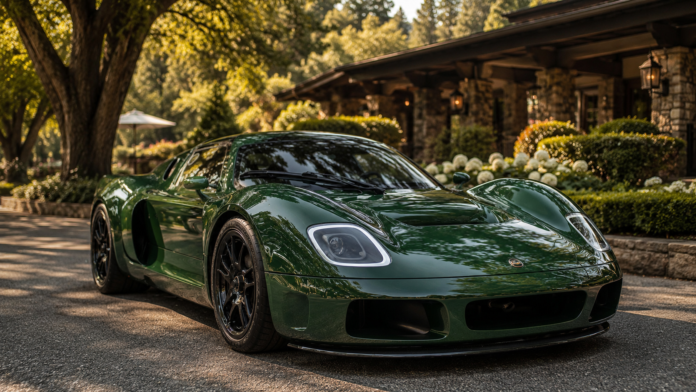
The sun is rising over the Monterey Peninsula as a low, sleek silhouette sits on the lawn at the Quail Lodge in Carmel, California. The car is unmistakably inspired by a 1960s race car, yet it is thoroughly modern. This is the Radford Type 62-2, a coachbuilt sports car that combines Lotus Evora bones with a 1960s racing silhouette on top and Formula 1 champion Jenson Button’s input in the development.

The Type 62-2 is the first modern car from Radford, a British coachbuilder revived by Button, designer Mark Stubbs, builder Ant Anstead, and business adviser Roger Behle. It is a tribute to the Lotus Type 62 race car from 1969, but it is not a replica. It is a modern interpretation, built on a Lotus Evora chassis with custom carbon fiber bodywork and a supercharged V6 engine.

The Lotus Bones

Underneath the retro bodywork, the Type 62-2 is pure Lotus. It uses the bonded aluminum chassis from the Evora, which provides a stiff and lightweight foundation for the car’s performance. The chassis is lower than the Evora, with the car standing just 1,133 mm tall, contributing to a low center of gravity that Button describes as providing minimal body roll and supreme driver confidence.

The engine is the same 3.5-liter supercharged V6 that Lotus uses in the Evora and Emira, mounted low behind the driver. The base Classic version produces 430 horsepower, while the Gold Leaf version upgrades to 500 horsepower through revised pistons, connecting rods, camshafts, and engine mapping. A top-spec JPS version is also available, producing 600 horsepower. The JPS version features a larger supercharger and is expected to wear the iconic black and gold John Player Special livery.

Jenson Button’s Input

Button’s involvement goes beyond a marketing exercise. He has been instrumental in developing the car’s driving dynamics, testing it at Lotus’s Hethel test track and providing feedback on the chassis setup. He described the car as “a pure driver’s car at its heart” with a low center of gravity and a chassis that “exhibits all the hallmarks of a beautifully set up race car for the road.”

The Type 62-2 has no driver aids. There is no traction control, no stability control, and no ABS. This is a deliberate choice, reflecting the car’s focus on raw, unfiltered driving engagement. The steering is unassisted, providing maximum feedback, and the car is available with a six-speed manual transmission. In the JPS version, Button achieved 0 to 62 mph in 2.9 seconds and a top speed of 186 mph.

The Coachbuilt Craftsmanship

Radford is a coachbuilder, and the Type 62-2 reflects that heritage. Each car is built to the owner’s specifications, with extensive personalization options available. The interior is handcrafted, with a focus on traditional materials and craftsmanship. The car features a six-inch digital display, a digital rearview mirror, and a premium audio system, but the emphasis is on the driving experience.

The Type 62-2 is limited to 62 units, with only 12 of those being Gold Leaf liveried cars. The Gold Leaf Quail Edition, unveiled at the Quail Lodge, features carbon ceramic brakes, carbon composite wheels, and a more aggressive aerodynamic package. The JPS version will be even more exclusive, with only 12 units planned.

The Quail Morning

The Type 62-2 has completed its demonstration run. Its supercharged V6 has delivered the 500 horsepower that makes it one of the most engaging sports cars on the road. The carbon fiber body and unassisted steering have provided a level of feedback that is rare in modern cars. The driver, cocooned in the handcrafted interior, has experienced a level of performance that is as exclusive as it is extraordinary.

The Type 62-2 is not a car for everyone. It is a car for those who value the pure, unfiltered experience of driving, who are willing to accept the compromises of a car that is built without driver aids. But it represents a significant moment in automotive history. It is the revival of a forgotten coachbuilder, a tribute to a 1960s race car, and a testament to the vision of a Formula 1 champion.

The Type 62-2 is not just a car. It is a statement. It is a reminder that even in an era of electrification and automation, there is still room for a car that is built by hand, driven with intent, and cherished as art.

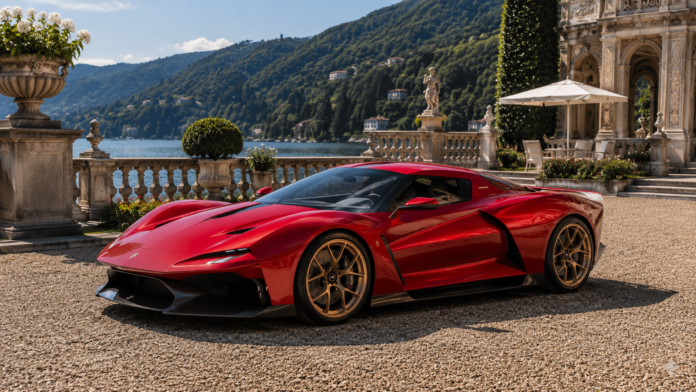
Bizzarrini Giotto: A Forgotten Italian Name Returns With a V12 – A Morning at the Villa d’Este

0

The sun is rising over Lake Como as a low, sculpted silhouette sits on the lawn at the Villa d’Este, surrounded by some of the most exquisite automotive art ever created. The car’s presence is understated but unmistakable. It is a Bizzarrini Giotto, the first entirely new model from a marque that has been dormant for more than five decades, and it represents a bet on whether a forgotten Italian name can compete in the hypercar segment.

The Giotto is the revival of a brand that was founded in the 1960s by Giotto Bizzarrini, one of the most influential engineers in Italian automotive history. He worked on the Ferrari 250 GTO, developed the Lamborghini V12, and created the legendary 5300 GT before his company went bankrupt in 1969. Now, more than 50 years later, a new Bizzarrini has arrived, and it carries the weight of that legacy.

The Name: A Tribute to a Legend

The Giotto is named after the company’s founder, Giotto Bizzarrini, who passed away in 2023 at the age of 96. The name is a deliberate choice, a tribute to the man who defined the brand’s engineering philosophy. The engine displacement, 6.6 liters, is a nod to his birth date: June 6, 1926.

The development of the car was led by Chris Porritt, formerly of Aston Martin and Rimac, and the design was penned by Giorgetto Giugiaro and his son Fabrizio, a partnership that rekindles the relationship that produced the original 5300 GT.

The Powertrain: A Cosworth V12 for the Purists

The heart of the Giotto is a naturally aspirated 6.6-liter V12 engine developed by Cosworth, the same British engineering firm that created the engines for the Gordon Murray T.50 and T.33. The engine is a bespoke unit, designed specifically for the Giotto, and it is expected to produce approximately 1,014 horsepower and 1,150 Nm of torque.

The engine is mounted longitudinally behind the cockpit, driving the rear wheels through an eight-speed dual-clutch transmission. It is a naturally aspirated unit, with no turbochargers, no electric motors, and no hybrid assistance. It is a deliberate choice, a rejection of the trend toward electrification in favor of the pure, unfiltered experience of a high-revving V12.

The chassis is a carbon fiber monocoque, with the body also made from carbon fiber. The dry weight is approximately 1,200 kilograms, giving it a power-to-weight ratio that rivals the most extreme hypercars.

The Design: Giugiaro’s Return to Bizzarrini

The Giotto’s design is a collaboration with GFG Style, the design studio founded by Giorgetto and Fabrizio Giugiaro. The elder Giugiaro had a hand in the design of the original 5300 GT, and the Giotto carries clear visual references to that car. The triangular B-pillar, the dual bonnet slats, and the shape of the glasshouse are all nods to the 1960s original.

The car’s proportions are classic mid-engine supercar, with a long wheelbase, short overhangs, and a predatory forward stance. The rear windshield wraps around the rear, almost cascading onto the wheel arches, and the tail tapers into an aerodynamic teardrop shape. The design is functional as well as beautiful, with active aerodynamic elements including a dihedral front splitter and rear diffuser.

Does the Name Carry Enough Weight?

The Bizzarrini name carries significant weight among automotive historians and connoisseurs. The 5300 GT is a legend, and the Ferrari 250 GTO, which Giotto Bizzarrini engineered, is one of the most valuable cars in the world. The Giotto has been compared to the Pagani Utopia, another Italian hypercar built around a naturally aspirated V12.

But the Bizzarrini name does not have the same recognition as Ferrari or Lamborghini. The company was only active from 1964 to 1969, producing approximately 140 cars. The brand is a niche within a niche, and its revival is a bet that there are enough collectors and enthusiasts who value its heritage to support a multi-million-dollar hypercar.

The Giotto has been in development since 2023, and testing was scheduled to begin in 2024. As of 2026, the car has not yet entered production, and its future remains uncertain. The project appears to have stalled, and it is unclear whether the Giotto will reach customers.

The Villa d’Este Morning

The Giotto has completed its demonstration run. Its Cosworth V12 has delivered the 1,014 horsepower that makes it one of the most powerful naturally aspirated cars ever built. The carbon fiber chassis and advanced aerodynamics have kept it planted through the curves. The driver, cocooned in the cabin, has experienced a level of performance that is as exclusive as it is extraordinary.

The Giotto is not a car for everyone. It is a car for those who value the pure, unfiltered experience of driving, who are willing to accept the compromises of a car that is built for enthusiasts. But it represents a significant moment in automotive history. It is the revival of a forgotten Italian name, and it proves that there is still a market for cars that prioritize emotion over efficiency.

The Giotto is not just a car. It is a statement. It is a reminder that even in an era of electrification and automation, there is still room for a car that is built by hand, driven with intent, and cherished as art. The forgotten Italian name has returned. But whether it has returned to stay remains an open question.

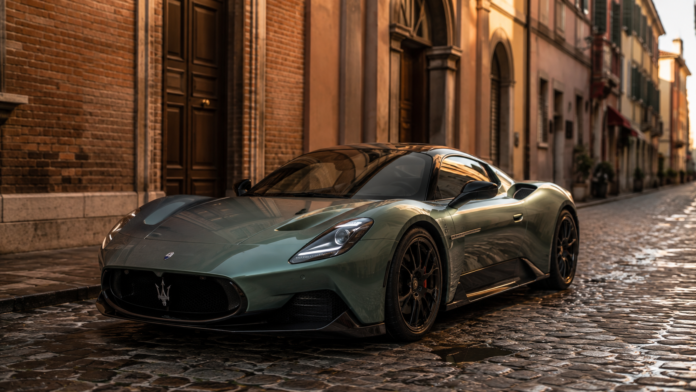
Maserati MCPura: The MC20 Grows Up – A Night in Modena

0

The lights of the Palazzo Ducale glow in the distance as a low, sculpted silhouette glides through the cobblestone streets of Modena. The sound is unmistakable, the purposeful hum of a twin-turbo V6 echoing off the Renaissance walls. This is the Maserati MCPura, the evolution of the MC20 that launched in 2020, and it represents Maserati’s attempt to make its halo car stick.

The MCPura is a mid-life evolution of the MC20, rebranded and refined to sharpen its focus and elevate its appeal. “Pura” translates loosely to “pure,” and the name reflects the car’s defining philosophy: no hybrid system, no all-wheel drive, no electric motors, no apologies. Just a twin-turbo V6, a carbon fiber tub, rear-wheel drive, and a shape that could hang in a gallery.

The Powertrain: Still Pure, Still Potent

The heart of the MCPura remains the Nettuno V6, a 3.0-liter twin-turbo masterpiece that produces 630 horsepower and 730 Nm of torque in its latest iteration. The engine features Formula 1-derived pre-chamber combustion technology, a system that places a small combustion chamber between the central spark plug and the main chamber to improve both performance and efficiency. The specific output is over 200 horsepower per liter, making it one of the most power-dense production engines ever built.

Power is sent to the rear wheels through an eight-speed dual-clutch transmission. The gearbox is a standout component: shifts are instantaneous in Sport and Corsa modes, with a satisfying mechanical precision that rewards aggressive use of the column-mounted paddles. The turbo wastegate whoosh between gears adds an audible punctuation mark that becomes addictive.

The performance figures are impressive. The MCPura accelerates from 0 to 100 km/h in 2.9 seconds and reaches a top speed exceeding 320 km/h. The coupe weighs 1,560 kilograms, while the Cielo convertible adds 65 kilograms due to its retractable glass roof. The chassis is a carbon fiber monocoque developed in collaboration with Dallara, the same outfit behind the Haas F1 car and various Le Mans prototypes. At 1,560 kg, the MCPura is significantly lighter than hybrid competitors like the Ferrari 296 GTB.

The Refinements: Sharper Design, More Personality

The MCPura’s exterior changes are subtle but effective. The front bumper has been reworked with larger air intakes, the rear diffuser is redesigned, and sharper aero detailing flows across the body. These revisions optimize airflow and enhance cooling efficiency at high speeds without compromising the car’s low-slung proportions. The aerodynamic package, developed with over 2,000 hours in the Dallara wind tunnel, achieves a 0.38 drag coefficient.

The interior is where the MCPura truly grows up. Maserati has given the cabin significantly more personality, with Alcantara playing a much larger role across the seats, door panels, dashboard, and steering wheel. The result is a cabin that feels more connected to the car’s performance mission, with better grip, less weight, and a more purposeful character. The seats feature laser-etched Trident graphics, and the steering wheel is inspired by GT2 racing, with a flatter upper section for better visibility. The center tunnel remains intentionally simple, with only the most important switches left in place.

The MCPura is available in a range of new colors, including the AI Aqua Rainbow that changes shade based on lighting and viewing angle, Devil Orange, and Verde Royale. The Fuoriserie customization program offers virtually unlimited personalization options, from interior trims to wheel finishes.

The Driving Experience: Rewarding, Not Intimidating

Behind the wheel, the MCPura is a car that rewards effort. The Nettuno V6 is peaky and requires revs to extract its full performance, delivering a swelling mid-range turbo rush and a top-end charge that screams to an 8,000-rpm redline. The power delivery is linear and predictable, with a character that is more old-school supercar than modern hybrid.

The chassis is exceptional. The double-wishbone suspension at all four corners, with adjustable dampers, provides a ride that is both compliant and controlled. The MCPura is happy to be driven like a supercar, but its best trick is how easy and sedate it is when taking on normal tasks. The carbon fiber monocoque is rigid, and the cabin is loud enough to remind the driver they are in an Italian supercar, but it remains comfortable enough for long journeys.

The car’s five drive modes, WET, GT, SPORT, CORSA, and ESC OFF, allow the driver to tailor the experience to their preferences. The braking system, with Brembo six-piston calipers and carbon-ceramic discs, provides immense stopping power, though the standard steel brakes offer better pedal feel and progression.

The Competition: A Different Kind of Purity

The MCPura’s competitive set includes the Ferrari 296 GTB and the McLaren Artura, both of which are hybrid-assisted and faster on a circuit. But the Maserati offers something they don’t: a purity of purpose that is increasingly rare in the supercar world. There is no electric motor to fill the gaps, no all-wheel drive to mask mistakes, no apologies for the lack of hybrid assistance. Just a twin-turbo V6, a carbon fiber tub, rear-wheel drive, and a shape that could hang in a gallery.

The MCPura starts at approximately $246,000 for the coupe and $281,000 for the Cielo convertible. Maserati plans to build roughly 1,000 combined units per year, with only 130 allocated to the North American market. This scarcity is deliberate. Maserati isn’t chasing volume here; it’s chasing a very specific kind of buyer, someone who values exclusivity, Italian craftsmanship, and emotional connection over lap times and spec-sheet supremacy.

The Modena Evening

The MCPura has completed its drive through the streets of Modena. Its Nettuno V6 has delivered the 630 horsepower that makes it one of the most engaging supercars on the road. The carbon fiber chassis and advanced aerodynamics have kept it planted through the curves. The driver, cocooned in the Alcantara-lined cabin, has experienced a level of performance that is as exclusive as it is extraordinary.

The MCPura is not a car for everyone. It is a car for those who value the pure, unfiltered experience of driving, who are willing to accept the compromises of a car that is built for enthusiasts. But it represents a significant moment in Maserati’s history. It is the car that proves the MC20 platform can grow up, that the Nettuno V6 can be refined without losing its character, and that Maserati can still build a supercar that competes with the best from Italy and England.

The MCPura is not just a car. It is a statement. It is a reminder that even in an era of electrification and automation, there is still room for a car that is built by hand, driven with intent, and cherished as art. The MC20 has grown up. And it is unforgettable.

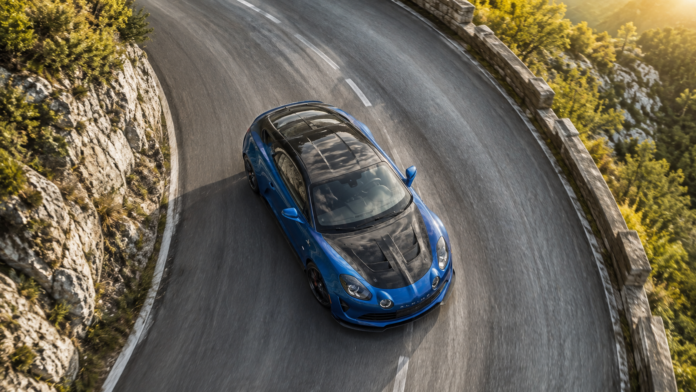
Alpine A110 R: The Lightest Way to Go Fast in France – A Night on the Route Napoléon

0

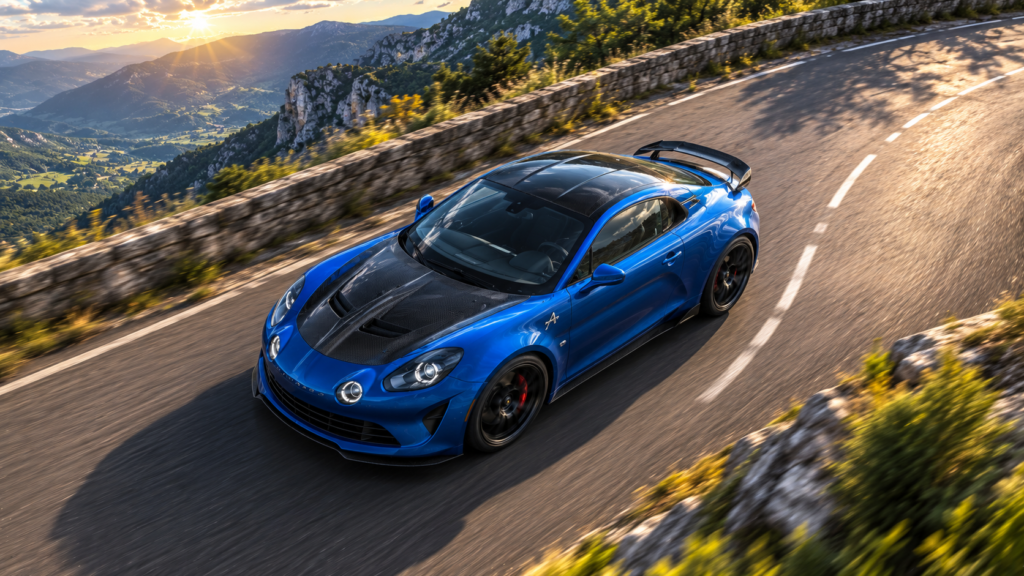
The sun is setting over the lavender fields of Provence as a low, compact silhouette carves through the curves of the Route Napoléon. The sound is not a screaming V8 or a wailing V12. It is the purposeful hum of a 1.8-liter turbocharged four-cylinder, working in harmony with a chassis that weighs less than 1,100 kilograms. This is the Alpine A110 R, the lightest way to go fast in France, and it is a car that proves power is not everything.

The A110 R is the most extreme version of Alpine’s modern sports car. It is a car built around subtraction rather than addition, a car that prioritizes weight reduction, aerodynamic efficiency, and chassis precision over horsepower. It is a car that represents the purest expression of Alpine’s philosophy: compact, light, agile, and rewarding to drive.

The Weight: 34 kg Lighter Than the A110 S

The A110 R weighs just 1,082 kilograms, 34 kg less than the A110 S. The weight savings come from a combination of carbon fiber components: a carbon front bonnet, carbon roof, carbon rear diffuser, carbon side skirts, and a carbon rear spoiler with gooseneck attachment. The most significant weight reduction comes from the carbon fiber wheels, which save 12.5 kg compared to the A110 S.

The carbon wheels are a technical showcase. Each wheel is a two-piece construction, with an identical eight-spoke structure on both front and rear, but with perforated flanges at the front for brake cooling and a full flange at the rear for better aerodynamics. The wheels are developed exclusively for the A110 R, with a specific dynamic performance and mechanical fine-tuning.

The Powertrain: 300 HP, 3.9 Seconds

The A110 R is powered by a 1.8-liter turbocharged four-cylinder engine that produces 300 horsepower and 340 Nm of torque. The engine is paired with a seven-speed dual-clutch transmission, with specific calibration for the R chassis.

The performance figures are impressive. The A110 R accelerates from 0 to 100 km/h in 3.9 seconds, making it the first Alpine A110 to break the four-second barrier. The top speed is 285 km/h, achieved on the track. The power-to-weight ratio is 3.6 kg per horsepower.

The engine is not the focus of the A110 R. It is the same engine as the A110 S, with the same output. The focus is on weight reduction and chassis precision. The result is a car that is faster than the A110 S, not because it has more power, but because it has less weight.

The Chassis: 10% Stiffer, 10 mm Lower

The A110 R’s chassis is a significant evolution of the A110 S. The suspension is 10% stiffer, with new springs and anti-roll bars that are 10% stiffer at the front and 25% stiffer at the rear. The ride height is 10 mm lower than the A110 S, and it can be adjusted by an additional 10 mm on the track.

The suspension uses multi-adjustable Sachs dampers, with specific calibration for the R chassis. The braking system is a Brembo setup with bimaterial discs of 320 mm diameter at both axles, with improved cooling for track use.

The steering is direct and communicative, with a natural feel that is rare in modern electric systems. The car responds with precision and predictability, inspiring confidence even at the limit.

The Aerodynamics: 29 kg More Downforce

The A110 R’s aerodynamic package is a significant evolution of the A110 S Aero Kit. The car generates 29 kg more downforce and has 5% less drag. The rear spoiler is mounted on gooseneck attachments, a design derived from motorsport.

The result is a car that is stable at high speed, with exceptional grip and cornering ability. The car is designed to be as comfortable on the track as it is on the road.

The Interior: A Race Car for the Road

The A110 R’s interior is a blend of race car function and road car comfort. The Sabelt carbon bucket seats are single-skin units with strategically positioned pads attached with Velcro. They are supportive and comfortable, even on long journeys.

Six-point harnesses are standard, with no traditional seatbelt. The harnesses are a statement of intent, and they bring added safety for track use. However, they make daily use more frustrating, especially for the passenger, whose seat is bolted in place.

The interior features a 7-inch touchscreen infotainment system with wireless smartphone mirroring for Apple and Android devices. The system is fully connected for over-the-air updates. The interior also features telematics functions, displaying turbo pressure, gearbox temperature, engine power and torque, and steering wheel angle.

The Route Napoléon Evening

The A110 R has completed its drive along the Route Napoléon. Its 300 horsepower has delivered the performance that makes it one of the most engaging sports cars on the road. The carbon fiber chassis and advanced aerodynamics have kept it planted through the curves. The driver, cocooned in the Sabelt bucket seat, has experienced a level of performance that is as exclusive as it is extraordinary.

The A110 R is not a car for everyone. It is a car for those who value the pure, unfiltered experience of driving, who are willing to accept the compromises of a car that is built for the track. But it represents a significant moment in automotive history. It is the lightest way to go fast in France, and it proves that subtraction is sometimes the most effective path to performance.

The A110 R is not just a car. It is a statement. It is a reminder that even in an era of electrification and automation, Alpine remains committed to the pure, unfiltered joy of driving. The lightest way to go fast has arrived. And it is unforgettable.