
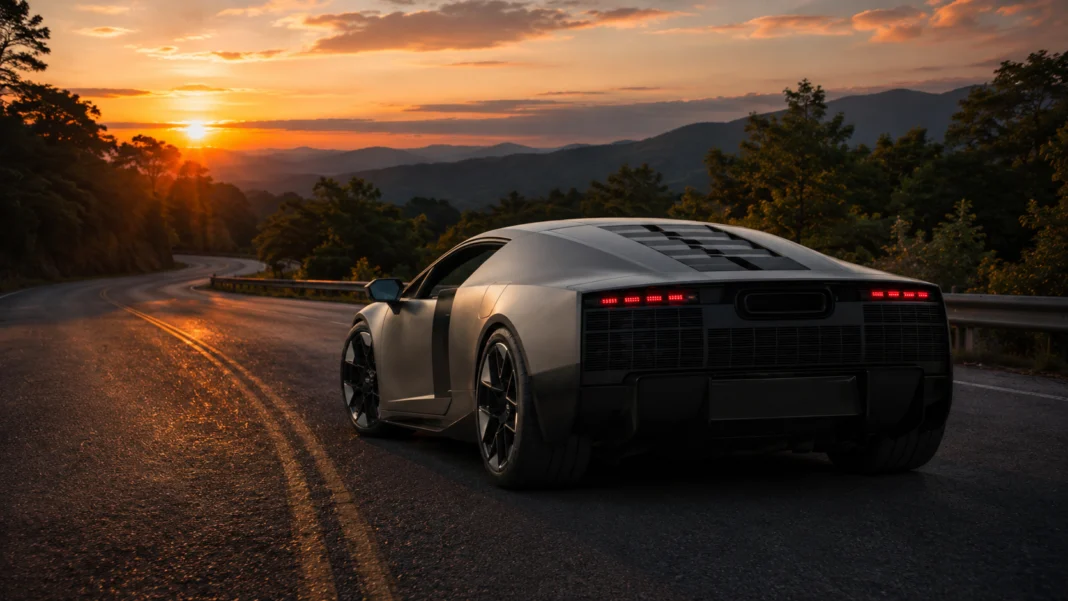
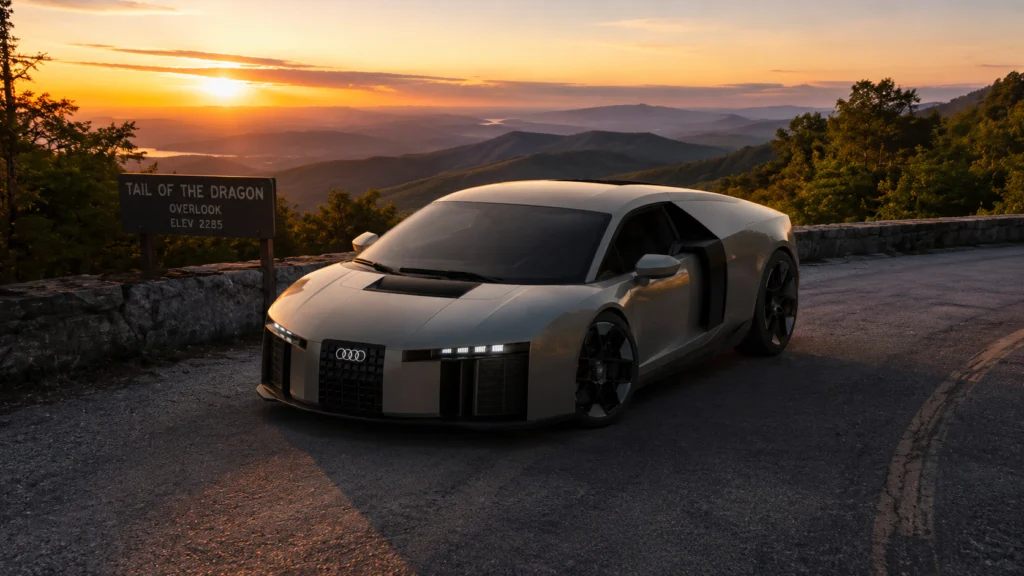
Picture the sun setting over the Smoky Mountains, casting long shadows across the 11 miles of asphalt known as the Tail of the Dragon at Deals Gap, North Carolina. This stretch of US 129 is a proving ground. Its 318 curves demand precision, courage, and a car that can pivot from one hairpin to the next without losing composure. It is exactly the kind of road the Audi Nuvolari, the brand’s first supercar with a high-performance hybrid powertrain, is built to conquer.
Audi has officially unveiled the Nuvolari as a near-production prototype in Antibes, France, with deliveries of the limited edition 499 units scheduled to begin in the first half of 2027. The car is named after Tazio Nuvolari, the fearless Italian racer who dominated motorsport in the 1930s. With 1,001 PS (987 horsepower) and a top speed exceeding 350 km/h (217 mph), the Nuvolari is set to become the fastest and most powerful production vehicle in the history of the four rings.
This article examines the engineering, design, and performance of the Audi Nuvolari, based on the official global release.
The Name: A Tribute to a Racing Legend
Tazio Nuvolari was not a typical racing driver. He was known for his fearlessness, his ingenuity, and his single-minded will to win. He won the 1935 German Grand Prix at the Nürburgring in an underpowered Alfa Romeo, beating the dominant Mercedes-Benz and Auto Union cars on their home track. He is widely considered one of the greatest drivers in motorsport history.
Audi has chosen his name for its first supercar. The Nuvolari is a tribute to that spirit of determination and performance.
The Powertrain: Formula 1 Technology on the Road
The Nuvolari is powered by a high-performance hybrid system that combines a 4.0 liter V8 biturbo engine with three axial flux electric motors. The total system output is 736 kW, or 1,001 PS.
- Combustion Engine: 4.0L twin-turbo V8 producing 588 kW (800 hp) and 730 Nm of torque. The engine revs to 10,000 rpm, a range previously reserved for motorsport.
- Electric Motors: Three axial flux motors, each producing 110 kW. Two are located at the front axle, providing torque vectoring and all-wheel drive capability. The third is mounted between the V8 and the transmission.
- Battery: 7.3 kWh lithium-ion pack, designed for power delivery rather than range.
The performance figures are staggering. The Nuvolari accelerates from 0 to 100 km/h (62 mph) in 2.6 seconds and reaches 200 km/h (124 mph) in 6.8 seconds. Top speed exceeds 350 km/h (217 mph). These figures place the Nuvolari in direct competition with the Ferrari SF90 Stradale, the McLaren 750S, and the Lamborghini Revuelto.

The Quattro Predictive Ride: Next Generation All-Wheel Drive
Quattro is one of Audi’s defining innovations. The Nuvolari introduces the next generation of all-wheel drive, called quattro predictive ride.
The system processes the current driving state based on a highly precise vehicle state model. Sensor data including steering angle, acceleration, yaw rate, and current grip level continuously feed into the control system. If the system anticipates a potential loss of grip in a corner, it responds proactively.
The drive units distribute torque precisely in both longitudinal and lateral directions. The brakes stabilize the vehicle through targeted interventions. The aerodynamics adjust downforce according to the situation.
The electric motors at the front axle enable variable torque vectoring for agile cornering and stability at high speeds.
Drivers can select from four driving modes. E-Hybrid enables fully electric driving for short distances. Balanced combines comfort, efficiency, and performance. Dynamic sharpens system response. Dynamic+ focuses the powertrain entirely on emotional driving. A Track Mode allows further refinement of traction control, with settings from Wet to Dry and from Race to Traction Control Off.
The Audi Space Frame with Carbon Exterior
The Nuvolari uses a new Audi Space Frame (ASF) with a carbon exterior. Almost all exterior components are made from carbon fiber reinforced polymer (CFRP). The manufacturing process uses prepreg autoclave technology, in which pre-impregnated carbon fibers are shaped and cured under high pressure and temperature.
This process enables highly complex geometries. Components can be designed consistently for function, from complex door panel structures to precisely aligned vertical frame elements that guide airflow through a concealed S-duct.
Forged center-lock wheels are also making their debut in Audi’s production portfolio.
Active Aerodynamics Inspired by Formula 1
Audi uses active aerodynamics in the Nuvolari to combine performance and efficiency. Each exterior element serves a clearly defined aerodynamic function, from the front splitter to the rear diffuser.
A vented front end, known as an S-duct, improves aerodynamic efficiency at the front axle. It delivers additional downforce, reduces lift at high speeds, and improves cooling of the powertrain.
The central element of the system is the deployable adaptive rear wing. It controls downforce and drag across three configurations: Closed, Low Downforce (LD), and High Downforce (HD).
In performance-oriented modes such as Dynamic, Dynamic+, and Track, the rear wing operates fully automatically. On straights, the system shifts to the LD position to optimize top speed and stability. A Drag Reduction System (DRS), familiar from Formula 1, can be activated manually via a steering wheel button to further lower the wing, reducing drag and increasing top speed.

Under braking and in corners, the wing moves to the HD position to optimize downforce. In this configuration, the aerodynamic concept delivers more than 400 kilograms of downforce, depending on the driving situation.
The Braking System: Formula 1 Inspired
The braking system uses a motorsport-inspired brake-by-wire system that enables variable distribution between recuperation and hydraulic braking. The brake pedal is functionally decoupled from the actual braking force, ensuring a consistent pedal feel.
The new Audi Ceramic Pro braking system is designed for high deceleration and precise control under sustained track use. At the front axle, ten-piston fixed calipers work with 420 mm by 40 mm brake discs. At the rear, four-piston calipers are paired with 410 mm by 32 mm discs.
The brake discs are derived directly from Formula 1. They are based on a long-fiber carbon structure designed to withstand extreme thermal loads. A specially designed internal cooling system improves airflow and increases heat dissipation by up to 21 percent compared with conventional carbon-ceramic systems.
With an energy absorption capacity of up to 2.8 megawatts, the braking system is on par with a current Formula 1 car. This ensures consistent braking performance without fading or overheating, even under extreme track conditions.
The Interior: Driver Focused
The interior of the Nuvolari is fully focused on the act of driving. A reduced architecture concentrates all controls on essential functions and positions them directly within the driver’s field of view.
Digital displays and physical controls follow a consistent logic. Color accents in the human-machine interface reference the legendary Auto Union Type C race car from the 1930s.
The cabin is divided into two zones. The front section is finished in a deep, dark tone designed to support concentration. The rear section introduces a lighter tone called Shadow Dune.
Lightweight seats complement the driver-oriented concept. The carbon fiber structure in the seat base and backrest reduces weight while providing high rigidity and precise lateral support.
The Tail of the Dragon Sighting: A Pre-Production Prototype in the Wild
The camouflaged prototype at Deals Gap is not the final production car. The rear wing is still disguised, and some body panels appear to be temporary. But the shape is unmistakable. The low, wide stance, the massive air intakes, and the aggressive diffuser all point to a car designed for serious performance.

A small crowd has gathered at the overlook. A man with a camera asks the driver about the car.
“It is fast,” the driver says. “Faster than anything Audi has built before. The hybrid system fills the gaps, and the all-wheel drive keeps it planted. The steering is precise. The brakes are incredible.”
He declines to answer more questions. The prototype disappears into the tunnel of trees.
The European Announcement: Key Details from Antibes
Audi officially unveiled the Nuvolari as a near-production prototype in Antibes, France, on June 4, 2026. Key details from the announcement include:
- Production is limited to 499 units.
- Deliveries will begin in the first half of 2027.
- U.S. availability is subject to a future announcement and may vary from the global specification.
- Final market-specific information, including pricing and EPA-rated mileage, will be announced later.
The Tail of the Dragon Sunset
The sun has set. The prototype is gone. The crowd has dispersed.
The Audi Nuvolari is not yet available in the United States. But it is coming. And if the performance claims hold true, it will be a serious contender in the hybrid supercar segment.
The Audi Nuvolari is a statement. It says that Audi can compete with Ferrari, Lamborghini, and McLaren. It says that Formula 1 technology can be transferred to the road. And it says that the four rings are ready for the next chapter.
The Tail of the Dragon will be waiting when it arrives.
Key Specifications (Global, Preliminary)
| Specification | Value |
|---|---|
| Combined Power | 1,001 PS (736 kW) |
| V8 Engine Power | 800 hp (588 kW) |
| Electric Motors | 3 x axial flux (110 kW each) |
| Torque (Electric Front) | 2,150 Nm |
| Battery Capacity | 7.3 kWh |
| 0 to 100 km/h (0 to 62 mph) | 2.6 seconds |
| 0 to 200 km/h (0 to 124 mph) | 6.8 seconds |
| Top Speed | 350+ km/h (217+ mph) |
| Downforce | 400+ kg |
| Production | 499 units |
| Delivery Start (Global) | First half of 2027 |
Fuel Consumption and Emissions (Preliminary, Germany)
| Measurement | Value |
|---|---|
| Fuel Consumption Combined (Weighted) | 11.3 l/100 km |
| Power Consumption Combined (Weighted) | 7.8 kWh/100 km |
| CO₂ Emissions Combined (Weighted) | 270 g/km |
| Fuel Consumption (Battery Discharged) | 14.7 l/100 km |
Conclusion
The Audi Nuvolari is not yet a production car. It is a near-production prototype, and the version that reaches the United States may differ from the global specification. But the promise is clear. Audi is entering the hybrid supercar wars.
The Nuvolari combines a high-revving V8 with electric motors, active aerodynamics, and a carbon fiber chassis. It is designed to compete with the best from Italy and Germany. And it is named after one of the greatest drivers in history.
The Tail of the Dragon is quiet now. The prototype is gone. But the echoes remain.
Audi has arrived.
Gear Picks for This Story
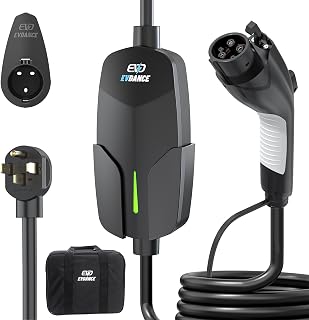 EV LifeEVDANCE Portable EV Charger 32ACheck Compatibility →
 Paddock StyleScuderia Ferrari Puma Polo ShirtSee the Design →
 Style UpAlpinestars Sequence HoodieSee the Design →
 Essential ToolDEWALT 20V MAX 1/2 Impact Wrench DCF899BExplore the Specs →
As an Amazon Associate, VeloxTrend earns from qualifying purchases.

