
The rotary engine occupies a unique place in automotive history. It is an engine that has inspired passionate devotion from enthusiasts, a powerplant that powered Mazda to victory at Le Mans, and a technology that the company has never fully abandoned. The rotary is inefficient by modern standards, consuming more fuel and producing more emissions than piston engines of similar output. But it is also smooth, compact, and capable of revving to heights that piston engines cannot match.
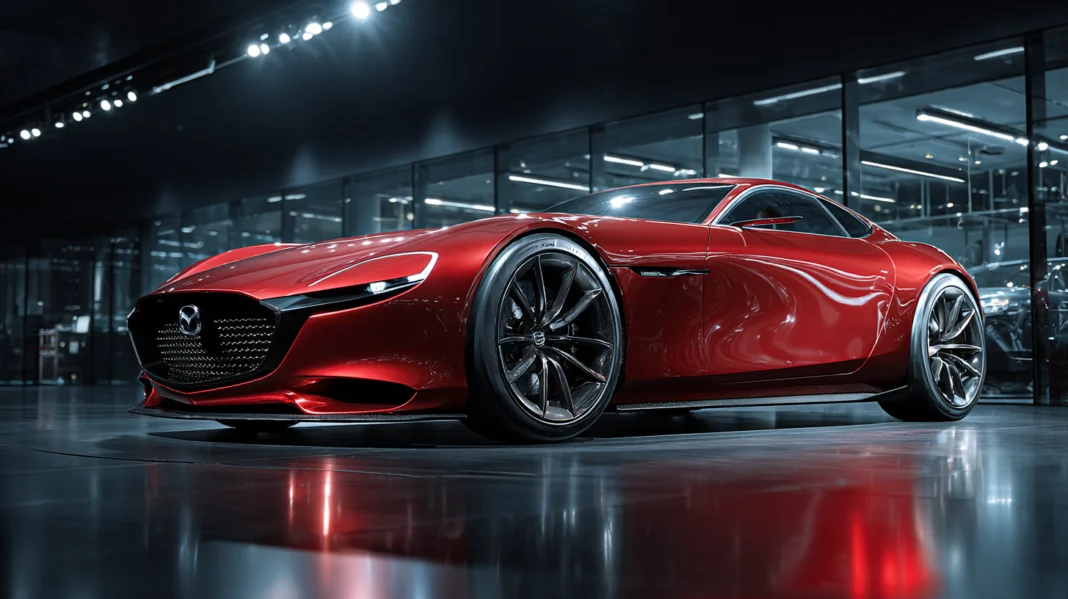
The Mazda RX-Vision Concept, first unveiled in 2015, represented a promise: that the rotary would return. The concept car was a stunningly beautiful front engine, rear drive coupe with proportions that recalled the legendary RX-7. It was a design study, not a production preview, but it signaled Mazda’s intent to keep the rotary flame alive.
Now, more than a decade after the RX-Vision Concept first appeared, the question remains: will the rotary return? This article examines the history of the rotary engine, the RX-Vision Concept, Mazda’s current rotary developments, and what a production rotary sports car might look like in 2026.
The Rotary Legacy: From the Cosmo to the RX-8
The rotary engine, also known as the Wankel engine, was developed by German engineer Felix Wankel in the 1950s. Mazda acquired the rights to the engine in the 1960s and committed to making it work, a decision that would define the company for decades.
The first production rotary powered car was the Mazda Cosmo Sport, introduced in 1967. It was a low volume sports car that established Mazda’s reputation for engineering innovation. Over the following decades, Mazda produced a range of rotary powered cars, including the RX-2, RX-3, RX-4, and the iconic RX-7.
The RX-7, produced from 1978 to 2002, became the definitive rotary sports car. Its three generations the FB, FC, and FD evolved from a simple, lightweight sports car to a sophisticated, turbocharged performance machine. The FD RX-7, with its 1.3 liter twin turbocharged rotary engine producing 255 horsepower, remains a highly sought after collector car.
The RX-8, produced from 2003 to 2012, was the last rotary powered Mazda sold in the United States. It featured a 1.3 liter naturally aspirated rotary engine producing 232 horsepower, with a unique four door, four seat configuration. The RX-8 was praised for its handling but criticized for its fuel consumption and oil consumption issues.
Since the RX-8 was discontinued, Mazda has not produced a rotary powered sports car. The company has continued to develop rotary technology, however, using it as a range extender in the MX-30 electric vehicle. But for enthusiasts, the question remains: will there be another RX sports car?
The RX-Vision Concept: A Design Study
Exterior Design
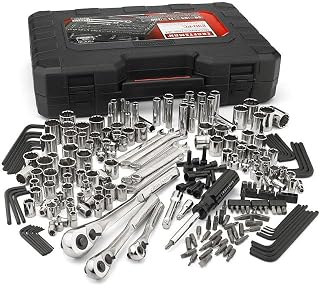
The Mazda RX-Vision Concept was unveiled at the 2015 Tokyo Motor Show. It was a front engine, rear drive coupe with proportions that recalled the FD RX-7. The car was 4,389 mm long, 1,850 mm wide, and 1,160 mm tall, with a wheelbase of 2,700 mm. These dimensions placed it between the Mazda MX-5 and the larger MX-6 in size.
The design was characterized by a long hood, a rearward cabin, and a short rear deck. The front end featured Mazda’s Kodo design language, with a prominent grille and slim headlights. The side profile showed a low, sweeping roofline and muscular haunches. The rear end featured a full width taillight assembly and quad exhaust outlets.
The RX-Vision Concept was widely praised for its beauty. Critics called it one of the most beautiful concept cars of the decade, and enthusiasts immediately began clamoring for a production version.
Powertrain
The RX-Vision Concept was powered by a next generation rotary engine, which Mazda called the SkyActiv R. The engine was a 1.6 liter twin rotor unit with direct injection and a turbocharger. Mazda claimed it would produce approximately 450 horsepower, a figure that would place it in competition with the Porsche 911 and other premium sports cars.
The engine was mounted longitudinally, driving the rear wheels through a six speed manual transmission. The combination of a rotary engine, front engine, rear drive layout, and manual transmission was precisely what enthusiasts wanted.
Why It Didn’t Go Into Production
Despite the positive reception, the RX-Vision Concept never entered production. Mazda cited several reasons: the difficulty of meeting modern emissions standards with a rotary engine, the high cost of developing a dedicated sports car platform, and the limited market for a rotary powered sports car.
The company’s resources were also focused on developing its SkyActiv technology, which was being rolled out across its mainstream lineup. A rotary sports car was a low volume, high cost project that was difficult to justify.
Mazda’s Current Rotary Developments
The MX-30 Rotary Range Extender
In 2023, Mazda introduced a version of the MX-30 electric vehicle with a rotary range extender. The MX-30 R-EV uses a 830 cc single rotor engine as a generator, charging the battery when it runs low. The engine does not drive the wheels directly; it only charges the battery.
The MX-30 R-EV is not a sports car, but it demonstrates that Mazda has not abandoned rotary technology. The engine is compact, smooth, and capable of running on multiple fuels. It is a proof of concept for a modern rotary engine that meets emissions standards.
The Iconic SP Concept
In 2023, Mazda unveiled the Iconic SP Concept, a sports car that many observers interpreted as a successor to the RX-Vision. The Iconic SP was a compact coupe with a rotary hybrid powertrain, combining a twin rotor engine with electric motors for a combined output of 365 horsepower.
The Iconic SP was smaller than the RX-Vision, with dimensions closer to the original RX-7. Its design was more production ready, with functional headlights, door handles, and mirrors. The car generated significant enthusiasm, and Mazda indicated that it was exploring production possibilities.
Current Status
As of 2026, Mazda has not confirmed production of a rotary sports car. The company continues to develop its electric and hybrid technology, with plans to electrify its entire lineup by 2030. A rotary sports car remains a possibility, but it is not a certainty.
Mazda’s leadership has indicated that the company is interested in creating a spiritual successor to the RX-7, but that such a car would need to make business sense. The company would need to develop a dedicated sports car platform, which could be shared with other models to amortize development costs.
What a Production Rotary Sports Car Might Look Like
Powertrain
A production rotary sports car would almost certainly use a hybrid powertrain. The rotary engine would be smaller than the 1.6 liter unit in the RX-Vision Concept, likely a 1.0 to 1.3 liter twin rotor engine, combined with one or more electric motors.
The hybrid system would serve multiple purposes. It would provide additional power, filling in the rotary’s torque deficit at low rpm. It would also improve fuel economy and allow the car to operate in electric only mode for short distances, helping meet emissions standards.

Total system output would likely be in the range of 400 to 500 horsepower, competitive with the Porsche 911 Carrera S and other premium sports cars.
Platform
A production rotary sports car would need a dedicated platform. Mazda does not have a front engine, rear drive sports car platform in its current lineup; the MX-5 uses a different architecture, and the larger Mazda6 sedan is front wheel drive.
Developing a new platform would be expensive, but Mazda could potentially share it with other manufacturers. The company has a history of collaboration, including its partnership with Fiat on the MX-5 platform.
Design
A production rotary sports car would likely draw heavily from the RX-Vision and Iconic SP concepts. The design would be characterized by a long hood, a rearward cabin, and a short rear deck. The Kodo design language would be evident, with a prominent grille, flowing surfaces, and a muscular stance.
Pricing
A rotary sports car would likely be positioned above the MX-5 but below the company’s luxury models. A starting price of approximately $40,000 to $50,000 would be plausible, placing it in competition with the Nissan Z, Toyota GR Supra, and Ford Mustang.
How a Rotary Sports Car Would Stack Up Against Rivals
Against the Nissan Z
The Nissan Z is a front engine, rear drive coupe with a 3.0 liter twin turbocharged V6 producing 400 horsepower. It is a traditional sports car with a strong enthusiast following.
A rotary sports car would offer a different experience. The rotary engine would be smaller, lighter, and smoother than the Nissan’s V6. It would rev more freely and produce a distinctive sound. The car would likely be lighter and more agile than the Z.
Against the Toyota GR Supra
The Toyota GR Supra is a front engine, rear drive coupe with a 3.0 liter turbocharged inline six producing 382 horsepower. It is a refined, capable sports car with strong performance.
A rotary sports car would offer a more emotional experience. The rotary engine’s character, with its high revving nature and distinctive sound, would set it apart from the Supra’s more conventional six cylinder. The car would likely be more engaging for drivers who value connection over refinement.
Against the Ford Mustang
The Ford Mustang is a front engine, rear drive coupe with a range of engines, including a 5.0 liter V8 producing 480 horsepower. It is a larger, more substantial car than a rotary sports car would likely be.
A rotary sports car would be smaller, lighter, and more agile than the Mustang. It would offer a different kind of performance, one based on momentum and handling rather than brute power. The rotary engine’s sound would also be distinctive.
Against the Porsche 718 Cayman
The Porsche 718 Cayman is a mid engine sports car with a 2.0 liter turbocharged flat four producing 300 horsepower in base form. It is widely regarded as one of the best handling sports cars in its class.
A rotary sports car would face a significant challenge competing with the Cayman. Porsche’s chassis tuning is exceptional, and the Cayman’s mid engine layout provides handling advantages that a front engine car cannot match. A rotary sports car would need to offer exceptional handling of its own to compete.
The Enthusiast Appeal
The Rotary Experience
The rotary engine’s character is unique. It revs quickly and smoothly, with a distinctive high pitched sound that builds to a crescendo as the revs climb. The engine is compact and light, allowing it to be mounted low in the chassis for a low center of gravity.

For enthusiasts who experienced the RX-7 and RX-8, the rotary engine is a source of passion. It is an engine that rewards those who work it, that communicates through its sound and its feel, that connects the driver to the car in a way that more conventional engines cannot.
The Emotional Value
A rotary sports car would not be a rational choice. It would be less efficient than a piston engine, more difficult to service, and likely less reliable. But for enthusiasts, rationality is not the point. The rotary sports car would be about emotion, about the experience of driving, about the connection to Mazda’s history.
The Community
The rotary community is one of the most passionate in the automotive world. Owners of RX-7s and RX-8s gather at events, share knowledge, and keep these cars on the road. A new rotary sports car would tap into this community, bringing a new generation of enthusiasts into the fold.
The Business Case
Development Costs
Developing a new rotary engine and a dedicated sports car platform would be expensive. Mazda would need to invest hundreds of millions of dollars in engineering, tooling, and testing. The company would need to sell enough cars to recover this investment.
Production Volume
A rotary sports car would be a low volume vehicle. Mazda sold approximately 100,000 RX-8s over its nine year production run, an average of about 11,000 per year. A new rotary sports car would likely sell in similar numbers.
Shared Platforms
To make the business case work, Mazda would likely need to share the platform with other models or other manufacturers. The MX-5 platform, for example, was shared with Fiat for the 124 Spider. A similar arrangement could be possible for a rotary sports car.
The Halo Effect
A rotary sports car would serve as a halo vehicle for Mazda, drawing attention to the brand and generating enthusiasm that could boost sales of other models. This halo effect is difficult to quantify, but it is a factor in the decision.
Conclusion
The Mazda RX-Vision Concept represented a promise: that the rotary engine would return. More than a decade later, that promise remains unfulfilled. Mazda has continued to develop rotary technology, using it as a range extender in the MX-30 and showcasing it in the Iconic SP Concept. But a production rotary sports car has not materialized.
The challenges are significant. Meeting modern emissions standards with a rotary engine is difficult. Developing a dedicated sports car platform is expensive. The market for a rotary sports car is limited. But the passion for the rotary remains strong, both within Mazda and among enthusiasts.
Mazda’s leadership has indicated that the company is interested in creating a spiritual successor to the RX-7. The Iconic SP Concept suggests that the company is actively exploring possibilities. But whether a production car will emerge is uncertain.
If Mazda does produce a new rotary sports car, it would be a significant moment for the brand and for enthusiasts. It would be a car that honors the company’s history, that celebrates engineering innovation, and that offers a driving experience that no other car can provide.
In 2026, the rotary sports car remains a possibility, not a certainty. It would be a car that defies the trends toward electrification and automation, a car that prioritizes emotion over efficiency. For enthusiasts who remember the RX-7, who fell in love with the rotary, the question remains: will the rotary return? The answer is still unclear, but the hope endures.
Popular With VeloxTrend Readers
 Tech UpgradeVeepeak OBDCheck BLE Bluetooth ScannerExplore the Specs →
 Detail Like a ProAdam's Polishes Ceramic Spray CoatingSee How It Works →
 Stay SafeSanDisk 512GB Extreme Pro microSDSee the Specs →
 Creator GearGoPro Max 2 360 CameraSee the Specs →
As an Amazon Associate, VeloxTrend earns from qualifying purchases.

