
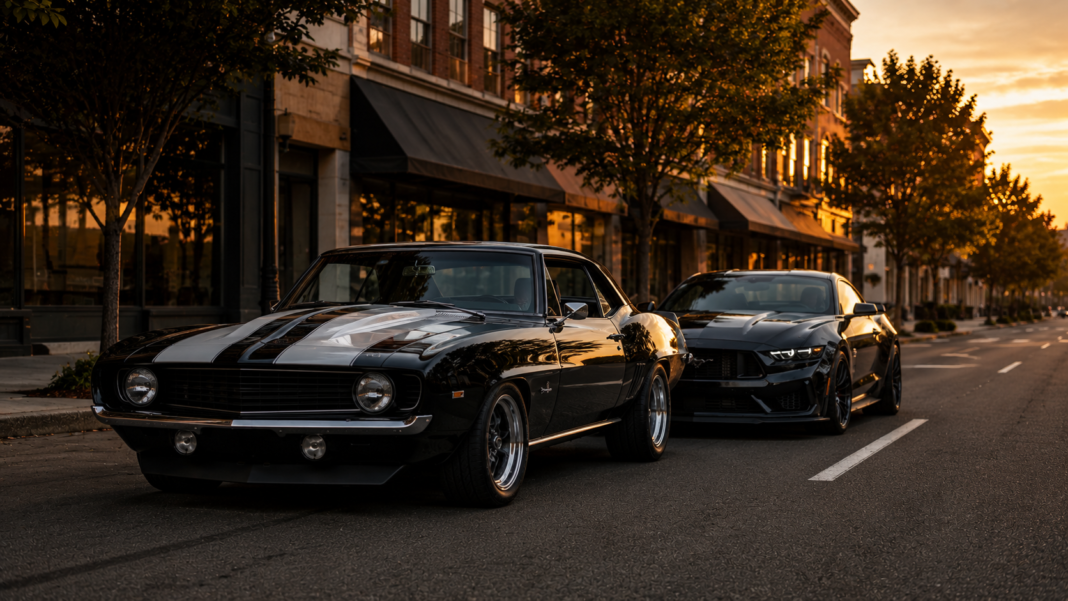
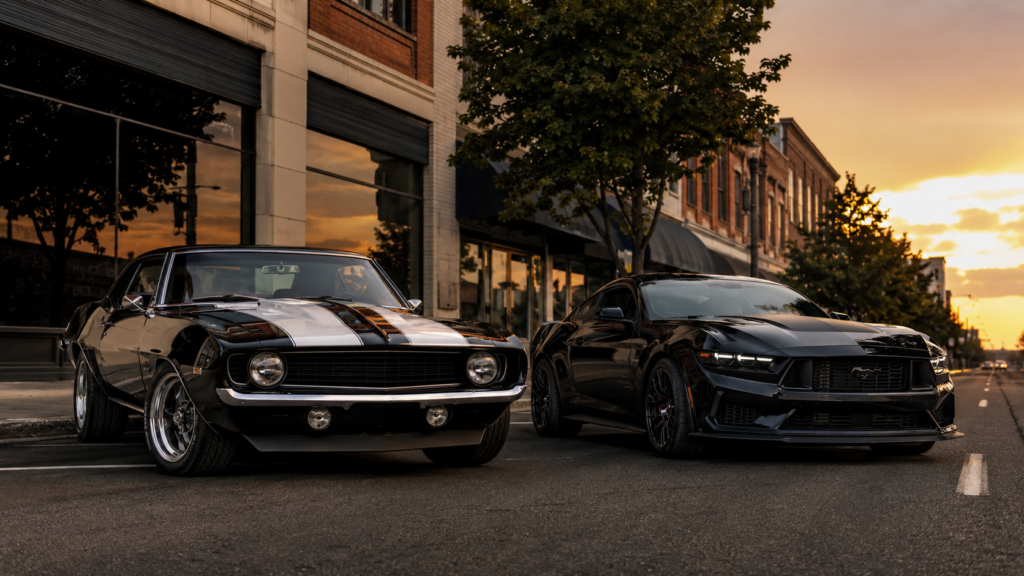
The sun is setting over Woodward Avenue in Birmingham, Michigan. The street is lined with classic muscle cars, their V8 engines rumbling in a low, continuous chorus. A 1969 Camaro SS idles next to a 2026 Ford Mustang Dark Horse. The sound is familiar, comforting, and increasingly rare. The V8 is America’s engine. It powered the muscle car era, defined the pickup truck, and gave the world the sound of freedom. But that sound is fading.
Emissions regulations, electrification targets, and changing consumer tastes are all working against the V8. The question is not whether the V8 will disappear, but when. This article examines the forces driving the V8 toward extinction, the models that are keeping it alive, and how long America’s most iconic engine format has left.
The Forces Against the V8
The V8 is under pressure from three directions.
Regulations: Governments around the world are tightening emissions standards. In the United States, fuel economy rules have made it increasingly difficult for manufacturers to justify building high-displacement naturally aspirated engines. Even the gold standard for reliability struggled to meet the standards. However, recent policy changes have reduced penalties for failing to meet fuel economy standards, giving automakers some breathing room.
Electrification: The industry is investing billions in electric and hybrid powertrains. Fully electric vehicles represented a growing share of global sales in 2025, and that share is expected to increase. Manufacturers are shifting production capacity from combustion engines to electric motors and batteries.
Consumer Preferences: Surveys indicate a marked shift in consumer interest toward electric vehicles and hybrids. Rising fuel prices and increasing awareness of climate change are driving demand for more efficient vehicles. However, the passionate loyalty of V8 enthusiasts remains strong, and events like the Woodward Dream Cruise continue to draw over a million attendees.
The Models That Are Keeping the V8 Alive
Despite the pressures, the V8 is not dead yet. Several American manufacturers are still committed to the format.
Ford Mustang: The Mustang remains the only mass-produced, rear-wheel-drive sports coupe with a naturally aspirated V8 at a mainstream price point. The 2026 Mustang GT and Dark Horse feature the 5.0-liter Coyote V8, producing 480 and 500 horsepower respectively.
Chevrolet Corvette: The C8 Corvette lineup proves the American V8 is still evolving. The base Stingray keeps its 6.2-liter LT2 V8, delivering up to 495 horsepower. The Z06 gets a hand-built 5.5-liter flat-plane-crank LT6 revving to 8,600 rpm and producing 670 horsepower.
Cadillac CT5-V Blackwing: This stands as America’s last true V8-powered sports sedan. Its hand-built 6.2-liter supercharged V8 produces 668 horsepower and is available with a six-speed manual transmission.
Dodge Durango: The brand’s sole three-row SUV has gone all-in on V8 power for 2026, dropping the V6 entirely. The lineup includes the supercharged 6.2-liter Hellcat producing 710 horsepower.
GM Trucks: The Chevrolet Silverado and GMC Sierra continue to offer V8 engines, including a 6.2-liter EcoTec3 V8 delivering 420 horsepower. GM has confirmed it will spend billions to keep its small-block V8 running into the 2030s.
Ford F-150: The 5.0-liter V8 remains a staple option, producing 400 horsepower. The F-150 Raptor R features a supercharged 5.2-liter “Predator” V8 with 700 horsepower.
The Hybrid V8 Solution
Hybridization is emerging as a key strategy to extend the life of the V8. By combining a V8 with an electric motor, manufacturers can improve fuel efficiency and reduce emissions while maintaining the power and character enthusiasts love. Mercedes-AMG is doubling down on combustion power with a refreshed V8 expected to arrive by the end of 2026, featuring mild-hybrid technology to comply with stricter emissions standards. The hybrid V8 offers the best of both worlds, providing the instant torque of an electric motor with the sustained power and sound of a V8.
The European Factor
European manufacturers are also keeping the V8 alive, often with hybridization. Mercedes-AMG has confirmed it will introduce a new iteration of its V8 engine by the end of 2026 as it continues to invest in combustion power. Aston Martin and Lamborghini continue to offer V8s in their performance models, often with hybrid assistance.
How Long Does the V8 Have Left?
The V8 is not going to disappear overnight. It will likely continue in performance cars, luxury SUVs, and pickup trucks for years, perhaps decades. But its days as a mass-market engine are over.
The V8 will survive as a specialty engine for enthusiasts who value its power, sound, and character. It will be available in limited numbers at premium prices. It will be a choice, not a default.
As long as internal combustion engines are allowed by law and supported by the market, there will be a few V8s available. They’ll remain in sports cars, pickups, and luxury SUVs. They won’t be common, but they will exist.
The Woodward Evening
The sun has fully set over Woodward Avenue. The classic cars are leaving. The rumbling V8s are fading into the night. The sound of America’s engine is becoming quieter.
The V8 is not dead yet. But it is dying. And the enthusiasts who love it are savoring every last roar.
Key Takeaways
- The V8 is under pressure from emissions regulations, electrification, and changing consumer preferences.
- Ford, GM, and Dodge are still investing in V8 development, often with hybrid assistance.
- Mercedes-AMG is doubling down on V8 power with a new mild-hybrid unit.
- The V8 will survive in limited numbers for performance enthusiasts, but its days as a mass-market engine are numbered.
Conclusion
The V8 is America’s engine. It powered the muscle car era, defined the pickup truck, and gave the world a sound that is unmistakable. But that sound is fading.
The forces against the V8 are powerful. Regulations, electrification, and changing consumer tastes are all pushing the industry toward smaller, more efficient powertrains. The V8 is becoming a specialty engine for enthusiasts, not a mainstream option.
The question is not whether the V8 will disappear, but when. It will survive for years, perhaps decades, in performance cars and trucks. But its days as the heartbeat of the industry are over.
The Woodward Dream Cruise is quiet now. The classic cars are gone. The V8s have faded into the night. But the memory of their sound will linger, a reminder of what the automotive world is losing.

