
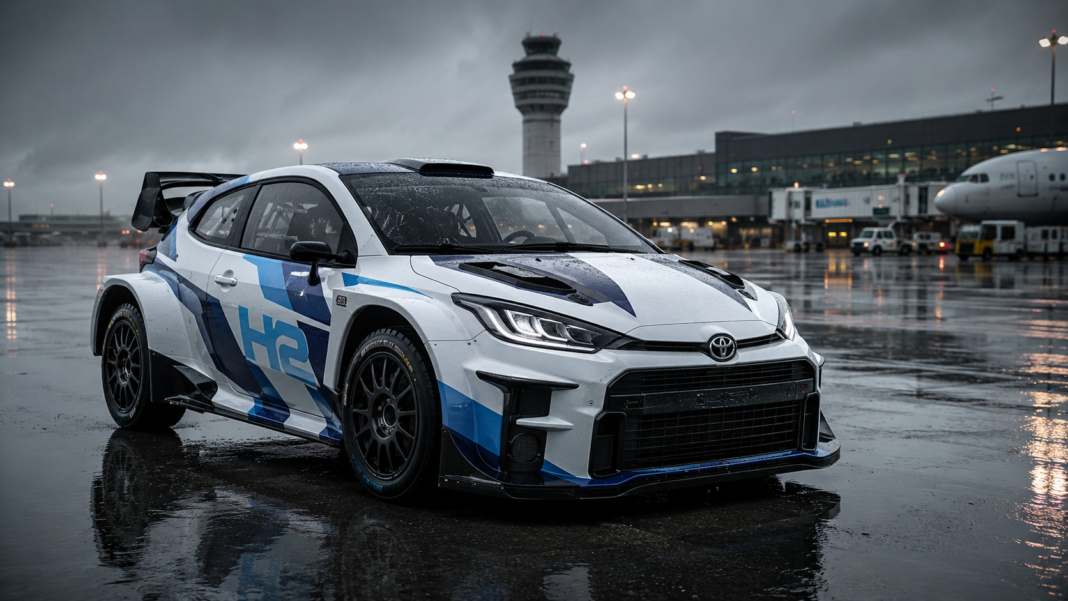
The morning fog is lifting over the Allegheny River as a convoy of trucks rolls into the cargo area of Pittsburgh International Airport. Inside one of the crates is a prototype that represents a different path forward. It is not a battery electric vehicle. It is a hydrogen hypercar, and its exhaust emits nothing but water vapor.
While the automotive industry sprints toward battery electric vehicles, a small number of manufacturers are betting on hydrogen. Alpine, Toyota, and a handful of startups are developing hydrogen combustion engines and fuel cell systems that could preserve the supercar experience. The sound, the feel, the engagement of a performance car these are the elements that battery EVs struggle to replicate. Hydrogen, they argue, offers a way to keep the internal combustion engine alive while eliminating tailpipe emissions.
The Hydrogen Combustion Engine: Sound, Emotion, and Zero Emissions
The most promising development in hydrogen hypercars is the combustion engine that runs directly on hydrogen. Unlike a hydrogen fuel cell vehicle, which converts hydrogen into electricity to power an electric motor, a hydrogen combustion engine burns hydrogen in the same way a petrol engine burns gasoline. The result is a car that sounds like a supercar, drives like a supercar, and emits only water vapor.
The Alpine Alpenglow Hy6
Alpine, the French performance brand, has developed the Alpenglow Hy6, a rolling prototype that runs on a 3.5-liter twin-turbo V6 engine fueled by hydrogen. The engine produces 740 horsepower and revs to 9,000 rpm. The car can exceed 330 km/h, and its exhaust emits only water. Alpine’s VP of Motorsports stated that the Hy6 concept demonstrates the commitment to hydrogen research, which could herald motorsport applications with high-performance levels.
The engine was developed entirely in-house by Alpine at its Viry-Châtillon facility, taking two years of work. It uses a 100-degree V6 with two turbochargers, a solid aluminum engine block with a dry sump, and chain-driven overhead camshafts. The engine’s specific power places it among the most efficient high-performance engines ever built. Fuel is stored in three high-pressure hydrogen tanks, located in the sidepods and behind the cockpit.
Alpine is pushing for hydrogen-powered cars to be authorized to compete at the 24 Hours of Le Mans from 2028 onward. The development philosophy favors a version designed for racing that could be transposed to series production. The ACO and FIA have indicated plans to allow hydrogen cars at Le Mans, and Alpine is positioning itself to be ready.
The Fast F61H V12
A new startup called Fast Auto has unveiled the F61H, a hydrogen-powered V12 supercar that debuted in early 2026. The car was designed by Ken Okuyama, the renowned designer behind the Ferrari Enzo and Maserati Quattroporte. It produces around 500 horsepower and emits only water vapor.
The F61H is not just a concept. Fast Auto is accepting orders, with first production models scheduled for the coming months. The car draws lineage from the Pininfarina Birdcage concept, a collaborative project that embodied futuristic sports design. Co-founder Ken Okuyama stated that while the F61H might look like a beautiful supercar, what is inside is a hydrogen-powered internal combustion engine, offering the same excitement in sound and performance while only water comes out of the exhaust.
Toyota’s Hydrogen Rally Car
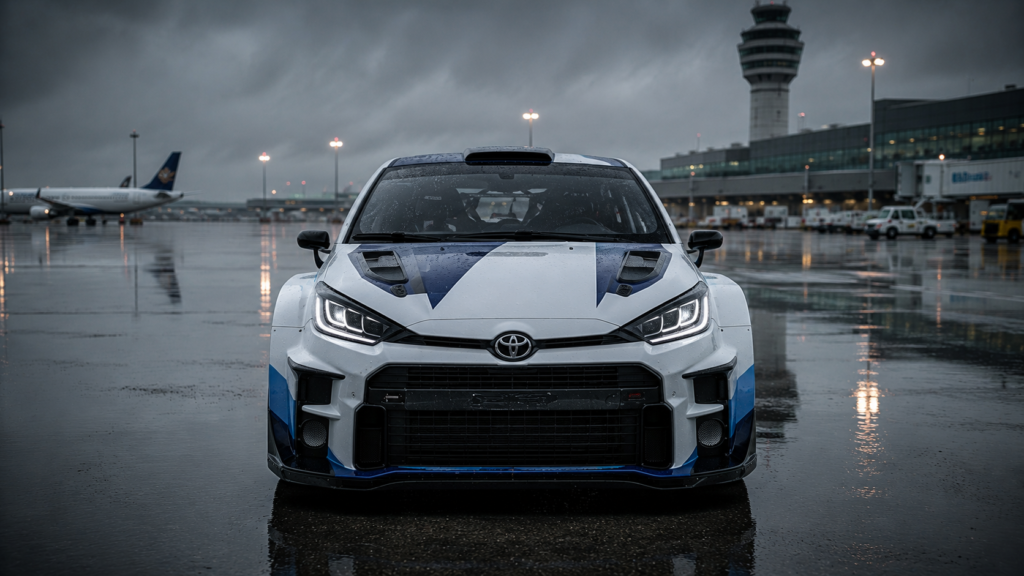
Toyota has developed a hydrogen-powered GR Yaris Rally2 H2 Concept, which debuted at Rally Finland in 2025. The car runs on liquid hydrogen and retains the sounds and sensations of a combustion engine while producing near-zero emissions. The car is based on the GR Yaris Rally2 racer and shares its chassis and wide bodykit.
Toyota believes hydrogen has the potential to become one of the options for the future of motorsport in a carbon-neutral society. The company has been testing hydrogen combustion engines in various motorsport activities since 2021, including the Super Taikyu series in Japan.
Suzuki’s Small-Car Hydrogen Engine
Suzuki has developed a hydrogen-powered Swift prototype, demonstrating that hydrogen combustion technology can be scaled down to affordable, compact cars. The car uses a modified 1.4-liter four-cylinder engine that runs on hydrogen, producing 100 kW of power and 220 Nm of torque. The engine can switch between lean combustion and stoichiometric modes, with the latter using cooled exhaust gas recirculation to keep combustion temperatures in check.
The Suzuki Swift hydrogen prototype demonstrates that hydrogen combustion technology is not limited to hypercars and supercars. It can be integrated into small, affordable vehicles.
Hydrogen Fuel Cell Supercars: The Other Path
Not all hydrogen hypercars use combustion engines. Some manufacturers are developing hydrogen fuel cell systems that produce electric power without the weight of a large battery pack.
Hyundai has developed a hydrogen fuel cell concept that produces substantial power from a lightweight system. The car features dual fuel cell stacks and a supercapacitor system that generates additional power from regenerative braking.
The Hyperion XP-1 is an American hydrogen fuel cell supercar that produces over 2,000 horsepower from four electric motors, accelerates to 100 km/h in less than 2.2 seconds, and has a claimed range exceeding 1,000 kilometers. The car uses supercapacitors instead of conventional lithium-ion batteries and can be refueled in 3 to 5 minutes.
The Advantages of Hydrogen
Hydrogen offers several advantages over battery electric vehicles for supercar applications.
Weight: Hydrogen vehicles do not require heavy battery packs. The Alpine Alpenglow Hy6 is lighter than a comparable battery electric hypercar, which improves handling and agility.
Refueling Time: Refueling a hydrogen car takes 3 to 5 minutes, similar to refueling a petrol car. A battery electric vehicle can take 30 minutes or more to charge.
Sound and Emotion: A hydrogen combustion engine provides the sound and feel of a traditional internal combustion engine. Battery electric vehicles are silent, which many enthusiasts view as a drawback.
Range: Hydrogen vehicles can achieve ranges comparable to petrol cars. The Hyperion XP-1 claims a range exceeding 1,000 kilometers.
The Challenges
Despite its promise, hydrogen faces significant obstacles.
Infrastructure: Hydrogen refueling stations are scarce. In the United States, there are only a handful of public hydrogen stations, nearly all in California. Without infrastructure, hydrogen cars cannot be used widely.
Cost: Hydrogen is expensive to produce and transport. Green hydrogen, produced from renewable energy, is still costly.
Production Cost: The vehicles themselves are expensive. The Fast F61H V12 is expected to cost seven figures. The Alpine Alpenglow Hy6 is a multi-million dollar concept.
Storage: Hydrogen must be stored at high pressure or as a liquid at extremely low temperatures, requiring complex and expensive systems.
The Pittsburgh Morning
The sun has fully risen over Pittsburgh. The crate containing the prototype has been opened. The car inside is a hydrogen hypercar, a machine that offers the sound and feel of a traditional supercar with zero tailpipe emissions.
The industry is not waiting. Alpine, Fast Auto, Toyota, and others are pushing hydrogen forward. The technology is real. The cars are being built. The question is whether the infrastructure will follow.
Key Takeaways
- Alpine’s Alpenglow Hy6 is a hydrogen combustion hypercar with a 740 hp V6, revving to 9,000 rpm and emitting only water.
- Fast Auto’s F61H V12 is a hydrogen-powered supercar designed by Ken Okuyama, accepting orders for production in 2026.
- Toyota has developed a hydrogen rally car based on the GR Yaris, retaining the sound and feel of a combustion engine.
- Suzuki has demonstrated a hydrogen-powered Swift, proving the technology can be scaled down to small cars.
- Hyundai and Hyperion are developing hydrogen fuel cell supercars offering high performance and long range.
- Hydrogen faces challenges in infrastructure, cost, and production, but manufacturers are pushing forward.
Conclusion
The Pittsburgh airport is quiet now. The crate is closed. The hydrogen hypercar is on its way to its next destination.
The alternative future nobody is talking about is real. It offers the sound, the feel, and the engagement that enthusiasts love, with zero emissions. It preserves the internal combustion engine while eliminating tailpipe pollution. It is not the dominant path, but it is a path. And for those who believe the supercar experience cannot survive electrification, it is the most promising alternative.

