
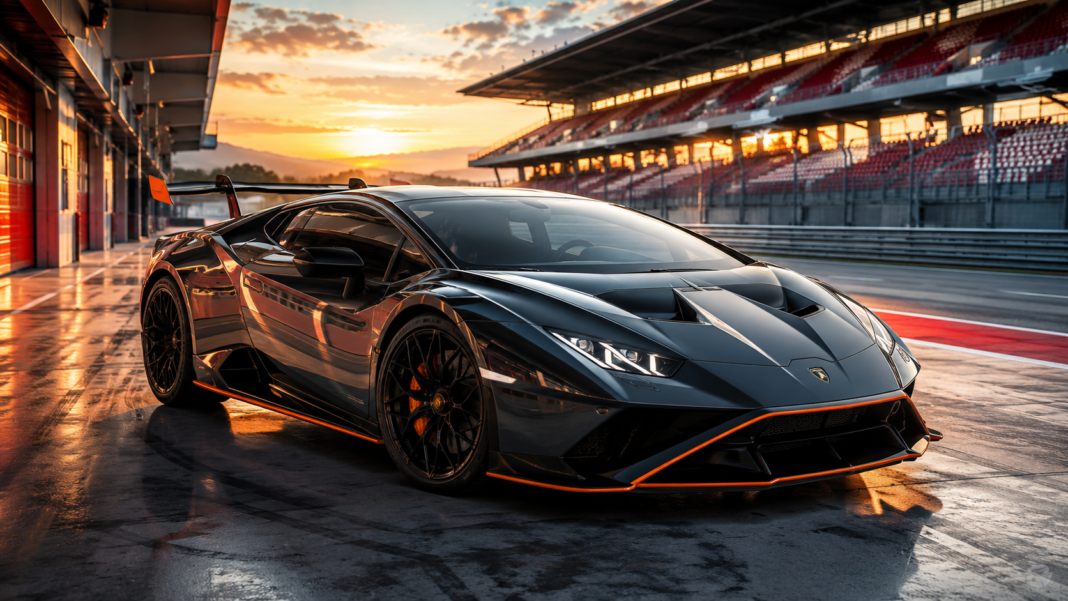
The sun is setting over the Circuit de Barcelona-Catalunya, casting long shadows across the pit lane. The track is quiet, but a prototype is being prepared for a final session. It is not a combustion car. It is an electric supercar, and it makes a sound. Not a roar, not a wail, but something deliberate, engineered, and carefully composed.
The sound of a supercar has always been part of its identity. The wail of a Ferrari V12, the howl of a Lamborghini V10, the mechanical shriek of a Porsche flat-six these sounds communicate power, emotion, and character. But as the industry moves toward electrification, that acoustic signature is disappearing. In its place, manufacturers are creating new sounds. Some are synthetic. Some are amplified. Some are designed to mimic the past. The question is whether any manufactured engine note can replace the real thing, and whether it even matters.
The Authentic Approach: Capturing Natural Frequencies
Ferrari has taken a distinctive position on the sound problem. The company’s first electric supercar does not use synthesized engine noise. Instead, it captures and amplifies the natural acoustic frequencies produced by the electric motors, inverters, and power electronics. The approach has been compared to an electric guitar, which does not invent a sound but captures the vibration of the strings and amplifies it.
The philosophy is simple. The company does not select, adjust, or synthesize sounds. It takes the frequencies produced by the electric motors and brings them into the cabin unchanged. The sound is tied directly to acceleration, throttle position, and vehicle dynamics. When the driver presses the pedal, the body feels the push and the ears hear a sound that matches the acceleration in real time.
The sound is not always active. It is linked to the driving mode and can be dialed up or down. When performance is needed, the sound is present. When silent cruising is preferred, it fades away.
The Digital Deception: Synthesized and Simulated Sounds
Other manufacturers have taken a different path. Porsche has developed an artificial soundscape designed to provide auditory feedback and enhance the sensation of speed. The sound is composed of mechanical whirs and synthesized elements that evolve with speed and acceleration. It is not a copy of a combustion engine, but it is not entirely natural either.
Porsche has also looked to other manufacturers for inspiration. Some electric performance cars have impressed Porsche engineers with their simulated gearboxes and active sound systems. Similar features, including virtual engine sounds and simulated gear shifts, are likely coming to Porsche’s electric sports cars.
Mercedes-AMG has gone even further. Its prototypes use resonators in the front seats to simulate the vibrations of a V8 engine. The seat vibrates subtly during acceleration, and the driver feels the rumble of a combustion engine even though the car is electric. The fake sound can be turned off, but the company has clearly invested in making the experience as convincing as possible.
BMW is taking a hybrid approach. The electric M3 will use recordings of the brand’s inline-six, V8, and V10 engines to map the emotional arc of acceleration onto amplified sounds from its electric motors. Like Ferrari, BMW is amplifying real motor noise rather than synthesizing a completely artificial sound. But unlike Ferrari, BMW is also shaping that sound to evoke familiar combustion engine characteristics.
The Case for Real Mechanical Noise
Some manufacturers are resisting synthesized sound altogether. The Rimac Nevera, one of the most powerful electric hypercars ever built, makes real mechanical noises from its four electric motors. Reviewers have noted that the car is loud enough to make conversation difficult, and that the sound is authentic rather than synthesized. The car has real mechanical noises instead of relying on synthesized engine sound.
Lamborghini’s CEO has also expressed skepticism about fake engine sounds, stating that he tends to disagree with adding fake combustion engine noises to electric vehicles.
Does It Even Matter?
The debate over electric car sound is ultimately about whether manufactured noise can replace the emotional connection of a combustion engine. For some enthusiasts, the answer is no. The sound of a V12 is not just a noise; it is a signature, a history, and a feeling that cannot be replicated.
But for a new generation of drivers who grow up without combustion engines, the calculation is different. They may not miss the roar of a V12 because they never knew it. Research suggests that customer expectations for electric vehicle sound are not fixed. Many manufacturers are now setting the standard, defining what electric performance sounds like for the next generation.
Innovation must be balanced with familiarity to avoid customer rejection. The manufacturers that succeed in creating soundscapes that are both novel and acceptable may define the acoustic identity of the electric performance car for decades to come.
The Barcelona Evening
The sun has fully set over the Circuit de Barcelona-Catalunya. The electric prototype has completed its session. The sound, whatever it was, has faded into the night.
The sound problem is not solved. It is being redefined. Ferrari amplifies the natural. Porsche simulates the familiar. Mercedes-AMG vibrates the seat. Rimac lets the motors speak for themselves. Each approach is a bet on what drivers will want, and each reflects a different philosophy about the relationship between sound and performance.
The question is not whether electric supercars can replace combustion drama. They cannot. But they can create something new. Whether that new thing is accepted depends less on the sound itself and more on what drivers come to expect. And that, like the sound, is being engineered.

