
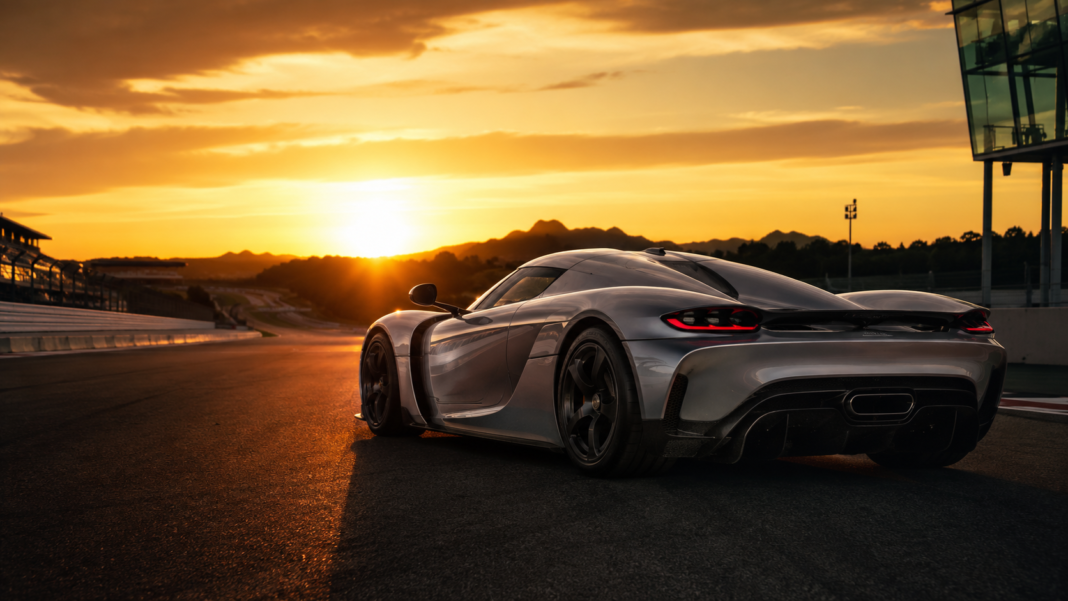
The sun is setting over the Estoril Circuit in Portugal, casting long shadows across the pit lane. The track is empty now, but the sound of a gated shifter clicking through its gates still echoes. A Koenigsegg CC850 has just completed a session, its driver experiencing something that seemed impossible just a few years ago: a 1,385 horsepower hypercar with a clutch pedal and a six-speed manual gearbox.
The manual transmission was declared dead a decade ago. Dual-clutch automatics shifted faster, delivered better lap times, and made driving easier. Yet the third pedal refuses to disappear. The Koenigsegg CC850 revived the idea of a manual hypercar, and there are reports of other manufacturers considering manual versions of their flagship models. The question is no longer whether manuals can survive in a world of 1,000 horsepower hypercars. The question is whether they will thrive.
The CC850: A Manual That Is Also an Automatic
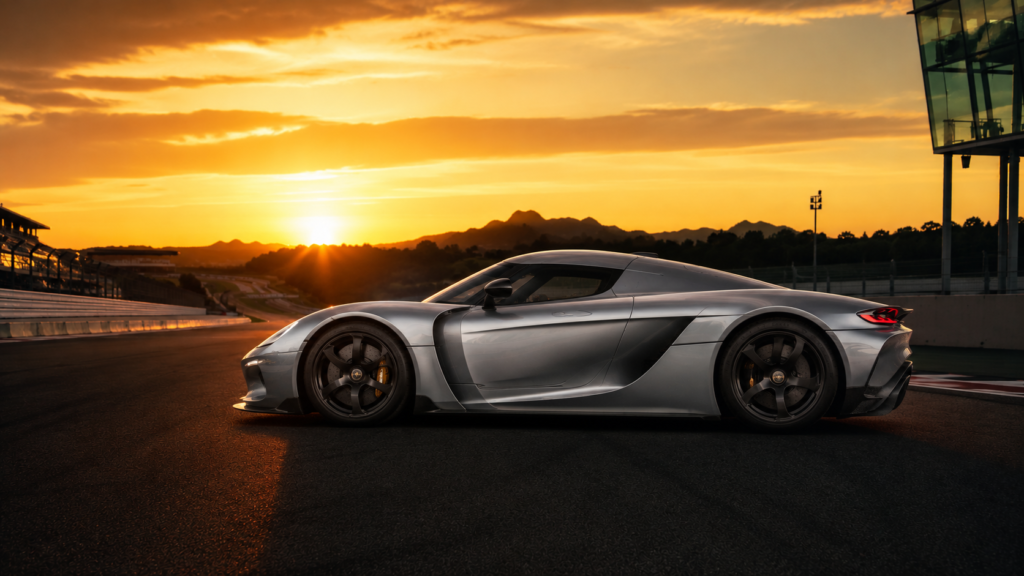
The Koenigsegg CC850 is the most significant development in manual transmission technology in decades. Limited to just 50 units, it celebrates 20 years since the first Koenigsegg delivery. The car is powered by a 5.0-liter twin-turbo V8 producing 1,185 horsepower on gasoline or 1,385 horsepower on E85. But the engine is not the story. The transmission is.
The CC850 uses the Engage Shift System (ESS), a development of Koenigsegg’s Light Speed Transmission (LST). The LST has no flywheel, no shifter forks, and no synchros. Instead, it uses seven multi-disc clutches that engage gear pairs directly, allowing instantaneous shifts.
In automatic mode, it is a nine-speed transmission with shifts as quick as any dual-clutch on the market. In manual mode, it becomes a six-speed gated manual with a clutch pedal that can stall the engine. The driver moves a gated shifter through an H-pattern, while the clutch pedal controls hydraulic pressure to the clutches inside the gearbox.
The system is designed to feel completely natural. The driver can feel the resistance of the synchros when shifting. The clutch pedal provides feedback. The engine can stall if the driver makes a mistake. It is a manual transmission that behaves exactly like a traditional gearbox, but with the speed and precision of a modern automatic when needed.
The gear ratios change depending on the driving mode. In track mode, the transmission starts with second gear’s ratio as first and then switches to third gear’s ratio once the car is moving, effectively tightening the ratio spread. The system can even stall the car, just like a traditional manual.
Ferrari’s Manual Comeback
Ferrari has not built a road car with a manual transmission in over a decade. Yet there are growing indications that the company may offer a manual version of its 12Cilindri flagship. The move would improve Ferrari’s product mix, lifting average selling price and margin without increasing production volume.
The logic is simple. When every supercar shifts perfectly, the act of driving stops feeling special. Manual transmissions have become a luxury feature precisely because they are harder and slower. Ferrari can charge a premium for a manual variant, and collectors will pay it.
The 12Cilindri’s naturally aspirated V12 produces over 800 horsepower and revs to 9,500 rpm. Pairing that engine with a manual transmission would create one of the most engaging driving experiences available. It would also be a direct response to the CC850, proving that manual hypercars are not a one-off experiment but a viable market segment.
The Hennessey Venom F5 Revolution LF
A recent one-off hypercar was commissioned with 2,031 horsepower channeled through a gated six-speed manual. The car was built through a new bespoke division that creates unique versions of the Venom F5.
The car uses a new carbon monocoque designed to accommodate a third pedal without compromising elsewhere. The shifter is milled aluminum, the pedal is floor-mounted, and the whole package costs several million dollars. It proves that the manual transmission can survive even at power levels exceeding 2,000 horsepower.
The Electric Manual: Lexus’s Bold Experiment
The manual transmission is not limited to combustion engines. Lexus is developing an electric supercar with a manual gearbox, set to launch before 2030. The car is a spiritual successor to the LFA, built on a GT3-spec chassis with four-wheel drive.
Lexus has already fitted a manual six-speed gearbox to a crossover as a proof of concept. The prototype has a clutch, a rev counter, and mimics the sound of an engine revving. It can even be stalled. The system is software-based and can be programmed to reproduce different driving experiences. The goal is not to simulate a combustion engine but to create a new form of engagement for electric vehicles.
The Estoril Evening
The sun has fully set over the Estoril Circuit. The Koenigsegg CC850 is parked in the pit lane, its gated shifter still warm. The driver steps out, smiling. He has just experienced something that seemed impossible: a hypercar with a clutch pedal that feels completely natural, even with 1,385 horsepower.
The manual transmission is not dead. It is evolving. Koenigsegg proved that a manual can coexist with extreme power. Ferrari is proving that there is commercial demand for it. Hennessey proved that it can work at over 2,000 horsepower. Lexus is proving that it can work without a combustion engine.
Key Takeaways
- The Koenigsegg CC850 uses the Engage Shift System, a transmission that operates as a six-speed manual or a nine-speed automatic.
- The system uses seven multi-disc clutches, no synchros, and a clutch pedal that can stall the engine.
- Ferrari is reportedly considering a manual version of its 12Cilindri flagship.
- A recent one-off hypercar was built with 2,031 horsepower and a gated six-speed manual.
- Lexus is developing an electric supercar with a manual gearbox, set to launch before 2030.
- Manual transmissions are becoming a luxury feature precisely because they are rare and engaging.
Conclusion
The manual transmission will survive in the hypercar world because it offers something that no automatic can replicate: connection. The CC850, the bespoke hypercars, and the rumored manual Ferraris are proof that the third pedal still has a place at the highest levels of performance.
The Estoril Circuit is quiet now. The Koenigsegg is gone. But the sound of the gated shifter lingers, a reminder that even in a world of 2,000 horsepower and electric motors, the manual transmission endures. It is not a relic. It is a choice.

