
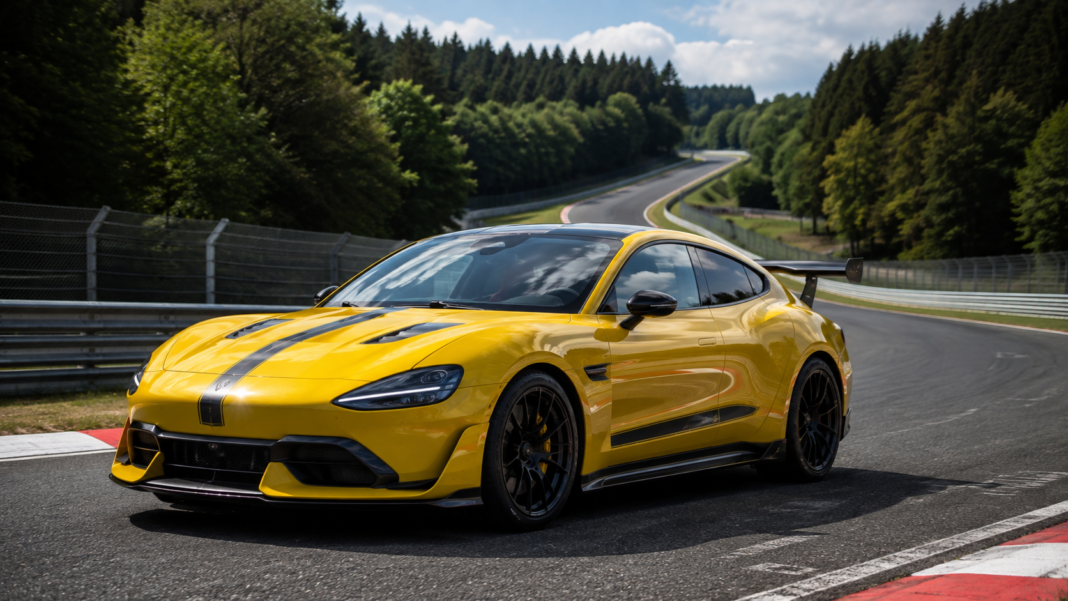
The lights of the Nürburgring Nordschleife glow in the distance as a low, aggressive silhouette carves through the curves of the Green Hell. The sound is not a wailing V12 or a screaming V10. It is the high-pitched whir of three electric motors spinning at the limits of physics. This is the Xiaomi SU7 Ultra, a 1,527-horsepower electric sedan built by a company that was best known for smartphones just a few years ago. It is the fastest four-door production car in the world, and it represents a fundamental shift in the global automotive hierarchy.
The SU7 Ultra is not a concept. It is a production car, available in China for a starting price of approximately $75,000. It is the result of Xiaomi’s $10 billion commitment to electric vehicles, and it proves that a consumer electronics company can build a world-class performance car in record time.
The Powertrain: A 1,500 HP Sedan
The heart of the SU7 Ultra is a tri-motor electric powertrain that produces 1,547 horsepower and 1,770 Nm of torque. The system combines two HyperEngine V8 motors and one HyperEngine V6s motor, with the rear axle producing 850 kW on its own. The power is delivered through a fixed-ratio gearbox to all four wheels.
The performance figures are extraordinary. The SU7 Ultra accelerates from 0 to 100 km/h in 1.98 seconds and reaches 200 km/h in just 6.09 seconds. Top speed is 350 km/h. The quarter mile is completed in approximately 9.0 seconds. The car weighs 2,360 kg, but the power-to-weight ratio is exceptional.
The battery is a 93.7 kWh CATL Qilin 2.0 pack running on an 800-volt architecture. It supports 480 kW DC fast charging, allowing a 10 to 80 percent charge in just 11 minutes. CLTC range is 630 km. The battery’s discharge rate is optimized for the 1,500 horsepower output.
The Chassis: Carbon Fiber and Ceramic Brakes
The SU7 Ultra is built with a focus on weight reduction and track performance. The car features a carbon fiber roof that saves 11 kg, carbon fiber side mirrors, a carbon fiber dual-duct front hood, and a carbon fiber rear spoiler. The interior uses extensive Alcantara and carbon fiber trim.
The braking system is track-ready. The car features carbon ceramic brakes with 420 mm front discs and six-piston Akebono calipers. The rear brakes are four-piston units. The car rides on 21-inch forged wheels with Pirelli P Zero tires, sized 265/35 R21 front and 305/30 R21 rear. The suspension uses double wishbones at the front and a five-link rear setup.
The Nürburgring Records
The SU7 Ultra has set multiple records at the Nürburgring. The prototype lapped the circuit in 6:22.091, making it the third-fastest car ever to take on the Green Hell. The production version achieved a time of 7:04.957, beating the Porsche Taycan Turbo GT’s record and making it the fastest production electric sedan around the Nürburgring. A camouflaged variant with a larger rear wing and revised bodywork has been spotted testing, suggesting an even faster version is on the way.
The Interior: Luxury and Technology
The SU7 Ultra’s cabin is a blend of luxury and technology. The car features Xiaomi’s HyperOS system on a 16.1-inch central display, a 7.1-inch dashboard, and a 56-inch head-up display. The system is powered by a Qualcomm Snapdragon 8295 chip and features a comprehensive driver assistance suite with Nvidia Drive Orin processors, LiDAR, and 14 cameras.
The seats are sport buckets with heating, ventilation, and massage functions. The interior uses over 5 square meters of Alcantara fabric and features 25 speakers, a 50W wireless charger, and a 4.6L refrigerator. The car also features a 220V AC outlet.
The Price: A Value Proposition
The SU7 Ultra starts at 529,900 yuan, approximately $75,000. The as-tested price is approximately $88,000. This makes it significantly less expensive than its competitors. The Porsche Taycan Turbo GT starts at approximately $230,000. The Lucid Air Sapphire starts at approximately $250,000. The Rimac Nevera starts at over $2 million. The SU7 Ultra delivers performance comparable to cars costing three to ten times as much. Xiaomi has stated that pre-orders exceeded 19,000 units within the first three days of launch, with over 10,000 locked-in orders. The car has already contributed to Xiaomi’s profitability.
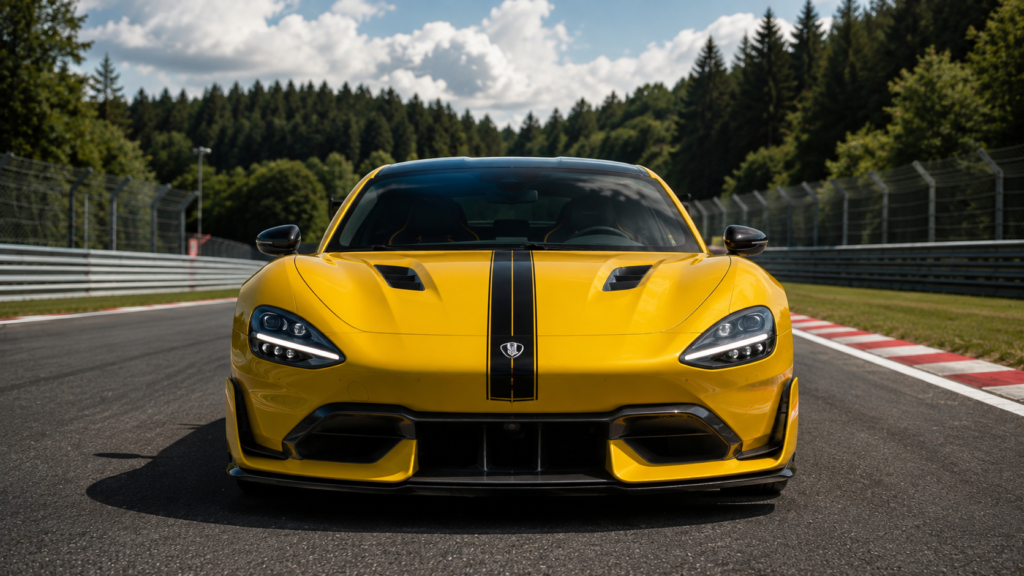
The Nürburgring Evening
The SU7 Ultra has completed its demonstration laps. Its tri-motor powertrain has delivered the 1,527 horsepower that makes it one of the most powerful production cars ever built. The carbon ceramic brakes and advanced aerodynamics have kept it planted through the curves. The driver has experienced a level of performance that is as exclusive as it is extraordinary.
The SU7 Ultra is not a car for everyone. It is a car for those who value extreme performance at an accessible price, who are willing to embrace the electric future. But it represents a significant moment in automotive history. It is the first Chinese production car to challenge the established order, and it proves that a consumer electronics company can build a world-class performance car in record time.
The SU7 Ultra is not just a car. It is a statement. It is a reminder that the hypercar world is no longer the exclusive domain of European manufacturers. The electric future has arrived. And it is faster than anyone expected.

